

Snøhetta's Hopkins Center for the Arts Expansion: A New Chapter in Dartmouth's Cultural Legacy
Snøhetta transforms Dartmouth's Hopkins Center with $123.8M expansion featuring glass recital hall, dance studio, and renewed commitment to interdisciplinary arts.


A Transformative Vision for Performance and Community
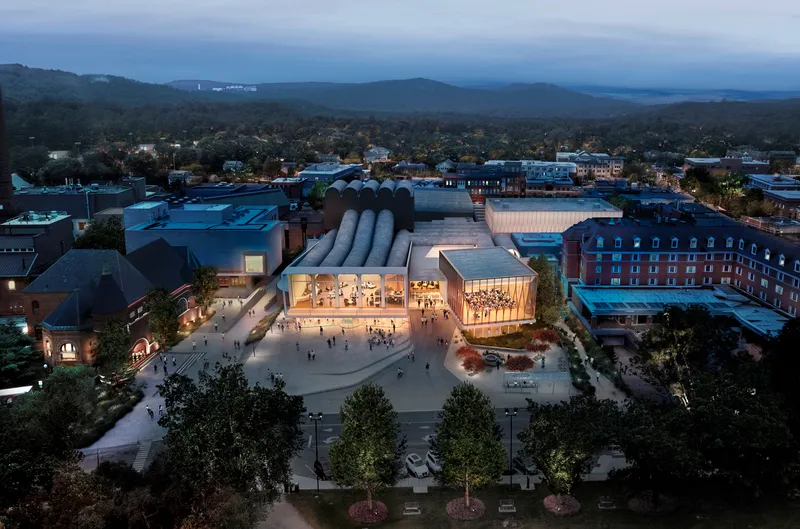
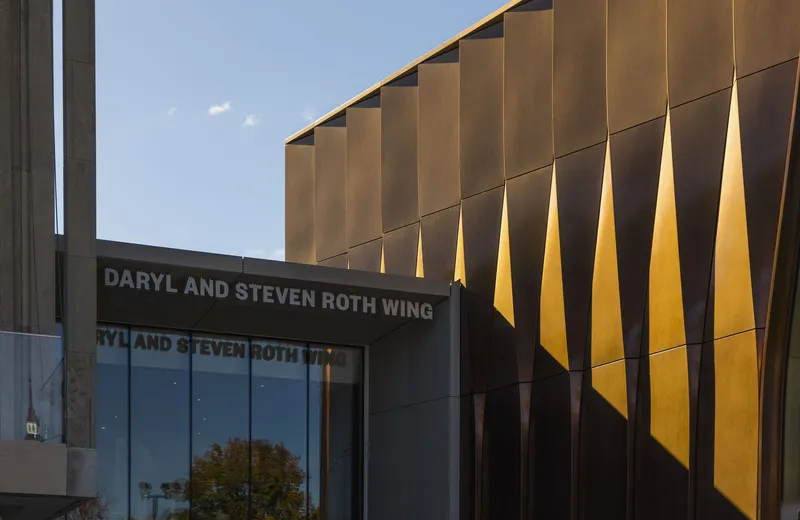
The Hopkins Center for the Arts at Dartmouth College has undergone a remarkable transformation, emerging from a comprehensive $123.8 million expansion and renewal project that represents one of the most significant cultural infrastructure investments in New Hampshire's recent history. After two and a half years of meticulous construction, the rejuvenated center reopened its doors during a grand celebration weekend on October 17th, 2025, unveiling a vision crafted by internationally acclaimed architecture firm Snøhetta that honors the past while boldly embracing the future of artistic expression.
Honoring Architectural Heritage While Embracing Innovation
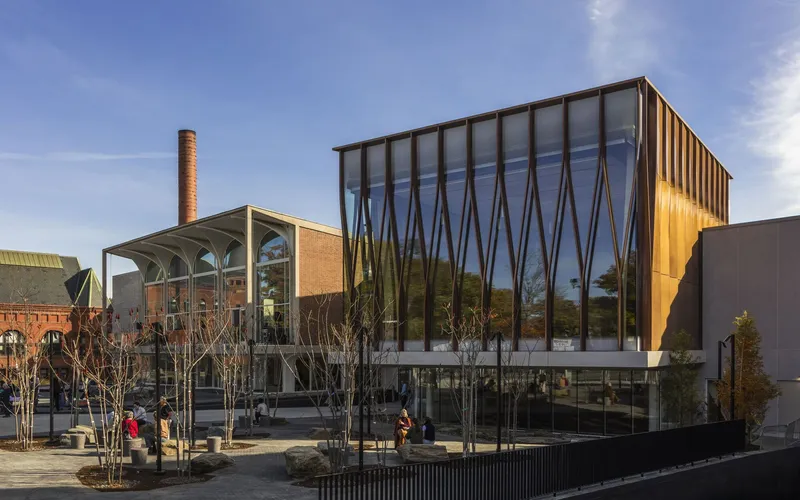
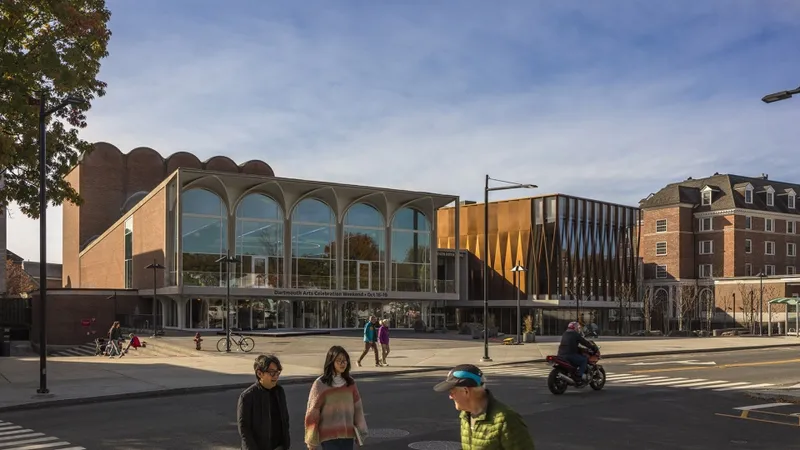
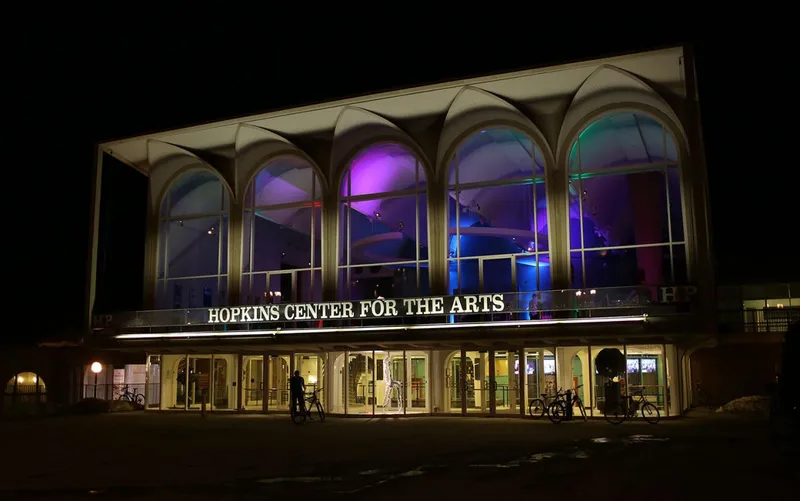
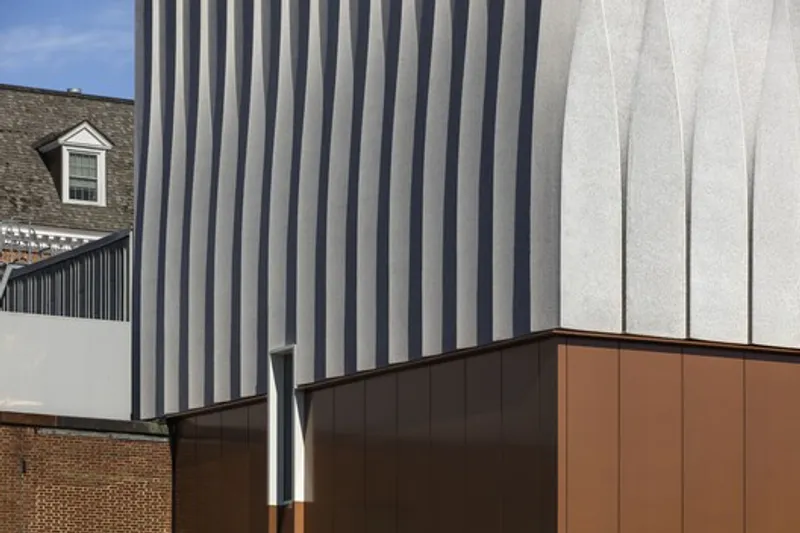
The original Hopkins Center, designed by the legendary architect Wallace K. Harrison and completed in 1962, has served as a multifaceted hub for artistic experiences at Dartmouth for over six decades. Snøhetta's expansion demonstrates exceptional sensitivity to this architectural heritage, working harmoniously alongside Harrison's expressive existing structure while preserving the building's iconic arches, distinctive presence, and beloved spaces including the Top of the Hop, Moore Theatre, and the 900-seat Spaulding Auditorium.
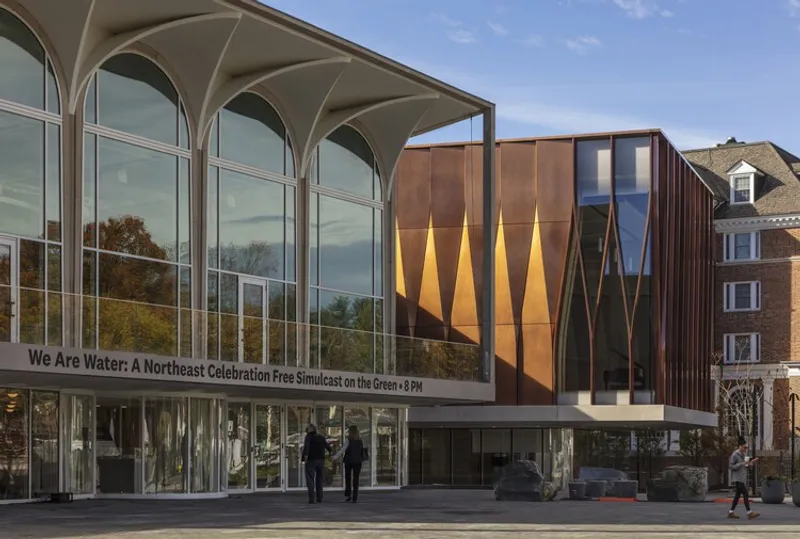
Rather than overshadowing the original design, Snøhetta's intervention creates a thoughtful dialogue between old and new, introducing contemporary elements that enhance functionality and accessibility without compromising the character that has made the Hopkins Center a cherished landmark on Dartmouth's campus.
Sculptural Landscape Design Rooted in Place
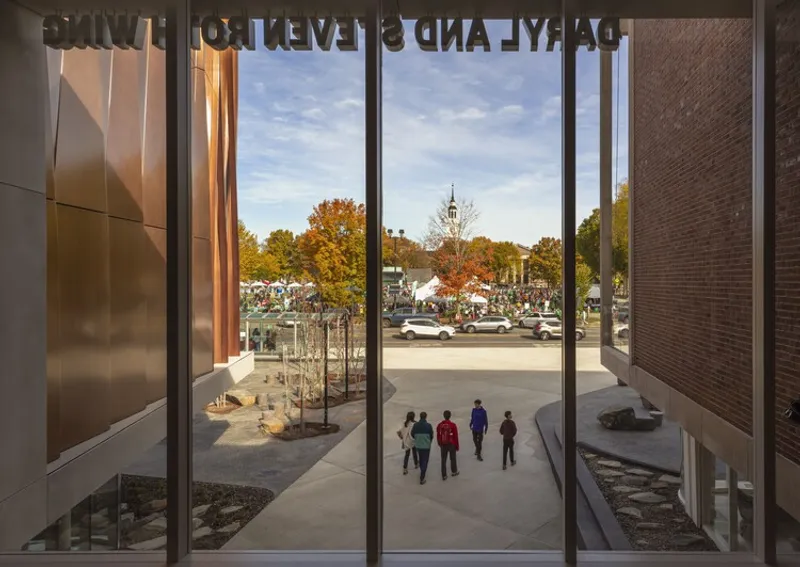
Snøhetta's design philosophy draws inspiration from the natural and cultural character of New Hampshire, reflecting what the architects describe as "the combination of the rugged and refined that defines this corner of New Hampshire." This sensitivity to place manifests most clearly in the exterior plaza, which has been carefully sculpted to facilitate intuitive movement patterns while creating distinct zones for gathering, meeting, and entering the building.
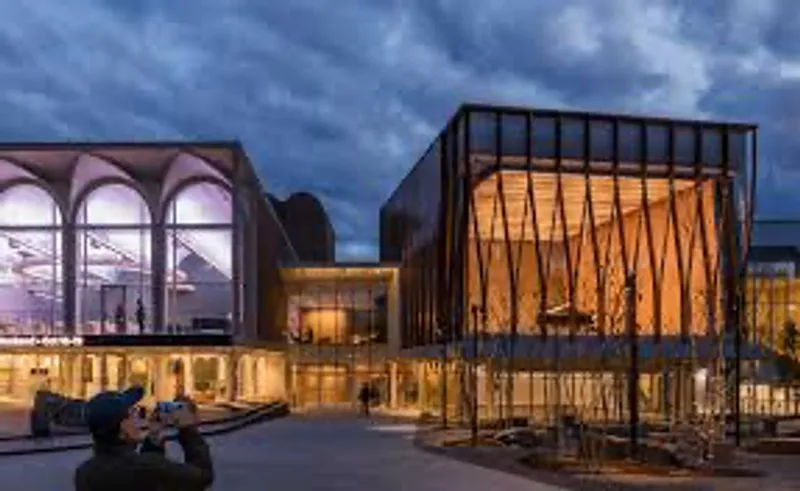
The plaza functions as more than mere circulation space—it serves as a platform that elevates the daily experiences of students and faculty, welcoming visitors while offering glimpses into the dynamic artistic processes happening within the building. This transparent approach to design demystifies the creative process, inviting the broader campus community to engage with the arts in both formal and informal ways.
The Forum: A New Social Heart
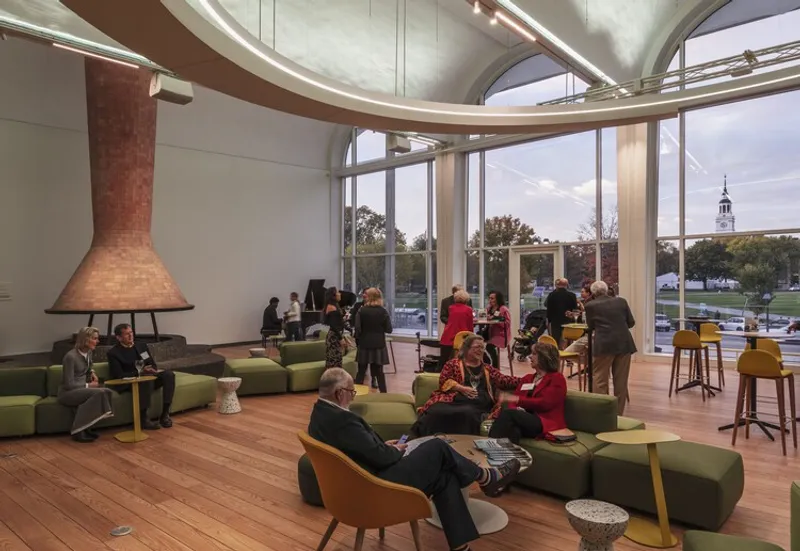
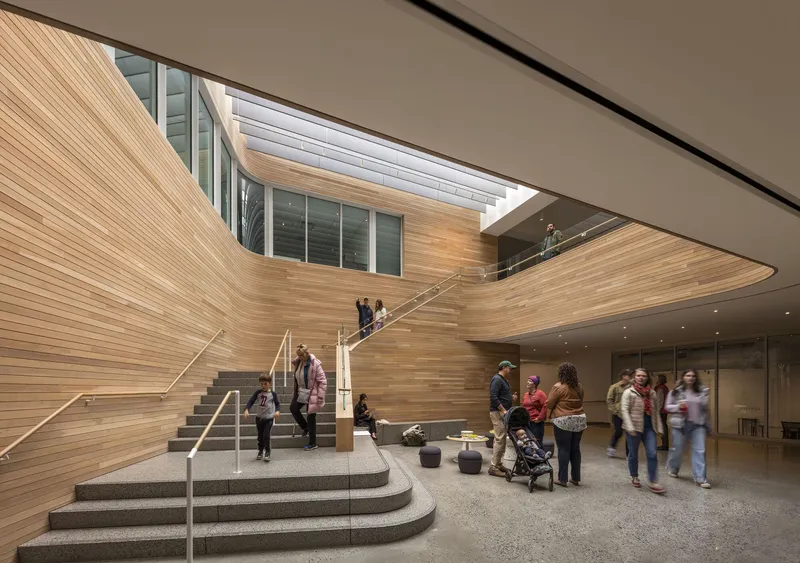
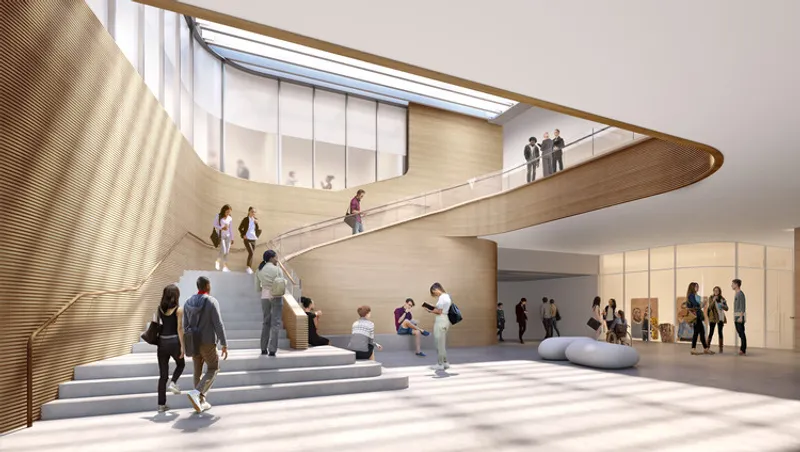
At the center of Snøhetta's expansion lies the forum, a new connected entry that expands inside the Hopkins Center and serves as the project's social and circulatory heart. This vibrant lobby space has been conceived as an active gathering place that will buzz with the energy of students, faculty, and staff throughout the day, while also serving audiences before and after performances.
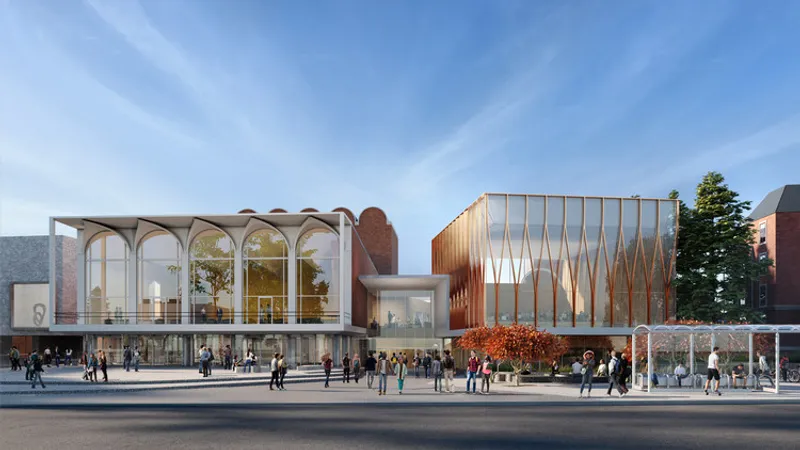
The forum successfully bridges the existing building spaces with the rejuvenated facilities, creating seamless connections that encourage exploration and chance encounters. A central staircase links the forum with the second floor, connecting the new Recital Hall and Performance Lab with the ground floor and plaza, establishing clear sight lines and intuitive wayfinding throughout the expanded complex.
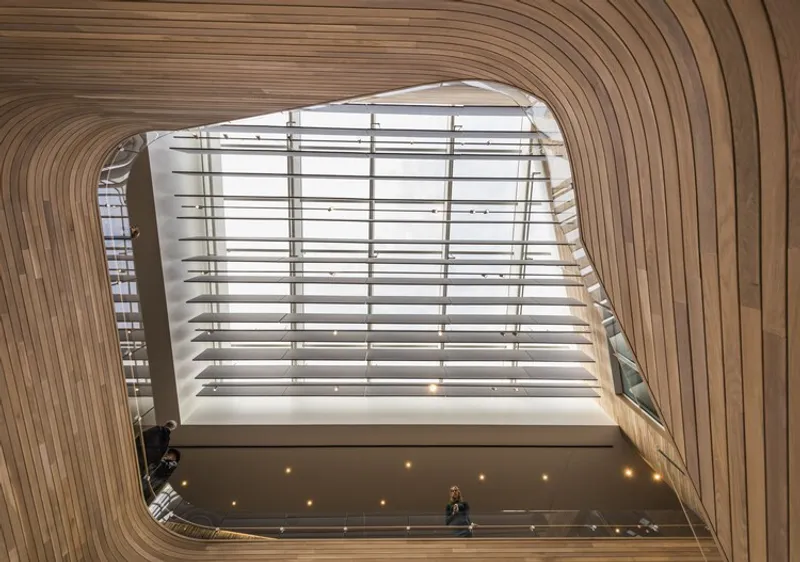
The Recital Hall: A Glass Lantern Overlooking Campus
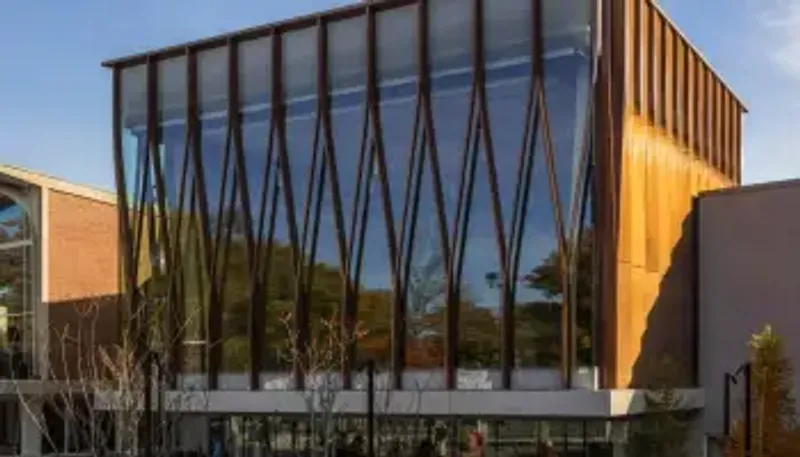
Perhaps the most visually striking element of the expansion is the new 150-seat Recital Hall, designed as a glass-enclosed lantern that serves as a beacon for the arts district. This transparent performance space overlooks the plaza and offers stunning views toward the Baker Library Tower while framing vistas of the Sugar Maples on The Green—Dartmouth's historic central campus quad.
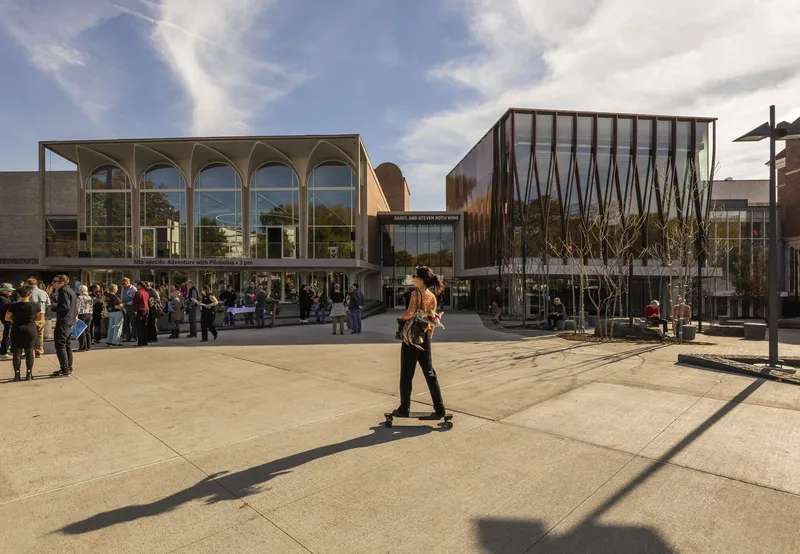
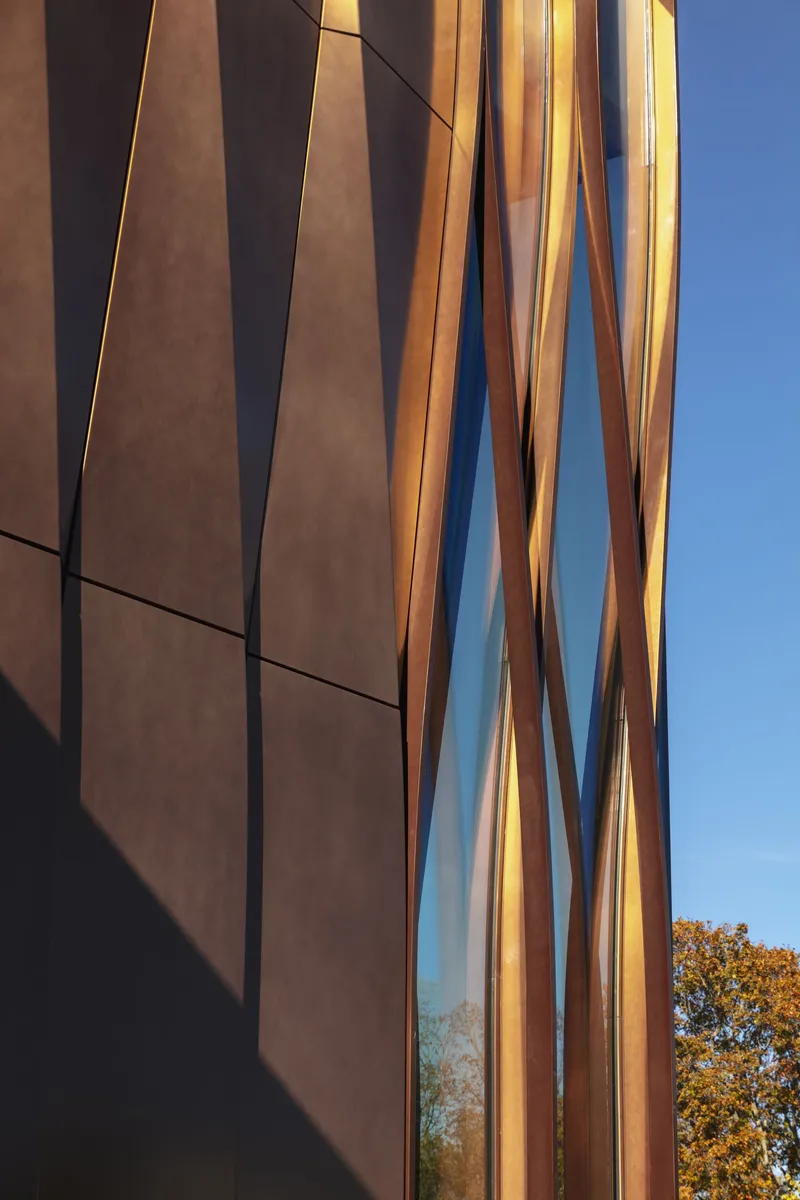
The Recital Hall's most distinctive architectural feature is its tapered arch-framed windows, created using an innovative curved mullion system that allows for abundant natural light while maintaining acoustic integrity. This technical achievement enables flexible seating configurations within the hall, allowing the space to adapt to diverse performance types and audience sizes.
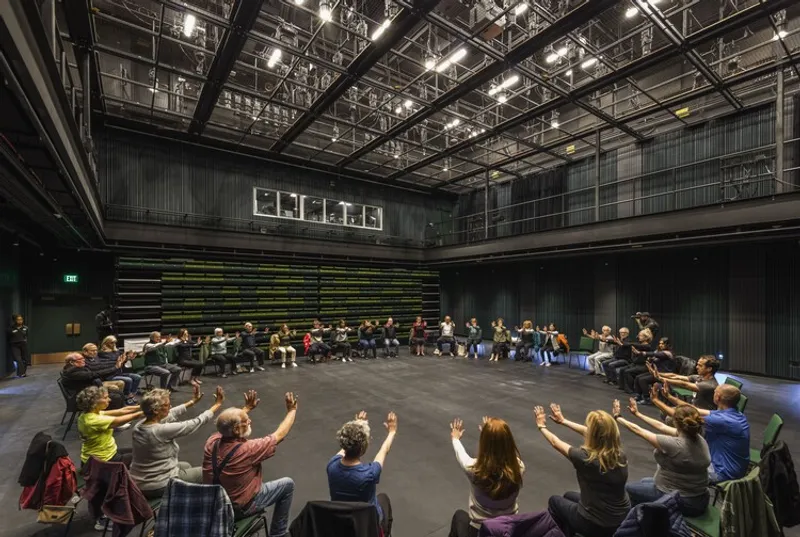
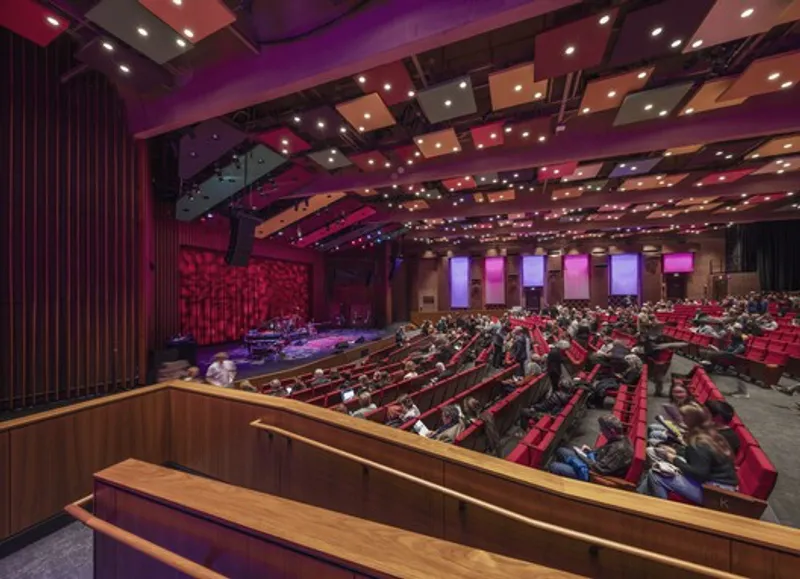
Beyond its architectural beauty, the Recital Hall has been outfitted with bespoke finishes, refined details, and state-of-the-art audio-visual equipment. These capabilities will facilitate the creation of student-led performance media while transforming the Hopkins Center into a broadcasting center capable of producing and disseminating digital performances to audiences far beyond Hanover.
The Dance Studio: Purpose-Built for Movement
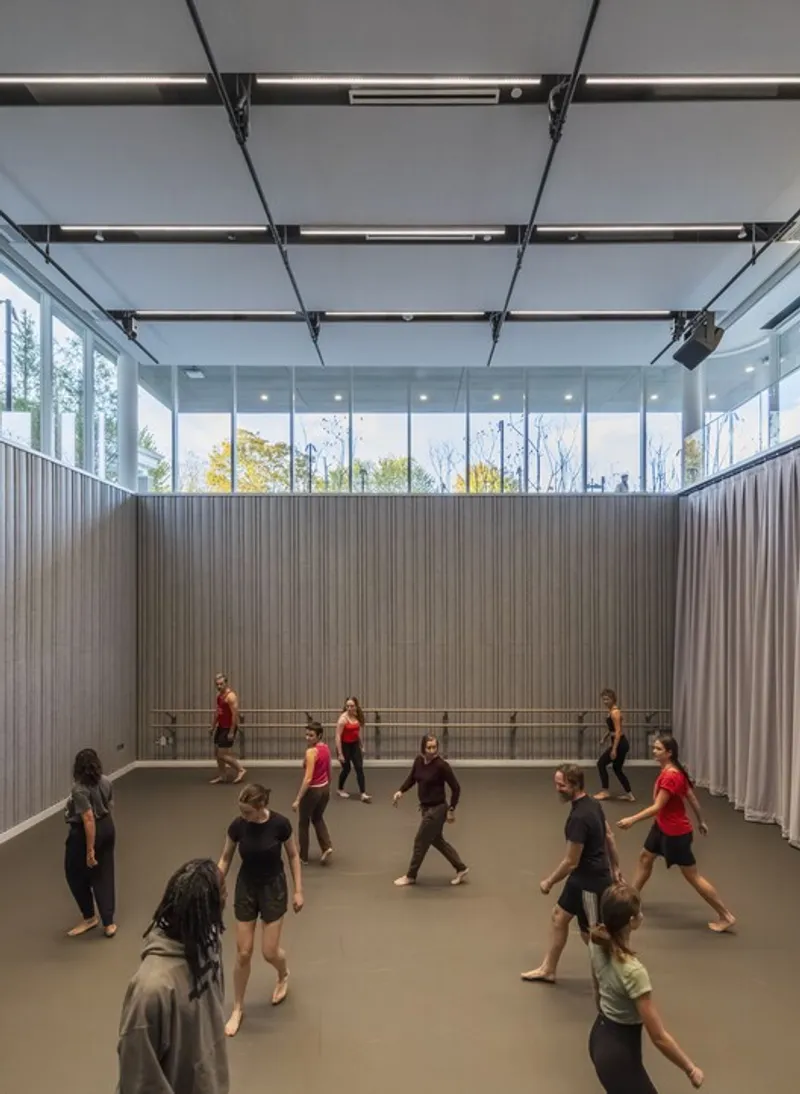
A level below the forum sits the new Dance Studio, a groundbreaking addition that marks the Hopkins Center's first purpose-built dance rehearsal space. This partially-submerged studio features north-facing clerestory windows that bring in controlled natural light while offering glimpses of the plaza tree canopy above.
The Dance Studio's generous 24-foot ceiling heights and well-lit interiors provide the ideal environment for dance troupes to perfect their routines, with sufficient vertical clearance for lifts and aerial work. The decision to position the studio partially below grade serves multiple purposes: it provides acoustic separation from other spaces, maintains comfortable temperatures for physical activity, and creates a focused environment that connects to the landscape while minimizing visual distractions.
Enhanced Practice and Performance Infrastructure
Beyond the signature spaces, the expansion delivers substantial improvements to the Hopkins Center's production and rehearsal infrastructure. The project includes additional rehearsal rooms, expanded production areas, and upgraded technical systems throughout the building. These enhancements address longstanding capacity constraints that limited the center's ability to support Dartmouth's growing arts programs.
The expansion also includes comprehensive upgrades to Spaulding Auditorium, the center's 900-seat main theater, with improvements to seating, acoustics, lighting, and backstage facilities. The beloved Top of the Hop gathering space received meticulous restoration and upgrades, preserving its character while improving its functionality for contemporary use.
Accessibility and Inclusion as Design Priorities
A critical component of the renewal project involves upgraded accessibility throughout the site. The design team prioritized universal access, ensuring that all spaces—from performance venues to rehearsal studios, from the plaza to the upper levels—can be navigated by individuals of all abilities. These improvements reflect a broader commitment to inclusion, ensuring that the arts remain accessible to the entire Dartmouth community.
State-of-the-Art Digital Capabilities
Recognizing the increasingly important role of digital media in contemporary artistic practice, the expansion incorporates cutting-edge broadcasting and recording capabilities throughout the facility. These systems enable high-quality capture and streaming of performances, supporting hybrid events that can reach global audiences while serving pedagogical purposes for students studying performance, production, and media arts.
The integration of these technologies positions the Hopkins Center to respond to evolving expectations around access to the arts, particularly in the wake of increased demand for digital programming. Students can now gain hands-on experience with professional-grade production equipment, preparing them for careers in an increasingly multimedia artistic landscape.
Collaborative Design Process
The successful realization of this complex project required close collaboration between Snøhetta and an extensive team of consultants and partners. PAGE (now Stantec) served as Architect of Record, while Arup provided expertise in lighting, structural engineering, and MEP (mechanical, electrical, and plumbing) systems. Engineering Ventures handled civil engineering, and Consigli Construction Company managed the construction process.
This collaborative approach ensured that the project's ambitious architectural vision could be realized within budget and schedule constraints while meeting the demanding technical requirements of a contemporary performing arts facility. The integration of multiple building systems—from acoustics to lighting to climate control—required careful coordination to deliver spaces that meet professional performance standards.
Sustainable Design Considerations
While not explicitly highlighted in the project description, contemporary performing arts facilities face unique sustainability challenges, balancing energy-intensive technical systems with environmental responsibility. The use of natural daylighting in the Recital Hall and Dance Studio reduces reliance on artificial lighting, while the partially-submerged design of the Dance Studio likely provides passive temperature moderation.
Impact on Campus Life and Artistic Programming
The expanded Hopkins Center fundamentally transforms what's possible for arts programming at Dartmouth. The addition of new performance and rehearsal spaces relieves scheduling pressures that previously limited artistic activity, allowing more student groups to access quality facilities while supporting expanded programming by professional visiting artists.
The forum's role as an active social space throughout the day—not just during performances—integrates the arts more fully into daily campus life. This casual accessibility helps demystify artistic practice and encourages broader participation in the arts, supporting Dartmouth's liberal arts mission of providing well-rounded education.

A Platform for Interdisciplinary Creativity
The Hopkins Center has always championed interdisciplinary approaches to the arts, and the expansion strengthens this commitment by creating spaces that support collaboration across artistic disciplines. The flexible Performance Lab and technologically sophisticated Recital Hall can accommodate experimental work that blends performance, visual art, technology, and social practice.
This emphasis on interdisciplinarity reflects broader trends in contemporary arts education and practice, where traditional boundaries between disciplines are increasingly porous. The physical infrastructure now matches this pedagogical approach, with adaptable spaces that can accommodate evolving artistic forms and collaborative working methods.
Connecting to Community and Place
The Hopkins Center's renewed presence on campus reflects a deeper truth about the role of the arts in educational communities: they serve as a bridge between the academy and the broader public, creating opportunities for engagement, dialogue, and shared experience. The transparent, welcoming design of the expansion embodies this connective role, inviting passersby to engage with artistic activity both as observers and participants.
The careful integration with the surrounding landscape—particularly the views toward the Baker Library Tower and The Green—roots the building firmly in its place, creating a facility that is unmistakably of Dartmouth while also achieving architectural excellence that resonates beyond the campus.
Looking Forward: The Arts at the Center
As Mary Lou Aleskie, former director of the Hopkins Center, noted in statements about the expansion, "The arts are essential, and the new Hop puts the arts at the center of the Dartmouth community—sparking joy, fueling creation and connection, and deepening the understanding of those around us."
This philosophy—that the arts serve not as peripheral enrichment but as central to the educational mission—finds physical expression in Snøhetta's design. The Hopkins Center expansion represents a substantial institutional investment in the belief that creative expression, artistic excellence, and cultural engagement are fundamental to preparing students for meaningful lives and productive citizenship.

All the Photographs are works of Jeff Goldberg Photography




Popular Articles
Popular articles from the community


Riyadh For All: Intergenerational Urban Design for Active Aging in Rabat
Riyadh For All reimagines urban design in Rabat with intergenerational co-living, adaptive courtyards, and Moroccan cultural exchange today.

Conexión: Biophilic Design Reimagines High-Rise Living in Hong Kong
Conexión reimagines high-rise living in Hong Kong through biophilic design, green facades, shared spaces, daylight, water and nature within.

Co-Life: Senior Housing Design That Reconnects Older Adults With the City
Co-Life reimagines senior housing design through healing gardens, shared streets, workshops, and a sustainable community across generations.

The Musturak Paradise: Senior Living Architecture for a Connected Future in Temara, Morocco
The Musturak Paradise reimagines senior living architecture in Temara via private homes, social spaces, culture, community, and shared care.


Similar Reads
You might also enjoy these articles


Hodi-Mandai Geram
Project Function: Preservation and revitalization of the Intangible heritage and socio-spatial identity of the Hodi by Housing, Cultural Memory Center, Sacred Grove, landscape, local tourism economy


Olio Towers: A Mid-Rise for Performers That Fuses Housing, Rehearsal, and Stage
Located blocks from Houston's Theater District, this modular tower stacks living units around a central performance atrium.

Oasis: Modular Green Housing Carved into Dhaka's Urban Fabric
A shortlisted Plugin Housing entry reclaims unauthorized settlements in Dhaka with stepped concrete volumes, green roofs, and ventilation-driven design.

Black Hole: A Floating Megastructure for the Post-Physical Era
Emiliano Mazzarotto envisions a spherical, self-scaling arena where e-sports, digital hotels, and holographic stadiums replace traditional public space.


Explore Cultural Architecture Competitions
Discover active competitions in this discipline



Challenge to reimagine the Iron Throne


Photograph architecture without architects


Illustrate the lost glory of Angkor Wat - Render Challenge


Bring back Drive In's
Comments (0)
Please login or sign up to add comments
No comments yet. Be the first to comment!