

SOHO Wisdom Granary: Revitalizing Dingzha Watertown Through Adaptive Reuse and Creative Industry
Adaptive reuse transforms Dingzha’s historic granary into a creative hub, blending industrial heritage, entrepreneurship, and sustainable rural revitalization strategies.


The SOHO Wisdom Granary of Dingzha Watertown, designed by line+ studio and MLA+, is a powerful example of adaptive reuse architecture, transforming an abandoned agricultural complex into a vibrant hub for creative industries, entrepreneurship, and cultural exchange in Jiashan, China.
Completed in 2022, the 11,824 m² project reimagines a historic granary site as a catalyst for rural revitalization, aligning with the broader vision of sustainable development within the Yangtze River Delta integration zone.


Rural Revitalization Through Urban-Rural Collaboration
Dingzha Town, once a thriving agricultural settlement, experienced decline due to rapid urban migration. The project responds to this condition by proposing a new urban-rural collaboration model, where industry, culture, and community life are reintegrated.
Instead of demolishing the past, the architects focused on preserving the identity of the granary while introducing new functions. This approach supports:
- Local economic regeneration
- Cultural tourism development
- Sustainable community growth
By activating underused spaces, the project restores human vitality, employment opportunities, and social interaction, key drivers of long-term resilience.
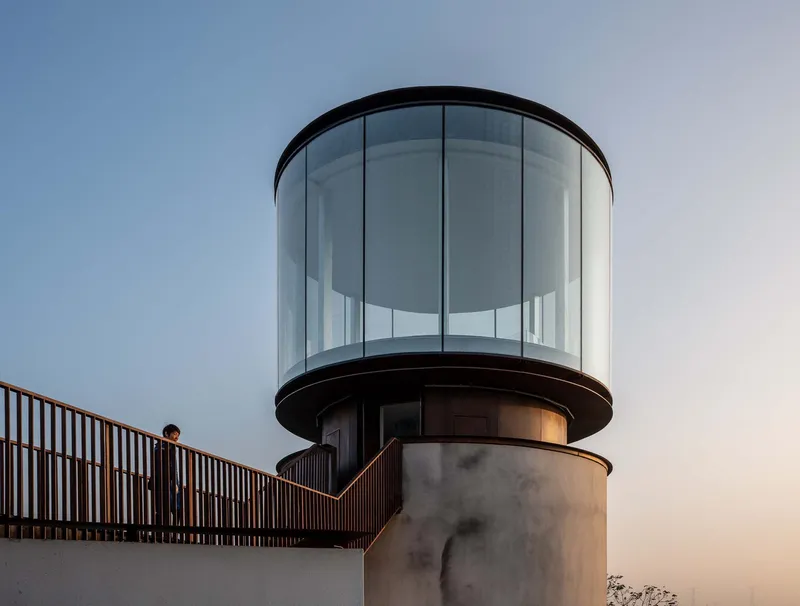

Industrial Heritage as Cultural Identity
Originally built in the 1960s, the Dingzha granary complex represents one of the earliest examples of “house-style warehouses” in China. The preserved concrete arch granary structures are not only historically significant but also emotionally resonant for the local community.
Rather than treating these buildings as relics, the design positions them as “spiritual coordinates”, anchors of memory and identity. Their raw textures and aged materiality create a unique spatial atmosphere that attracts:
- Tourists
- Creative professionals
- Cultural producers
This transformation highlights how industrial heritage architecture can become a driver of placemaking and storytelling.


Spatial Transformation: From Storage to Knowledge Hub
The masterplan introduces the concept of a “Shared Smart Granary”, where former storage and processing facilities are reprogrammed into flexible, multifunctional spaces.
Key Spatial Strategies:
- Central Zone: Converted into open knowledge-sharing and event spaces
- Southern Granary Cluster: Transformed into entrepreneurial offices and studios
- Mixed Urban Fabric: Integrates residential and creative functions
The design carefully responds to the existing layout, preserving the structural logic and rhythm of the original buildings while inserting contemporary interventions.
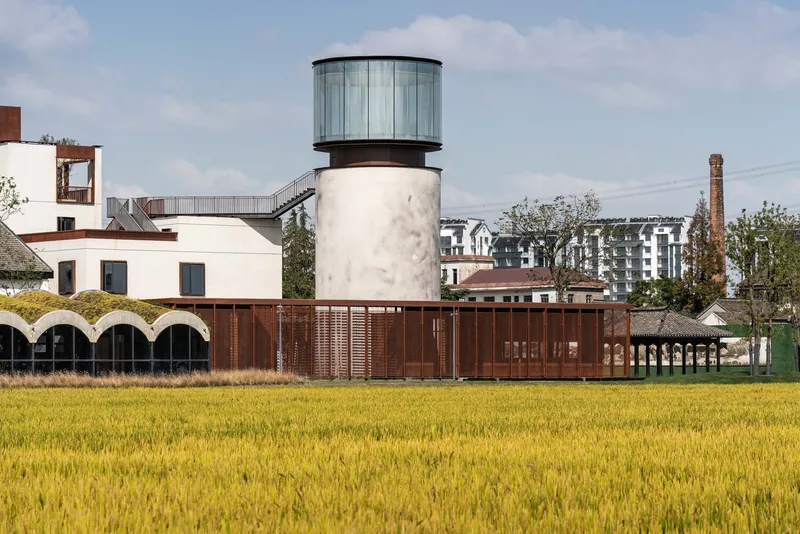


Creative Ecosystem and Sustainable Development
The project forms part of a larger vision called the “Water Town SOHO”, a creative settlement that supports:
- Startups and innovation hubs
- Cultural production and exhibitions
- Community-driven activities
By combining architecture, planning, and economic strategy, the development fosters a self-sustaining ecosystem rooted in local resources and global creative networks.
This model demonstrates how adaptive reuse + creative industry integration can:
- Revive declining towns
- Attract new talent
- Strengthen regional identity


Architecture as a Tool for Regeneration
The SOHO Wisdom Granary goes beyond physical transformation: it redefines how architecture can mediate between past and future, rural and urban, production and creativity.
Through minimal intervention and maximum impact, the project successfully:
- Preserves cultural memory
- Introduces new economic opportunities
- Creates meaningful public spaces
It stands as a benchmark for sustainable rural revitalization projects in China and beyond.
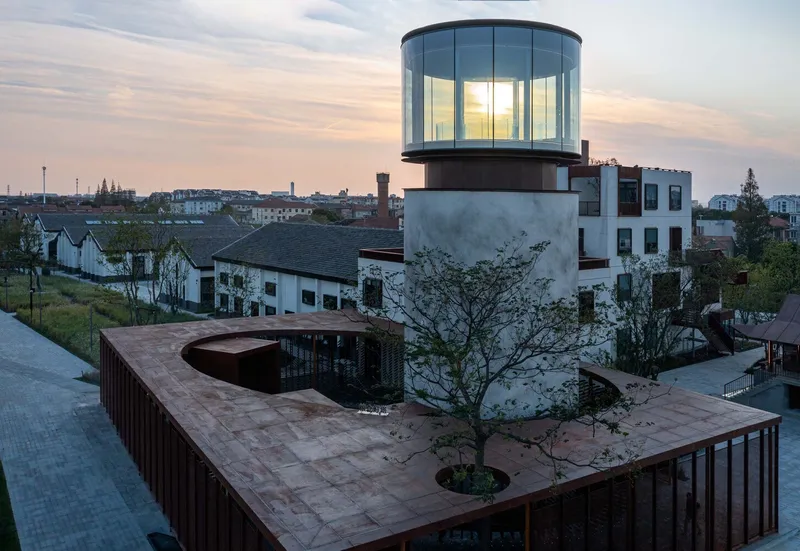

All photographs are works of
Chen Xi Studio, Simu


Popular Articles
Popular articles from the community


ETEH Reworks the Shared Spaces of São Domingos School in Brazil Around Timber, Color and Hanging Plants
At São Domingos School in Brazil, 436 m² of hall, refectory and library are recast with timber joinery, a yellow and blue code and trailing greenery.

FCC Arquitectura Expands a Portuguese Granite House with a Board-Marked Concrete Wing
In Portugal, JV House pairs a cleaned-up whitewashed and granite dwelling with a timber-shuttered concrete extension, courtyards and a garden pool.


The Amber Palace Opera: A Geological Fiction Surfaces on Tallinn's Baltic Waterfront
Pierre Brillard reimagines a Baltic legend as a public landscape, opera house, and waterfront promenade rooted in Tallinn's coastal identity.

graciastudio Turns a Viewless Tijuana Lot Inward Around a Courtyard of Concrete, Timber and Trees
In Tijuana, Jorge Gracia's GA2 House stacks a timber-clad private floor over exposed concrete and replaces a missing view with a planted interior patio.

Similar Reads
You might also enjoy these articles

Bamboo Housing Challenge 2026: Design Affordable, Sustainable Homes Using Bamboo
An international design competition by Bamboo U and IBUKU inviting architects and designers to reimagine affordable housing using bamboo — with the winning design built full-scale in Bali.

Computational Design & Education: Beegraphy Design Awards Introduces 7th Category (Featuring Jiyun's Innovative Approach)
Dive into Beegraphy’s 7th Design Awards category, where computational design meets education to create immersive, interactive learning tools, inspired by Jiyun’s work.
From Parametric Lighting to Urban Furniture: Join the 2nd Workshop in Beegraphy’s Computational Design Series
Dive into Cutting-Edge Design Techniques and Practical Applications with Industry Experts

Last Call: Unleash Your Architectural Genius in SHAK's Kindergarten Design Competition
Urgent call for architects to join SHAK's kindergarten design competition before the looming deadline

Explore Architecture Competitions
Discover active competitions in this discipline

Challenge to reimagine the Iron Throne

Photograph architecture without architects

Illustrate the lost glory of Angkor Wat - Render Challenge

Design challenge to reuse E-waste
Comments (0)
Please login or sign up to add comments
No comments yet. Be the first to comment!