

Sojourners Asylum
A place feeling like home

Our design emphasizes self-sufficiency and sustainability to create a socially interactive atmosphere where no one would feel any signs of homesickness. We considered all criteria needed for a person who has left everything behind and created a place where it feels like home.
Design Process
Refugees are people fleeing conflict or persecution. They are defined and protected in international law, and must not be expelled or returned to situations where their life and freedom are at risk. owing to a well-founded fear of being persecuted for reasons of race, religion, nationality, membership of a particular social group or political opinion, is outside the country of his nationality and is unable or, owing to such fear, is unwilling to avail himself of the protection of that country; or who, not having a nationality and being outside the country of his former habitual residence as a result of such events, is unable or, owing to such fear, is unwilling to return to it ( Figure 1 ). By considering these problems and difficulties and the convenience of modern technology, we can obtain an optimum design. Cultural, security provider, and climatic aspects were the most needed matters to contemplate and required solutions. One of the most significant and desired answers was to study the behavior of the refugee and poor people and their lives. There are two strategies utilized to gather data in this project, one of them is Survey Analysis design (SAD), and the other one is Pattern Assistance Design (PAD). After searching and analyzing different samples in different patterns and studying incremental constructed architectural buildings and considering the compact area of Phase 1 and simultaneously the area that we need for every unit which decided to be 49 m2 in our design and 100 of them in GF+1 level ( Figure 2 ), we detected that in this project we are in need of a masterpiece composition of units in Phase 1 area to create beneficial social spaces and narrow alleys and so we decided to rejuvenate the idea of composition which had been used in Composition II in Red, Blue, and Yellow by Piet Mondrian ( Figure 3 ) in order to place units in an organized map and for the second strategy we level up the walking path by ramps and create access to the upper level by this way, therefore people can walk beneath and above the ramps which expand their spaces ( Figure 4 ).
 Figure 1: 82.4 million individuals have been forcibly displaced worldwide as a result of human rights violations, poverty, conflict, and persecution.
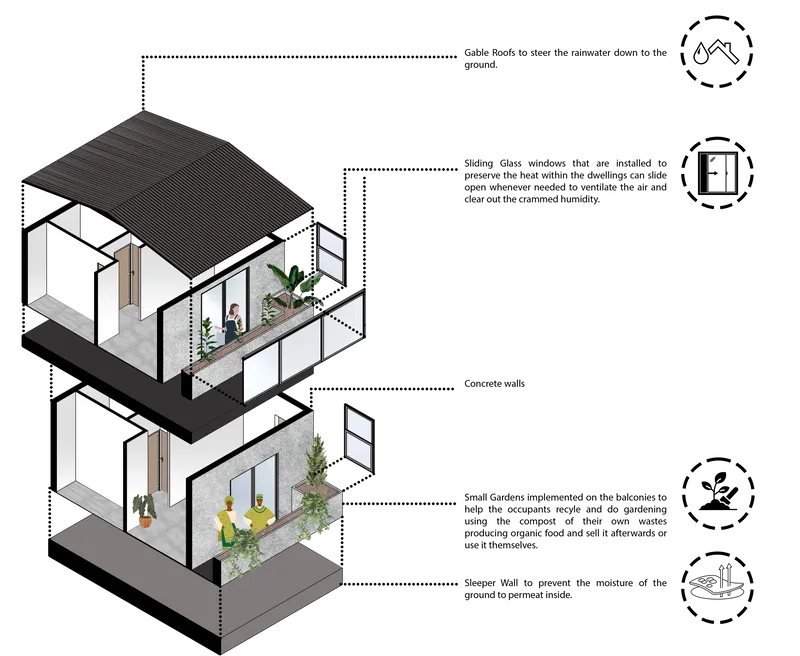 Figure 2 : 49 m2 units in our design and 100 of them in GF+1 level.
 Figure 3: using Composition II in Red, Blue, and Yellow by Piet Mondrian in order to place units in an organized map.
 Figure 4: Use public stairs instead of private stairs to reduce the area.
In the first steps of the unit design, we have worked on numerous concepts that gradually some were chosen. After working on these concepts, some others were omitted, and finally, by improving the chosen one, we reached our desired design. During the period of about two months, we have worked on the concept, composition, and interior design, and site design in a trial and error method, making a 3D of the model in Sketchup and Rhino software. After reaching the almost desired configuration, the work began to speed up as it was improved and modified until we reached the final destination, which was the presentation.
Design Principles and Elements organization
The strategy for locating the functional spaces was based on the fact that we needed a strong connection among refugees people and also local people; at the same time, we wanted to create an understanding between refugees and local people by integrating them with each other, based on what has been said in this paper, spaces such as market, park, and parking which need to work with local people are close and convenient to the street in order to give refugees a chance to blend in get familiar with their culture and lifestyle. In addition, Greenhouse has been implemented to give the refugees a chance to work and earn money, and also it has also the potential to provide them their basic food which can lead to their independence from local expensive stores. Products such as tomato, potato, and some sort of vegetable which are the basic ingredient of any food possess a high price in Utrecht. Furthermore, in this kind of farming, there is much wider space for farming owing to vertical farming strategy than old-school farming. Moreover, Sewage treatment is aimed to remove contaminants from sewage to produce an effluent that is suitable for discharge to the surrounding environment or an intended reuse application, thereby preventing water pollution from raw sewage discharges. Sewage treatment removes the contaminants from sewage to produce liquid and solid (sludge) suitable for discharge to the environment or for reuse. Besides the strategies have been mentioned in this article we design 2 different ways of farming for residents with the aim of being financially independent, first off we have planned an old fashion farm for them owing to the fact that there is a vivacious market for flowers in Netherland although, on the other hand, we have tried to mention aquaponics farming in small scale which is sustainable and environment-friendly, as there are no toxic wastes and run-offs from chemicals. Ultimately, aquaponics systems can help urban food growers maximize food yield. This is possible by harvesting both fish for a protein source and fresh plant produce ( Figure 5 ). We take into account the matter that refugees, leave everything behind them and leave their country for the sake of their children and a bright future for them. These hypothetical ideas demand some measure to take, two of which are education and proper healthcare services. Consequently, we design a light steel frame structure buildings for these two objections with the aim of preparing some of their basic needs which in the future time they can use education as a turning point in their lives and pursue their educational life whit the aim of helping refugee with their rights and develop the level of their lifestyle.
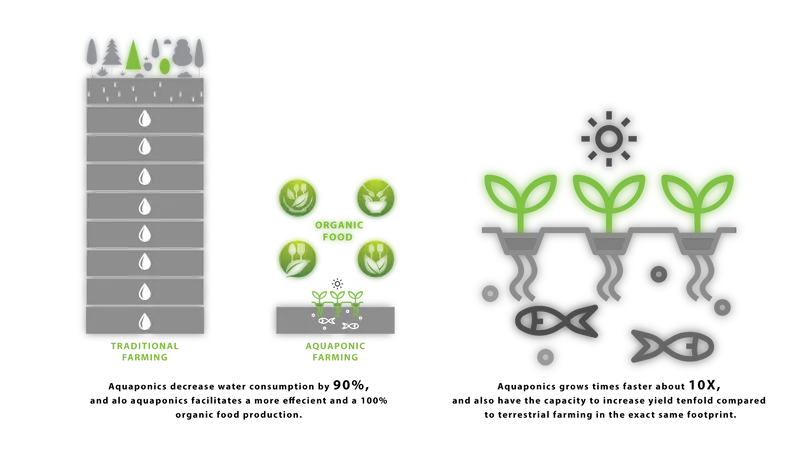 Figure 5: Aquaponic farming.
Materials
In addition to the mentioned contents, choosing materials were one of the most important criteria related to the abidance by the principles of the context and also the culture. The materials used in this project are chosen according to the past users' experiences and also new technologies and data that have made a living more convenient based on scientific factors and substantiated documents. For the roofs of the main spaces, gable roof shapes were considered that are seen and used vastly in Netherland. For the walls (Figure 6), a material with U' value = 0.15W/m² can be the best option for this climate. In this project, the built environment reached the lowest amount that decreased the portion of the carbon footprints through the building construction. In addition to that, in the construction of the site, materials, and panels associated with the climate of Utrecht have been used that do not require complicated technology, and even native and indigenous people can help in construction (Table 1).
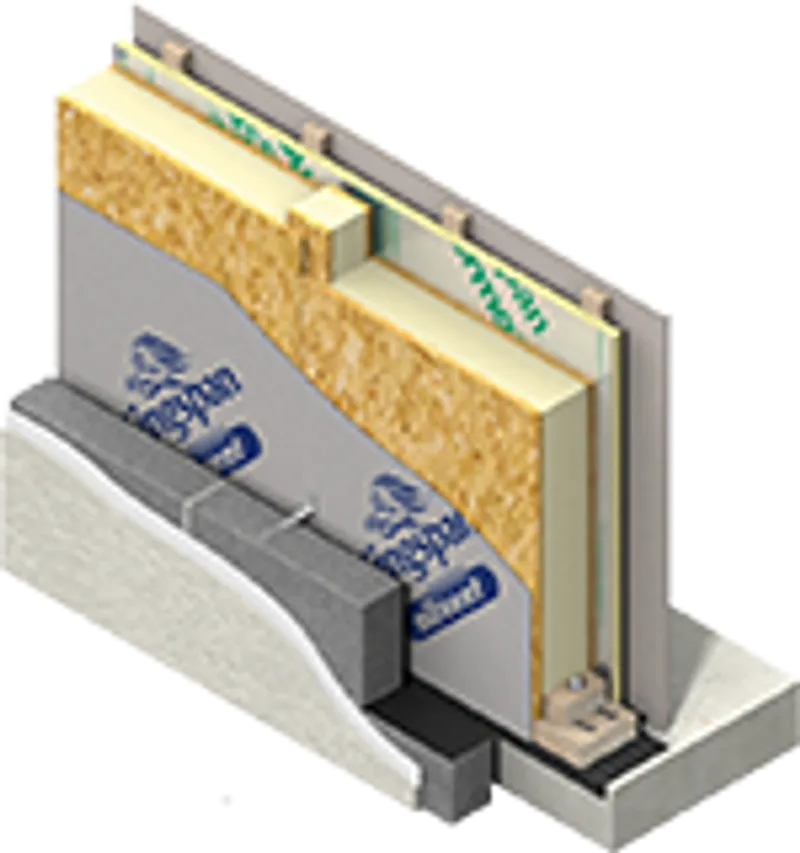 Figure 6: Layers of the exterior walls
 Table 1: Element Description
Design Strategies
Active and passive design strategies have been utilized in this design. Energy-efficient construction materials have been used as the means to the thermal comfort of the occupants and also to reduce the usage of the consumed energy. The problem with access to sufficient energy and greenhouse gas emissions has been one of the dilemmas the users face and caused the designers to think of methods to solve this problem in a low-cost and economical way. We have come up with some cheap and Renewable energy. These systems are implemented in the house units. In the seasons with high precipitation, some flexible pipes are connected to intended places, and rainwater is steered down to a reservoir. The tubes get connected to an object that also is considered a shader which has been designed as a roof for the central courtyard. In the sunny and hot seasons, the pipes will be removed. There are some holes positioned through the walls and the domes of the construction that work as a Windcatcher, helping with the ventilation and also cooling the weather. Considering the natural ventilation has been one of the most criteria information of the building, that is to say, using the narrow alleys and spatial gathering centers had both climatic and social reasons.
Considering the sustainable methods used in the design of this building, we can say that this construction can be known as a green building that does not require a lot of energy and also does not harm the environment.


Popular Articles
Popular articles from the community


Opera on the Sea: Driftwood Logic Shapes a Timber Opera House on Estonia's Coast
Trevor Orgill's opera house translates the entangled drift of floating timber into a civic building where wood, water, and music converge.

Tsunami Convergenics: Turning Catastrophic Ocean Forces into Underwater Housing Infrastructure
A speculative underwater settlement off the coast of Onagawa, Japan, treats tsunamis and typhoons as energy sources rather than threats.

Cloaked Colonization: A Mobile Underwater Habitat That Moves Like a Fish
Micah Abaya's shortlisted EHC Pacific entry reimagines ocean settlement as a dispersed network of self-sustaining architectural organisms.

Opera by the Sea Estonia: Three Shells Dissolving Architecture into Tallinn's Coastline
A winning opera house proposal replaces monumental form with interconnected shells that blur the boundary between building, park and Baltic Sea.

Similar Reads
You might also enjoy these articles
The Rhythm of Seasons
A Farmers' Market Connecting Nature and the City

More Than a Building-Designing a Living System
More Than a Building-Designing a Living System
Base Beyond
DESERT COMPOUND ARID: TOURISM OF ABSENCE AND ABUNDANCE

Comments (0)
Please login or sign up to add comments
No comments yet. Be the first to comment!