
Solar House by Pablo Senmartin: Sustainable Architecture in Villa Parque Síquiman
Solar House by Pablo Senmartin is a sustainable, steel-structured residence in Villa Parque Síquiman, integrating voids, sunlight, water, and nature harmoniously.


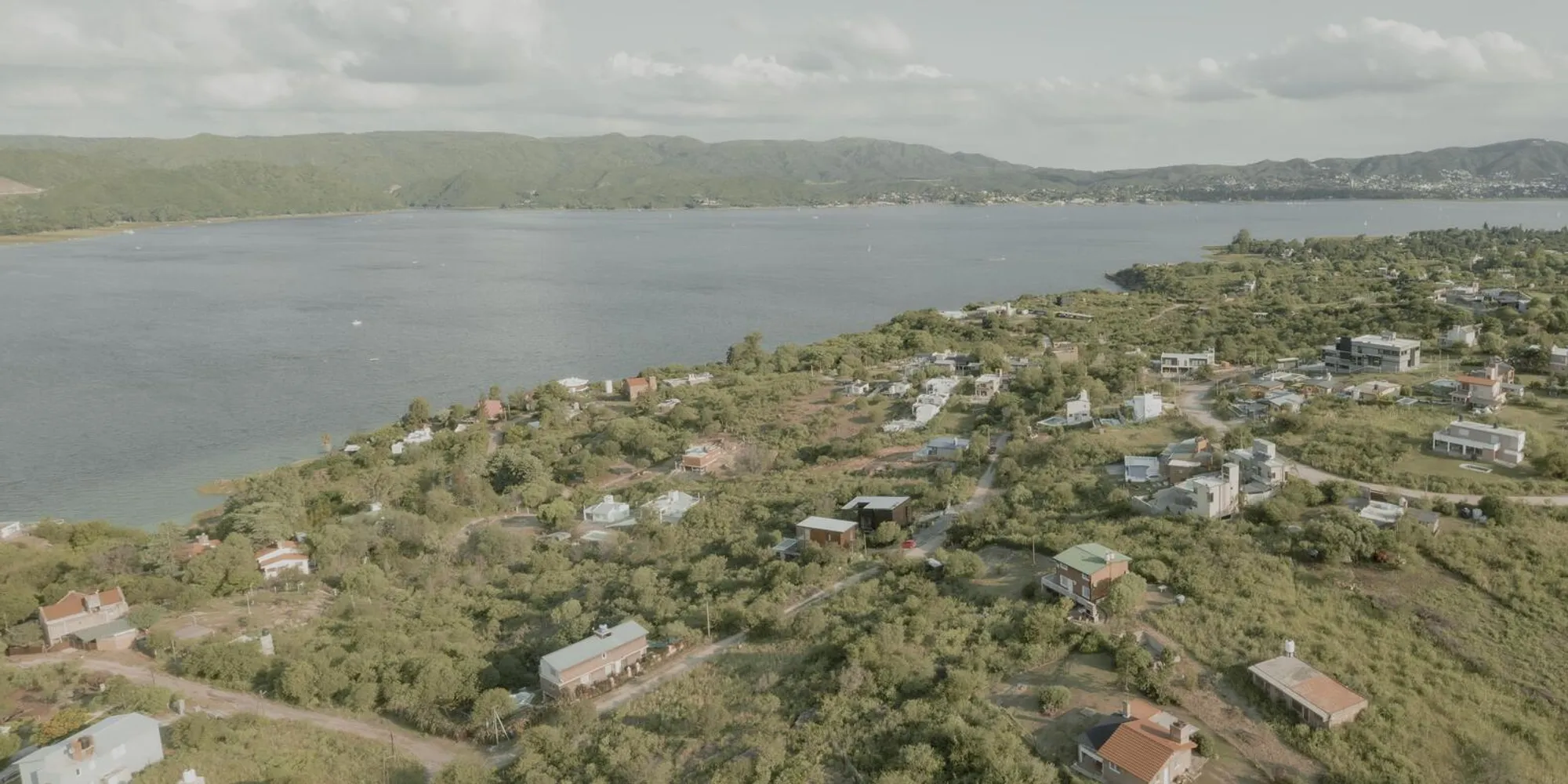
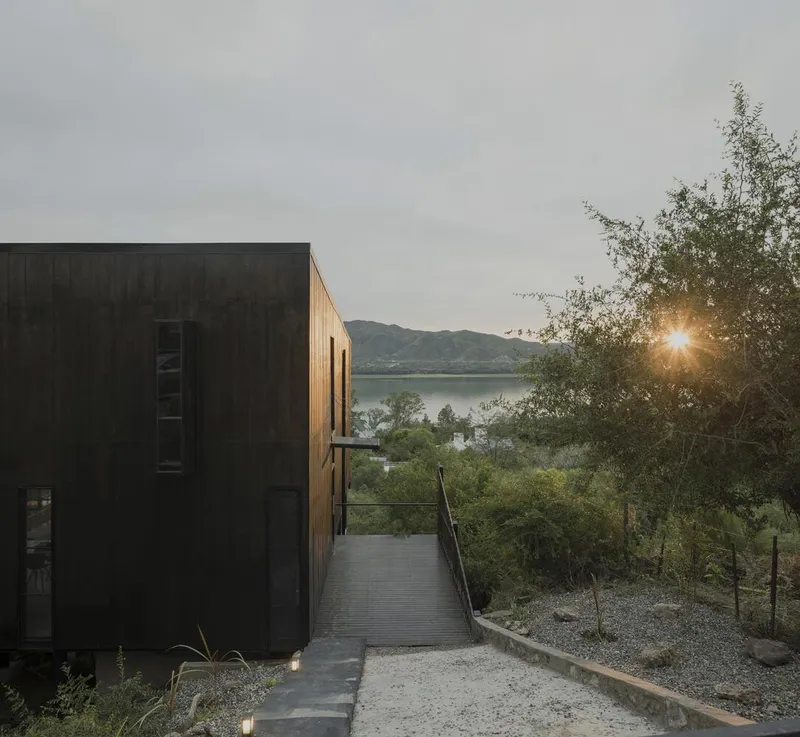
The Solar House by Pablo Senmartin redefines the relationship between architecture and nature, focusing not merely on solid construction but on the interplay of voids, light, and environmental integration. Located in the pristine landscape of Villa Parque Síquiman, this 250 m² residence is designed for a family seeking harmony with the surrounding natural ravine, abundant forests, and panoramic views of Lake San Roque.
Architecture Concept: Absence as Presence
Instead of emphasizing the physical form of the house, Solar House explores the spaces left by absence. The architecture encourages occupants to engage with the voids, allowing human presence to complete the spatial experience. By manipulating light, shadow, and reflection, the house becomes a living canvas that evolves with time, weather, and human activity.
This approach results in an architecture that is minimalist, sensitive, and environmentally conscious, aligning with contemporary sustainable design principles and LEED v4 certification criteria.
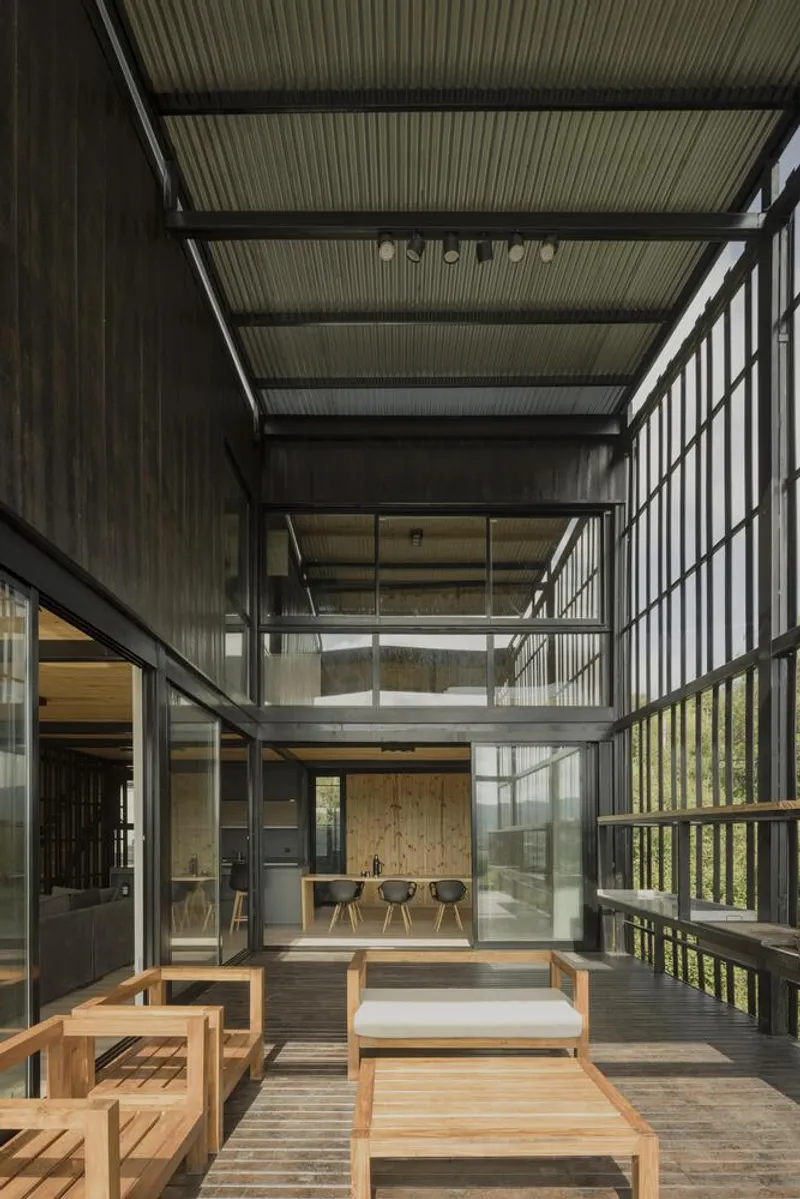

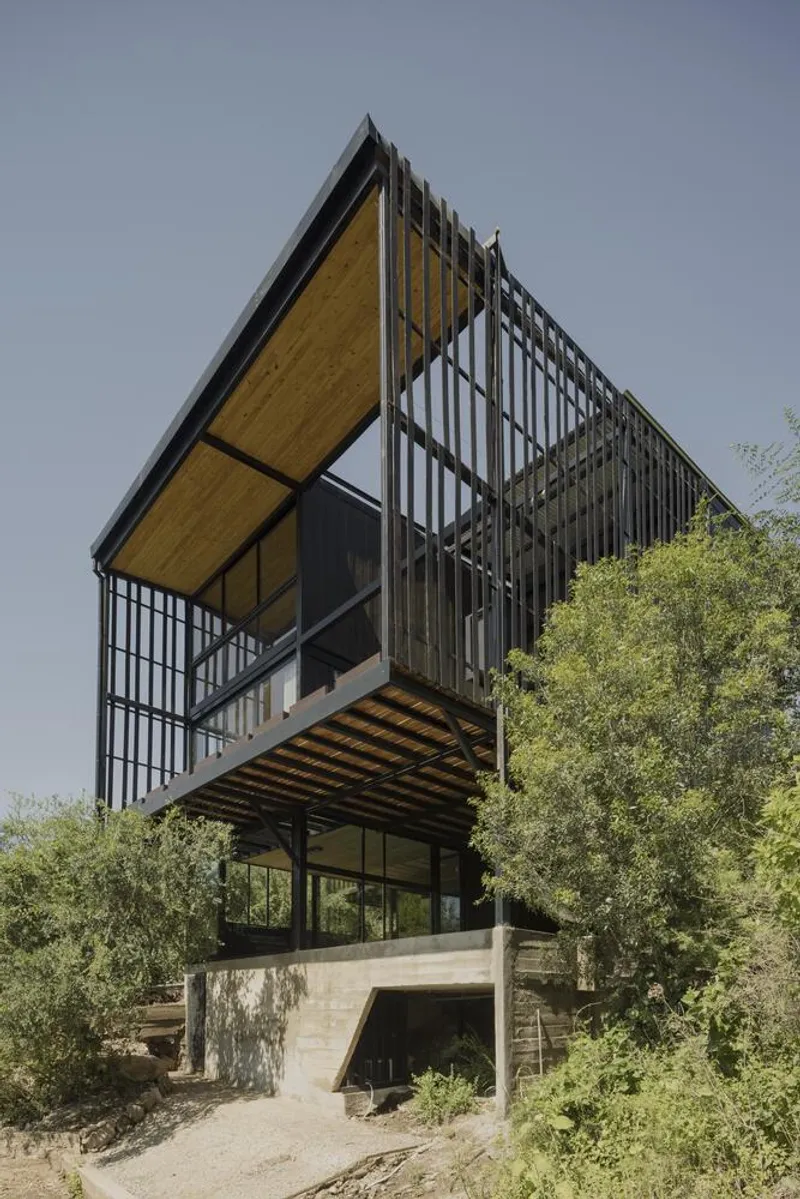
Site Integration and Environmental Sensitivity
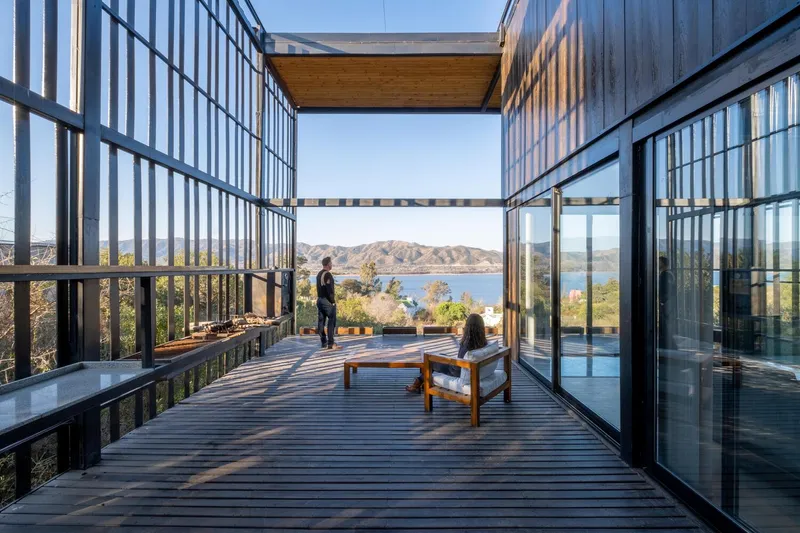
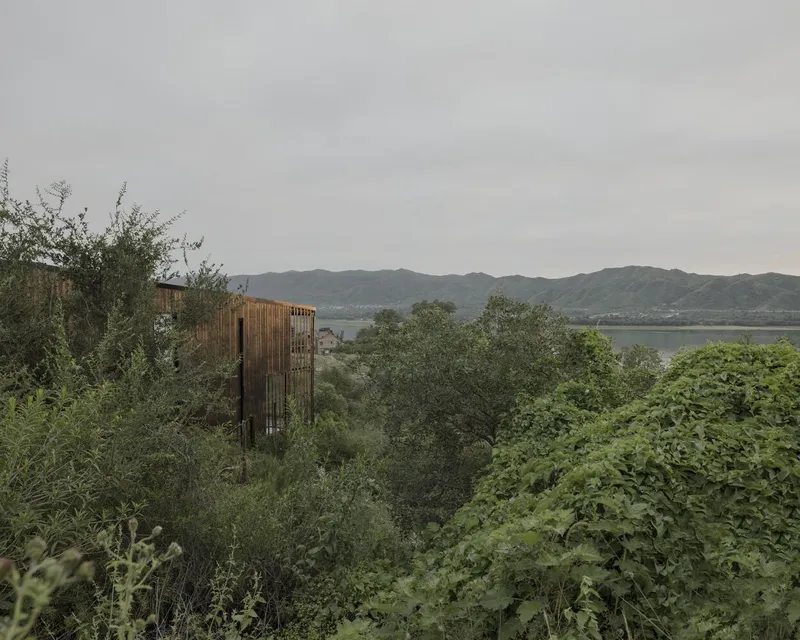
The house sits within a natural ravine approximately 10 meters deep, acting as a natural drainage system for the surrounding land. The rocky terrain and lush vegetation serve as a natural buffer, absorbing water and moderating temperature fluctuations. From the street, the house remains visually discreet, while inside, large openings frame dynamic views of the lake and forest, creating a direct connection with nature.
Sustainability is integral to the design. The house leverages passive environmental strategies, including:
- The ravine cavity as a natural thermal buffer
- Forest vegetation acting as a double protective façade
- Controlled solar energy with a motorized mobile roof
- Rainwater collection for pools and irrigation
- Gray water treatment through a biodigester system
These strategies ensure minimal environmental impact while enhancing the quality of life for the residents.
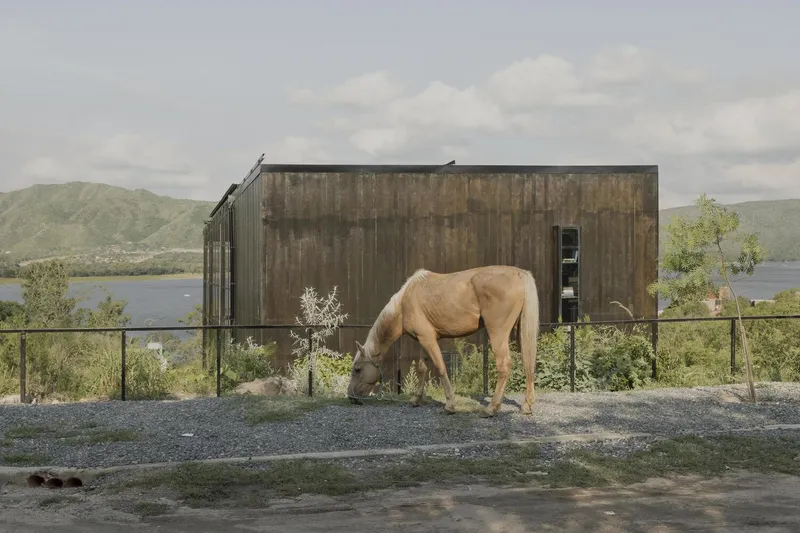
Structural Design: Floating Steel Box
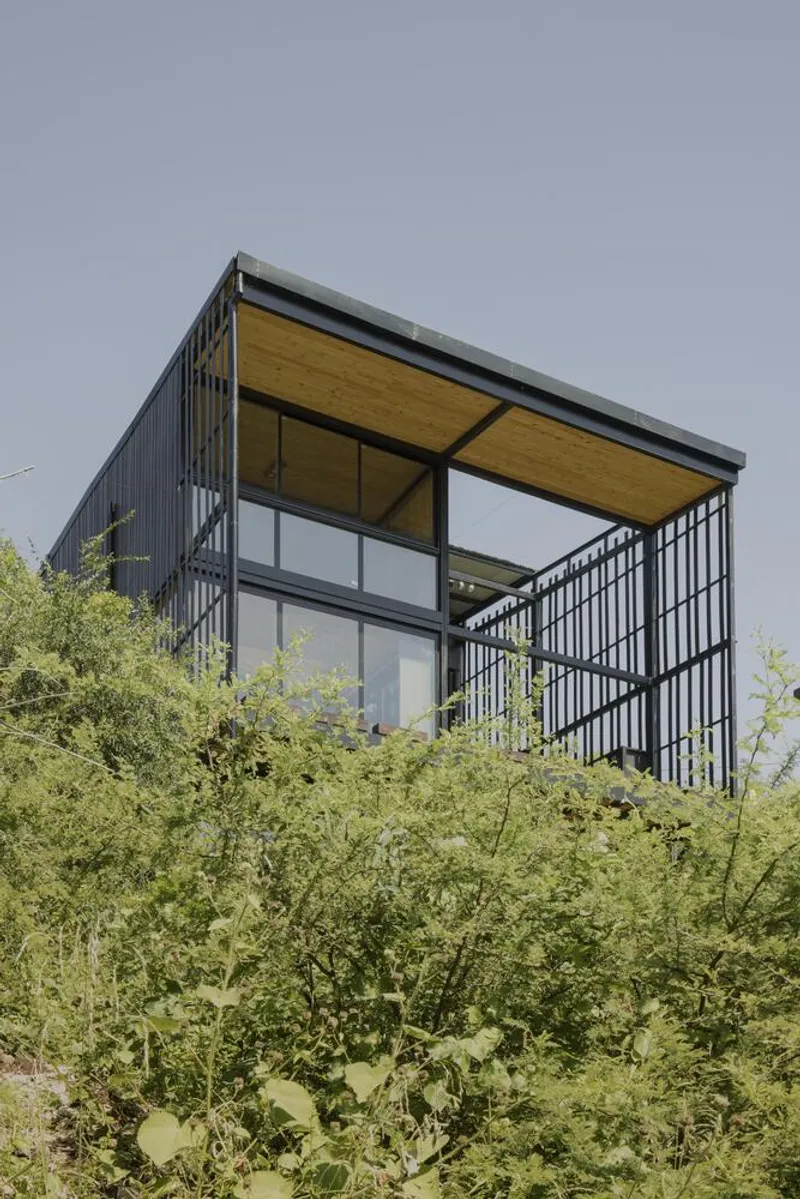
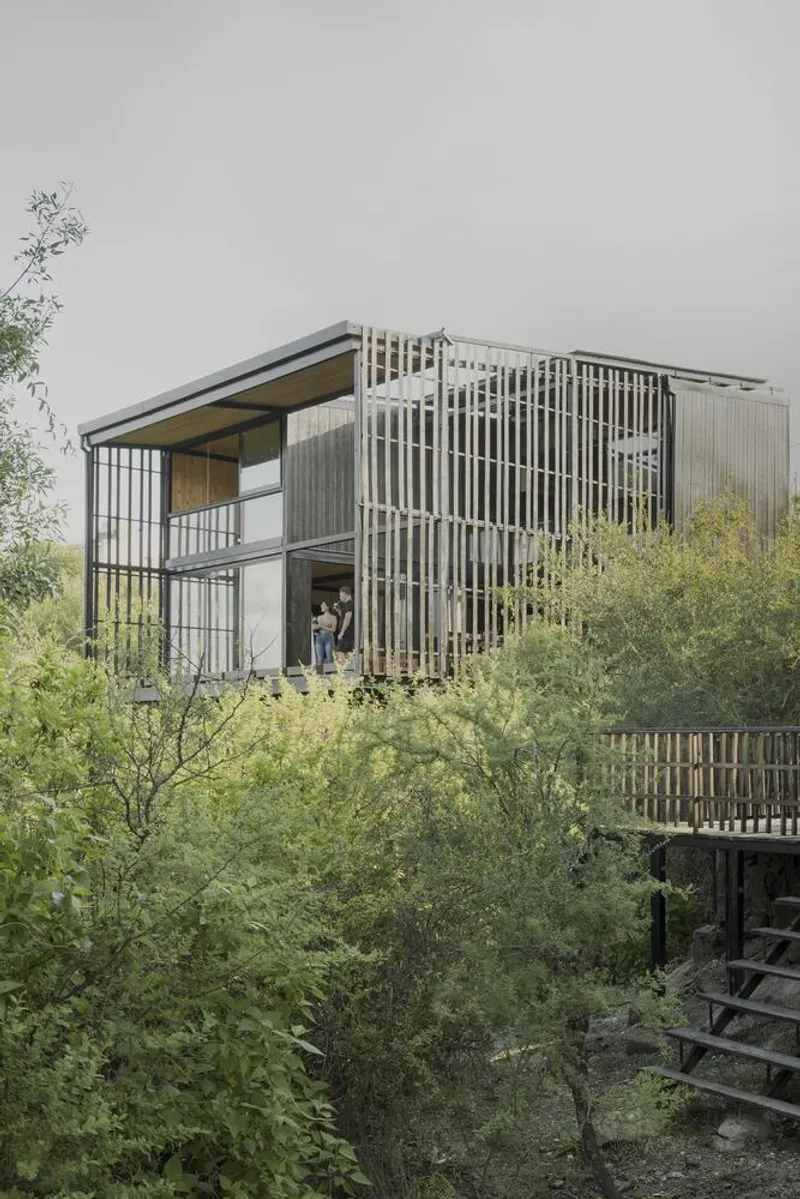
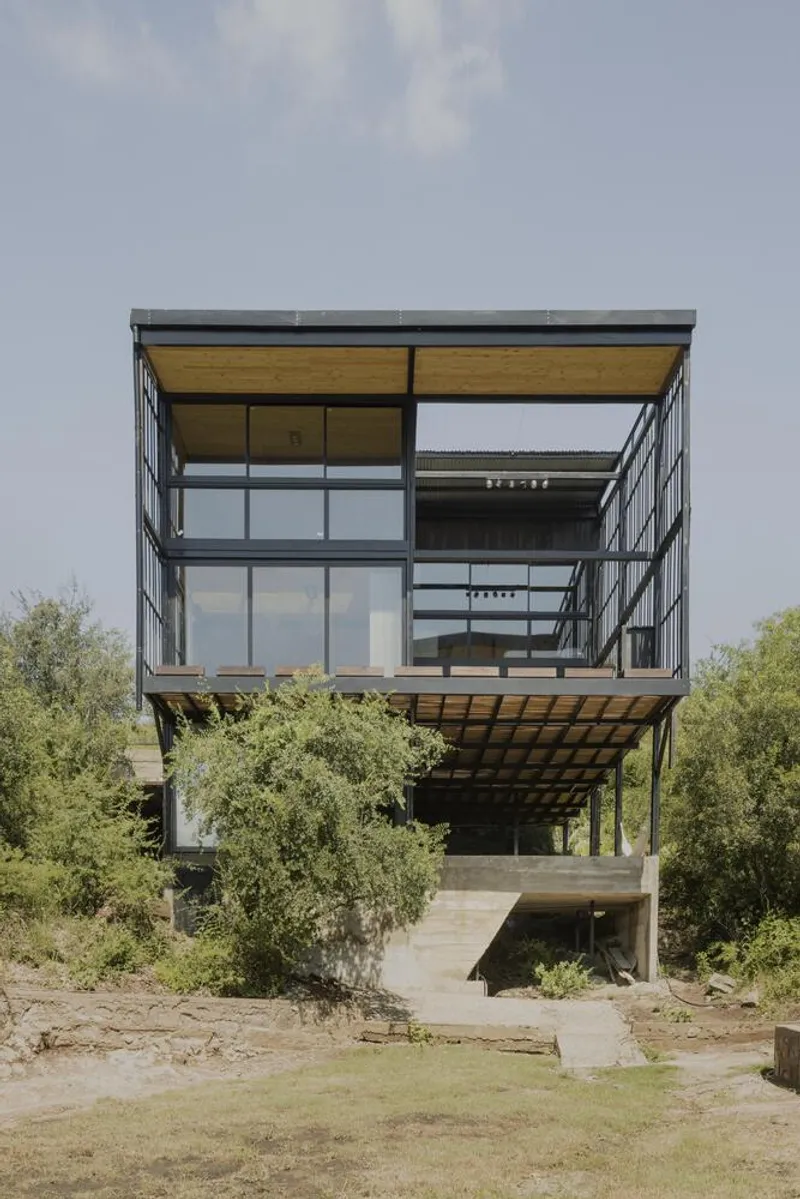
The central architectural feature of Solar House is a floating, inclined steel box that extends over the ravine and integrates seamlessly with the surrounding terrain. Measuring 12 x 9 meters in plan and 6 meters in height, the modular structure is based on a 4.50 x 4.50 m grid, creating a flexible interior layout for social and private areas.
The steel box allows a 3-meter cantilever towards the park, giving the impression of the house floating above the landscape. Reinforced concrete partitions in the lower basement support the cantilever, accommodating swimming pools, technical rooms, and storage areas. This lightweight, modular approach ensures efficient use of materials while maintaining structural stability.
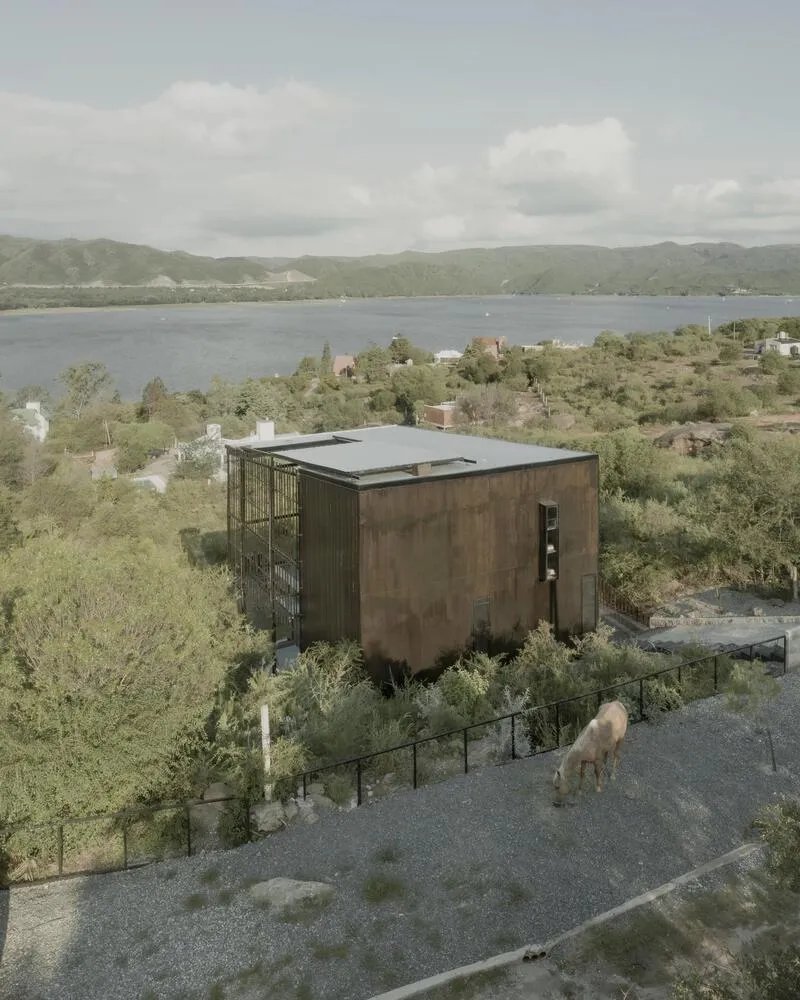
Interior Spaces: Fluidity and Connection
From the street, visitors descend three meters to an intermediate access level, where a viewpoint esplanade connects them to the natural surroundings. The interior social space, characterized by an L-shaped layout, integrates living, dining, and kitchen areas while surrounding a semi-covered central void.
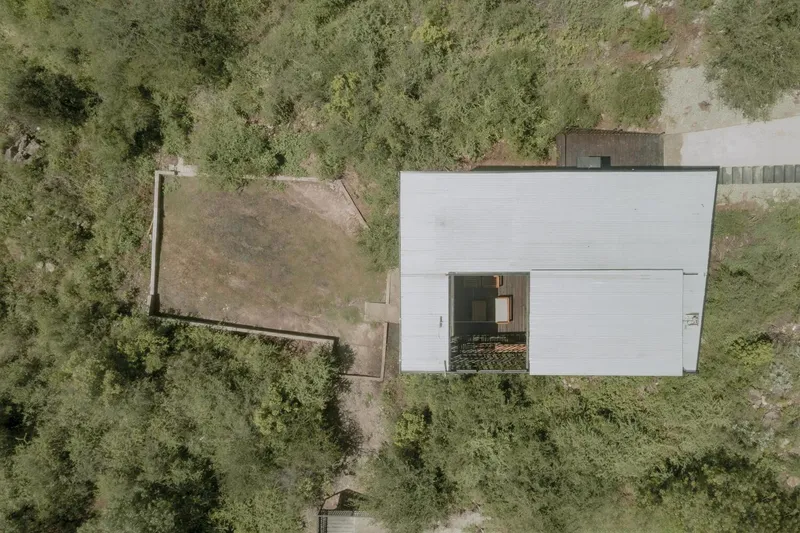
The mobile roof enables adaptable climate control, modulating sunlight exposure according to seasonal needs. This interstitial space functions as both a thermal and visual mediator, creating changing atmospheres that respond to solar radiation and human activity.
The intermediate level bridges the lower basement, pool, and patio area with the upper rest and study zones. The central kitchen island serves as a multifunctional hub, supporting diverse uses and seasonal adaptations.
Water and Energy Management
Solar House prioritizes water conservation and energy efficiency. Rainwater collected from the sloping roof feeds integrated pools, which help regulate indoor temperature and humidity. Gray water is treated and reused for irrigation of the orchard and surrounding forest.
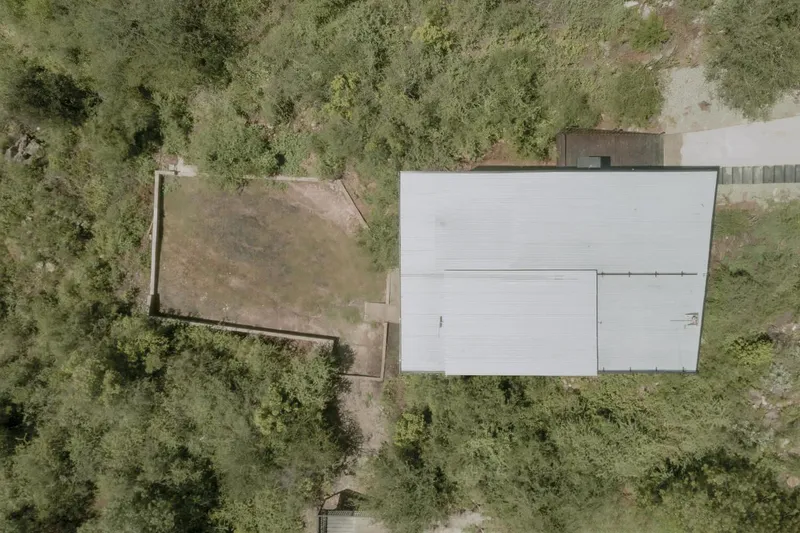
The motorized roof system optimizes solar gain, providing warmth in winter and shading in summer. This climate-responsive design reduces energy consumption while enhancing interior comfort and sustainability.
Materiality: Local and Low-Impact Choices
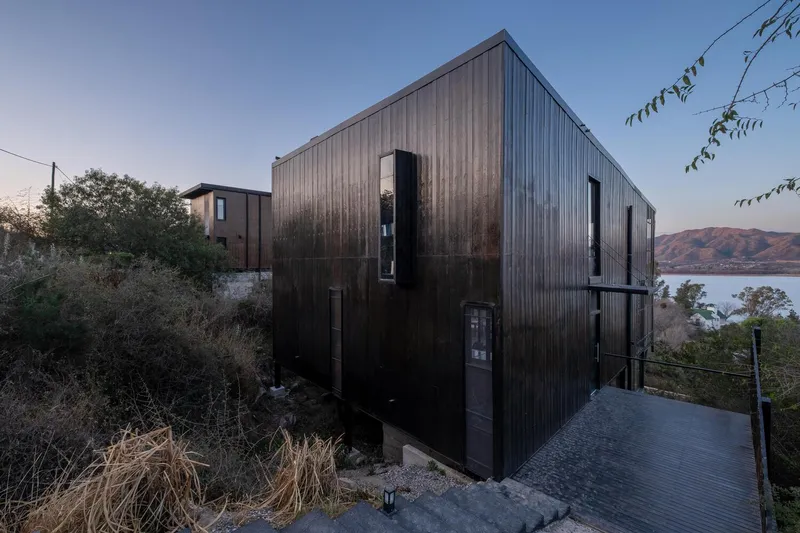
The design emphasizes the use of local, lightweight, and low-cost materials. Exterior facades facing the street are clad in fiber cement panels with dark wood tones, blending seamlessly with the forest. Inside, tongue-and-groove elliotis pine wood complements the exposed steel structure, creating a warm yet minimal interior.
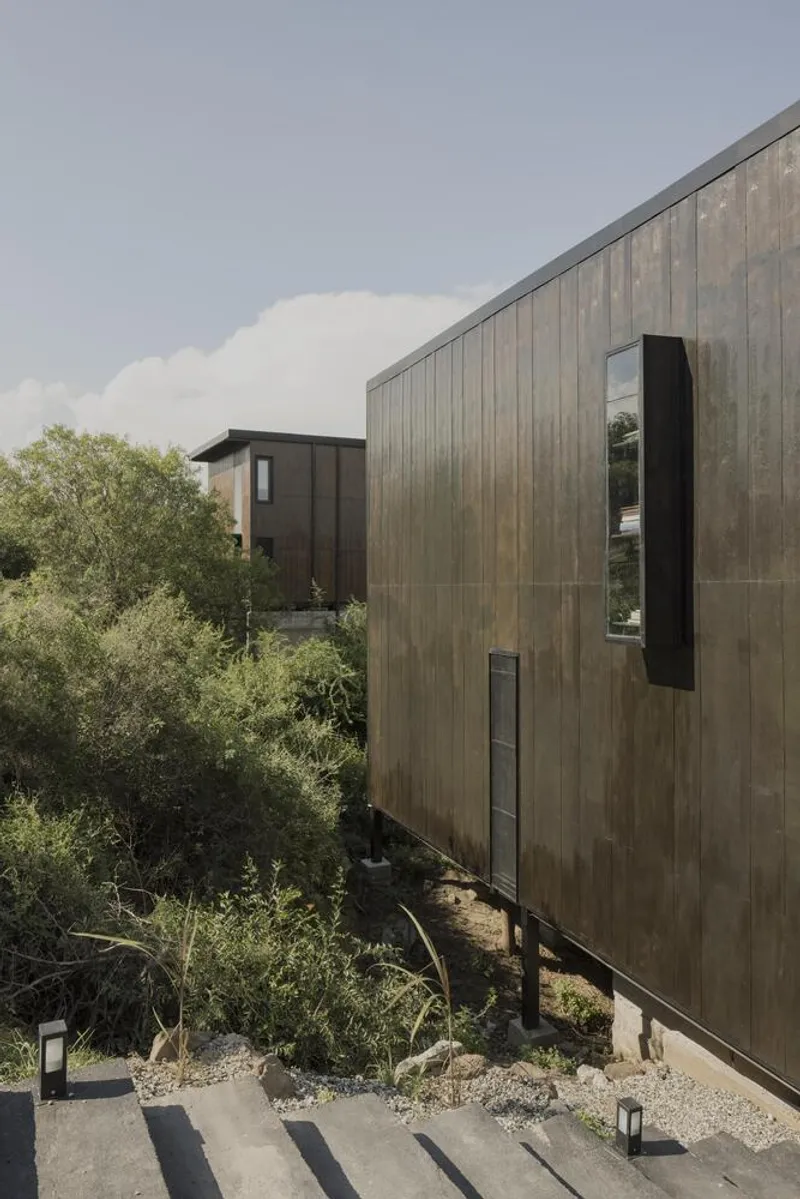
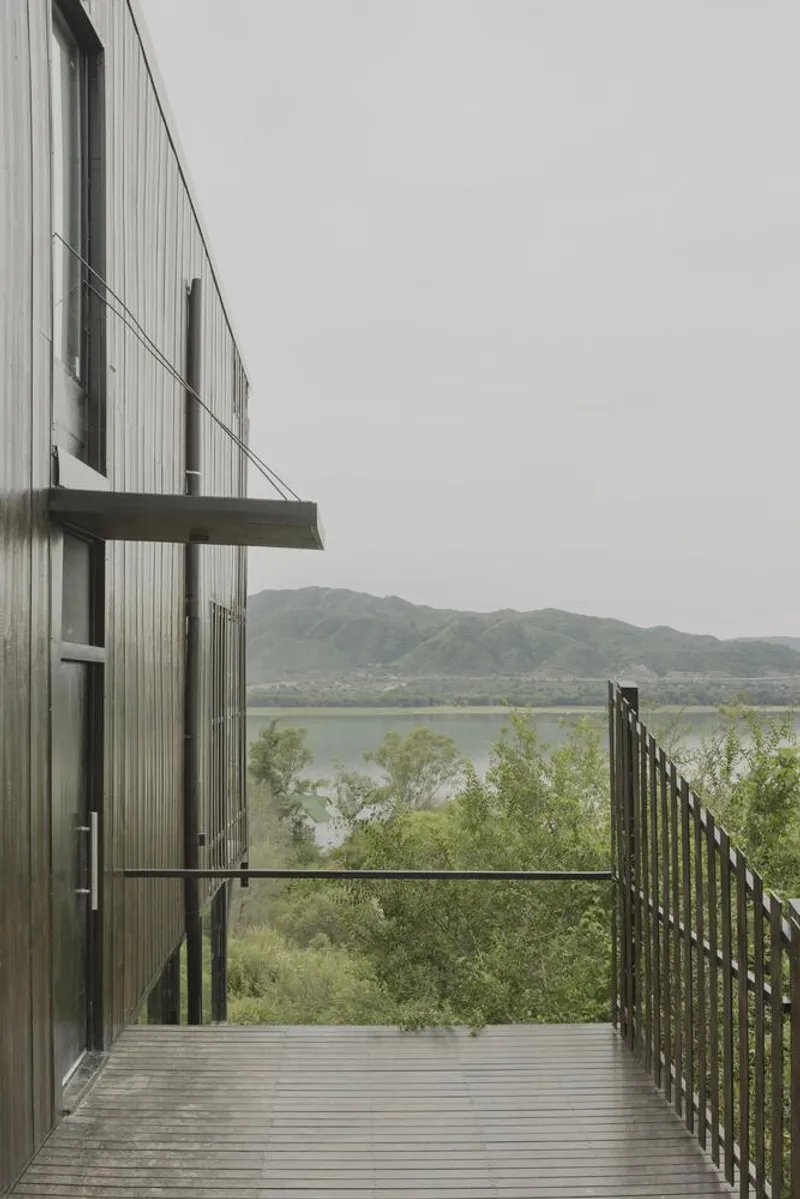
Reused steel profiles from demolition projects form the main structure, reflecting a commitment to circular construction and sustainable architecture. The combination of natural materials, modular design, and minimal environmental intervention makes Solar House a model of eco-conscious residential design.
Solar House by Pablo Senmartin exemplifies a new paradigm in residential architecture, where absence becomes presence, and sustainability shapes every design decision. By integrating environmental sensitivity, modular structure, and adaptable spaces, the house not only respects its surroundings but also creates a living, evolving dialogue between humans, architecture, and nature.
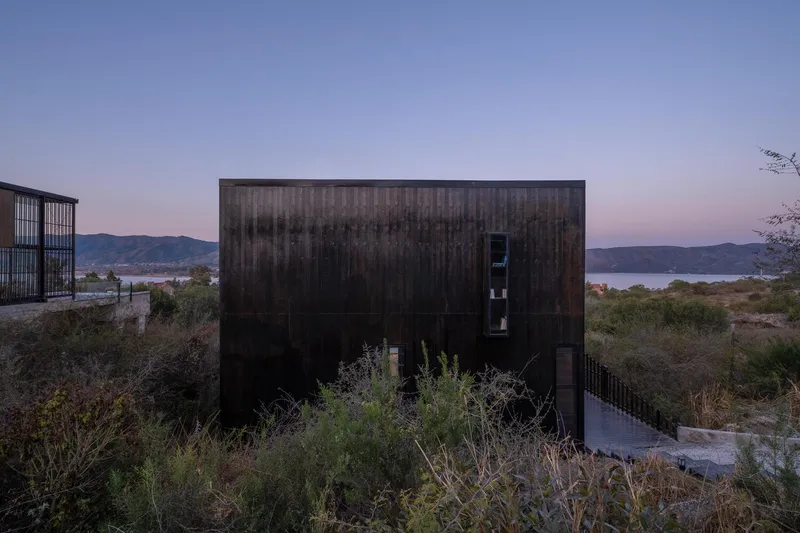
All photographs are works of Andrés Dominguez, Federico Cairoli




Popular Articles
Popular articles from the community


Co-Life: Senior Housing Design That Reconnects Older Adults With the City
Co-Life reimagines senior housing design through healing gardens, shared streets, workshops, and a sustainable community across generations.
EW PARK: Sustainable Architecture Reimagines the Future of Urban Parking
EW PARK reimagines city parking as a modular wooden tower combining automation, solar energy, electric mobility, and adaptable urban design.

The Ocean Hive: Sustainable Architecture for a Self-Sufficient Civilization at Sea
The Ocean Hive imagines sustainable architecture at sea, where modular habitats, algae, wave power and ocean waste sustain a growing colony.

Conexión: Biophilic Design Reimagines High-Rise Living in Hong Kong
Conexión reimagines high-rise living in Hong Kong through biophilic design, green facades, shared spaces, daylight, water and nature within.


Similar Reads
You might also enjoy these articles


Hodi-Mandai Geram
Project Function: Preservation and revitalization of the Intangible heritage and socio-spatial identity of the Hodi by Housing, Cultural Memory Center, Sacred Grove, landscape, local tourism economy


Olio Towers: A Mid-Rise for Performers That Fuses Housing, Rehearsal, and Stage
Located blocks from Houston's Theater District, this modular tower stacks living units around a central performance atrium.

Oasis: Modular Green Housing Carved into Dhaka's Urban Fabric
A shortlisted Plugin Housing entry reclaims unauthorized settlements in Dhaka with stepped concrete volumes, green roofs, and ventilation-driven design.

Black Hole: A Floating Megastructure for the Post-Physical Era
Emiliano Mazzarotto envisions a spherical, self-scaling arena where e-sports, digital hotels, and holographic stadiums replace traditional public space.


Explore Solar Responsive Competitions
Discover active competitions in this discipline



Challenge to reimagine the Iron Throne


Photograph architecture without architects


Illustrate the lost glory of Angkor Wat - Render Challenge


Design challenge to reuse E-waste
Comments (0)
Please login or sign up to add comments
No comments yet. Be the first to comment!