
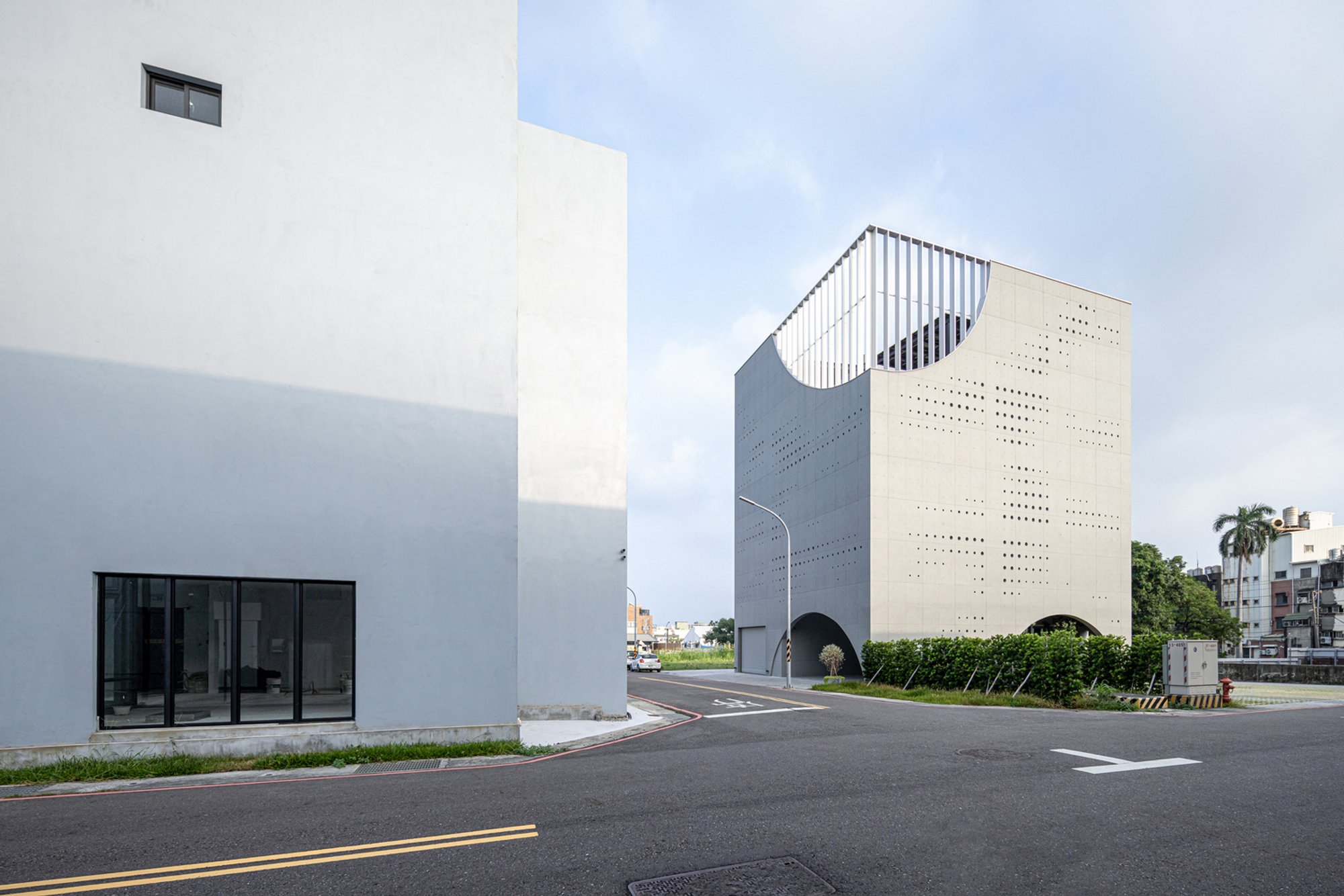
Solar Locus by air matters + 16 arch studio: A “Container of Light” in Tainan, Taiwan
"Solar Locus by air matters + 16 arch studio in Tainan blends concrete, glass, and light for sustainable architecture excellence."

Reconnecting Architecture with Nature
Solar Locus serves as the corporate headquarters for a solar energy company in Taiwan, embodying a philosophy that bridges architecture and the natural world. At its core, the design takes light as the primary medium, creating a spatial experience where occupants can perceive the subtle interplay of shadow and illumination. Described by the architects as a “Container of Light,” the building encourages a reconnection with nature and the fundamental rhythms of the environment.
Monumental Form and Urban Presence
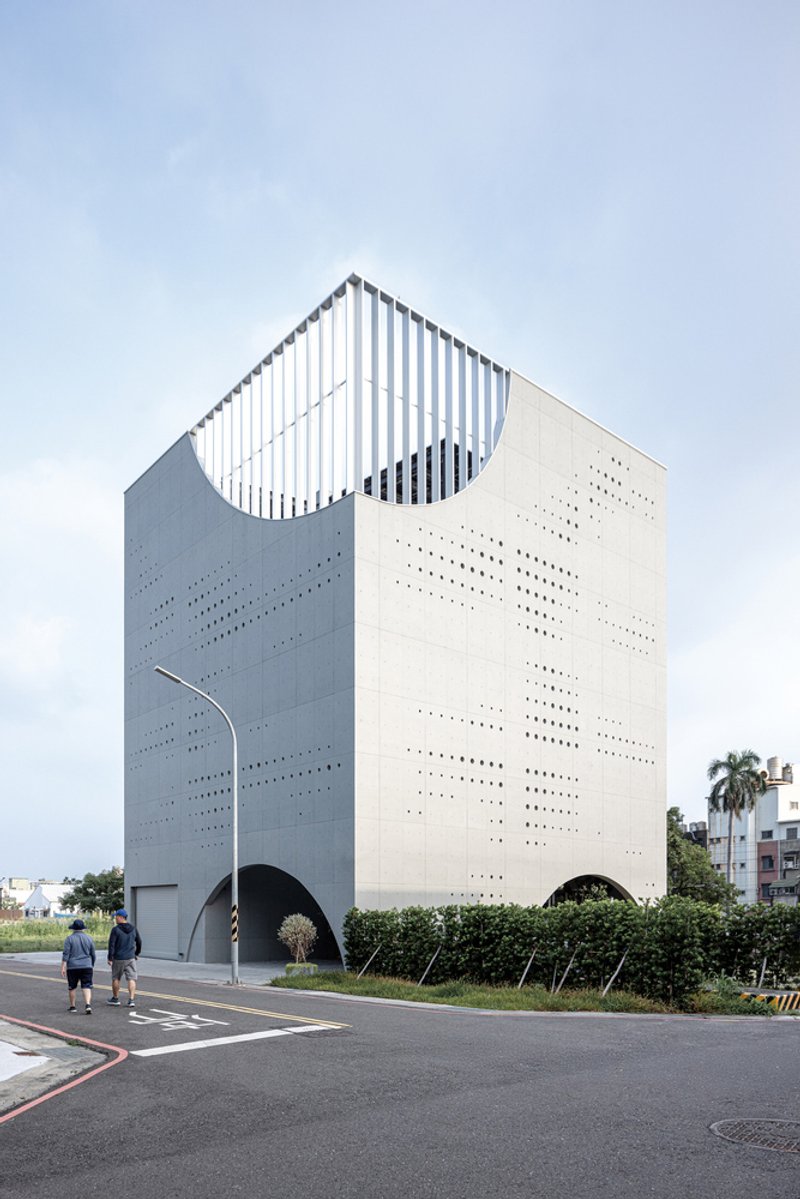
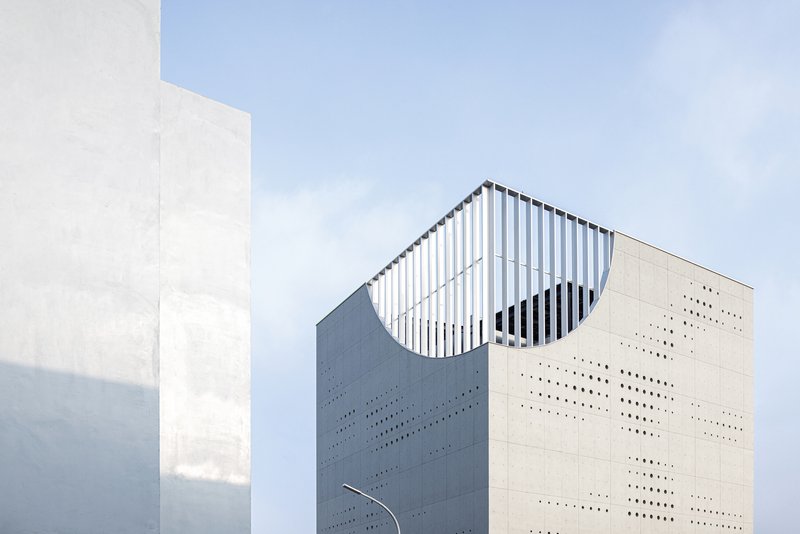
This five-story headquarters is conceived as a monumental cube anchoring itself within Tainan’s urban landscape. The concrete exterior presents a solid, almost hermetic façade, which conceals a delicate glass interior. This contrast between mass and transparency allows light to penetrate the building while creating a dialogue between weight and lightness.
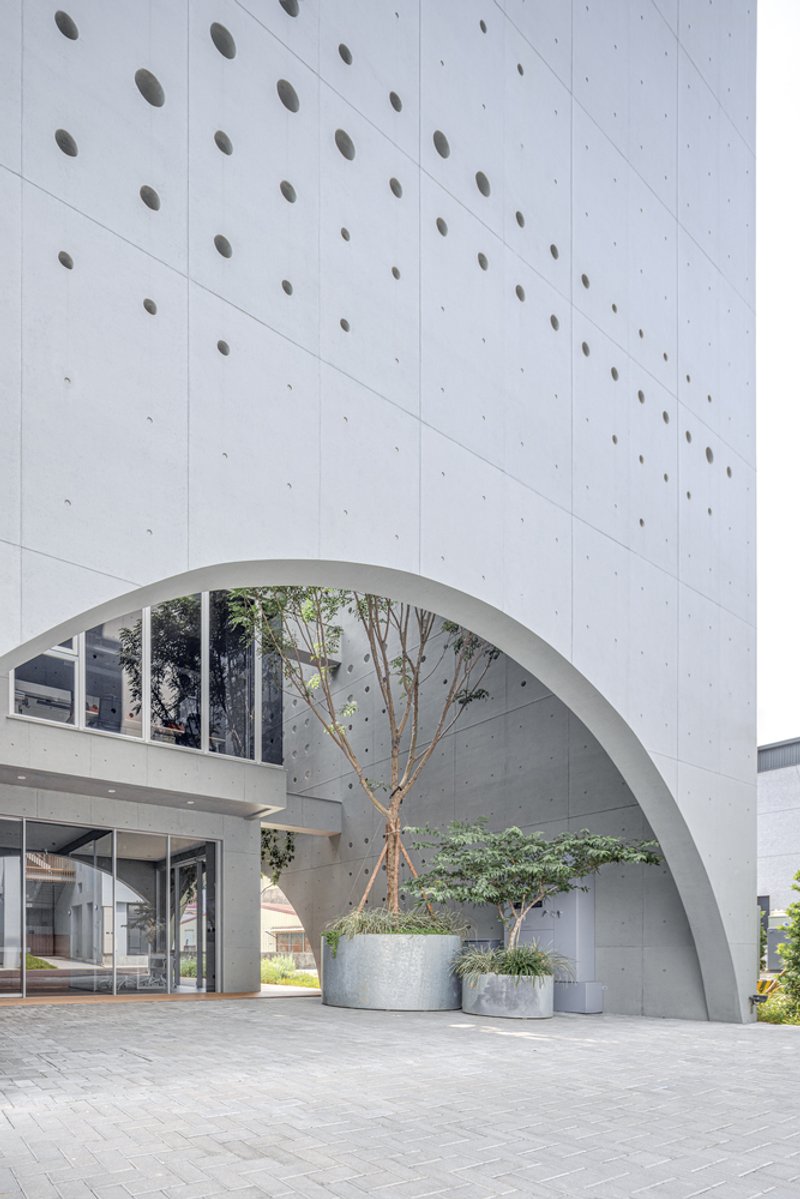
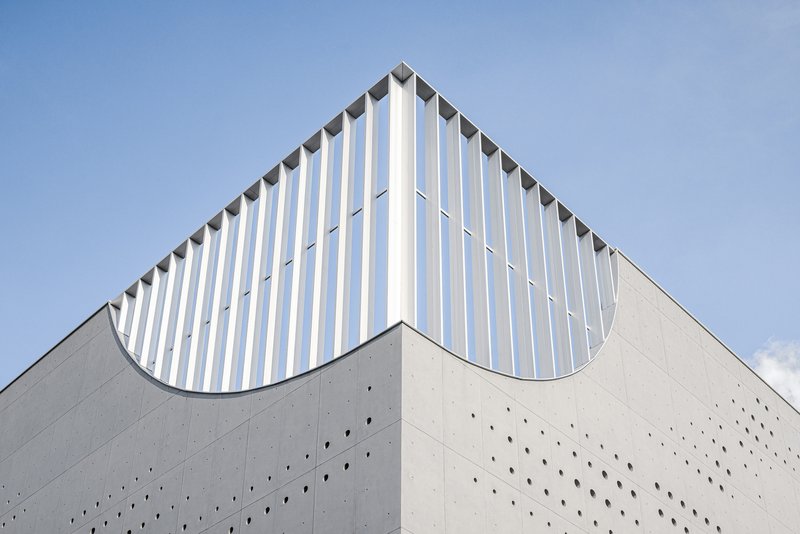
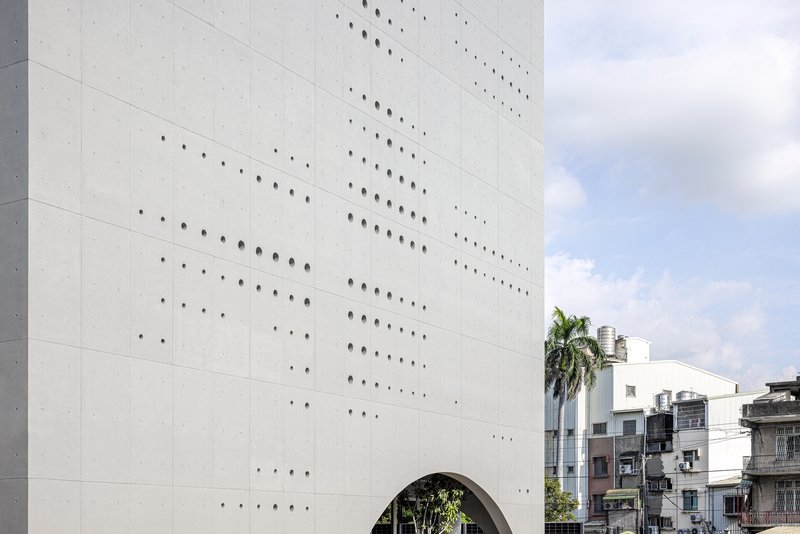
The façade curves subtly, evoking the trajectory of the sun from sunrise to sunset, symbolizing celestial movement within a static urban context. Ground-level arches open to the front plaza and side garden, offering public and social interaction spaces, while upper-level openings orient toward the city, establishing a visual and spatial connection between the rooftop garden and the surrounding urban fabric.
Light, Air, and Vertical Spatiality
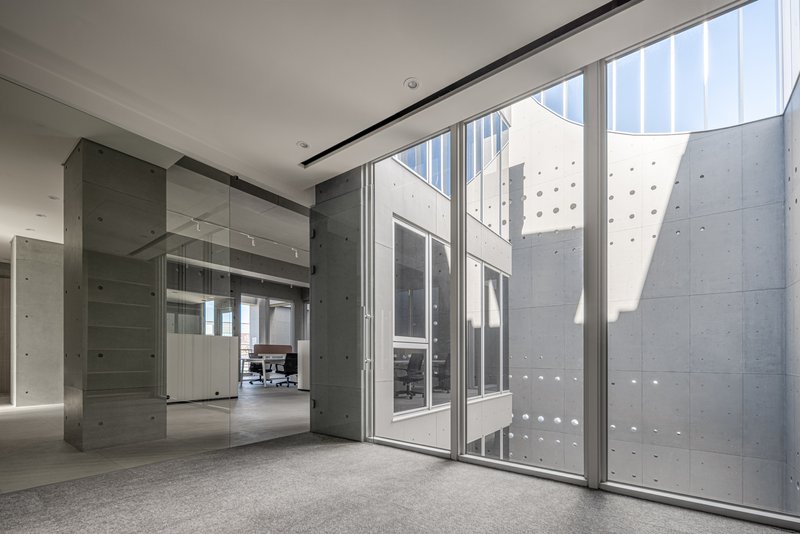
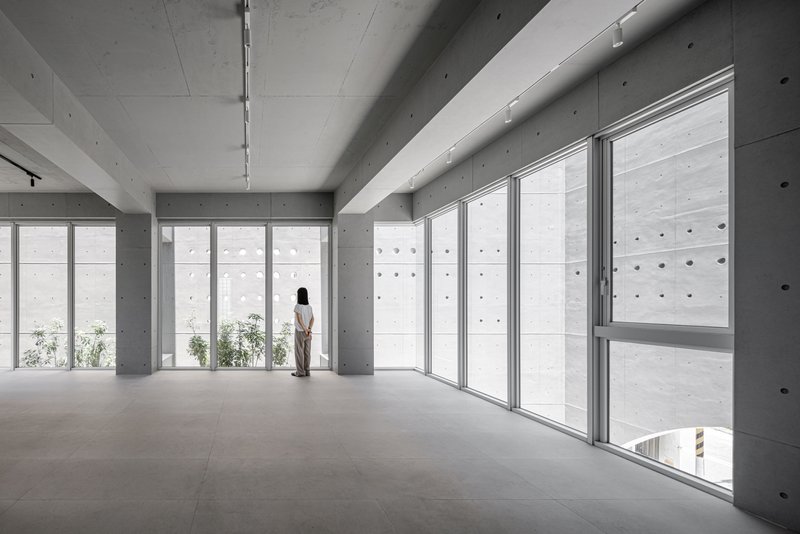
A permeable intermediary space exists between the concrete envelope and the glazed volume, facilitating the circulation of air and natural light throughout the building. This vertical atrium draws the eye upward, framing the sky as a living link to nature.
The inner wall, conceptualized as the building’s “Fifth Façade,” extends from ground to roof, acting as a canvas for light. Circular perforations of various sizes, aligned with the structural bolt grid of the fair-faced concrete, humanize the monolithic exterior and allow soft, diffused sunlight to filter into the interior. These fragmented beams of light enhance the sensory experience, connecting occupants with the temporal flow of natural phenomena.
Simplicity, Materiality, and Spatial Essence
Solar Locus balances mass and void with minimalist precision, emphasizing structural and material clarity. The architecture fosters perceptual engagement, guiding users to encounter spatial essence through everyday movement. The building’s play of light, shadow, and transparency subtly encourages reflection and connection with both self and environment.
Through this design, architecture transcends its physicality to become a spiritual presence—delicate yet profound, intimate yet awe-inspiring. Solar Locus embodies a philosophy of “Ordinary Monumentality,” merging sustainable solar energy innovation with an immersive, contemplative spatial experience.
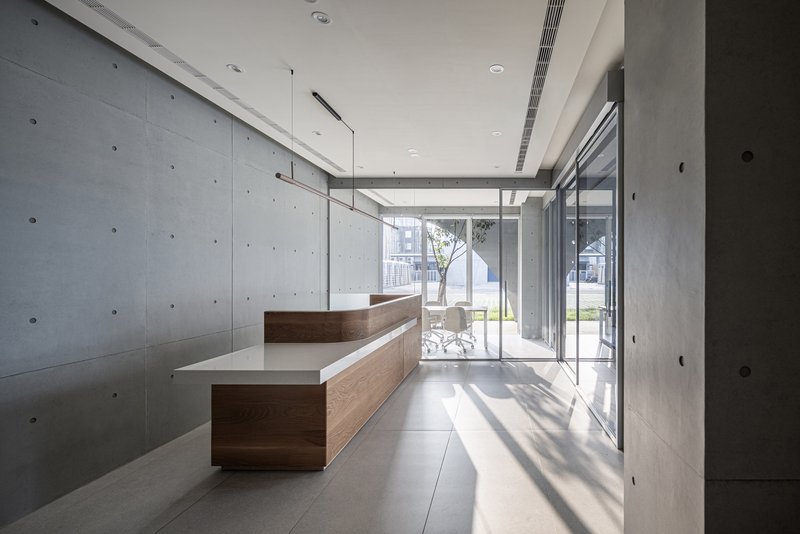
All Photographs are works of Yuchen Chao Photography




Popular Articles
Popular articles from the community

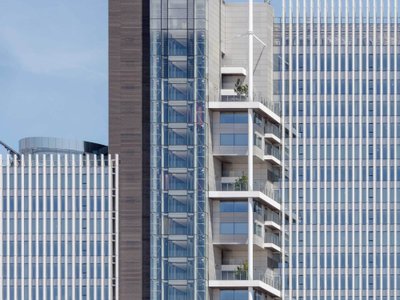
Cro&Co Architecture Builds a 150-Meter Tower on Top of a Seven-Lane Highway in La Défense
Trinity Tower reimagines the office high-rise as a bioclimatic organism threaded with terraces, trees, and public ground in Paris's business district.
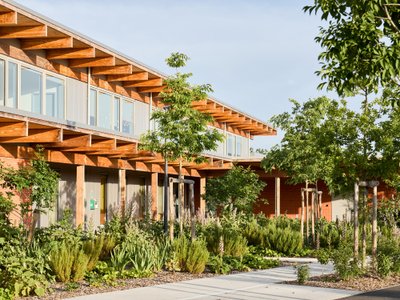
GGR Architectes Anchors a New Neighborhood in Frouzins with a Brick and Timber School Complex
A cruciform plan of terracotta brick and exposed wood frames four courtyards for 140 students outside Toulouse, France.
Non Architecture's Horrible Houses Competition Asks AI to Design the Ugliest Home Possible
A free global competition invited participants to use AI image generators to produce the most hideous house they could imagine.

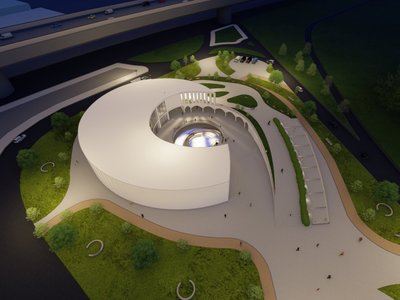
The Heart of Milano: Slow Fashion Architecture for a New Circular Culture
The Heart of Milano turns slow fashion architecture into a civic landmark where learning, making, sharing, and circular culture meets daily.

Similar Reads
You might also enjoy these articles

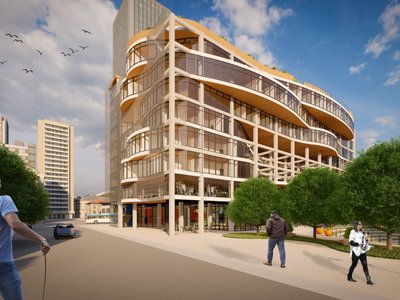
Olio Towers: A Mid-Rise for Performers That Fuses Housing, Rehearsal, and Stage
Located blocks from Houston's Theater District, this modular tower stacks living units around a central performance atrium.
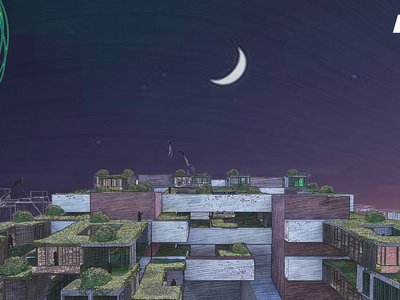
Oasis: Modular Green Housing Carved into Dhaka's Urban Fabric
A shortlisted Plugin Housing entry reclaims unauthorized settlements in Dhaka with stepped concrete volumes, green roofs, and ventilation-driven design.

Black Hole: A Floating Megastructure for the Post-Physical Era
Emiliano Mazzarotto envisions a spherical, self-scaling arena where e-sports, digital hotels, and holographic stadiums replace traditional public space.
Compact & Sustainable Living in Piraeus: A Four-Level Family Home Built Around Light and Air
A narrow townhouse in one of Greece's densest port cities uses a central atrium and passive strategies to house three generations under one roof.

Explore Architecture Competitions
Discover active competitions in this discipline




The International Standard for Design Portfolios


The Global Benchmark for Architecture Dissertation Awards


The Global Benchmark for Graduation Excellence


Challenge to reimagine the Iron Throne
Comments (0)
Please login or sign up to add comments
No comments yet. Be the first to comment!