
SOM LAND Hotel by RooMoo: A Sustainable Retreat Rooted in Nature and Local Craft
Sustainable boutique hotel in Shanghai blending adaptive reuse, natural materials, vernacular craftsmanship, and slow living within a serene countryside landscape.


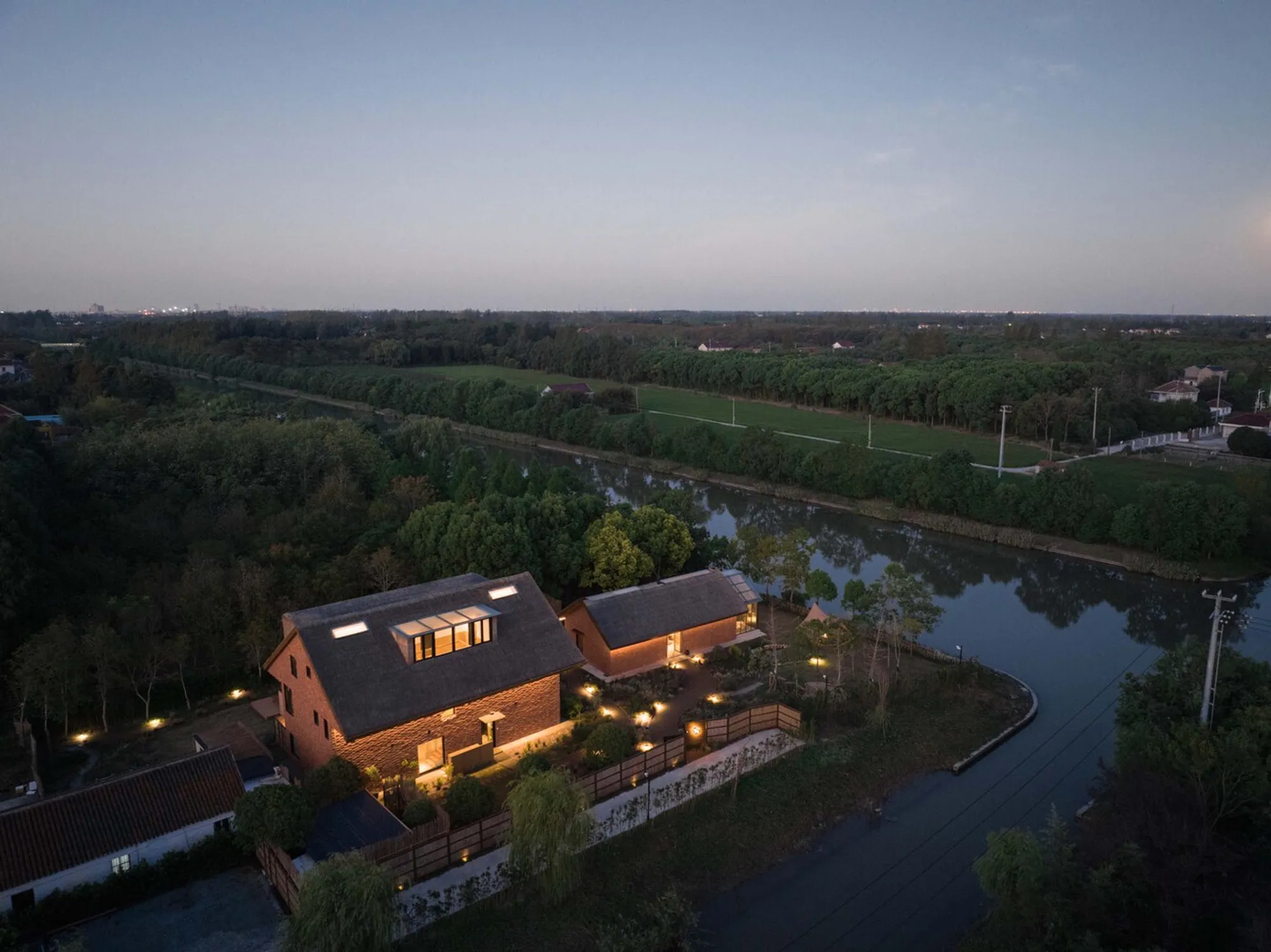
Located on the serene Chongming Island in Shanghai, the SOM LAND Hotel designed by RooMoo redefines sustainable hospitality through adaptive reuse, vernacular inspiration, and nature-driven design. Completed in 2022, this 632-square-meter boutique hostel embodies a slow-living philosophy, seamlessly blending architecture, landscape, and cultural identity into a tranquil resort experience.
Design Concept: Inspired by Nature and Slow Living
The name “SOM LAND” is derived from a traditional Chinese color: a warm green tone found in dappled tree shadows: symbolizing calmness, relaxation, and a slower pace of life. This concept becomes the foundation of the project, guiding both spatial planning and material selection. Surrounded by rivers, shelter forests, and rural landscapes, the hotel embraces its natural context while preserving the essence of local traditions.
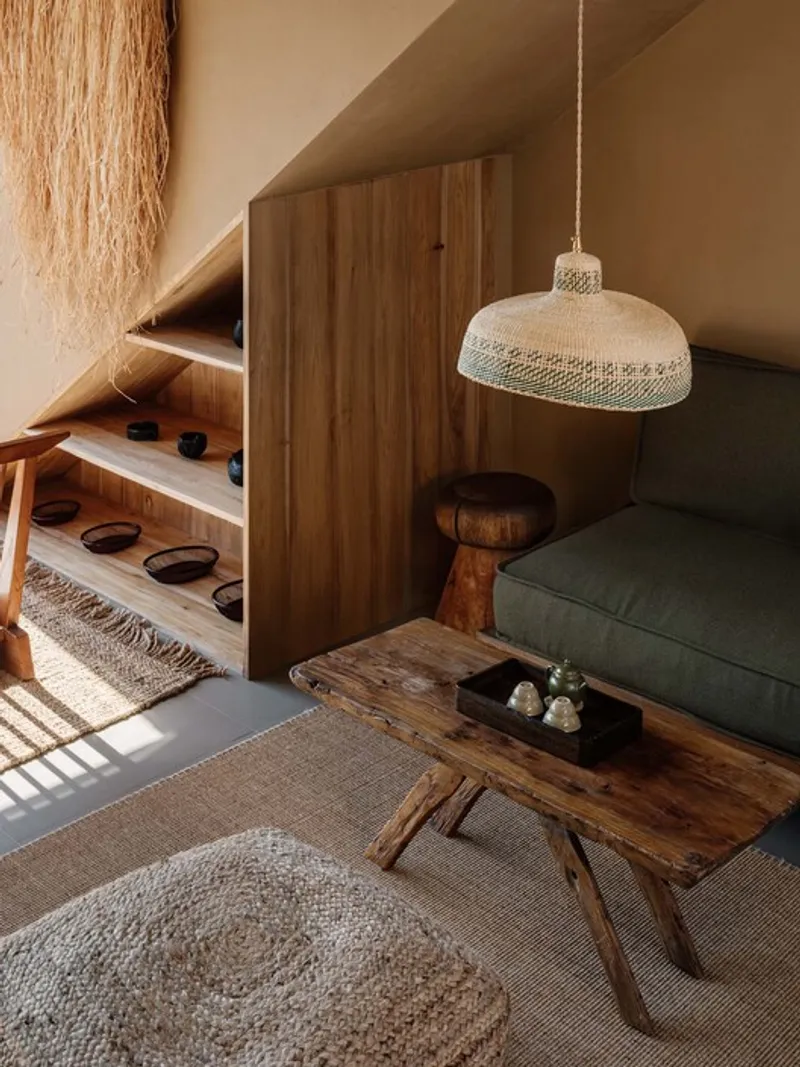
Adaptive Reuse and Spatial Transformation
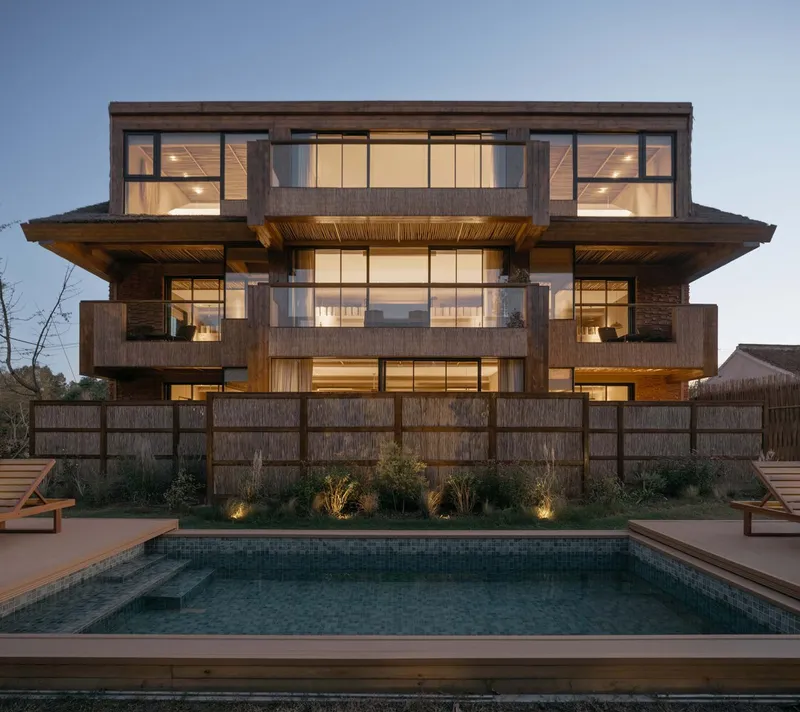
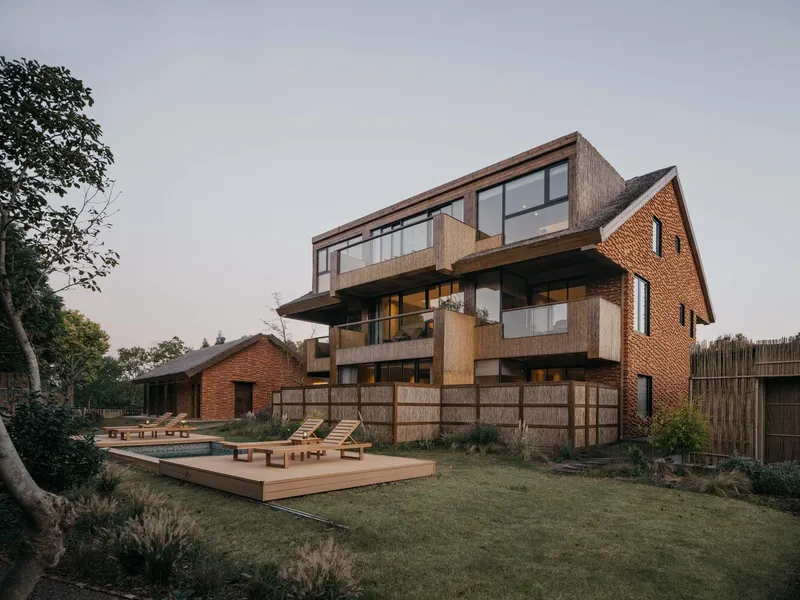
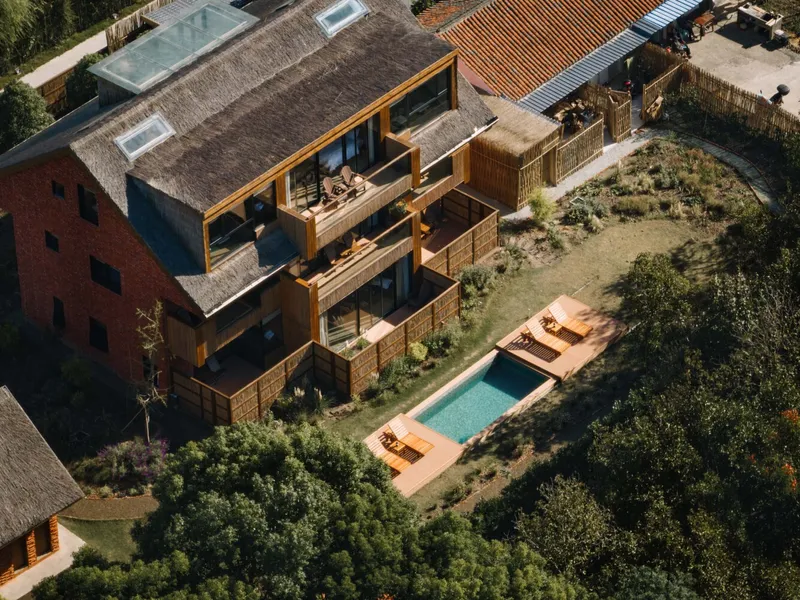
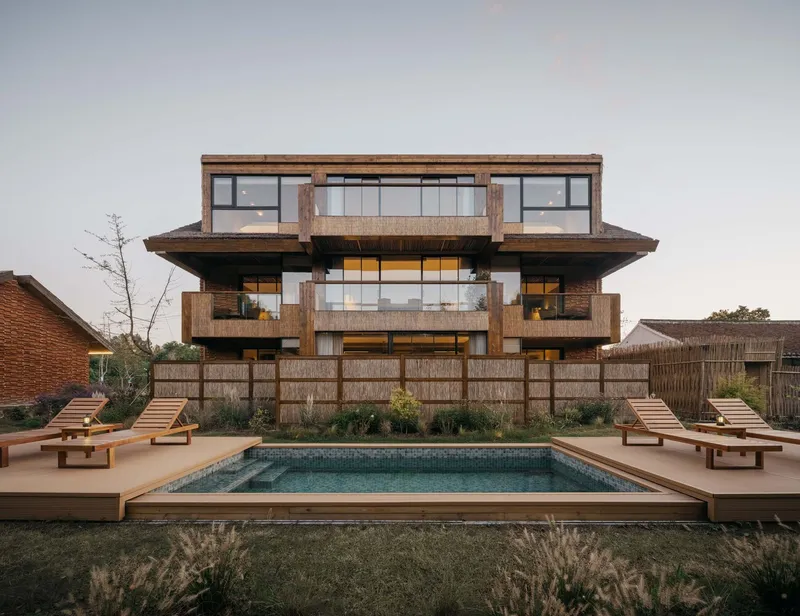
The project involves the renovation of two existing rural structures, carefully transformed to meet modern hospitality needs while respecting local building regulations. The original two-story residence is reimagined into a three-story accommodation building, optimizing vertical space without altering the original height constraints. Through strategic interventions such as repositioning staircases and reorganizing room layouts, the architects enhance circulation, maximize views, and introduce abundant natural light into interior spaces.
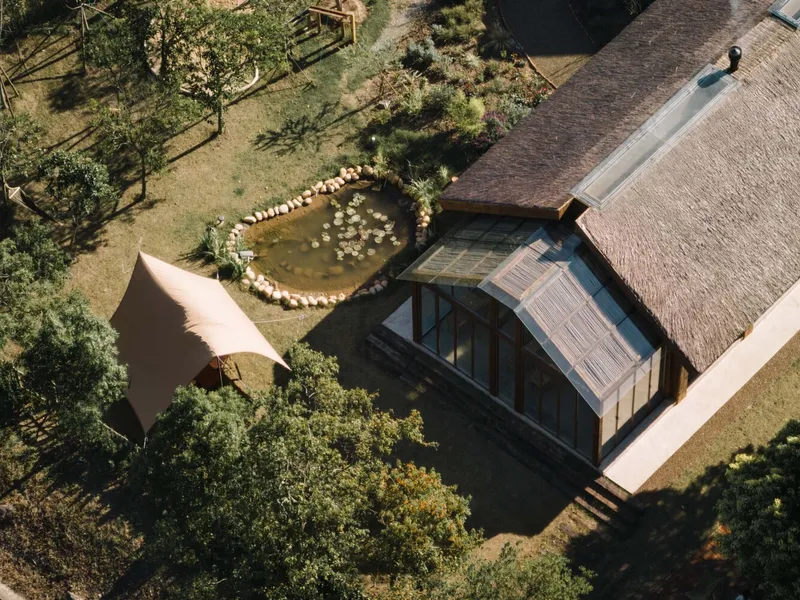
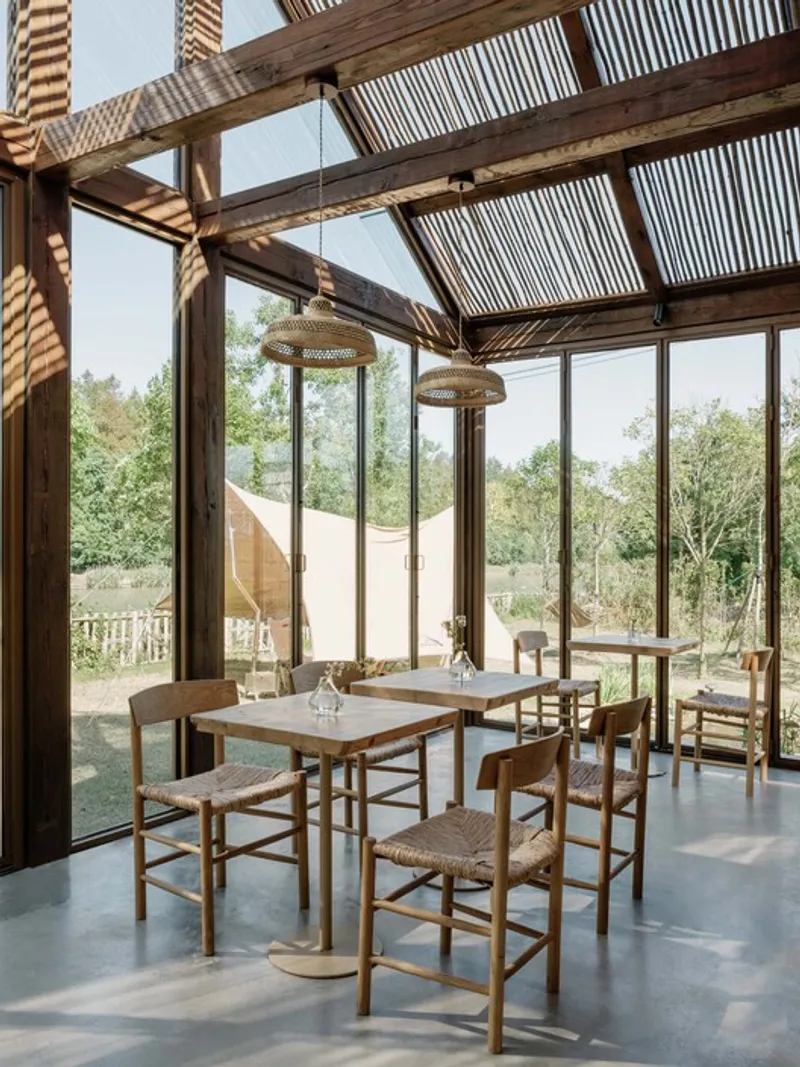
The former tool house is expanded and converted into a multifunctional reception and community hub. This flexible space accommodates dining, social gatherings, music events, and leisure activities, fostering interaction among guests. A combination of glass, wood framing, and foldable openings blurs indoor-outdoor boundaries, creating a fluid spatial experience enriched by daylight.
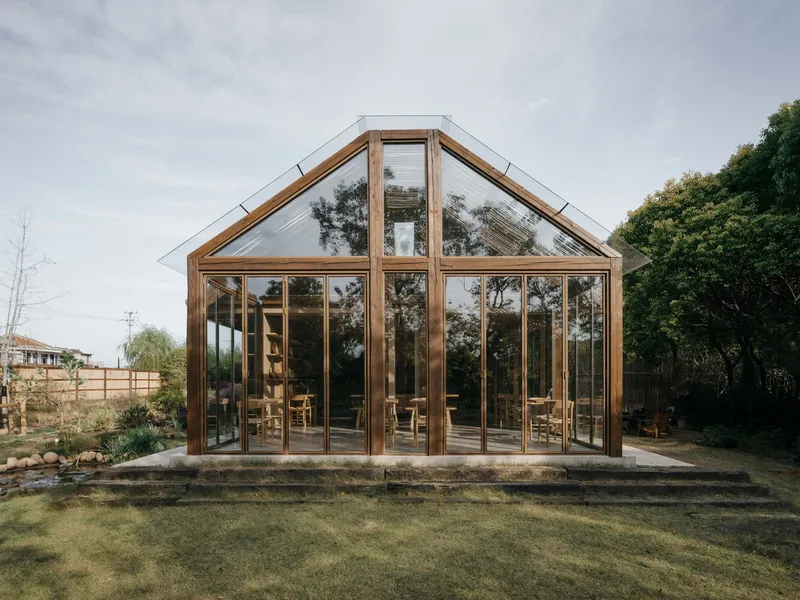
Material Strategy and Sustainable Design
Sustainability lies at the heart of SOM LAND Hotel. The design prioritizes locally sourced, recycled, and natural materials, reinforcing a low-impact construction approach. Reclaimed bricks, salvaged timber, natural clay finishes, and traditional fabrics from Chongming Island contribute to a tactile and authentic architectural language.
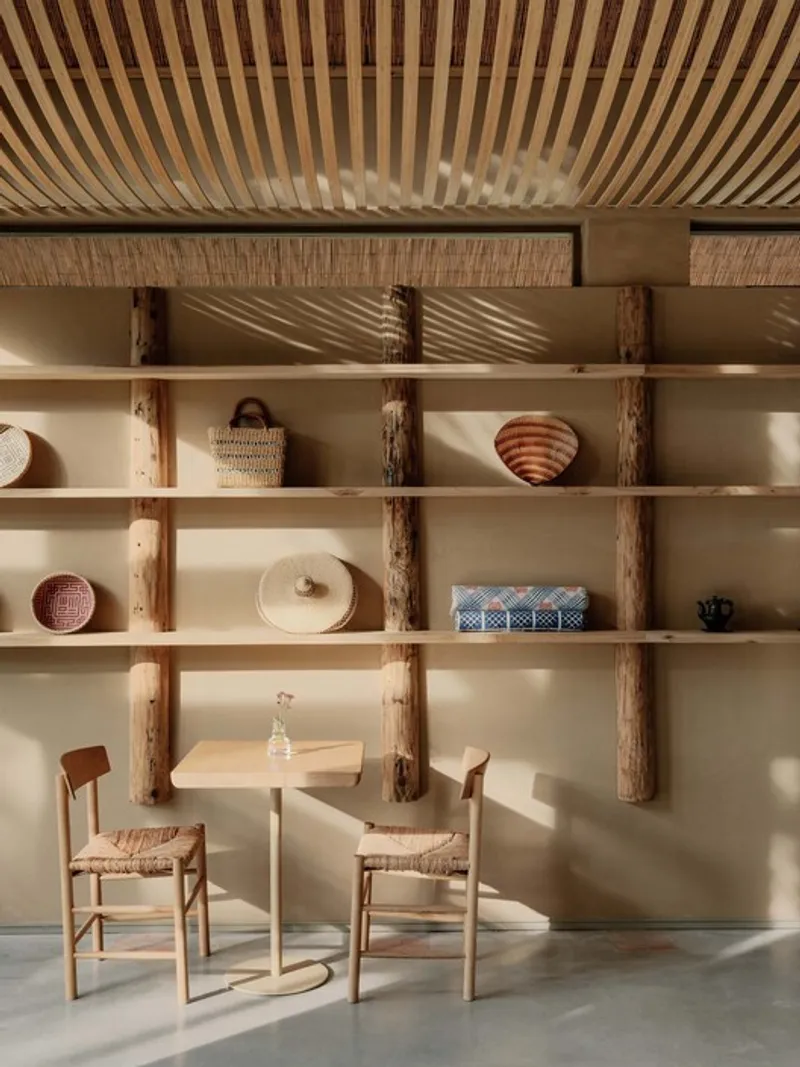
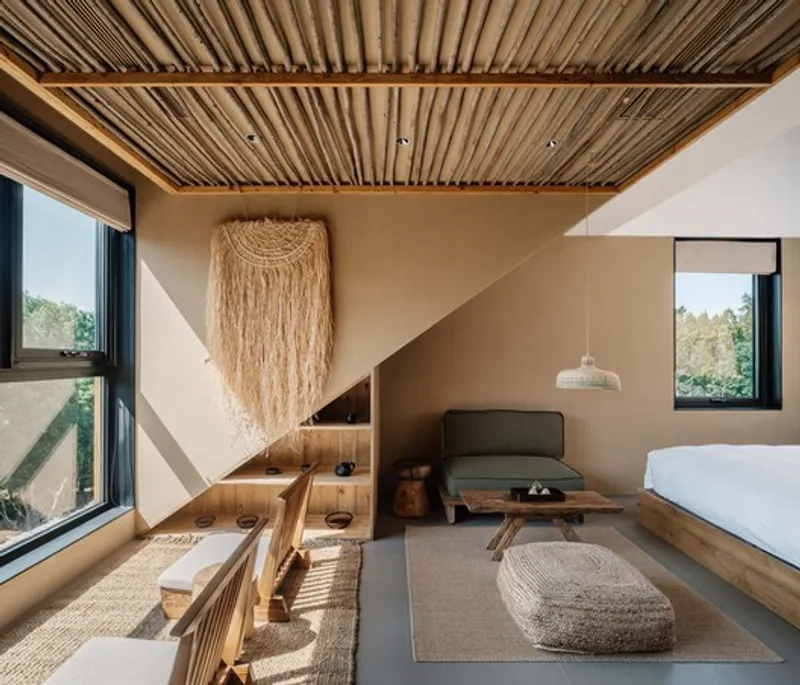
The façade features a textured composition of recycled bricks, arranged to echo patterns found in traditional local textiles. Meanwhile, the use of reed poles for roofing revives a historic construction technique once common in the region, demonstrating a thoughtful reinterpretation of vernacular craftsmanship. These strategies not only reduce environmental impact but also celebrate cultural continuity.
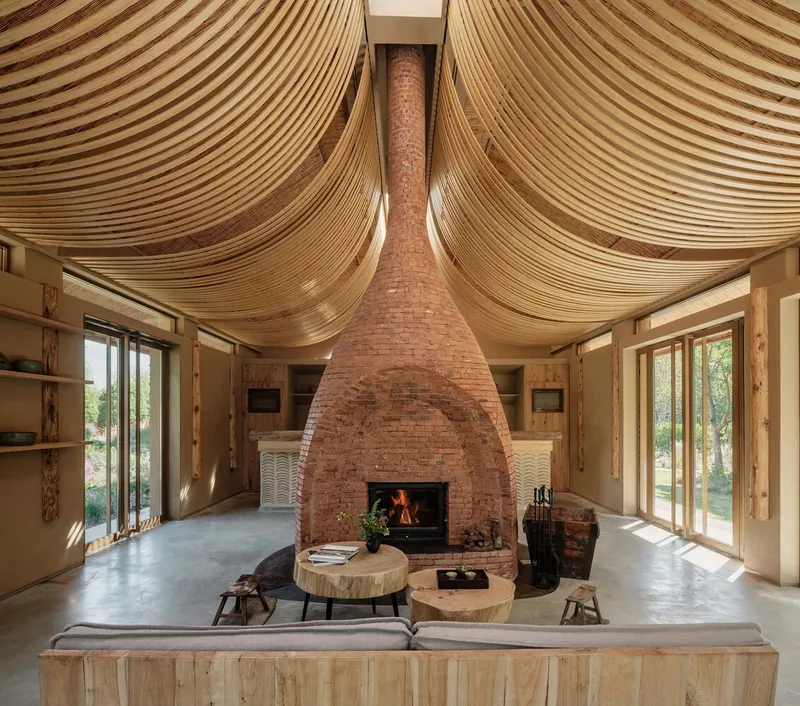
Interior Experience: Light, Warmth, and Craft
Inside, the hotel offers a warm and immersive spatial experience. A standout feature is the preserved brick fireplace beneath a curved bamboo ceiling in the reception area, acting as both a functional and social centerpiece. Natural light filters through glass skylights and translucent materials, casting dynamic shadows that change throughout the day and seasons.
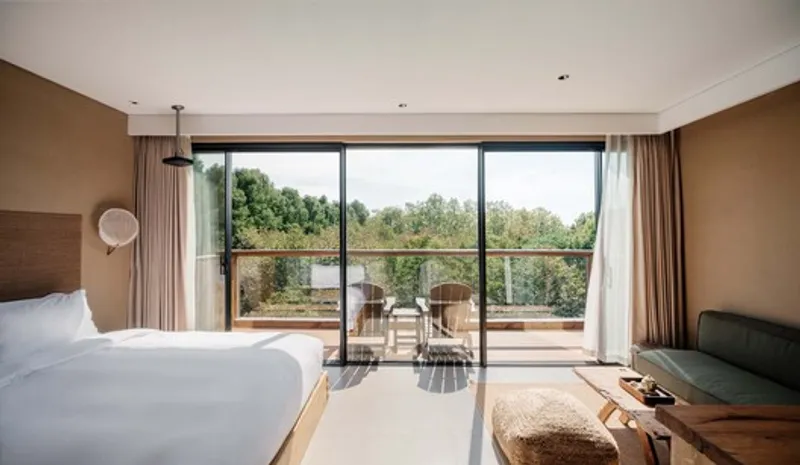
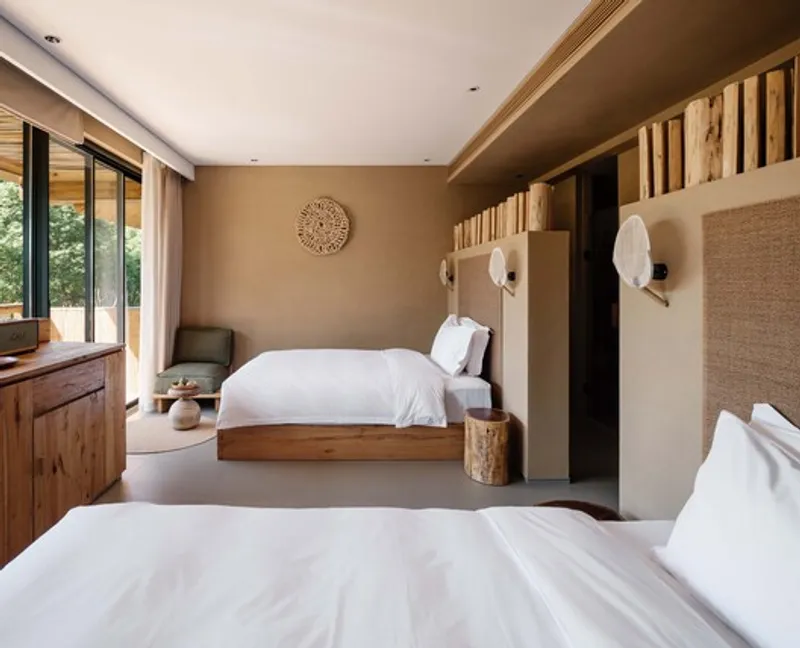
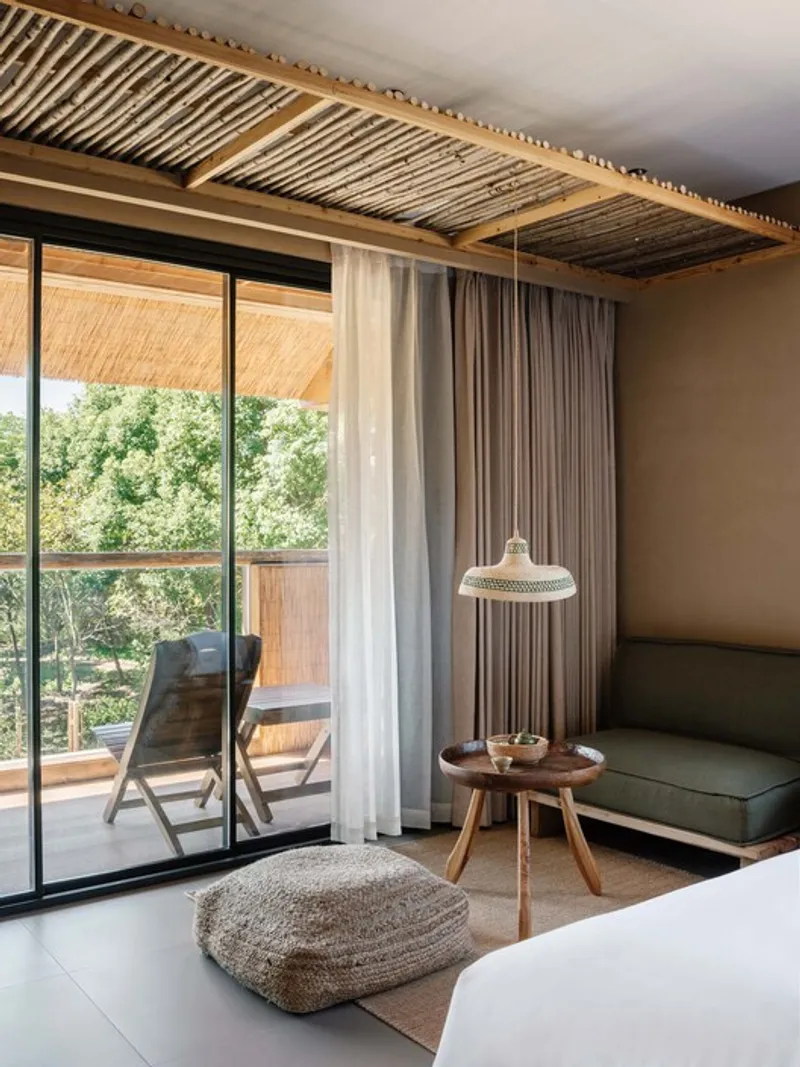
Guest rooms are designed to maximize views and daylight, with carefully positioned windows and minimal yet expressive interiors. The design avoids standardized, machine-made aesthetics, instead embracing imperfections and textures that reflect handmade craftsmanship and local identity.
Landscape and Outdoor Integration
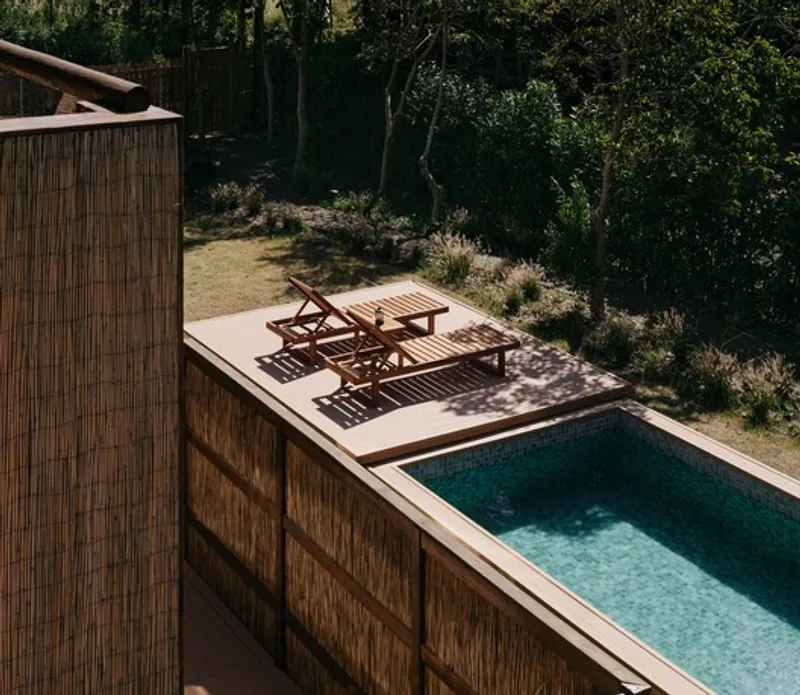
The outdoor garden follows a “low-maintenance” philosophy, allowing vegetation to grow naturally and harmonize with the surrounding ecosystem. This approach enhances biodiversity while reinforcing the project's connection to its rural context. The landscape becomes an extension of the architecture, offering guests a peaceful retreat immersed in nature.
A Model for Sustainable Hospitality Architecture
SOM LAND Hotel stands as a compelling example of sustainable architecture, adaptive reuse, and culturally responsive design. By integrating local materials, traditional techniques, and modern spatial strategies, RooMoo creates a destination that is both environmentally conscious and experientially rich. The project not only provides a relaxing getaway but also offers a deeper understanding of Chongming Island’s heritage and ecological landscape.
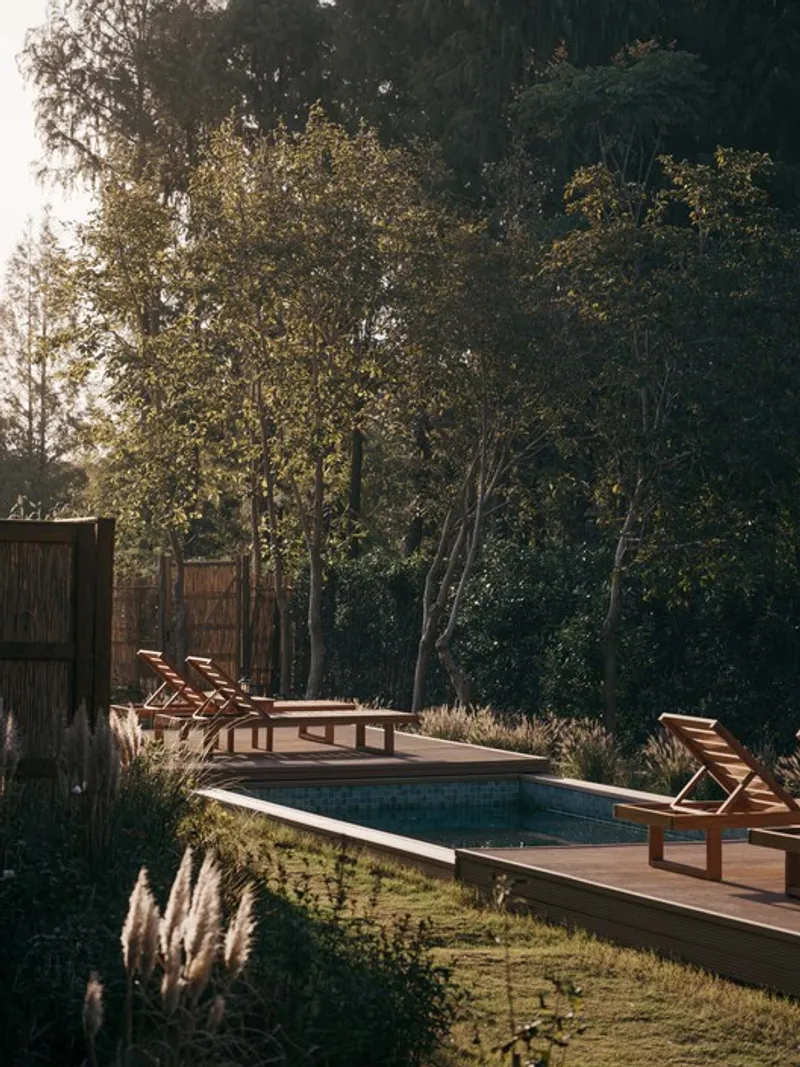
All photographs are works of
Wen Studio




Popular Articles
Popular articles from the community


Co-life: Sustainable Architecture for Age-Friendly Community Living
Co-life reimagines sustainable architecture for seniors through courtyards, rammed earth, shared gardens, and spaces designed for belonging.

The Musturak Paradise: Senior Living Architecture for a Connected Future in Temara, Morocco
The Musturak Paradise reimagines senior living architecture in Temara via private homes, social spaces, culture, community, and shared care.

Lunar Spiral: Space Architecture Shaped by the Mathematics of the Universe
Lunar Spiral reimagines space architecture through Fibonacci geometry, lunar regolith, levitating habitats, and self-sustaining Moon living.

Riyadh For All: Intergenerational Urban Design for Active Aging in Rabat
Riyadh For All reimagines urban design in Rabat with intergenerational co-living, adaptive courtyards, and Moroccan cultural exchange today.


Similar Reads
You might also enjoy these articles

Bamboo Housing Challenge 2026: Design Affordable, Sustainable Homes Using Bamboo
An international design competition by Bamboo U and IBUKU inviting architects and designers to reimagine affordable housing using bamboo — with the winning design built full-scale in Bali.

Computational Design & Education: Beegraphy Design Awards Introduces 7th Category (Featuring Jiyun's Innovative Approach)
Dive into Beegraphy’s 7th Design Awards category, where computational design meets education to create immersive, interactive learning tools, inspired by Jiyun’s work.
From Parametric Lighting to Urban Furniture: Join the 2nd Workshop in Beegraphy’s Computational Design Series
Dive into Cutting-Edge Design Techniques and Practical Applications with Industry Experts

Last Call: Unleash Your Architectural Genius in SHAK's Kindergarten Design Competition
Urgent call for architects to join SHAK's kindergarten design competition before the looming deadline


Explore Architecture Competitions
Discover active competitions in this discipline



Challenge to reimagine the Iron Throne


Photograph architecture without architects


Illustrate the lost glory of Angkor Wat - Render Challenge


Design challenge to reuse E-waste
Comments (0)
Please login or sign up to add comments
No comments yet. Be the first to comment!