

Space Architecture Inspired by Diatoms: A Vision for the Future
Sustainable space architecture inspired by diatoms: nature's lightweight, resilient structures reimagined for humanity's future.


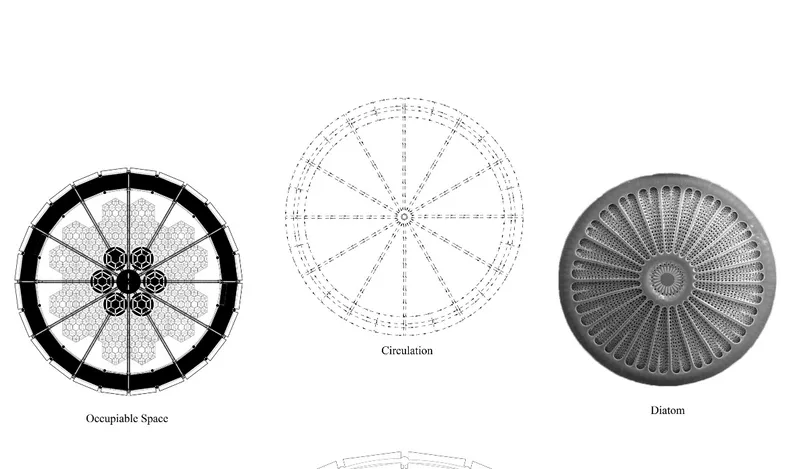
Humanity continues to explore and inhabit space, much like plankton drifting and thriving in Earth's oceans. When designing innovative space architecture, we drew inspiration from diatoms—a kind of plankton that flourishes in the ocean. These seemingly fragile organisms exist in trillions, contributing to 20% of the oxygen production on our planet each year.
Why Diatoms as an Architectural Inspiration?
The beauty of diatoms lies in their microscopic architecture. Despite their delicate appearance, their intricate skeletal structures are incredibly strong and lightweight, making them an ideal model for building space habitats. Research highlights that the multiple hierarchies and repeatable microstructures in diatoms enable them to form durable skeletons out of weak materials.
Structural Design Inspired by Nature
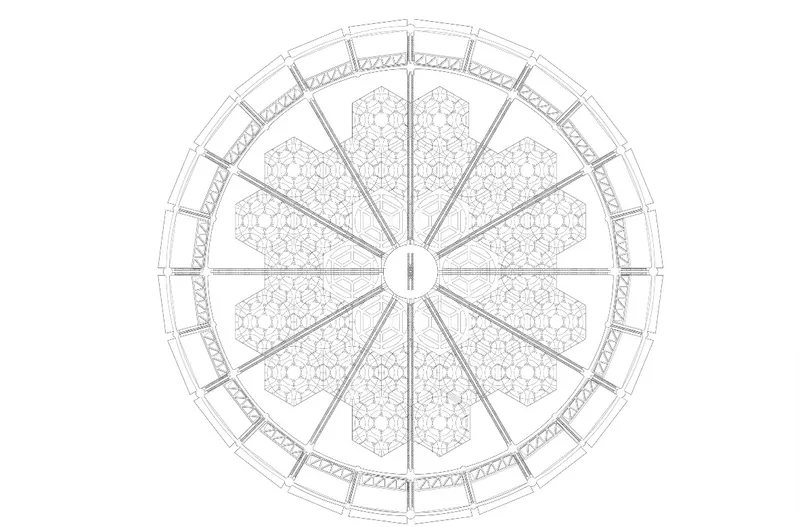
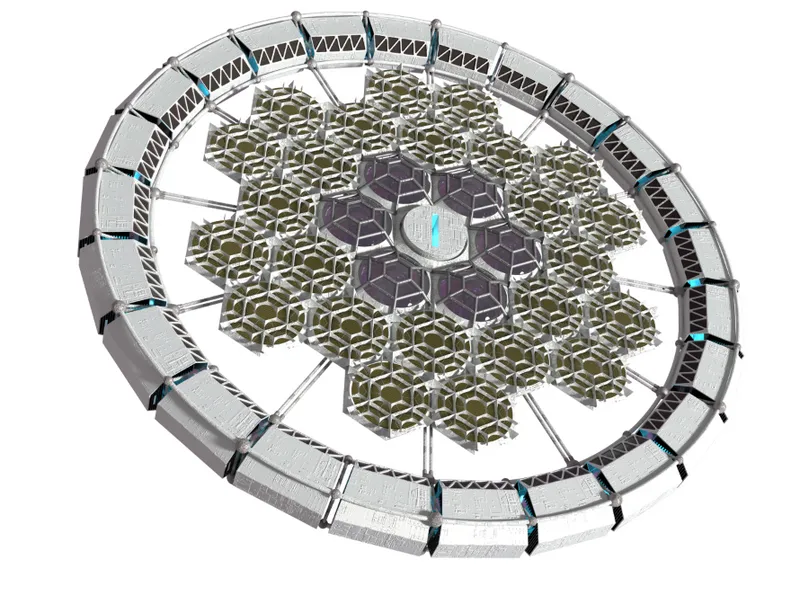
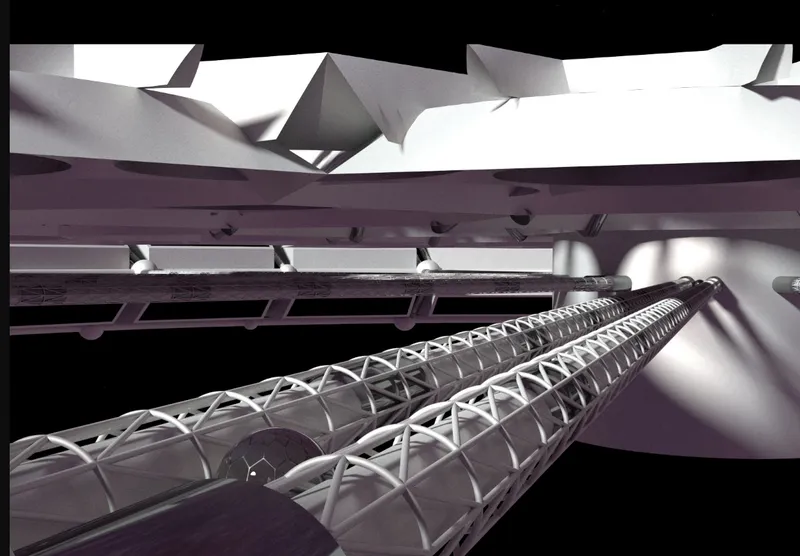
The space habitat's primary structure is a rotating modular ring, echoing the natural patterns observed in diatoms. This ring rotates around a central axis to simulate artificial gravity within its chambers, allowing inhabitants to live, work, and conduct research under Earth-like conditions.
- Hexagonal Structures: The nano-structure logic of diatoms inspired the use of hexagonal frames to hold solar panels. These repeating modular patterns not only provide structural strength but also allow for scalable assembly.
- Circulation Efficiency: The ring and rib architecture ensures efficient circulation, both radially and circularly, within the habitat. Rib tunnels facilitate transportation of spherical modules between central and peripheral areas.
Modular Assembly for Space Construction
The project introduces a "modular ring" system—a key innovation in space architecture. Each module can be shipped to orbit separately and assembled on-site, making it cost-effective and flexible for large-scale space construction.
Functional Cabins: Living and Laboratory Spaces
The habitat contains two primary cabin types:
- Laboratory Cabins: Dedicated workspaces for astronauts and researchers. These include mechanical layers that accommodate experimental equipment for customized needs.
- Living Cabins: Spaces designed for relaxation and socialization. A three-story shopping mall sits below the ground level, offering recreation and communal areas for dining and leisure. Independent water storage and circulation systems support each cabin.
Nature Meets Future Space Design
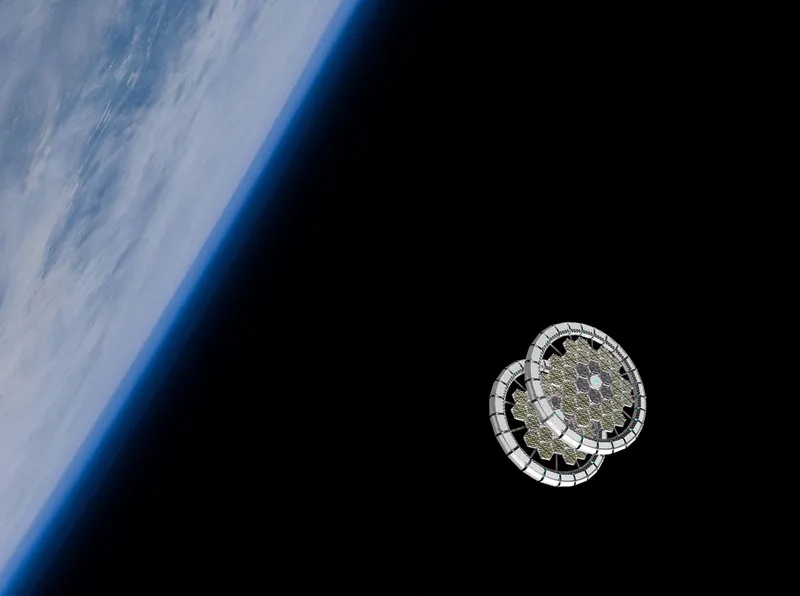
This project showcases how biomimicry in architecture—specifically inspired by diatoms—can lead to resilient and efficient solutions for space colonization. The harmonious combination of lightweight structures, modular systems, and nature-inspired geometry reflects the potential of sustainable and scalable space architecture.
Project Credits:
- Yiwen Song, Yixiao Wei, Mei Wu, Kaiwen Wu
- Shortlisted Entry for "Origyn"


Popular Articles
Popular articles from the community

Cloaked Colonization: A Mobile Underwater Habitat That Moves Like a Fish
Micah Abaya's shortlisted EHC Pacific entry reimagines ocean settlement as a dispersed network of self-sustaining architectural organisms.
Manzana Morphosis: Stretching Barcelona's Grid into a Living Landscape for 2050
A radical reworking of the Eixample manzana turns density into a tool for generous public space, vertical ecology, and environmental performance.
Opera by the Sea Estonia: Three Shells Dissolving Architecture into Tallinn's Coastline
A winning opera house proposal replaces monumental form with interconnected shells that blur the boundary between building, park and Baltic Sea.

The Amber Palace Opera: A Geological Fiction Surfaces on Tallinn's Baltic Waterfront
Pierre Brillard reimagines a Baltic legend as a public landscape, opera house, and waterfront promenade rooted in Tallinn's coastal identity.

Similar Reads
You might also enjoy these articles


Hodi-Mandai Geram
Project Function: Preservation and revitalization of the Intangible heritage and socio-spatial identity of the Hodi by Housing, Cultural Memory Center, Sacred Grove, landscape, local tourism economy


Olio Towers: A Mid-Rise for Performers That Fuses Housing, Rehearsal, and Stage
Located blocks from Houston's Theater District, this modular tower stacks living units around a central performance atrium.

Oasis: Modular Green Housing Carved into Dhaka's Urban Fabric
A shortlisted Plugin Housing entry reclaims unauthorized settlements in Dhaka with stepped concrete volumes, green roofs, and ventilation-driven design.

Black Hole: A Floating Megastructure for the Post-Physical Era
Emiliano Mazzarotto envisions a spherical, self-scaling arena where e-sports, digital hotels, and holographic stadiums replace traditional public space.

Comments (0)
Please login or sign up to add comments
No comments yet. Be the first to comment!