

Sports and Cultural Hall by LINK Architectes Associés: Puy-Guillaume, France
Innovative sports and cultural hall in Puy-Guillaume combines sustainable wood, natural light, landscape integration, and community-focused multifunctional spaces.


Situated on the eastern edge of Puy-Guillaume, the Sports and Cultural Hall by LINK Architectes Associés stands as a landmark of urban integration and landscape sensitivity. Spanning 1,570 m², the project, completed in 2022, embraces the hilly horizon of the Forez mountains while responding harmoniously to the modest architectural context of the town’s outskirts. The site, previously occupied by a car park, municipal workshops, and a rugby pitch, presented an ambiguous challenge that the architects addressed through careful volumetric and spatial strategies.

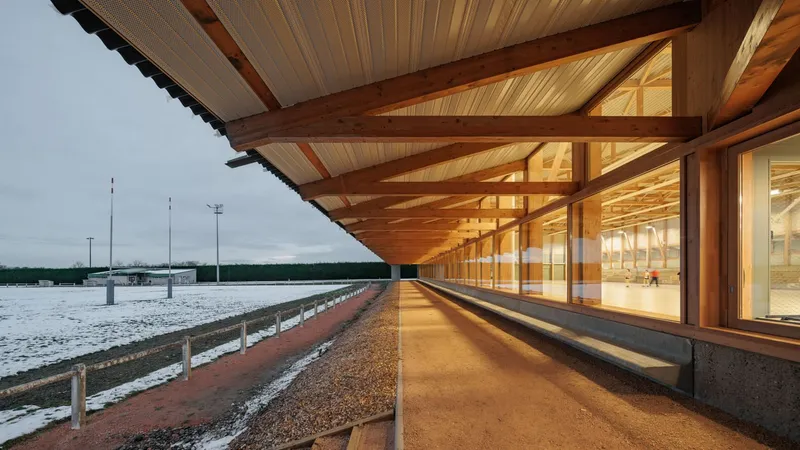
The hall establishes a dialogue between the surrounding rural landscape and the urban center, connecting tertiary, sports, and technical buildings through thoughtful siting and geometry. Its placement along the back line of the rugby field enhances its public presence without overwhelming the context. By prioritizing material and formal familiarity with adjacent structures, the design fosters continuity and avoids visual rupture, while its recognizable “iconic” volume asserts itself as a central civic facility.

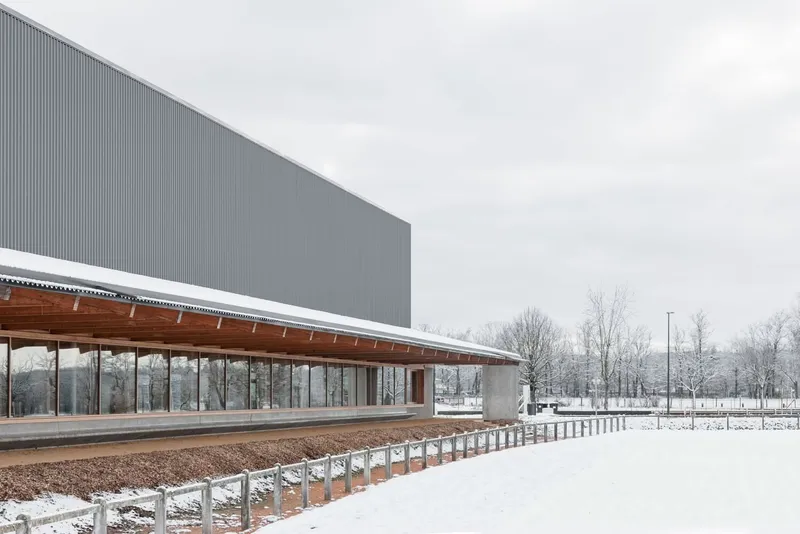
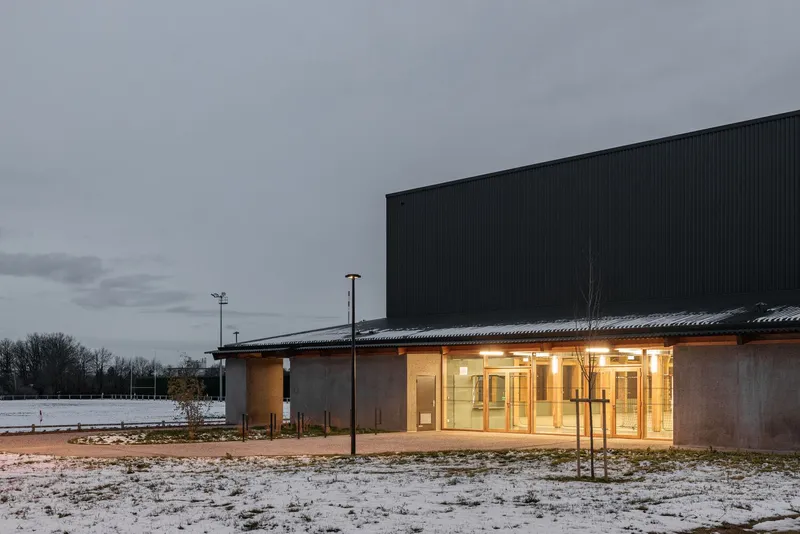
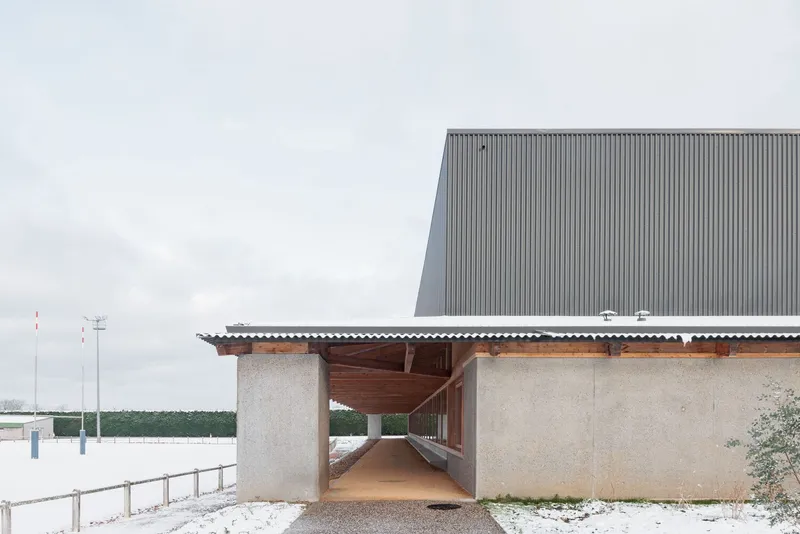
Strategically elevated on the site, the building overlooks the rugby pitch and reorganizes the backdrop of technical facilities, emphasizing the recreational character of the area. On match days, the hall supports and structures pedestrian flows naturally, reinforcing the preexisting spatial organization. Its covered public gallery extends along the west facade, providing sheltered, convivial spaces that encourage community interaction. A refreshment bar occasionally opens onto this gallery, enhancing its role as a social hub while complementing sports and cultural activities.
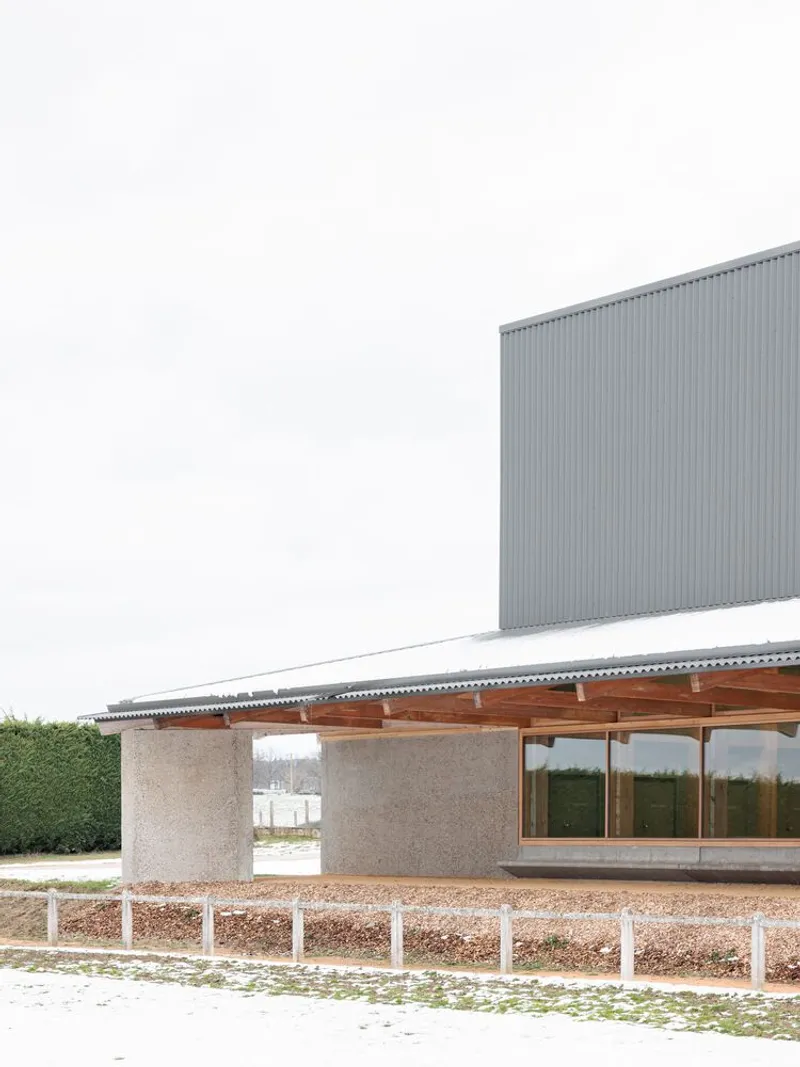
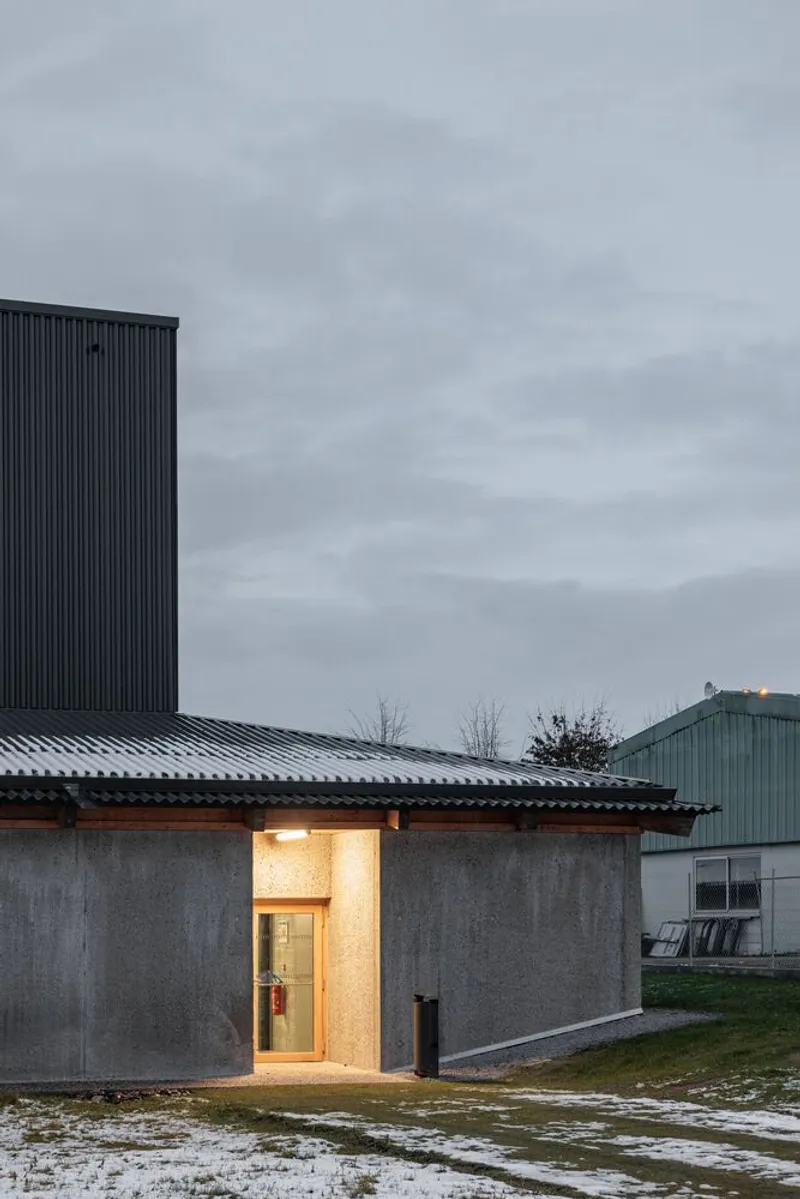
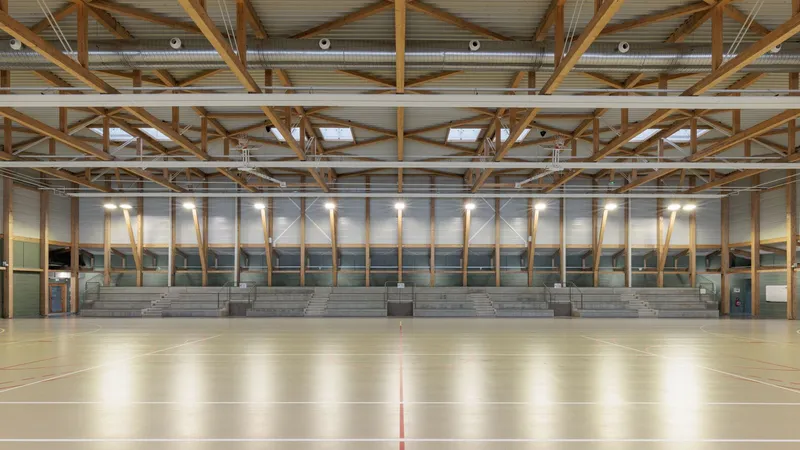
The hall’s architectural expression balances scale and human experience. Its slender corbelled facade protects interiors from western sunlight while maintaining transparency and continuity with the exterior. The primary volume, designed as a “hat” with a wooden frame and metal cladding, accommodates the large sports hall and spectator stands under a 7-meter-high structure, while secondary spaces wrap around the periphery under lower roofs. This volumetric hierarchy delivers both functional efficiency and a human-scaled approach to the diverse program.
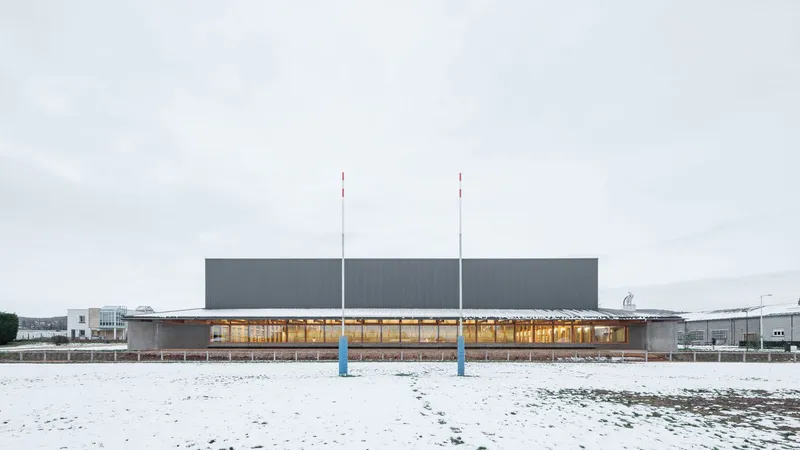
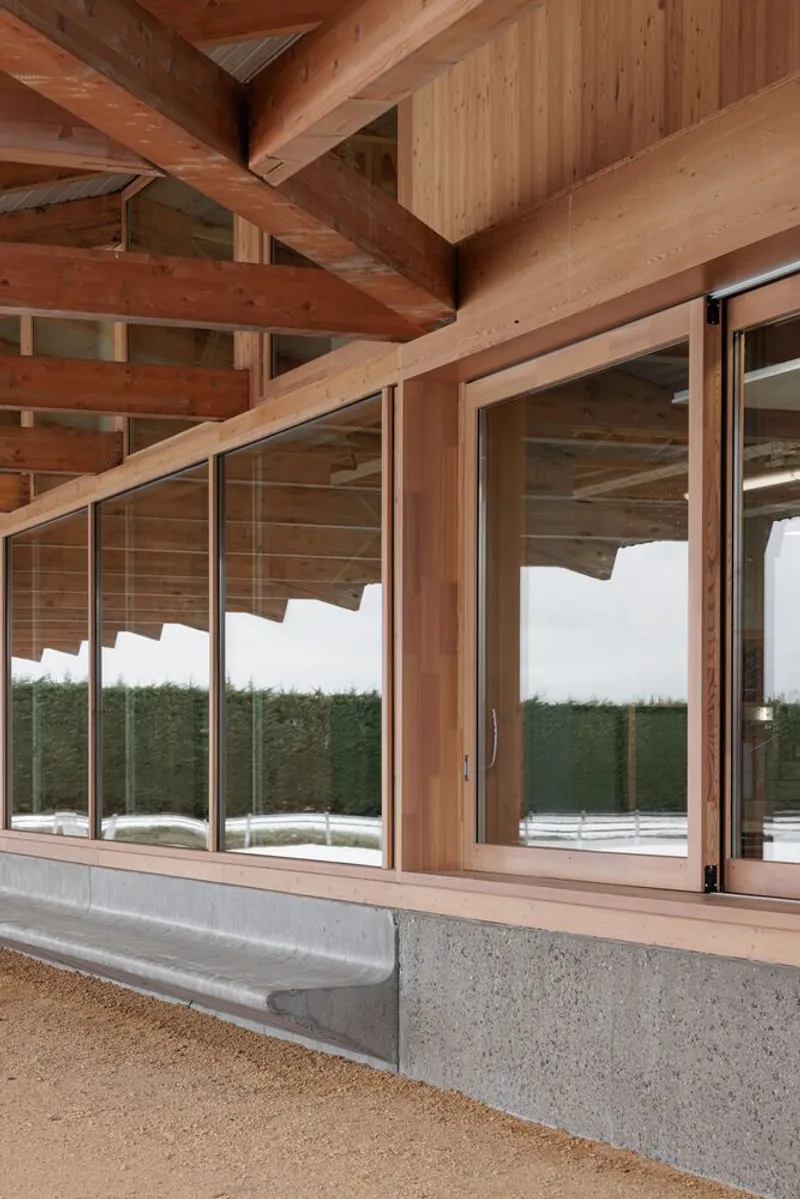
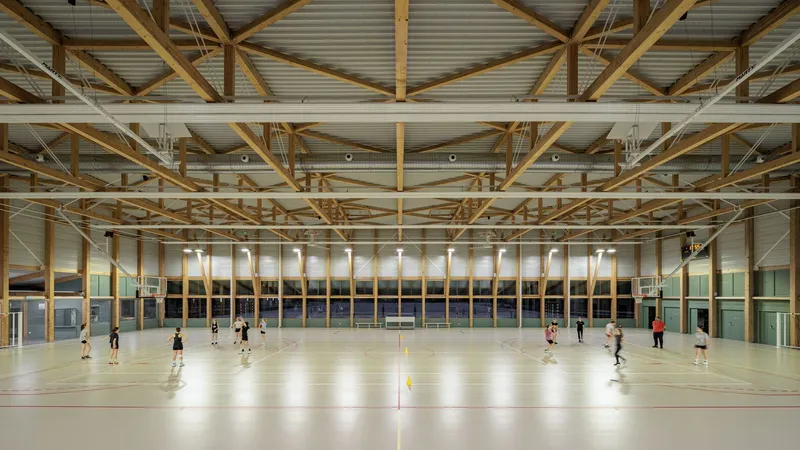
The design emphasizes local craftsmanship and sustainable construction. The wooden structure and natural materials celebrate the expertise of the Massif Central region, earning the BTMC label and reinforcing the hall’s rustic, resilient interior aesthetic. Natural light is carefully modulated throughout the main hall, optimizing visibility, comfort, and a seamless connection with the outdoor rugby pitch and surrounding landscape. The architecture ensures that activities inside are visible from the exterior, reinforcing transparency, accessibility, and civic engagement.

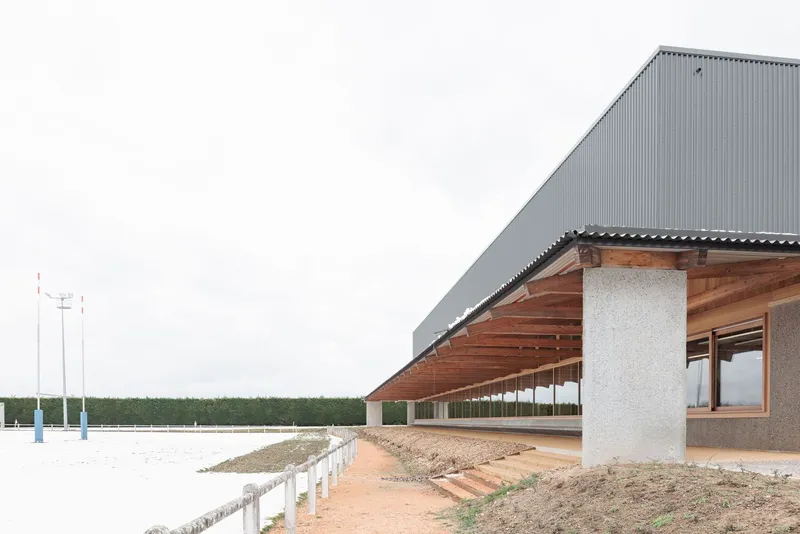
The Sports and Cultural Hall thus embodies a careful balance of landscape integration, urbanity, and community interaction, offering a multifunctional venue that is at once monumental in presence but approachable in scale, celebrating local materials and contemporary architectural strategies.
All photographs are works of
salemmostefaoui



Popular Articles
Popular articles from the community


The Musturak Paradise: Senior Living Architecture for a Connected Future in Temara, Morocco
The Musturak Paradise reimagines senior living architecture in Temara via private homes, social spaces, culture, community, and shared care.

The Ocean Hive: Sustainable Architecture for a Self-Sufficient Civilization at Sea
The Ocean Hive imagines sustainable architecture at sea, where modular habitats, algae, wave power and ocean waste sustain a growing colony.

Co-Life: Senior Housing Design That Reconnects Older Adults With the City
Co-Life reimagines senior housing design through healing gardens, shared streets, workshops, and a sustainable community across generations.

Co-life: Sustainable Architecture for Age-Friendly Community Living
Co-life reimagines sustainable architecture for seniors through courtyards, rammed earth, shared gardens, and spaces designed for belonging.

Similar Reads
You might also enjoy these articles

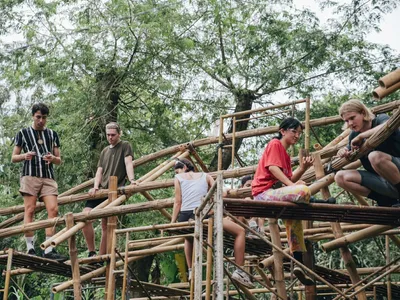
Bamboo Housing Challenge 2026: Design Affordable, Sustainable Homes Using Bamboo
An international design competition by Bamboo U and IBUKU inviting architects and designers to reimagine affordable housing using bamboo — with the winning design built full-scale in Bali.

Computational Design & Education: Beegraphy Design Awards Introduces 7th Category (Featuring Jiyun's Innovative Approach)
Dive into Beegraphy’s 7th Design Awards category, where computational design meets education to create immersive, interactive learning tools, inspired by Jiyun’s work.
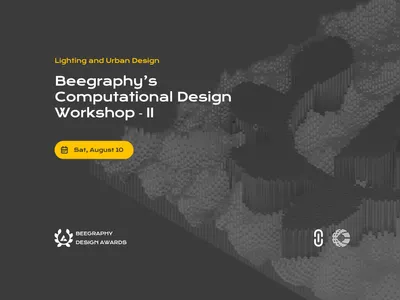
From Parametric Lighting to Urban Furniture: Join the 2nd Workshop in Beegraphy’s Computational Design Series
Dive into Cutting-Edge Design Techniques and Practical Applications with Industry Experts

Last Call: Unleash Your Architectural Genius in SHAK's Kindergarten Design Competition
Urgent call for architects to join SHAK's kindergarten design competition before the looming deadline

Explore Sports Architecture Competitions
Discover active competitions in this discipline


Challenge to design a barrier free sports center


Challenge to design an outdoor ice-rink and park


Challenge to reimagine the Iron Throne


Photograph architecture without architects
Comments (0)
Please login or sign up to add comments
No comments yet. Be the first to comment!