

St. Ives House by Common Office: A Civic Approach to Contemporary Residential Design
Civic-inspired family house with double-height living spaces, expansive glazing, and strong landscape connection, redefining suburban residential architecture in Australia contemporary.


Located in Saint Ives, Australia, the St. Ives House is a 440-square-metre private residence completed in 2023 that deliberately challenges conventional suburban domestic architecture. Designed by Common Office, the project rejects the inward-looking, privatized street presence typical of detached homes, instead adopting an architectural language more closely aligned with civic and public buildings. Through its formal restraint, compositional clarity, and careful engagement with landscape, the house proposes a new model for contemporary Australian residential design: one that is simultaneously generous, public-facing, and deeply connected to its natural surroundings.
Civic Motifs and a Public-Facing Residential Identity
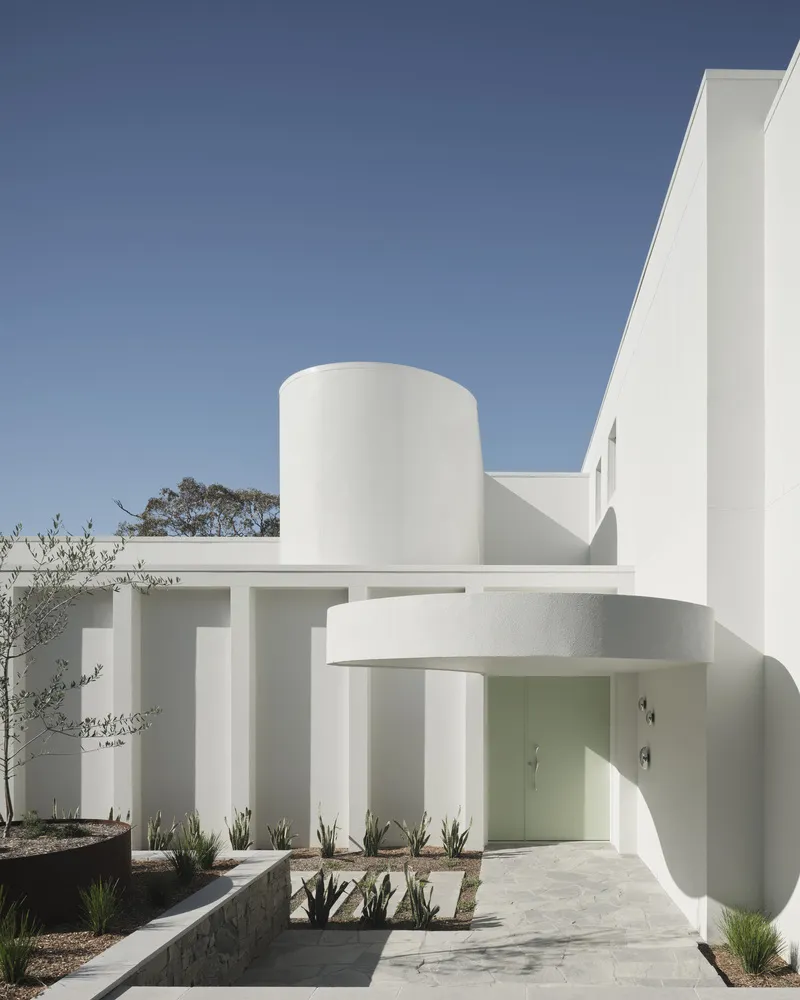
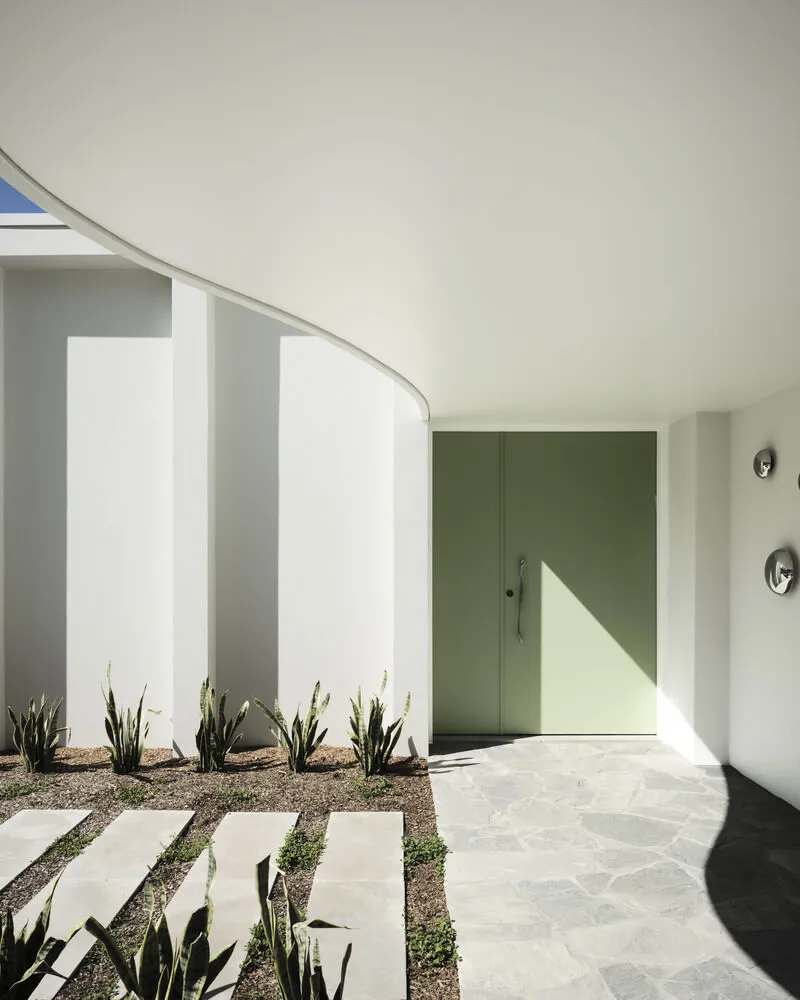
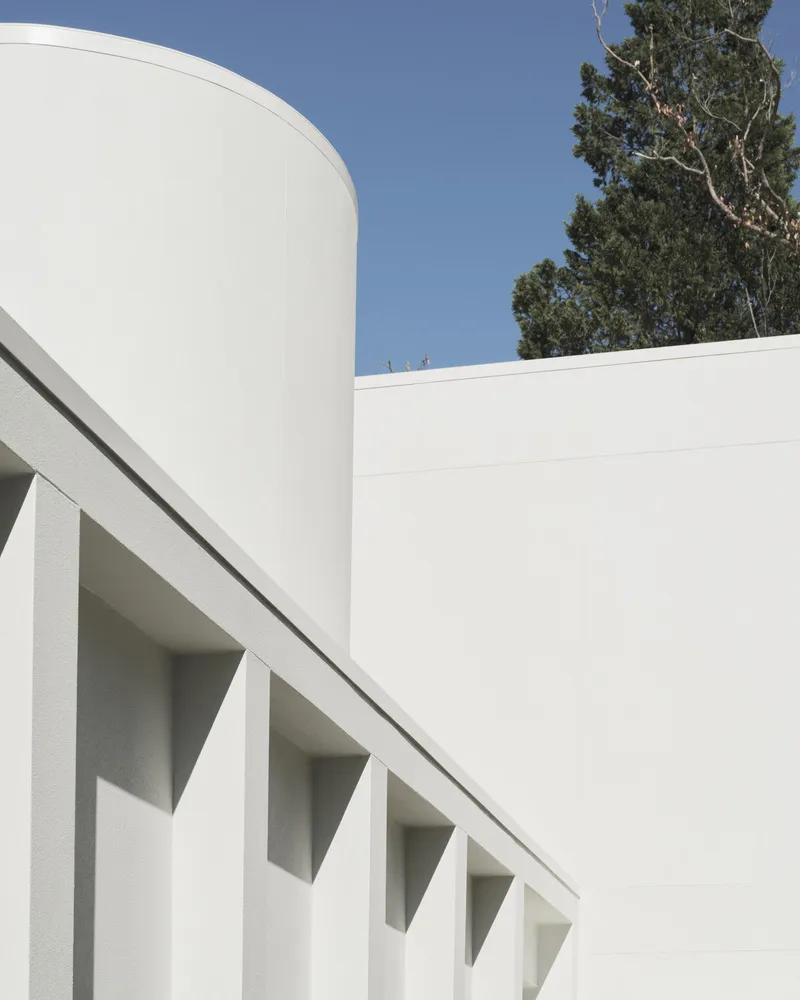
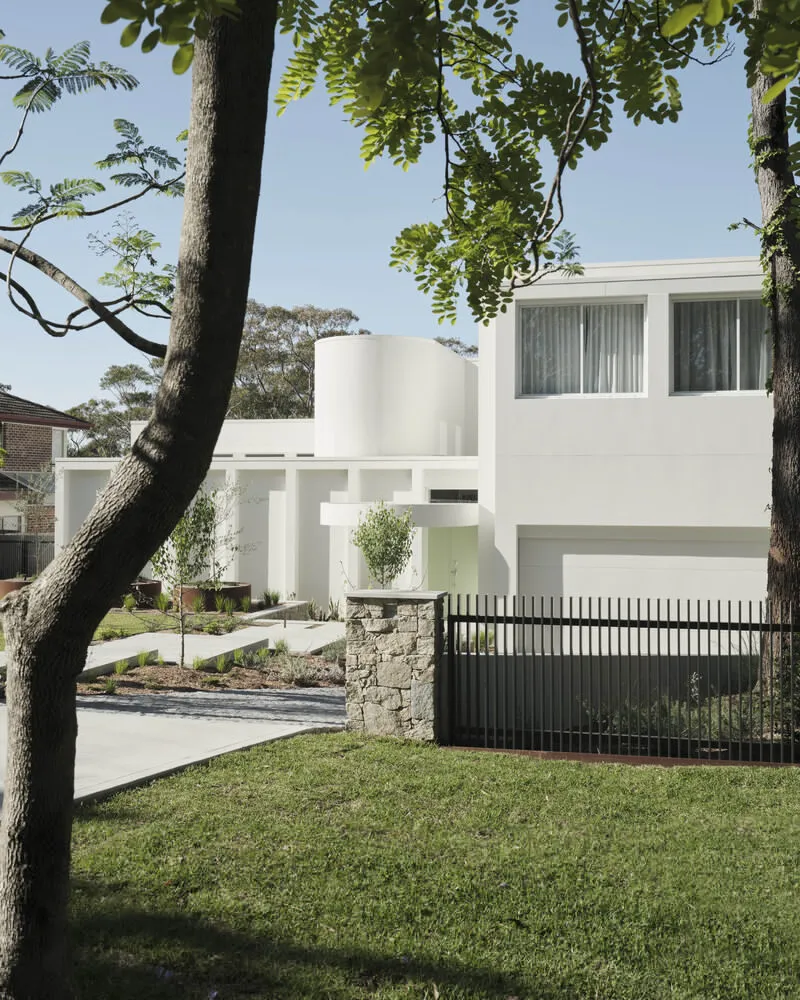
Rather than concealing domestic life behind fences and hedges, the St. Ives House embraces visibility and openness. The street elevation is articulated through a series of civic-inspired architectural elements, including a faux colonnade, plain double-height volumes, and a boldly cantilevered entry awning. These gestures establish a sense of monumentality and urban presence, allowing the building to contribute visually to the streetscape while remaining unmistakably residential in scale.
The exterior palette reinforces this clarity. Lightweight rendered walls and brickwork are painted a bright, consistent white, creating a crisp geometric composition. This neutral backdrop allows surrounding vegetation, greens and warm orange tones from the adjacent national park, to visually penetrate the architecture, subtly revealing the landscape beyond and embedding the house within its environmental context.
Spatial Hierarchy and Programmatic Clarity
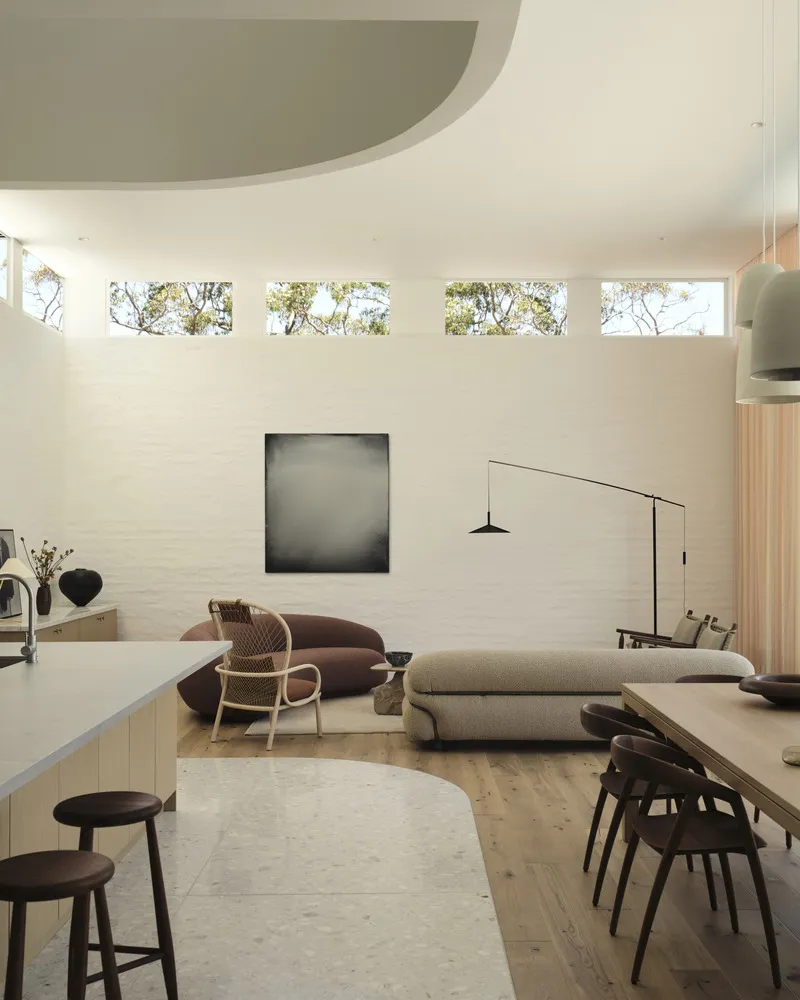
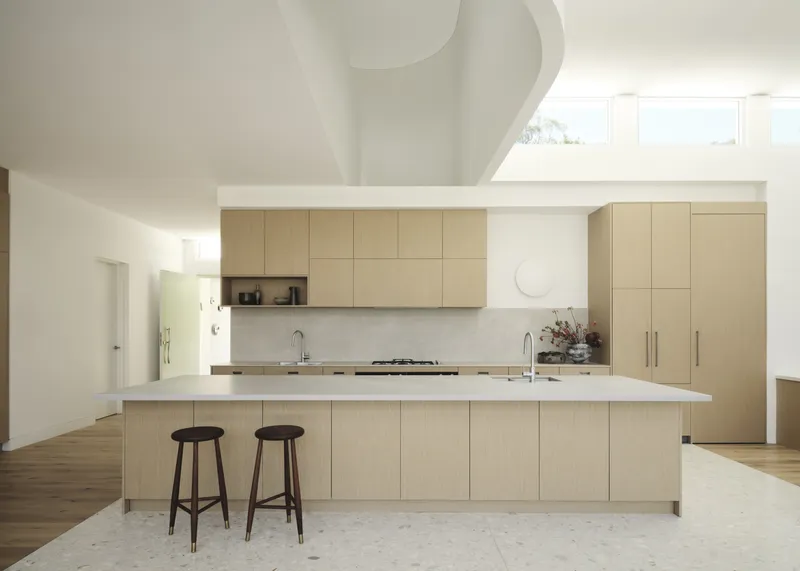
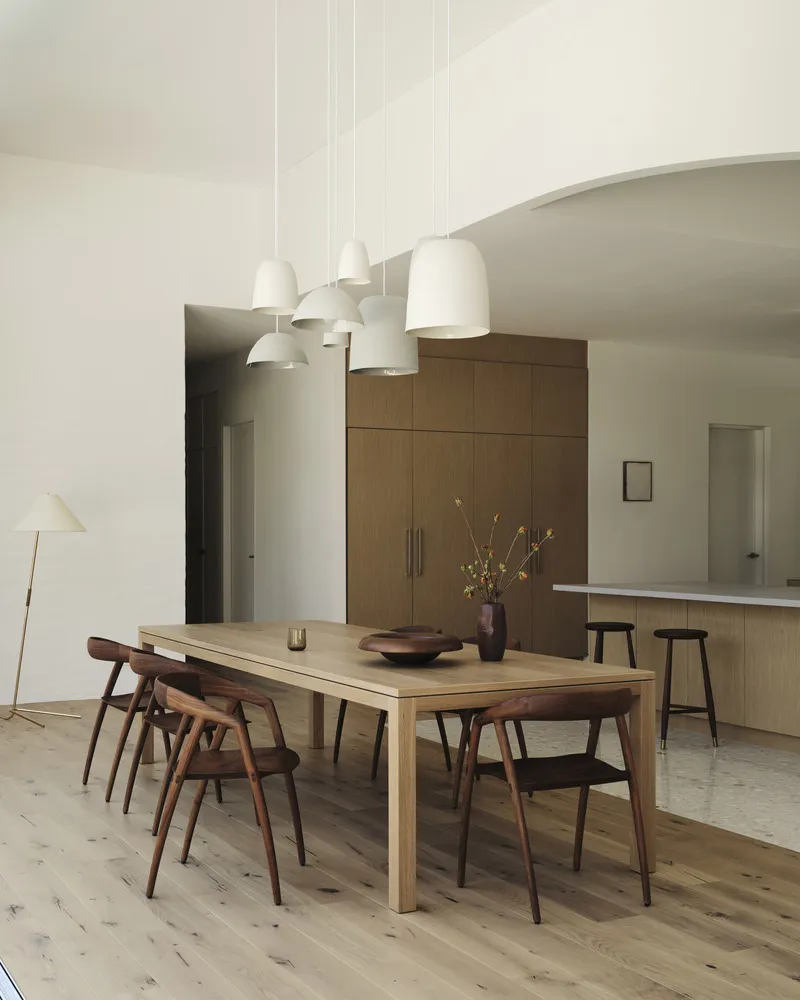
The architectural organization of the St. Ives House is driven by both site conditions and the social priorities of its occupants. Programmatically and formally, the design emphasizes the eastern volume of the building, which accommodates the kitchen, living, and dining spaces. These areas form the social heart of the home, reflecting the family’s strong emphasis on shared meals and collective time.
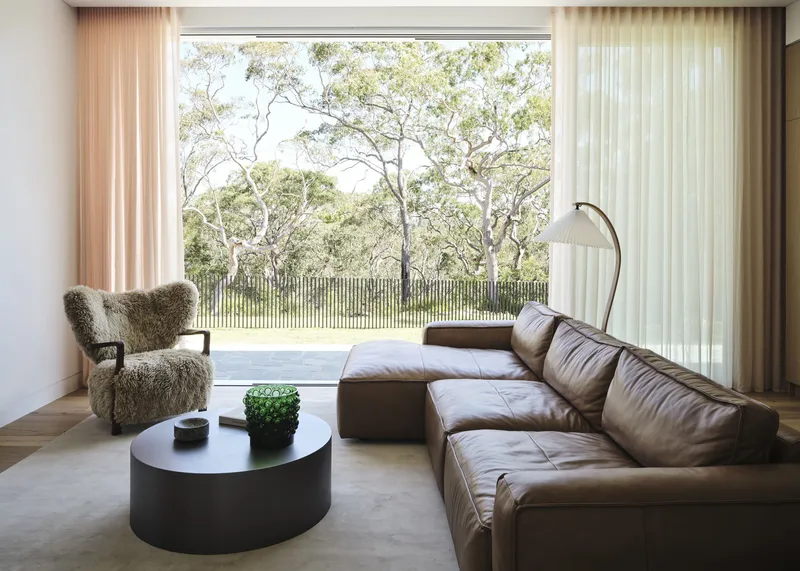
This primary living volume is expressed as a generous double-height space, designed to maximize light, openness, and connection to nature. Clerestory windows on the northern side introduce controlled solar gain, while an expansive 11.5-metre-wide wall of sliding glass panels opens directly to the adjacent national park. When fully retracted, the boundary between interior and exterior dissolves, transforming the living space into an extension of the landscape and reinforcing indoor, outdoor living principles central to Australian architecture.
Light, Volume, and Landscape Integration
Natural light plays a defining role in shaping the interior experience. The double-height living space allows light to penetrate deep into the plan, while carefully positioned openings frame views of the surrounding bushland. The interplay between solid white surfaces and expansive glazing produces interiors that feel calm, luminous, and spatially expansive, despite the home’s clear formal structure.
The connection to the national park is not merely visual. The architecture is composed to allow occupants to experience shifting light conditions, seasonal changes, and long views through the site, reinforcing a daily relationship with nature. This approach positions the house as both a domestic retreat and a civic object embedded within a broader ecological context.
Functional Volumes and Vertical Circulation
To the west of the site, a more restrained and utilitarian volume houses the private and service functions of the home, including bedrooms, garages, and home offices. These spaces are stacked across two floors and deliberately expressed with less formal emphasis, allowing the primary living volume to remain dominant.
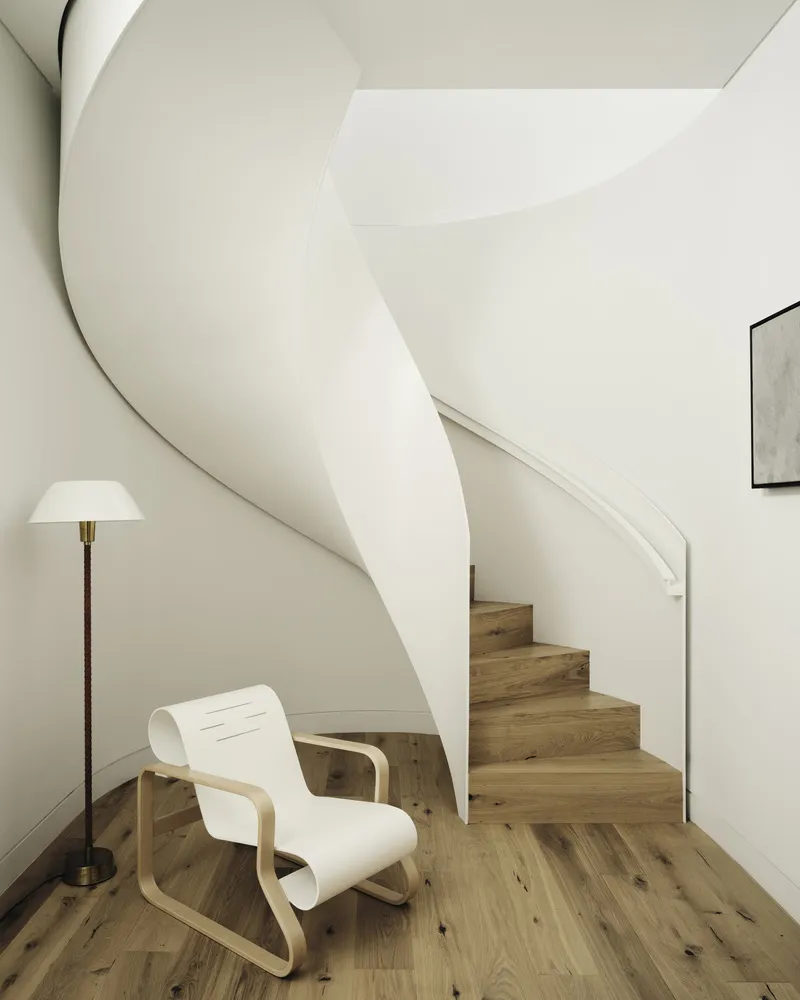
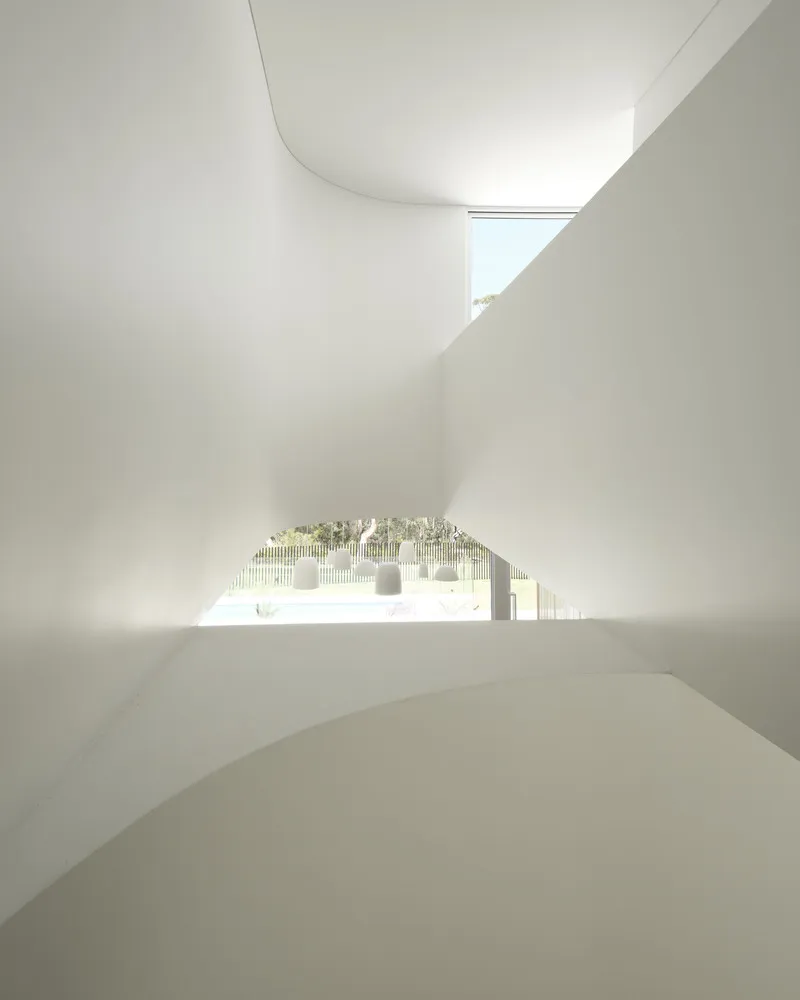
Vertical circulation within this zone is organized around a sculptural spiral staircase. While primarily functional, the staircase also acts as a spatial device, offering framed glimpses of the park beyond as occupants move between levels. This moment of visual connection reinforces continuity between the more private areas of the home and the surrounding landscape.
Contemporary Australian Architecture with Civic Ambition
The St. Ives House stands as a compelling example of contemporary residential architecture that transcends traditional domestic boundaries. By adopting civic architectural language, prioritizing shared living spaces, and engaging directly with its environmental context, Common Office has created a home that is both expressive and disciplined.
Rather than retreating from the public realm, the project contributes to it, demonstrating how private architecture can participate meaningfully in the visual and spatial life of a neighborhood. The result is a carefully balanced residential building that combines architectural clarity, social intention, and landscape integration into a coherent and forward-looking design.
All photographs are works of
Dave Wheeler


Popular Articles
Popular articles from the community


David Macias Steps a Doorless Stone and Plaster House Down a Tropical Colombian Hillside
In the humid hills of Colombia, Threshold House replaces the front door with an open void and terraces its 850 m² down the slope instead of fighting it.

Architekt Andreas Gruber Scatters 23 Dark Timber Chalets Across a South Tyrolean Forest Edge
In Molini di Tures, Amonti Chalets breaks a resort into a hamlet of gabled timber houses, with parking, storage and services pushed into the slope.

Jaramillo Van Sluys Arquitectura and Urbanismo Turn a Demolished Registry Lot in Quito into an Orchard Plaza
In Quito's Centro Histórico, a 2,800 m² plaza exposes the San Agustín convent wall and redraws its lost Augustinian orchard in volcanic stone.

David Ortega Stacks a Two-Story Mexico City Penthouse Around a Steel Stair and a Pergola-Shaded Roof Terrace
In Colonia Roma, a 300 m² penthouse uses oak joinery, a planted steel stair and a slatted roof pergola to make a new-build apartment feel like a house.

Similar Reads
You might also enjoy these articles

Gil Mello Arquitetura Tilts a Single Roof Toward the Waterfalls on a Plateau Above Aiuruoca, Brazil
In Aiuruoca, Minas Gerais, a 200 m² house of local labor and reclaimed poles pairs a low valley veranda with a tall mountain one.

U.GA Architects Wraps an Oval Rooftop Pool in Curved Board-Formed Concrete on Busan's Jeollidan-gil
In Busan's Jeonpo-dong, a 454 m² mixed-use block stacks a neighborhood facility, guest rooms and an oval rooftop pool inside spiraling concrete walls.

Felipe Hess Arquitetos Turns a Blind Stone Wall to the Street and Opens a Brazilian House onto a Courtyard and Canal
A canal-front house in Brazil hides behind painted stone and planting, then opens to an olive-tree courtyard, a reed-ceilinged porch and a curving pool.
David Macias Steps a Doorless Stone and Plaster House Down a Tropical Colombian Hillside
In the humid hills of Colombia, Threshold House replaces the front door with an open void and terraces its 850 m² down the slope instead of fighting it.

Explore Architecture Competitions
Discover active competitions in this discipline

Challenge to reimagine the Iron Throne

Photograph architecture without architects

Illustrate the lost glory of Angkor Wat - Render Challenge

Design challenge to reuse E-waste
Comments (0)
Please login or sign up to add comments
No comments yet. Be the first to comment!