

St Leonards Church Community Connection: Transforming a Historic Church into a Vibrant Community Hub
St Leonards Church in Hove is transformed into a flexible, sustainable community hub with a striking timber porch and adaptable interiors.


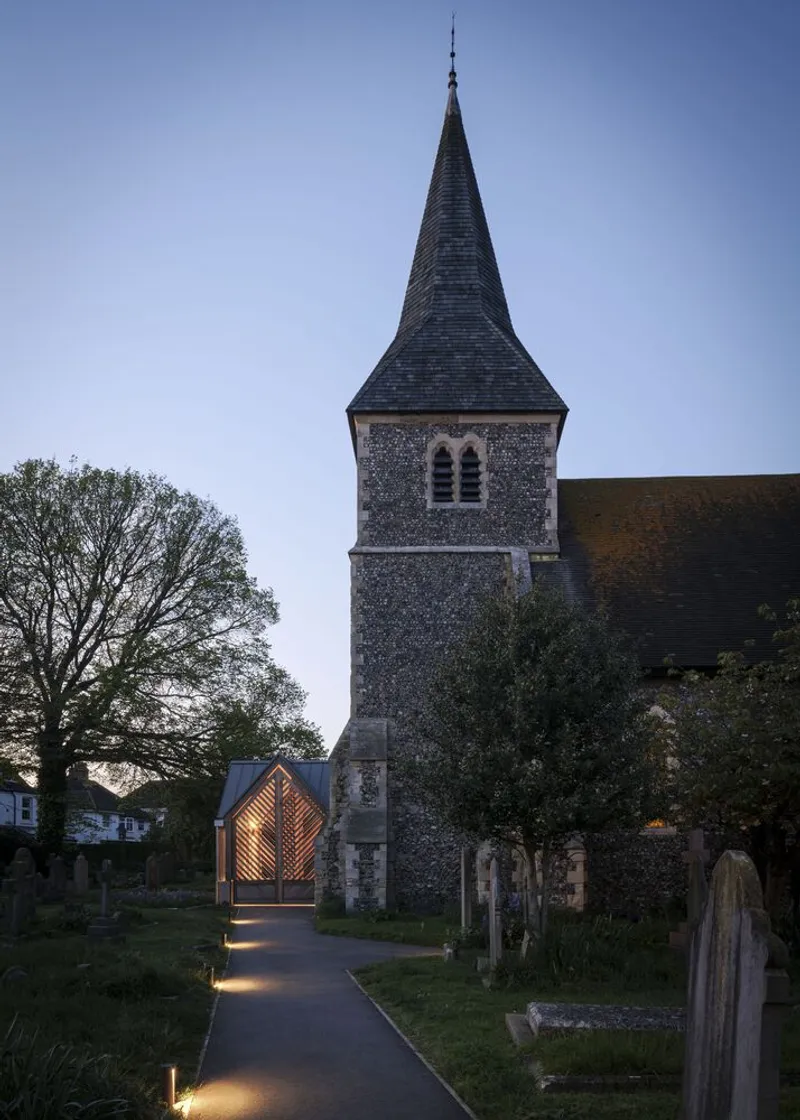
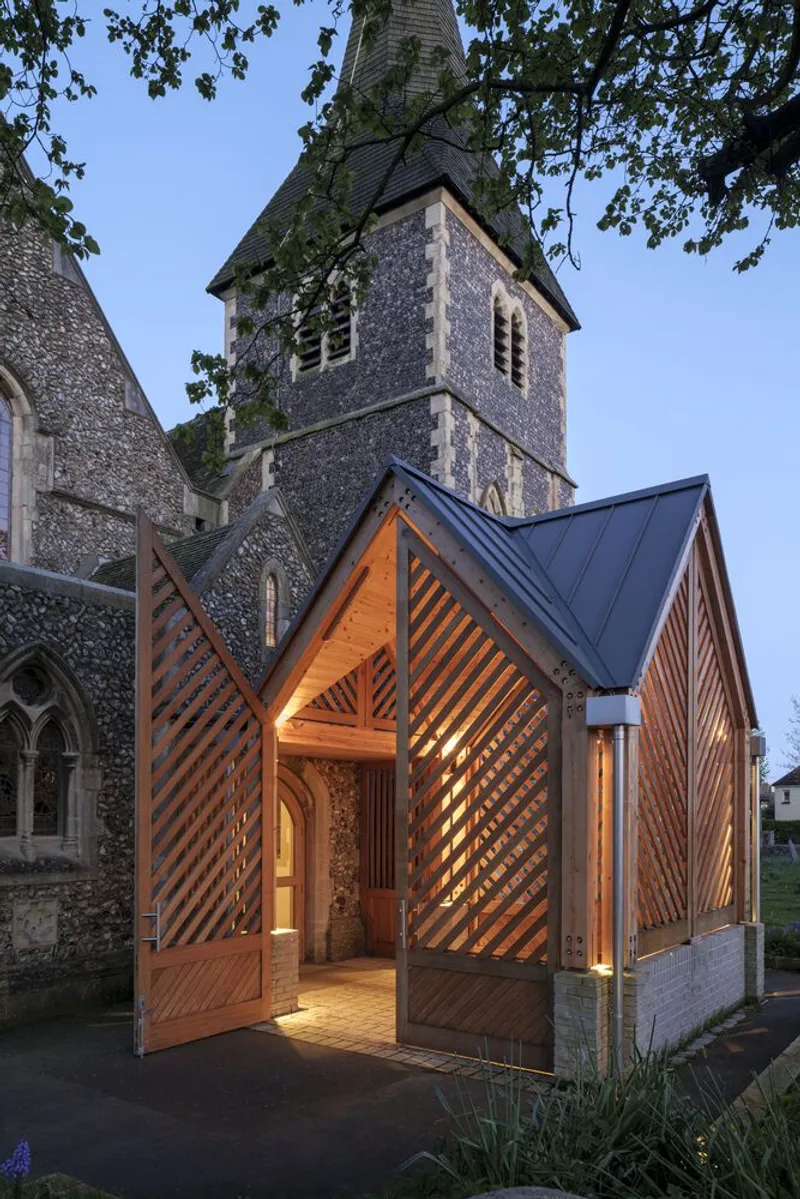
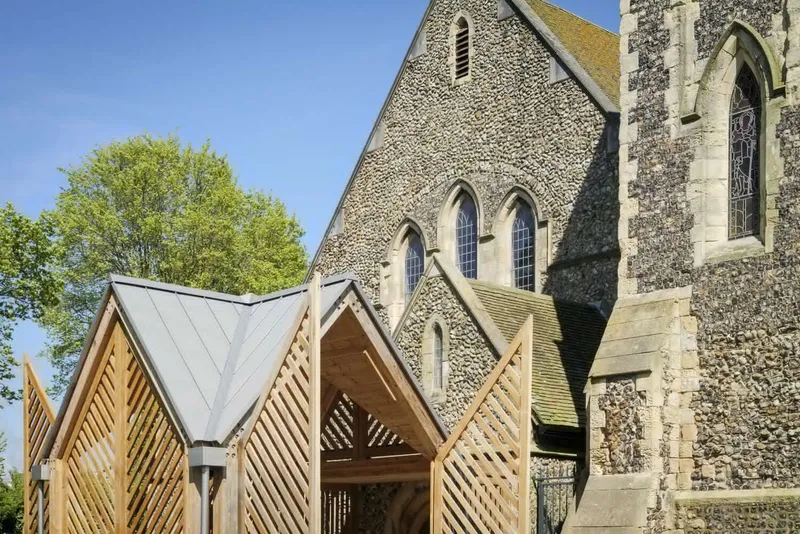
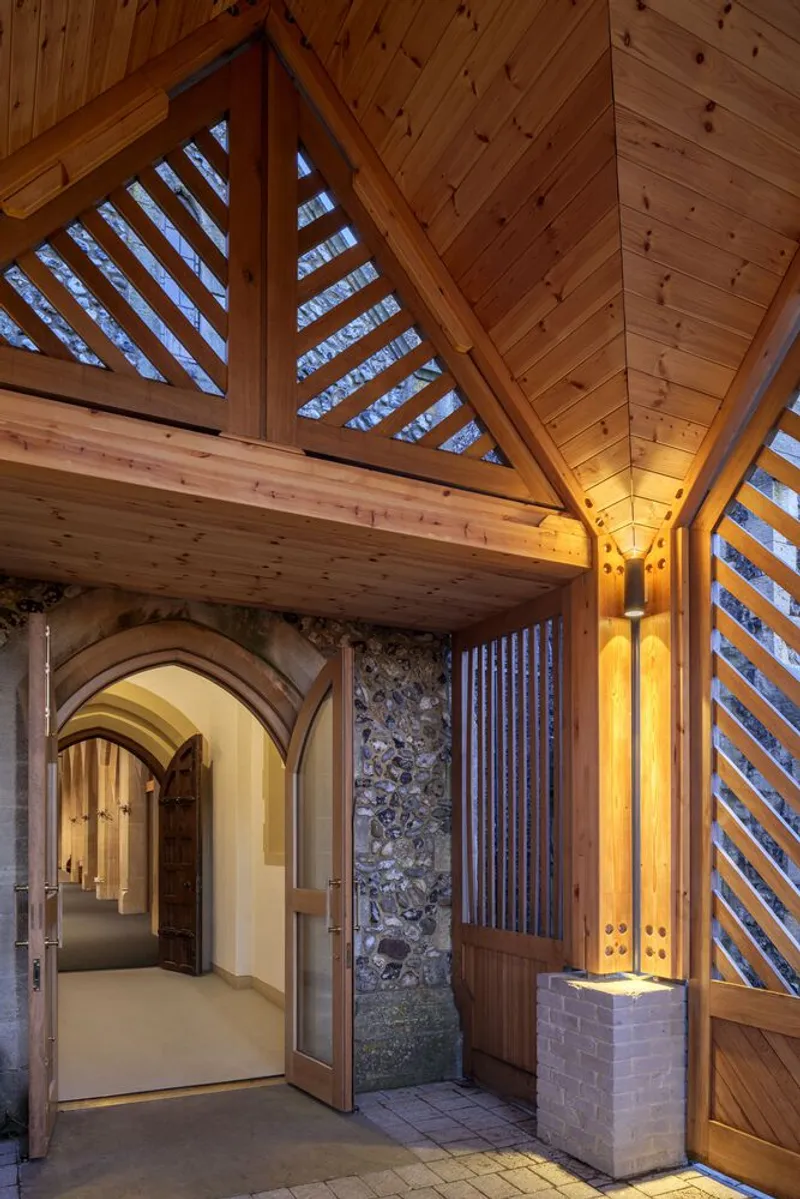
John Puttick Associates has completed a transformative refurbishment of St Leonards Church in Hove, creating a flexible community space while celebrating its rich history. The renovation introduces a striking glulam timber porch with a pitched roof, symbolizing an open welcome to both the congregation and the wider neighborhood. Situated on New Church Road, this Grade-II listed Anglican church dates back to the 13th century. Its Victorian structure features a textured knapped flint facade across a double-nave plan, providing a unique historic character that has been sensitively preserved.
Despite facing closure in 2016 due to a dwindling congregation and the absence of a resident vicar for four years, St Leonards remained active. Meanwhile, the nearby St Peter’s Church in Brighton, with its large, youthful congregation, needed additional facilities. This led to a visionary partnership between St Leonard’s, the Diocese of Chichester, and St Peter’s, combining efforts to reimagine St Leonard’s as a versatile community asset.
Collaborative Design and Community Vision
The refurbishment project was born from a collaborative approach. Thirty members from St Peter’s Church joined Vicar Ali Marshall and the smaller traditional St Leonard’s congregation to envision a space that serves both worship and community engagement. In 2020, John Puttick Associates won an invited competition to bring this vision to life, with funding secured from the Church of England in 2021.
The architects were tasked with creating an adaptable, multi-functional space suitable for a modern, family-oriented congregation. The brief emphasized the need for contemporary amenities, including a heating system and audiovisual integration, to support lively weekend services while respecting the historic fabric.
Architectural Interventions: A New Entrance and Flexible Interiors
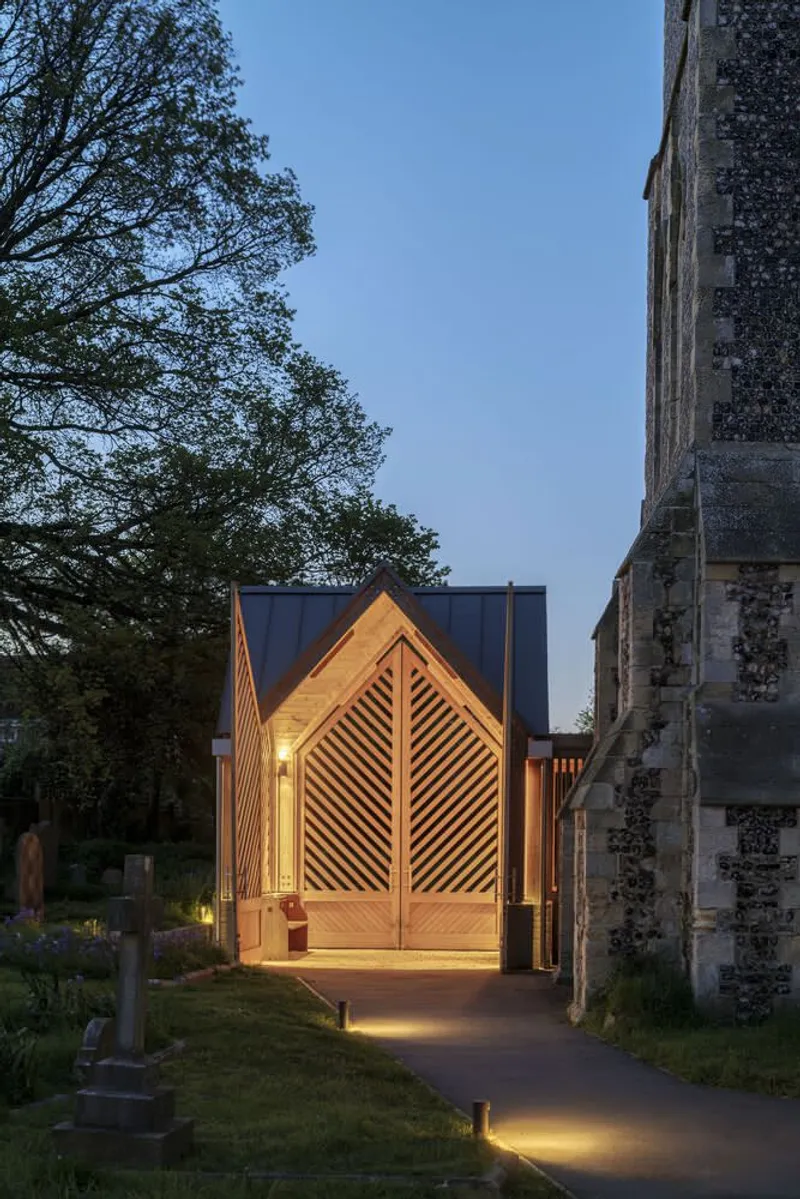
A major element of the refurbishment was relocating the main entrance. Previously situated on the south elevation behind a gated porch, it was often perceived as closed off. The architects moved the entrance to the west elevation, a more traditional location, enhancing accessibility and flow.
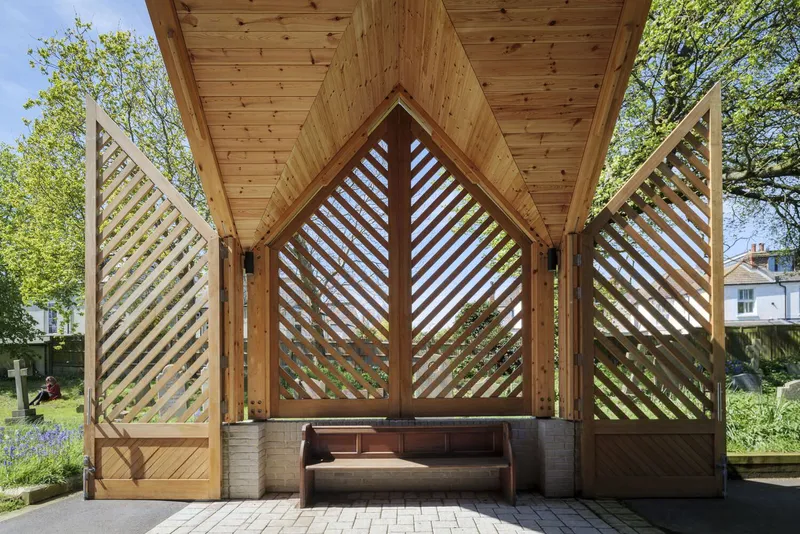
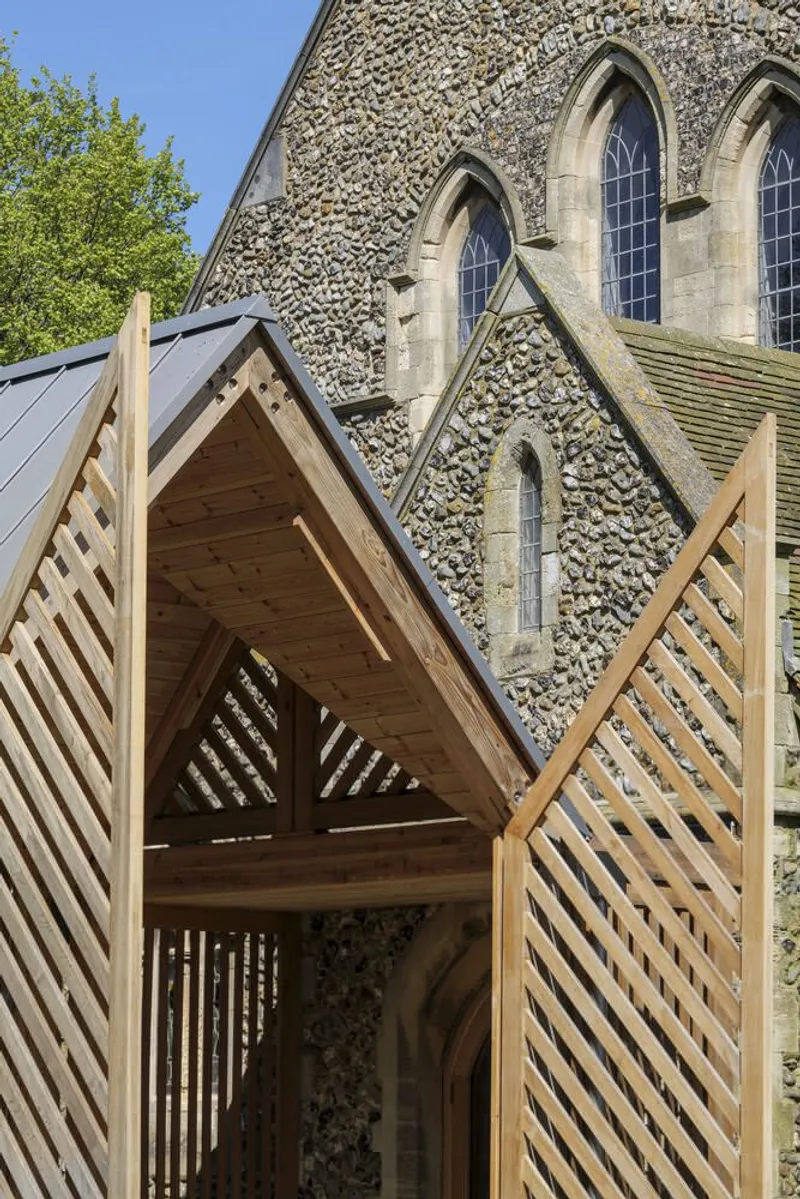
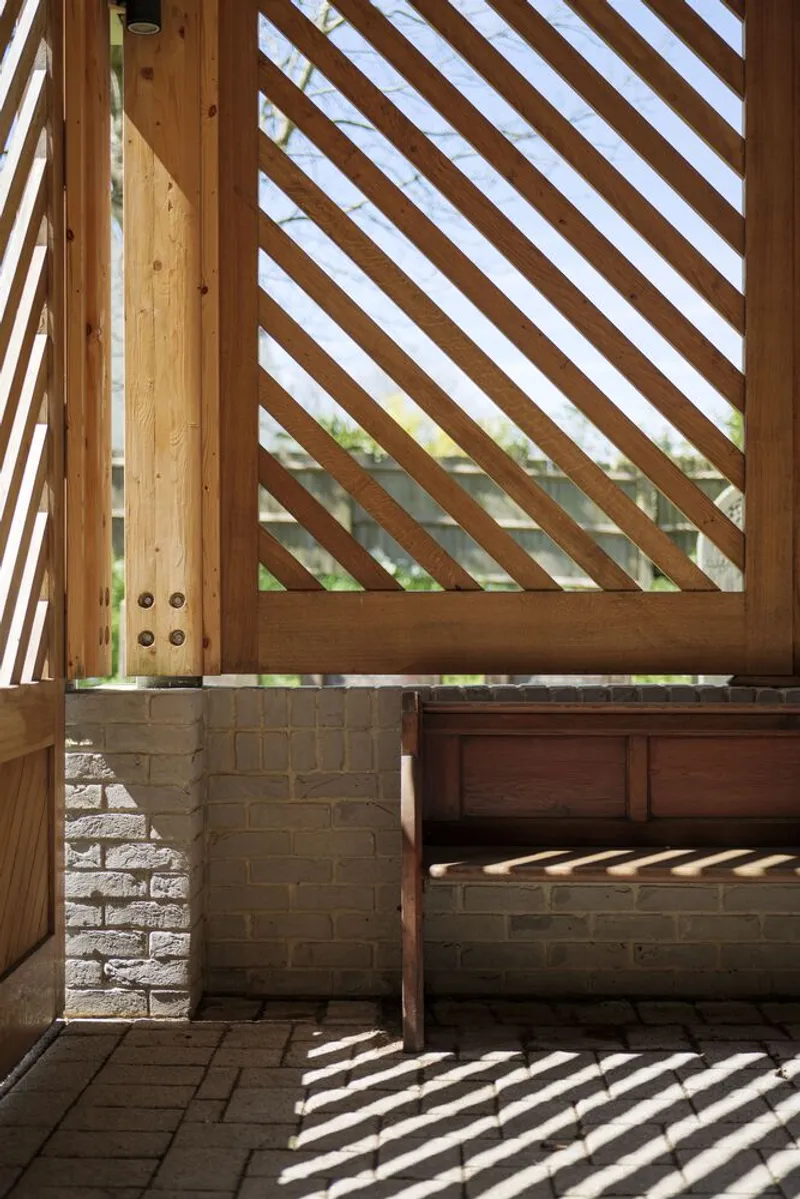
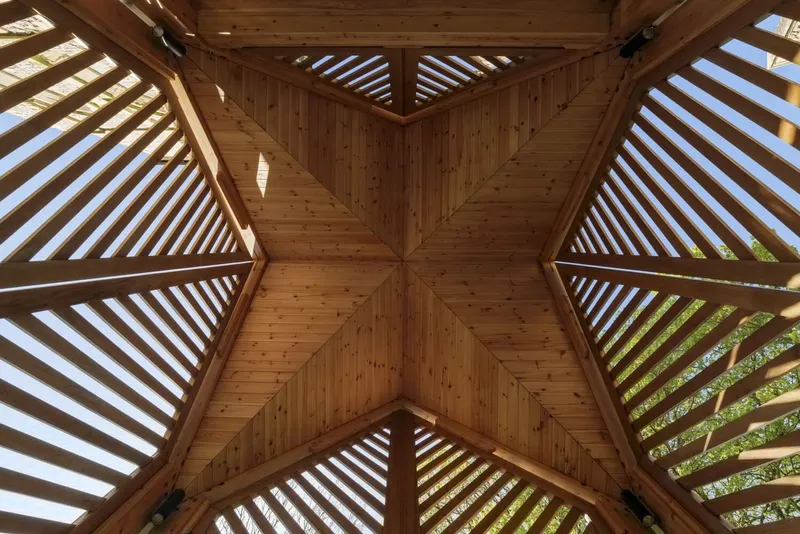
The new entrance features a 4.5-meter tall glulam timber porch topped with a standing seam zinc roof. Two sets of slatted timber doors open both towards the street and the rear courtyard, promoting permeability and a welcoming atmosphere.
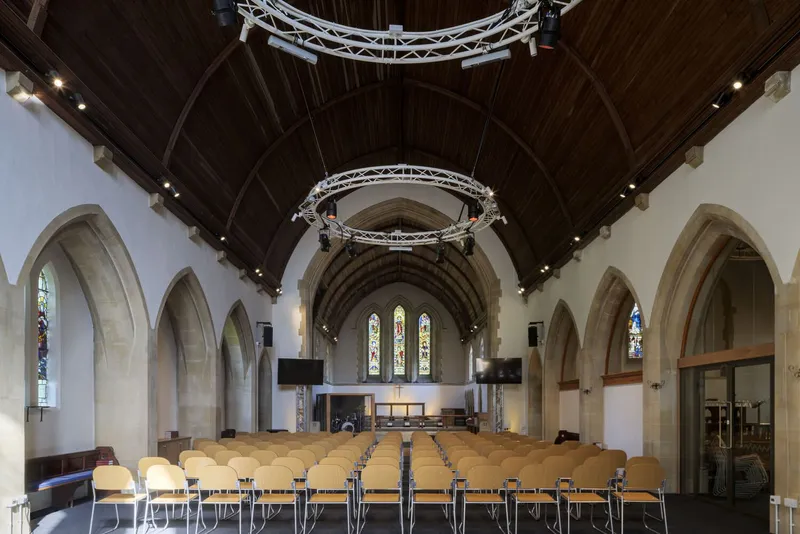
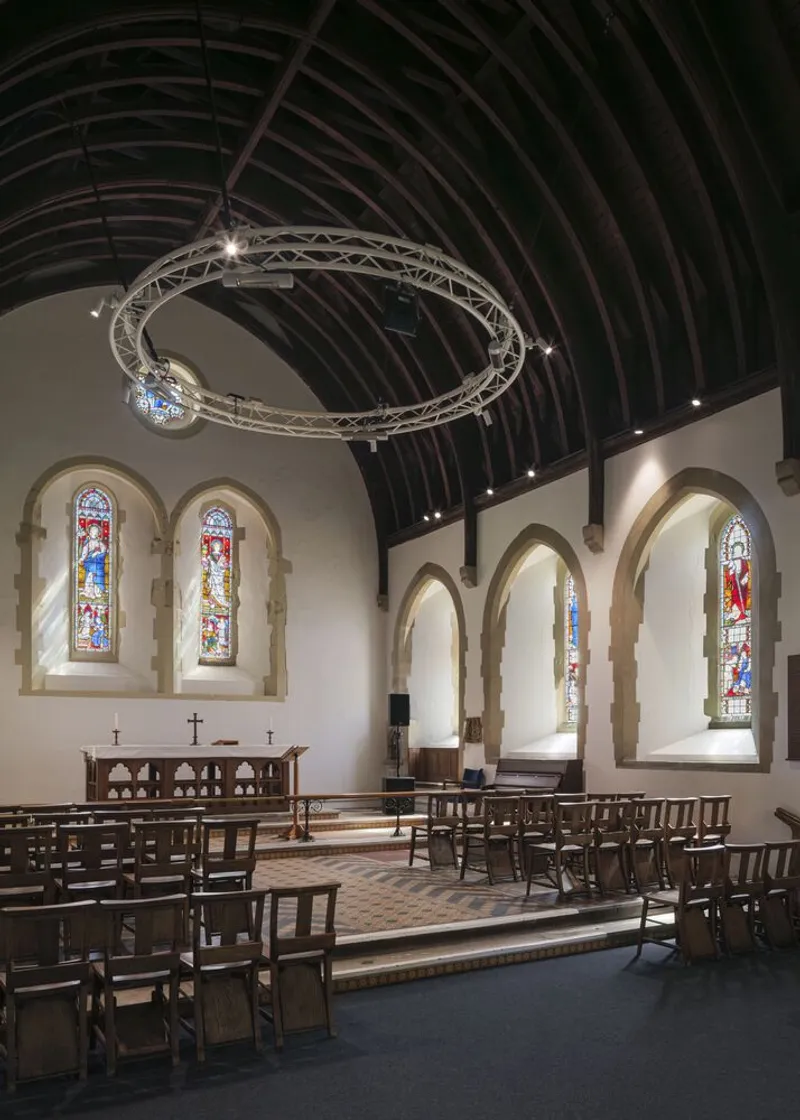
Inside, the church has been reimagined with flexible floor plans. St Leonard’s features two distinct naves: a smaller, traditional southern nave and a larger northern nave for contemporary family services and live music. Glass doors inserted into the original stone arches allow the space to adapt to different community needs while preserving historic features such as the encaustic tiled floors.
Sustainability and Modern Amenities
In line with sustainable design principles, the refurbishment incorporated a new air-source heat pump and an underfloor heating system installed over the original parquet floor, minimizing disruption to historic materials. Ramps at the new porch and south entrance improve accessibility, ensuring the church is welcoming for all.
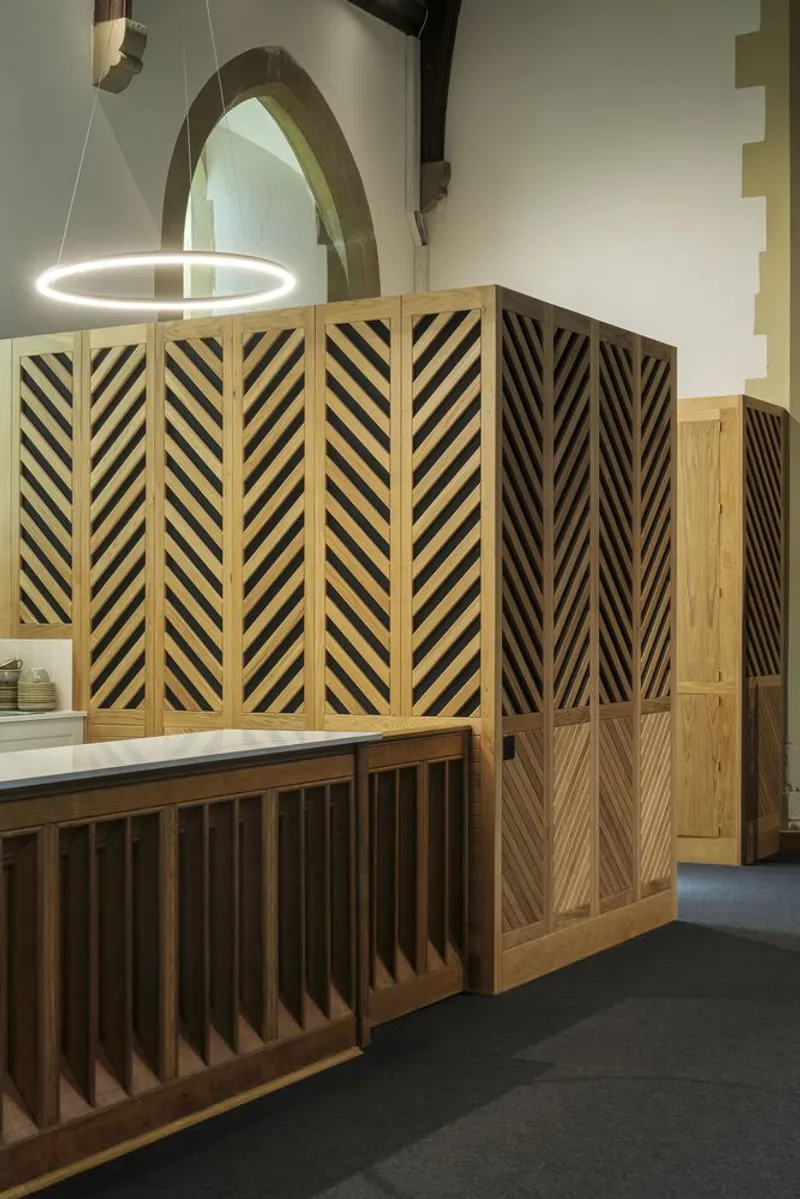
A café space was introduced in the smaller nave, using repurposed choir stalls for the counter and echoing original herringbone tiling patterns in the new joinery. Timber herringbone cladding on dividing screens and oak slats on the porch reinforce the building’s commitment to heritage while embracing modern functionality.
Enhancing the Exterior and Neighborhood Connection
The project also included landscaping improvements, such as renewed pathways, outdoor seating, and new lighting. Festoon lights along the timber porch have earned St Leonard’s the nickname “Bright and Light Church,” enhancing its visibility and sense of community in the local area.
John Puttick Associates’ sensitive interventions represent the most significant refurbishment at St Leonard’s in decades, ensuring that the church continues to serve both worshippers and the broader community.
Architects’ Reflections
John Puttick, Director of John Puttick Associates, commented: "It has been a pleasure adapting St Leonard's Church to meet contemporary needs. The refurbishment supports both worship and community activities, giving renewed life to the building."
Martin Aberson, Senior Architect, added: "The new timber porch embodies the welcoming nature of the church, with slatted oak gates opening wide to all visitors."
Ali Marshall, Associate Vicar at St Leonard’s Hove Church, shared: "The refurbishment balances historic preservation with modern functionality. The new porch is a stunning feature, warmly welcoming both long-time and new community members."
The St Leonards Church Community Connection project demonstrates how thoughtful design can revitalize historic buildings. Through adaptive reuse, sustainable upgrades, and community-focused planning, this Grade-II listed church continues to thrive as a vibrant cultural and spiritual hub in Brighton and Hove.

All photographs are works of
Gareth Gardner


Popular Articles
Popular articles from the community


longwave studio Reorganizes a 112 m² Tainan Apartment Around the Daily Routines of a Family and Two Cats
In Tainan, Taiwan, birch plywood, rust-red furniture and a freestanding plaster wall link arrival, storage, work and family life in one apartment.

LT2A and OPEN Architectes Thread a Brick and Glass High School Through a Wooded Belgian Campus
In Braine-l'Alleud, a 3,000 m² wing for Collège Cardinal Mercier pairs pale brick with a glazed colonnade, deferring to a small chapel and a dense wood.

Architekt Andreas Gruber Scatters 23 Dark Timber Chalets Across a South Tyrolean Forest Edge
In Molini di Tures, Amonti Chalets breaks a resort into a hamlet of gabled timber houses, with parking, storage and services pushed into the slope.

David Macias Steps a Doorless Stone and Plaster House Down a Tropical Colombian Hillside
In the humid hills of Colombia, Threshold House replaces the front door with an open void and terraces its 850 m² down the slope instead of fighting it.

Similar Reads
You might also enjoy these articles


Hodi-Mandai Geram
Project Function: Preservation and revitalization of the Intangible heritage and socio-spatial identity of the Hodi by Housing, Cultural Memory Center, Sacred Grove, landscape, local tourism economy


Olio Towers: A Mid-Rise for Performers That Fuses Housing, Rehearsal, and Stage
Located blocks from Houston's Theater District, this modular tower stacks living units around a central performance atrium.

Oasis: Modular Green Housing Carved into Dhaka's Urban Fabric
A shortlisted Plugin Housing entry reclaims unauthorized settlements in Dhaka with stepped concrete volumes, green roofs, and ventilation-driven design.

Black Hole: A Floating Megastructure for the Post-Physical Era
Emiliano Mazzarotto envisions a spherical, self-scaling arena where e-sports, digital hotels, and holographic stadiums replace traditional public space.

Explore Congregational Space Competitions
Discover active competitions in this discipline

Challenge to reimagine the Iron Throne

Photograph architecture without architects

Illustrate the lost glory of Angkor Wat - Render Challenge

Design challenge to reuse E-waste
Comments (0)
Please login or sign up to add comments
No comments yet. Be the first to comment!