
STA Threads a Museum of Heartbreak Through a Colonial Building in Chiang Mai
A 308-square-metre renovation turns a historic Thai shophouse into a traveling museum's permanent Southeast Asian home.


The Museum of Broken Relationships has made a career out of transience: traveling exhibitions of personal objects donated by people processing loss, breakups, and emotional upheaval. Planting that nomadic concept inside a permanent building demands a particular kind of spatial intelligence, one that can hold fragile, intimate stories without drowning them in architecture. In Chiang Mai, STA, led by Asrin Sanguanwongwan and Petra Tikulin, found that balance inside a two-storey colonial-era structure on a busy street, stripping its interior down to the bones and reassembling it as a sequence of rooms that feel both deliberate and open-ended.
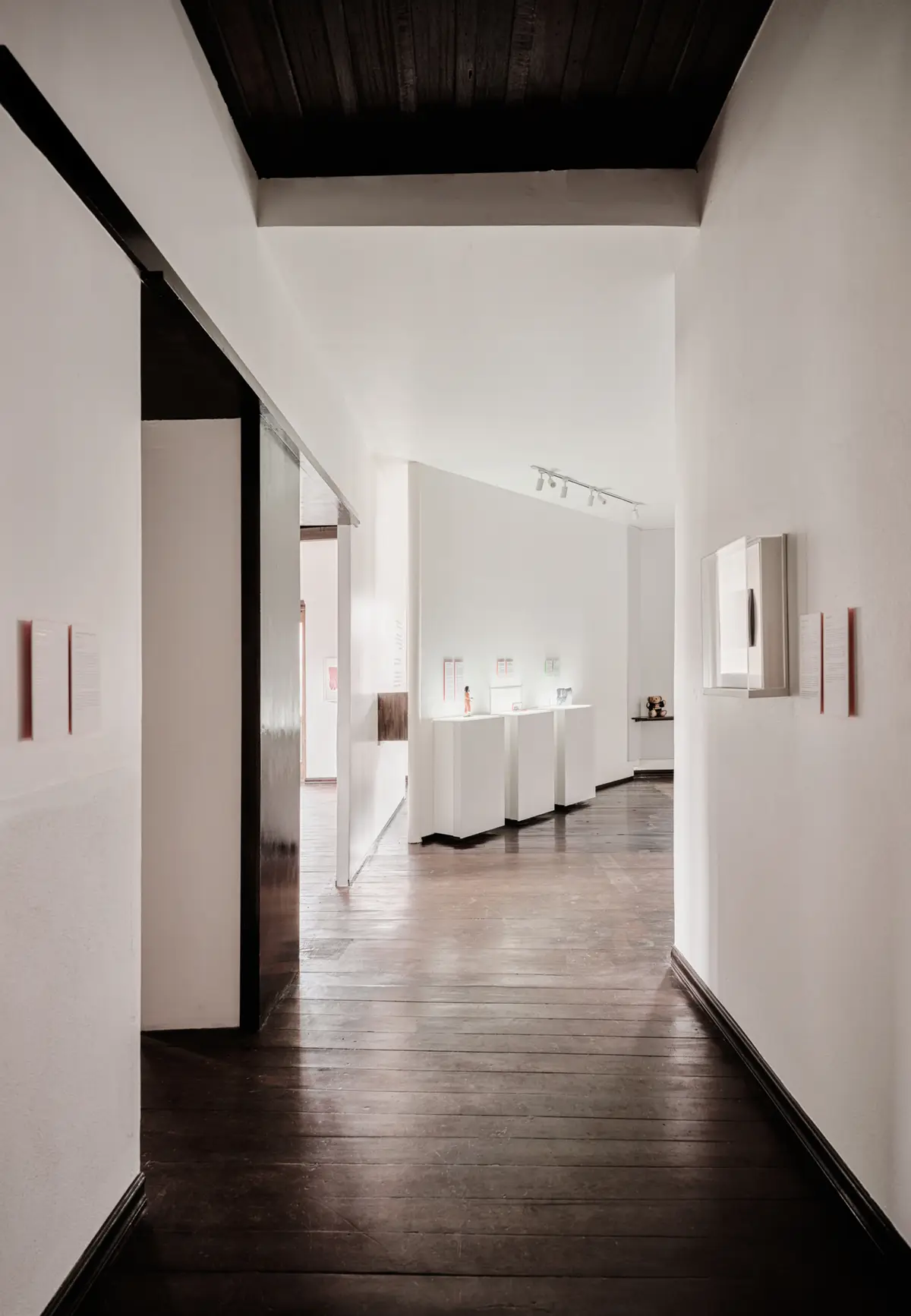
What makes this 308-square-metre renovation worth studying is the tension between preservation and insertion. The existing building, with its thick masonry walls, timber shutters, and patterned tile floors, is not hidden or apologized for. Instead, STA introduced a system of freestanding white partitions and dark-stained timber ceiling planes that operate almost independently of the historic shell. The old building becomes a container; the new elements become a flexible armature for curation. Neither dominates. The result is a museum where the architecture serves as emotional scaffolding rather than spectacle.
Street Presence and Threshold
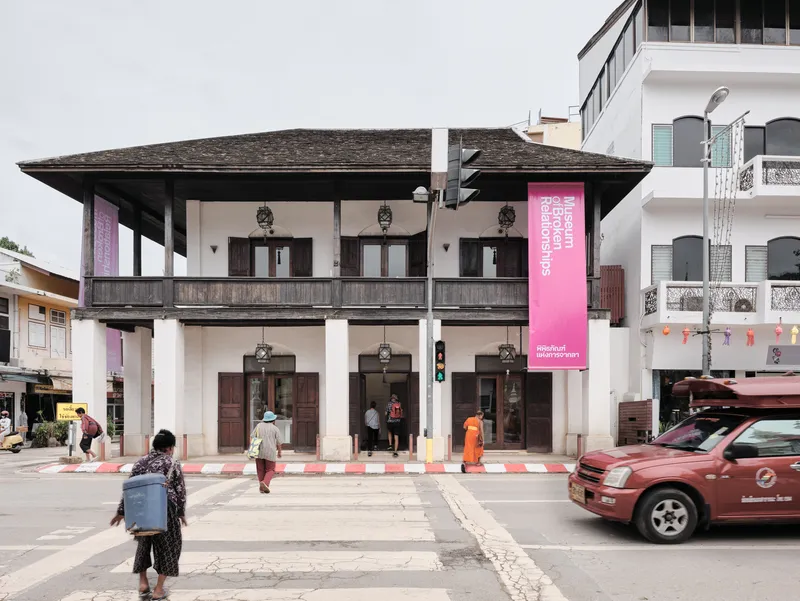


From the street, the building reads as a straightforward two-storey colonial shophouse: timber balcony, symmetrical openings, the kind of structure you walk past a hundred times in Chiang Mai's old city. Pink exhibition banners signal that something has changed inside, but the facade itself has not been theatrically altered. That restraint matters. It means the shift from public street to private confession happens at the threshold, not from across the road.
Crossing into the ground floor entrance, the patterned terrazzo floor and striped wall-mounted sculpture establish the museum's tone immediately: playful, slightly melancholic, and materially honest. Black typography panels above the terrazzo give context and set up the emotional register before visitors move deeper into the galleries. The entrance is compact and low, which compresses the experience before the rooms begin to open.
The Ceiling as Spatial Device
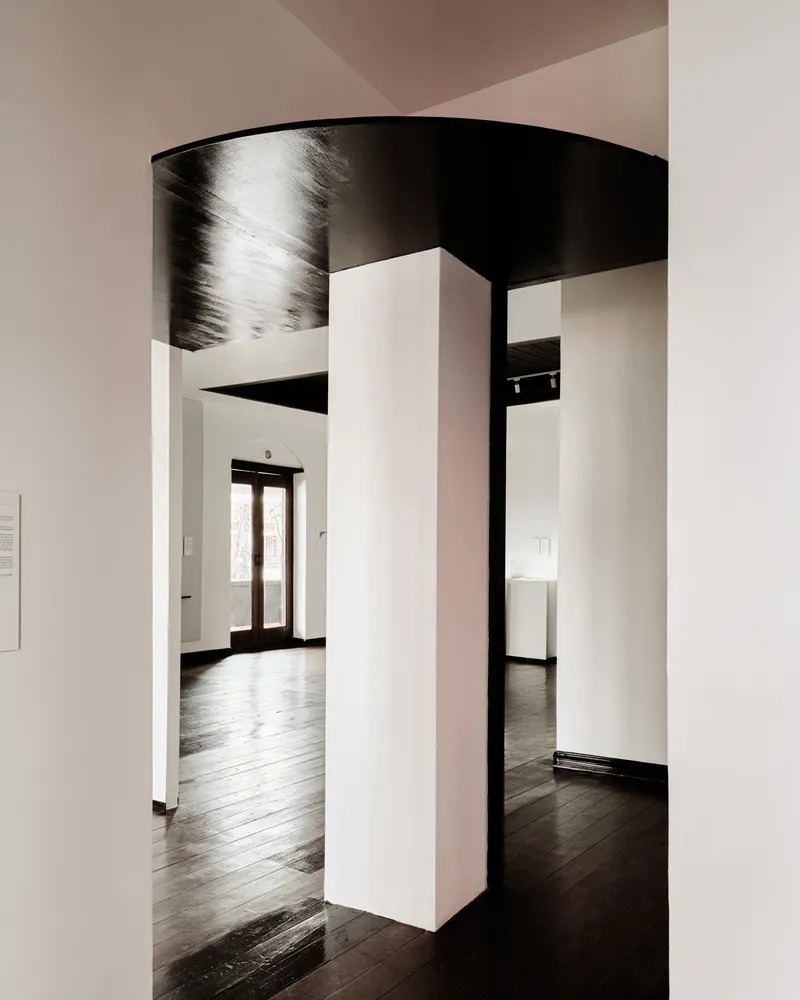
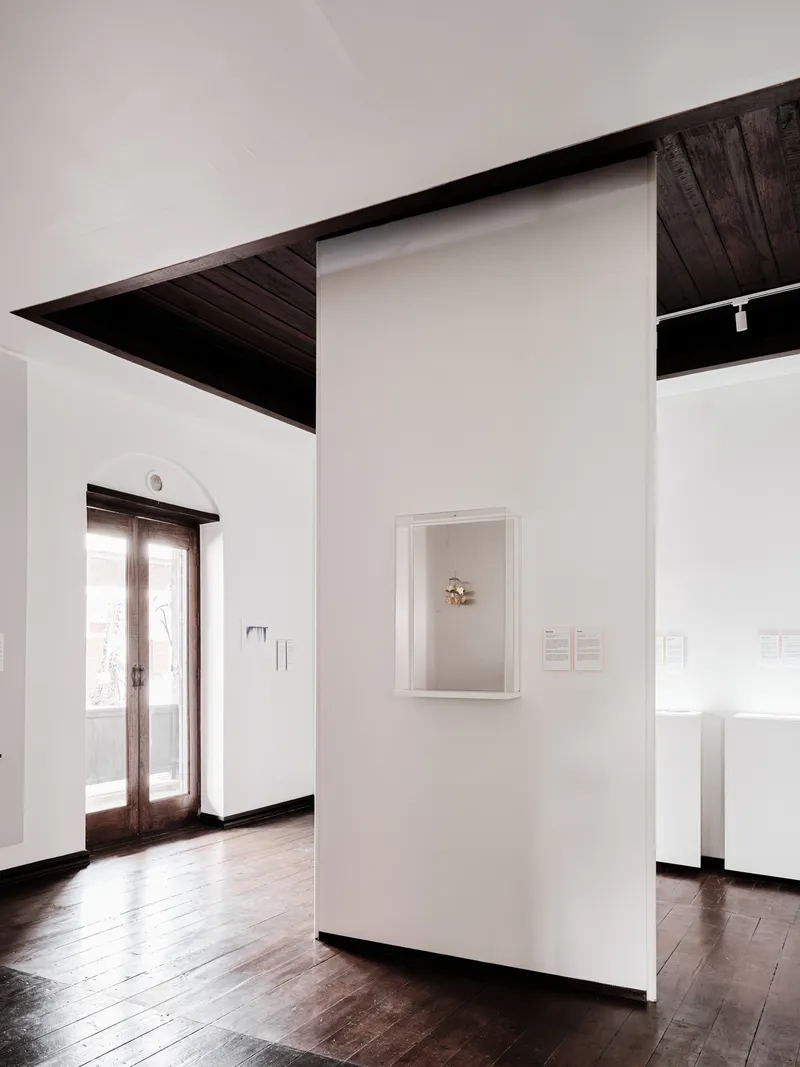

STA's most assertive move is the insertion of dark-stained timber ceiling planes that curve, fold, and angle across the tops of the gallery rooms. These are not structural; they are scenographic, defining zones within the open floor plates and compressing or lifting the perceived ceiling height as visitors move through the building. The curved black timber inserts create a canopy effect that draws the eye upward and then pulls it back down to the objects on display.
Where the new ceiling planes meet the existing structure, angular metal columns mark the intersection. These moments of contact between old and new are legible without being labored. You can see exactly where the historic building ends and the contemporary insertion begins, which gives the whole project a documentary quality: the architecture is transparent about its own construction history.
Freestanding Walls and Flexible Display
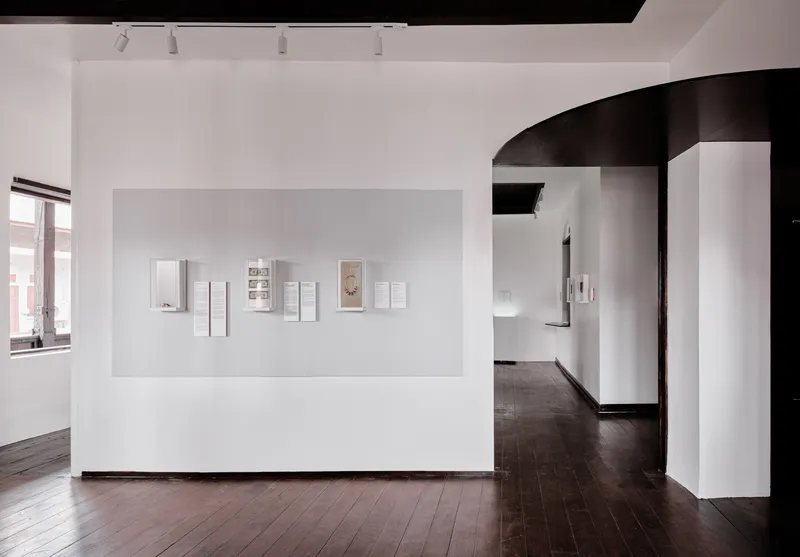
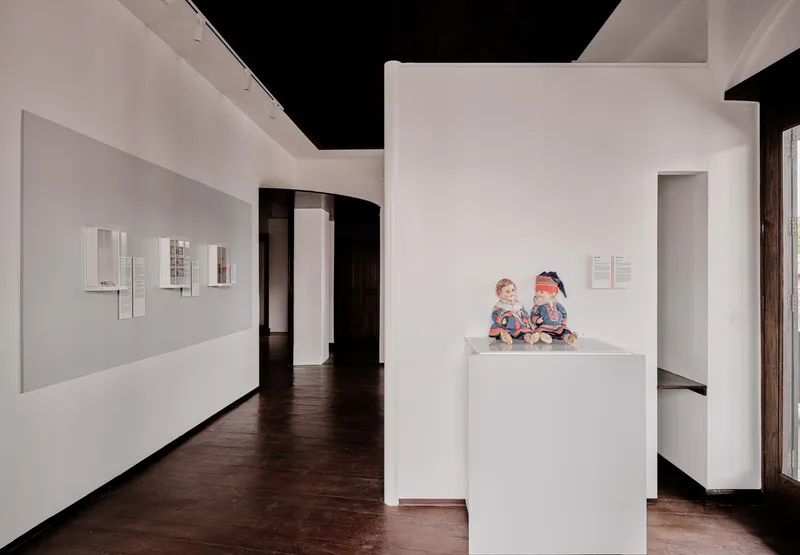
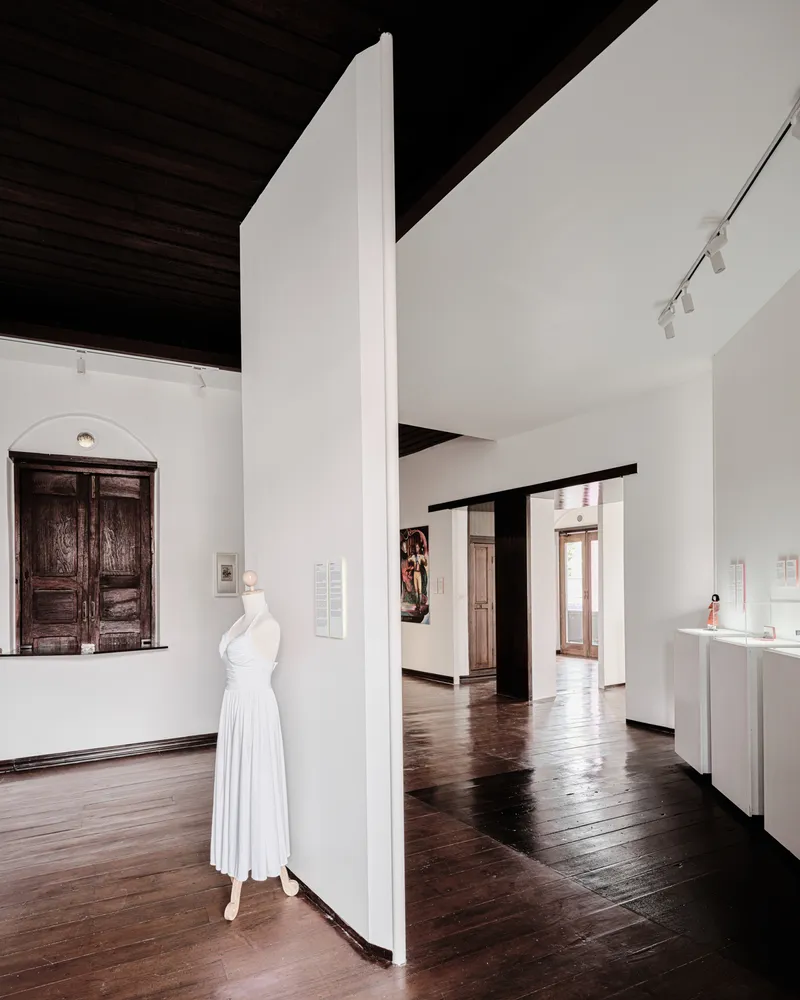
The white partition walls do not touch the perimeter. They stand free on the dark timber floors, creating corridors, alcoves, and rooms-within-rooms that can be reconfigured as exhibitions change. For a museum whose content is inherently personal and rotating, this is essential. A dress form, framed artworks, and small objects on plinths all coexist within a spatial system that never prioritizes one type of artifact over another.
The partitions' proportions are generous enough to carry large-format pieces but narrow enough to maintain intimacy. Children sit on a plinth in one room, completely at ease, which says something about the scale: this is not a cathedral of culture. It is a series of domestic-scaled spaces where personal objects can hold their own gravity.
Framing and Sequence
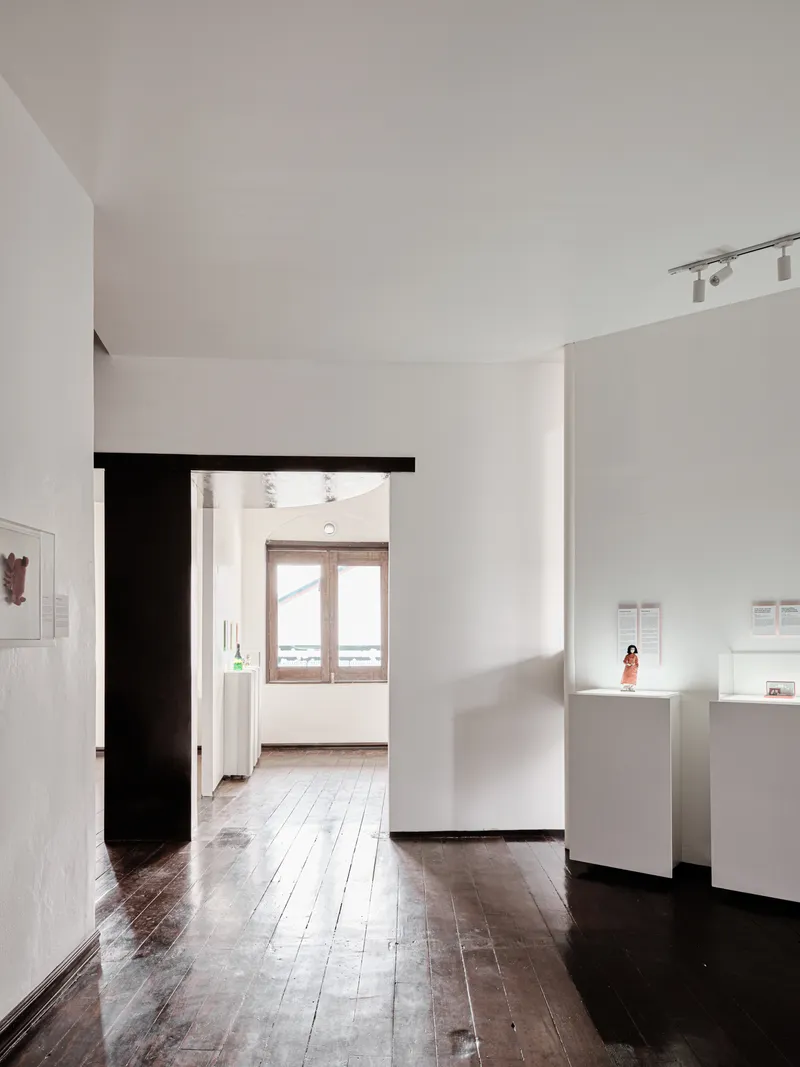
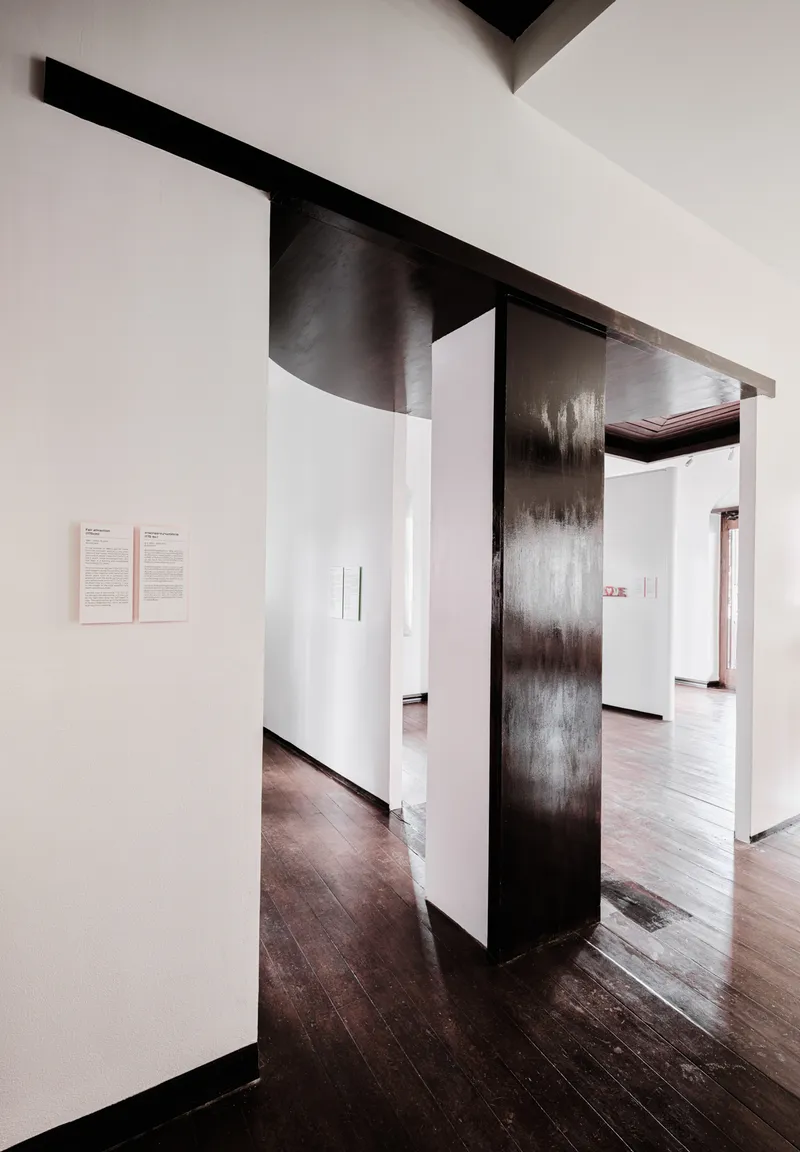

STA uses doorways, steel frames, and timber jambs to choreograph views from one room into the next. Blackened steel columns frame a sequence of gallery thresholds so that the visitor always sees a compressed preview of the next space before entering it. This is cinematic pacing applied to architecture: each room is a scene, and each doorway is a cut.
Natural light enters through the original timber window shutters, washing the far walls of certain galleries and providing a counterpoint to the controlled track lighting elsewhere. The interplay between found daylight and curated spotlights gives each room a slightly different atmosphere, which keeps the procession from becoming monotonous.
Objects and Intimacy


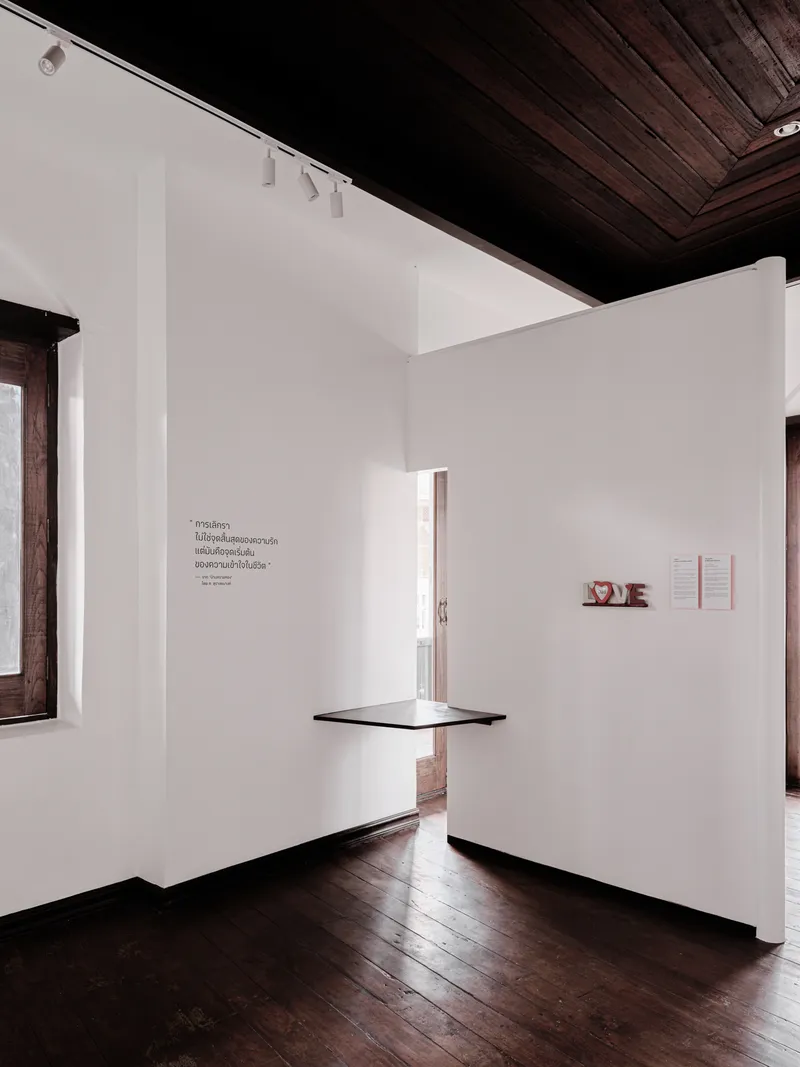
The Museum of Broken Relationships is, at its core, about small things carrying enormous emotional weight. A hammer on a cylindrical pedestal in a corner alcove with patterned floor tiles. Pink rubber gloves in a white display box mounted on a wall. A mirror with pink books on a floating shelf in a corridor. These are not precious artifacts in the traditional museum sense; they are relics of lived experience, and the architecture treats them accordingly.
The narrow vertical openings in the partition walls, the recessed display niches under exposed timber beams, and the careful placement of floating shelves all suggest that the architects spent significant time thinking about how a single object occupies a field of vision. Nothing is crowded. Each piece has enough breathing room to register as a stand-alone emotional proposition before the visitor moves on.
Material Dialogue
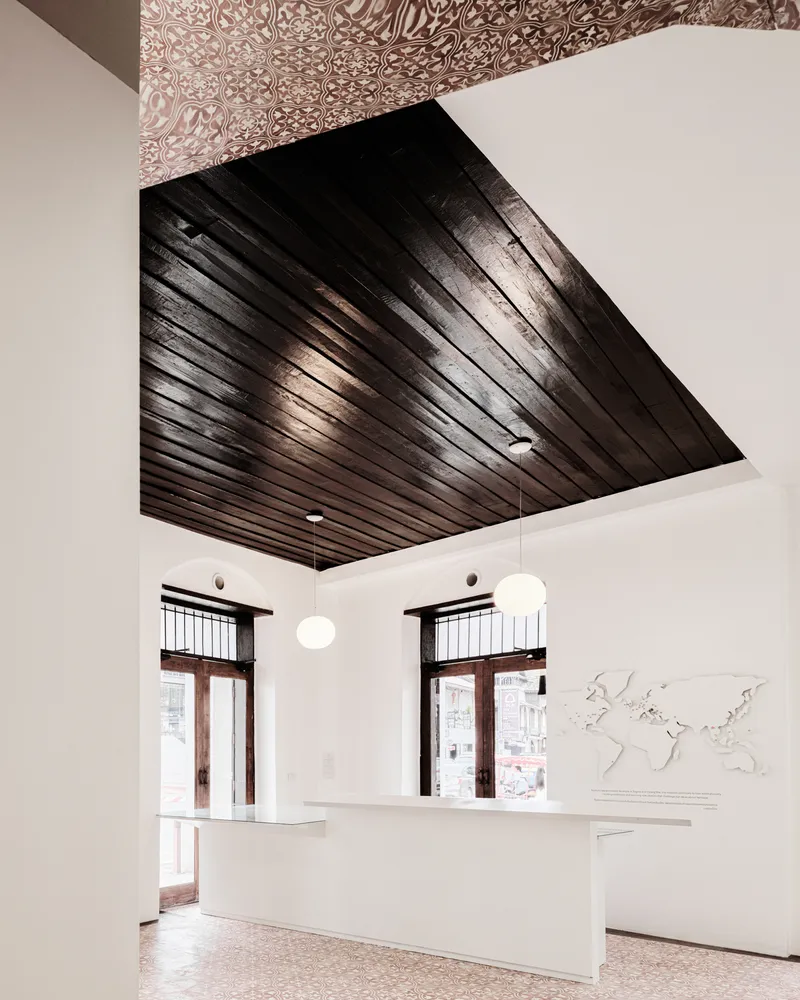


The reception desk sits under a dark timber slatted ceiling with patterned tile above and sphere pendant lights, a single moment where old tile, new timber, and contemporary lighting coexist in one frame. This kind of material layering runs through the entire project. Weathered timber door jambs lead to galleries with exposed plank ceilings. Recessed niches cut into plaster walls sit beneath original timber beams outfitted with track lighting.
STA's material palette is deliberately restricted: white plaster, dark-stained timber, blackened steel, patterned tile, terrazzo. There is no moment where a flashy finish competes with the exhibited objects. The restraint allows the emotional content of the collection to do the heavy lifting while the architecture provides a quiet, textured backdrop.
Plans and Drawings



The axonometric drawings reveal the building's organizational logic: rooms arranged around a central courtyard with thick perimeter walls, and interior partitions operating as a semi-independent system within the historic shell. A pink-highlighted central volume in one axonometric suggests a key spatial element, possibly a stair or service core, that anchors the plan.
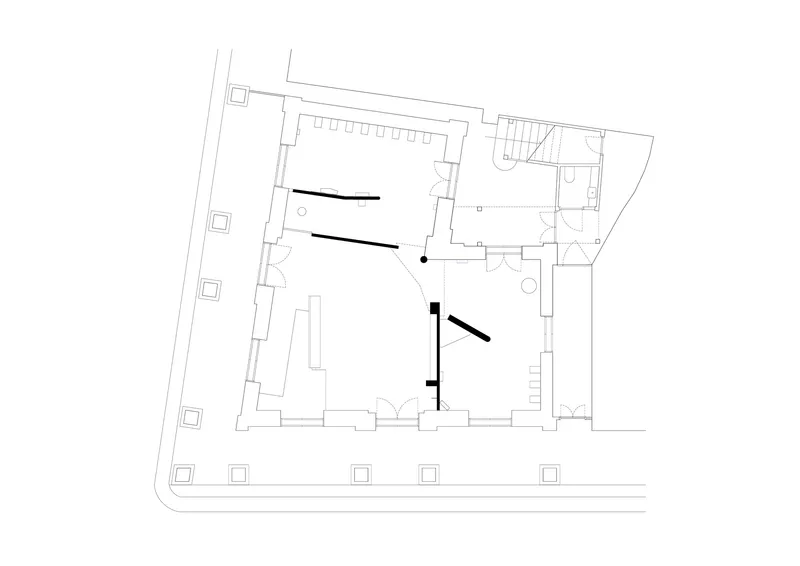
The floor plans show an irregular perimeter that follows the original building's footprint, with a central staircase connecting levels and an outdoor terrace on one side. The irregularity is honest: this is a found building, not a purpose-built box, and the plan reflects the compromises and opportunities that come with adaptive reuse. The stairwell, set off to one side, keeps circulation out of the gallery rooms, which is a smart move for maintaining the intimacy of the exhibition spaces.
Why This Project Matters


Adaptive reuse projects in Southeast Asia too often fall into one of two traps: either the historic building is embalmed in conservation-grade caution, or it is gutted and re-skinned beyond recognition. STA sidesteps both by treating the existing structure as a partner rather than a patient. The old walls, tiles, and timber are left to speak in their own register while the new insertions create a parallel spatial language. The two coexist without hierarchy, which is harder to pull off than it looks.
More broadly, the project raises an interesting question about what a museum of emotion needs from its architecture. The answer here is clarity, restraint, and a willingness to disappear when the objects demand it. STA built a building that knows when to step forward and when to get out of the way, and for a museum dedicated to the messy, complicated business of human feeling, that is exactly the right instinct.
Museum of Broken Relationships, Chiang Mai, Thailand. Architecture by STA. Lead architects: Asrin Sanguanwongwan, Petra Tikulin. Completed 2024. 308 m². Photography by Napat Pattrayanond.
About the Studio
Share Your Own Work on uni.xyz
If projects like this are the kind of work you want to make, uni.xyz is a place to publish your own, find collaborators, and enter design competitions.


Popular Articles
Popular articles from the community


David Ortega Stacks a Two-Story Mexico City Penthouse Around a Steel Stair and a Pergola-Shaded Roof Terrace
In Colonia Roma, a 300 m² penthouse uses oak joinery, a planted steel stair and a slatted roof pergola to make a new-build apartment feel like a house.

graciastudio Turns a Viewless Tijuana Lot Inward Around a Courtyard of Concrete, Timber and Trees
In Tijuana, Jorge Gracia's GA2 House stacks a timber-clad private floor over exposed concrete and replaces a missing view with a planted interior patio.


Opera on the Sea: Driftwood Logic Shapes a Timber Opera House on Estonia's Coast
Trevor Orgill's opera house translates the entangled drift of floating timber into a civic building where wood, water, and music converge.

Manzana Morphosis: Stretching Barcelona's Grid into a Living Landscape for 2050
A radical reworking of the Eixample manzana turns density into a tool for generous public space, vertical ecology, and environmental performance.

Similar Reads
You might also enjoy these articles

LAVA Architecten Gives Vocational Education a Sawtooth-Roofed Face on a Mechelen School Campus
In Mechelen, Belgium, a 2,053 m² STEM school on a 6×6 m grid turns workshops and classrooms into rooms that can be rearranged as teaching changes.

KEMA Studio Turns a Derelict Marvila Attic into a 60 m² Lighthouse Apartment Above Lisbon
In Lisbon's Marvila district, a rebuilt roof, four skylights and two plywood volumes turn an unlivable attic into a bright home facing the Tagus.

Pixel Gardens: One Repeated Module Stacked Into a Terraced Social Housing Tower for Famagusta
Salem Bader's shortlisted housing tower builds a vertical neighbourhood from one repeated module, offsetting units to carve terraces, light and air.

Bao Huynh Watercolor Atelier: A Serene Art Retreat in Hội An
Bao Huynh Watercolor Atelier in Hội An blends multifunctional art spaces, sustainable design, local materials, and family-friendly living in a serene environment.

Explore Museum Competitions
Discover active competitions in this discipline

Challenge to design luxury tourism on rails

VR headsets Storefront design competition

Bring back Drive In's

Designing a staircase for a client
Comments (0)
Please login or sign up to add comments
No comments yet. Be the first to comment!