
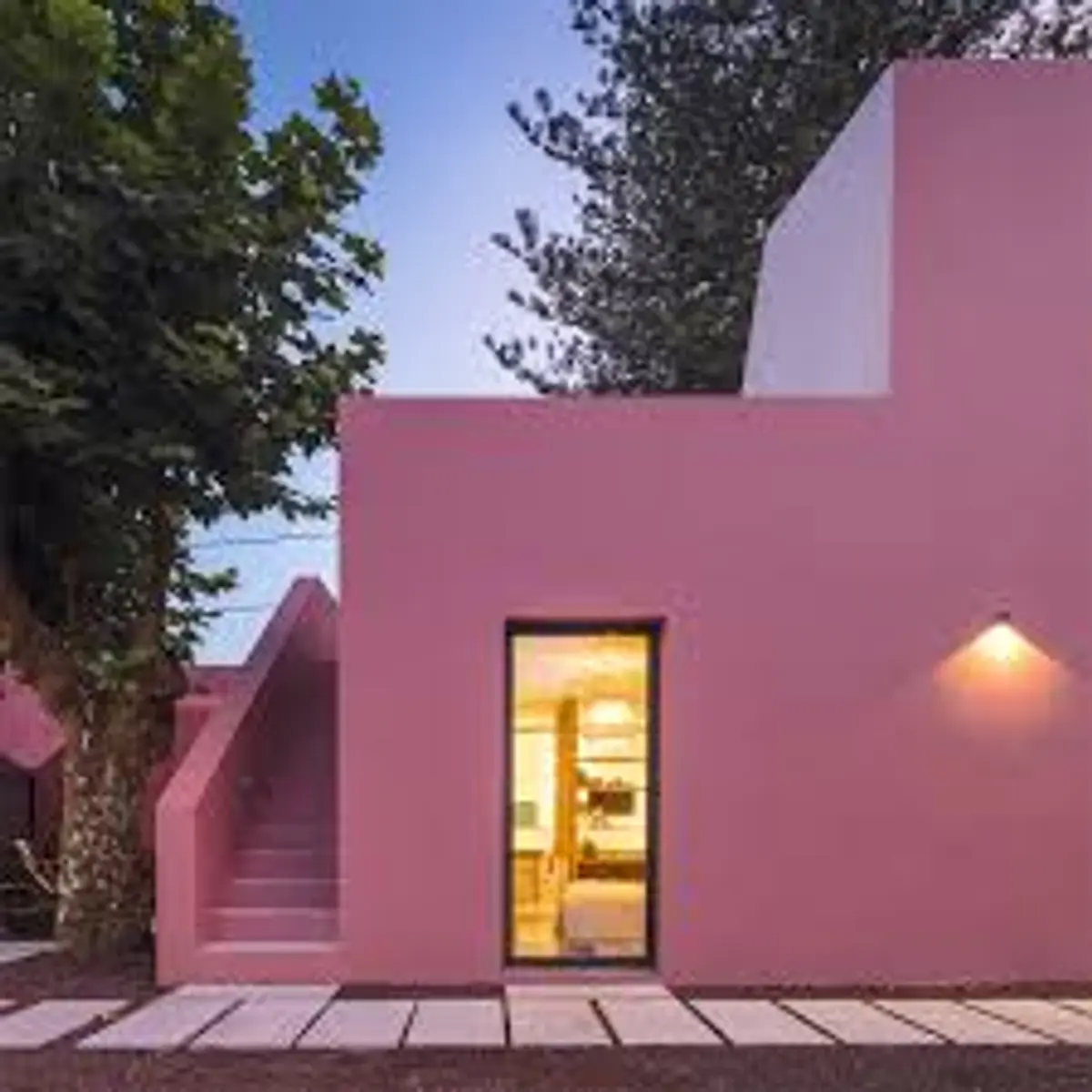
Stacked
Journal

- What was the concept behind the project?
The concept is born from the idea and desire to create comfortable and functional living, even in such a small living space, a situation that we will meet more and more often in an increasingly populous world. Several long and narrow sites exist between large plots in big cities, all over the world, from Tokyo, to New York and beyond. With ever increasing urbanization, there is an urgent housing need, which is becomes even more intense if we consider events such as movements of refugees and other displaced people due to climate change, war or other events. This concept, provides a small yet flexible, functional and high-quality space, with all the necessary amenities and without creating a claustrophobic feeling to the user.
- What was the intent behind the organization of elements across various levels (Architectural, Site, Urban)?
The structure of the modular pocket homes, provides a certain degree of flexibility in regards to their arrangement. They can be neatly stacked on top of each other, but also offset to a certain degree when the site allows it. The modules are organized over a common ground floor and are connected together with a steel structural frame. The intent is to create a rational architectural object which respects the surroundings and the strict spatial requirements, but is also playful.
- How many iterations were tried to arrive at the final outcome?
Several different design iterations were used in order to arrive to this outcome, including different spatial arrangements of the modules as well as several different options in how to approach the problem of using the limited space optimally. Different layouts were also tested to optimize movement, space perception and life in the residential units.
- Which methods of design investigation?
Sketching and diagrams such as circulation diagrams prove invaluable tools for this design.
- What/How were the materials chosen?
The main structural material is steel. New developments in technology such as steel furnaces powered directly by solar power or other sustainable sources, open the possibility that this material is used in a sustainable manner, something which was difficult to do until now, due to the high emissions during its manufacturing. At the same time steel can be recycled indefinitely. For the interiors, one of the primary elements is wood. Wood is chosen due to its several benefits in human psychological and physical health, as an indoor climate regulator but also due to its timeless aesthetic value.
The facade is composed of reclaimed brick cladding, a material which has a long history of use in New York. Several brick multi-storey buildings which are demolished annually in the city, can provide a material which has a long history locally in a cradle-to-cradle context.
- How was a specific objective attempted to be met?
Creating an open and accessible space, without sacrificing functionality was one of the main objectives in this concept. This was met by creating a space which provides everything which is necessary, but without foregoing comfort. Thus, a solution with hidden, foldable fixed furniture was chosen, as it can greatly increase free space in the home, without sacrificing essential functions.
Another objective was to create an object that uses materials that can be sourced sustainably such as timber and reclaimed bricks, a material which is abundant in the local context. With considerations to indoor climate and comfort, but as well as energy demands, the building is insulated using high-performance insulation batts, a solution which is optimal in situations of little available space.
- What is the expansion plan of the project?
The modules are composed of a prefabricated steel frame, which provides flexibility in regards to expansion plans in the future, due to its strength and longevity. The steel frame is dimensioned adequately for further modules to be placed on top if such a necessity arises. At the same time, the units are mobile, can be disassembled, transported and reassembled in a new location, increasing their useful lifespan and reducing waste.
- How will the project transform with the passing time?
As the project is designed to be composed of modular, transportable and stackable elements, there are several open possibilities for its transformation through time. The project could expand vertically with similar modules, or even larger modules that could accommodate more people.


Popular Articles
Popular articles from the community


Temporary Home for Dogs: A Reversed Zoo Rethinks Animal Shelter Architecture
In Bucharest, a sinuous corridor and freed landscape flip the logic of containment, designing a shelter that works to make itself unnecessary.
Extended Shell: Retrofitting Kolkata's Balconies as Living Urban Thresholds
A modular retrofit system recovers the social and environmental intelligence of Kolkata's historic verandas for contemporary Park Street residents.
Cloaked Colonization: A Mobile Underwater Habitat That Moves Like a Fish
Micah Abaya's shortlisted EHC Pacific entry reimagines ocean settlement as a dispersed network of self-sustaining architectural organisms.

Manzana Morphosis: Stretching Barcelona's Grid into a Living Landscape for 2050
A radical reworking of the Eixample manzana turns density into a tool for generous public space, vertical ecology, and environmental performance.

Similar Reads
You might also enjoy these articles
The Rhythm of Seasons
A Farmers' Market Connecting Nature and the City


More Than a Building-Designing a Living System
More Than a Building-Designing a Living System
Base Beyond
DESERT COMPOUND ARID: TOURISM OF ABSENCE AND ABUNDANCE


Comments (0)
Please login or sign up to add comments
No comments yet. Be the first to comment!