
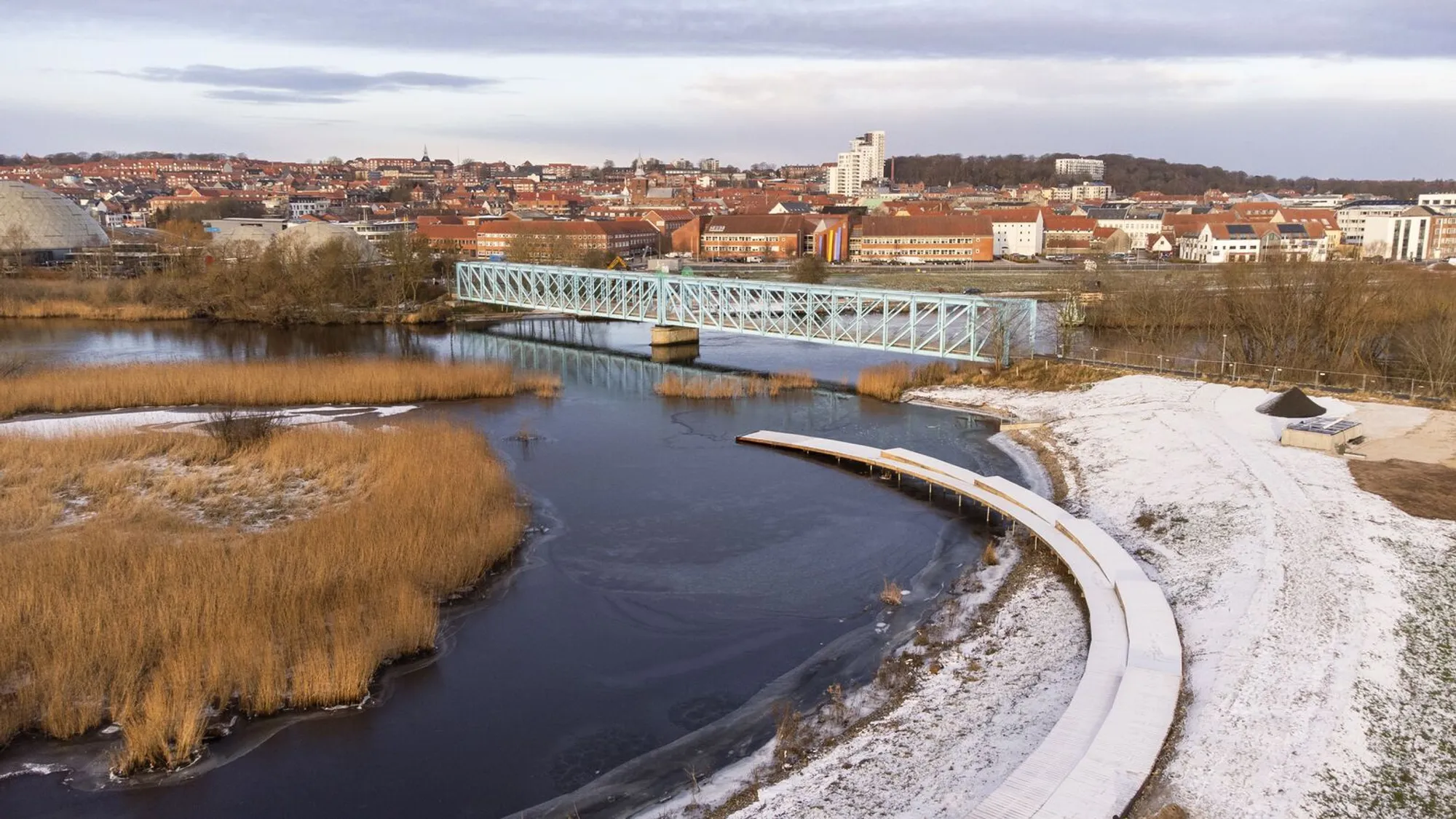
Stork Meadow Nature Park by C.F. Møller Architects: A Climate-Resilient Urban Oasis in Randers, Denmark
Stork Meadow Nature Park transforms Randers’ Storkeengen into a climate-resilient public park with wet meadows, stormwater management, pathways, and nature experiences.


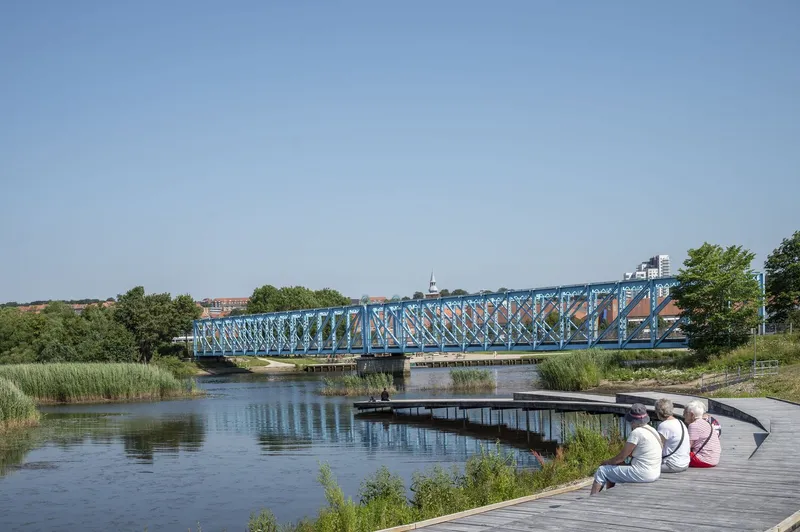
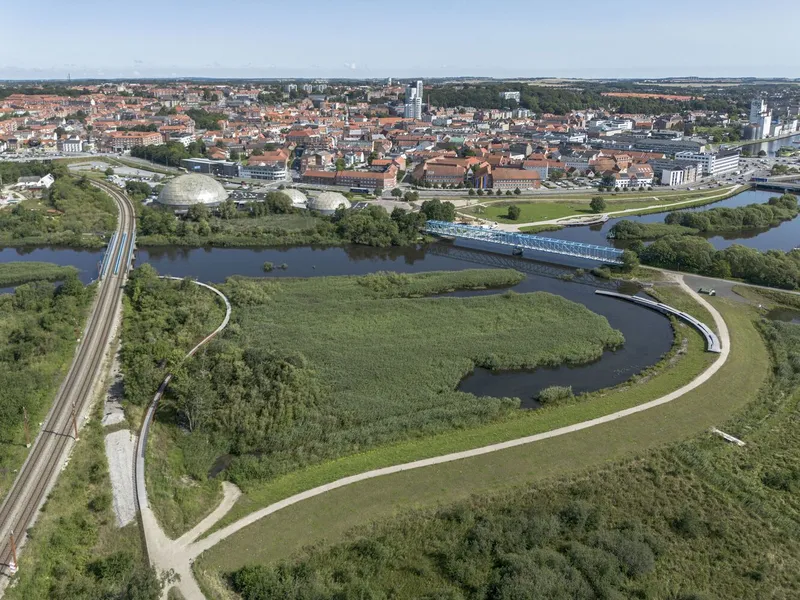
C.F. Møller Architects’ visionary project, Stork Meadow Nature Park, transforms the historic Storkeengen area into a multifunctional public nature park that addresses Randers’ climate challenges. Strategically located along the Gudenå, Denmark’s longest river, the park integrates climate adaptation strategies with recreational opportunities, bringing the natural delta closer to the city center and enhancing urban accessibility.
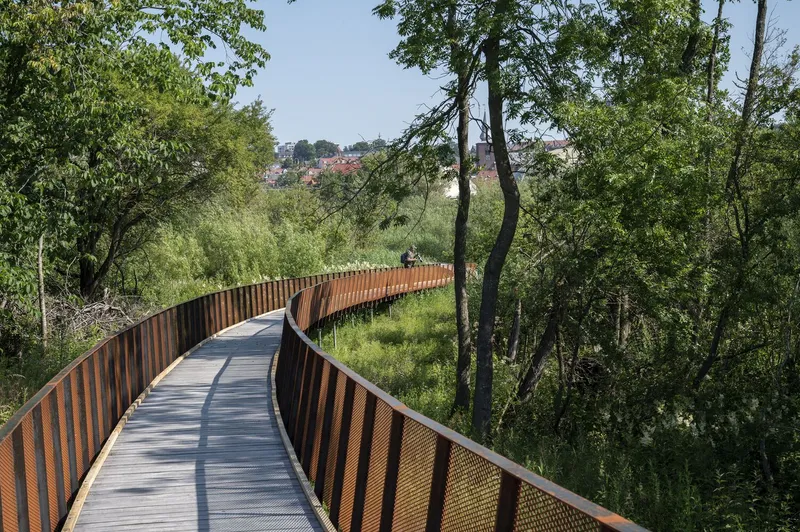
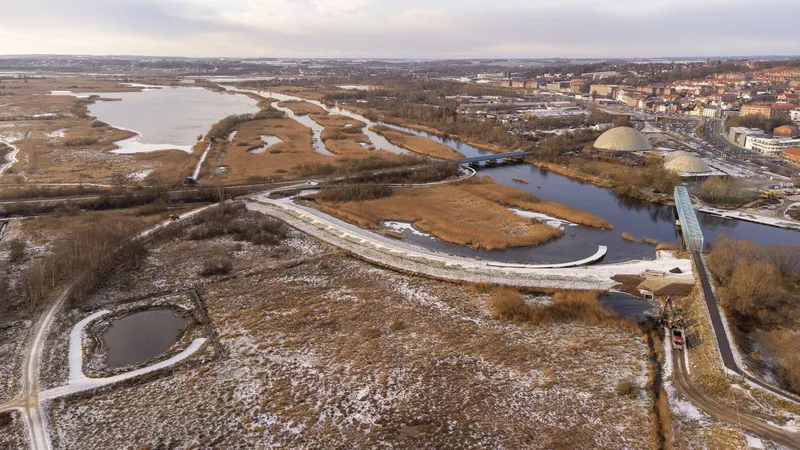
This project demonstrates how sustainable landscape design and ecological restoration can coexist with urban living, creating a vibrant green space that actively manages stormwater while offering a rich nature experience to residents.
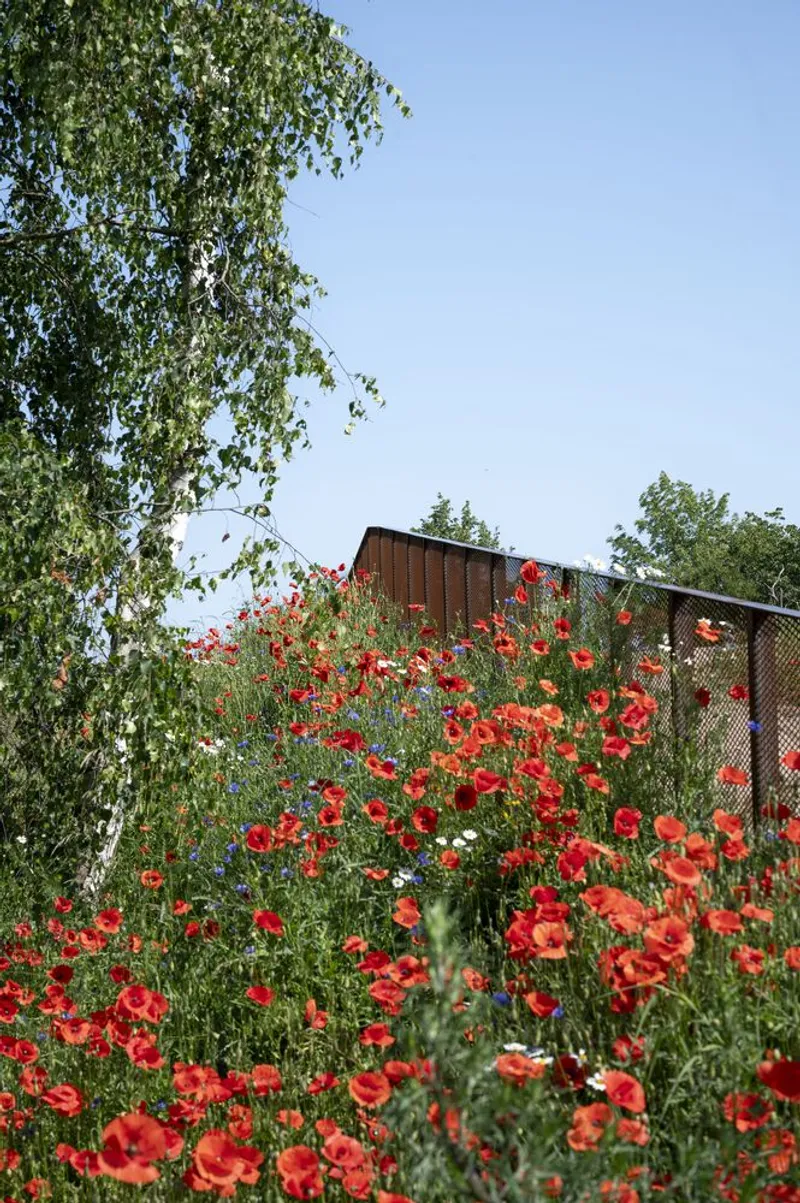
Climate Adaptation and Stormwater Management
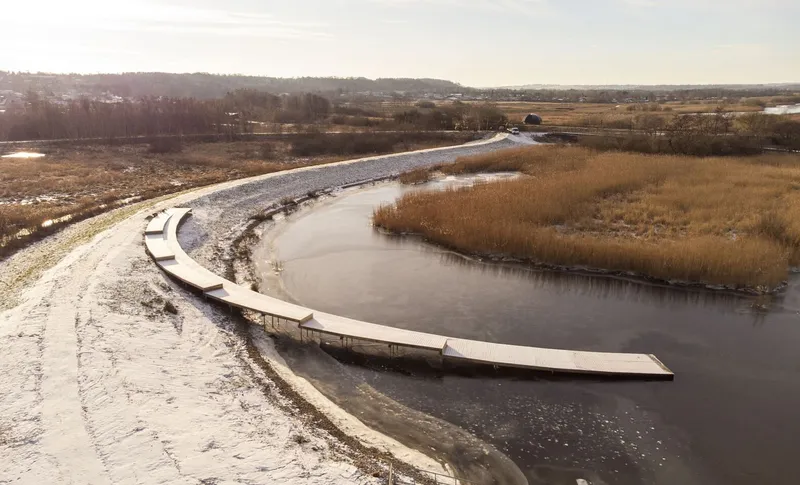
Storkeengen’s innovative design tackles increased rainfall and stormwater levels through climate-resilient infrastructure. Cloudburst channeling routes collect rainwater from surrounding roofs, roads, and car parks, directing it into natural purification basins. These basins function as wet meadows, naturally filtering water before it flows into the Gudenå stream.
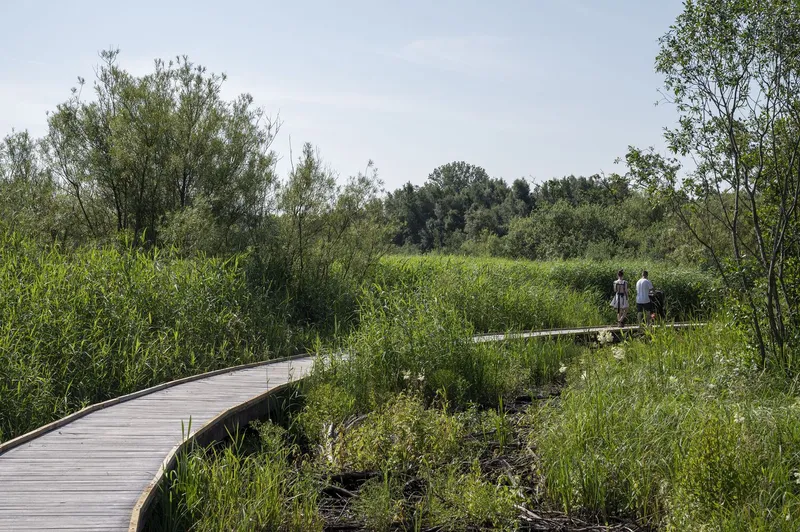
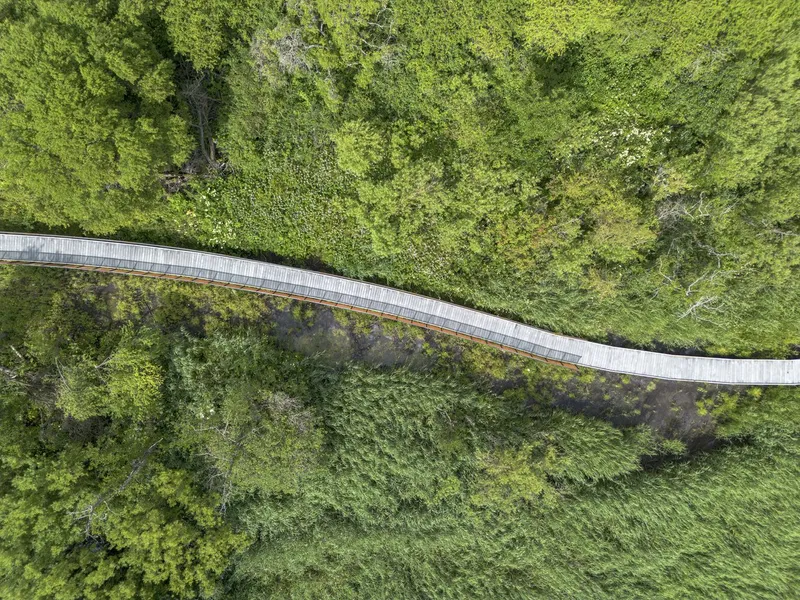
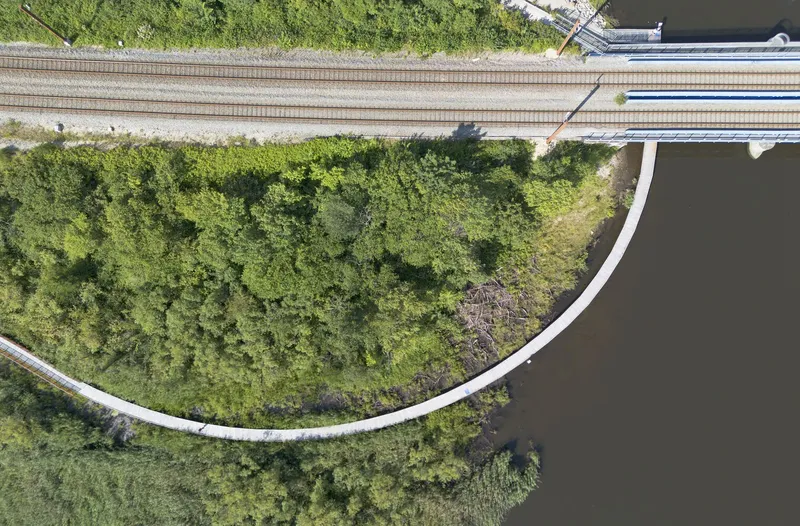
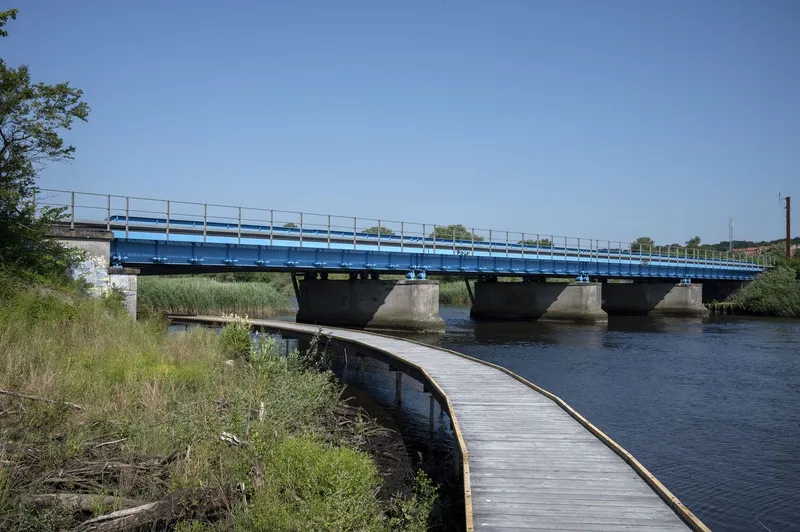
A new dyke system not only protects low-lying areas of Vorup from flooding but also connects the city to the park. This dyke serves as a pedestrian pathway, creating seamless access between Randers’ urban core and the rejuvenated natural landscape.
By merging technical wastewater solutions with recreational design, the park demonstrates urban ecological innovation while enhancing biodiversity and community engagement.
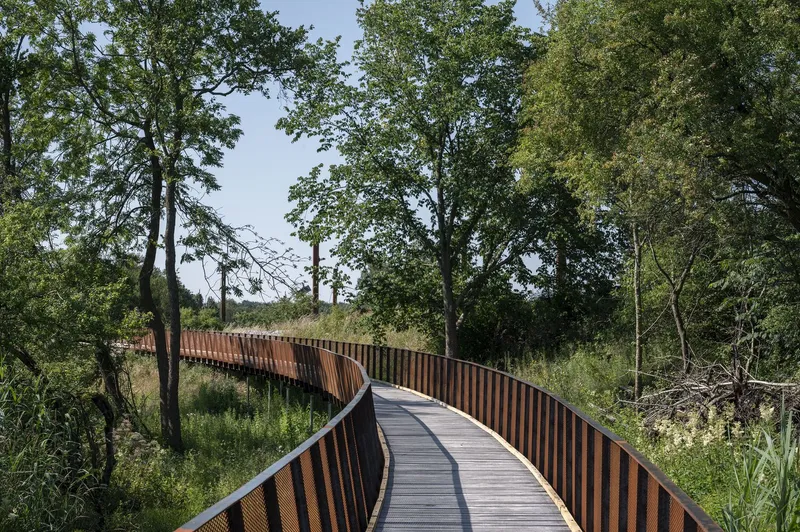
Enhancing Nature and Recreation
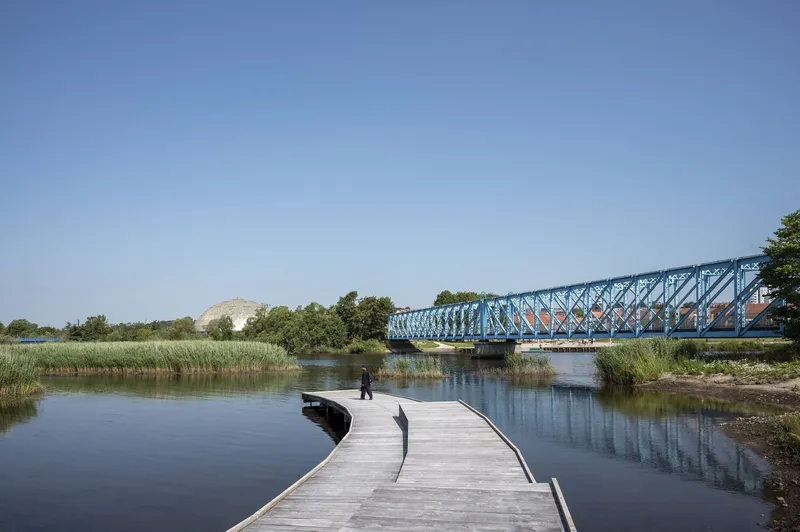
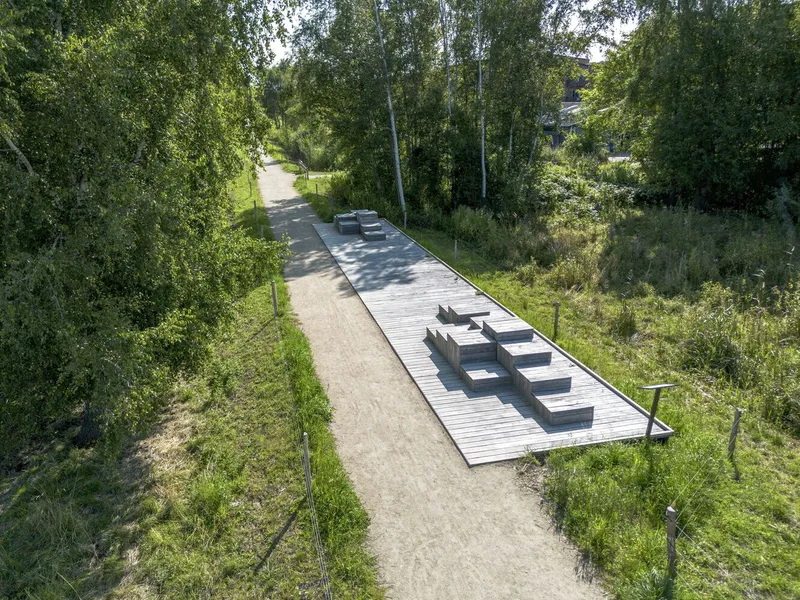
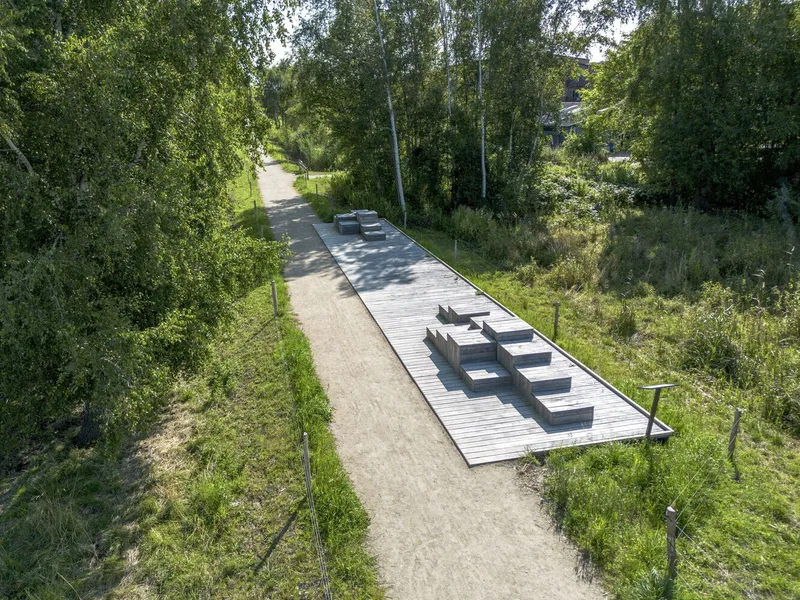
Stork Meadow Nature Park emphasizes nature-led design principles. Wet meadows, diverse flora, and grazing cattle enrich the park’s ecosystem, creating dynamic habitats that change with the seasons. Visitors can explore the park through newly designed pathways and activity plateaux, offering intimate encounters with the area’s flora and fauna.
These plateaux also enable residents to enjoy sunsets, birdwatching, or canoeing on the Gudenå, providing a multi-sensory experience that strengthens the connection between city dwellers and nature.
Through careful integration of ecological restoration, climate adaptation, and public accessibility, the park stands as a model for future urban nature projects in Denmark and beyond.
A Model for Sustainable Urban Parks
C.F. Møller Architects’ Stork Meadow Nature Park exemplifies how climate adaptation, ecological restoration, and public recreation can coexist harmoniously. By leveraging nature-based solutions and green infrastructure, the project not only mitigates urban flooding but also enhances the city’s cultural and environmental identity.
All photographs are works of
Peter Sikker Rasmussen, Silas Andersen



Popular Articles
Popular articles from the community


Play: Fragments of Their World
Familiar architecture becomes modular playground design, creating safe spaces where displaced children can learn, connect, imagine and play.

Co-Life: Senior Housing Design That Reconnects Older Adults With the City
Co-Life reimagines senior housing design through healing gardens, shared streets, workshops, and a sustainable community across generations.

The Earth Pod: 3D Printed Homes for Resilient Refugee Communities
The Earth Pod reimagines refugee housing through 3D printed homes made from clay, combining resilience, self-sufficiency, and rapid shelter.

Riyadh For All: Intergenerational Urban Design for Active Aging in Rabat
Riyadh For All reimagines urban design in Rabat with intergenerational co-living, adaptive courtyards, and Moroccan cultural exchange today.


Similar Reads
You might also enjoy these articles


Hodi-Mandai Geram
Project Function: Preservation and revitalization of the Intangible heritage and socio-spatial identity of the Hodi by Housing, Cultural Memory Center, Sacred Grove, landscape, local tourism economy


Olio Towers: A Mid-Rise for Performers That Fuses Housing, Rehearsal, and Stage
Located blocks from Houston's Theater District, this modular tower stacks living units around a central performance atrium.

Oasis: Modular Green Housing Carved into Dhaka's Urban Fabric
A shortlisted Plugin Housing entry reclaims unauthorized settlements in Dhaka with stepped concrete volumes, green roofs, and ventilation-driven design.

Black Hole: A Floating Megastructure for the Post-Physical Era
Emiliano Mazzarotto envisions a spherical, self-scaling arena where e-sports, digital hotels, and holographic stadiums replace traditional public space.

Explore Architecture Competitions
Discover active competitions in this discipline



Challenge to reimagine the Iron Throne


Photograph architecture without architects


Illustrate the lost glory of Angkor Wat - Render Challenge


Design challenge to reuse E-waste
Comments (0)
Please login or sign up to add comments
No comments yet. Be the first to comment!