
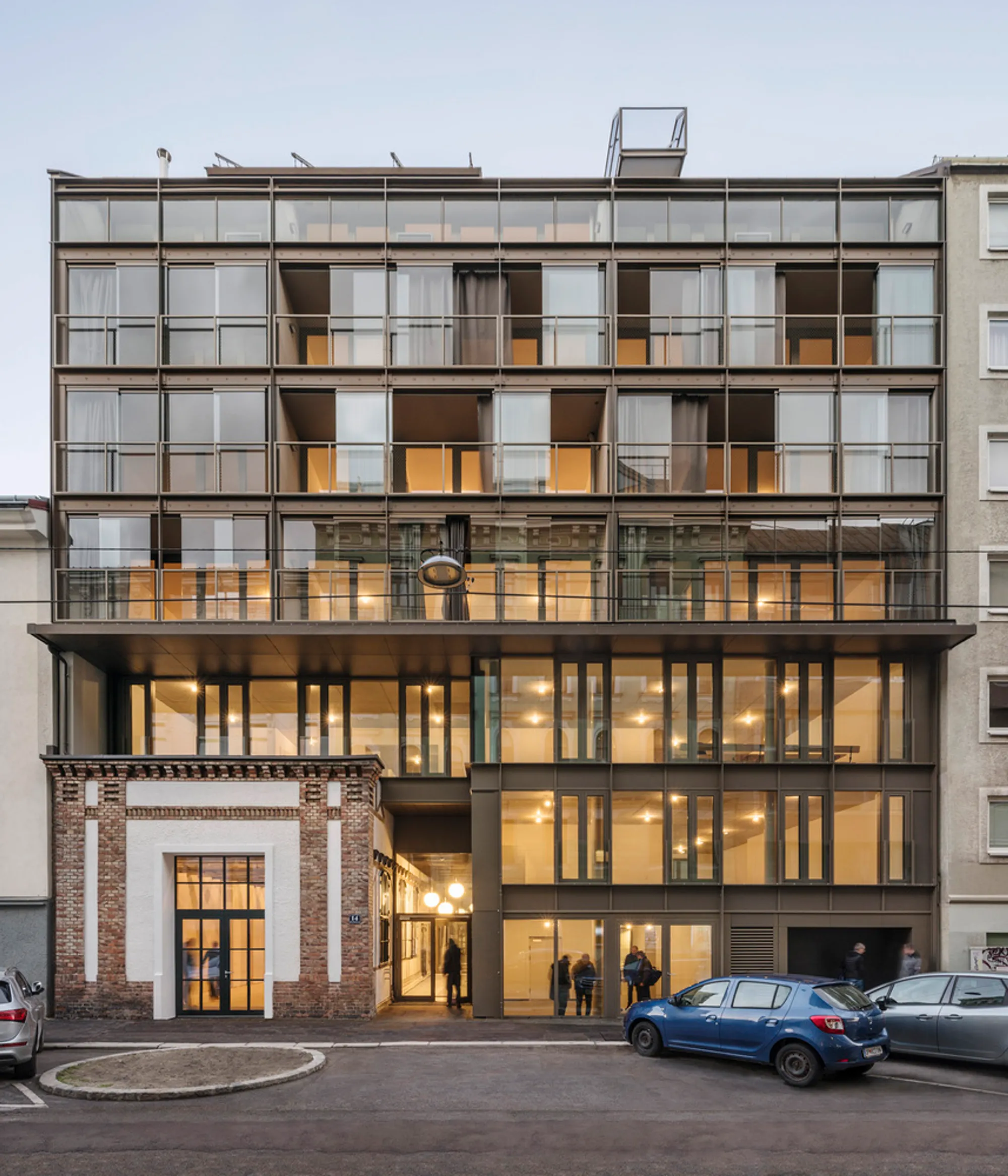
Straußengasse 14 by feld72: A Contemporary Residential Infill Revitalizing Vienna’s Historic Urban Fabric
A refined infill project integrating a historic half-timbered house with a light, industrial-inspired façade, enhancing urban density and residential flexibility.


Straußengasse 14, designed by feld72, transforms a long-standing vacant lot in Vienna into a refined example of contemporary residential architecture. For decades, this unusual gap site shaped the streetscape, highlighting the challenges of urban densification and the need to respect existing architectural heritage. Completed in 2022 and spanning 2,349 m², the project delivers a sensitive yet forward-looking response to the city’s evolving residential needs.
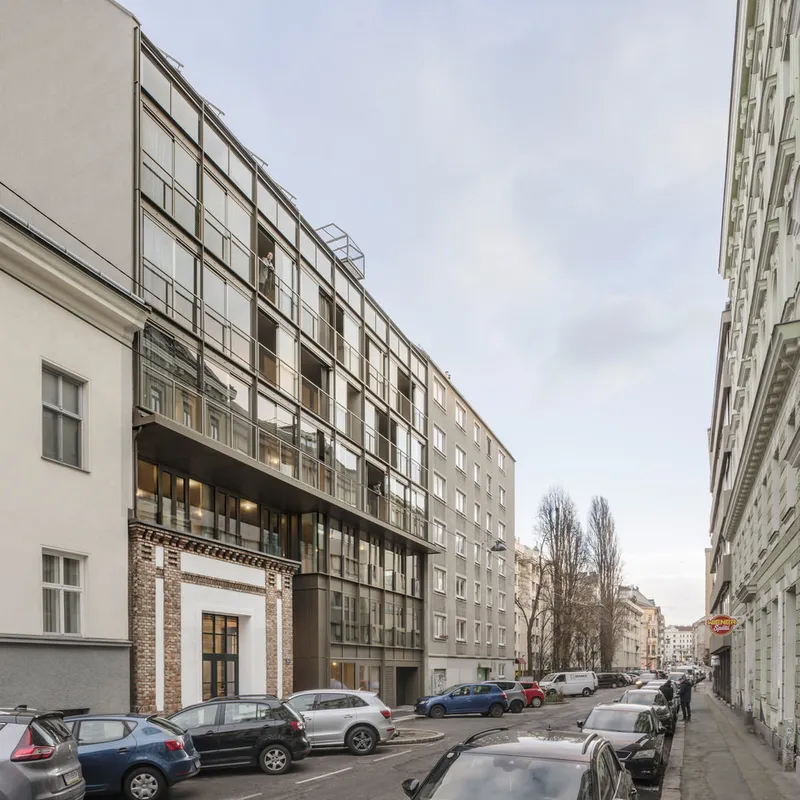
A Sensitive Dialogue With the Half-Timbered House
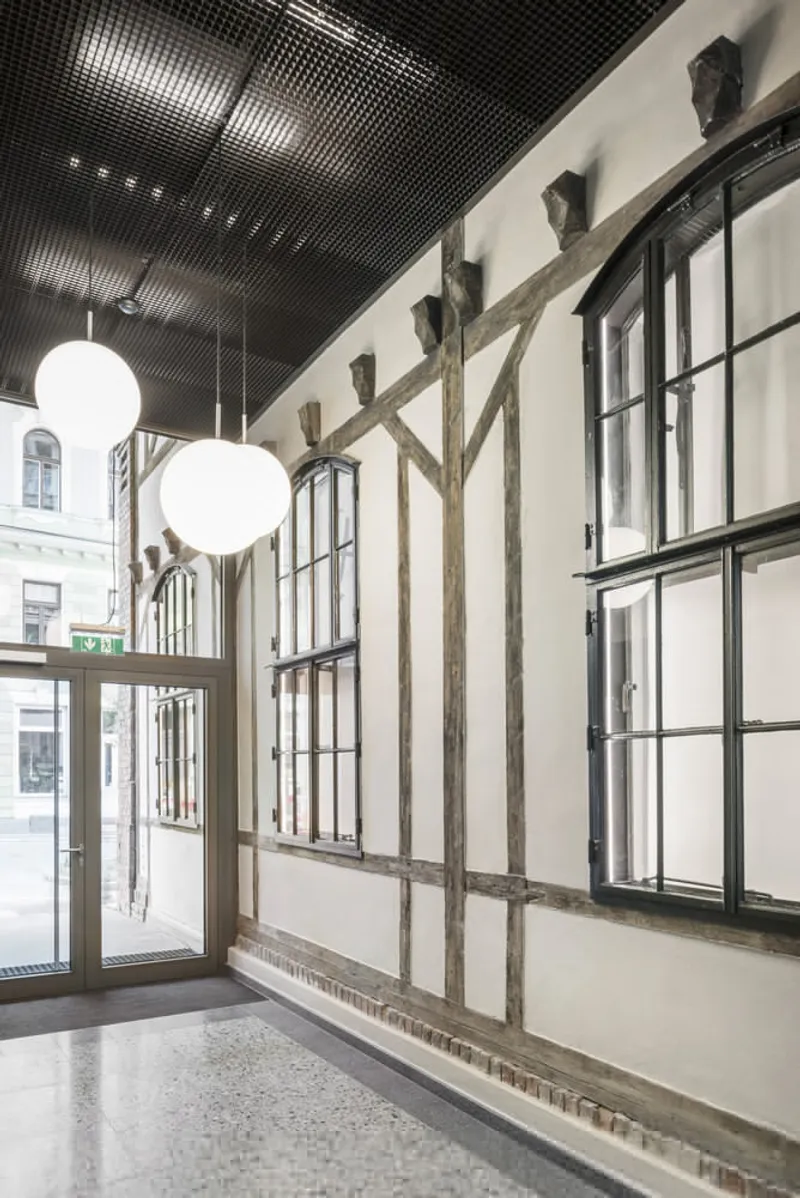
At the heart of the design is an existing half-timbered structure, a rare element within Vienna’s dense district fabric. Instead of overshadowing it, feld72 adopts a strategy of architectural integration, wrapping the new building around the historic house with subtlety and precision. This approach allows the preserved structure to stand out almost sculpturally, an independent architectural presence that enriches the identity of the street.
By adopting the typology of the productive townhouse, the project layers multiple uses within a compact footprint. A commercially active ground floor supports the street’s dynamism, while studio spaces in the courtyard wing offer flexible working environments that respond to the evolving needs of urban residents.
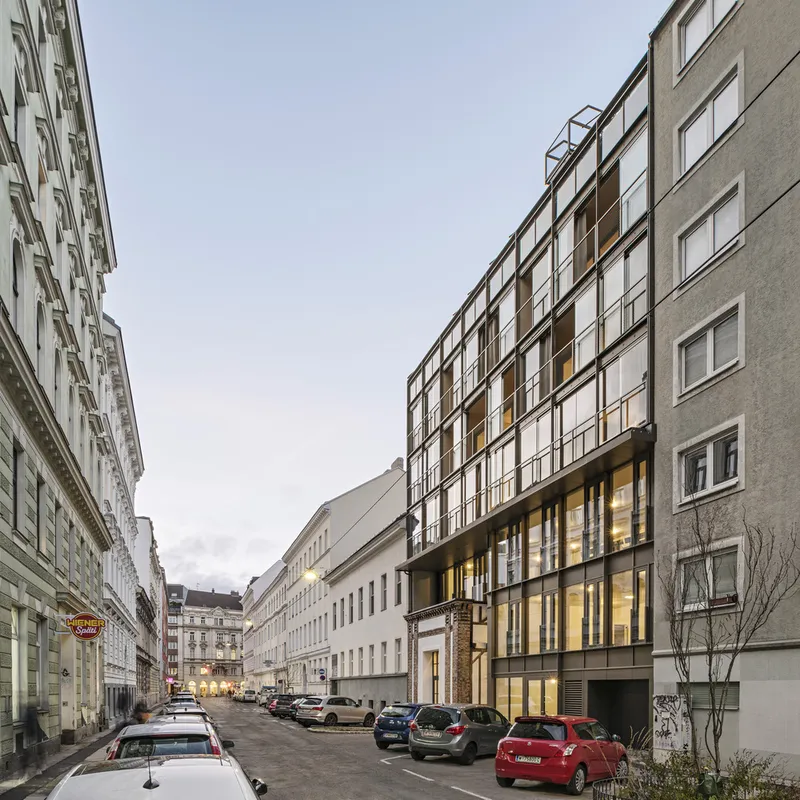
A Façade Defined by Lightness, Industry, and Urban Elegance
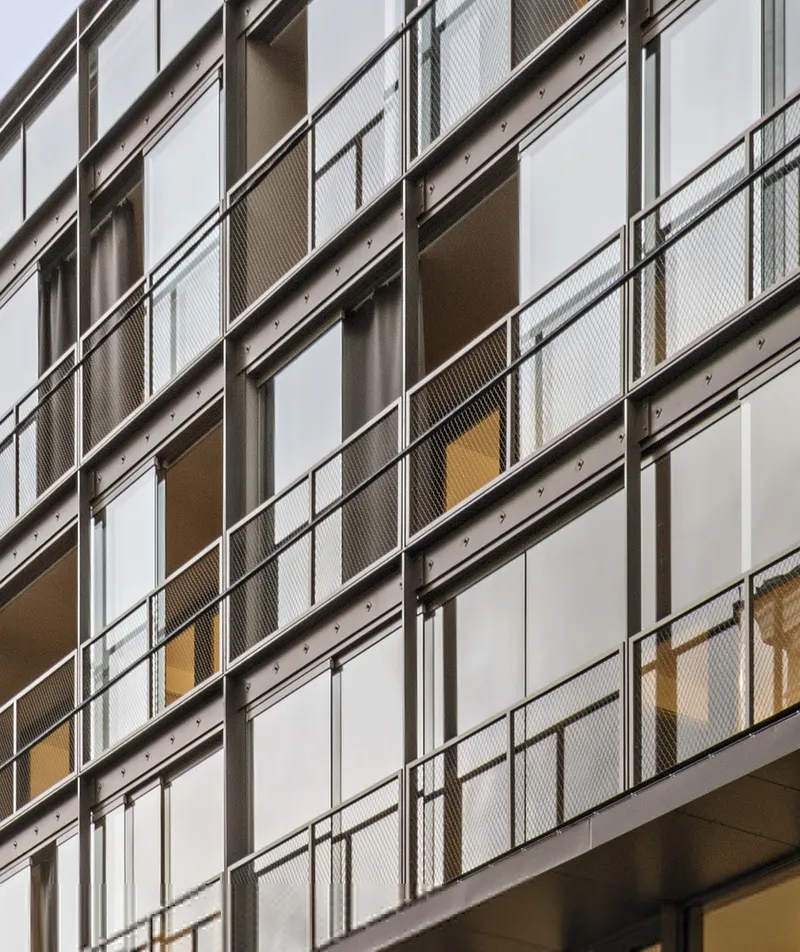
One of the most distinctive elements of Straußengasse 14 is its delicate, industrial-inspired façade. Subtle references to the existing half-timbered building create visual continuity, while the slender articulation of the new façade adds lightness, contemporary refinement, and urban finesse.
The façade operates not only as an aesthetic surface but also as a climate-responsive layer. A buffer zone positioned along the front of the building encourages residents to engage with their environment. This transitional space enhances:
- Light regulation, enabling users to adjust brightness and glare
- Microclimate control, providing passive environmental comfort
- Privacy flexibility, offering adjustable levels of openness and visual permeability
These features promote individual spatial agency, enhancing comfort and reinforcing the building’s human-centered design approach.
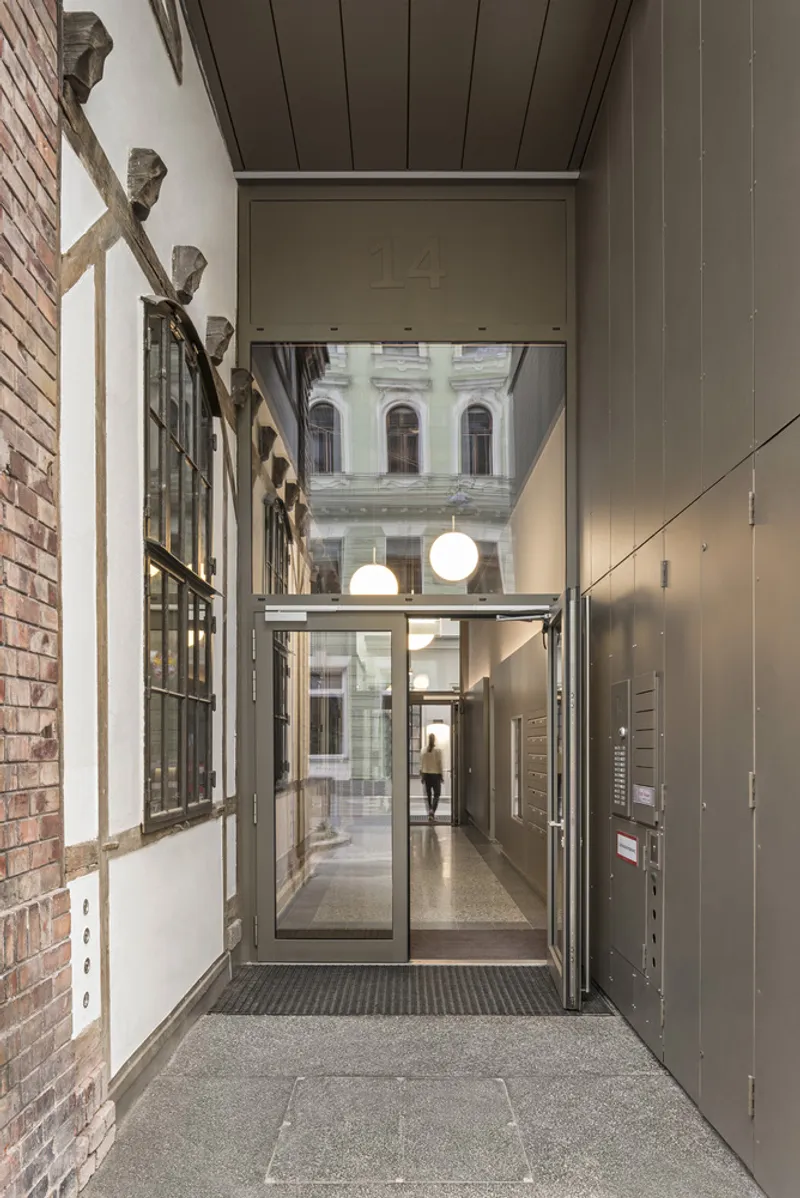
Crafting Spatial Quality Through Contextual Sensitivity
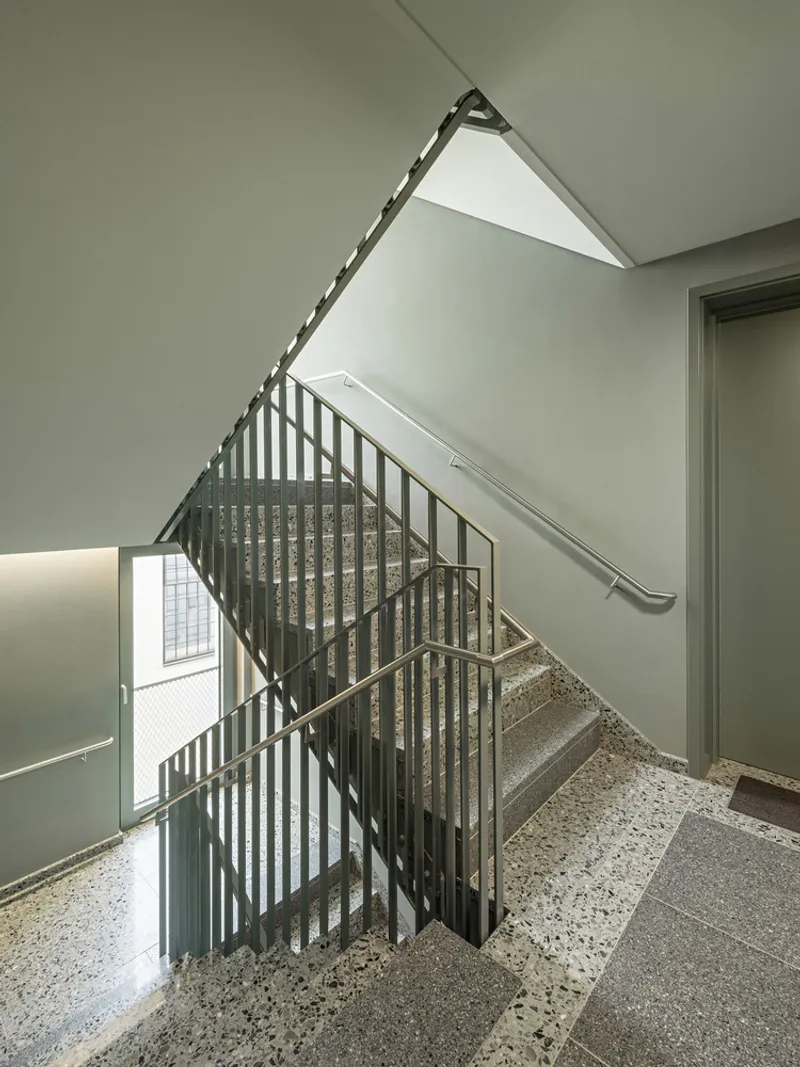
Internally, the project emphasizes material authenticity, with brick, exposed structural elements, and large windows creating warm, bright, and spatially dynamic interiors. The dialogue between contemporary interventions and the preserved historic structure underscores feld72’s commitment to contextuality, craftsmanship, and subtle urban repair.
A Model for Future Urban Infill Development
Straußengasse 14 sets a benchmark for future residential infill projects in Vienna. By balancing heritage preservation, functional adaptability, and architectural elegance, feld72 demonstrates how thoughtful design can reanimate forgotten urban pockets while contributing meaningfully to the evolving fabric of the city.
All photographs are works of
Hertha Hurnaus




Popular Articles
Popular articles from the community


Riyadh For All: Intergenerational Urban Design for Active Aging in Rabat
Riyadh For All reimagines urban design in Rabat with intergenerational co-living, adaptive courtyards, and Moroccan cultural exchange today.

The Musturak Paradise: Senior Living Architecture for a Connected Future in Temara, Morocco
The Musturak Paradise reimagines senior living architecture in Temara via private homes, social spaces, culture, community, and shared care.

Conexión: Biophilic Design Reimagines High-Rise Living in Hong Kong
Conexión reimagines high-rise living in Hong Kong through biophilic design, green facades, shared spaces, daylight, water and nature within.
EW PARK: Sustainable Architecture Reimagines the Future of Urban Parking
EW PARK reimagines city parking as a modular wooden tower combining automation, solar energy, electric mobility, and adaptable urban design.

Similar Reads
You might also enjoy these articles


Hodi-Mandai Geram
Project Function: Preservation and revitalization of the Intangible heritage and socio-spatial identity of the Hodi by Housing, Cultural Memory Center, Sacred Grove, landscape, local tourism economy


Olio Towers: A Mid-Rise for Performers That Fuses Housing, Rehearsal, and Stage
Located blocks from Houston's Theater District, this modular tower stacks living units around a central performance atrium.

Oasis: Modular Green Housing Carved into Dhaka's Urban Fabric
A shortlisted Plugin Housing entry reclaims unauthorized settlements in Dhaka with stepped concrete volumes, green roofs, and ventilation-driven design.

Black Hole: A Floating Megastructure for the Post-Physical Era
Emiliano Mazzarotto envisions a spherical, self-scaling arena where e-sports, digital hotels, and holographic stadiums replace traditional public space.

Explore Geurst & Schulze Architecten Competitions
Discover active competitions in this discipline


Challenge to design mud housing for contemporary communities


Challenge to reimagine the Iron Throne


Photograph architecture without architects


Illustrate the lost glory of Angkor Wat - Render Challenge
Comments (0)
Please login or sign up to add comments
No comments yet. Be the first to comment!