
Studio McW Turns a Narrow Clapham Terrace into a Raw Concrete Framework for Family Life
A Victorian terraced house in south London is gutted and rebuilt around an exposed concrete skeleton that redefines every room.


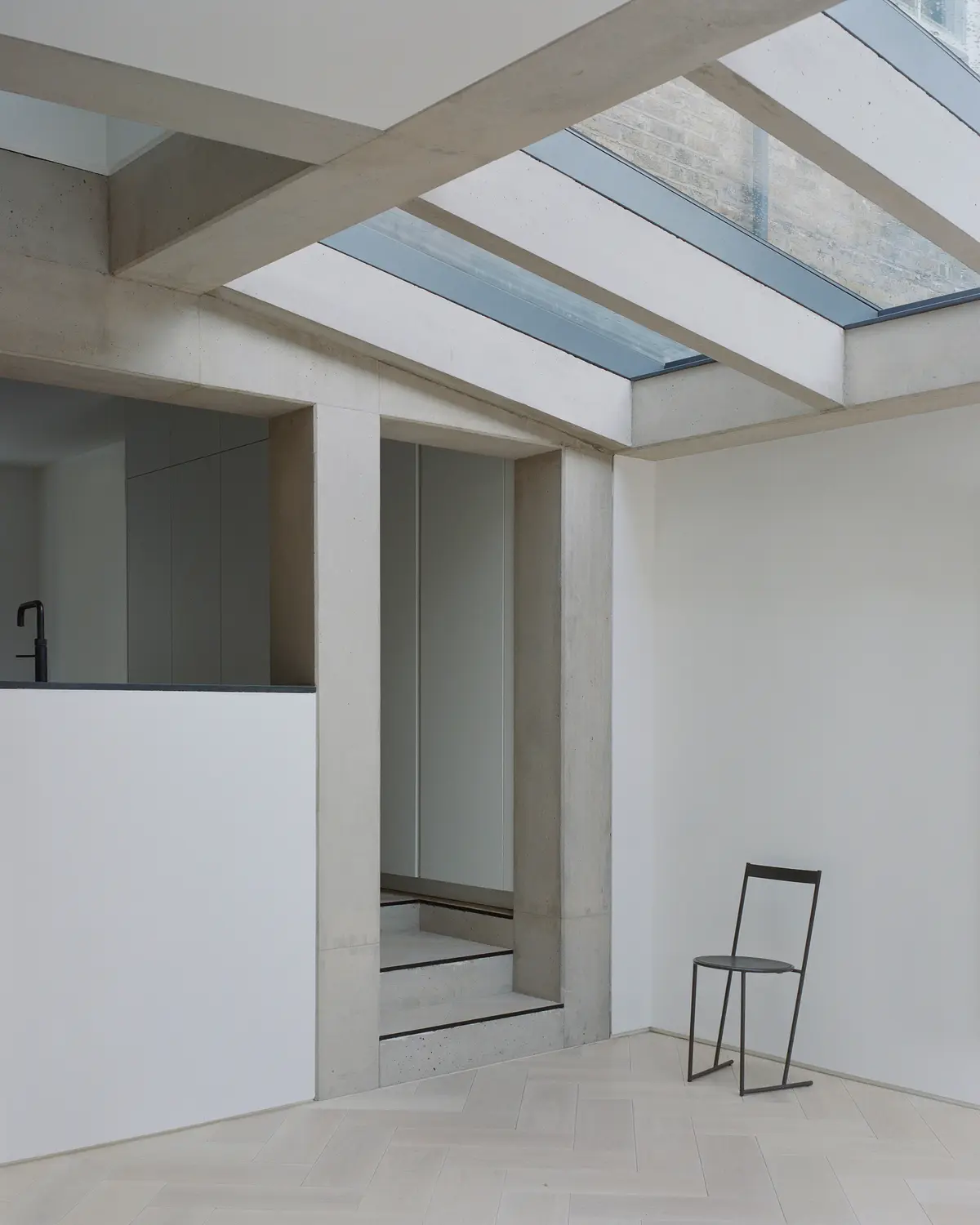
Terraced houses in London are among the most tightly constrained building types in residential architecture. Their narrow plots, party walls, and strict planning rules leave architects little room for structural invention, which is exactly why Studio McW's intervention in Clapham feels so striking. Rather than wrapping a conventional timber or steel extension around the back of the property and calling it done, the studio inserted a raw concrete frame that runs through the full depth of the house, replacing failing structure and generating new volumes from ground to roof.
The result, completed in 2020, is Framework House: 172 square metres of refurbished and extended living space organized around a monolithic precast concrete staircase, top-lit voids, and a flipped ground floor plan that puts dining in the bay window and the living room at the rear, opening directly onto a generous courtyard garden. The brief came from a family moving out of a flat who wanted to keep the lateral, open feeling of apartment life while gaining the vertical space a house provides. Studio McW answered that request by treating the concrete skeleton not as something to hide but as the primary architectural event.
A Quiet Front, a Structural Reveal Behind


From the street, Framework House is indistinguishable from its neighbors. The white stucco facade, arched windows, and mature planting preserve the Victorian character of the terrace. Step around to the rear, however, and the project reveals its hand. Sliding glass doors open to the courtyard beneath a linear skylight, exposing the concrete beams and white interior volumes that define the extension. The contrast is deliberate: the house performs the conservation role the street demands while pursuing a completely different structural language inside.
The full-height window at the transition point between old house and new extension frames a weathered brick boundary wall and planted bed beyond, turning the courtyard into a borrowed landscape that deepens the ground floor perspective. It is a simple device, but it works because the depth of the plan has been reorganized so that the widest section sits at the back, pulling light and garden views into the space where the family actually gathers.
The Concrete Stair as Centerpiece
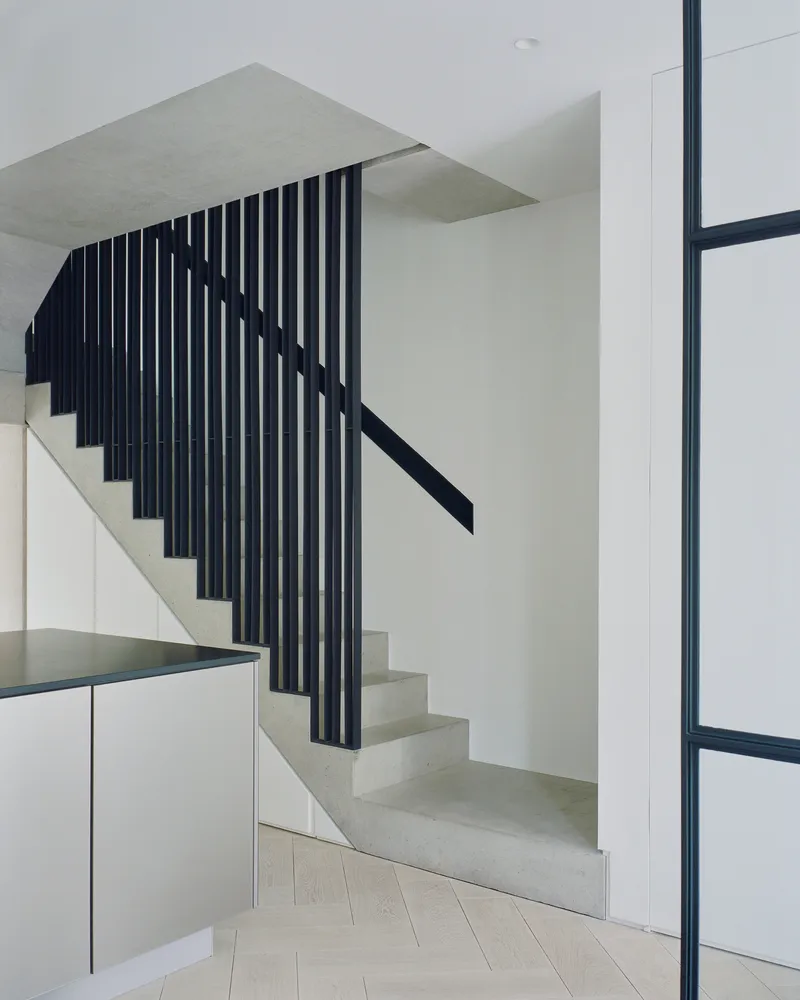

The staircase is the project's most physically impressive element. Cast as three precast segments that were craned in through the roof light and joined by an in-situ landing at first floor level, it descends through the house in a sculptural sweep. The concrete is left raw, its formwork texture visible, paired with a vertical black metal rod balustrade and a dark steel handrail. Against the herringbone timber floor and white joinery, the stair reads as an insertion rather than a background feature.
Studio McW made the unusual decision to collaborate with a contractor who had never worked with concrete before, which speaks to the practice's confidence in its detailing and specification. The precast elements arrived on site precisely dimensioned; the formwork itself was cleaned and reused elsewhere in the build to minimize waste. There is a satisfying honesty to the approach: no applied finishes, no cladding, just the material doing its job and showing you how.
Light from Above


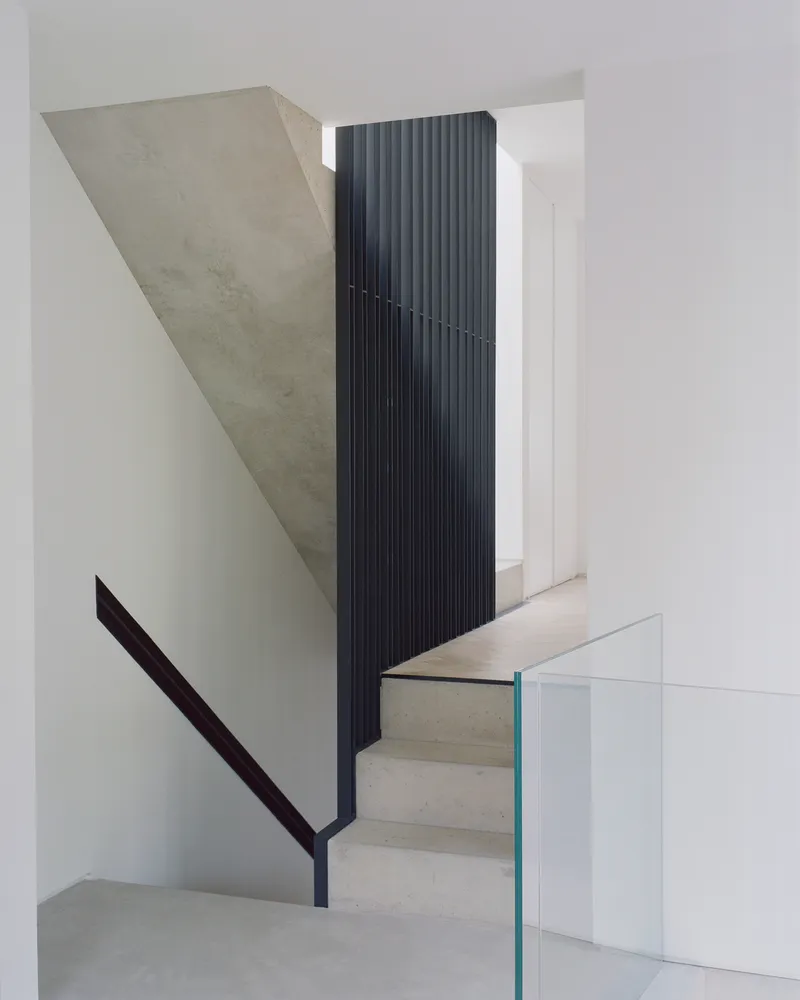
Narrow terraced houses depend on borrowed light, and Framework House gets this right through a series of overhead glazing elements. The stairwell is capped by a generous skylight that washes the vertical timber cladding and concrete surfaces in diffused daylight. Looking up from the ground floor, the stair becomes a light well, pulling brightness down through the center of the plan where side windows cannot reach.
The vertical timber slat wall that lines parts of the stair volume serves a dual purpose. It conceals cabling and pipework within its depth while providing a warm, rhythmic texture against the cool concrete. The interplay of materials here is carefully calibrated: concrete beams read as horizontal lines, timber slats as vertical ones, and overhead glass dissolves the ceiling plane. It is one of those sectional moments where you can feel the architect thinking in section rather than in plan.
Kitchen as Connective Spine

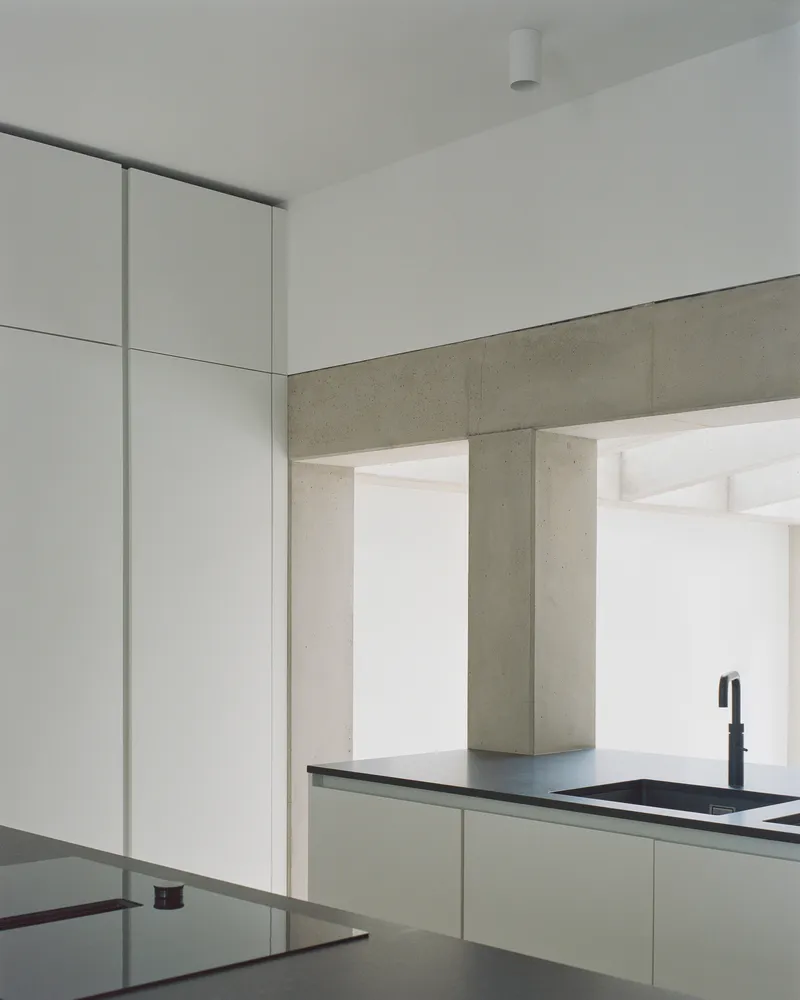
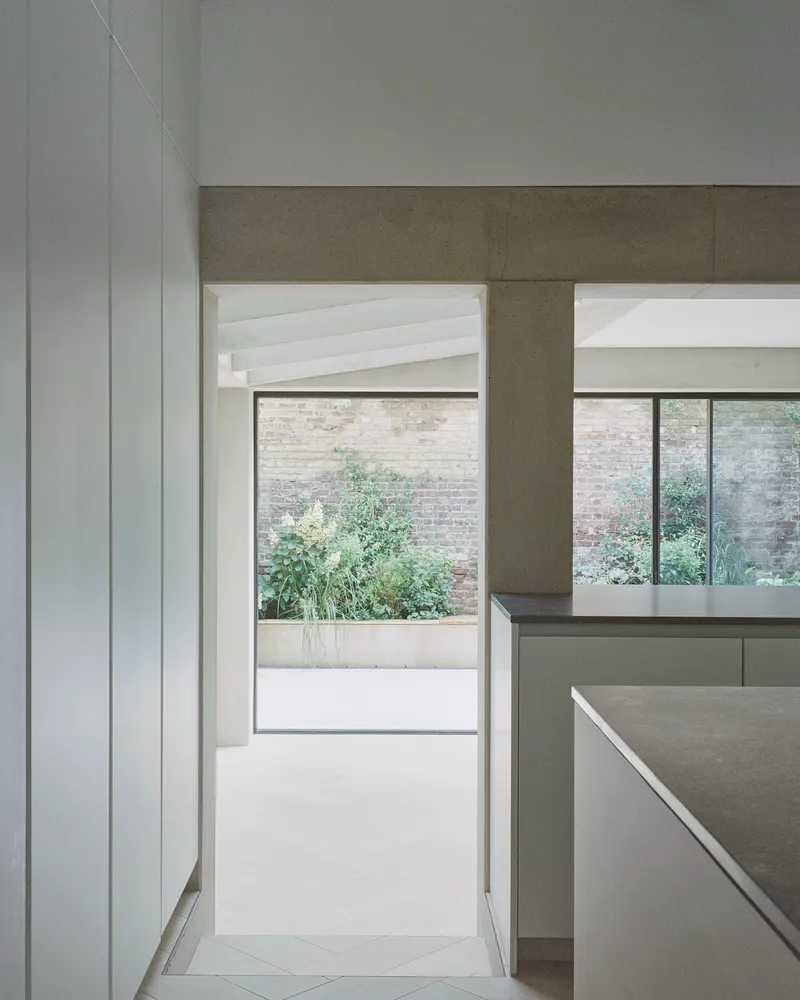
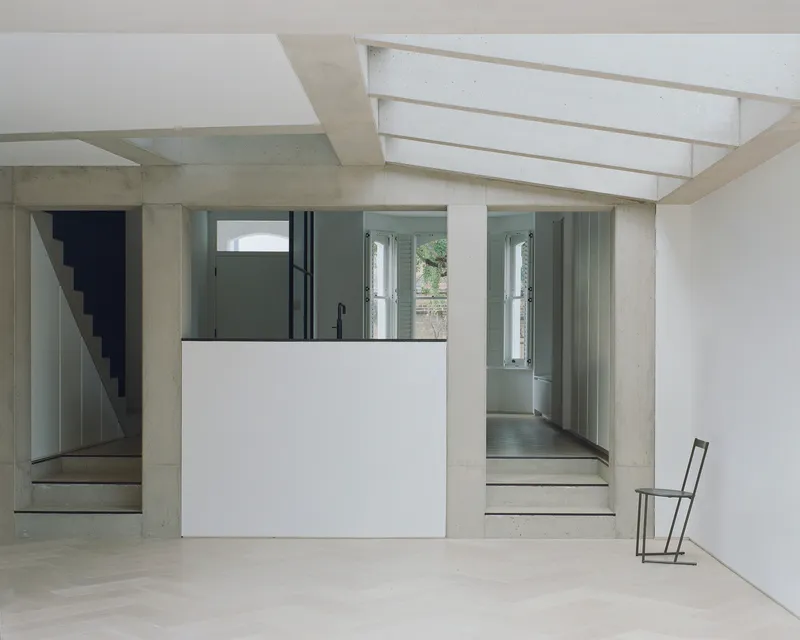
The ground floor plan has been inverted from the traditional terraced arrangement. Where the parlour or living room would typically sit at the front, Studio McW placed the dining area within the bay window, tucking it into the most characterful part of the existing envelope. The kitchen then occupies the center of the plan, acting as a connective spine between dining at the front and living at the rear. It is a layout borrowed from apartment thinking, where circulation and cooking overlap rather than being separated by corridors and doors.
The Poggenpohl kitchen itself is restrained: dark cabinetry, a dark countertop on a substantial island, and white upper volumes. The concrete beams span across overhead, their soffits just above head height, creating a compression that makes the release into the rear living room and courtyard beyond feel more dramatic. It is not a showy kitchen; it is a well-proportioned room where structure does the work of decoration.
Courtyard and Rear Garden
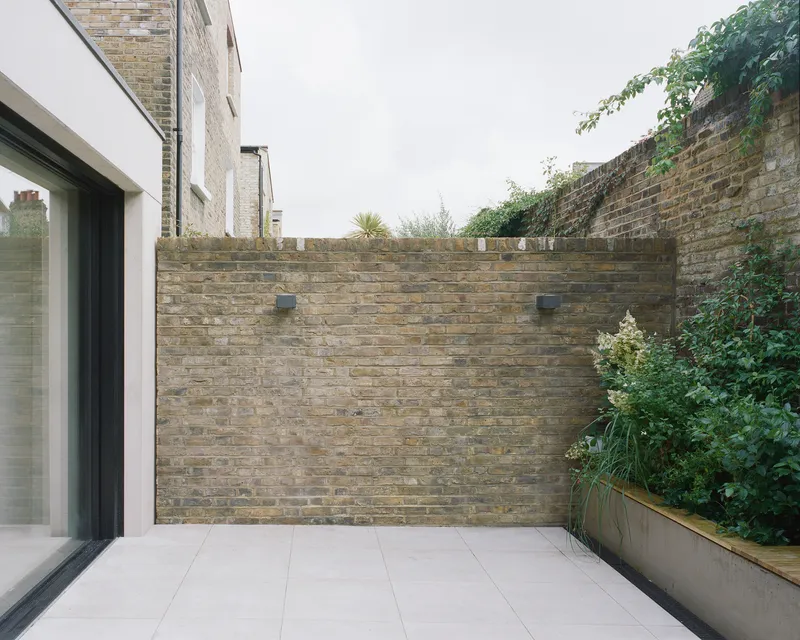
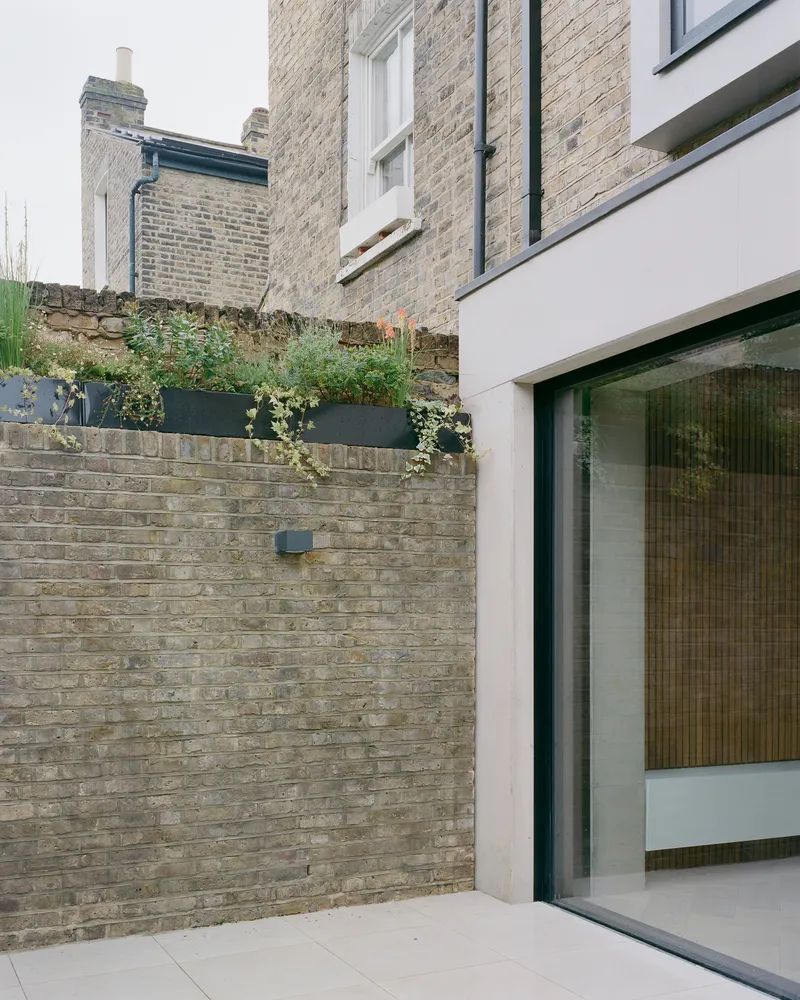
The rear courtyard is a compact but effective outdoor room. Buff brick walls and weathered boundary masonry define its edges, while metal planter boxes introduce greenery at a scale that suits the space without trying to imitate a suburban garden. The planting is restrained, almost Mediterranean in its palette, and the hard landscaping is simple enough to function as an extension of the living room floor plate when the sliding glass doors are open.
What makes this courtyard work is its proportional relationship to the rear extension. Because Studio McW widened the plan at this point, the living room and garden read as a single zone rather than a corridor leading to a patch of green. The threshold is almost seamless, and on a London summer evening, the distinction between inside and out collapses entirely.
Joinery and Material Restraint

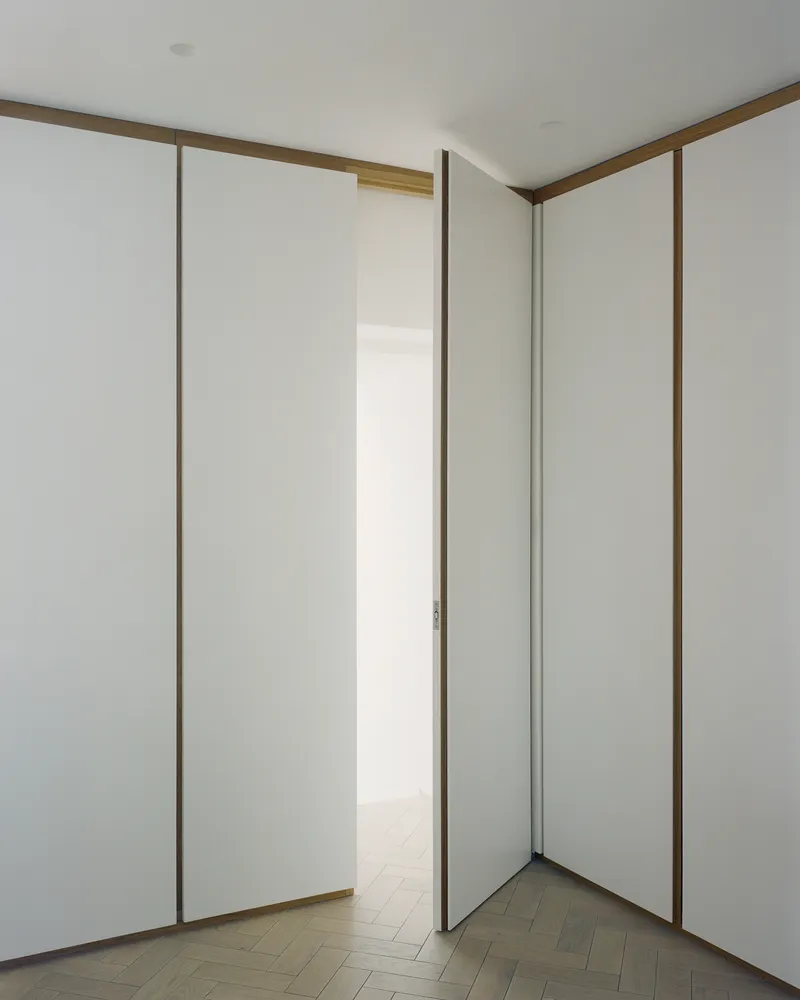

The bespoke joinery by Hexagon is worth noting for its discipline. Full-height white storage walls are composed of flush, jointed panels that absorb the visual noise of domestic storage. Sliding panels with timber edging close off rooms without the weight of hinged doors, reinforcing the lateral openness the clients wanted. The matte black metalwork throughout, from stair balusters to door hardware, acts as a consistent graphic line against the white and grey palette.
Studio McW made a deliberate effort to eliminate redundant construction materials and unnecessary finishes. Wall and ceiling infills conceal services but do so within the structural logic of the concrete frame rather than as applied layers. The herringbone timber floors by Havwoods provide warmth underfoot without competing with the concrete above. The material hierarchy is clear: concrete is the protagonist, timber is the supporting character, and everything else steps back.
Plans and Drawings


The ground floor plan reveals the logic of the flipped arrangement. The curved bay window at the front accommodates the dining area, while the stair sits centrally, dividing the plan between the kitchen spine and the circulation core. Adjacent rooms open through generous apertures rather than conventional doorways, maintaining sightlines from front to back. The plan is tight, as any London terrace plan must be, but the proportional intelligence is evident in the way each zone gets the width and light it needs without corridors consuming usable space.
Why This Project Matters
Framework House is a lesson in what happens when you treat a domestic refurbishment as a structural project rather than a decorative one. The decision to expose the concrete frame, to celebrate its weight and texture rather than conceal it behind plasterboard, gives a standard London terrace a spatial and material identity that most renovations never achieve. It also proves that ambitious materiality does not require an unlimited budget; it requires conviction in the design and a willingness to eliminate everything that does not serve the idea.
For architects working on narrow, constrained urban sites, the project offers a transferable strategy. Flip the plan to put communal life where the best light and proportion exist. Use structure as finish. Let overhead glazing do the heavy lifting in deep plans. And trust that a carefully detailed raw material will age better and mean more than any applied surface. Studio McW has delivered a house that is genuinely tough and genuinely refined at the same time, which is a rare combination in residential work anywhere, let alone in a Victorian terrace in Clapham.
Framework House by Studio McW, Clapham, London, United Kingdom. 172 m². Completed 2020. Structural engineer: Blue Engineering. Joinery: Hexagon. Concrete: White and Reid. Flooring: Havwoods. Metalwork: Sunbeam Group. Kitchen: Poggenpohl. Photography by Rory Gardiner.
About the Studio
Share Your Own Work on uni.xyz
If projects like this are the kind of work you want to make, uni.xyz is a place to publish your own, find collaborators, and enter design competitions.


Popular Articles
Popular articles from the community


LT2A and OPEN Architectes Thread a Brick and Glass High School Through a Wooded Belgian Campus
In Braine-l'Alleud, a 3,000 m² wing for Collège Cardinal Mercier pairs pale brick with a glazed colonnade, deferring to a small chapel and a dense wood.

David Macias Steps a Doorless Stone and Plaster House Down a Tropical Colombian Hillside
In the humid hills of Colombia, Threshold House replaces the front door with an open void and terraces its 850 m² down the slope instead of fighting it.

Jaramillo Van Sluys Arquitectura and Urbanismo Turn a Demolished Registry Lot in Quito into an Orchard Plaza
In Quito's Centro Histórico, a 2,800 m² plaza exposes the San Agustín convent wall and redraws its lost Augustinian orchard in volcanic stone.

longwave studio Reorganizes a 112 m² Tainan Apartment Around the Daily Routines of a Family and Two Cats
In Tainan, Taiwan, birch plywood, rust-red furniture and a freestanding plaster wall link arrival, storage, work and family life in one apartment.

Similar Reads
You might also enjoy these articles


LAVA Architecten Gives Vocational Education a Sawtooth-Roofed Face on a Mechelen School Campus
In Mechelen, Belgium, a 2,053 m² STEM school on a 6×6 m grid turns workshops and classrooms into rooms that can be rearranged as teaching changes.

KEMA Studio Turns a Derelict Marvila Attic into a 60 m² Lighthouse Apartment Above Lisbon
In Lisbon's Marvila district, a rebuilt roof, four skylights and two plywood volumes turn an unlivable attic into a bright home facing the Tagus.

Pixel Gardens: One Repeated Module Stacked Into a Terraced Social Housing Tower for Famagusta
Salem Bader's shortlisted housing tower builds a vertical neighbourhood from one repeated module, offsetting units to carve terraces, light and air.

Bao Huynh Watercolor Atelier: A Serene Art Retreat in Hội An
Bao Huynh Watercolor Atelier in Hội An blends multifunctional art spaces, sustainable design, local materials, and family-friendly living in a serene environment.

Explore Slumscraper Competitions
Discover active competitions in this discipline

Challenge to visualize slums of 2080

Challenge to design mud housing for contemporary communities
Comments (0)
Please login or sign up to add comments
No comments yet. Be the first to comment!