

Studio-Workshop for Photographers by Roman Bauer Arquitectos in Barranco, Peru
Studio-Workshop by Roman Bauer Arquitectos in Barranco, Peru, blends photography, exhibition space, natural light, huayruro wood, terrazzo floors, and flexible design.


A Versatile Creative Space
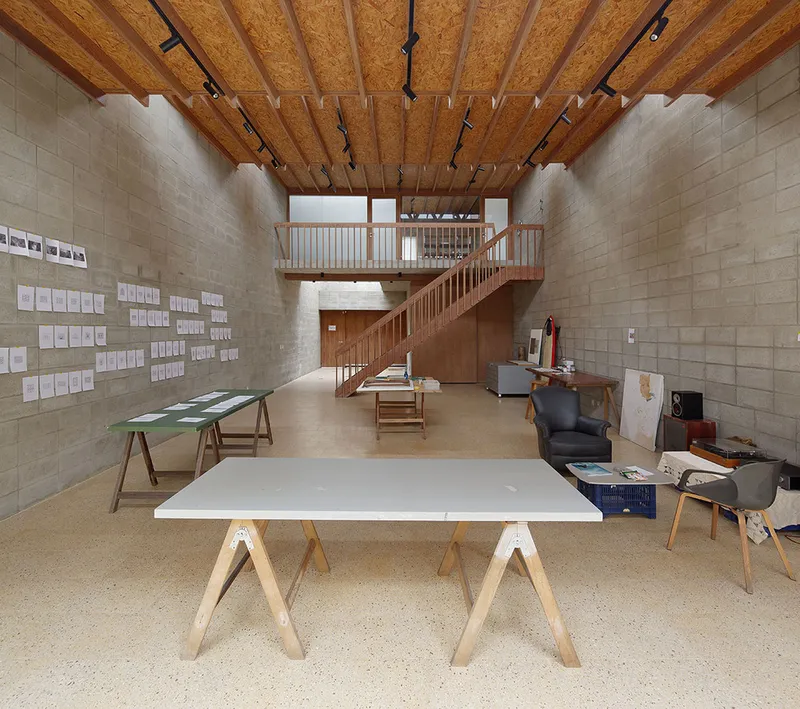
The Studio-Workshop for Photographers by Roman Bauer Arquitectos is a thoughtfully designed creative hub situated in the historic and monumental district of Barranco, Peru. Conceived primarily as a professional photography studio, the space is flexible enough to transform into an exhibition venue, seamlessly accommodating the dynamic needs of visual artists.
The 198 m² site hosts a series of interconnected spaces that emphasize natural light, spatial fluidity, and adaptability, creating an environment that balances work and inspiration.

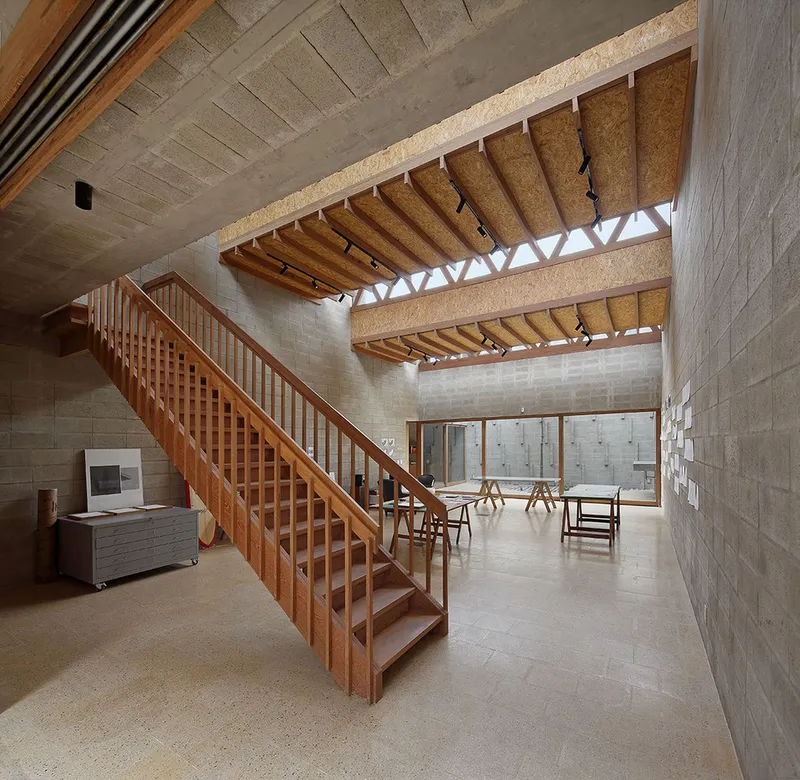
Architecture and Layout
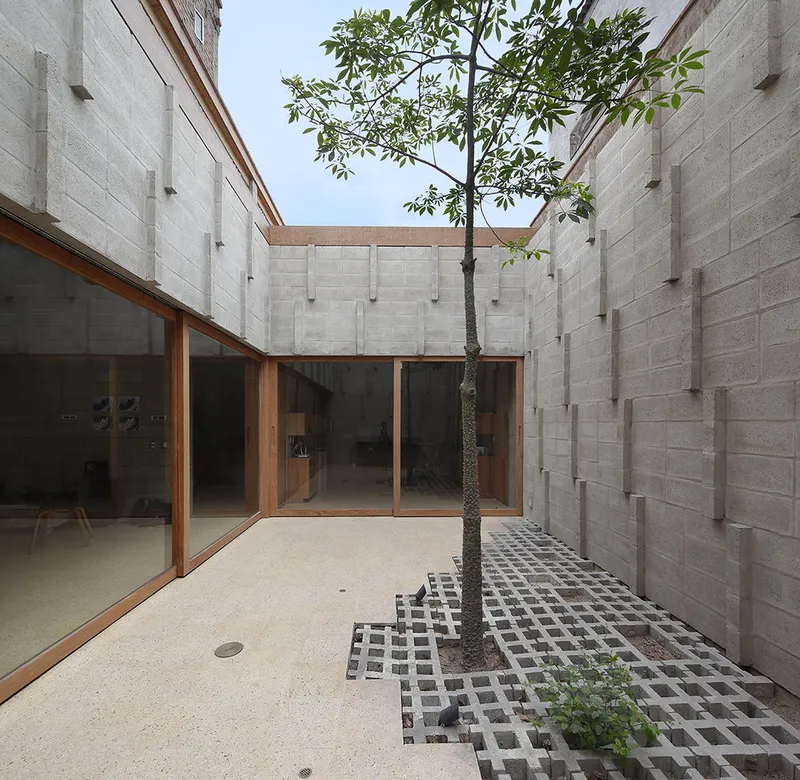
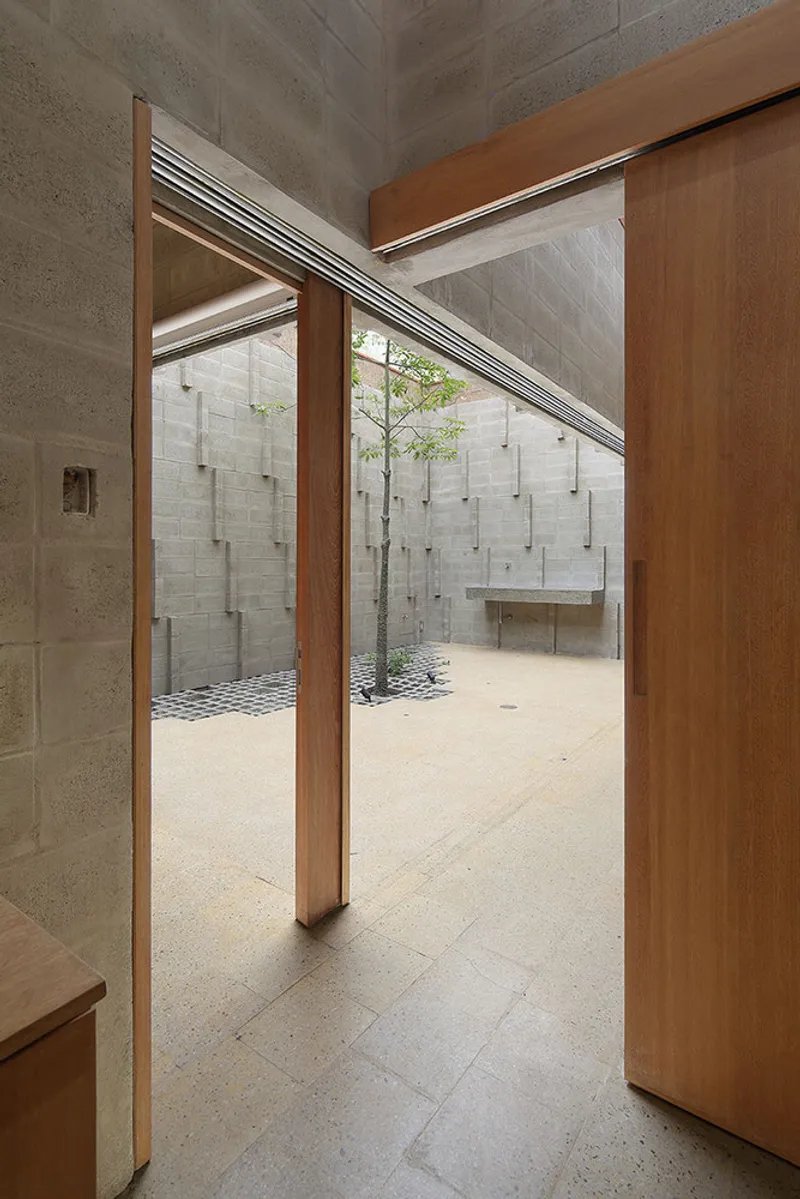
Visitors enter through a welcoming courtyard adorned with cantilevered planters, which leads directly to the central workspace. The studio employs sliding doors that can be concealed, allowing the open-plan environment to connect naturally with both the entrance and rear courtyards.
Additional features include:
- Kitchenette for convenience during long creative sessions
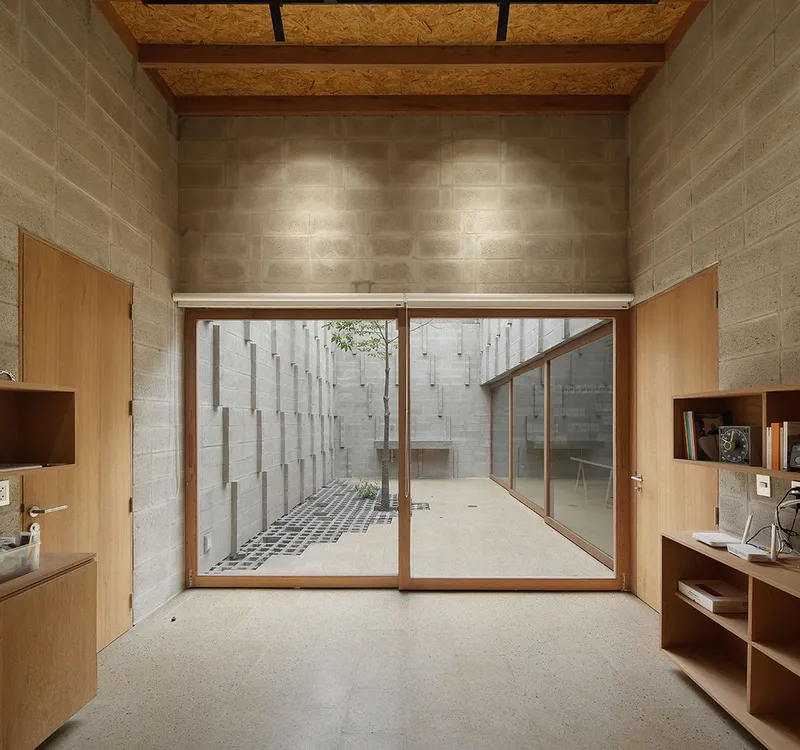
- Two multifunctional rooms suitable as desks, small offices, or temporary bedrooms for resident artists
- Enclosed bathrooms and a dedicated darkroom for analog photography development
This design prioritizes flexibility, ensuring the studio can easily support both production and exhibition functions.
Structural Design and Materiality
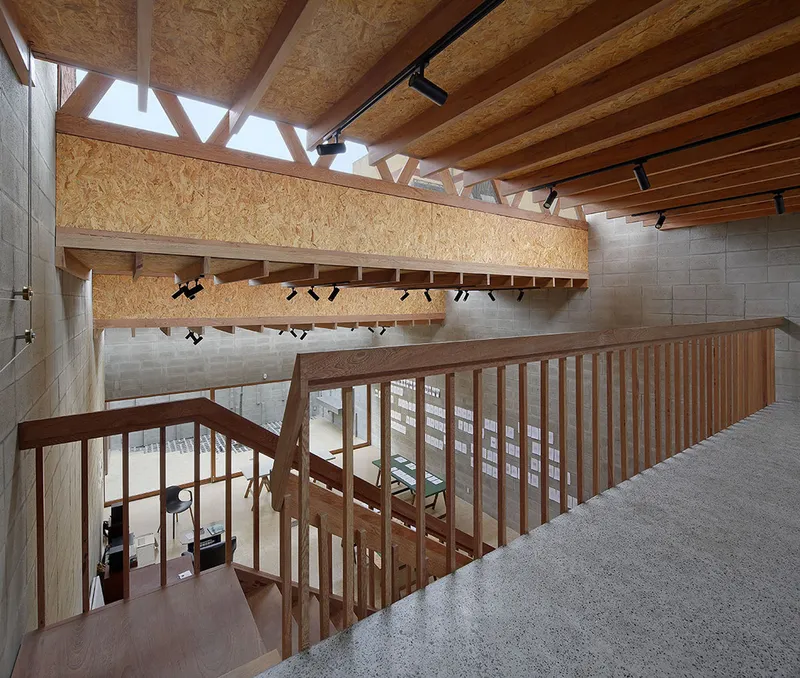
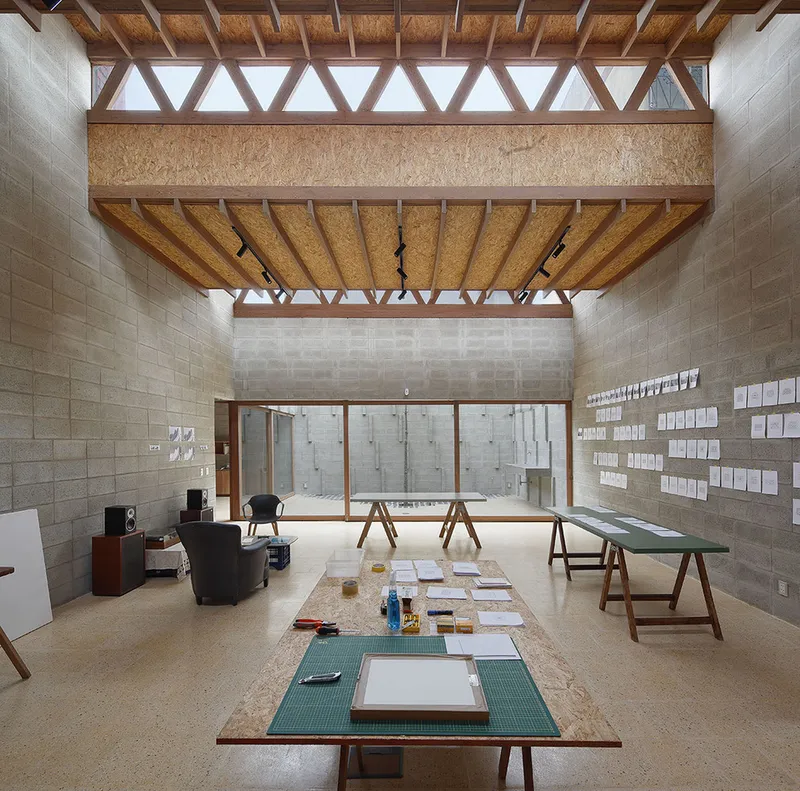
The studio’s structural framework combines reinforced concrete block perimeter walls with large supporting trusses and a wooden roof. The roof gradually folds and descends in height from the second-floor office toward the rear courtyard on the first level, creating dynamic interior volumes.
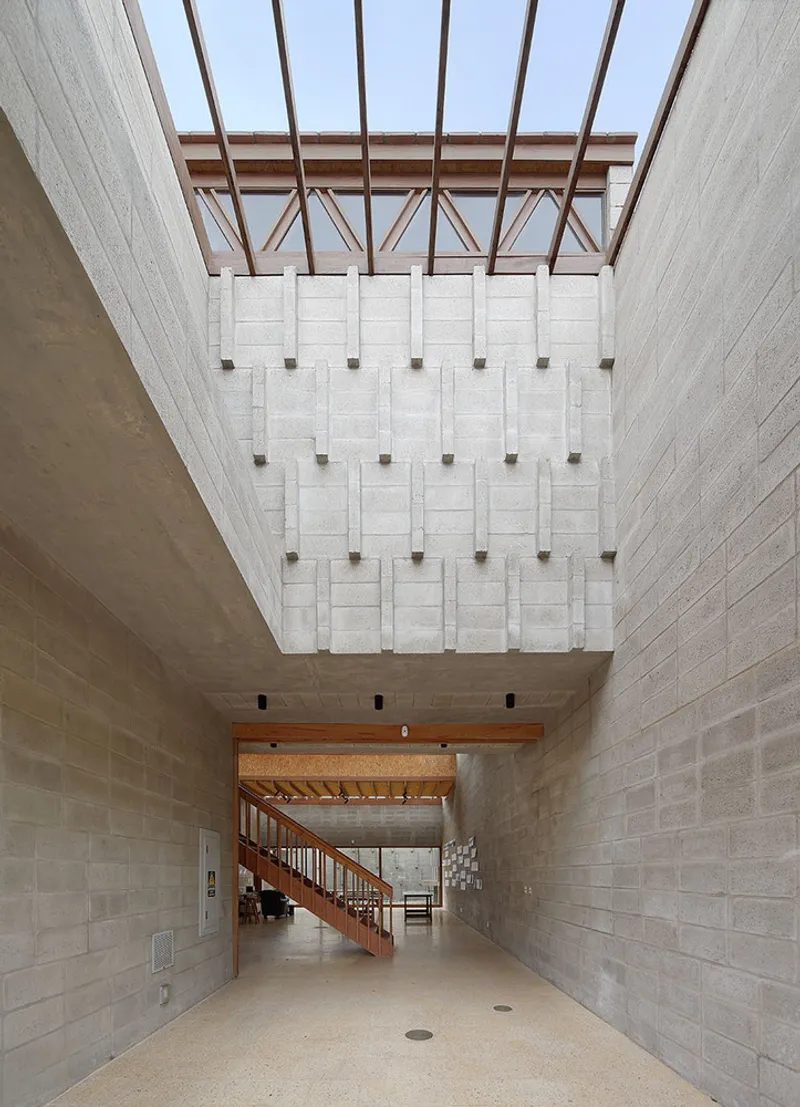
Four rectangular skylights punctuate the roof, providing abundant daylight and enabling cross ventilation via pulley-operated upper windows. This approach pays homage to Barranco’s historic houses, where skylights, lanterns, and ceiling lights traditionally addressed natural lighting and ventilation challenges.
Material Palette and Interior Features
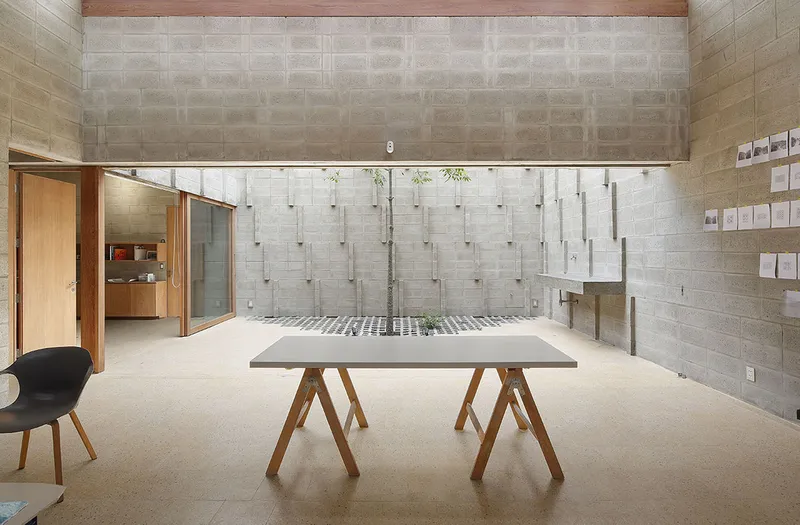
Huayruro wood defines the studio’s interior, featured in roof structures, partitions, furniture, gates, and the staircase connecting the two levels. Concrete block walls are smooth indoors, while textured surfaces in the courtyards integrate hidden lighting and support climbing plants or vines.
The first level’s handcrafted yellow terrazzo flooring flows seamlessly into the rear courtyard, terminating in a planter formed from concrete slats. A central ceibo tree anchors the courtyard, complemented by cacti and succulents, adding natural vibrancy and enhancing the biophilic character of the studio.
A Modern Studio Rooted in Heritage
Roman Bauer Arquitectos’ design respects the cultural and architectural heritage of Barranco, incorporating natural lighting strategies, ventilation methods, and material choices inspired by the region’s historic homes. The result is a multi-functional photography studio that is both contemporary and deeply contextual, offering artists an inspiring and functional environment to create and showcase their work.
All Photographs are works of Juan Solano Ojasi


Popular Articles
Popular articles from the community

Cloaked Colonization: A Mobile Underwater Habitat That Moves Like a Fish
Micah Abaya's shortlisted EHC Pacific entry reimagines ocean settlement as a dispersed network of self-sustaining architectural organisms.

Manzana Morphosis: Stretching Barcelona's Grid into a Living Landscape for 2050
A radical reworking of the Eixample manzana turns density into a tool for generous public space, vertical ecology, and environmental performance.

Singing Woman: Contemporary Architecture Inspired by Estonia’s Voice and the Sea
Singing Woman turns Estonia’s song culture into flowing opera house architecture, blending public life, landscape, sea, and national memory.

Extended Shell: Retrofitting Kolkata's Balconies as Living Urban Thresholds
A modular retrofit system recovers the social and environmental intelligence of Kolkata's historic verandas for contemporary Park Street residents.

Similar Reads
You might also enjoy these articles


Hodi-Mandai Geram
Project Function: Preservation and revitalization of the Intangible heritage and socio-spatial identity of the Hodi by Housing, Cultural Memory Center, Sacred Grove, landscape, local tourism economy


Olio Towers: A Mid-Rise for Performers That Fuses Housing, Rehearsal, and Stage
Located blocks from Houston's Theater District, this modular tower stacks living units around a central performance atrium.

Oasis: Modular Green Housing Carved into Dhaka's Urban Fabric
A shortlisted Plugin Housing entry reclaims unauthorized settlements in Dhaka with stepped concrete volumes, green roofs, and ventilation-driven design.

Black Hole: A Floating Megastructure for the Post-Physical Era
Emiliano Mazzarotto envisions a spherical, self-scaling arena where e-sports, digital hotels, and holographic stadiums replace traditional public space.

Explore Studios Competitions
Discover active competitions in this discipline

Challenge to reimagine the Iron Throne

Photograph architecture without architects

Illustrate the lost glory of Angkor Wat - Render Challenge

Design challenge to reuse E-waste
Comments (0)
Please login or sign up to add comments
No comments yet. Be the first to comment!