

Summer House in Klegod by Spant Studio
A restrained coastal retreat in West Jutland, blending timber, light, and landscape to create a calm, enduring summer house.


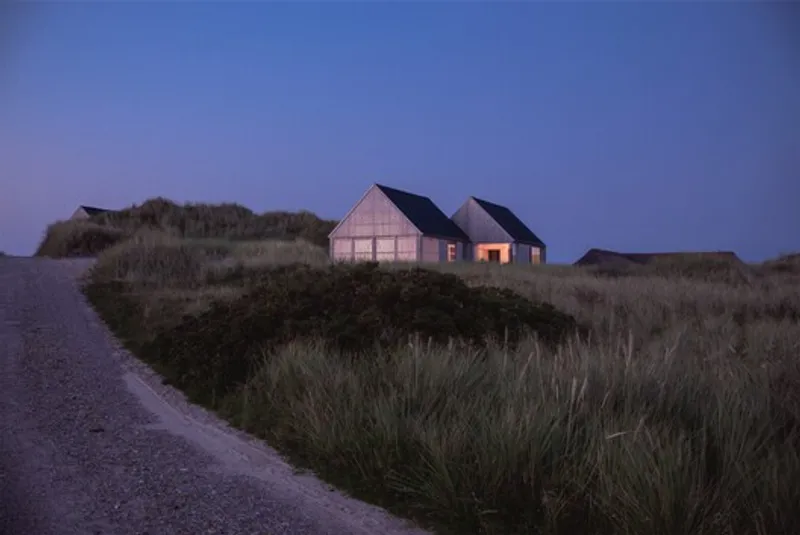
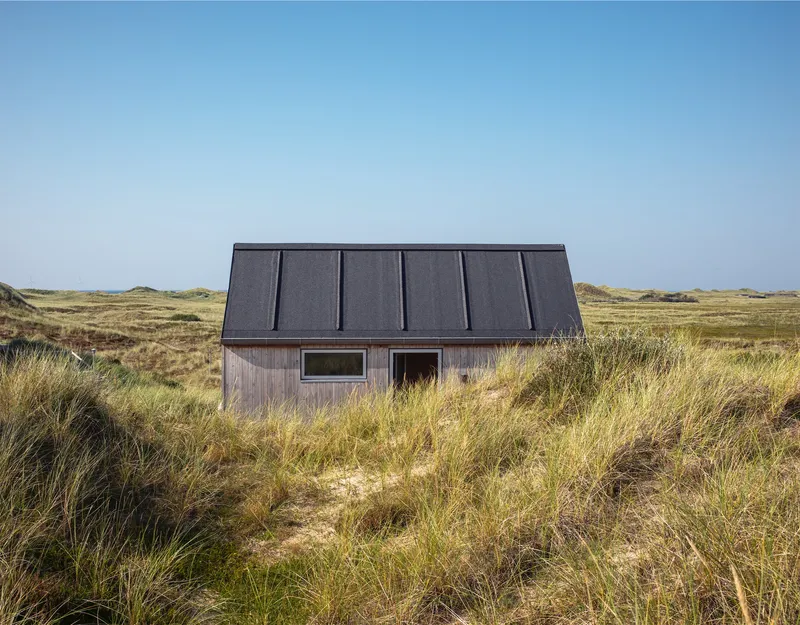
Located near Ringkøbing in the windswept coastal landscape of West Jutland, the Summer House in Klegod is a restrained and thoughtful retreat designed for long-term use and seasonal living. Completed in 2024, the 102 m² residence offers a quiet refuge where architecture, climate, and landscape are deeply intertwined.
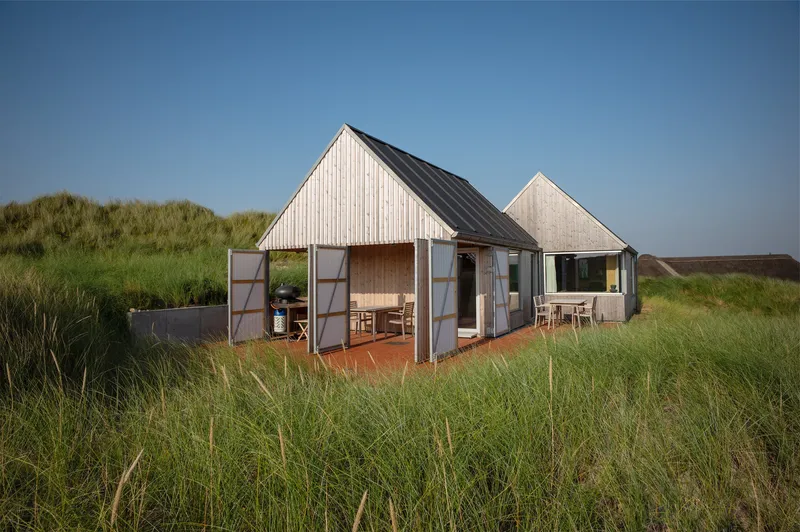
Designed as a gathering place for a couple, their children, and grandchildren, the house balances intimacy and openness while responding sensitively to its exposed dune setting near the North Sea.
Context: Living with Wind, Light, and Dunes
Klegod lies in one of Denmark’s most dramatic coastal regions, characterized by:
- Strong prevailing winds
- Shifting sand dunes
- Rapid weather changes
- Expansive skies
- Sparse vegetation
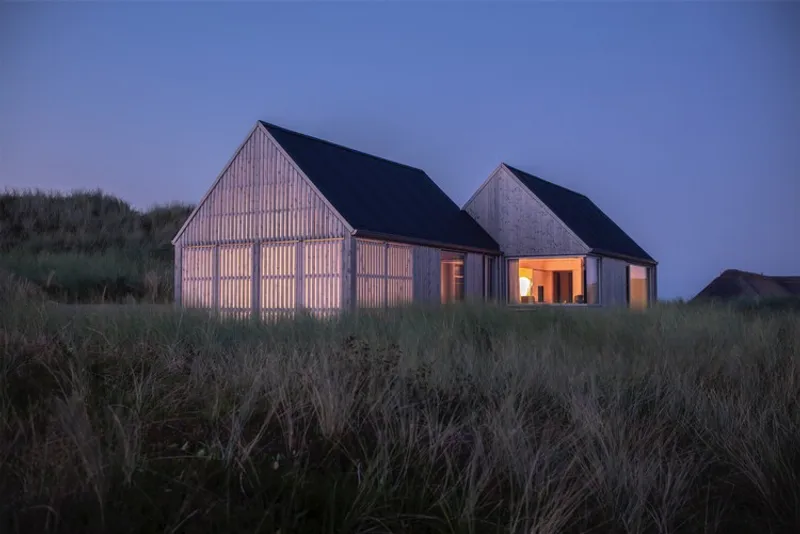
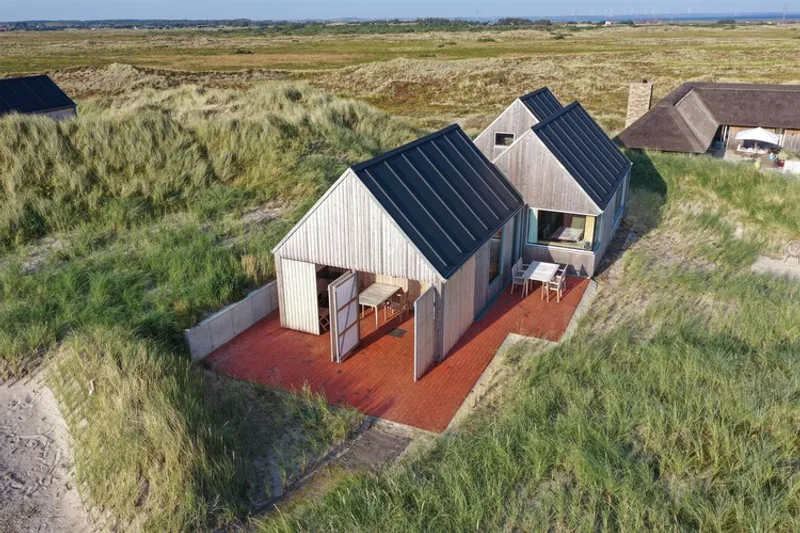
Rather than resisting these conditions, Spant Studio embraced them as central design drivers. The house is conceived not as a protective shell that isolates its users, but as a mediator between human life and natural forces.
Design Philosophy: Belonging Rather Than Standing Out
From the outset, the project aimed to “belong” to its site.
Key intentions included:
- Preserving existing vegetation
- Minimizing visual impact
- Avoiding major land reshaping
- Using weathering materials
- Maintaining modest scale
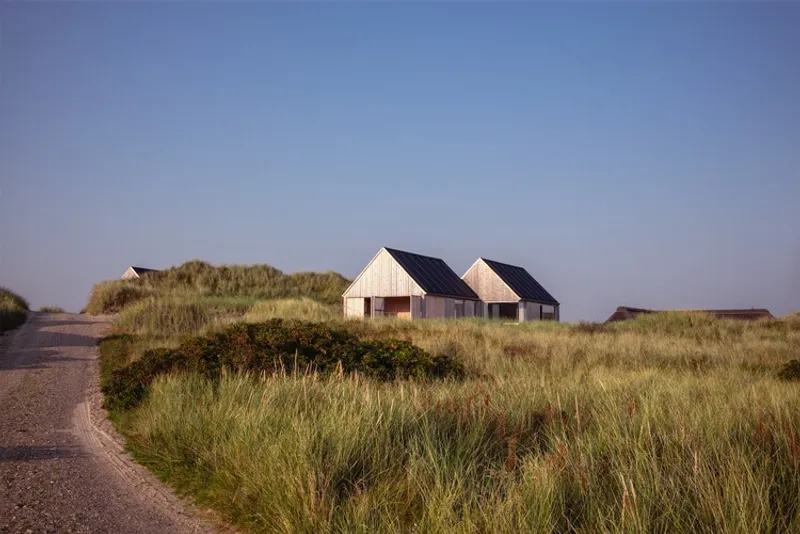
This attitude resulted in an architecture that settles quietly into the dunes, becoming part of the landscape rather than dominating it.
Site Strategy and Orientation
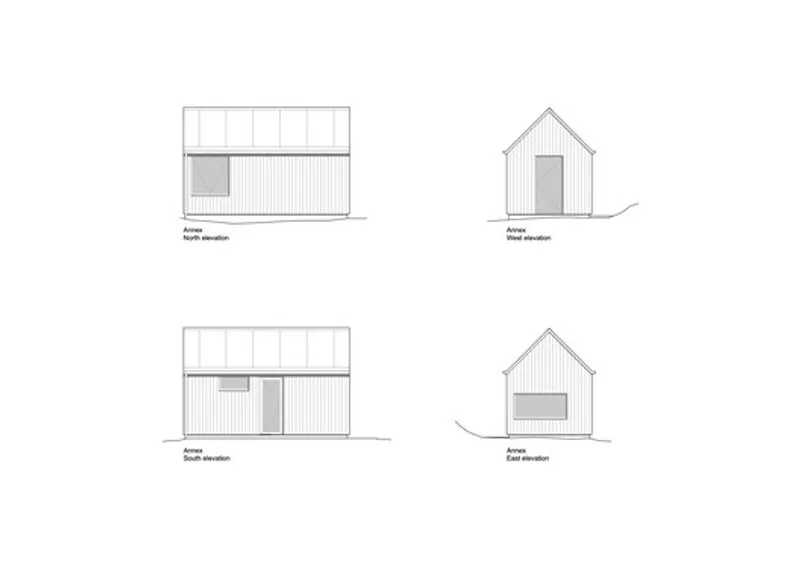
The building is carefully positioned to provide shelter from dominant winds while maintaining openness toward key views.
Spatial Response to Climate
- Protected façades on exposed sides
- Openings toward dunes and sky
- Covered southwest-facing terrace
- Wind-buffered outdoor areas
- Gradual transition between inside and outside
This strategic placement allows the house to remain comfortable throughout changing seasons.
The Covered Terrace: An Outdoor Living Room
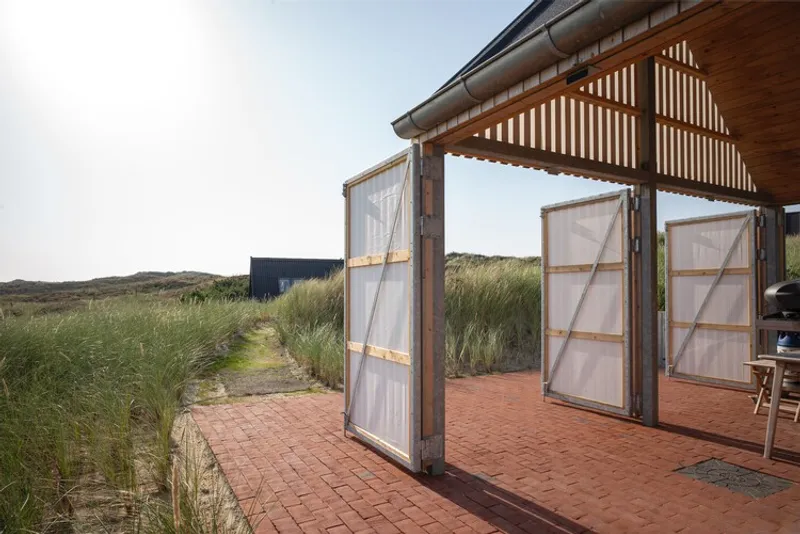
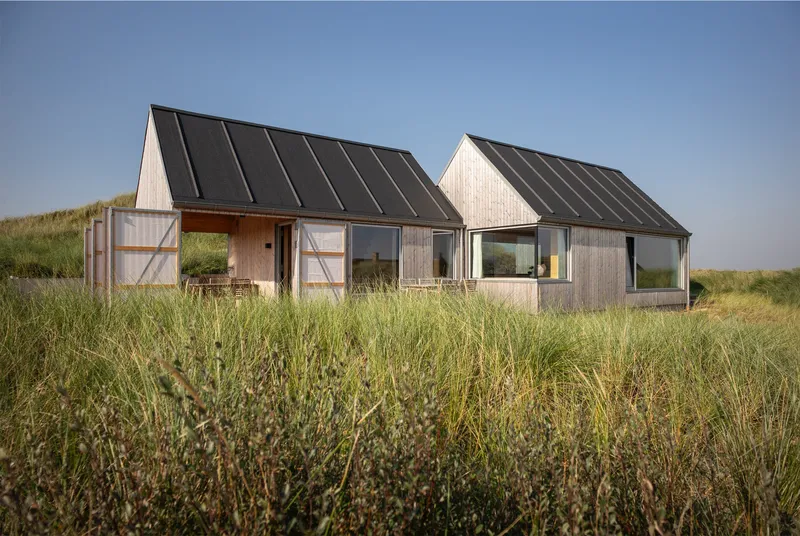
One of the project’s defining elements is the covered terrace on the southwest side.
Key Features
- Transitional indoor–outdoor space
- Adjustable sailcloth wind screens
- Flexible enclosure system
- Visual connection to landscape
- Evening lantern effect
During the day, the terrace opens to sun and views. In strong winds or after sunset, translucent screens close the space, transforming it into a softly glowing enclosure.
This adaptable outdoor room extends daily living and becomes the social heart of the house.
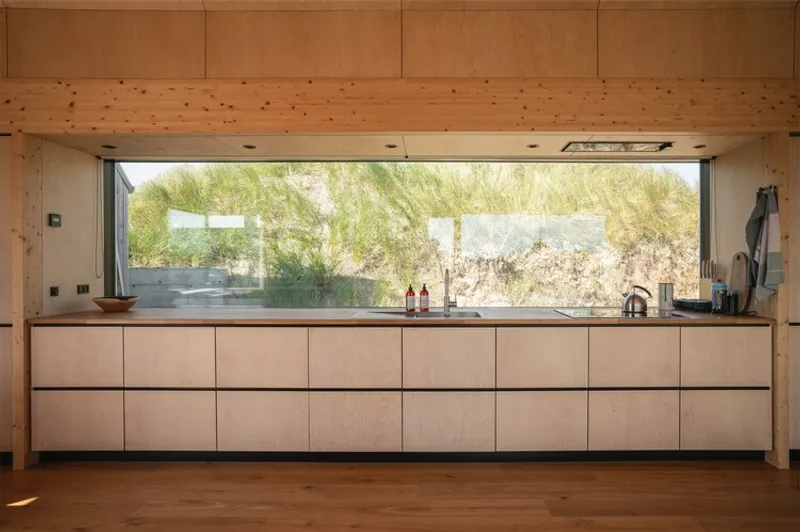
Light as a Building Material
Light plays a central role in shaping spatial experience.
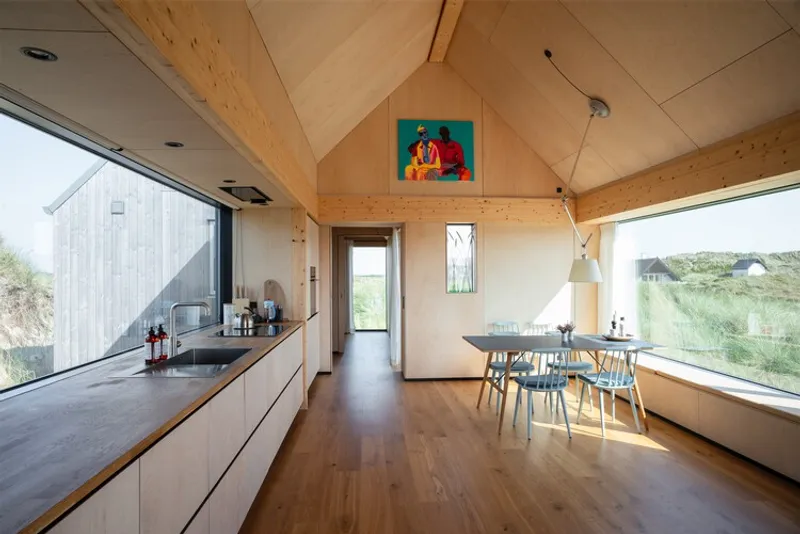
Rather than treating daylight as incidental, the architects carefully choreographed its entry through framed openings and varying façade densities.
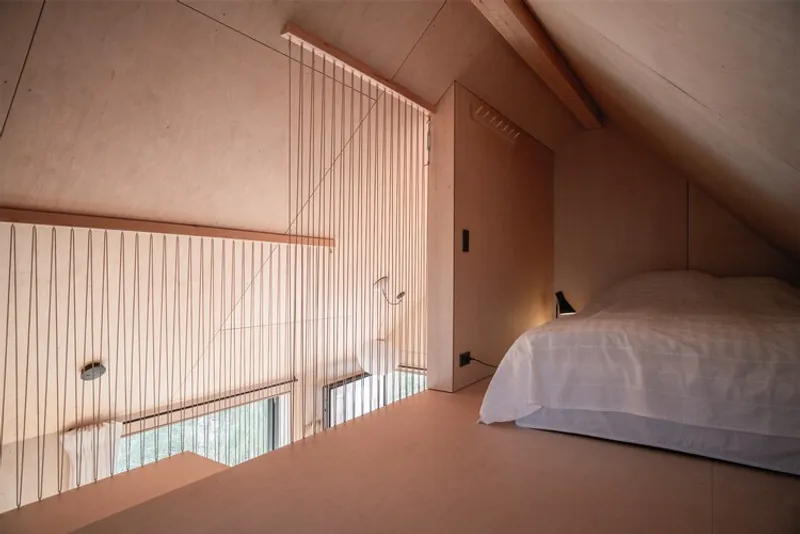
Effects of Light
- Changing atmospheres throughout the day
- Seasonal variation
- Visual connection to sky
- Enhanced spatial depth
- Reinforced sense of calm
Light becomes a dynamic material, constantly redefining the interior environment.
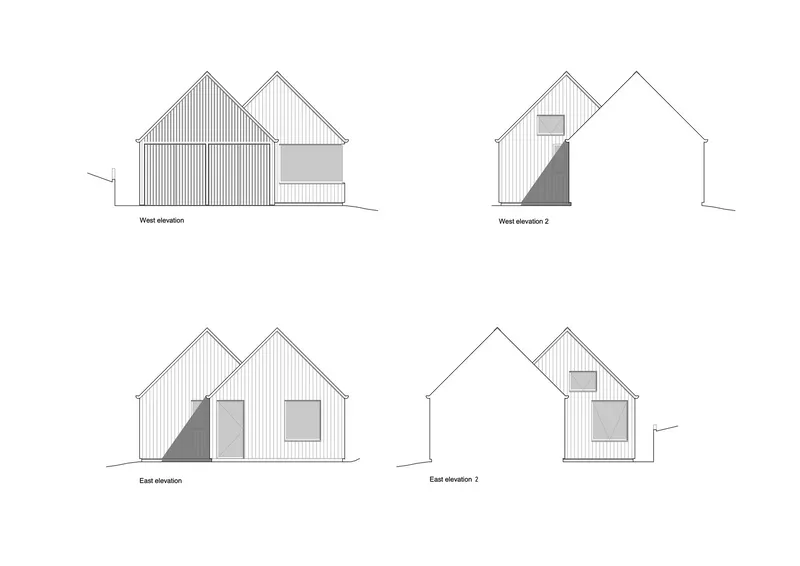
Spatial Organization: Clarity and Hierarchy
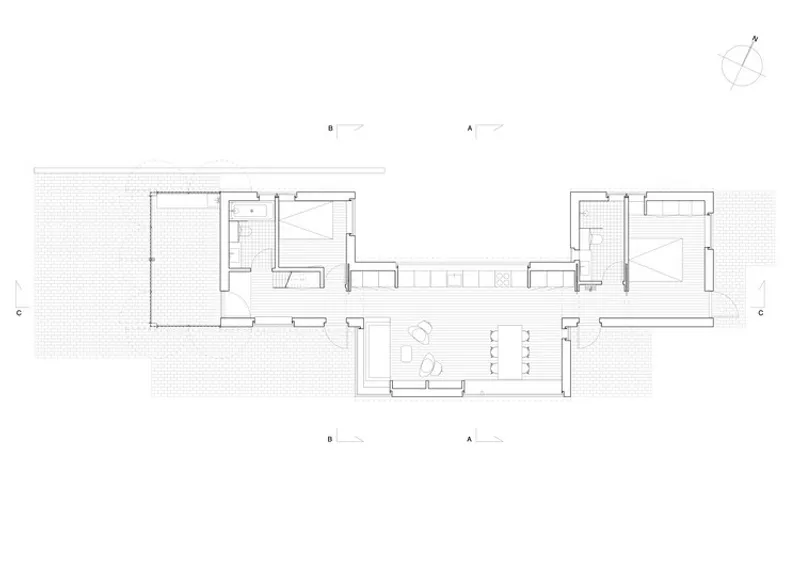
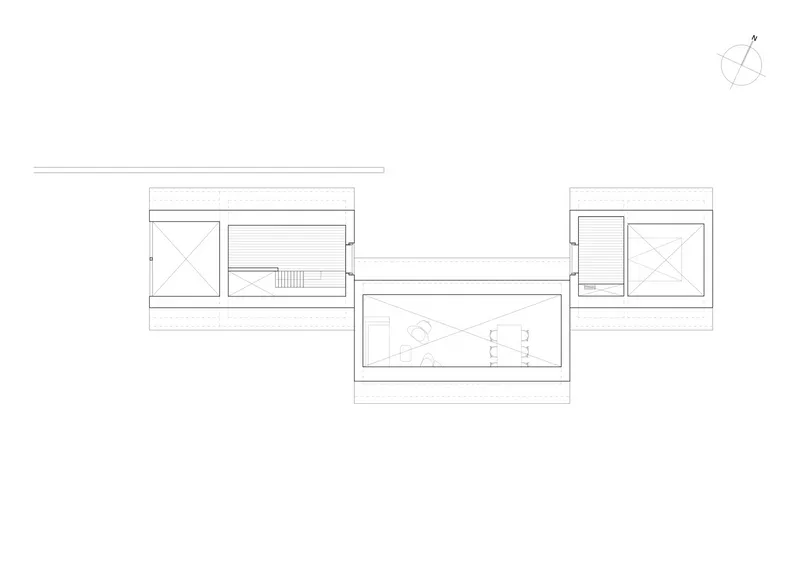
The plan follows a clear and intuitive hierarchy.
Programmatic Layout
- Central living and kitchen zone
- Bedrooms at outer edges
- Private functions separated from social areas
- Direct access to terrace
- Compact circulation
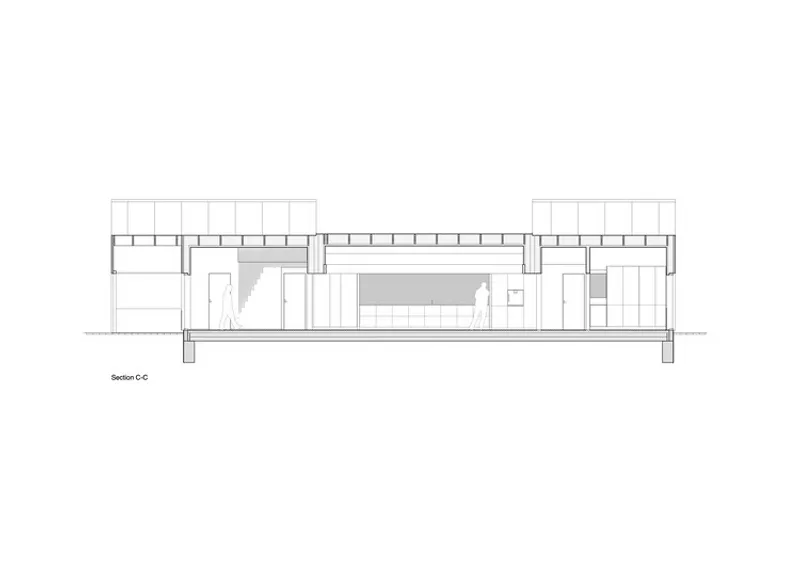
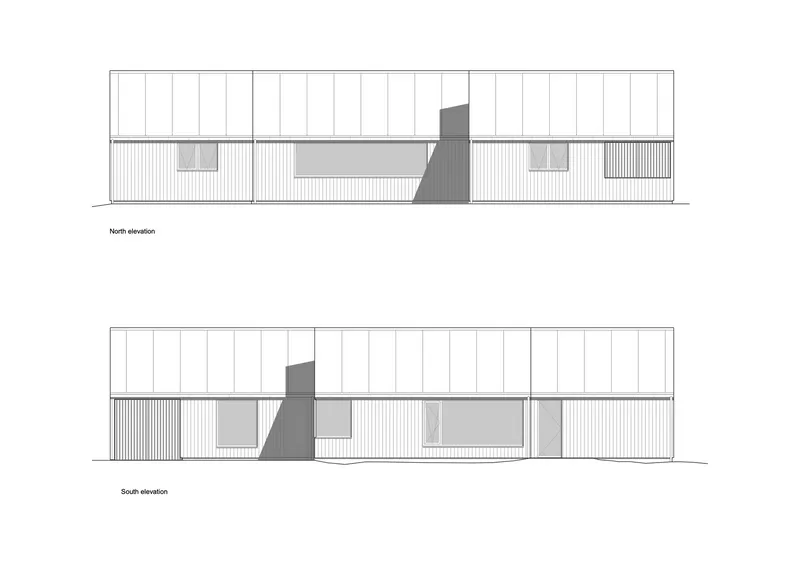
This organization supports both family gatherings and quiet retreats, allowing multiple modes of occupation within a modest footprint.
Integrated Architecture and Interior Design
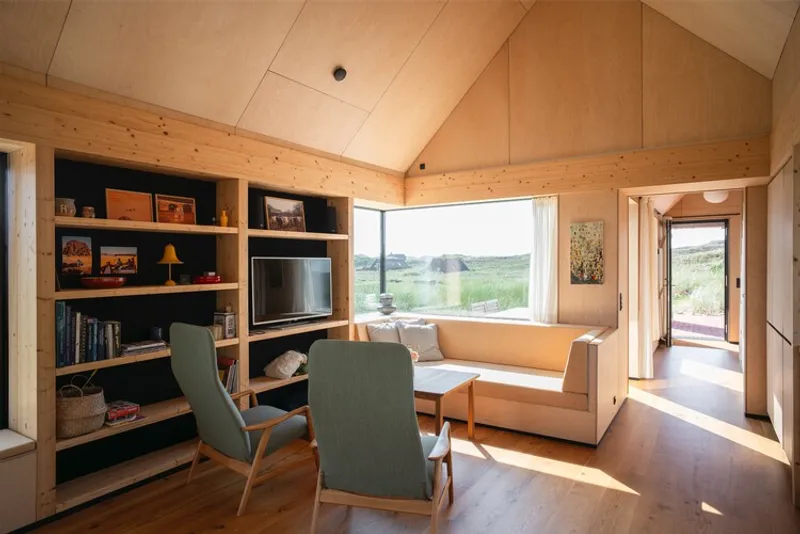
In the Klegod Summer House, architecture, interiors, and furnishings are conceived as one coherent system.
Rather than adding furniture after construction, Spant Studio designed:
- Built-in seating
- Fixed storage
- Integrated cabinetry
- Custom surfaces
- Unified proportions
This approach eliminates visual clutter and reinforces continuity throughout the house.
Rooms, objects, and surfaces merge into a seamless spatial experience.
Subtle Spatial Variation
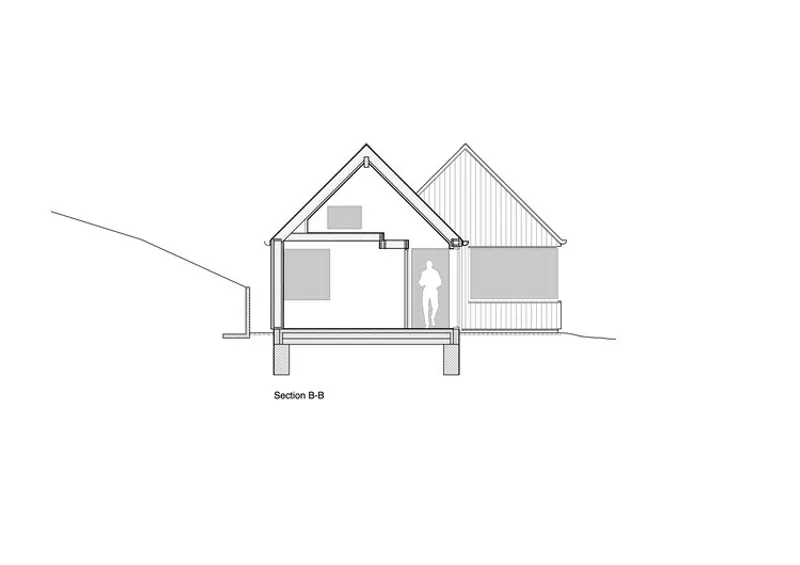
Although compact, the house avoids monotony through subtle spatial modulation.
Design tools include:
- Slight ceiling height variations
- Differentiated light conditions
- Changes in enclosure
- Shifts between openness and refuge
These nuanced adjustments create spatial richness without increasing footprint or material use.
Sustainability Through Restraint
Sustainability in this project is achieved through moderation rather than technological excess.
Environmental Principles
- Minimal site disturbance
- Long-lasting materials
- Passive climate control
- Natural ventilation
- Reduced maintenance needs
By relying on orientation, form, and material behavior, the house achieves comfort with minimal mechanical intervention.
A Quiet Model of Scandinavian Residential Design
The Summer House in Klegod exemplifies a contemporary Scandinavian approach rooted in restraint, craftsmanship, and environmental sensitivity.
Rather than pursuing iconic form, Spant Studio delivers an architecture of balance: between openness and shelter, permanence and change, simplicity and richness.
The result is a deeply contextual retreat that demonstrates how small-scale residential architecture can achieve lasting cultural and spatial value.
All the Photographs are works of Helene Høyer Mikkelsen


Popular Articles
Popular articles from the community


U.GA Architects Wraps an Oval Rooftop Pool in Curved Board-Formed Concrete on Busan's Jeollidan-gil
In Busan's Jeonpo-dong, a 454 m² mixed-use block stacks a neighborhood facility, guest rooms and an oval rooftop pool inside spiraling concrete walls.

Architekt Andreas Gruber Scatters 23 Dark Timber Chalets Across a South Tyrolean Forest Edge
In Molini di Tures, Amonti Chalets breaks a resort into a hamlet of gabled timber houses, with parking, storage and services pushed into the slope.

Cube Design Draws an Ecological Corridor Between Two Shenzhen Hills with the Nankai Building
Beside Shenzhen's container docks, the Nankai Building pairs stacked balconies with a climbing green screen to connect two hillsides across its height.

longwave studio Reorganizes a 112 m² Tainan Apartment Around the Daily Routines of a Family and Two Cats
In Tainan, Taiwan, birch plywood, rust-red furniture and a freestanding plaster wall link arrival, storage, work and family life in one apartment.

Similar Reads
You might also enjoy these articles


Hodi-Mandai Geram
Project Function: Preservation and revitalization of the Intangible heritage and socio-spatial identity of the Hodi by Housing, Cultural Memory Center, Sacred Grove, landscape, local tourism economy


Olio Towers: A Mid-Rise for Performers That Fuses Housing, Rehearsal, and Stage
Located blocks from Houston's Theater District, this modular tower stacks living units around a central performance atrium.

Oasis: Modular Green Housing Carved into Dhaka's Urban Fabric
A shortlisted Plugin Housing entry reclaims unauthorized settlements in Dhaka with stepped concrete volumes, green roofs, and ventilation-driven design.

Black Hole: A Floating Megastructure for the Post-Physical Era
Emiliano Mazzarotto envisions a spherical, self-scaling arena where e-sports, digital hotels, and holographic stadiums replace traditional public space.

Explore Seaside Architecture Competitions
Discover active competitions in this discipline

Challenge to reimagine the Iron Throne

Photograph architecture without architects

Illustrate the lost glory of Angkor Wat - Render Challenge

Design challenge to reuse E-waste
Comments (0)
Please login or sign up to add comments
No comments yet. Be the first to comment!