

Sun-in-flexible Skyscraper
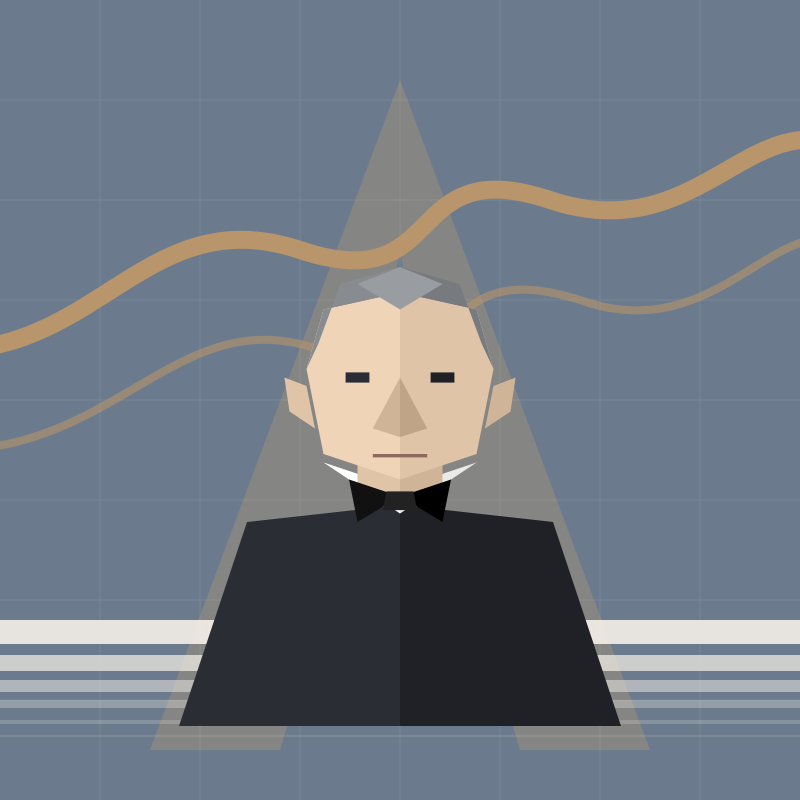
Producing residential units inside the factory and Creating a high-rise building with the possibility of rotating the residential units in order to take advantage of having a favorable view.
The issues:
1- The population of cities is increasing day by day and providing housing is a serious issue.
2- Cities have increased in surface over the centuries and destroyed the natural environment.
3- The traditional construction system leads to an increase in construction time and waste of materials.
4- City buildings do not have the necessary flexibility to increase the height.
5- Many high-rise buildings do not have the possibility of providing adequate light to create green space inside the building.
Analyze:
1- Among the two solutions of expanding cities on the surface or in height, despite some problems, many experts emphasize on the vertical growth of cities.
2- Cities need more high-rise buildings to accommodate the rising population. These buildings with minimum occupancy levels can help to increase natural green space in cities.
3- In order to reduce the construction time and increase the quality of residential complexes and also to reducing the waste of materials, industrialization is a basic solution. The structure is implemented at the project site and the apartment units are printed in the factory with the lightest materials and transported to the site.
4- The possibility of choosing the desired floor or view, or in other words, the possibility of changing the floor of the unit and the surrounding views in different directions in different days of the year, month, week or day can be a very valuable idea for high-rise buildings. Using an elevator to move the units and rotate them in each floor makes this possible.
5- The possibility of entering natural light into the central core of the towers and creating a suitable green space and landscape inside this project can be done through light reflecting panels on the roof and the inner tube of the building. The use of Iranian mirror-work in the central tube, in addition to makes the possibility to create an interesting landscape of light, makes it possible to create a green space in the central core of the towers. At night, with lighting in this cylinder, residents will experience the play of light and color in the central corridor.
solution
1- The constructing towers on the margins of green spaces and parks as well as in dense urban centers according to the speed of growth of cities and the increase of housing applicants. The designed tower provides this possibility.
2- Creating flexible buildings that can accommodate more people as the population increases. The proposed tower, with the possibility of increasing the height, can accommodate up to 600 residential units and a population of approximately 3000 people in an occupation area of approximately 1200 square meters.
3- The concrete structure on the site is implemented and completed in stages according to the increase in population and applicants. and the units are made in the factory with the lightest materials and are installed to the site and installed in their place.
4- The constructing an elevator is proposed to carry prefabricated residential units to the desired floor with the possibility of rotating them on that floor and placing them at the desired location of each unit is based on the management plan of the complex. The units located on the upper or lower floors enjoy optimal visibility and light by rotating on each floor or moving to another floor.
5- A wide, expandable and intelligent mirror reflects light to a central mirror and then to the central tube and cylinder inside the tower. Mirrored walls transmit light to the lower floors.

Popular Articles
Popular articles from the community

Temporary Home for Dogs: A Reversed Zoo Rethinks Animal Shelter Architecture
In Bucharest, a sinuous corridor and freed landscape flip the logic of containment, designing a shelter that works to make itself unnecessary.

Tsunami Convergenics: Turning Catastrophic Ocean Forces into Underwater Housing Infrastructure
A speculative underwater settlement off the coast of Onagawa, Japan, treats tsunamis and typhoons as energy sources rather than threats.
Opera by the Sea Estonia: Three Shells Dissolving Architecture into Tallinn's Coastline
A winning opera house proposal replaces monumental form with interconnected shells that blur the boundary between building, park and Baltic Sea.

Cloaked Colonization: A Mobile Underwater Habitat That Moves Like a Fish
Micah Abaya's shortlisted EHC Pacific entry reimagines ocean settlement as a dispersed network of self-sustaining architectural organisms.

Similar Reads
You might also enjoy these articles

Day and Night Park: A Time-Based Urban Newsstand in Beijing
A temporary urban newsstand in Beijing blending travel, light, and reading through poetic colors, compact form, and community-focused design.

Modernist Patio Renovation in El Masnou, Barcelona by Oliver Segura Arquitectura + Cebrià Arquitectura
Modernist patio renovation blending tradition and innovation with a movable pool, leveled floors, and Catalan materials in El Masnou.

Alto Residencial Coop: Cooperative Housing Development in Santiago de Compostela by Carbajo Barrios Arquitectos
A linear cooperative housing complex blending white volumes and perforated metal façades, enhancing community living, natural light, privacy, and urban integration.
Vil Genis School by BPA ARCHITECTURE – Massy, France
Vil Genis School in Massy, France, features sustainable design, south-facing classrooms, community integration, accessible spaces, and modern educational architecture.

Explore Skyscraper Competitions
Discover active competitions in this discipline


Challenge to reimagine the Iron Throne

Photograph architecture without architects

Illustrate the lost glory of Angkor Wat - Render Challenge

Design challenge to reuse E-waste
Comments (0)
Please login or sign up to add comments
No comments yet. Be the first to comment!