

Sun Tower Yantai: A Beacon of Nature-Inspired Architectural Brilliance by OPEN Architecture
Sun Tower in Yantai by OPEN Architecture redefines cultural architecture by blending natural phenomena with sustainable design and community spaces.


Introduction to Sun Tower
The Sun Tower in Yantai, designed by OPEN Architecture, is a cultural landmark celebrating the harmony of nature and modern design. Located in Yantai Yeda Development Zone, this architectural marvel serves as a public cultural facility housing a library, digital exhibition spaces, a café, and an outdoor theater, all united under a vision to reconnect people with nature's spiritual essence.


Historical and Cultural Significance
Archaeological findings reveal that Yantai was one of China's earliest sun-worshiping cultural hubs. The Sun Tower symbolizes this rich heritage by incorporating solar alignments and timeless natural phenomena into its design, fostering a connection with the cycles of the universe.



Architectural Features
Nature-Inspired Geometry
The Sun Tower's form is shaped by solar movements observed from its site. Key alignments include:
- Northern edge parallel to equinox sunlight.
- Entrance tunnel aligned with the winter solstice sunset.
- Theater axis pointing to Zhifu Island’s summer solstice sunrise.
This precise integration of celestial paths establishes a seamless link between architecture and the natural world.



Innovative Shell Structure
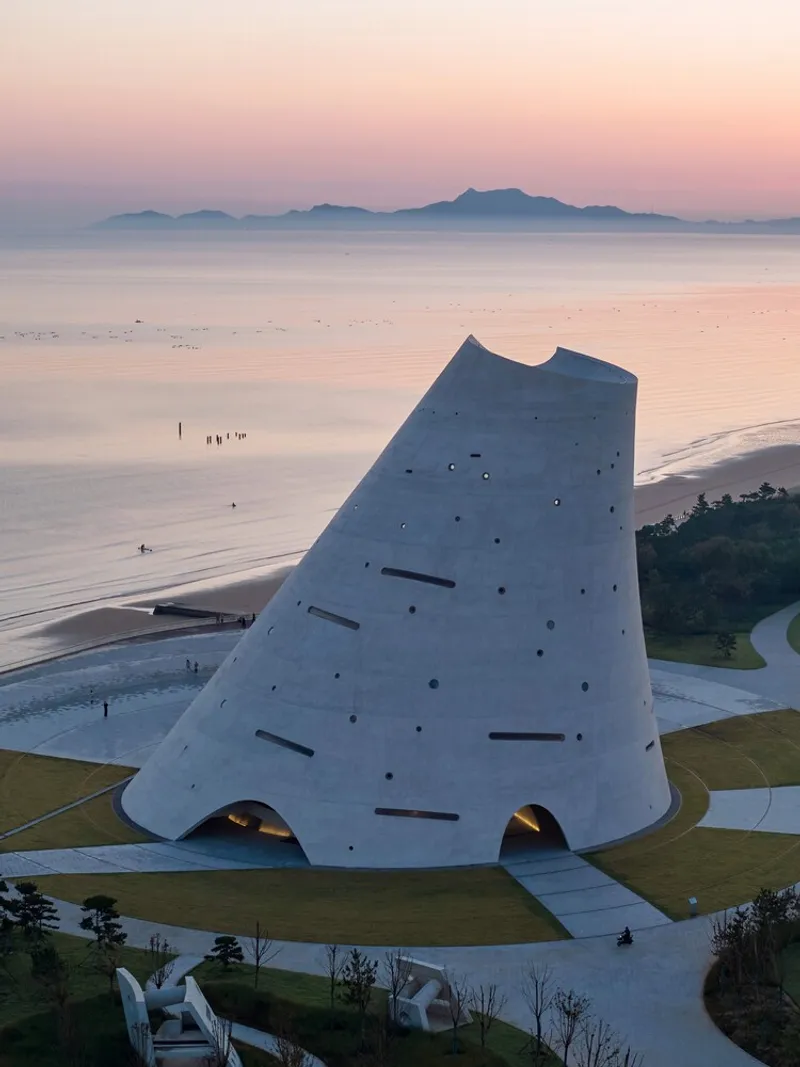
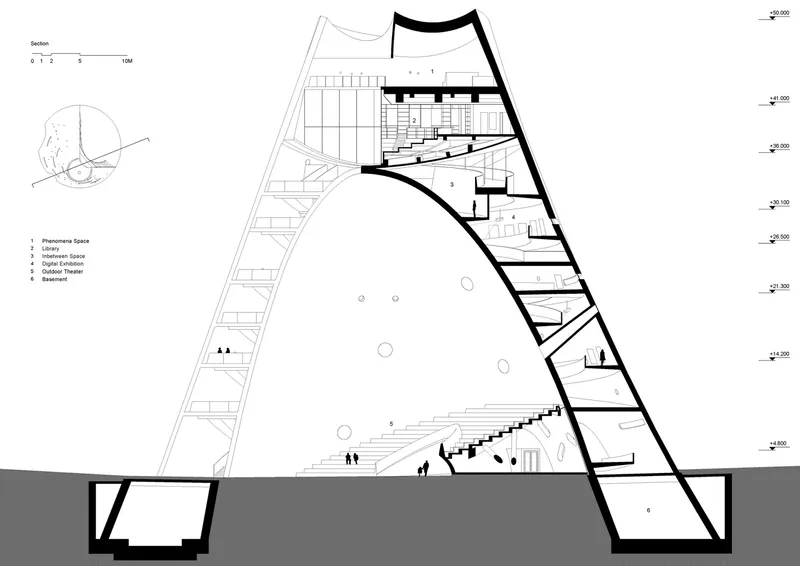
The structure comprises two layers of white concrete shells:
- Inner concave shell: Acts as a sound collector, amplifying ocean sounds.
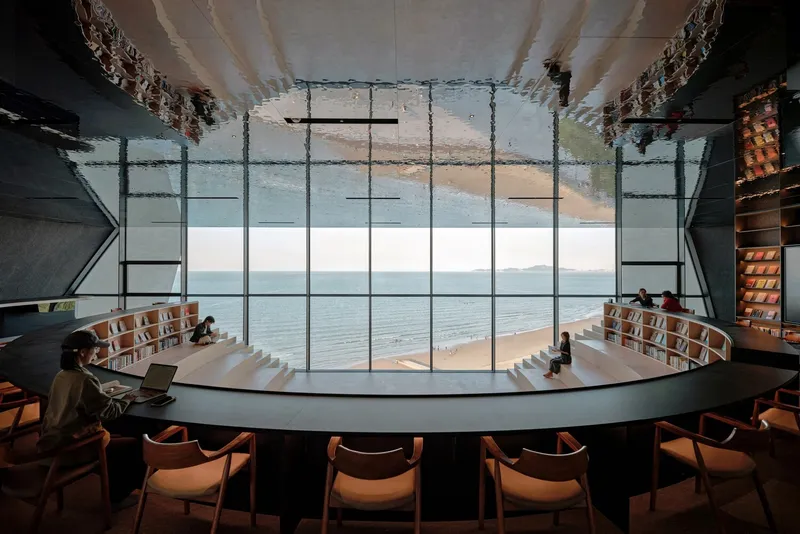
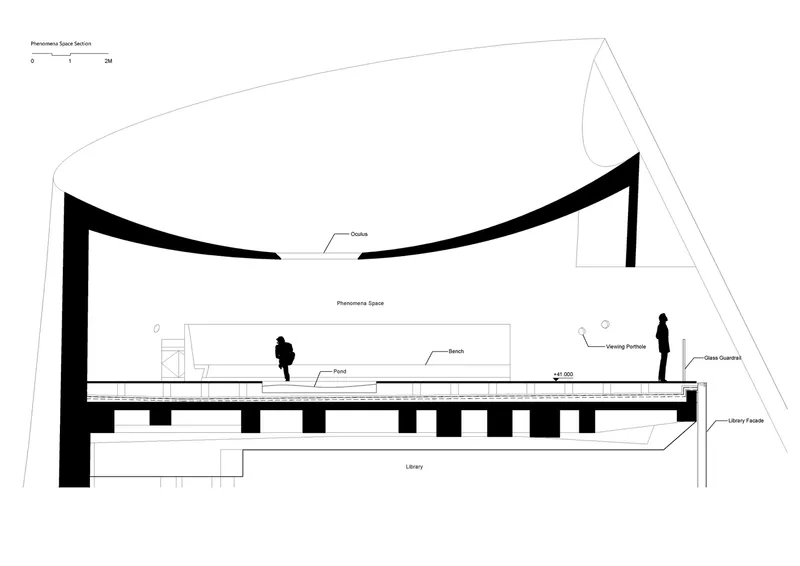
- Outer shell: Enhances thermal mass and passive cooling.The library and the unique "Phenomena Space" reside within the upside-down shell atop the main structure, offering panoramic views of the sea and sky.


Phenomena Space and Time Interaction
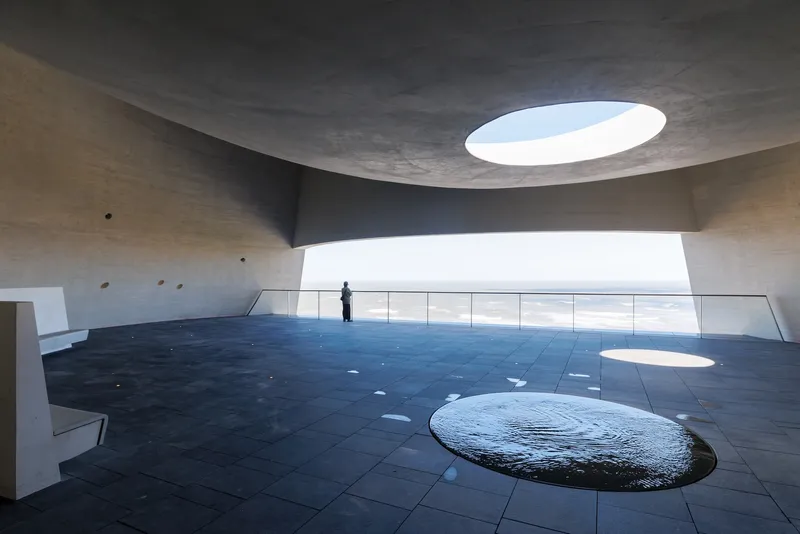
The Phenomena Space, a semi-outdoor void, captures rainwater through an oculus, creating a swirling water feature every hour from 5 AM to 9 PM. This unique time device transforms nature's elements into a sensory experience.


Environmental Sustainability
Sun Tower employs passive cooling strategies, including:
- Tunnel cooling for airflow.
- Cross-ventilation and thermal mass for temperature regulation.
- Chimney effect to remove hot air.
These measures reduce energy consumption and expand the comfort zone for visitors during summer.

Multifunctional Public Spaces
Library and Exhibition Spaces
The library combines traditional and digital resources, providing a serene space to read under natural light. The digital exhibition area, located between the shells, features adaptive spaces with advanced technologies for dynamic displays.

Outdoor Theater and Seashell Plaza
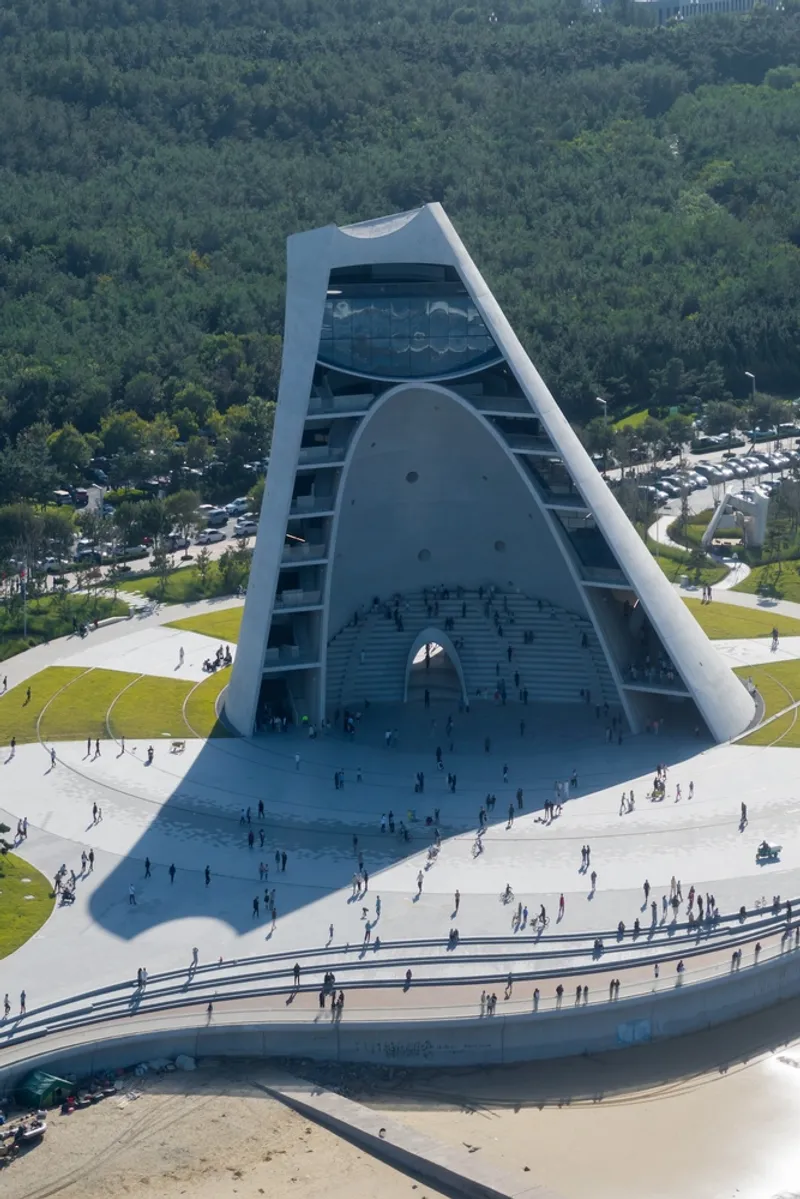
At the tower's base lies an outdoor amphitheater doubling as a relaxation spot. The seashell-shaped plaza features elliptical rings resembling planetary orbits, with water channels marking time during equinoxes.


Solar Calendar Integration
Fountains on the plaza commemorate the 24 Solar Terms of the lunar calendar, synchronizing their sprays with the sea’s tides, blending cultural heritage with modern technology.


A Cultural Lighthouse
The Sun Tower stands as more than a building—it's a cultural lighthouse. Through its design, it captures air, light, sound, and natural phenomena, transforming them into visceral human experiences. It bridges ancient wisdom with contemporary urban life, inviting visitors to reconnect with nature.

The Sun Tower in Yantai by OPEN Architecture is a testament to how architecture can integrate with natural elements, cultural heritage, and community needs. Its innovative design elevates it as a symbol of sustainability, creativity, and spiritual connection.

All Photographs are work of Iwan Baan, Jonathan Leijonhufvud




Popular Articles
Popular articles from the community

EW PARK: Sustainable Architecture Reimagines the Future of Urban Parking
EW PARK reimagines city parking as a modular wooden tower combining automation, solar energy, electric mobility, and adaptable urban design.

The Ocean Hive: Sustainable Architecture for a Self-Sufficient Civilization at Sea
The Ocean Hive imagines sustainable architecture at sea, where modular habitats, algae, wave power and ocean waste sustain a growing colony.

Conexión: Biophilic Design Reimagines High-Rise Living in Hong Kong
Conexión reimagines high-rise living in Hong Kong through biophilic design, green facades, shared spaces, daylight, water and nature within.

The Musturak Paradise: Senior Living Architecture for a Connected Future in Temara, Morocco
The Musturak Paradise reimagines senior living architecture in Temara via private homes, social spaces, culture, community, and shared care.


Similar Reads
You might also enjoy these articles


Hodi-Mandai Geram
Project Function: Preservation and revitalization of the Intangible heritage and socio-spatial identity of the Hodi by Housing, Cultural Memory Center, Sacred Grove, landscape, local tourism economy


Olio Towers: A Mid-Rise for Performers That Fuses Housing, Rehearsal, and Stage
Located blocks from Houston's Theater District, this modular tower stacks living units around a central performance atrium.

Oasis: Modular Green Housing Carved into Dhaka's Urban Fabric
A shortlisted Plugin Housing entry reclaims unauthorized settlements in Dhaka with stepped concrete volumes, green roofs, and ventilation-driven design.

Black Hole: A Floating Megastructure for the Post-Physical Era
Emiliano Mazzarotto envisions a spherical, self-scaling arena where e-sports, digital hotels, and holographic stadiums replace traditional public space.


Explore Architecture Competitions
Discover active competitions in this discipline



Challenge to reimagine the Iron Throne


Photograph architecture without architects


Illustrate the lost glory of Angkor Wat - Render Challenge


Design challenge to reuse E-waste
Comments (0)
Please login or sign up to add comments
No comments yet. Be the first to comment!