
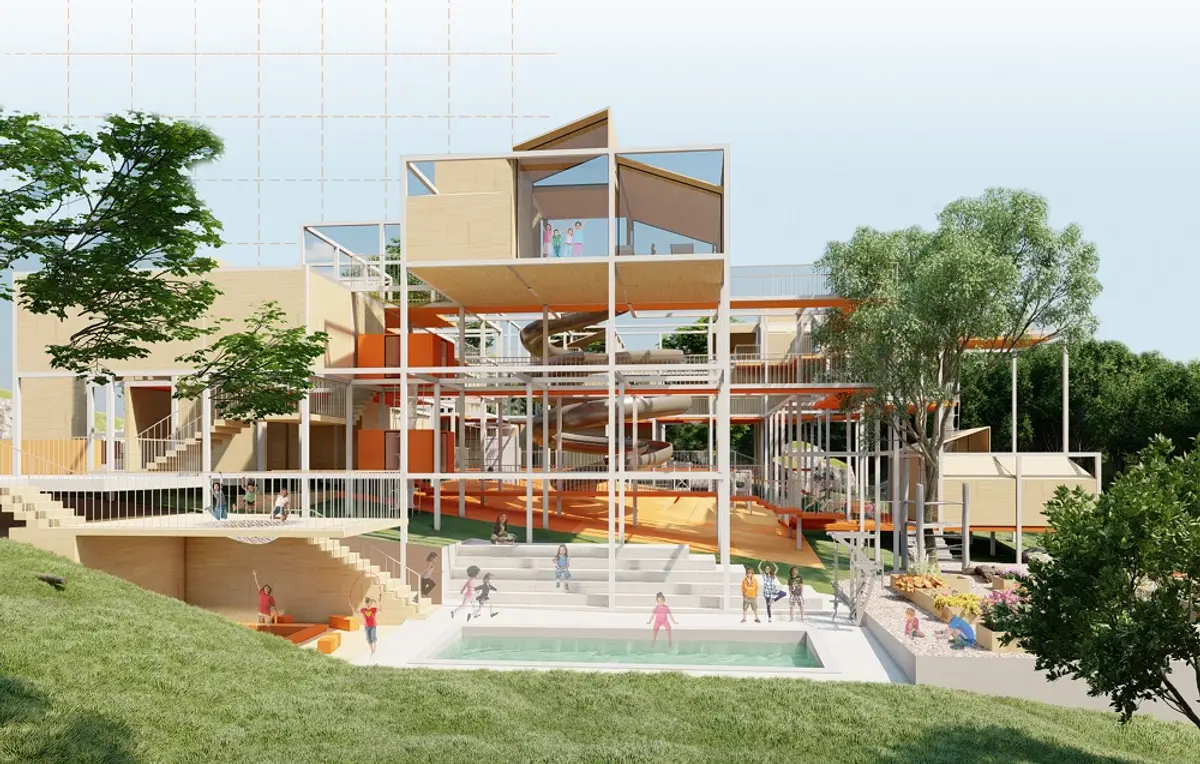
Education Reinvented: Architects rediscover kindergarten design in New Zealand through Supergarten
Developing a relevant kindergartens of today


Overview
Our children are sent to kindergarten with the best intention, believing that formal education is what kids need to become productive, happy adults. Education begins at playschools, a place that handles these blooming minds and their first interaction of out-of-home learning with their peers.
While education curriculum varies from place to place how can built form itself can be a great teacher of various elements of life? Kindergartens offer a lot of opportunities to teach children about basic spheres of life, yet most utilize rooms and surfaces only.
How can the architecture of the kindergarten boost exploration and curiosity while creating a safe enclosure for the children? How well are we managing these shoots of imagination especially in changing times of today?
There are several elements in a school that can introduce life that is not with a blackboard. Be it staircases, corridors, trees, soil, walls, floors, materials, and possibilities just begin. From natural to man-made, every element in nature can be a teacher to a specific aspect of life.
Yet we are mostly restrained to classrooms, and now rely on video screens to absorb knowledge.
Unarguably, screens are the gold standard of providing a convenient audio-visual format of learning without much effort in a world full of free content.
However, when 90% of our lives will be spent in front of screens, how can Kindergarteners be a space where children begin to learn without it? How can we switch classrooms or blur their boundaries so that the outdoors and indoors become one and offer new learning spaces without hassle every day? What can a model school based on life skills learning will look like?
Brief of the competition
The design challenge was to conceive a Kindergarten for 75 children + 75 children in an expansion plan – based on the design theme above. The problem not only expanded to the spatiality of the Kindergarten but explored new learning models/frameworks that help teachers to employ different types of teachings in day-to-day life effortlessly.
The problem looked at opening up classrooms either partially or completely by creating smaller pockets or blurred borders promoting openness and learning from either peers or the environment.
The site for this competition was located in Wellington, New Zealand. The place is known to be the capital of the country of New Zealand and has extremely pleasant outdoor weather during most parts of the year. The brief looked at manifesting the model school ideas on a site like this, where new aspects of learning could be demonstrated via architectural experimentation for children of today.
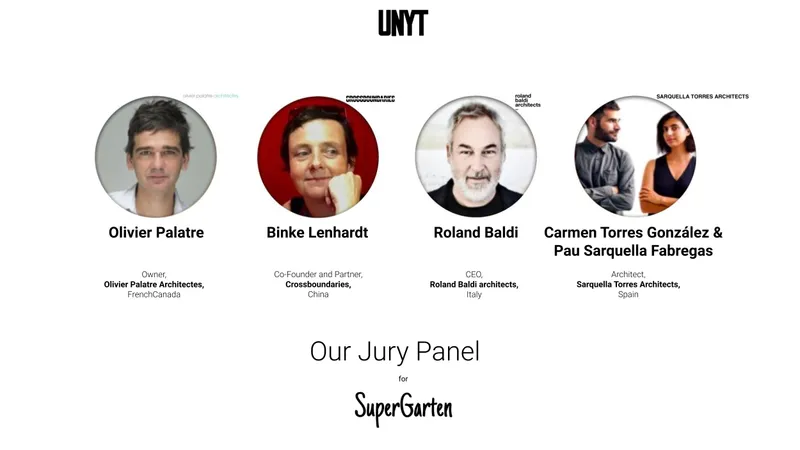
The jury for the competition consisted of esteemed designers, professionals, and academicians from around the world. The Lead Jurors for the competitions were as follows:
Carmen Torres González & Pau Sarquella Fabregas, Architect, Sarquella Torres Architects, Spain
Roland Baldi, CEO, Roland Baldi architects, Italy
Binke Lenhardt, Co-Founder and Partner, Crossboundaries, China
Olivier Palatre, Owner, Olivier Palatre Architectes, French
Some of the Best of competition projects are:
Winning Project: Cube Land
By: Mojtaba Shirazi, Mahsa Pakshir & Amjad Sadri
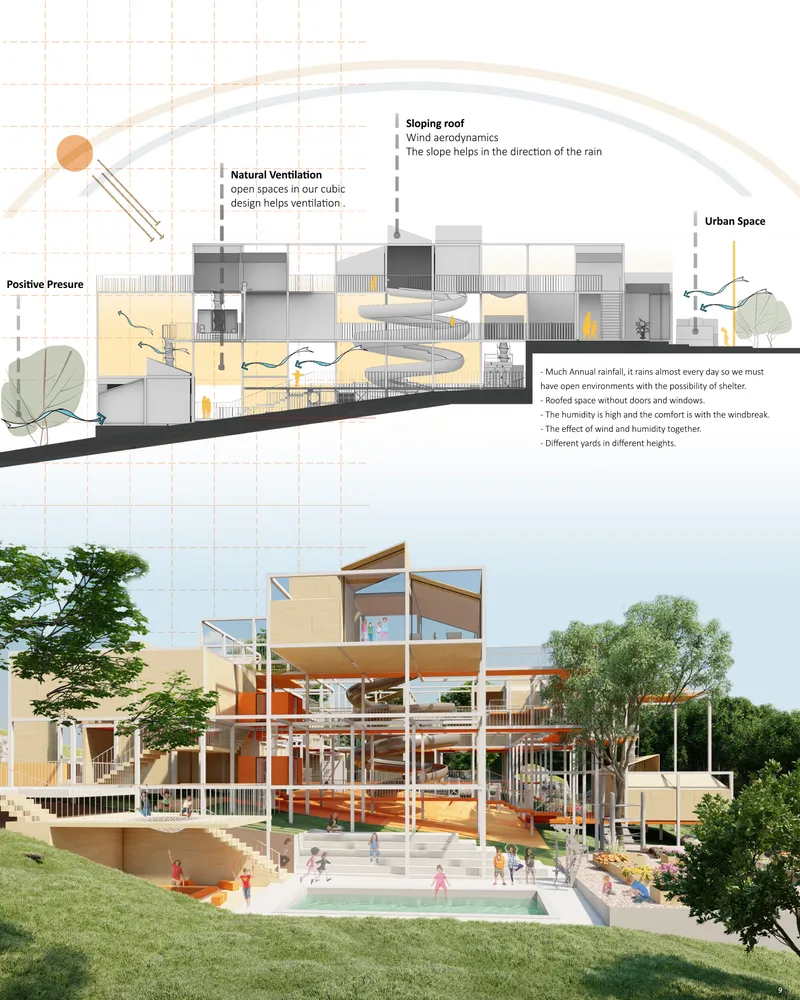
Fig: 1 Section Plan
Description: The Cube Land Kindergarten tries to combine play, biological, visual, and movement experiences with architectural circulation and micro-space. Familiar spaces for the child in the combination with the Maori culture and the climatic needs of the region shape micro-spaces.
------------------
People’s Choice: Querencia
By: Özge Dönmez
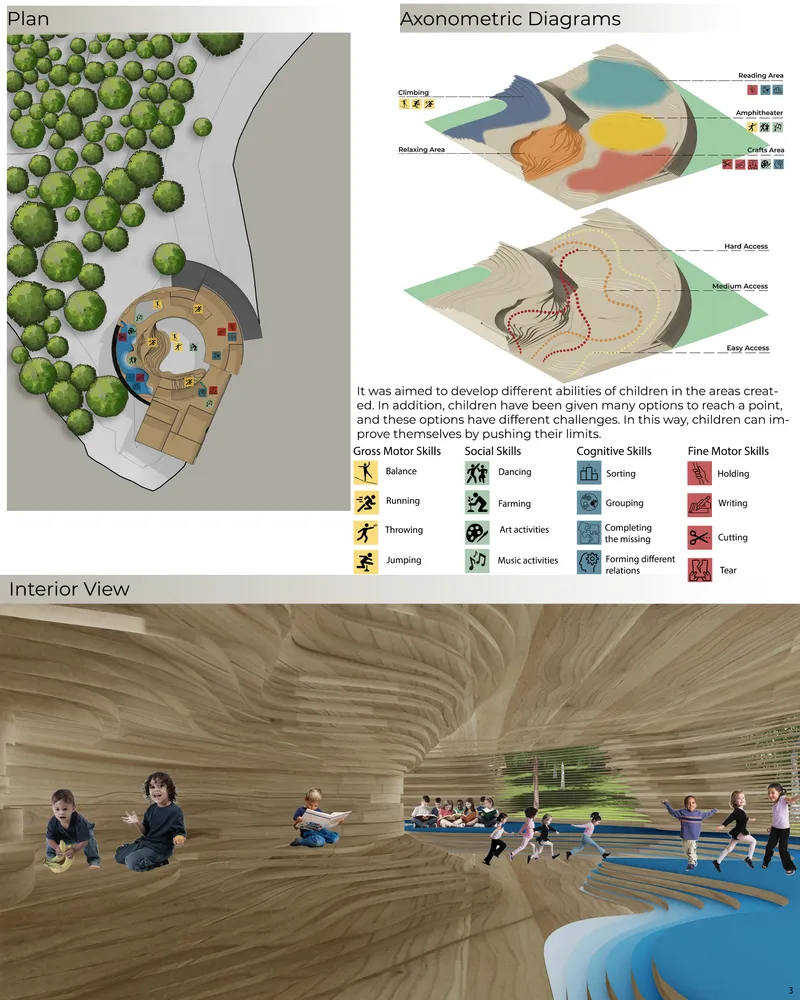
Fig: 2 Site Plan and Interior View
Description: Querencia is a noun, meaning "a place from which one's strength is drawn, where one feels at home; the place where you are your most authentic self." When the children first met life, an abstract environment was created in which the children became stronger and felt at home by the redefinition of the elements that make up space.
--------------------
People’s Choice: Nutrogarten
By: IC Studio
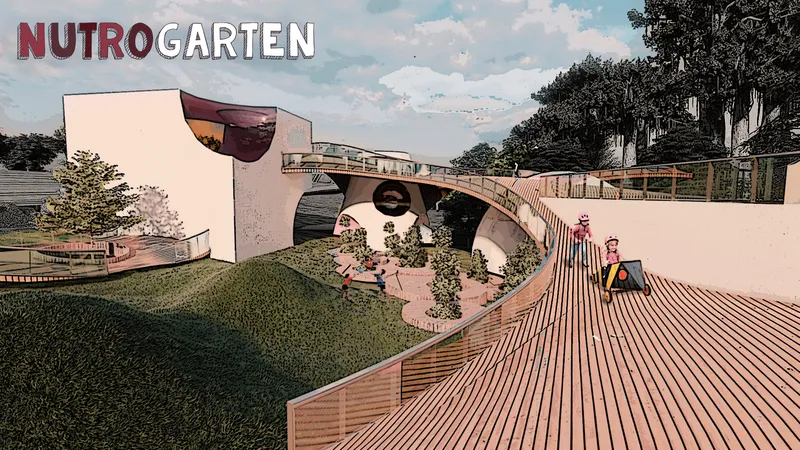
Fig: 3 Cover image
Description: Children are the most sensitive and impressionable age group in society. In this regard, the environment should be designed to be the best teacher for children and provide conditions that increase the children’s creativity. This project aims to escalate children's creativity with curiosity as a means to discover and experience the environment around them.
--------------------
Editor’s Choice: Play with Kindergarten
By: Qi Mei
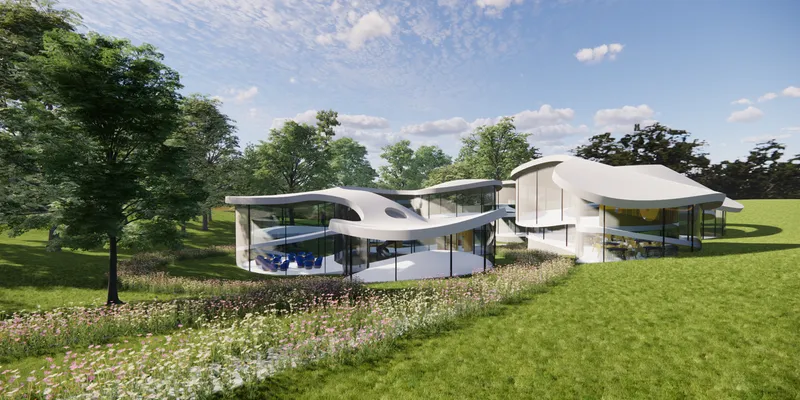
Fig: 4 Cover image
Description: Based on the goal of promoting the active development of children's physiology, language, cognition, and emotion, the kindergarten architectural space can be transformed into a new form: the combination of "teaching aids" and "toys". This plan will encourage the kindergarten space to directly participate in all levels and directions of preschool education.
--------------------
Editor’s Choice: Kawa Kawa Garden, the forest kindergarten
By: Misak Terzibasiyan, Danai Dafnouli & Aleksandra Klawikowska
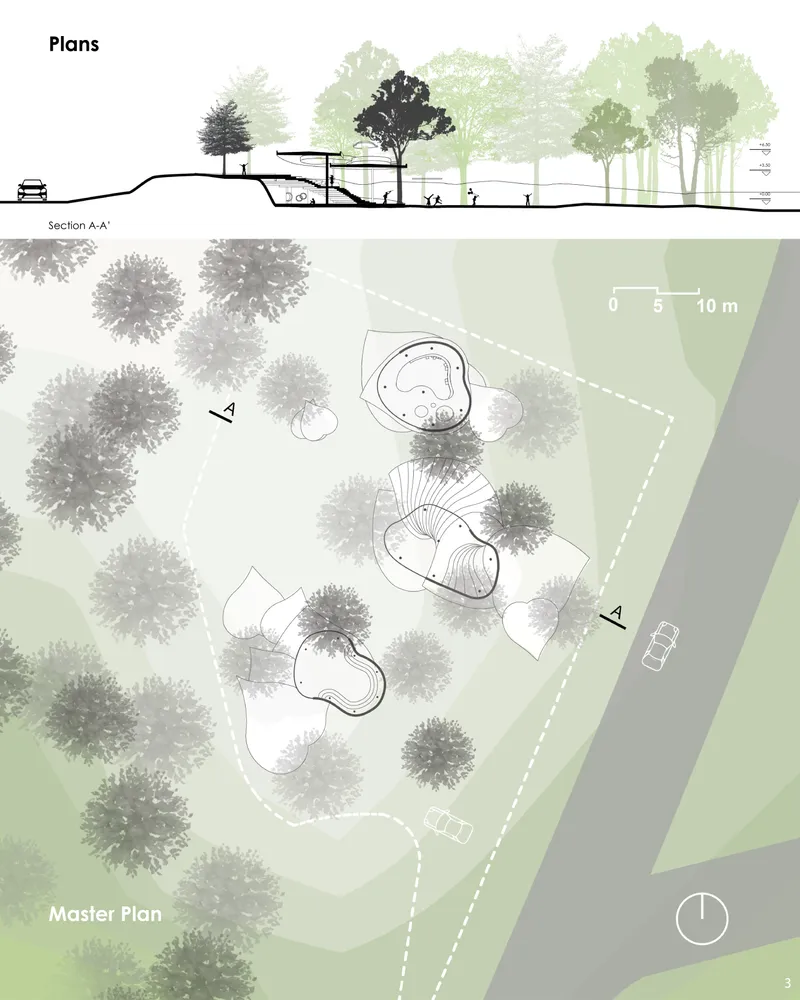
Fig: 5 Section Plan
Description: Learning and playing outside, promotes creativity, collaboration but also kids learn how to trust themselves and be careful. They realize that they can be wet and dirty and survive, they eliminate fears, and subconsciously, they see risk as part of their play and learning. Risk helps their brains develop and mature faster. There is a whole forest to explore.
--------------------
Editor’s Choice: KinderEarth
By: Genc Blakaj & Arjana Suka
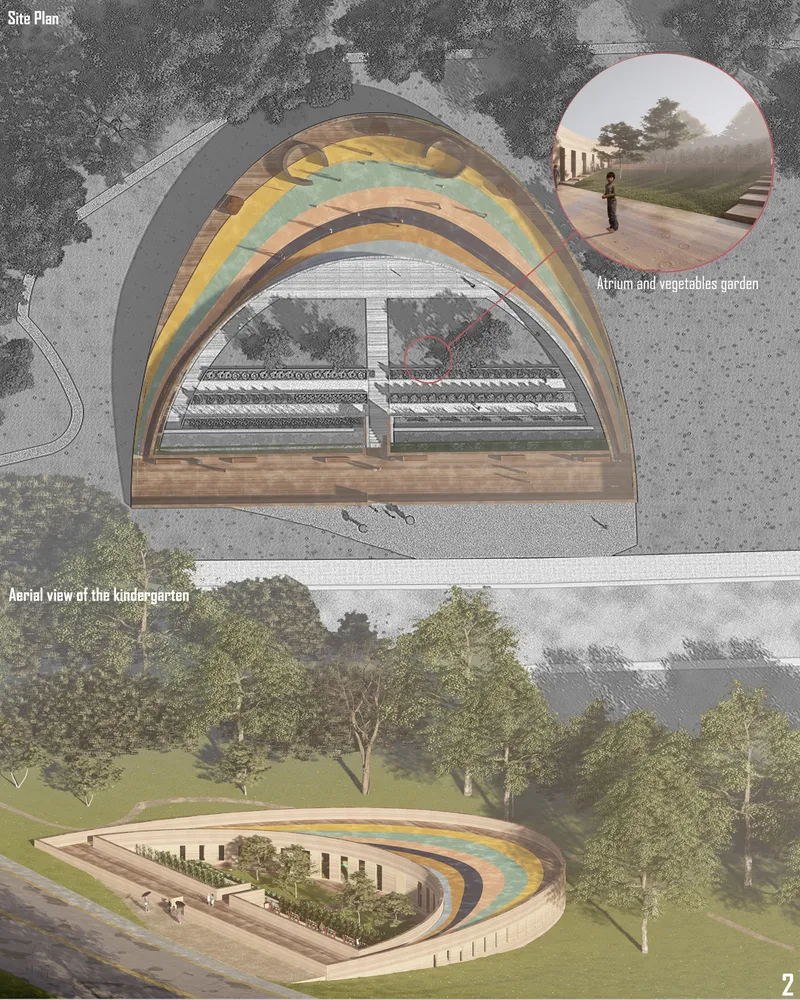
Fig: 6 Aerial View of the Kindergarten
Description: Awareness of children about the importance of living healthy, in harmony with nature and all other living things should be taught to children from kindergarten where they receive most of the information that influences the creation of their character that will accompany them throughout life. Undoubtedly, the role of architecture is special in this process.
--------------------
Editor’s Choice: SUPERGARTEN- Kindergarten of tomorrow
By: Marta Lewicka
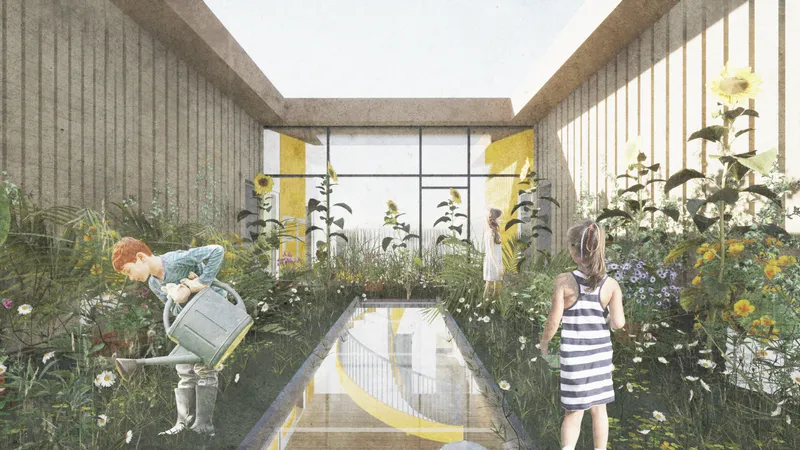
Fig: 7 Cover image
Description: Project of kindergarten designed for 150 (75 + 75) children in Wellington, New Zealand. The main goal of the design was to create a true place for the growth of human knowledge, since the beginning of life. Inspired by connectivity, nature, and carelessness.
Follow us on social media: Facebook | Instagram | LinkedIn | Twitter | Youtube
References (3)


Popular Articles
Popular articles from the community


Architekt Andreas Gruber Scatters 23 Dark Timber Chalets Across a South Tyrolean Forest Edge
In Molini di Tures, Amonti Chalets breaks a resort into a hamlet of gabled timber houses, with parking, storage and services pushed into the slope.

longwave studio Reorganizes a 112 m² Tainan Apartment Around the Daily Routines of a Family and Two Cats
In Tainan, Taiwan, birch plywood, rust-red furniture and a freestanding plaster wall link arrival, storage, work and family life in one apartment.

David Macias Steps a Doorless Stone and Plaster House Down a Tropical Colombian Hillside
In the humid hills of Colombia, Threshold House replaces the front door with an open void and terraces its 850 m² down the slope instead of fighting it.

David Ortega Stacks a Two-Story Mexico City Penthouse Around a Steel Stair and a Pergola-Shaded Roof Terrace
In Colonia Roma, a 300 m² penthouse uses oak joinery, a planted steel stair and a slatted roof pergola to make a new-build apartment feel like a house.

Similar Reads
You might also enjoy these articles


Aquadapt: An Underwater Habitat That Rewrites Its Rooms by the Hour
Curved modules ring the seabed while one shell shifts from breakfast room to cinema, farm and football pitch as residents' needs change.

Play: Fragments of Their World: Remembered Architecture Rebuilt as a Modular Playground for Refugee Camps
Tom Gardner abstracts domes, arches and towers from the homelands of displaced families into a kit of child-scaled play parts for camp settlements.
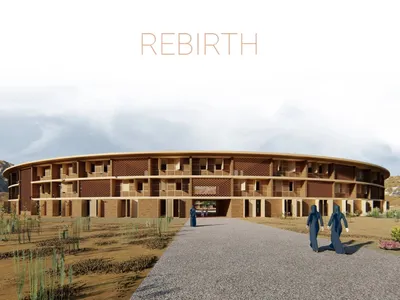
REBIRTH: A Circular Settlement Where Afghan Widows and Their Children Rebuild Life Together
A shortlisted Resile entry turns the circle into a protective ring of timber and brick, gathering homes, classrooms and gardens around a shared landscape.
The Main Dream: A Recycled Plastic Kit That Lets Refugee Children Build Their Own Playground
Thirty-centimetre interlocking cubes that connect on three axes turn play into construction, letting children author the spaces they occupy.

Explore Interior Design Competitions
Discover active competitions in this discipline

Challenge to design luxury tourism on rails

VR headsets Storefront design competition

Designing a staircase for a client
Comments (0)
Please login or sign up to add comments
No comments yet. Be the first to comment!