
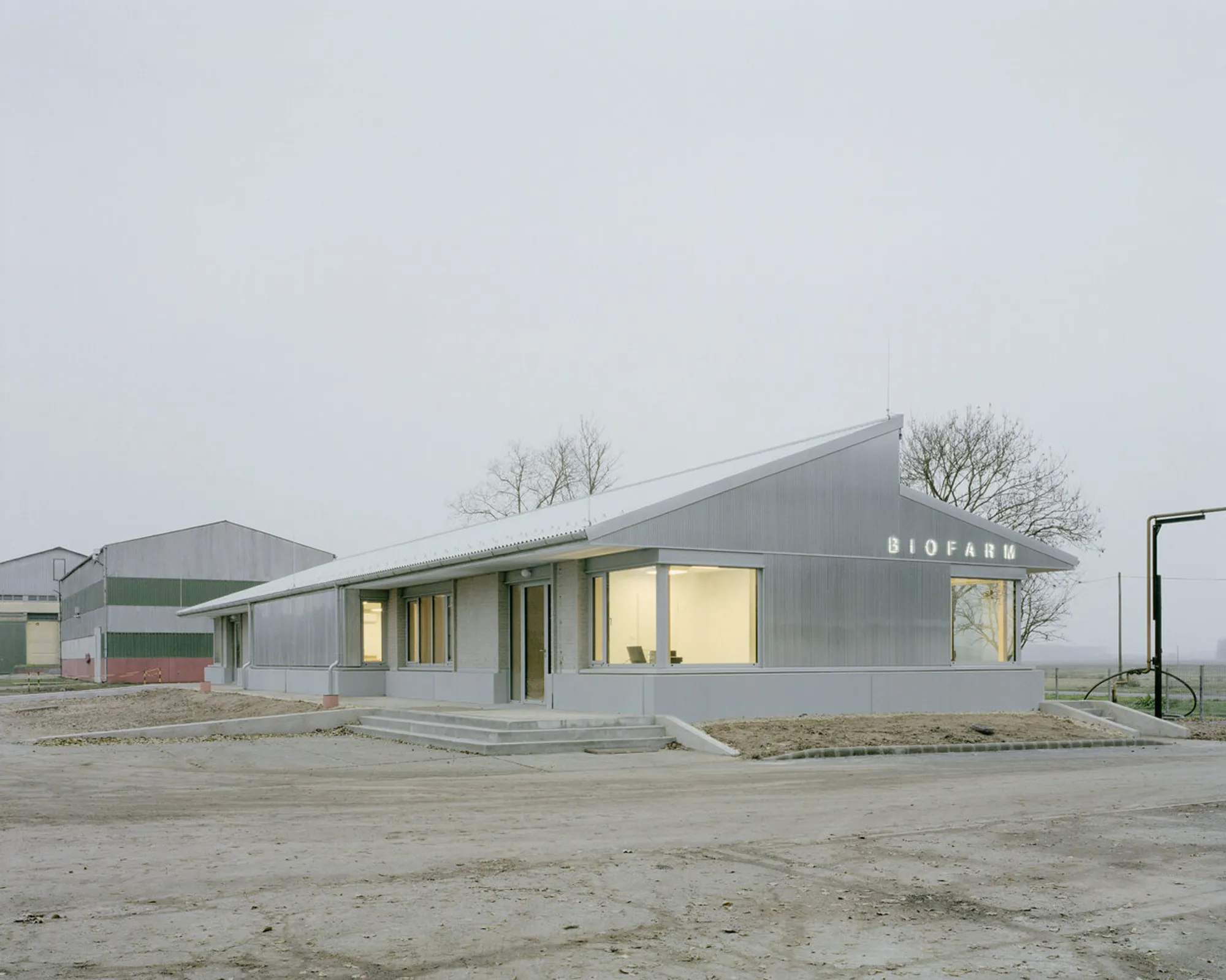
KONTEXTUS Builds a Timber Workplace for Farmers and Staff on the Hungarian Plains
A 350-square-meter CLT office in Sárospatak channels the shed roofs and rugged materiality of North-East Hungary's agricultural landscape.


North-East Hungary is not subtle terrain. The landscape around Sárospatak is defined by ploughed fields that stretch to the horizon, punctuated by grain silos, sheds, and the occasional cluster of bare trees. Placing an office building in this context means reckoning with a visual culture that rewards utility over ornament. KONTEXTUS architecture studio took that challenge literally with the Biofarm Workplace, a 350-square-meter single-story structure completed in 2024 that borrows its proportions, roofline, and toughness from the agricultural buildings already standing around it.
What makes the project worth studying is the deliberate tension between its agrarian shell and its interior ambition. Outside, the building reads as a corrugated metal shed on a concrete plinth. Inside, cross-laminated timber walls and ceilings create a warm, precisely detailed workplace split into two zones: one for administrative staff, the other for the farmers who actually work the land. The building does not try to look like something imported from Budapest. It tries to be the best possible version of what already belongs here.
A Shed Roof That Earns Its Asymmetry
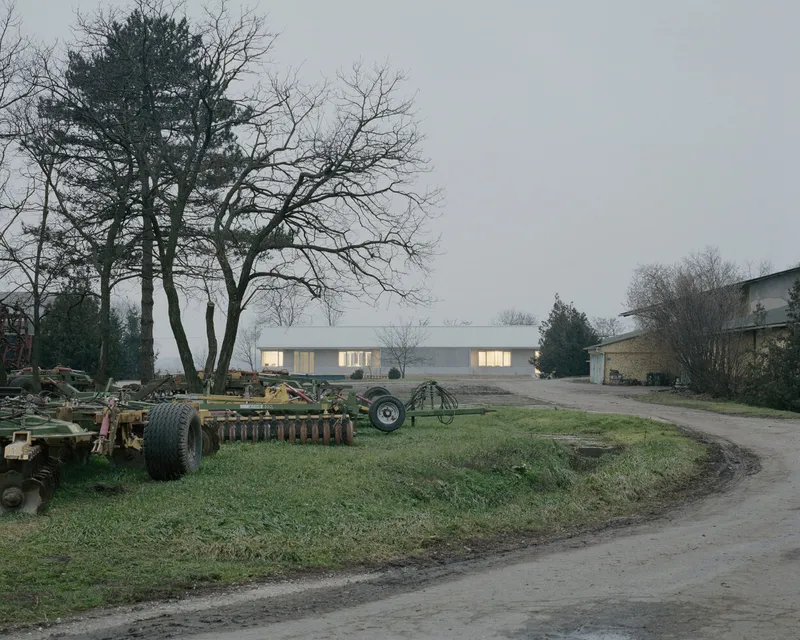
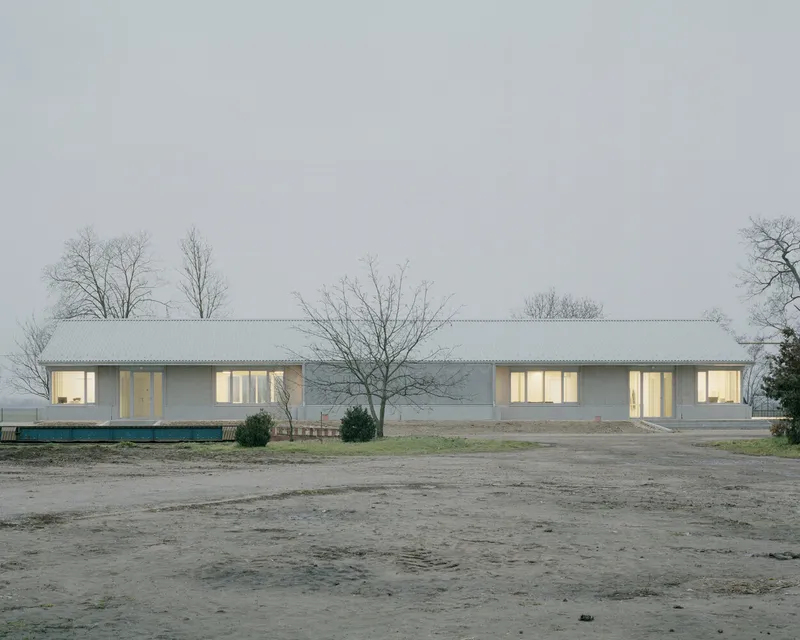
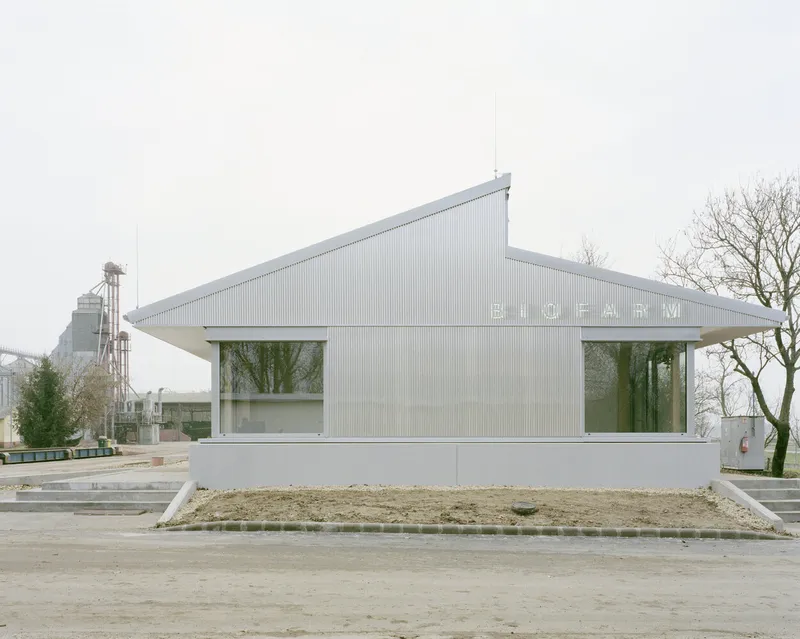
The elongated plan and asymmetrical shed roof are the building's most obvious gestures toward local typology, and they work because they are not merely decorative. The roof pitch channels rainwater efficiently while allowing the longer facade to face the compound and the shorter one to deflect the prevailing weather. The corrugated metal cladding is the same material you see on every agricultural outbuilding in the region, but here it is applied with tighter tolerances and more deliberate joint patterns. At dusk, the low profile and warm interior glow give the building the quality of a lantern set into the flat landscape.
The horizontal proportions are critical. A taller building would have looked stranded in these open fields. By staying at a single story and stretching the plan along its long axis, KONTEXTUS ensured the workplace reads as a continuous line rather than an object, echoing the horizon itself.
Concrete, Brick, and the Logic of the Plinth
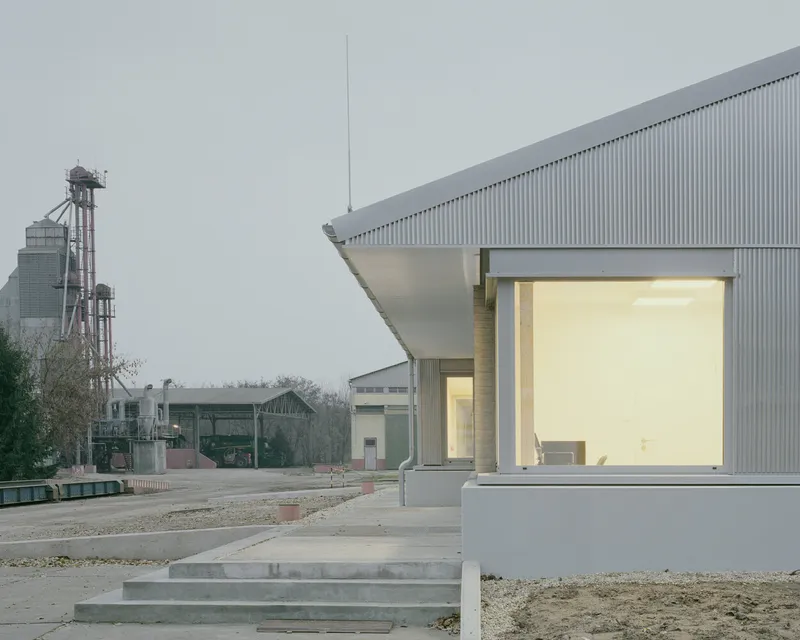
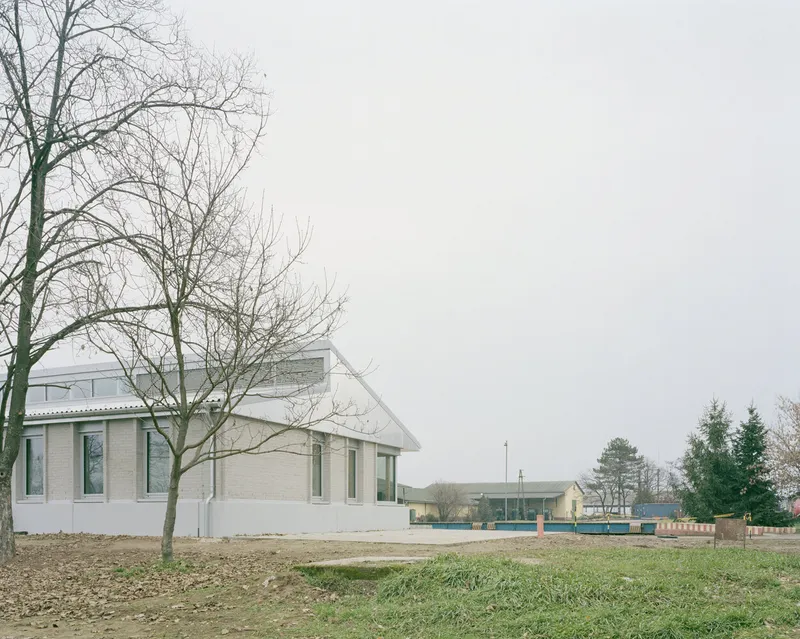
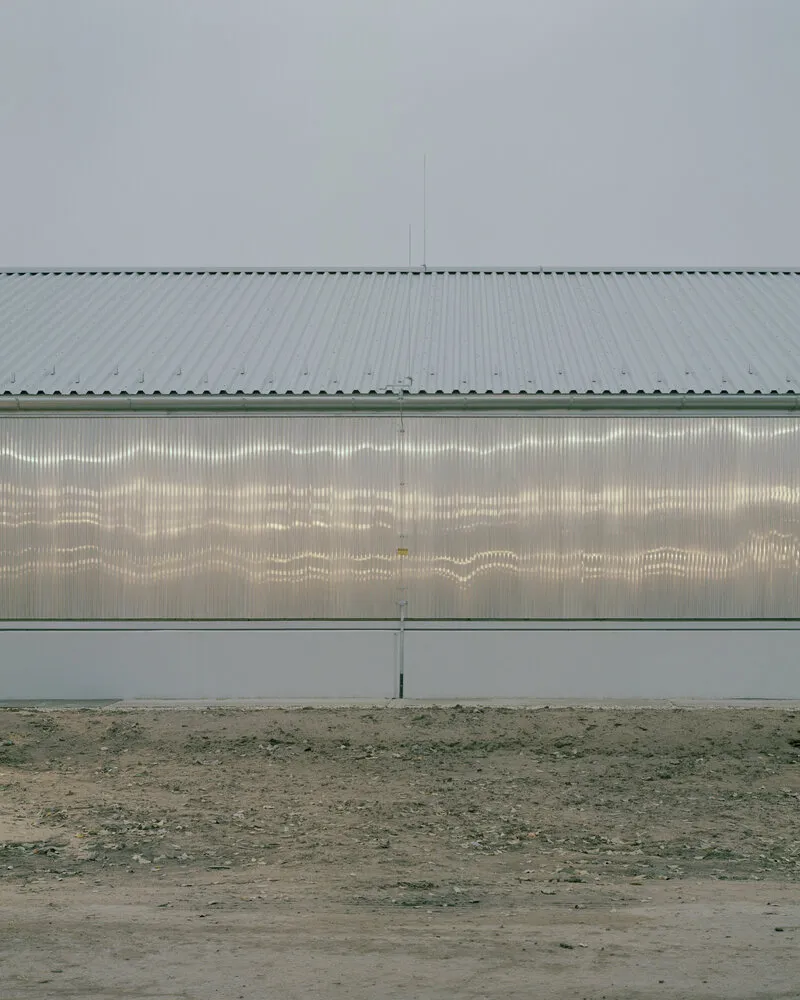
Agricultural buildings take a beating. Moisture wicks up from the ground, machinery kicks gravel against facades, and freeze-thaw cycles crack anything that is not properly detailed. The reinforced concrete plinth running the full perimeter of the Biofarm Workplace addresses all of these conditions at once. It lifts the CLT structure away from ground-level moisture, absorbs impact, and provides a clean visual datum that separates the building from its gravel and asphalt surroundings.
Pale brick appears on certain facades, softening the industrial quality of the corrugated metal and connecting the building to the masonry traditions of Hungarian rural architecture. The material palette is deliberately limited: brick, aluminium, concrete, timber. No composite panels, no render. Everything ages visibly and honestly, which is exactly how farm buildings have always worked in this part of the country.
Entering Through the Canopy
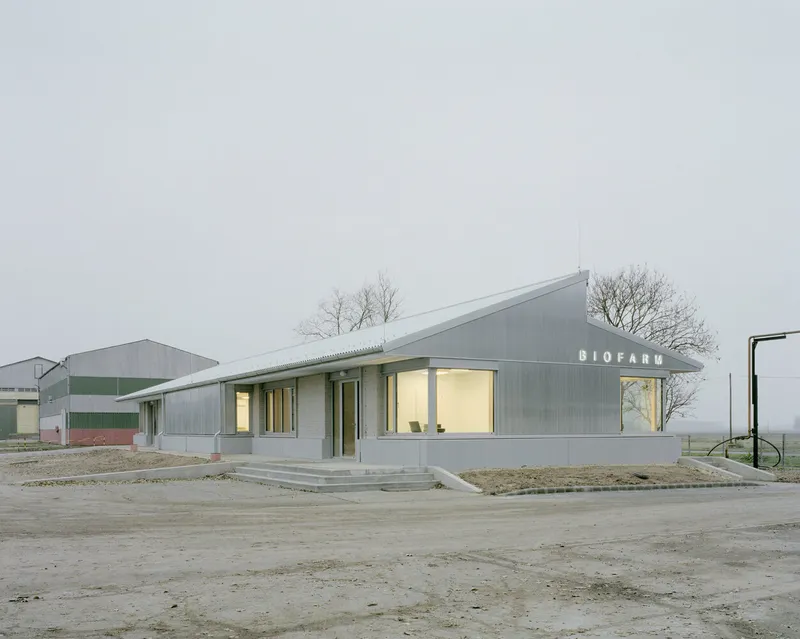
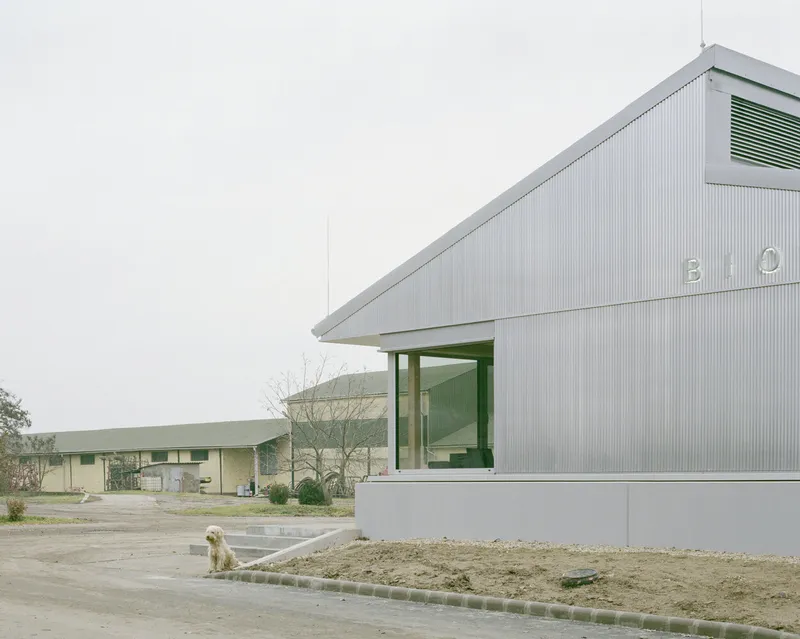
The entrance is marked by a cantilevered canopy that projects from the corrugated metal volume, creating a threshold between the open compound and the interior. It is a simple move, but it does important work: it provides shelter from rain, signals the door location from across the yard, and compresses the visitor's spatial experience before releasing them into the bright interior. The green-framed door adds a single note of color, just enough to register as intentional without tipping into whimsy.
CLT Interiors and the Warmth of Exposed Timber
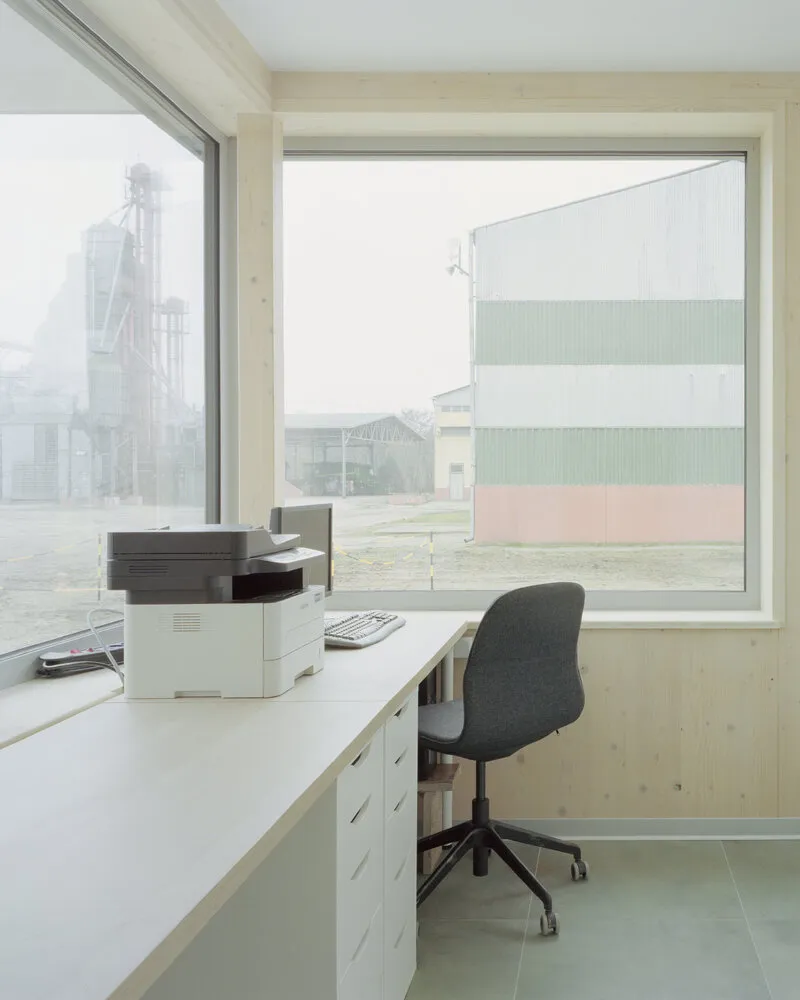
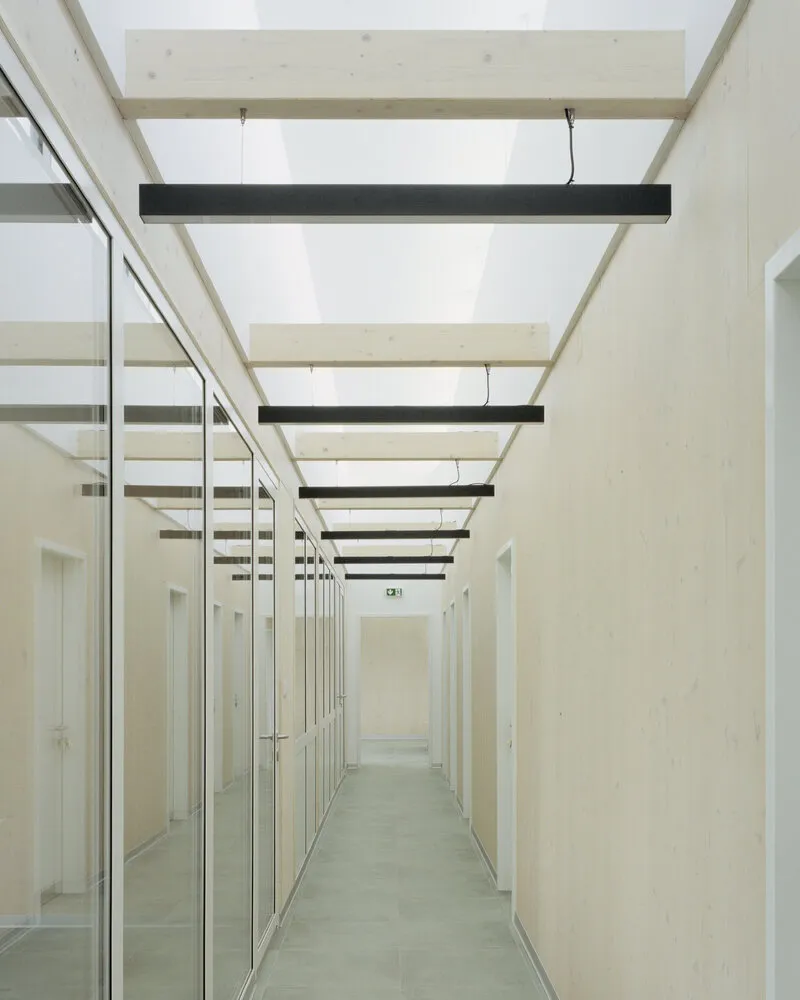
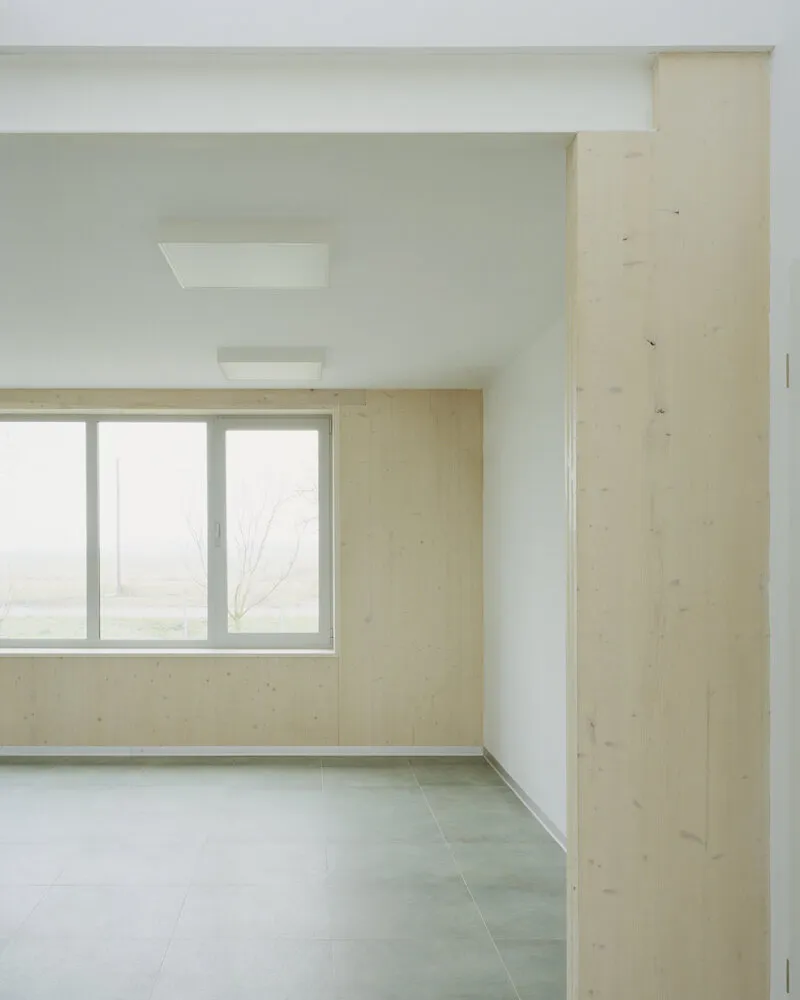
Step inside and the material world shifts entirely. The corrugated metal exterior gives way to pale CLT panels that line walls, ceilings, and partitions. The timber is left exposed rather than clad, which means the structure is also the finish. This keeps the build straightforward and the interior honest. Black pendant fixtures hang from exposed timber beams along the central corridor, providing rhythm and scale to what could otherwise feel like a simple hallway.
The office spaces are oriented to capture views of the surrounding landscape. In one corner workspace, large windows frame a row of industrial silos emerging from morning fog, a reminder that this is not a co-working space in a converted loft but a building embedded in a working agricultural operation. The glass partitions along the corridor let borrowed light move through the plan while preserving acoustic separation between the staff and farmer zones.
There is a quiet confidence in exposing the CLT columns and beams throughout. Timber regulates humidity, improves air quality, and brings a tactile warmth that no amount of drywall can replicate. For workers who spend their days surrounded by heavy machinery and open fields, the interior reads as a genuine shelter, not merely a conditioned box.
Plans and Drawings
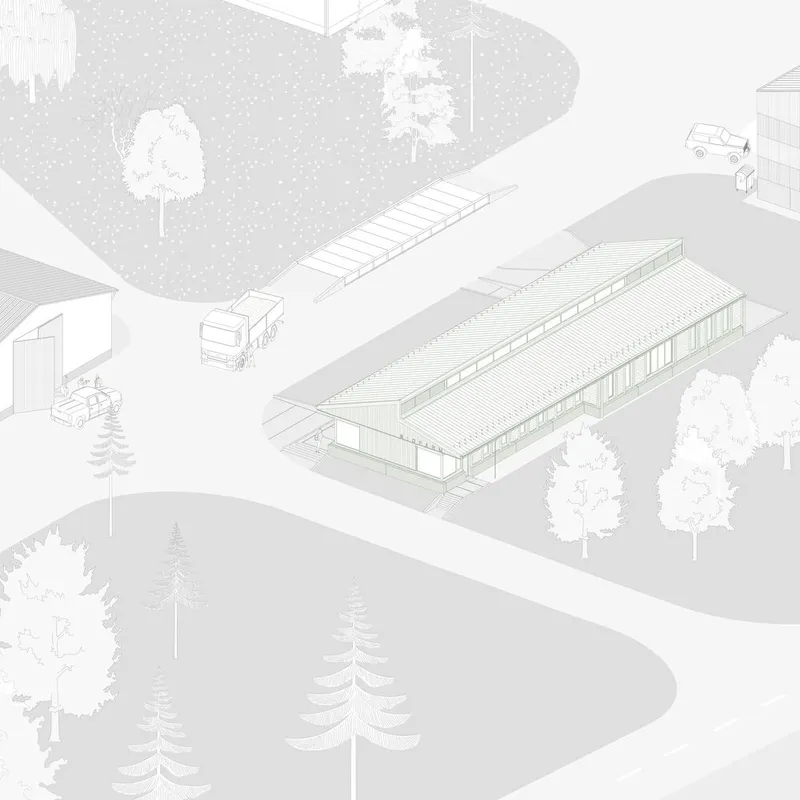
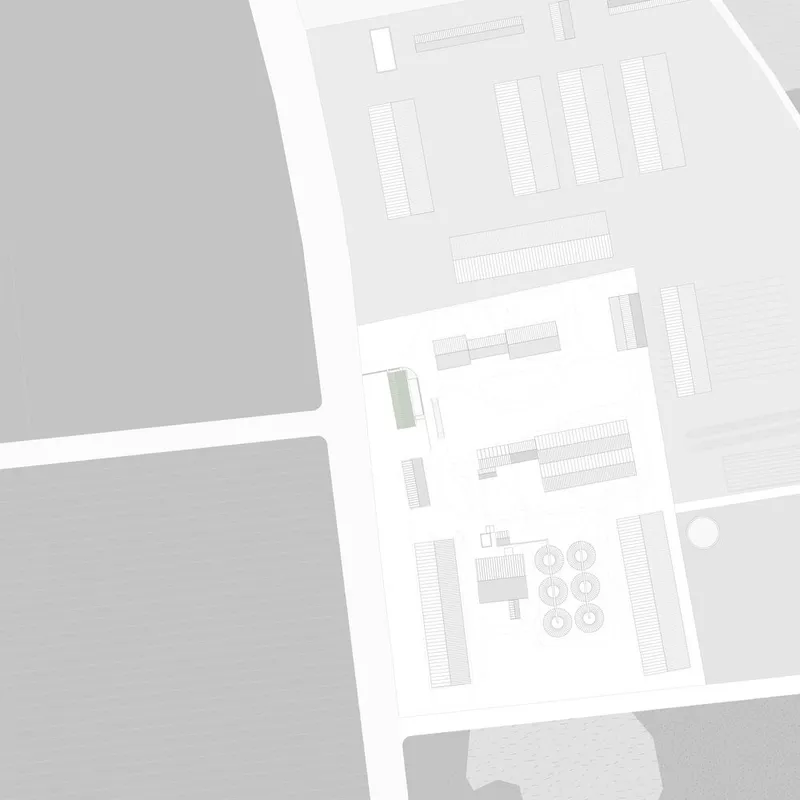
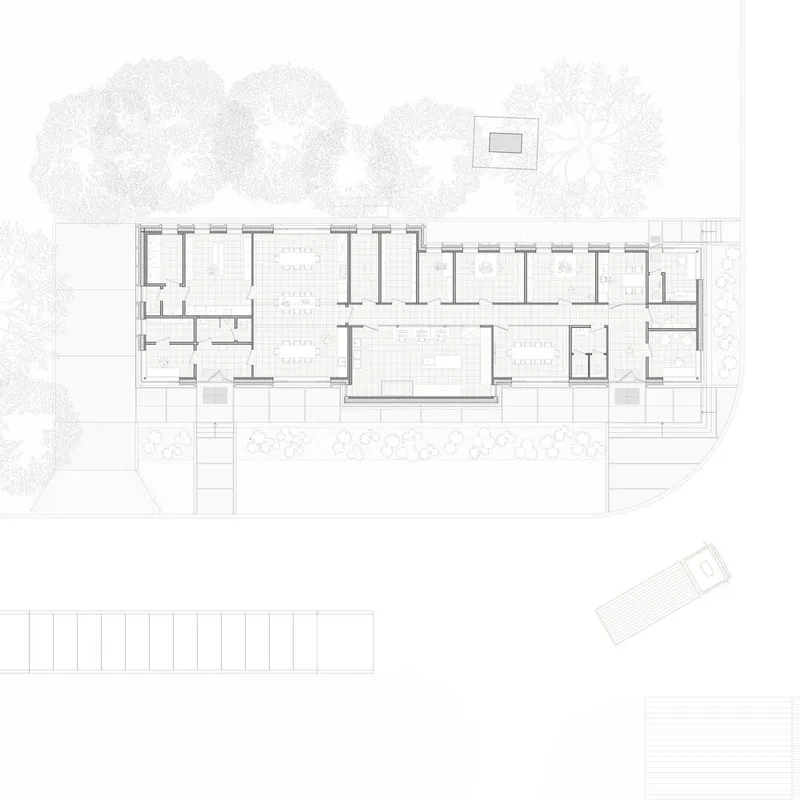
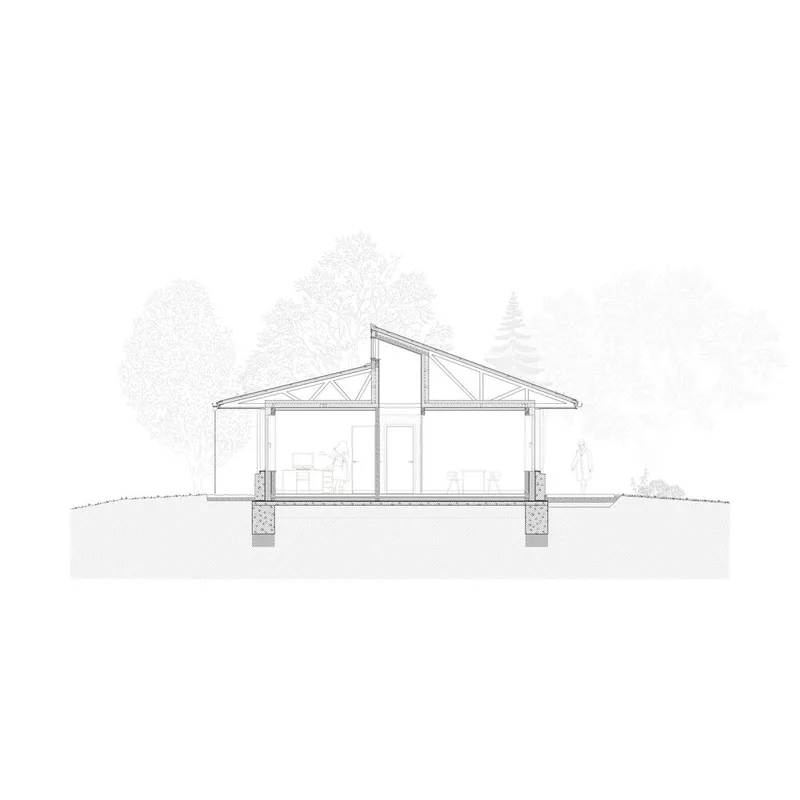
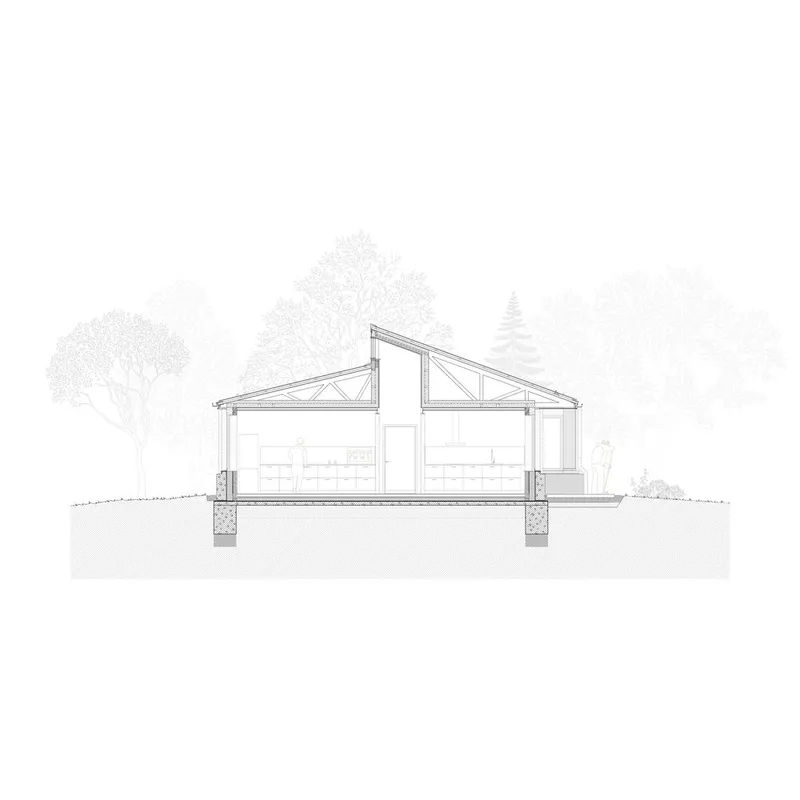
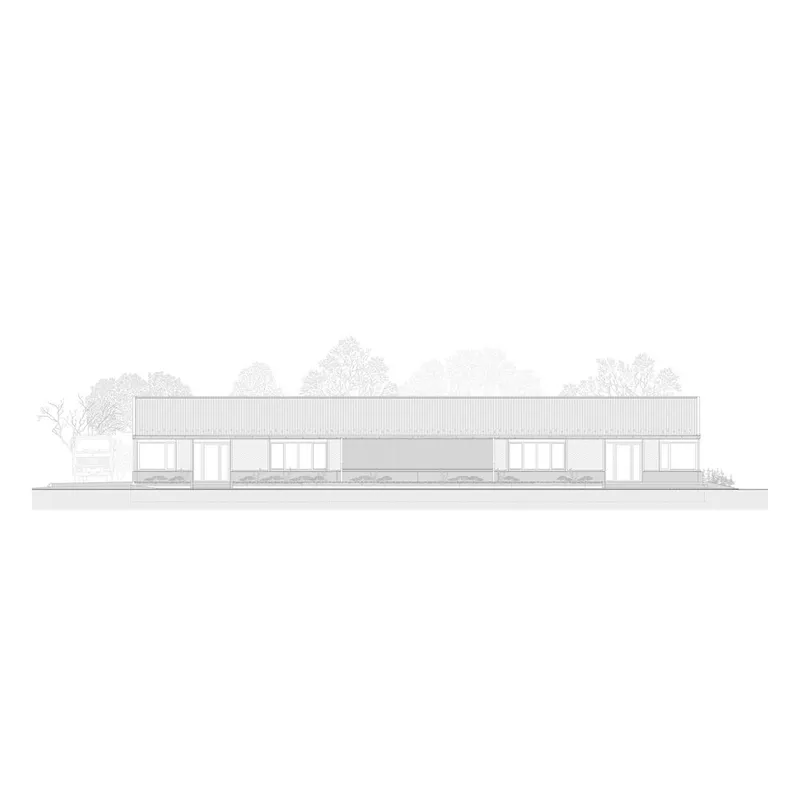
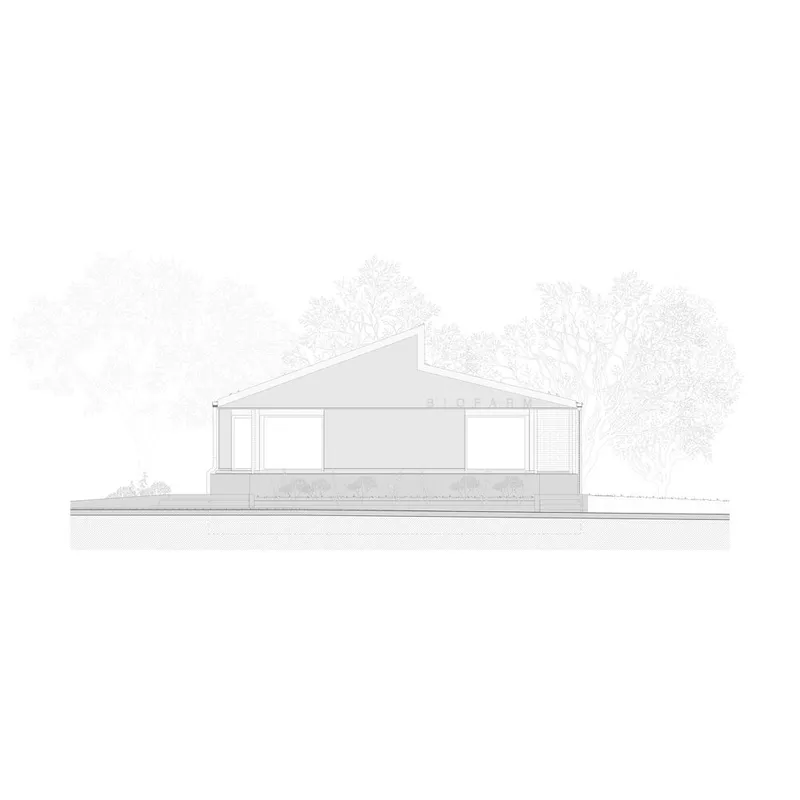
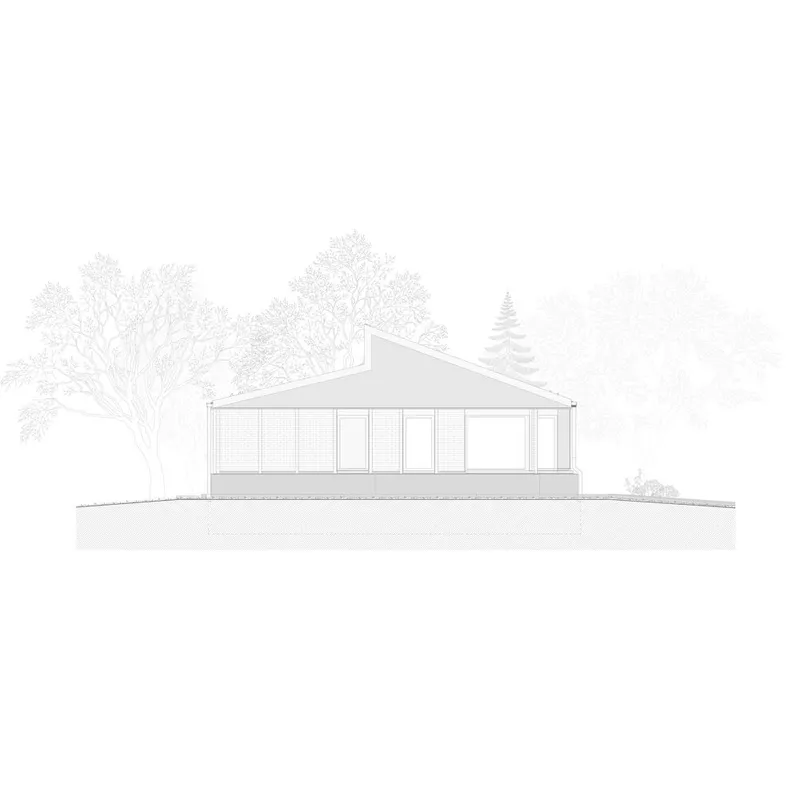
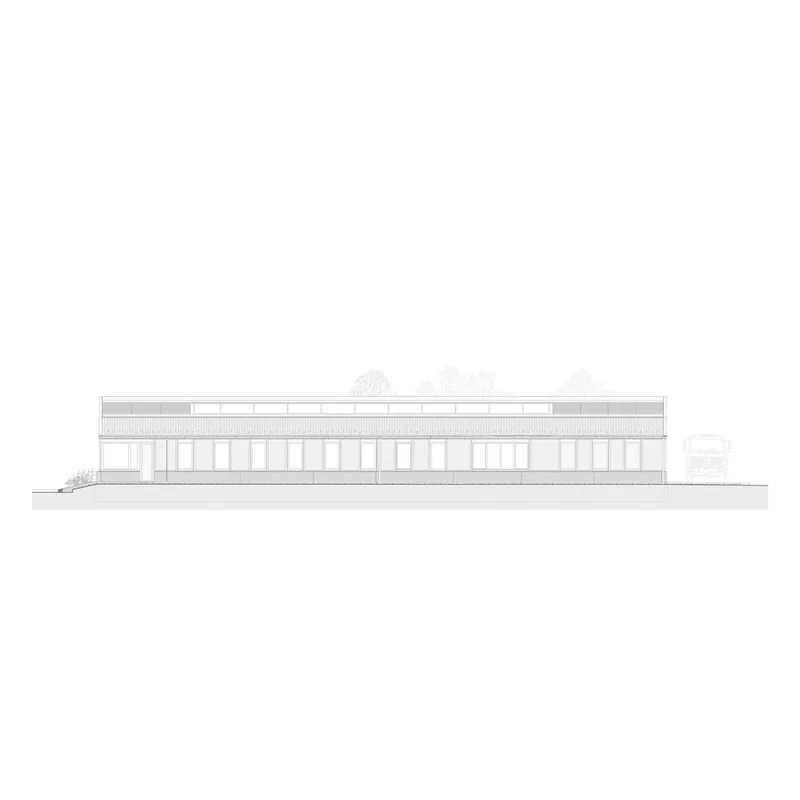
The axonometric drawing reveals the building's relationship to its compound: a long gabled volume set within a cluster of trees and parking areas, modest in footprint but deliberate in orientation. The floor plan confirms the dual-zone strategy, with rooms flanking a central communal space that serves as the hinge between staff and farmer areas. Section drawings expose the triangulated timber roof trusses sitting on concrete pier foundations, a hybrid structural logic that keeps the CLT dry and the spans efficient.
The elevations are worth reading carefully. Each facade responds differently to its orientation: corrugated metal with rhythmic glazed openings on the long sides, a gabled end with ribbon windows, and a more transparent face where floor-to-ceiling glass appears beneath a clerestory. The site plan shows circular tree plantings around the building, suggesting that the architects are thinking about how the structure will look in ten years when the landscape has grown up around it.
Why This Project Matters
Agricultural workplaces are almost always treated as afterthoughts: prefabricated containers dropped next to a barn, or repurposed rooms in a farmhouse that was never designed for office work. The Biofarm Workplace demonstrates that a small building with a modest budget can be architecturally serious without being architecturally pretentious. It fits its context because it was designed from the context, not despite it. The shed roof, the corrugated cladding, the concrete plinth: none of these elements are novel, but their assembly here is precise and considered.
More broadly, the project makes a case for CLT construction in rural and semi-industrial settings where timber is not the default choice. The material performs well structurally, environmentally, and experientially. If Hungarian agriculture is going to modernize its infrastructure, buildings like this offer a template that is sustainable, replicable, and actually pleasant to occupy. That combination is rarer than it should be.
Biofarm Workplace by KONTEXTUS architecture studio, Sárospatak, Hungary. 350 square meters. Completed 2024. Photography by Balazs Danyi.
About the Studio
Share Your Own Work on uni.xyz
If projects like this are the kind of work you want to make, uni.xyz is a place to publish your own, find collaborators, and enter design competitions.




Popular Articles
Popular articles from the community


The Earth Pod: 3D Printed Homes for Resilient Refugee Communities
The Earth Pod reimagines refugee housing through 3D printed homes made from clay, combining resilience, self-sufficiency, and rapid shelter.

The Ocean Hive: Sustainable Architecture for a Self-Sufficient Civilization at Sea
The Ocean Hive imagines sustainable architecture at sea, where modular habitats, algae, wave power and ocean waste sustain a growing colony.

Hill & Cross Opera: Sculptural Opera House Architecture Shaped by Tallinn’s Landscape and Identity
Hill & Cross Opera reimagines opera house architecture in Tallinn through its sculptural hill, civic plaza, glass wave and a luminous cross.

Lunar Spiral: Space Architecture Shaped by the Mathematics of the Universe
Lunar Spiral reimagines space architecture through Fibonacci geometry, lunar regolith, levitating habitats, and self-sustaining Moon living.

Similar Reads
You might also enjoy these articles


Hodi-Mandai Geram
Project Function: Preservation and revitalization of the Intangible heritage and socio-spatial identity of the Hodi by Housing, Cultural Memory Center, Sacred Grove, landscape, local tourism economy


Olio Towers: A Mid-Rise for Performers That Fuses Housing, Rehearsal, and Stage
Located blocks from Houston's Theater District, this modular tower stacks living units around a central performance atrium.

Oasis: Modular Green Housing Carved into Dhaka's Urban Fabric
A shortlisted Plugin Housing entry reclaims unauthorized settlements in Dhaka with stepped concrete volumes, green roofs, and ventilation-driven design.

Black Hole: A Floating Megastructure for the Post-Physical Era
Emiliano Mazzarotto envisions a spherical, self-scaling arena where e-sports, digital hotels, and holographic stadiums replace traditional public space.
Explore Sustainable Farm Competitions
Discover active competitions in this discipline



Challenge to reimagine the Iron Throne


Photograph architecture without architects


Illustrate the lost glory of Angkor Wat - Render Challenge


Design challenge to reuse E-waste
Comments (0)
Please login or sign up to add comments
No comments yet. Be the first to comment!