

Sustainable Architecture in Vietnam: The 99 Mai Thuc Loan House by Cong Sinh Architects
The article explores the 99 Mai Thuc Loan House, showcasing sustainable architecture that harmonizes people, nature, and design.


The 99 Mai Thuc Loan House, designed by Cong Sinh Architects, is a perfect example of sustainable architecture in Vietnam that seamlessly blends modern design with natural elements, responding to both environmental and human needs. Located in the bustling commercial area of Hue City, this residential project offers an insightful exploration of how architecture can integrate nature, privacy, and community within a confined urban space. Built for a family of three, the house spans 82 m² and was completed in 2023.
Introduction: Sustainable Design in Urban Vietnam
In the face of rapid urbanization and growing environmental concerns, sustainable architecture in Vietnam has become more crucial than ever. The 99 Mai Thuc Loan House is a testament to how architecture can adapt to the local climate, respond to family dynamics, and foster a strong connection with nature, all while promoting sustainability. Designed as a tube house, a popular type of housing in Vietnam, this home creatively integrates cooling systems, natural light, and sustainable materials that make it energy-efficient and environmentally conscious.
The Architectural Vision: Connecting People, Nature, and the Home
Cong Sinh Architects’ design for this sustainable architecture project focuses on three key relationships: people to people, people to nature, and people to the house itself.
People to People: Fostering Generational Connections
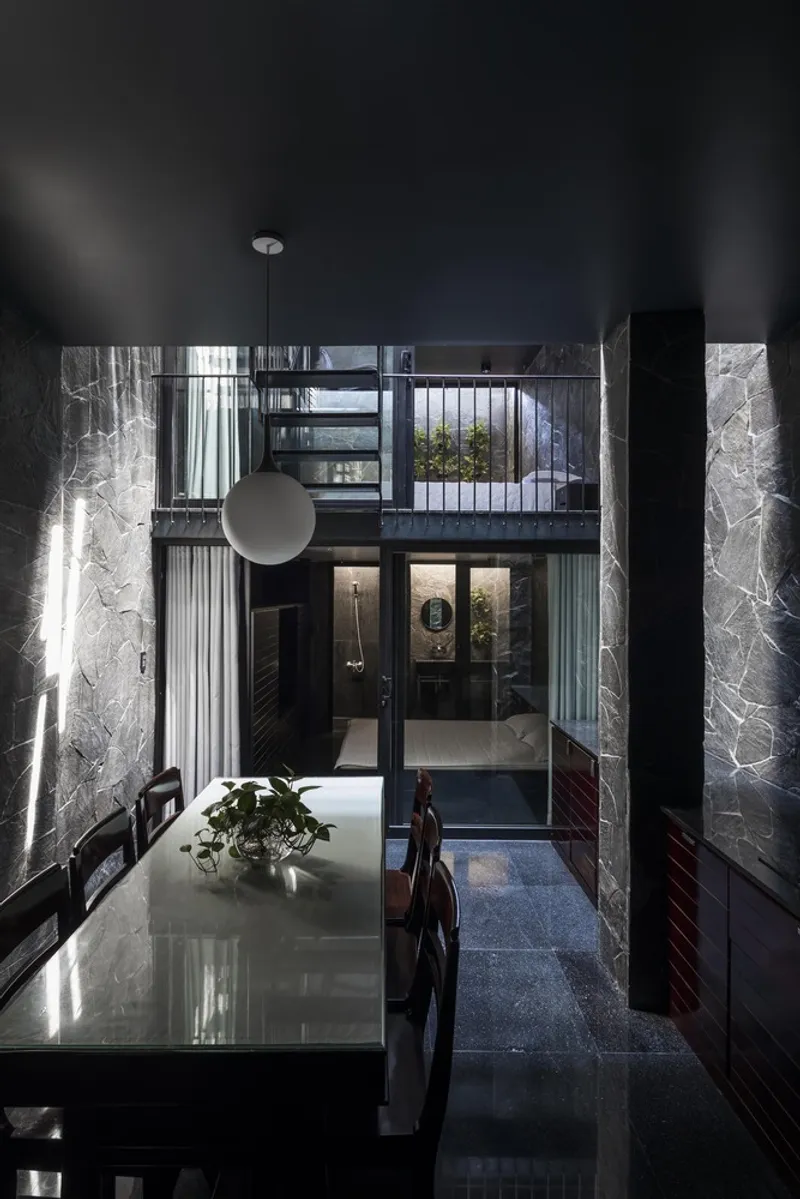
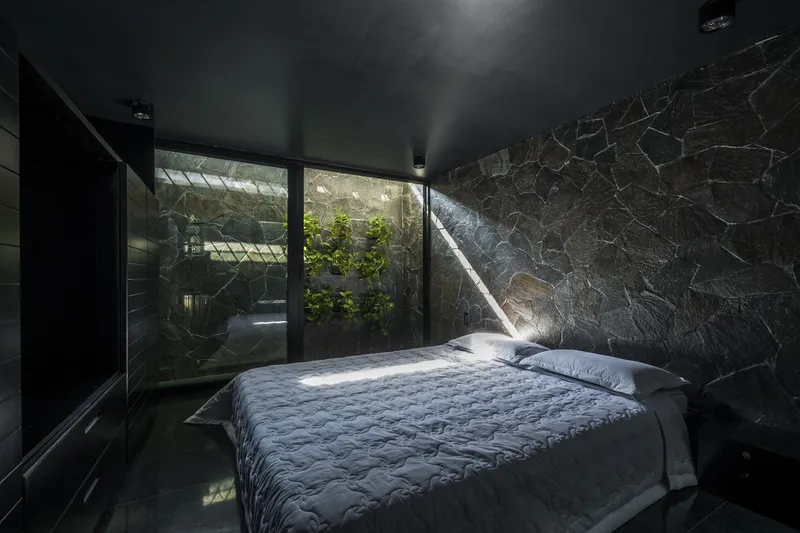
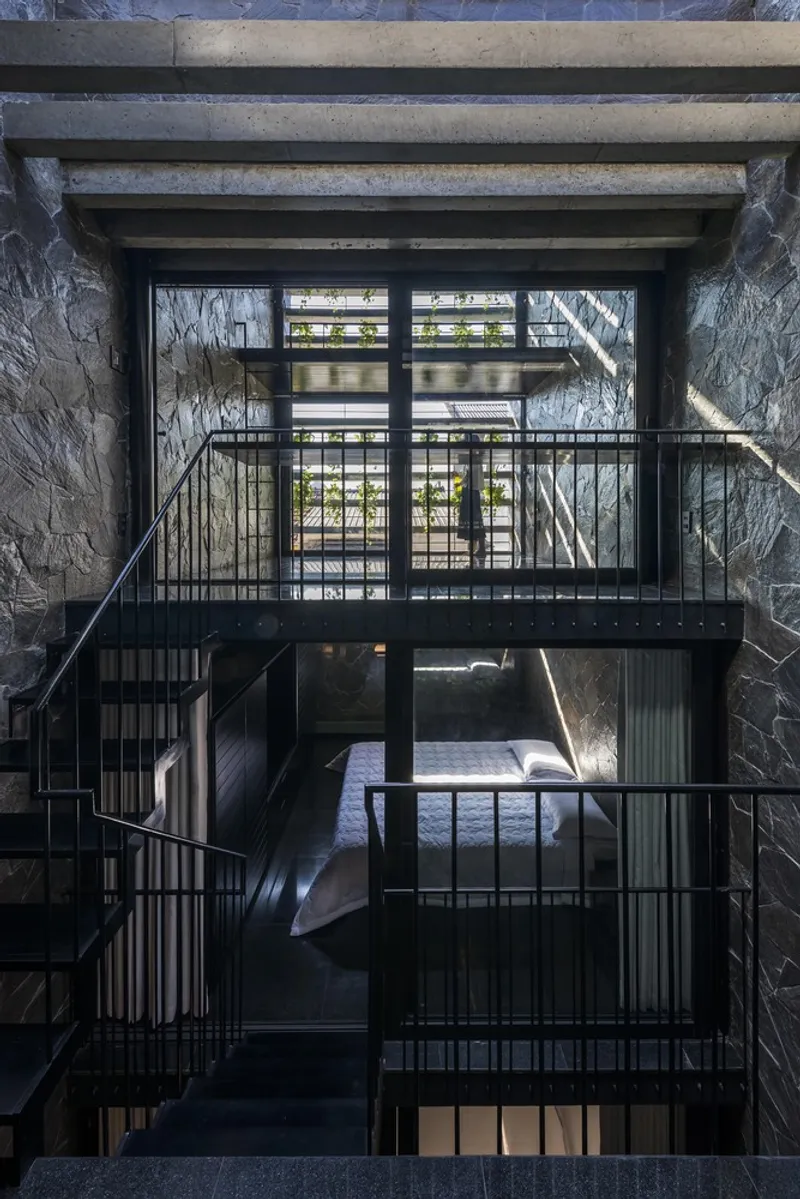
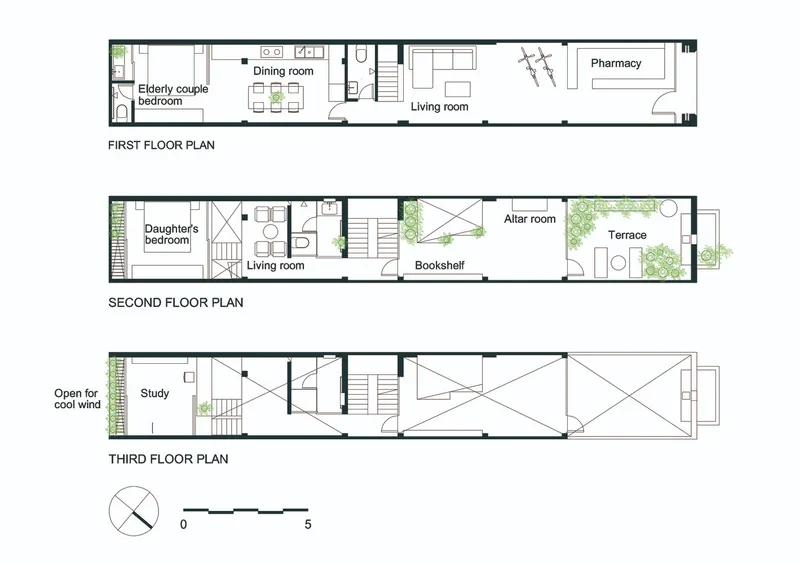
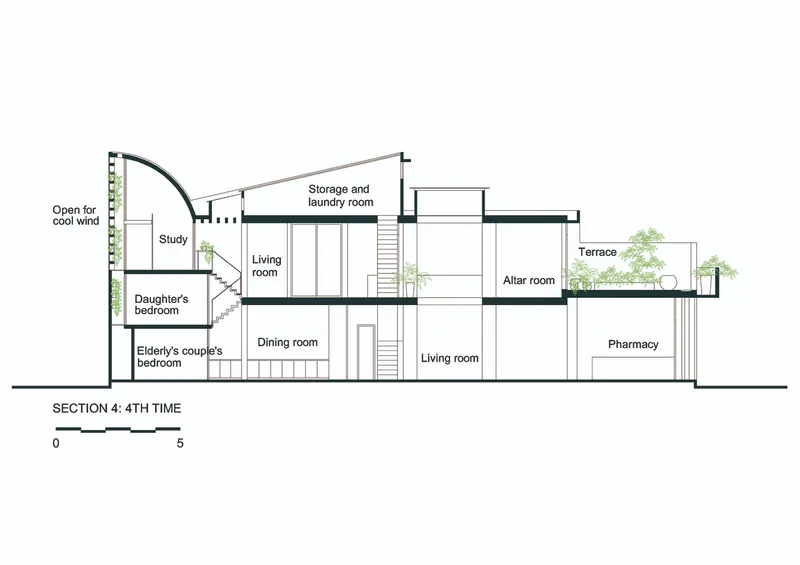
The house design prioritizes the relationship between family members, particularly the elderly couple and their daughter. By placing the elderly couple’s bedroom on the ground floor at the back of the house, the architects ensure privacy while still allowing easy access for their daughter. This arrangement enables the daughter to quickly attend to her parents, promoting safety and well-being. The central area of the house, designed as an open kitchen and dining room, becomes the heart of the home, where the family comes together. This space is bathed in natural light, thanks to a strategically placed skylight, and offers a direct connection to the activities happening throughout the house.
People to Nature: Maximizing Natural Light and Ventilation
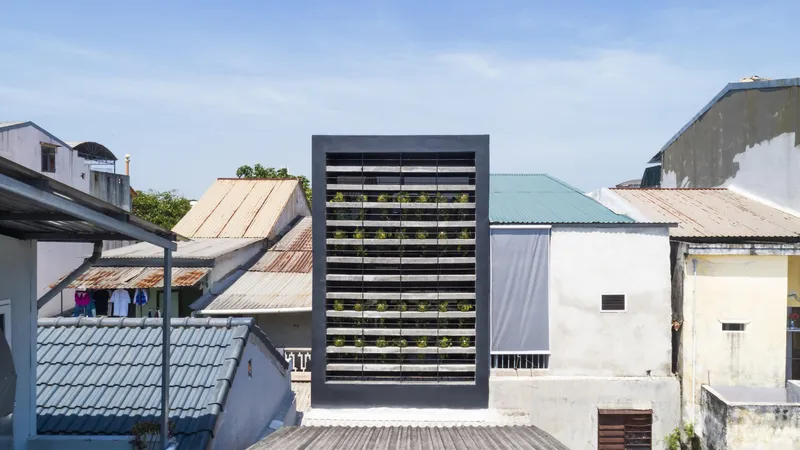
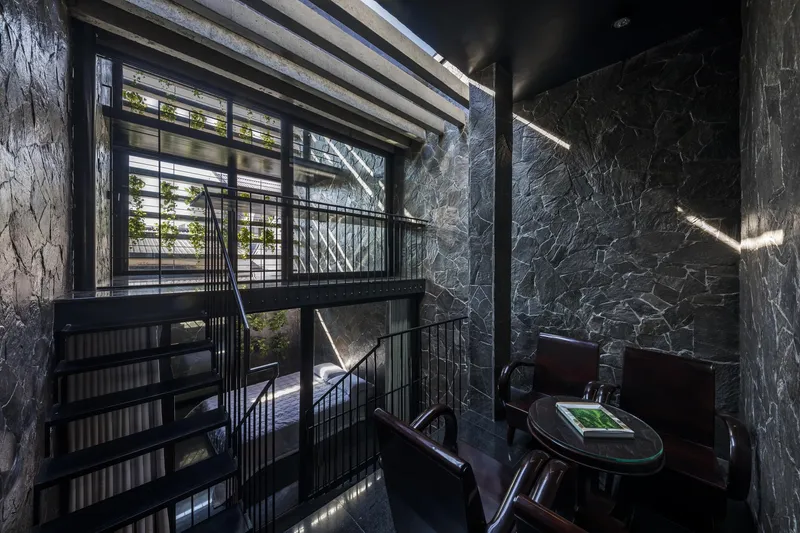
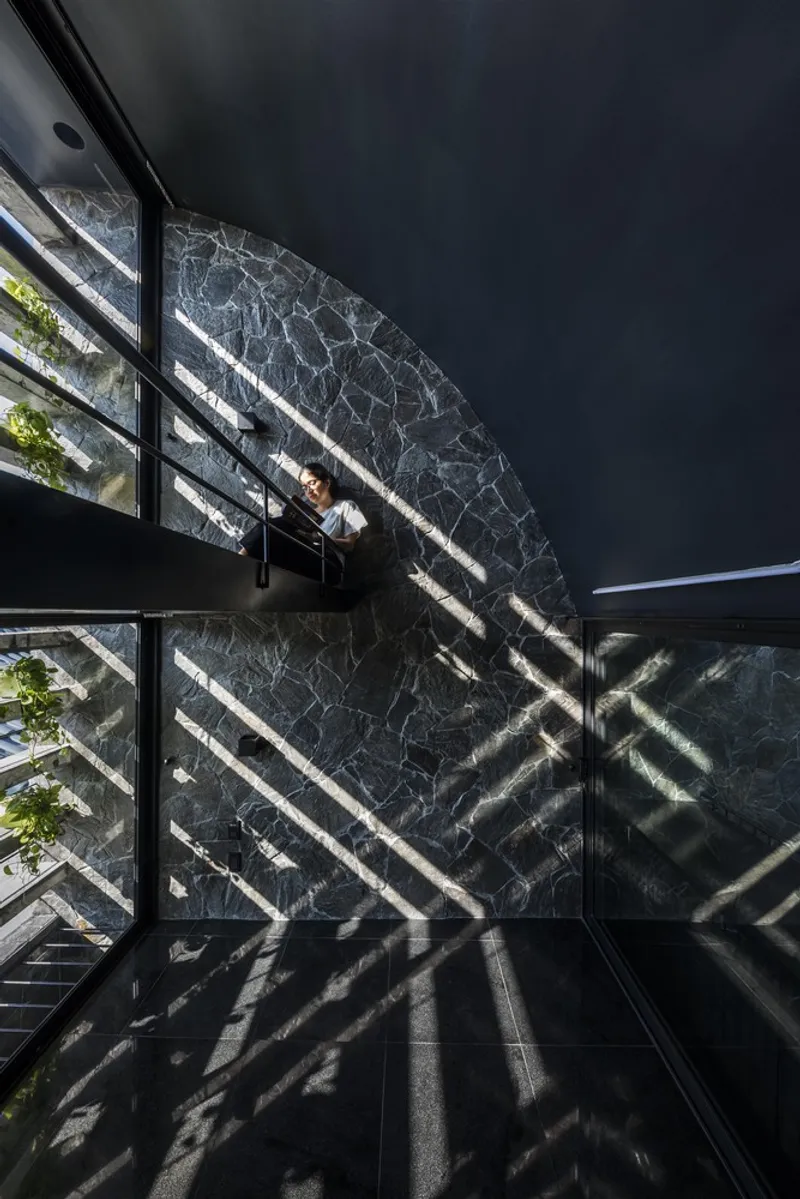
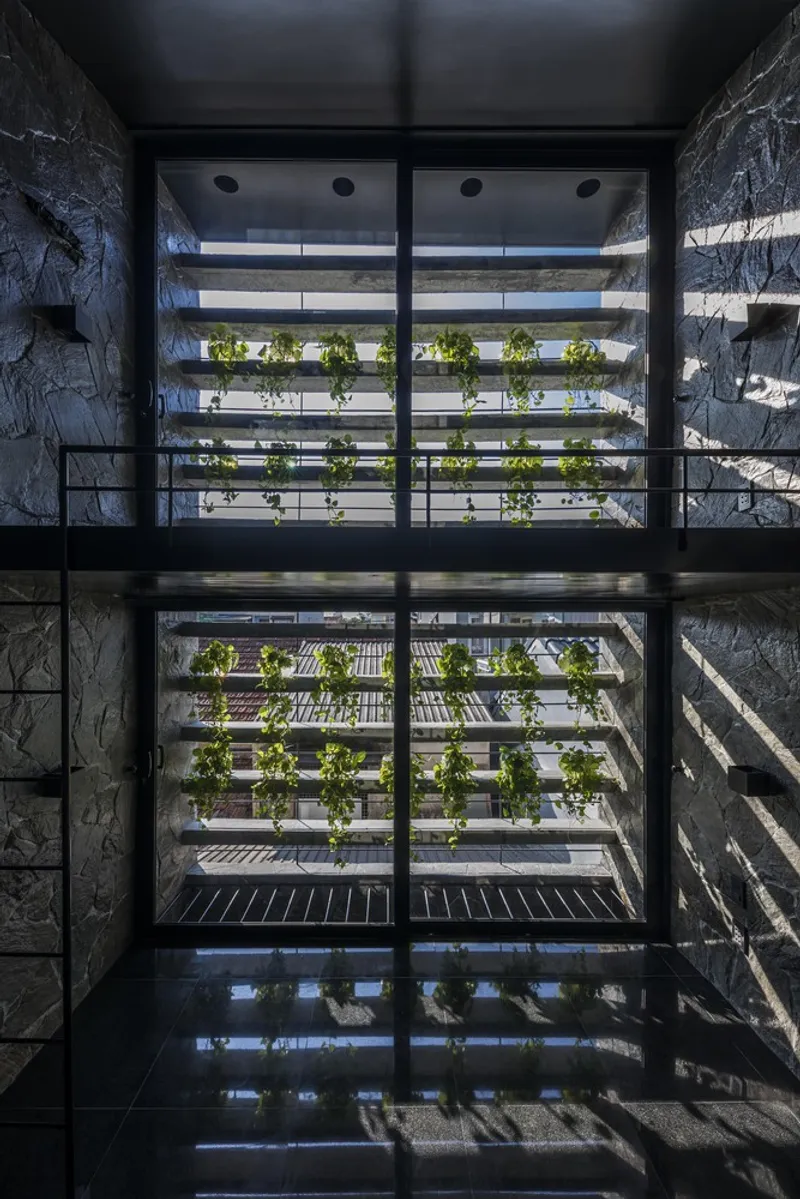
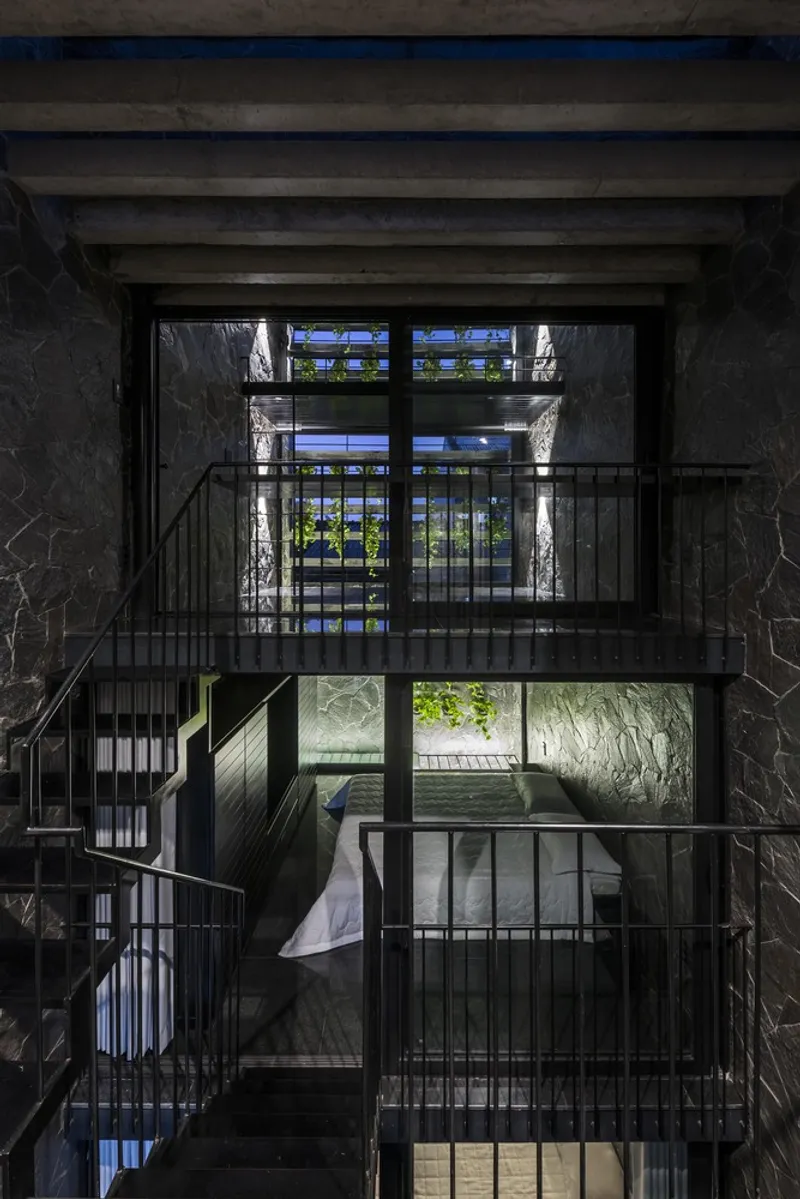
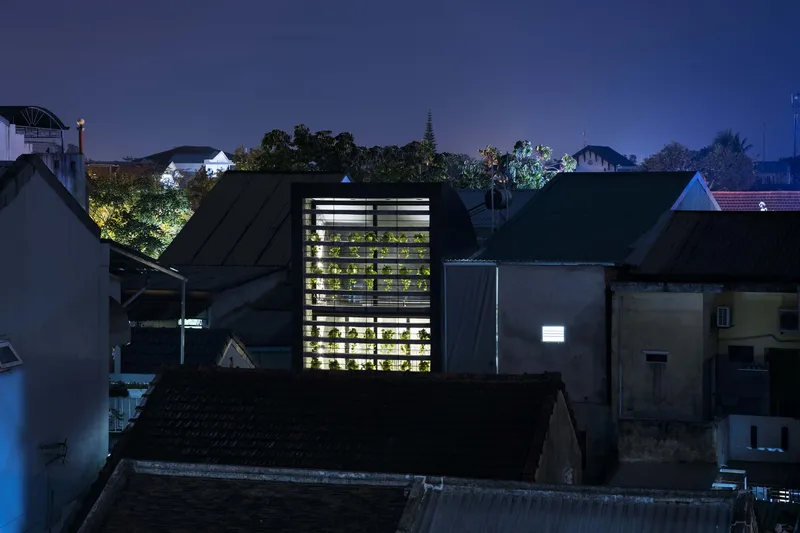
One of the most innovative aspects of this home is how it connects with its natural surroundings. Despite being located on a noisy and busy street, the house provides a sanctuary filled with natural light and fresh air. The building opens up to the Southeast, allowing the cool breeze to flow through the house, thanks to large windows and open-plan spaces. The concrete louver system on the facade helps filter out harmful sun rays while allowing soft morning light to enter, contributing to the house’s energy efficiency. Additionally, the thick stone walls and roof offer excellent thermal insulation, keeping the house cool even during the hot summer months, reducing the need for air conditioning.
The presence of skylights further enhances the relationship with nature, ensuring that natural light reaches every corner of the home. These small but significant design choices demonstrate how sustainable architecture can create comfortable, energy-efficient living spaces in urban environments.
People to the House: A Safe and Secure Environment
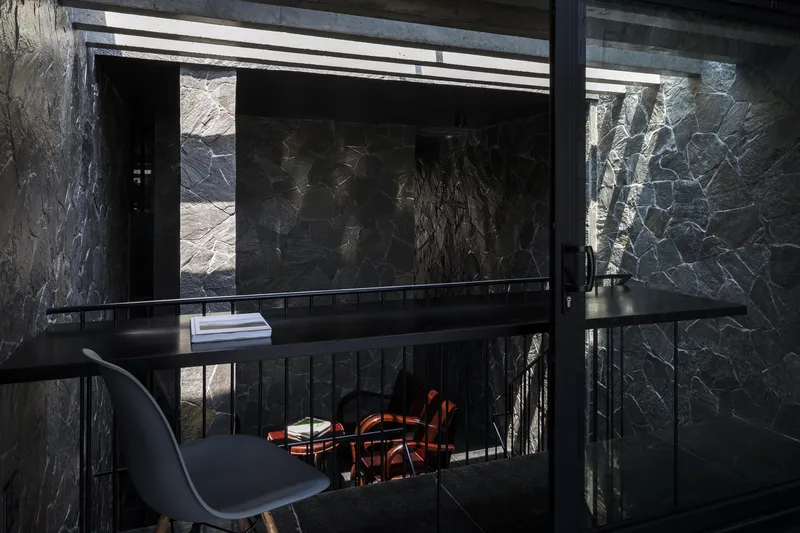
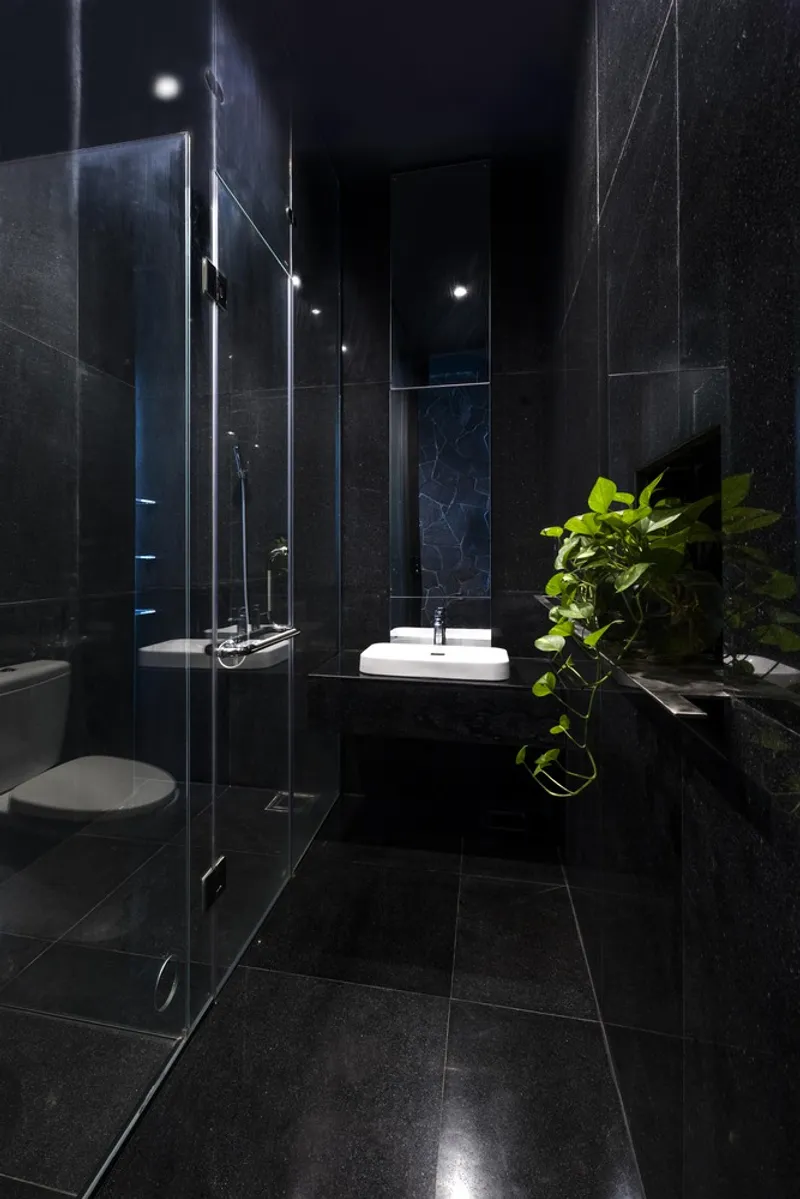
The 99 Mai Thuc Loan House serves as a protective and nurturing environment for its inhabitants. The design feels intimate and secure, much like a cave, offering both a physical and psychological sense of safety. The cool, quiet interior spaces allow the family to unwind and rest fully, promoting healthy living and overall well-being. In terms of materials, the house uses Hue’s black stone, a local stone often overlooked in favor of imported materials. This stone offers not only durability and a connection to the region’s heritage but also a tactile quality that fosters a sense of warmth and comfort. The building feels like a custom-tailored “shirt” for the family, where every dimension and space is carefully considered for the members’ unique needs.
Sustainable Materials and Technologies: Eco-Friendly Choices
A standout feature of the 99 Mai Thuc Loan House is its use of locally sourced materials and sustainable construction techniques. The use of black stone, a material native to Hue, helps reduce the ecological footprint of the house by supporting local industries and reducing the demand for imported materials. This commitment to sustainability extends to the integration of a louvered facade, which not only enhances the aesthetic appeal but also plays a crucial role in regulating indoor temperatures and minimizing energy consumption.
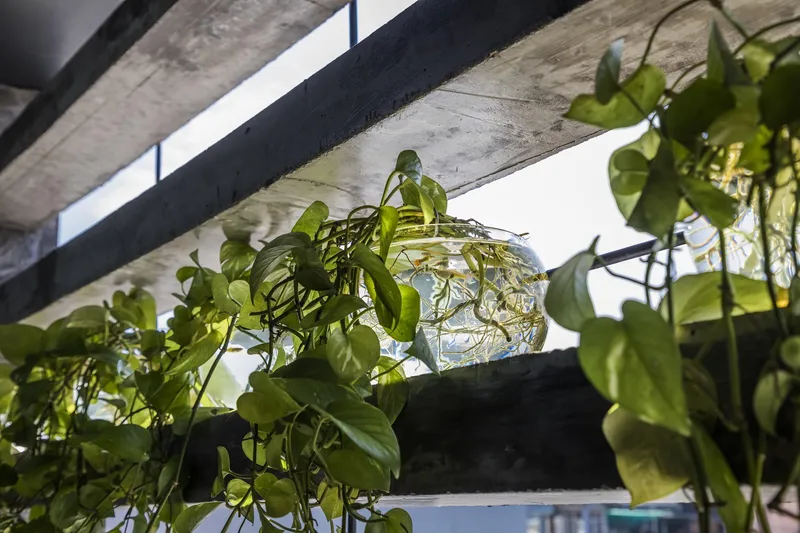
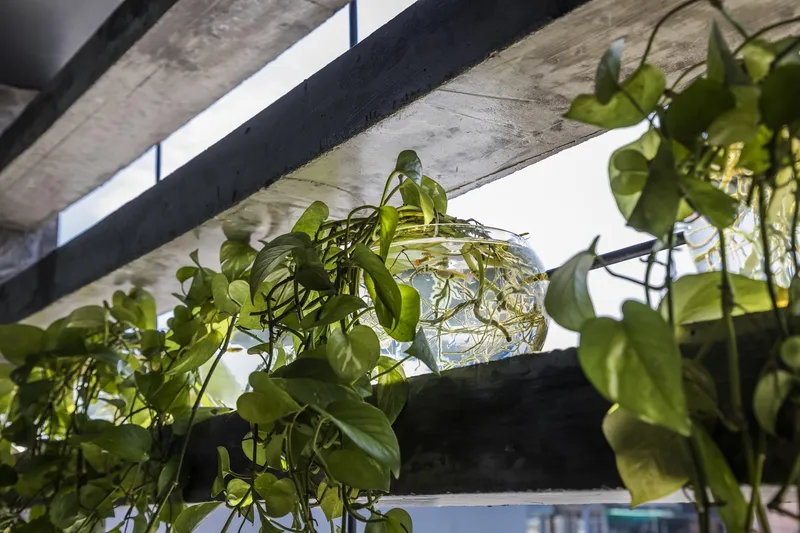
Additionally, the house incorporates edible plants and fish farming, offering the family a chance to grow their own food while enhancing the greenery around the home. These elements contribute to the overall ecological balance, making the house not just a shelter but a sustainable living system.

A Model for Sustainable Architecture in Vietnam
The 99 Mai Thuc Loan House is an exemplary model of sustainable architecture in Vietnam, showcasing how thoughtful design can foster a deeper connection between people, nature, and their homes. By incorporating energy-efficient strategies, locally sourced materials, and a focus on family relationships, Cong Sinh Architects have created a home that promotes well-being and sustainability in an urban setting.
As urban centers in Vietnam continue to grow, the principles demonstrated in this house offer valuable insights for future architectural projects. By embracing sustainable design solutions, homes can provide both comfort and environmental responsibility, creating spaces that nurture not just the residents but also the world around them.

All photographs are work of Hiroyuki Oki


Popular Articles
Popular articles from the community


Cloaked Colonization: A Mobile Underwater Habitat That Moves Like a Fish
Micah Abaya's shortlisted EHC Pacific entry reimagines ocean settlement as a dispersed network of self-sustaining architectural organisms.

Manzana Morphosis: Stretching Barcelona's Grid into a Living Landscape for 2050
A radical reworking of the Eixample manzana turns density into a tool for generous public space, vertical ecology, and environmental performance.

Temporary Home for Dogs: A Reversed Zoo Rethinks Animal Shelter Architecture
In Bucharest, a sinuous corridor and freed landscape flip the logic of containment, designing a shelter that works to make itself unnecessary.

Singing Woman: An Opera House That Performs Before the Curtain Rises
Ovidiu Cristian Pavel's conceptual opera house translates Estonia's choral identity into a sculpted waterfront landmark facing the Baltic Sea.

Similar Reads
You might also enjoy these articles


Hodi-Mandai Geram
Project Function: Preservation and revitalization of the Intangible heritage and socio-spatial identity of the Hodi by Housing, Cultural Memory Center, Sacred Grove, landscape, local tourism economy


Olio Towers: A Mid-Rise for Performers That Fuses Housing, Rehearsal, and Stage
Located blocks from Houston's Theater District, this modular tower stacks living units around a central performance atrium.

Oasis: Modular Green Housing Carved into Dhaka's Urban Fabric
A shortlisted Plugin Housing entry reclaims unauthorized settlements in Dhaka with stepped concrete volumes, green roofs, and ventilation-driven design.

Black Hole: A Floating Megastructure for the Post-Physical Era
Emiliano Mazzarotto envisions a spherical, self-scaling arena where e-sports, digital hotels, and holographic stadiums replace traditional public space.

Explore Vietnam Architecture Competitions
Discover active competitions in this discipline

Challenge to reimagine the Iron Throne

Photograph architecture without architects

Illustrate the lost glory of Angkor Wat - Render Challenge

Design challenge to reuse E-waste
Comments (0)
Please login or sign up to add comments
No comments yet. Be the first to comment!