
Sustainable Architecture in Wetlands: A Deep Dive into El Abrazo House
Exploring El Abrazo House's innovative design for sustainable living in the Paraná River Delta's wetlands.


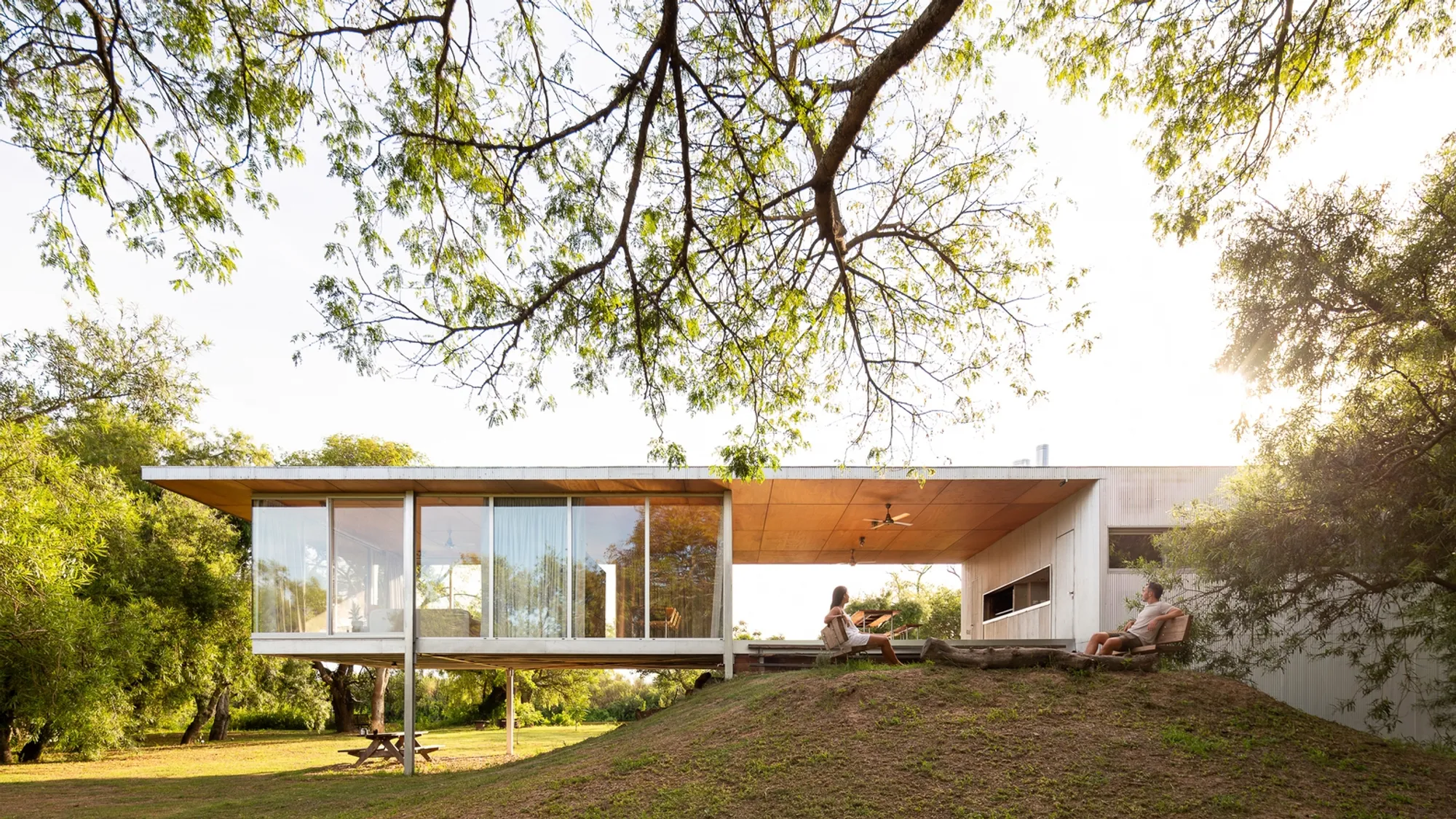
El Abrazo House, designed by architect Mateo Gagliardo, is a beacon of sustainability and resilience. Located on "El Chiriguë" island along the Lechiguana Stream in the province of Entre Ríos, the house is a response to the distinct challenges posed by the wetlands area, known for its intermittent surface flooding. This 154 m² dwelling, completed in 2022, epitomizes how architectural ingenuity can harmonize with nature's unpredictability.

Design Philosophy and Environmental Response
Sustainable Integration with the Landscape
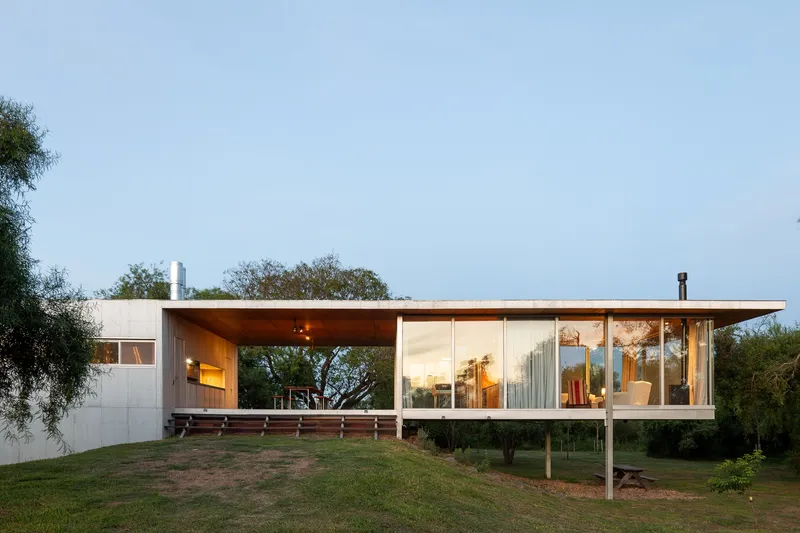
The architectural strategy for El Abrazo House is rooted in sustainability and integration. The design is a deliberate response to the flooding landscape and the lack of services in the area. It embodies a profound respect for its environment, utilizing a layout that aligns with the natural elements — the river, the dock, and the existing flora.
Elevation and Accessibility
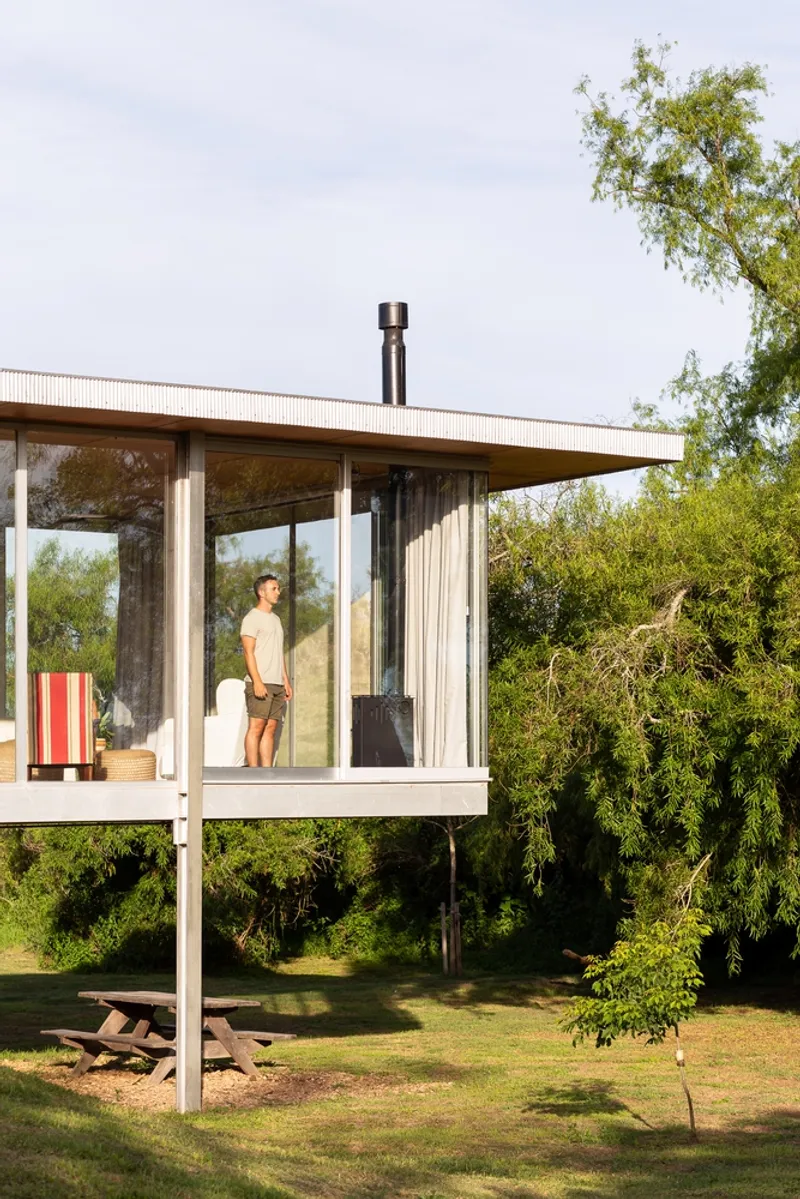
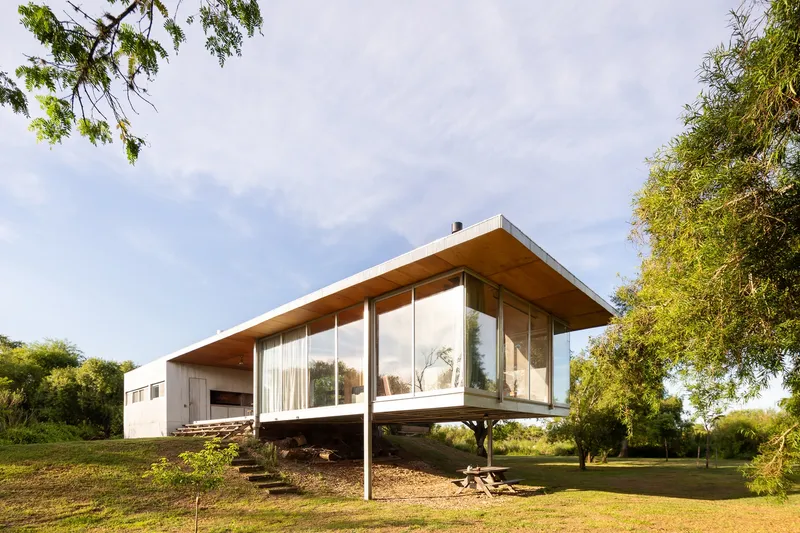
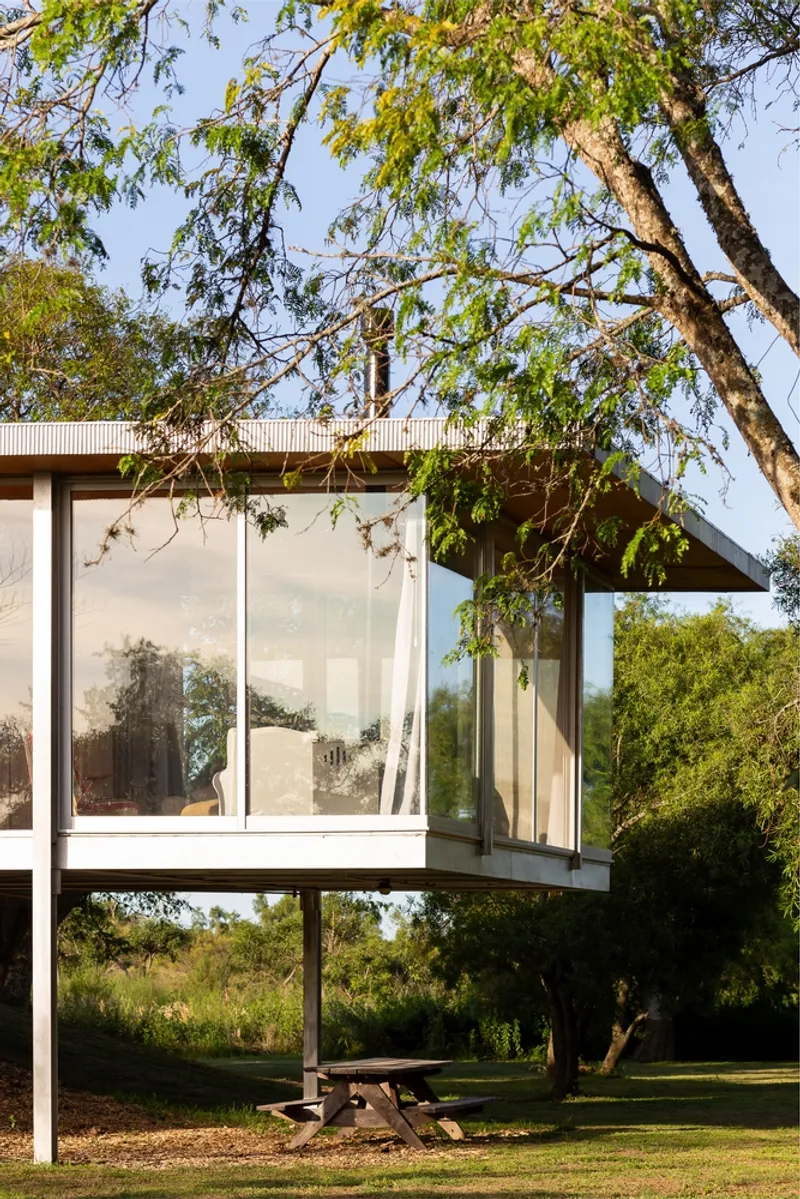
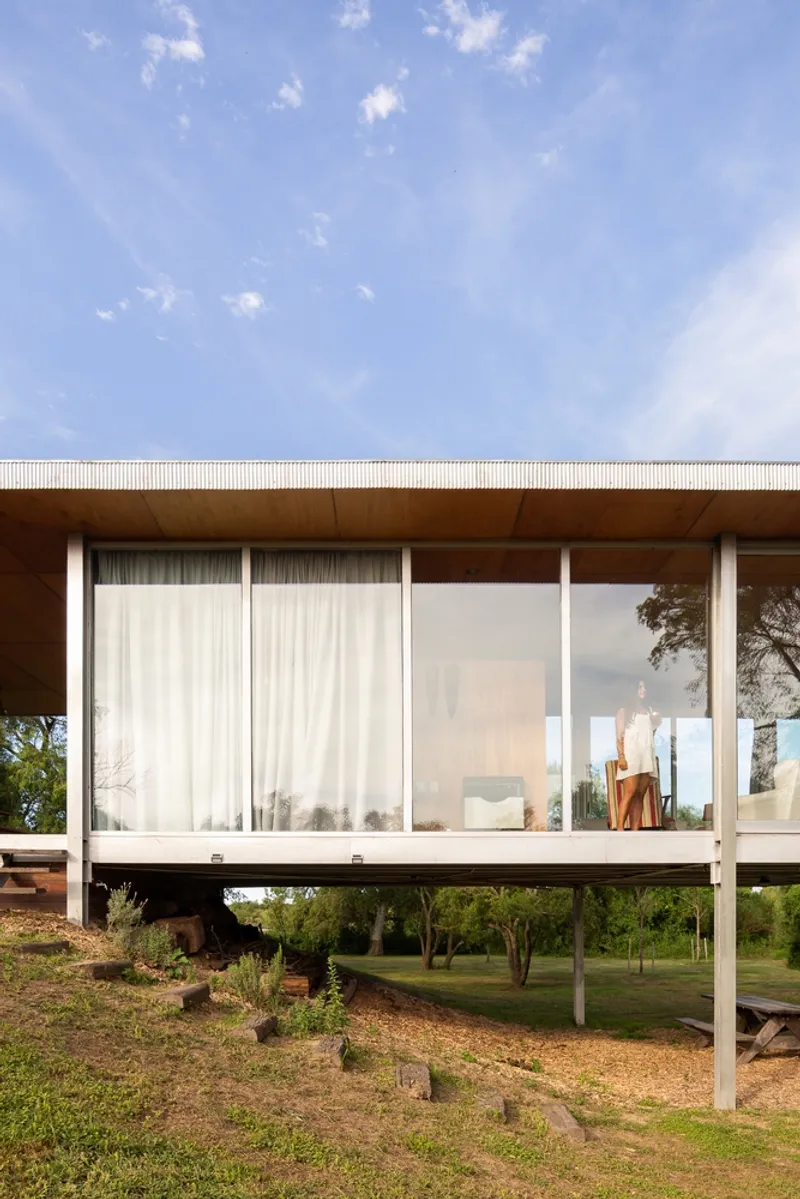
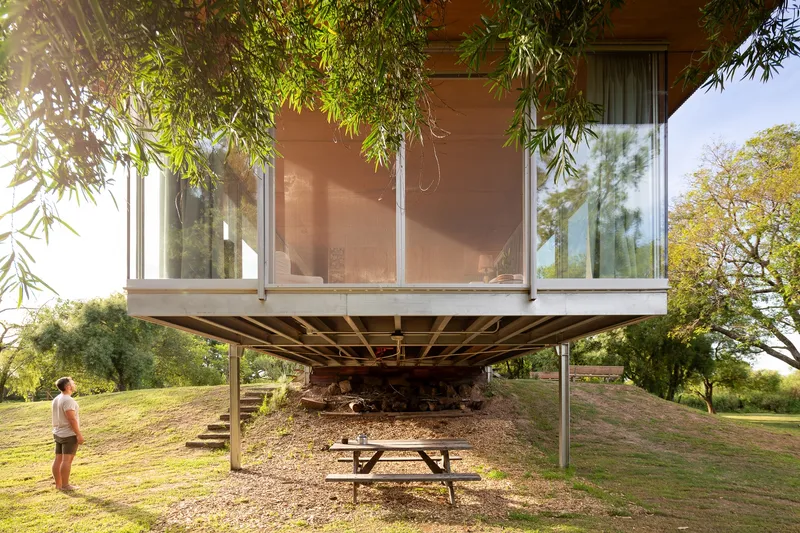
One of the house's key features is its elevation above ground level, a practical solution to the flooding characteristic of the wetlands. This not only anticipates potential floods but also integrates the structure with the terrain, enhancing accessibility. A berm facilitates access during floods, seamlessly merging the built environment with its natural setting.

Material Selection for Resilience
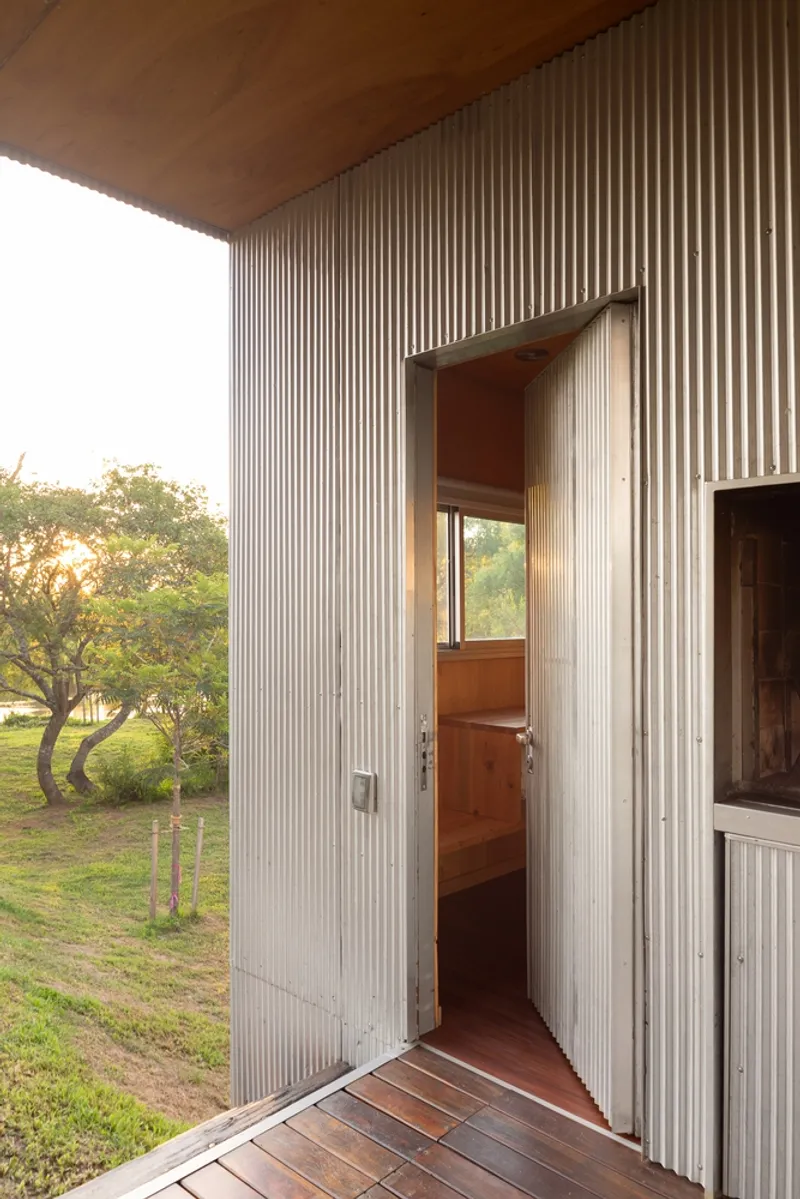
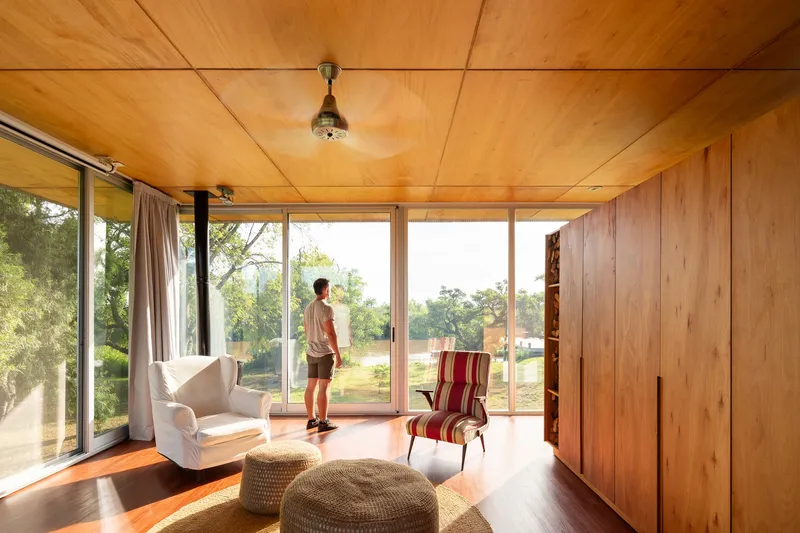
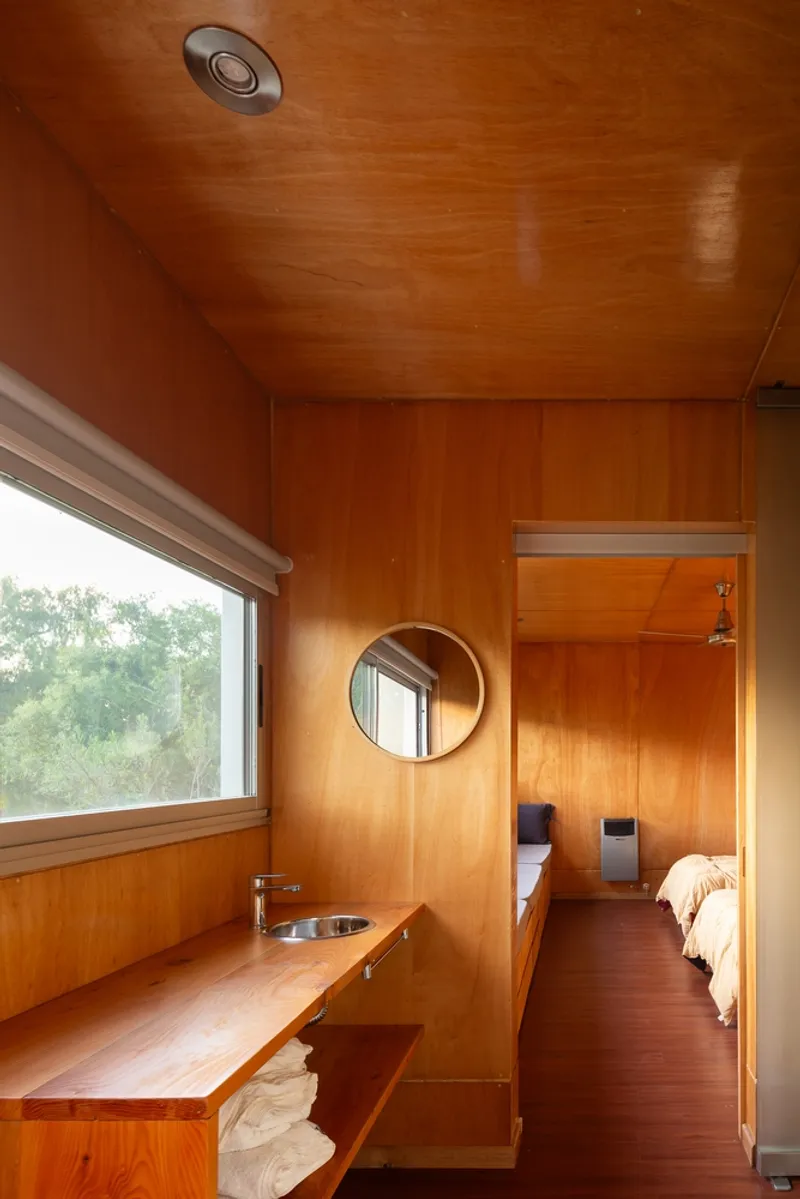
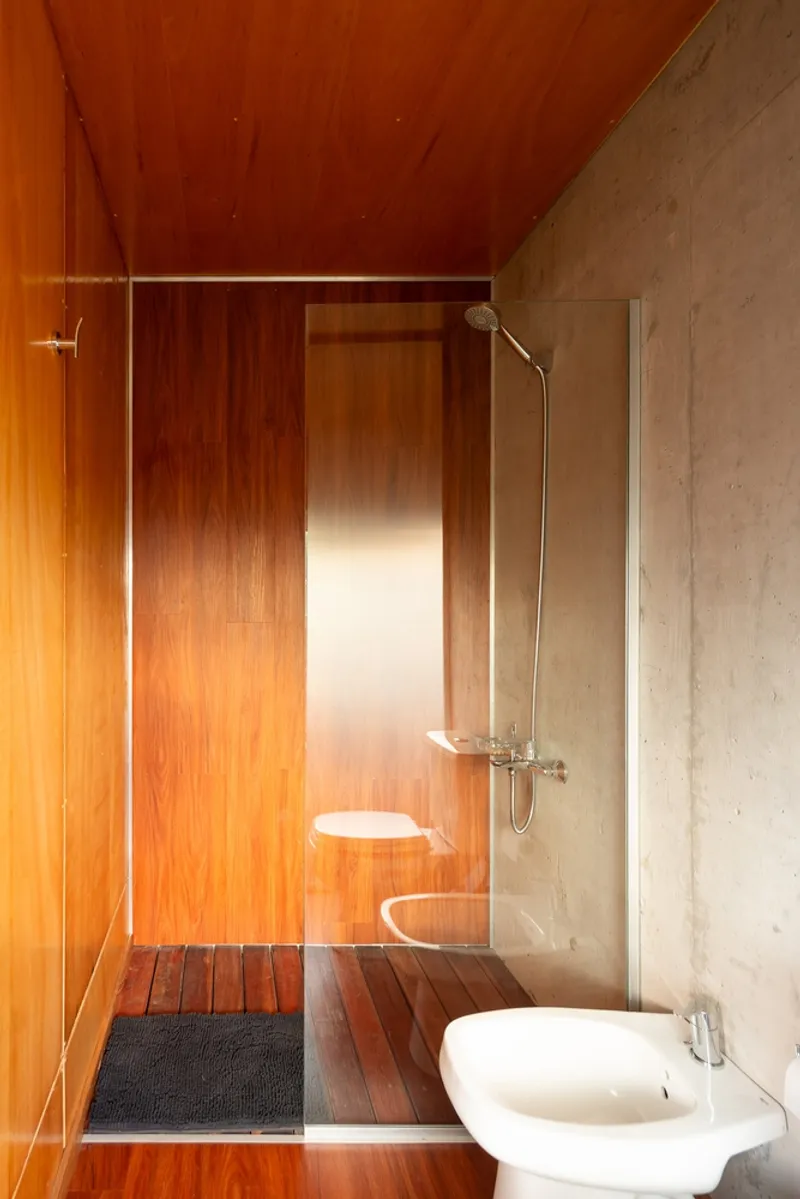
The construction employs Steel Frame for private zones, with exterior cladding of Minionda Cincalum sheets and interiors finished with phenolic panels. These materials were chosen for their durability and ability to withstand the wetland's humid conditions, emphasizing the project's sustainability ethos.

Maximizing Natural Light and Views
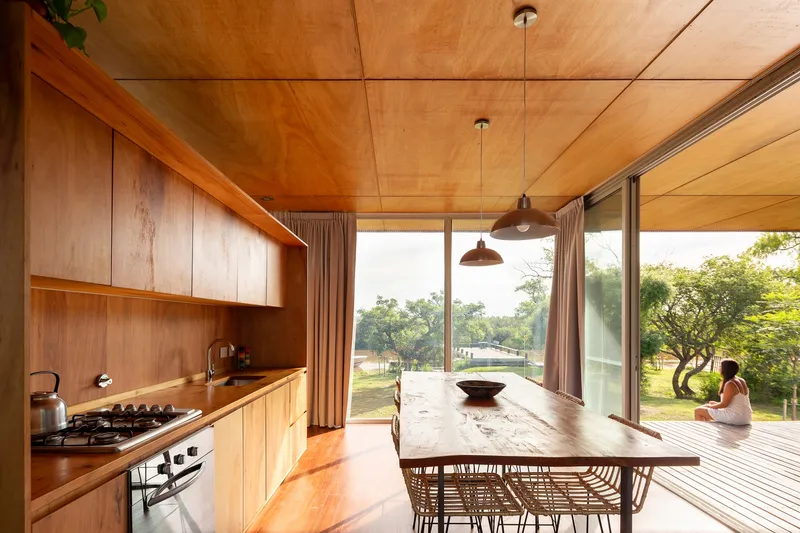
The design of El Abrazo House prioritizes transparency and natural light. The social areas are enveloped in glass, blurring the boundaries between indoors and outdoors. This architectural choice not only invites the landscape in but also fosters a sense of connection and continuity with the surrounding wetlands.

Functional Zoning and Fluidity
El Abrazo House distinguishes between private and social zones, arranging spaces based on their intimacy and service requirements. The layout encourages fluid movement between areas while maintaining a clear division between private bedrooms and the communal living spaces. The central gallery acts as a nexus, promoting interaction and hosting social gatherings.

A Model for Sustainable Architecture in Wetlands
El Abrazo House by Mateo Gagliardo is more than just a residence; it's a model for sustainable architecture in wetlands. It showcases how thoughtful design can overcome environmental challenges, creating spaces that are both functional and harmonious with nature. As we face increasing ecological concerns, projects like El Abrazo House inspire a future where architecture not only coexists with the natural world but also enhances it.
This exploration into the sustainable design principles of El Abrazo House illuminates the potential for architecture to adapt to and celebrate the unique conditions of wetland environments. It stands as a beacon for sustainable living, proving that with creativity and respect for nature, we can create spaces that are both beautiful and resilient.
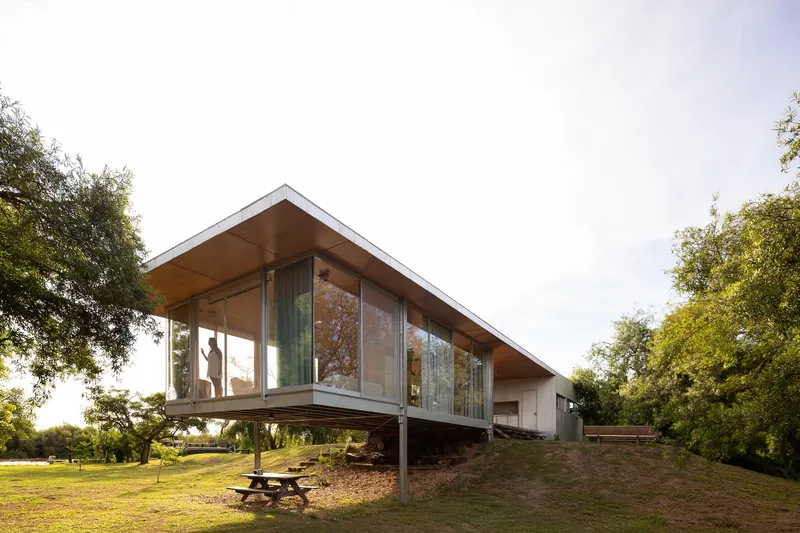
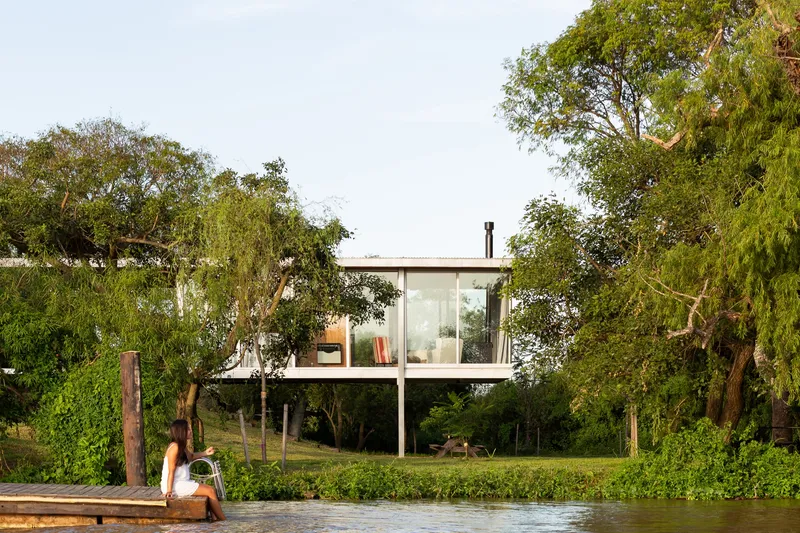

All photographs are work of Ramiro Sosa




Popular Articles
Popular articles from the community


The Musturak Paradise: Senior Living Architecture for a Connected Future in Temara, Morocco
The Musturak Paradise reimagines senior living architecture in Temara via private homes, social spaces, culture, community, and shared care.

Riyadh For All: Intergenerational Urban Design for Active Aging in Rabat
Riyadh For All reimagines urban design in Rabat with intergenerational co-living, adaptive courtyards, and Moroccan cultural exchange today.

Co-life: Sustainable Architecture for Age-Friendly Community Living
Co-life reimagines sustainable architecture for seniors through courtyards, rammed earth, shared gardens, and spaces designed for belonging.

Hill & Cross Opera: Sculptural Opera House Architecture Shaped by Tallinn’s Landscape and Identity
Hill & Cross Opera reimagines opera house architecture in Tallinn through its sculptural hill, civic plaza, glass wave and a luminous cross.


Similar Reads
You might also enjoy these articles

FAMM Arquitectura Organizes Ten Villas Around Courtyards and Jungle in Nosara, Costa Rica
El Molino pairs two elongated volumes with deep overhangs and timber louvers to build a compact coastal community five minutes from the beach.
Oscar Niemeyer's Ibirapuera Park Pavilions Define São Paulo's Cultural Identity in Concrete and Curve
A constellation of modernist volumes set within São Paulo's most important urban park, conceived for the city's 400th anniversary in 1954.
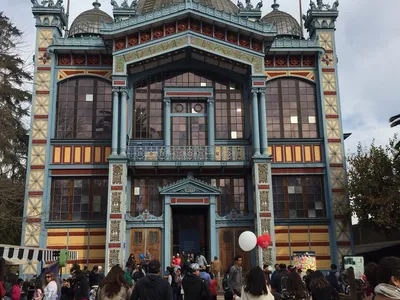
How Henri Picq's 1889 Paris Pavilion Traveled 11,000 Kilometers to Become Santiago's Artequín Museum
A prefabricated iron and glass pavilion built for the Paris Universal Exposition found a second life as a children's art museum in Chile.
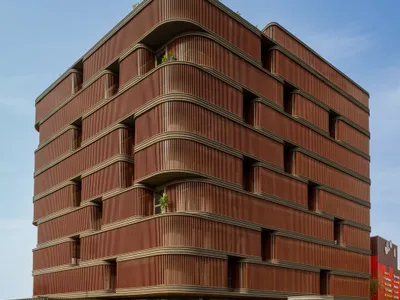
Sanjay Puri Architects Wraps a Jaipur Office Tower in Capsule-Shaped Green Buffers
A nine-level climate-responsive workplace near Jaipur Airport uses stacked planter terraces and aluminium screens to fight 40°C heat.


Explore Residential Building Competitions
Discover active competitions in this discipline


Challenge to design mud housing for contemporary communities


Challenge to reimagine the Iron Throne


Photograph architecture without architects


Illustrate the lost glory of Angkor Wat - Render Challenge
Comments (0)
Please login or sign up to add comments
No comments yet. Be the first to comment!