
Sustainable Farmhouse Design in India: Farmhouse at Balkash by ROOMOOR
A sustainable farmhouse that combines traditional Indian architecture with modern functionality, reconnecting family and nature in rural Balkash.


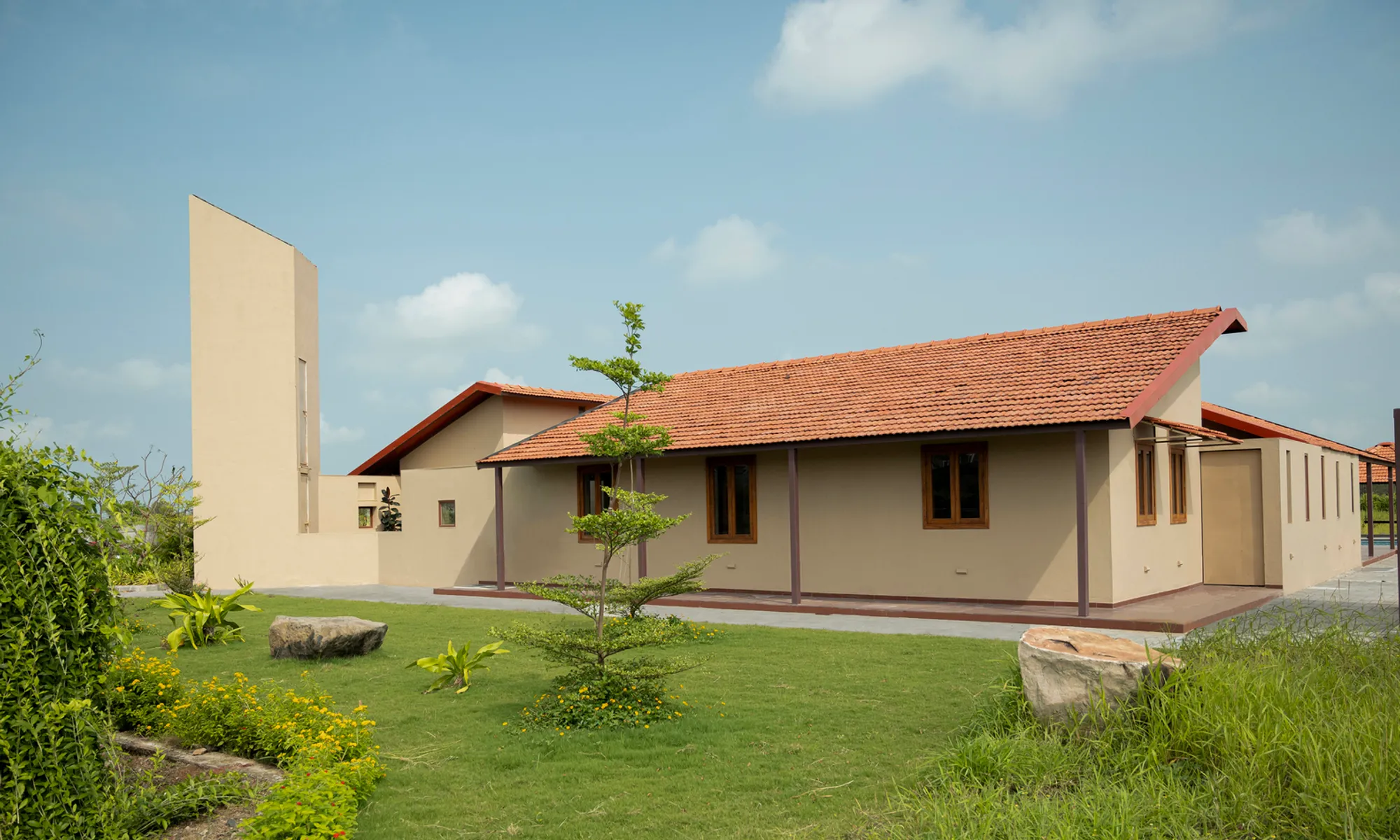
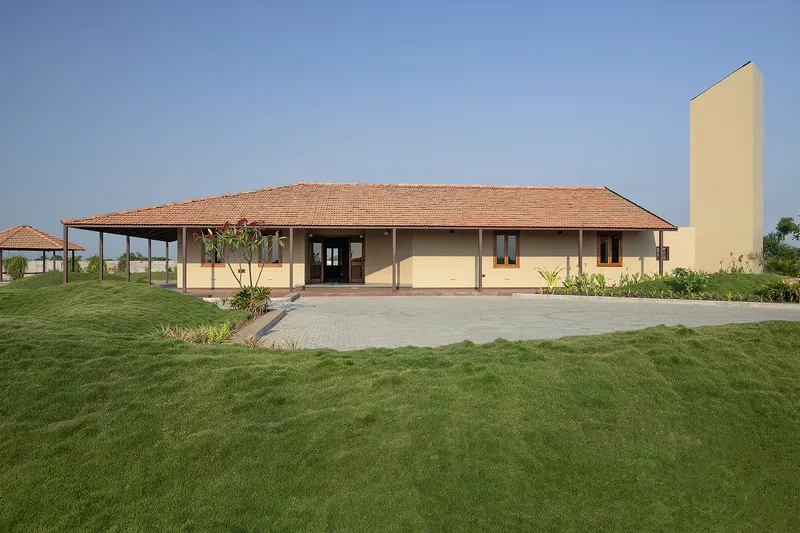
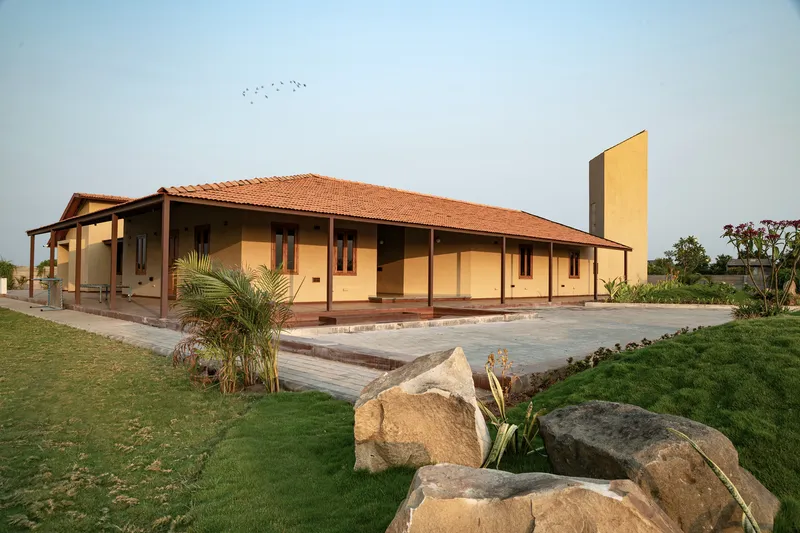
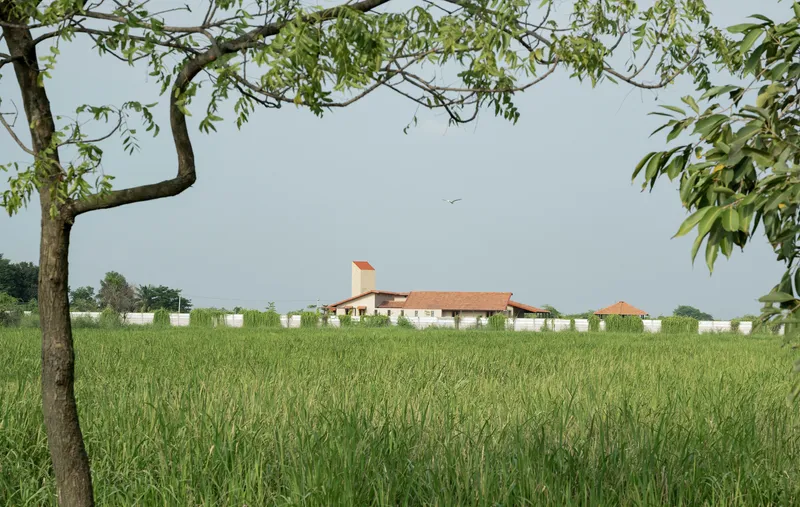
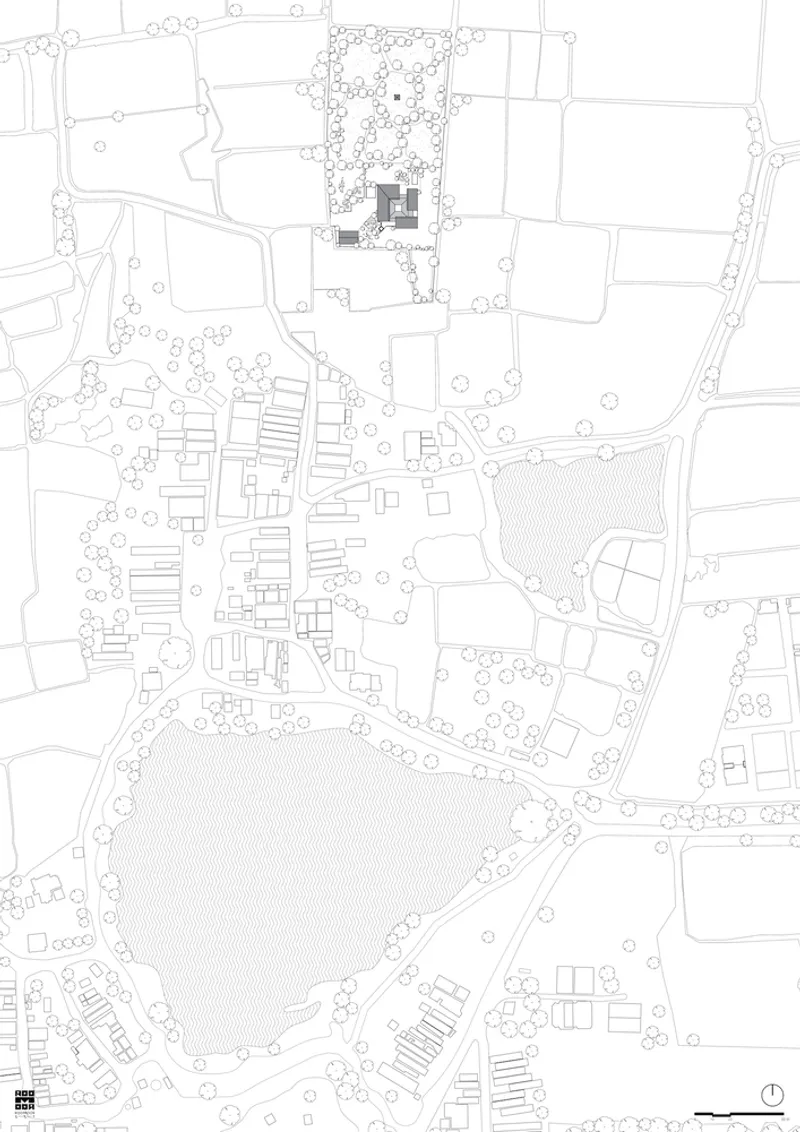
The Farmhouse at Balkash, designed by ROOMOOR, is a harmonious blend of vernacular Indian architecture and contemporary sustainability principles. Located in the rural village of Balkash, near Surat, India, this 525 m² farmhouse bridges cultural heritage with modern needs, serving as both a family retreat and a functional agricultural base.
Vernacular Inspiration and Cultural Roots
A Connection to Rural Traditions
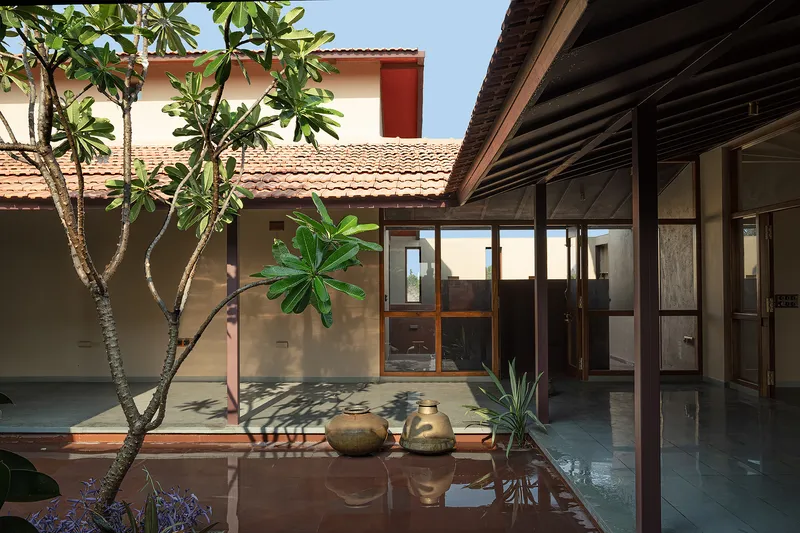
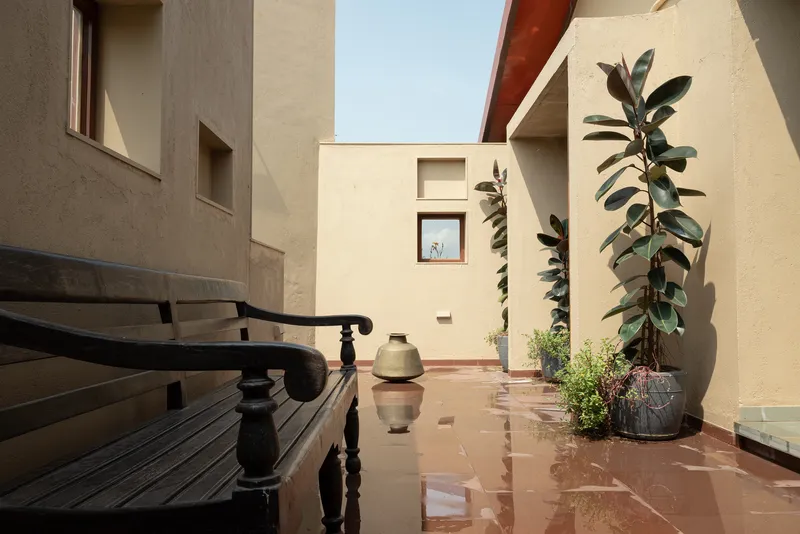
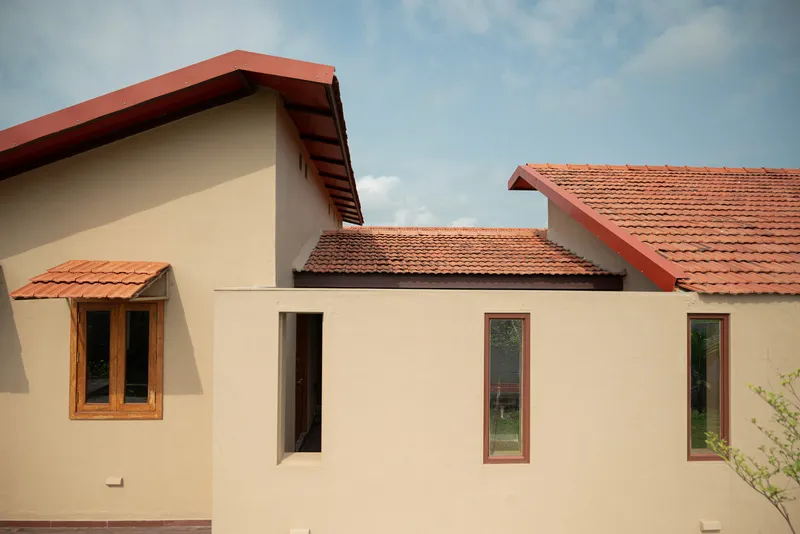
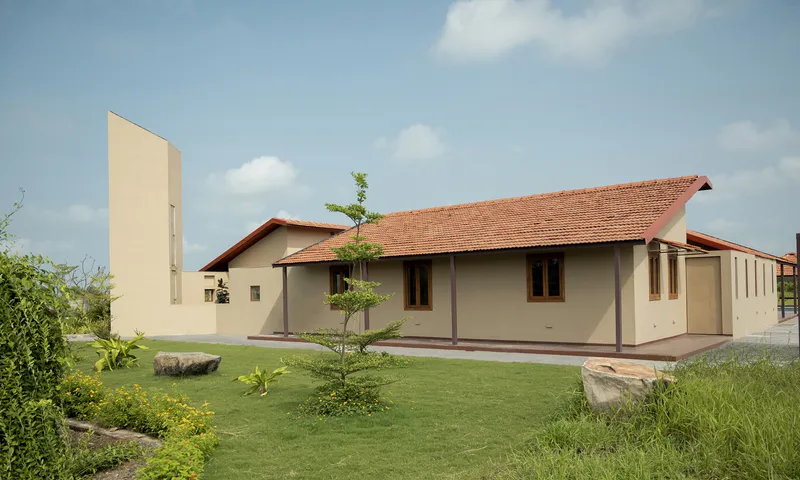
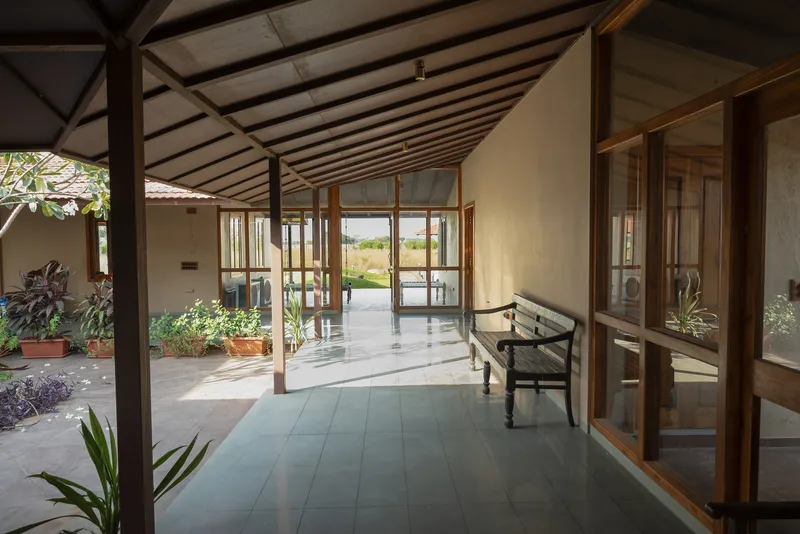
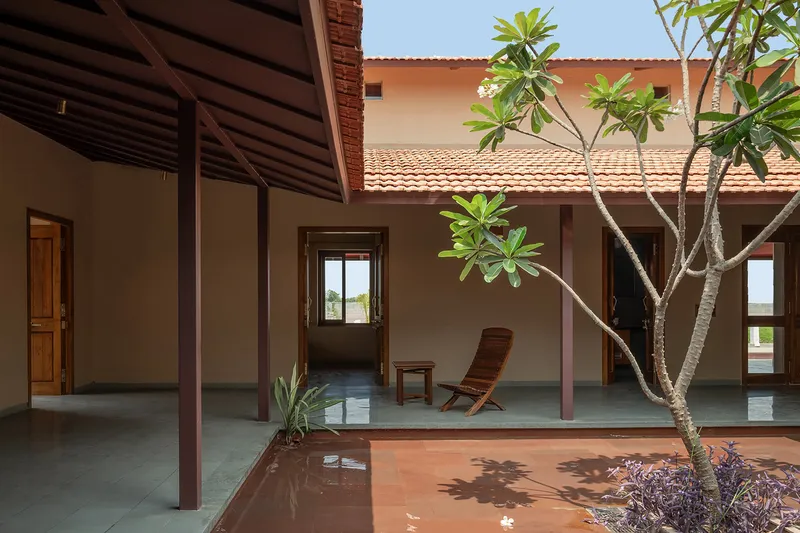
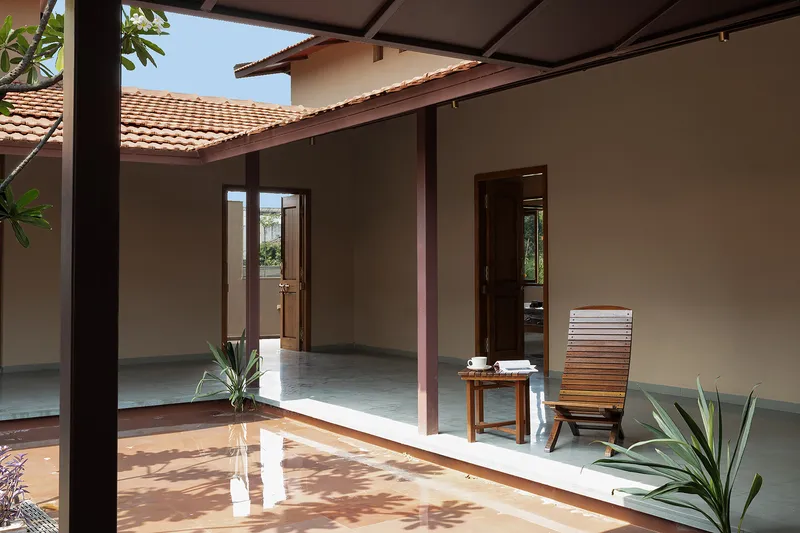
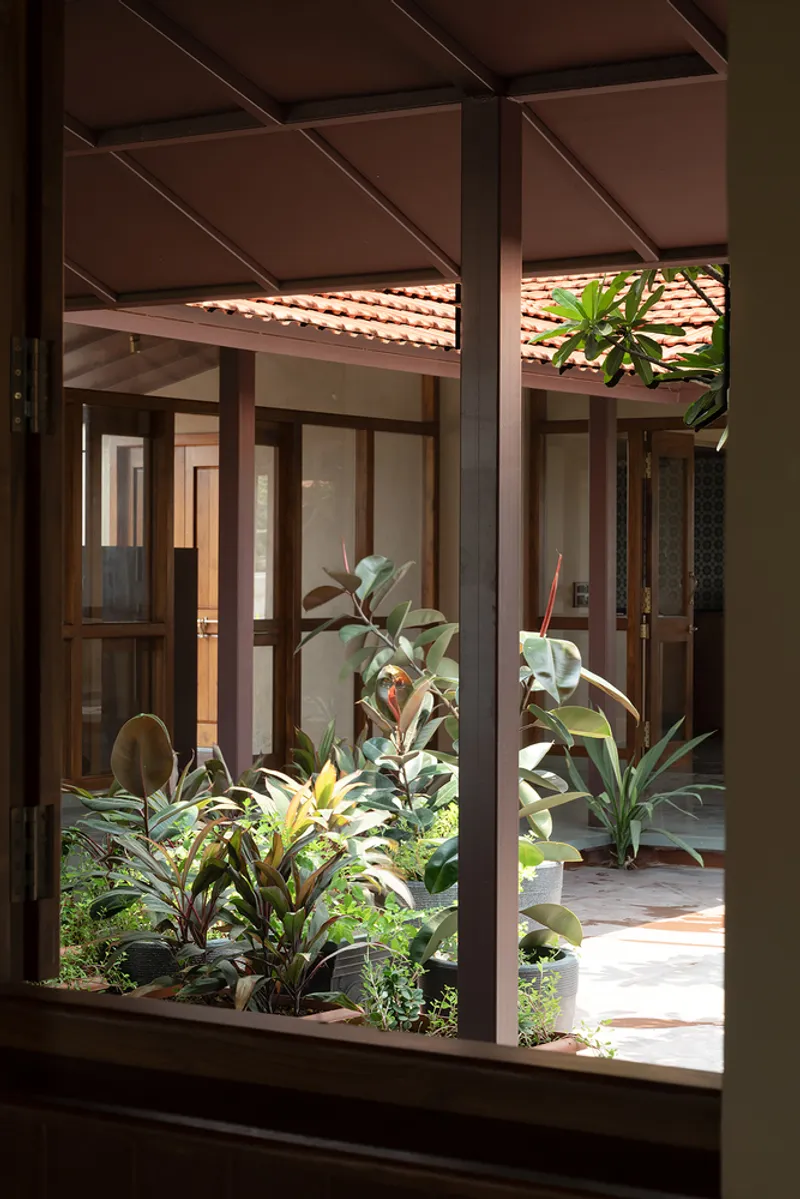
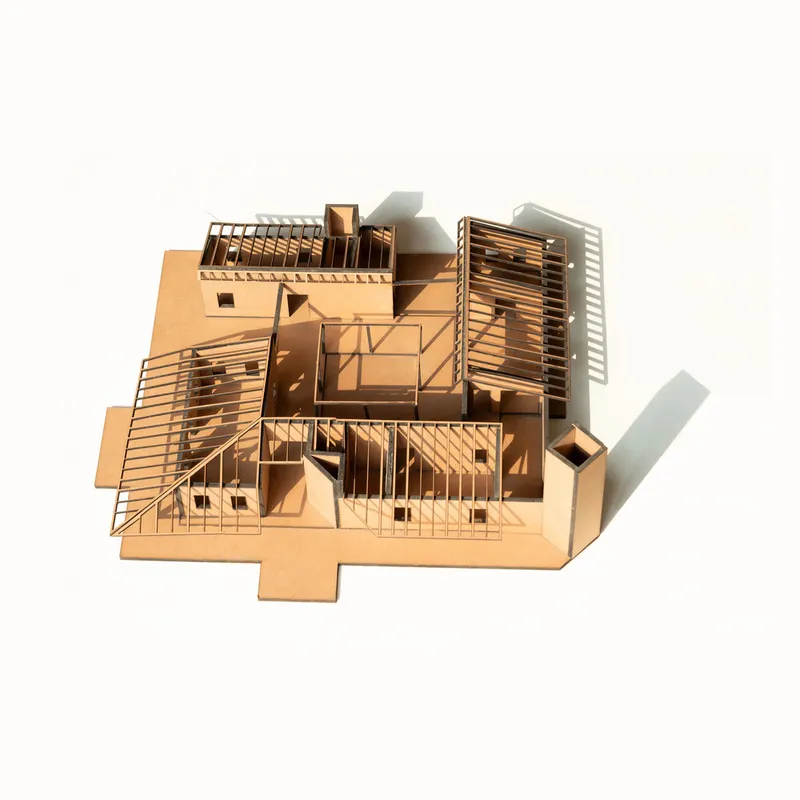
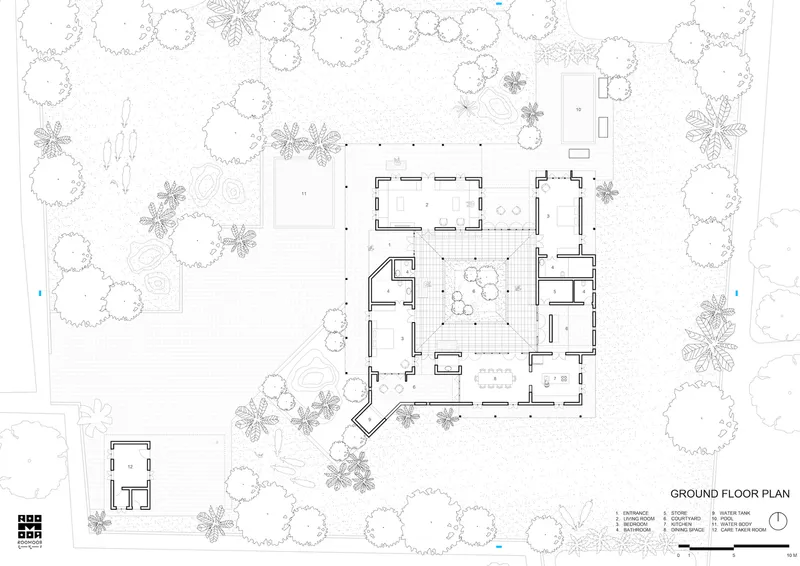
Balkash, with its traditional pitched-roof houses and lush farmlands, inspired the design of the farmhouse. The architects incorporated semi-covered verandahs, courtyards, and cross-ventilation strategies, reflecting the village’s architectural essence. The central courtyard, a key feature of Indian homes, anchors the design and fosters community interaction while providing natural light and ventilation.
Nostalgia and Purpose
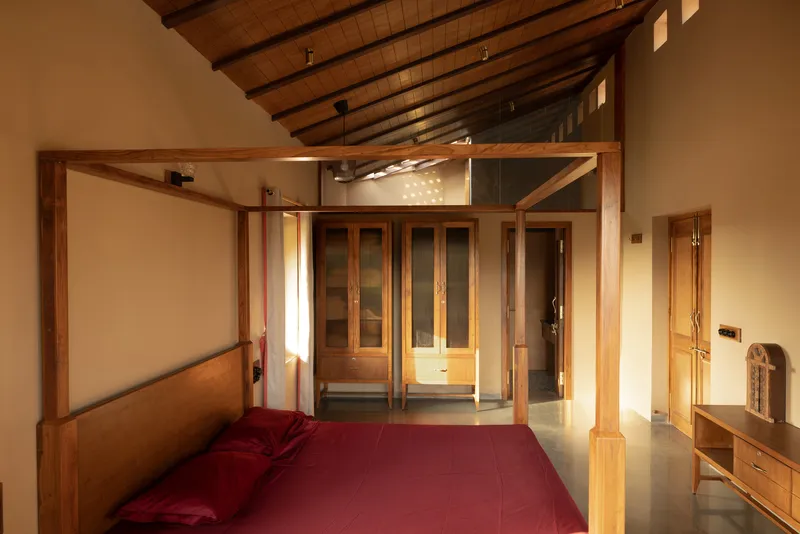
The farmhouse was built to reconnect the client’s family with their ancestral roots. Its layout and materials evoke memories of traditional Indian homes while accommodating the dynamic needs of modern rural living.
Sustainable Design Strategies
Climatic Responsiveness
The design employs several strategies to address the local climate:
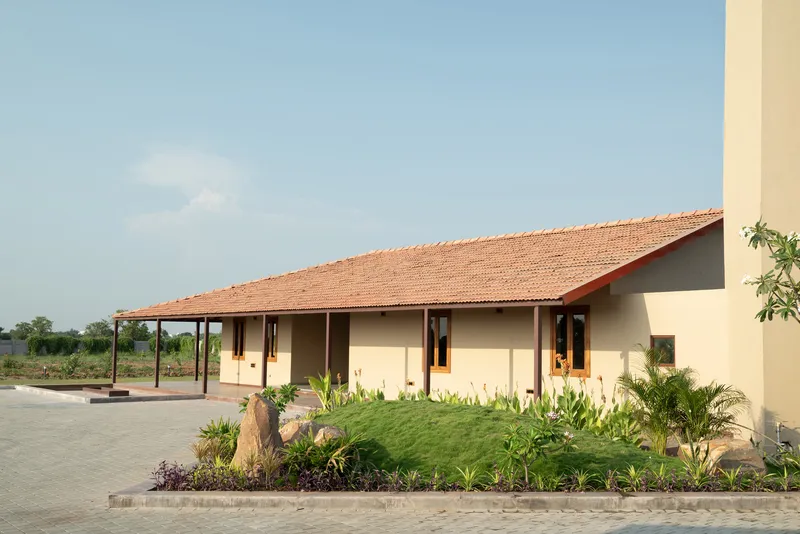
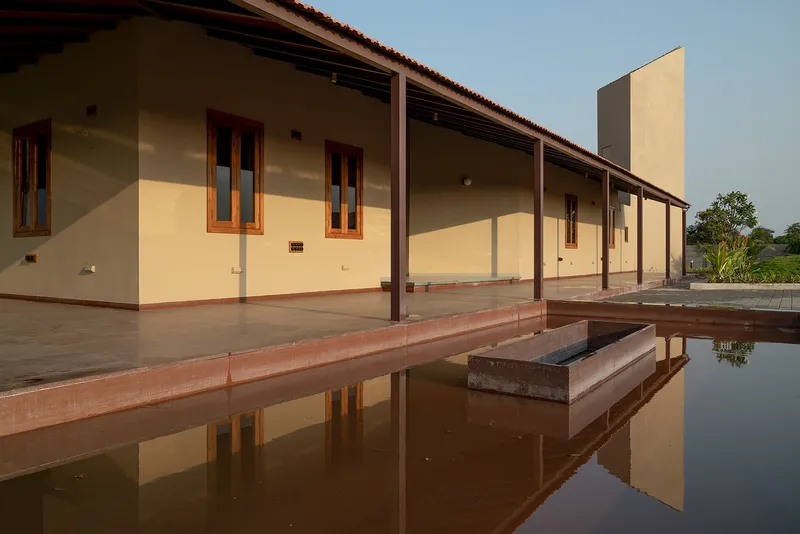
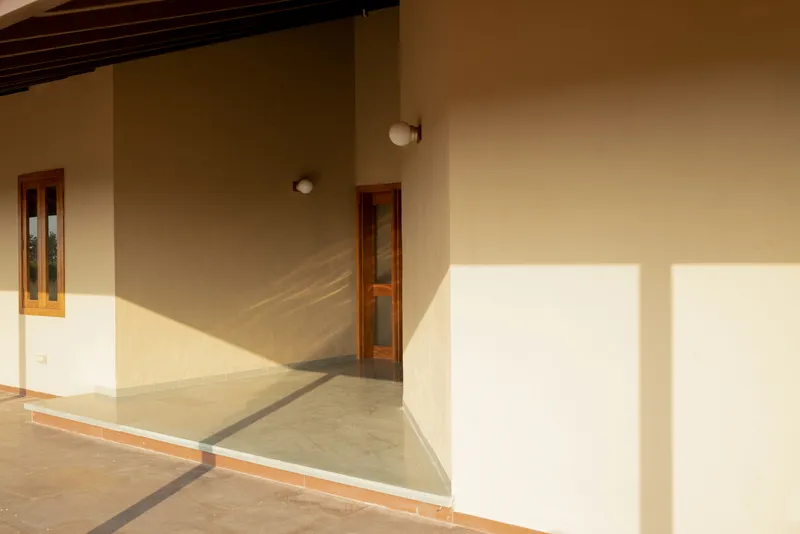
- Shaded Verandahs: Protect against heat while providing transitional spaces for relaxation.
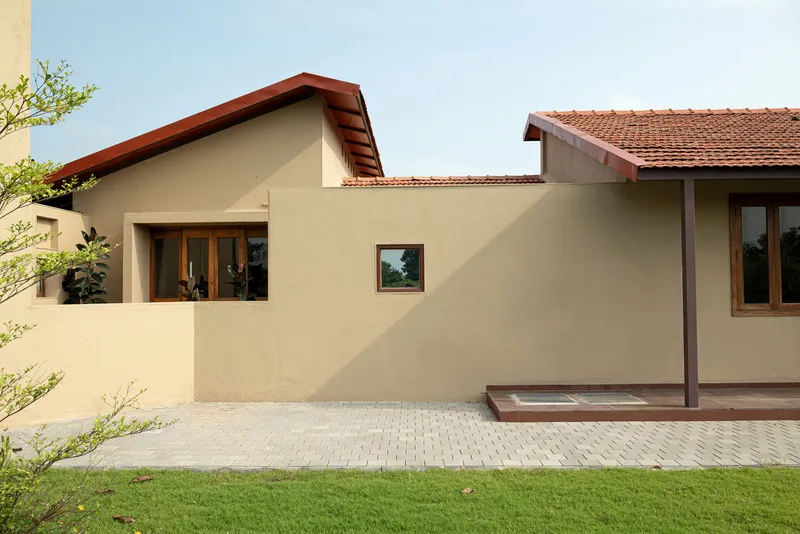
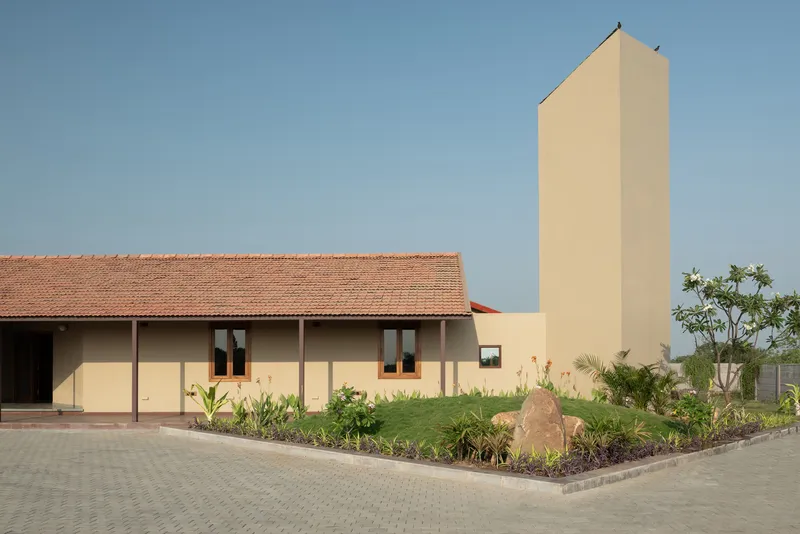
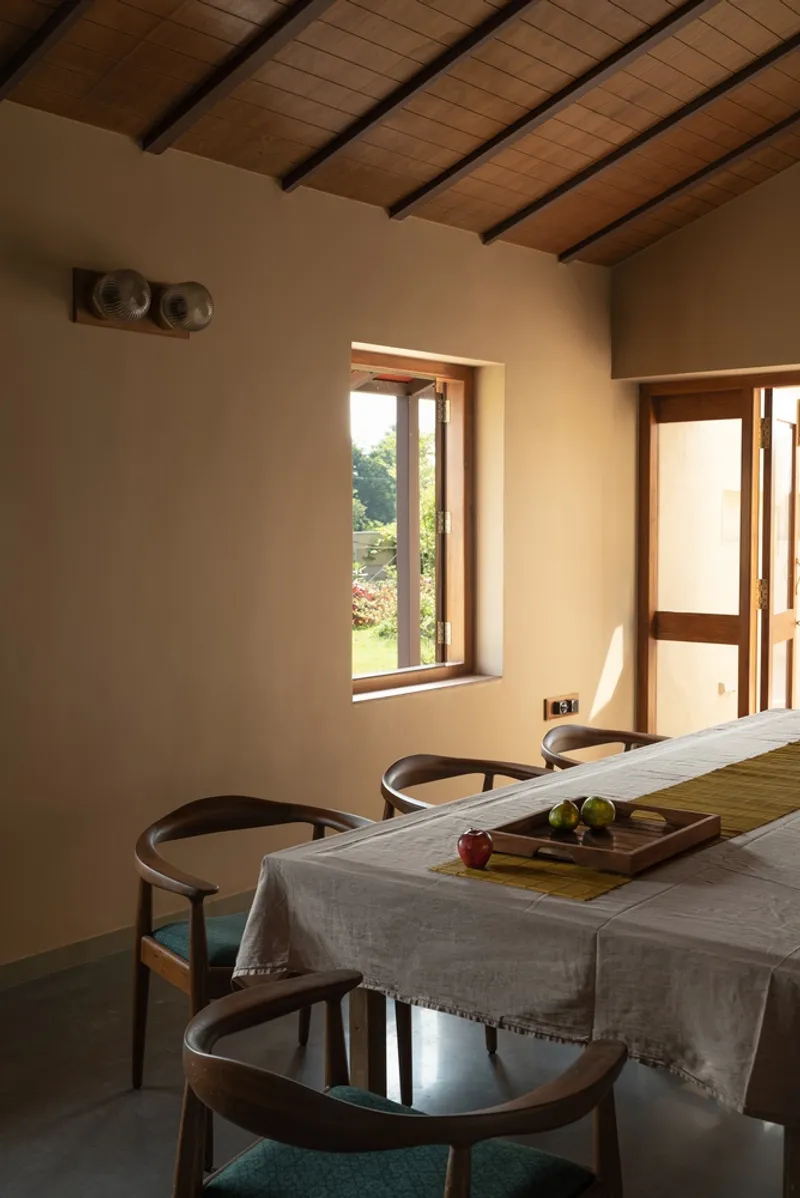
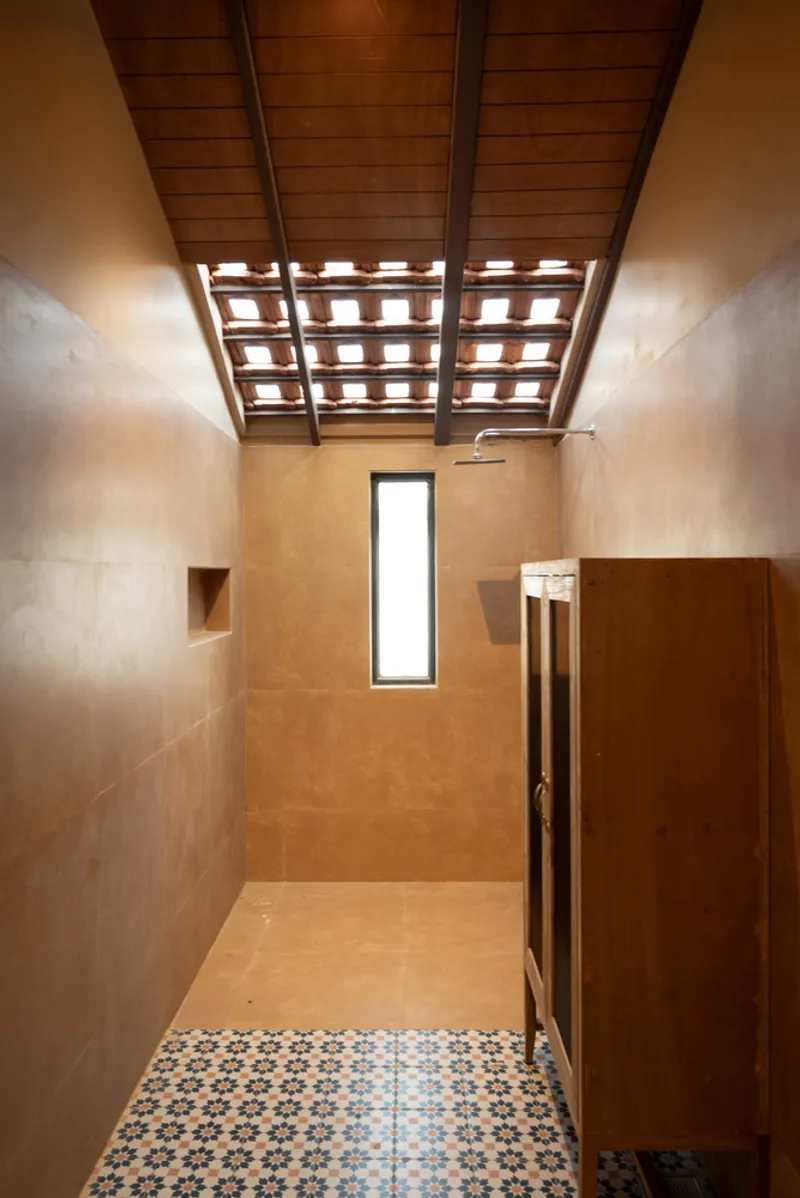
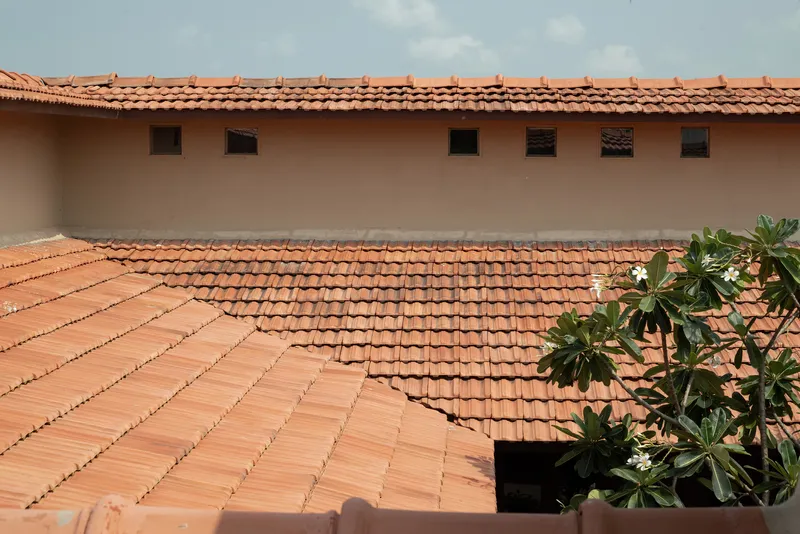
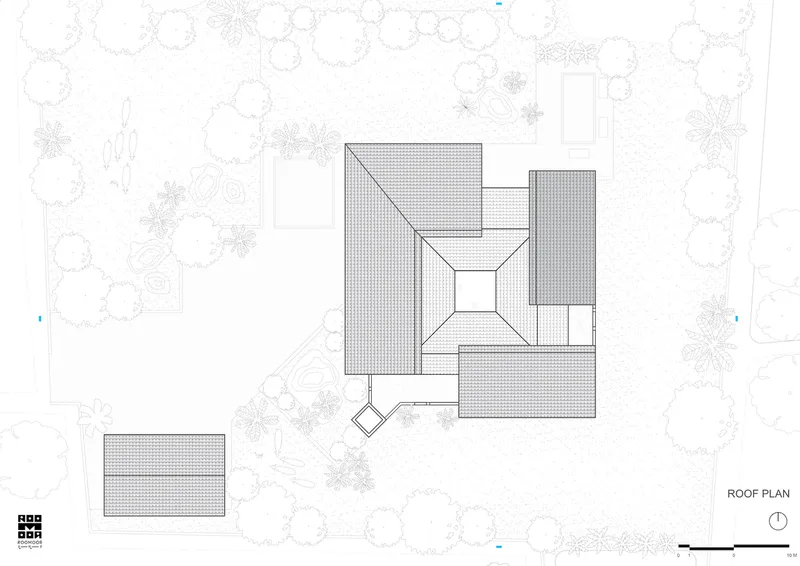
- Lightweight Roofing: A terracotta tile roof supported by metal rafters and galvanized columns creates a visually light yet robust structure.
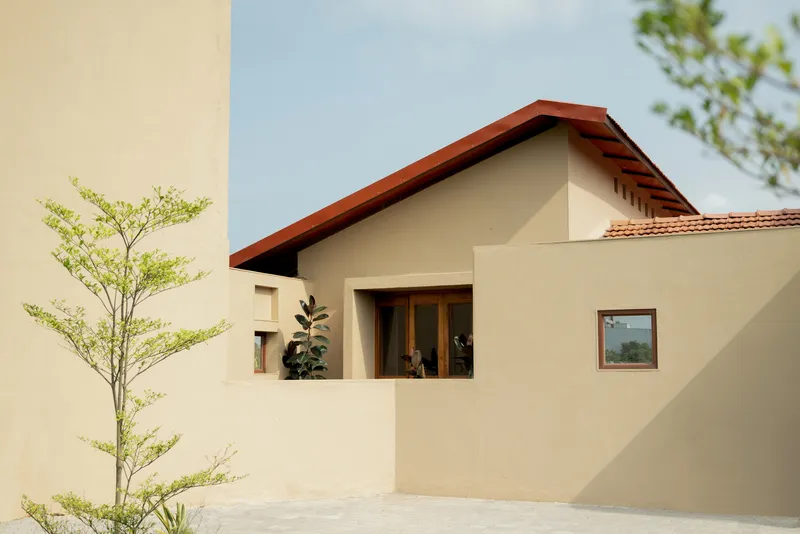
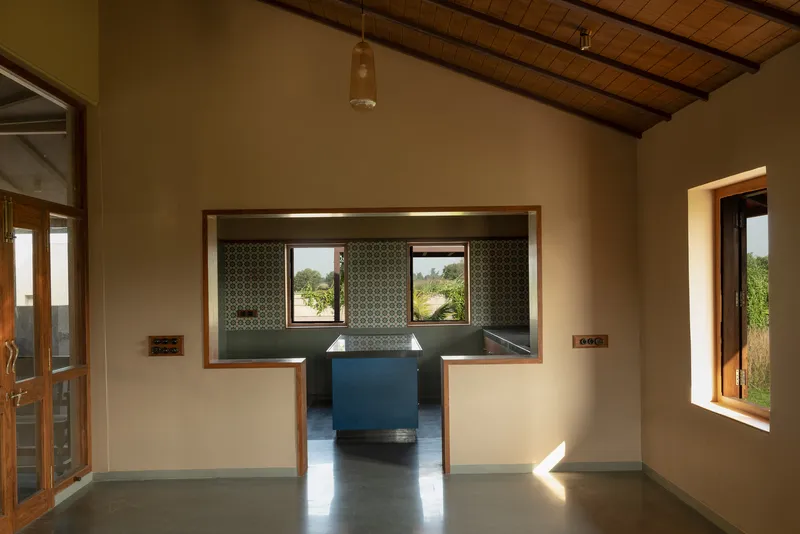
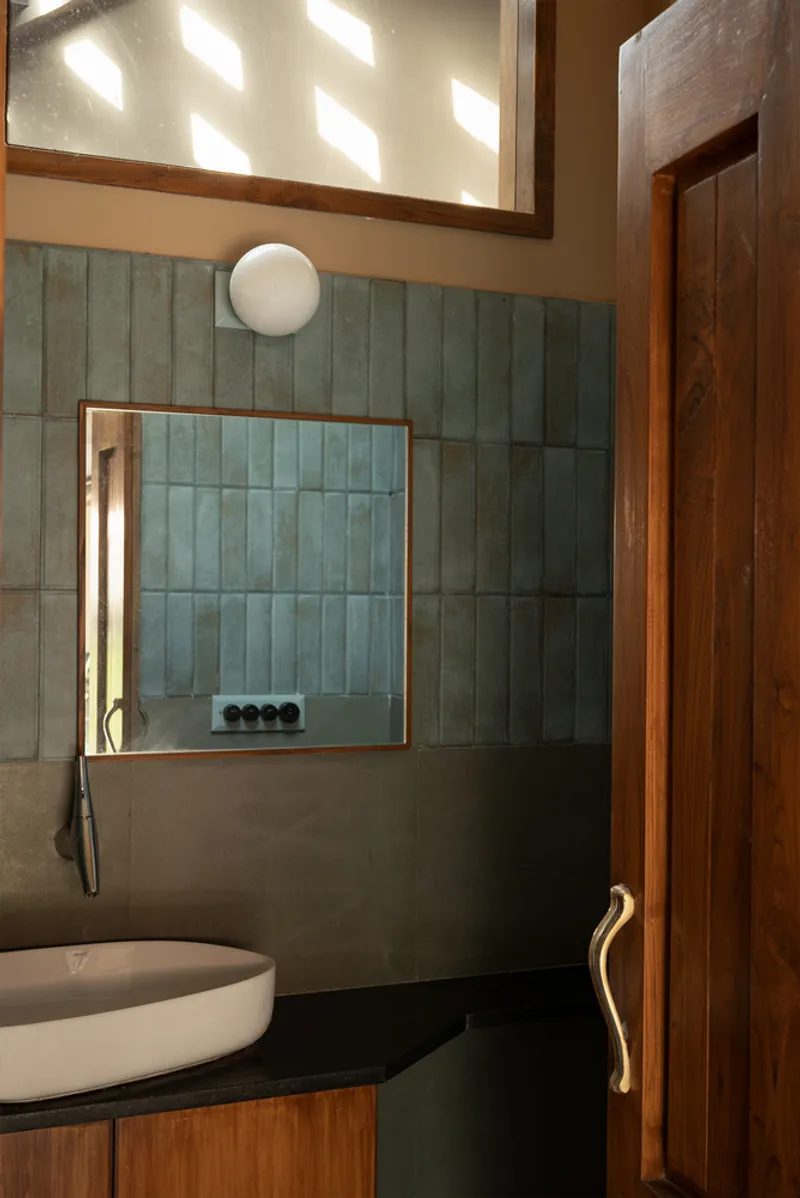
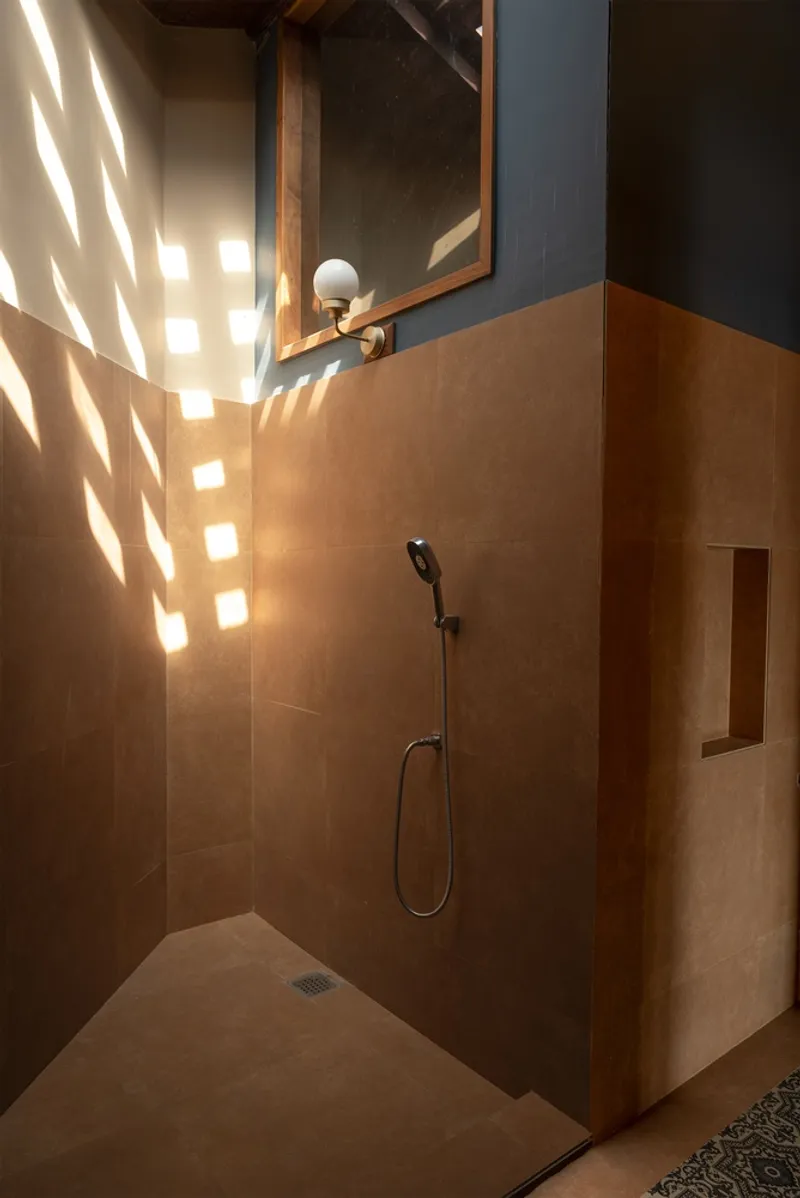
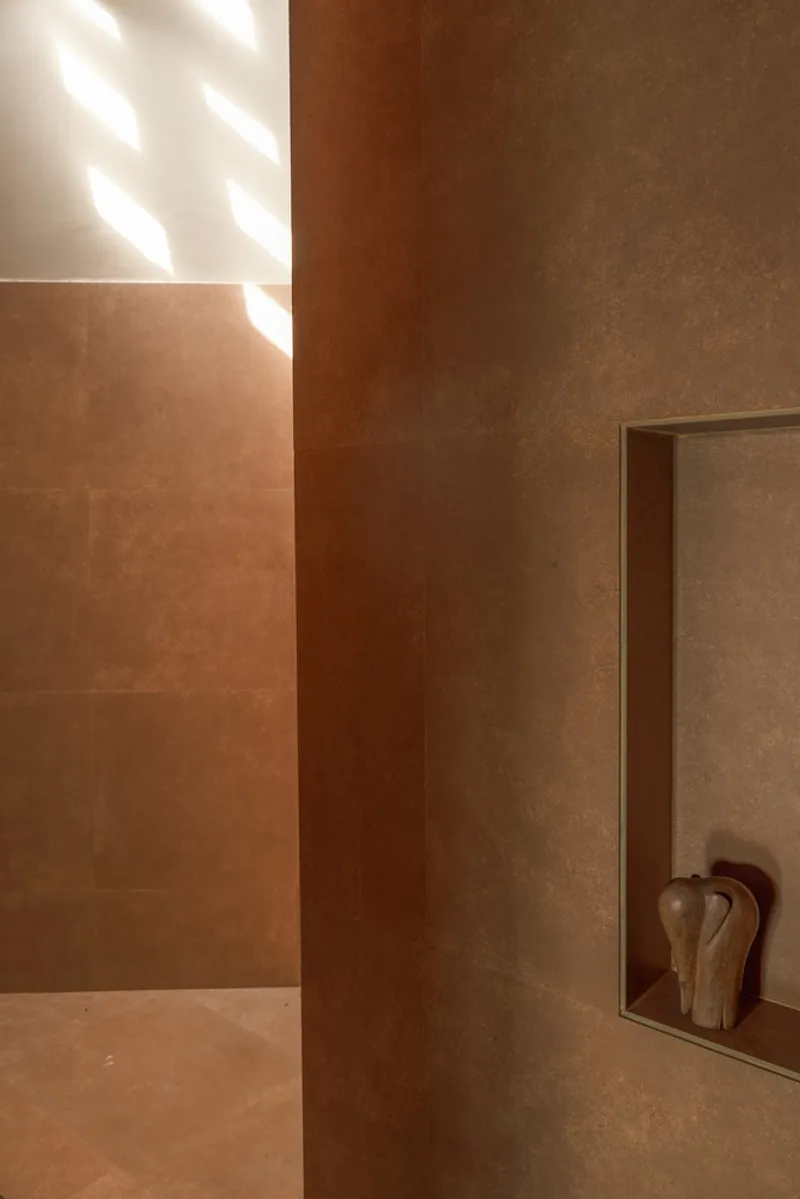
- Top-Light Windows: Diffuse natural light into enclosed rooms, mimicking the ambiance of old village homes.
Material Choices
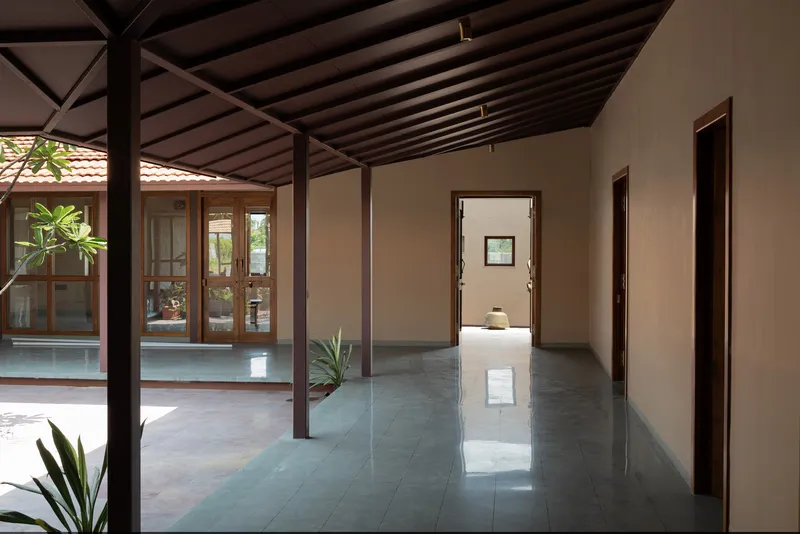
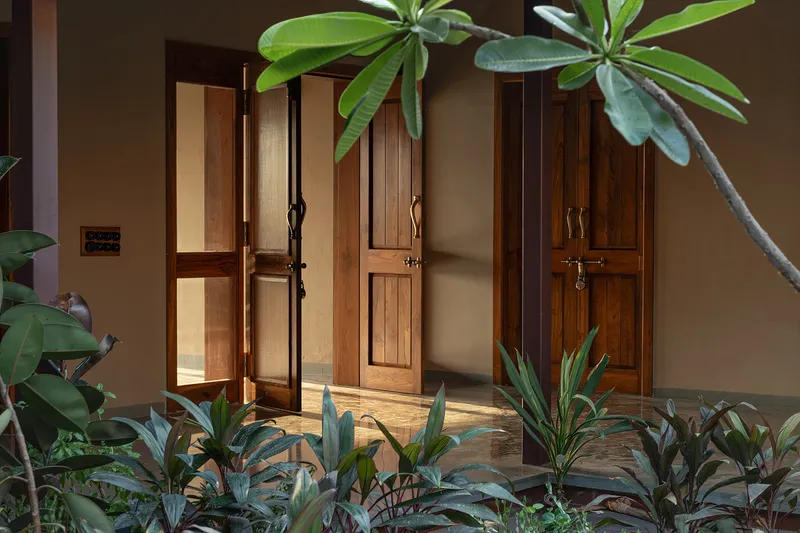
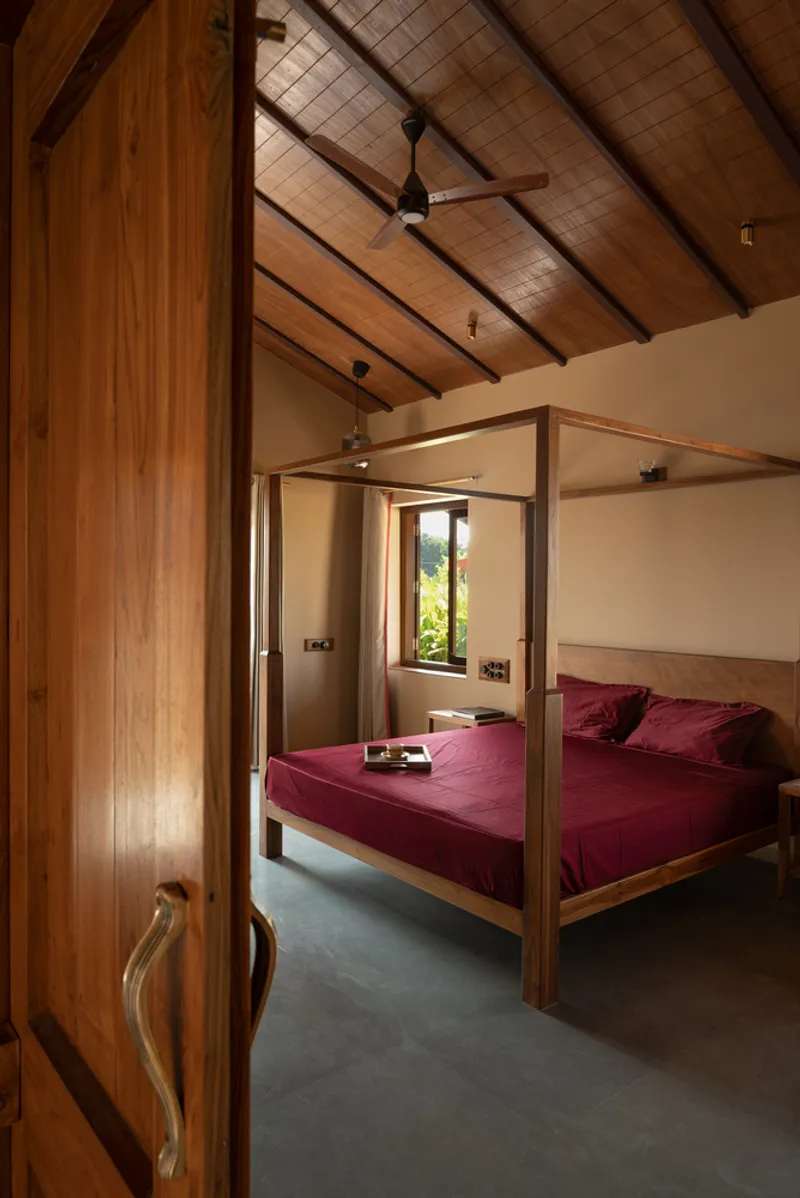
The farmhouse incorporates reclaimed teak wood for doors and windows, designed in modular sizes to allow for future adaptability. The Mandana stone flooring, polished by rivers, adds durability and aesthetic warmth. The structure's foundations, constructed with 120 cm deep piles, ensure longevity and resilience.
Balancing Functionality and Exploration
Flexible Spaces
The farmhouse design fosters movement and exploration. Each room features dual doors, offering multiple entry and exit points to promote openness. Edge courtyards and concentric spatial orbits further enhance connectivity between indoor and outdoor areas.
Dual Purpose Design
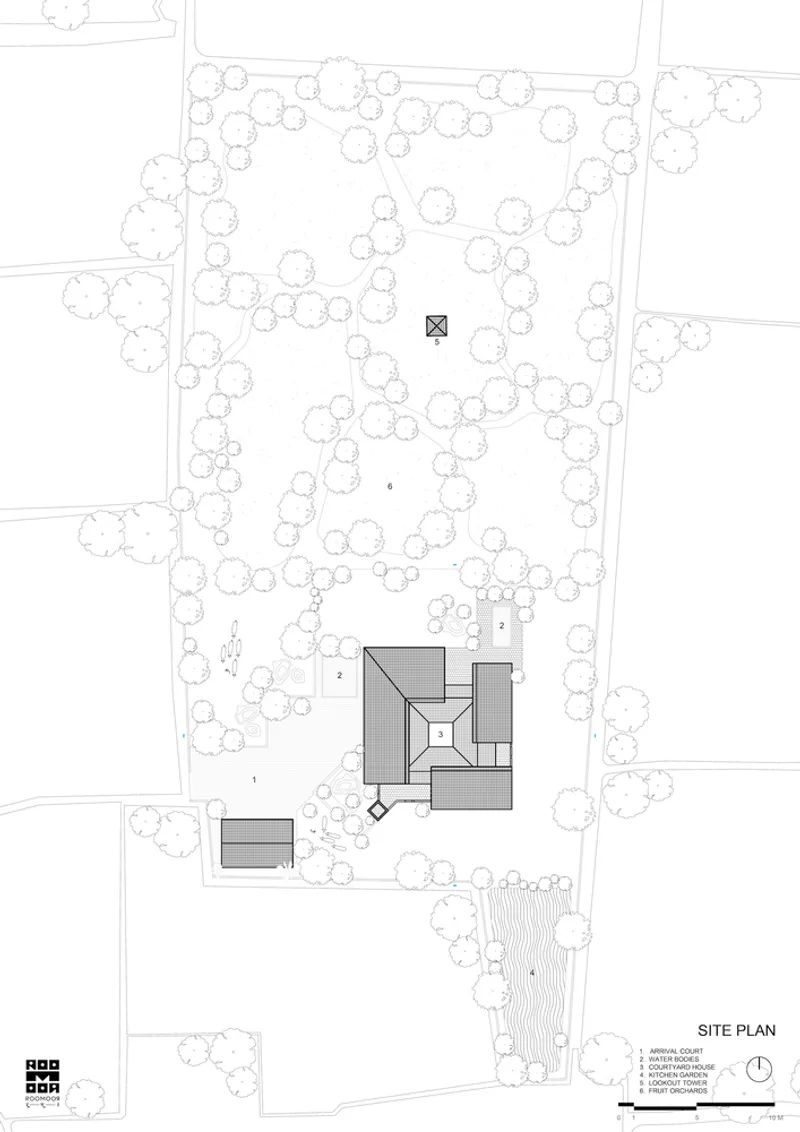
Beyond being a family retreat, the farmhouse supports agricultural activities. The forecourt doubles as a grain-drying yard during harvest seasons, and the surrounding farmland is actively used for sugarcane and coconut cultivation.
Blending Architecture with Nature
Integration with the Landscape
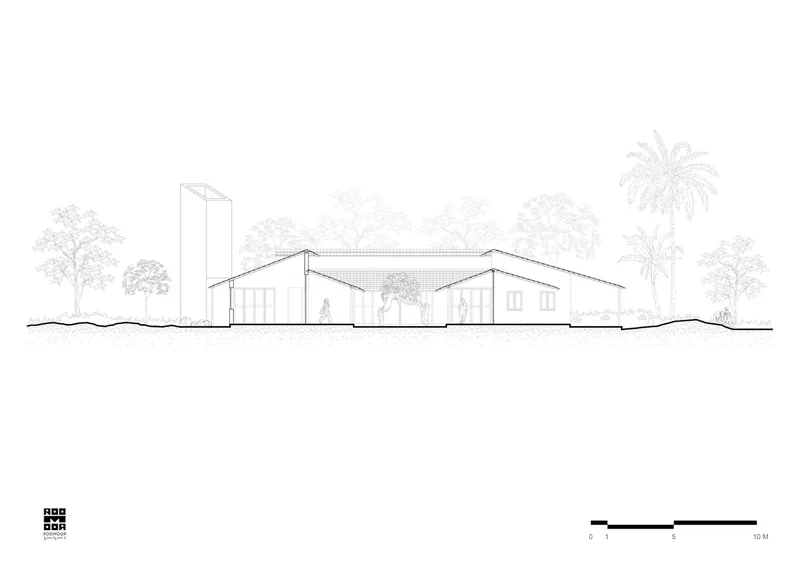
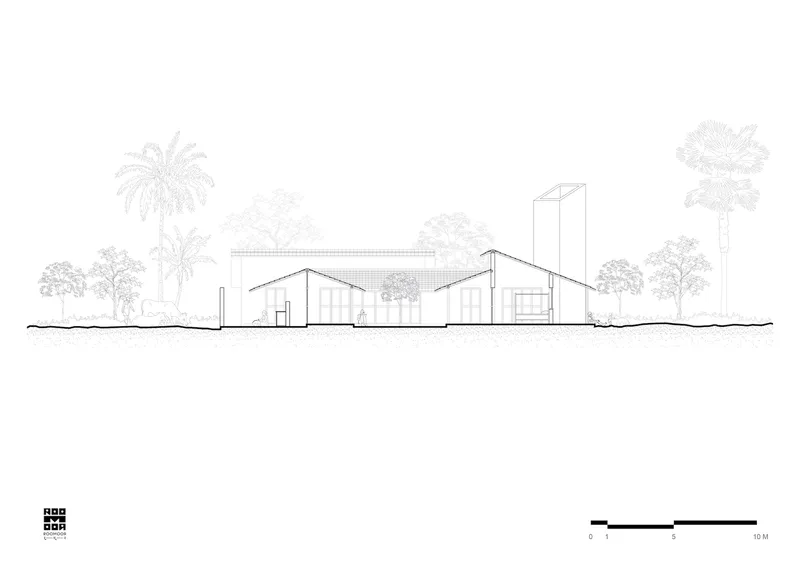
The farmhouse seamlessly integrates with its environment. An elevated water tank tower provides shade and reflects the expanse of the sky, while the site’s fruit plantations attract birds, fostering a connection with nature.
Community and Future Adaptability
Two-thirds of the land remains dedicated to farming, emphasizing the home’s role in the village community. The design prioritizes modular construction, ensuring it can adapt to future changes without compromising its essence.
A Journey of Connection
The Farmhouse at Balkash epitomizes sustainable, culturally rooted architecture that bridges nostalgia and modernity. By integrating traditional Indian design elements with innovative functionality, ROOMOOR has created a space that celebrates heritage while meeting contemporary needs.
All photographs are work of Jainee Gusain



Popular Articles
Popular articles from the community


Hill & Cross Opera: Sculptural Opera House Architecture Shaped by Tallinn’s Landscape and Identity
Hill & Cross Opera reimagines opera house architecture in Tallinn through its sculptural hill, civic plaza, glass wave and a luminous cross.

Co-life: Sustainable Architecture for Age-Friendly Community Living
Co-life reimagines sustainable architecture for seniors through courtyards, rammed earth, shared gardens, and spaces designed for belonging.

The Ocean Hive: Sustainable Architecture for a Self-Sufficient Civilization at Sea
The Ocean Hive imagines sustainable architecture at sea, where modular habitats, algae, wave power and ocean waste sustain a growing colony.

Riyadh For All: Intergenerational Urban Design for Active Aging in Rabat
Riyadh For All reimagines urban design in Rabat with intergenerational co-living, adaptive courtyards, and Moroccan cultural exchange today.

Similar Reads
You might also enjoy these articles


Hodi-Mandai Geram
Project Function: Preservation and revitalization of the Intangible heritage and socio-spatial identity of the Hodi by Housing, Cultural Memory Center, Sacred Grove, landscape, local tourism economy


Olio Towers: A Mid-Rise for Performers That Fuses Housing, Rehearsal, and Stage
Located blocks from Houston's Theater District, this modular tower stacks living units around a central performance atrium.

Oasis: Modular Green Housing Carved into Dhaka's Urban Fabric
A shortlisted Plugin Housing entry reclaims unauthorized settlements in Dhaka with stepped concrete volumes, green roofs, and ventilation-driven design.

Black Hole: A Floating Megastructure for the Post-Physical Era
Emiliano Mazzarotto envisions a spherical, self-scaling arena where e-sports, digital hotels, and holographic stadiums replace traditional public space.


Explore Sustainable Farm Competitions
Discover active competitions in this discipline



Challenge to reimagine the Iron Throne


Photograph architecture without architects


Illustrate the lost glory of Angkor Wat - Render Challenge


Design challenge to reuse E-waste
Comments (0)
Please login or sign up to add comments
No comments yet. Be the first to comment!