
SD+A Tucks Timber Pavilions into the Paraguayan Forest at Yvyrupa Cabins
In Cerrito, Paraguay, a pair of low-slung hotel cabins disappear into the tree canopy through green roofs, exposed timber frames, and passive climate strat


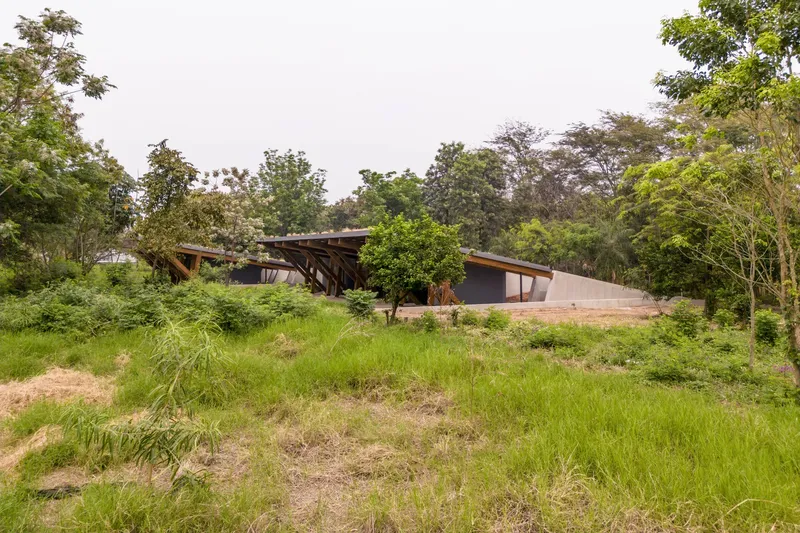
From above, you almost miss them. Two long, angular rooflines poke through the forest canopy in Cerrito, Paraguay, barely distinguishable from the surrounding green. Yvyrupa Cabins, designed by SD+A, is a small hotel project that takes its cues from the land itself: the slope of the terrain, the direction of prevailing winds, the path of the sun. Rather than clearing a site and imposing a building, the architecture slips into the gaps between mature trees and follows the natural grade downhill.
What makes this project worth paying attention to is not the ambition of its program but the rigor of its response. Every decision, from the pitch of the roof to the orientation of the courtyard, traces back to a specific environmental condition. The result is a building that looks effortless but is, in fact, deeply considered. The name "Yvyrupa" comes from the Guaraní concept of the earth as a living system, and the architecture treats it that way: not as a surface to build on but as a context to inhabit.
Vanishing into the Canopy
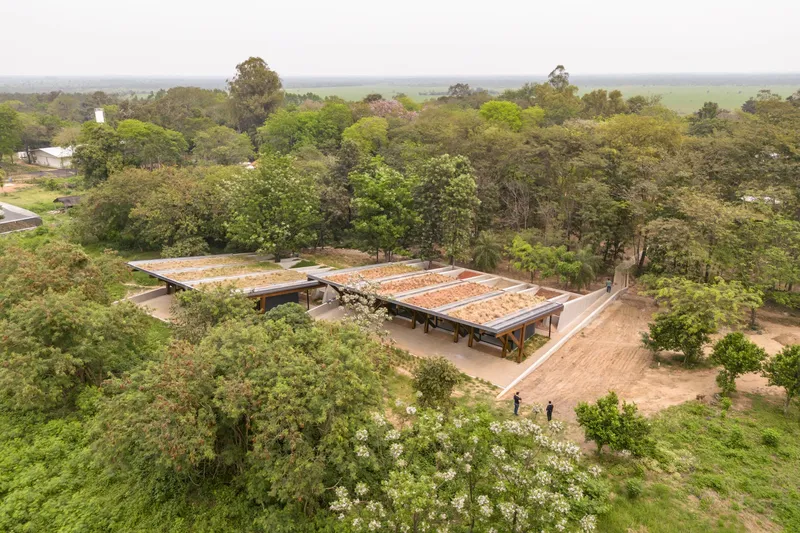
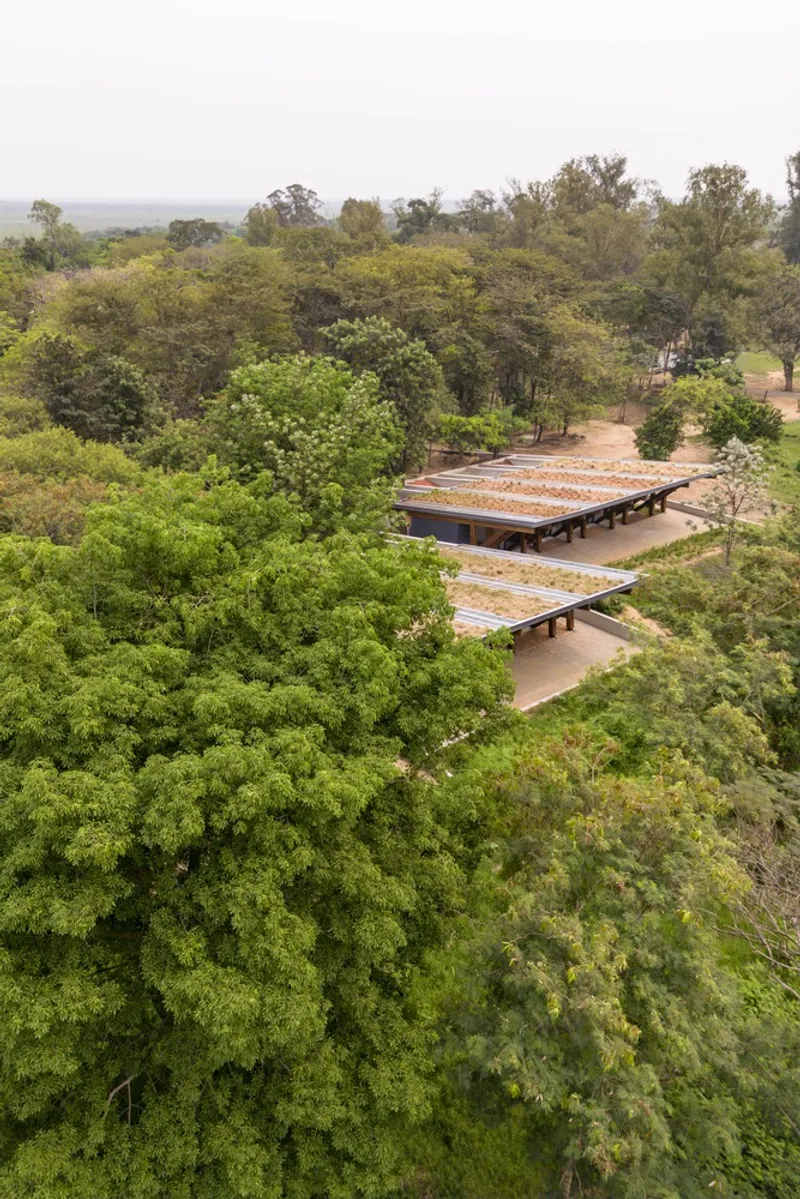
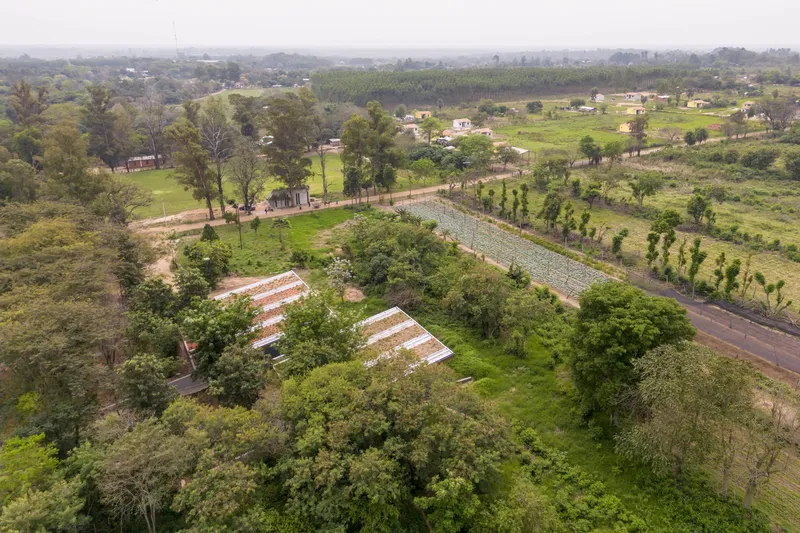
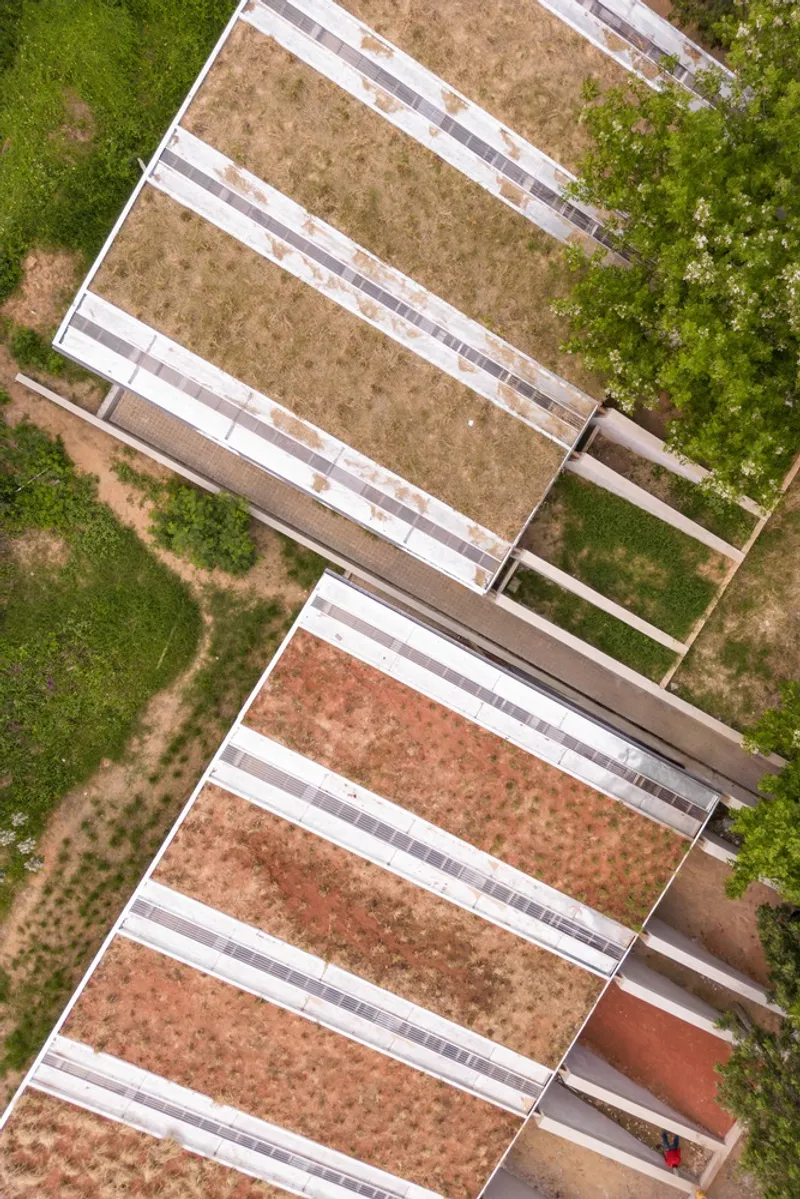
The aerial photographs tell the story most clearly. The two pavilions are oriented at slight angles to each other, their wide overhanging roofs planted with vegetation that blurs the boundary between building and ground. From a drone, the structures read as gentle inflections in the topography rather than foreign objects dropped onto a site. The surrounding rural landscape of fields and forest patches absorbs the project without protest.
Green roofs do real work here. They are not decorative gestures toward sustainability; they insulate the roof assembly, manage stormwater runoff on the sloped terrain, and keep the buildings thermally stable in Paraguay's subtropical climate. Paired with solar panel arrays visible on the roof surfaces, the project pursues energy independence without turning its technology into spectacle.
Ground Conditions
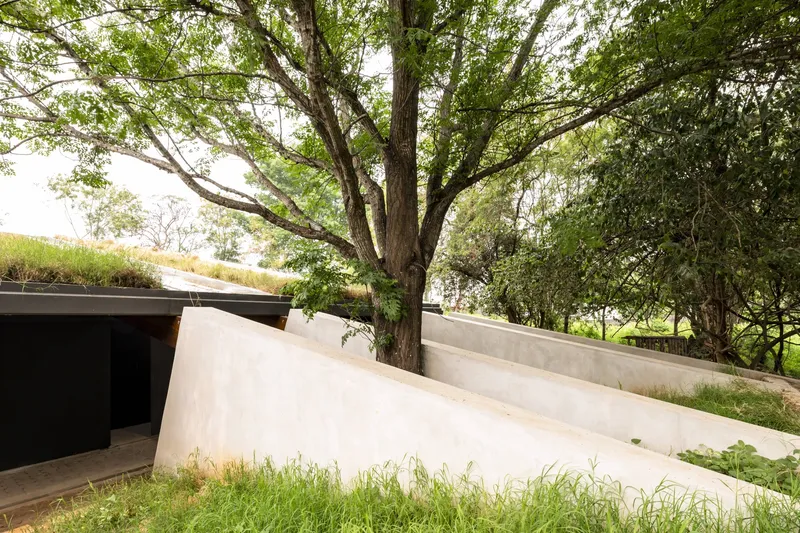
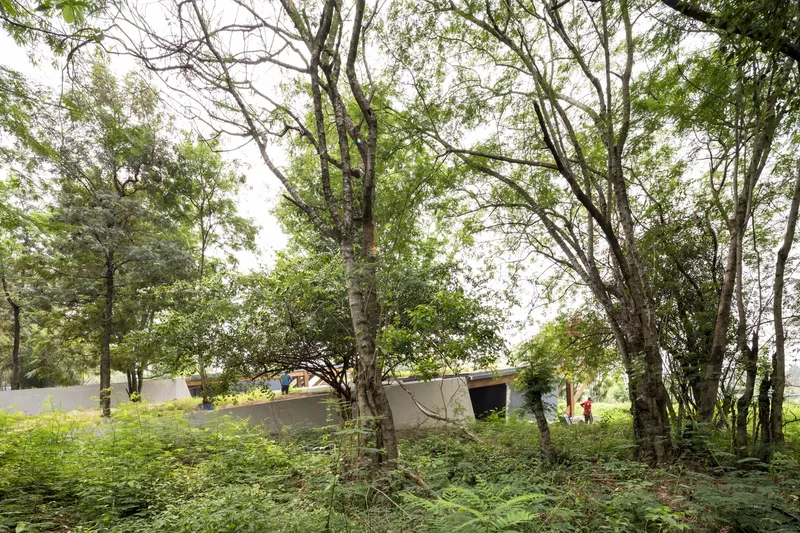
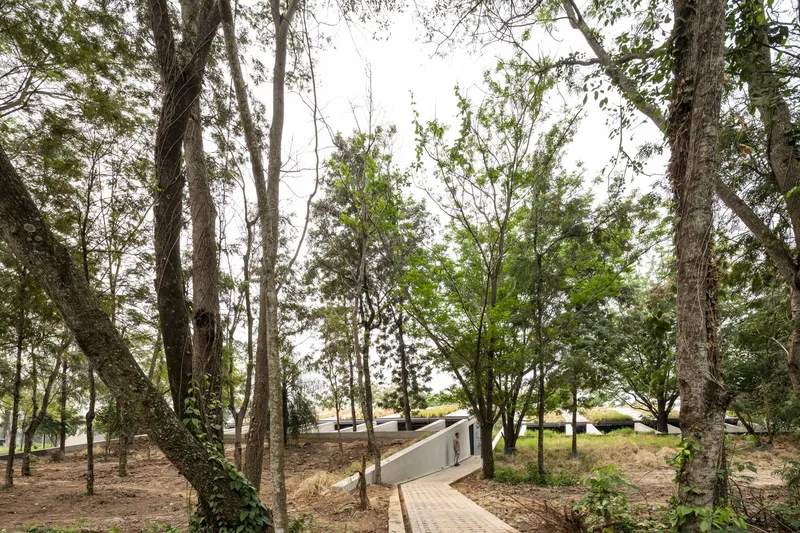
At ground level, the relationship between structure and site becomes more tactile. Concrete retaining walls hold back the sloped earth, allowing the pavilions to nestle into the hillside without extensive excavation. These walls are left raw, their surfaces picking up the texture of formwork and aging alongside the tree trunks and foliage that press in close. The architecture does not compete with the forest; it negotiates with it.
Paved pathways wind through existing trees, routing circulation around root zones rather than through them. The commitment to preserving the existing landscape is evident in the way mature trunks stand within arm's reach of walls and overhangs. It is a constraint that shapes the architecture in productive ways, forcing the plan to bend and the section to step where a more conventional approach would simply flatten.
Timber Frame and Steel Joints
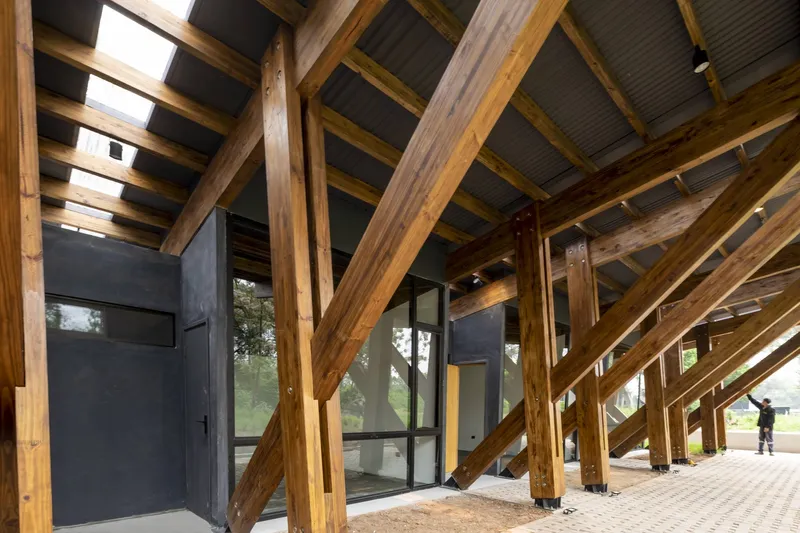
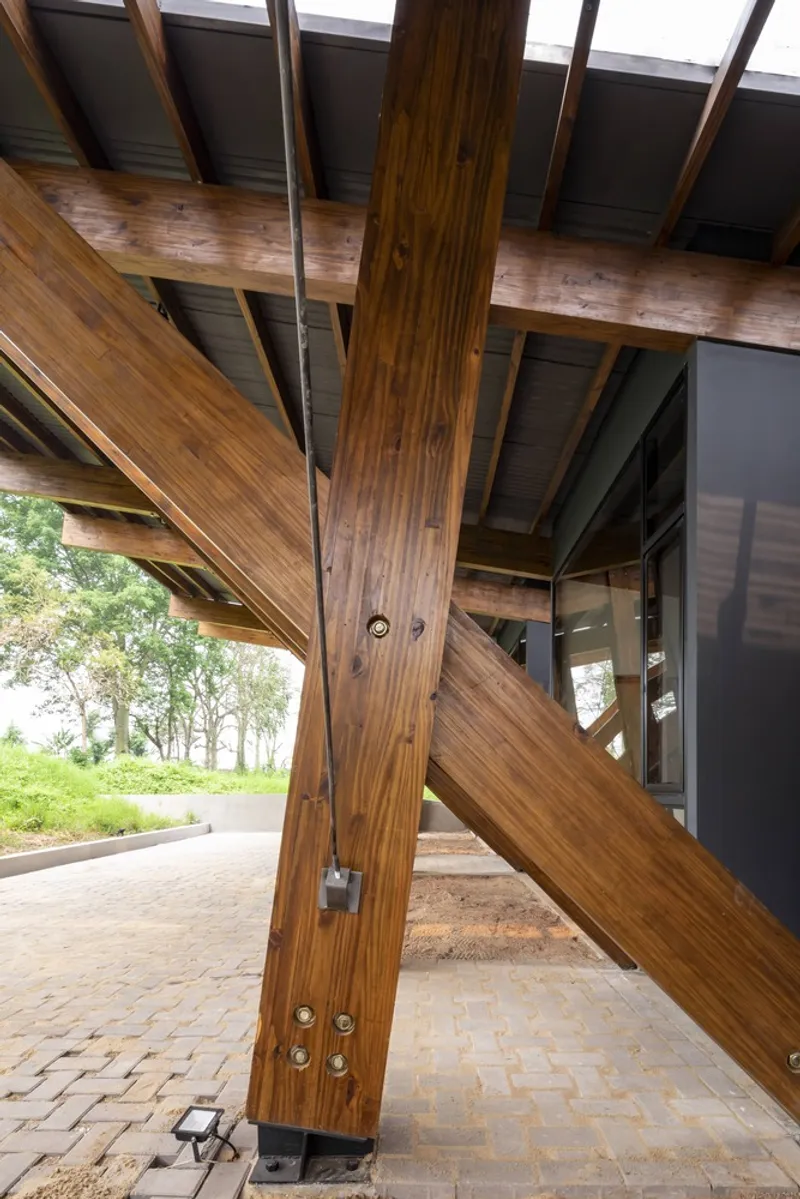
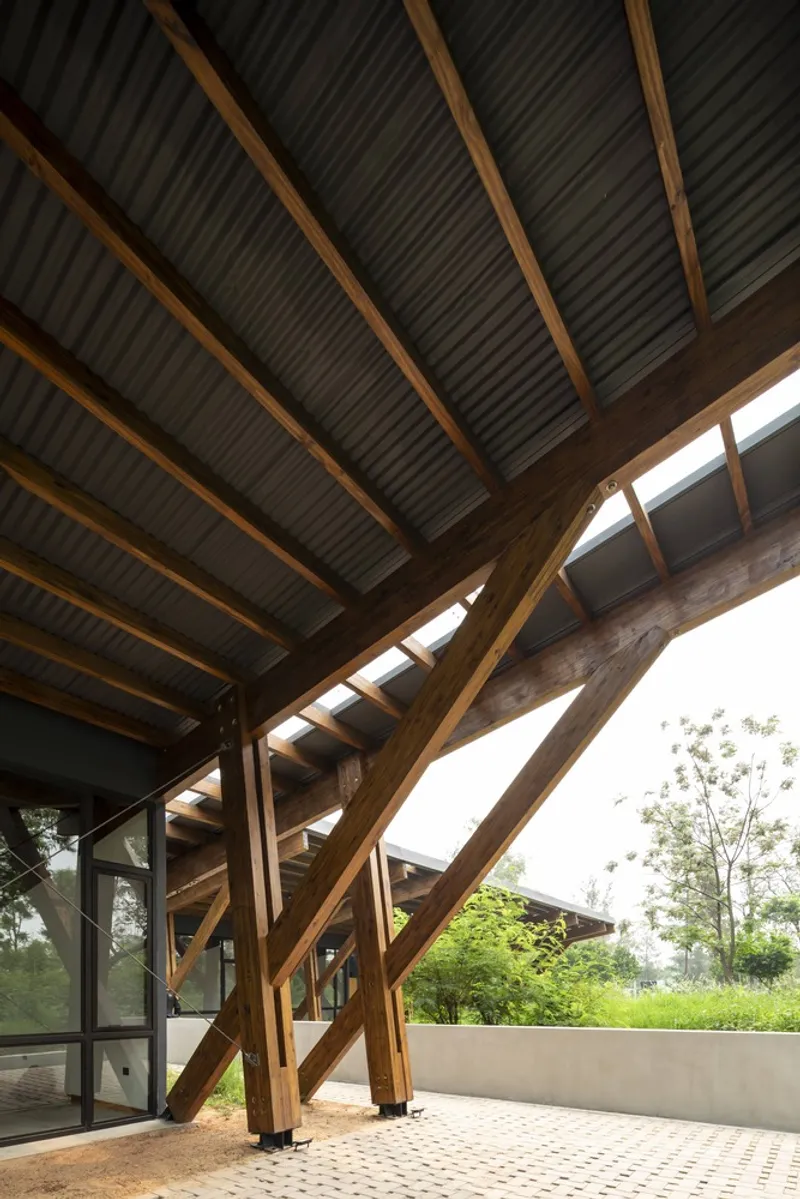
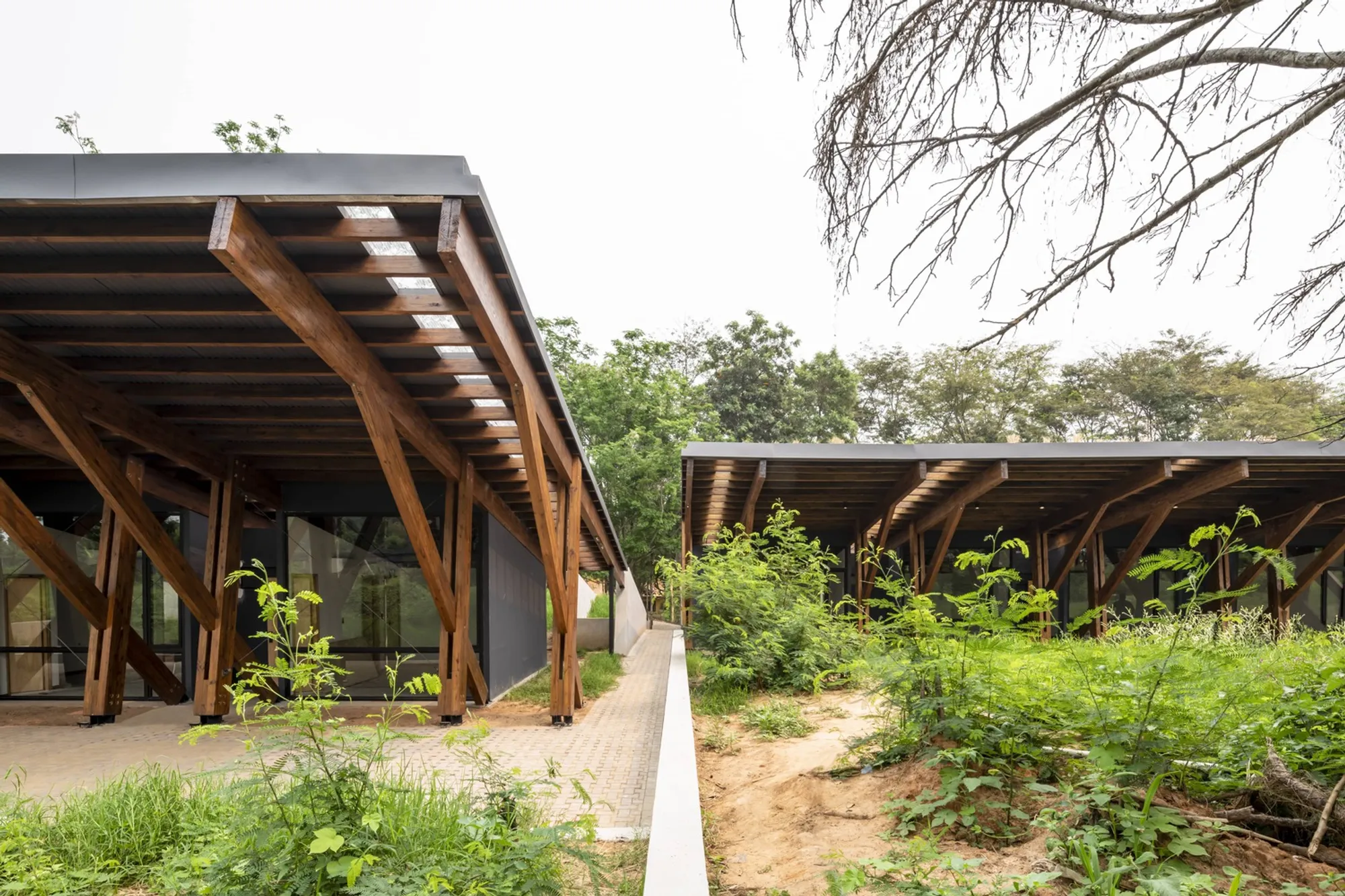
The structural system is legible and honest. Timber columns and diagonal braces carry the sloped roofs, their connections made visible through bolted steel plates and metal gussets. There is no attempt to hide how the building stands up. The joints are precise, almost mechanical, lending an industrial clarity to what is otherwise a very landscape-driven project. The corrugated metal ceiling overhead reflects this same directness: functional, unpretentious, effective.
Covered walkways defined by this exposed frame connect interior rooms to open terraces and the central courtyard. Perforated concrete floors allow water to drain through, reinforcing the idea that the building is porous, a filter between inside and outside rather than a sealed enclosure. The diagonal bracing does double duty as sun shading, fragmenting direct light into patterns that shift throughout the day.
The Courtyard as Organizing Space
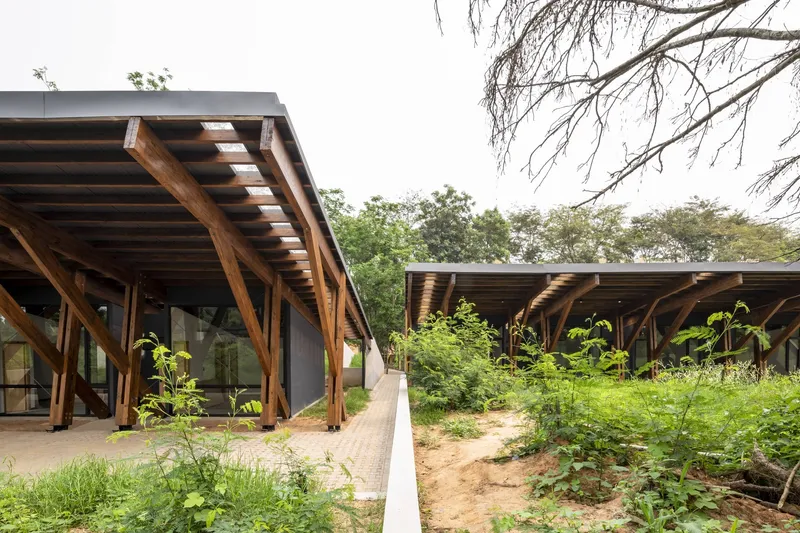
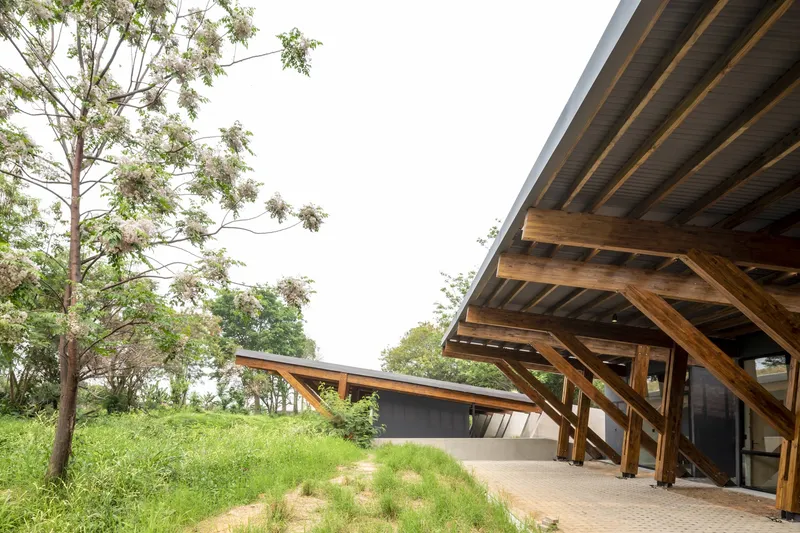
The two pavilions face each other across a planted courtyard, creating an outdoor room that is both the heart of the project and its primary circulation spine. Glazed walls on the courtyard side open the cabin interiors to this shared garden, collapsing the distinction between private and communal space. The plantings are low and grassy, kept deliberately informal to match the surrounding meadow landscape.
Wide overhanging roofs with exposed rafters extend over concrete walkways that border the courtyard, providing covered outdoor areas that are usable in rain and sun alike. In a subtropical climate where the line between comfortable and oppressive shifts quickly, this kind of intermediate space is not a luxury but a necessity. The deep eaves also protect the timber structure from moisture, an important durability consideration in a region with heavy seasonal rainfall.
Inside Looking Out
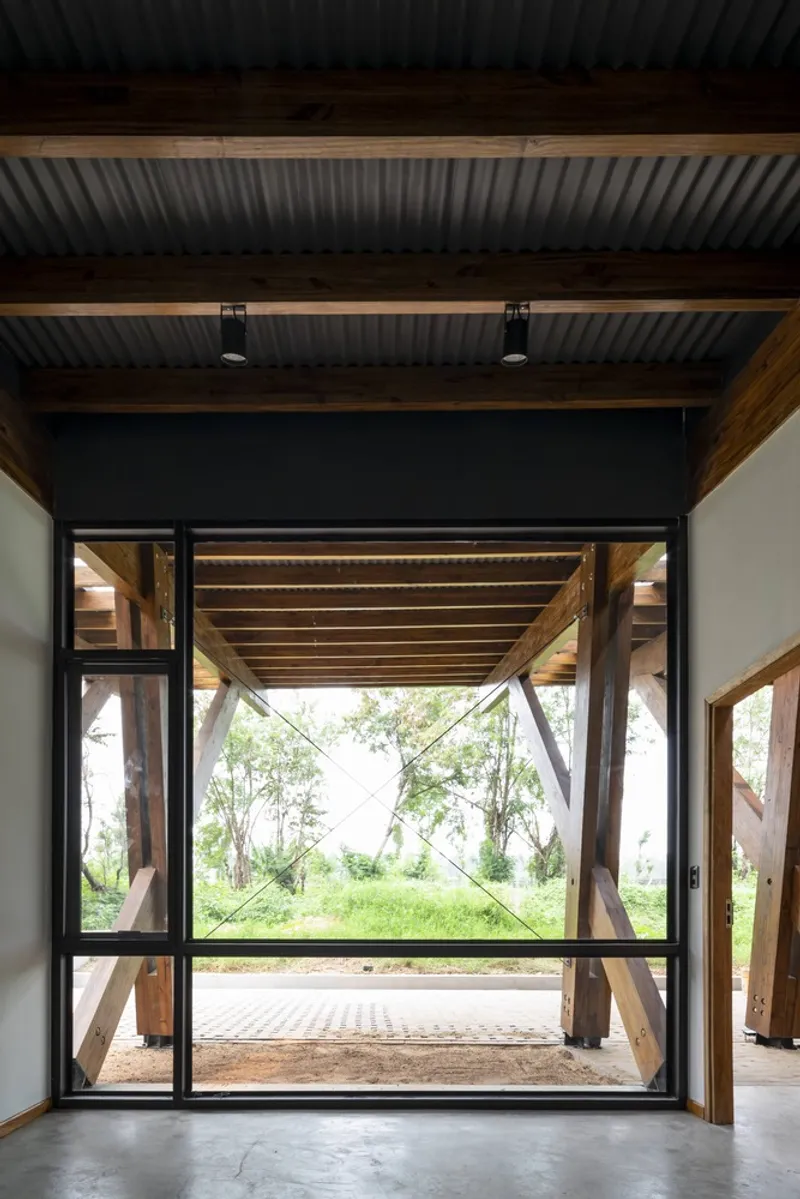
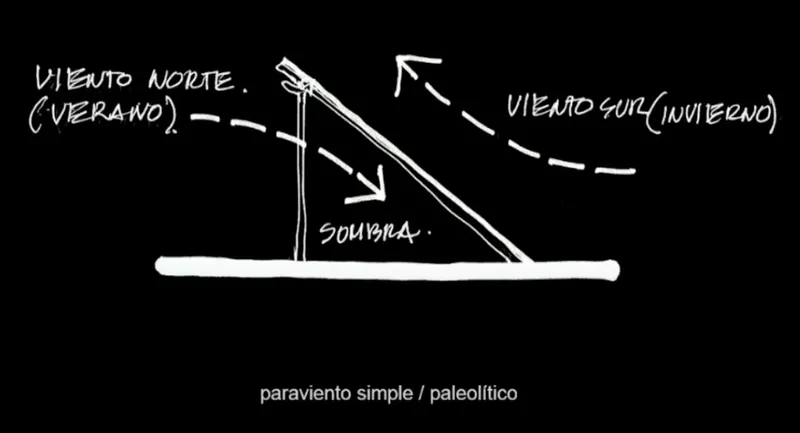
From the interior, the black-framed glass doors frame the covered terrace and green field beyond as a continuous panorama. The architecture recedes in these moments, becoming a thin threshold between conditioned space and open air. Cross-ventilation driven by the roof geometry and building orientation reduces the need for mechanical cooling, a strategy that the design sketches document in careful detail.
The solar panel arrays visible in the aerial views are integrated into the roof plane without disrupting the overall form. They sit alongside the green roof sections in a pragmatic coexistence: energy generation next to thermal mass, technology next to ecology. It is a straightforward approach that avoids the common trap of treating sustainability as either an invisible obligation or a marketing badge.
Plans and Drawings
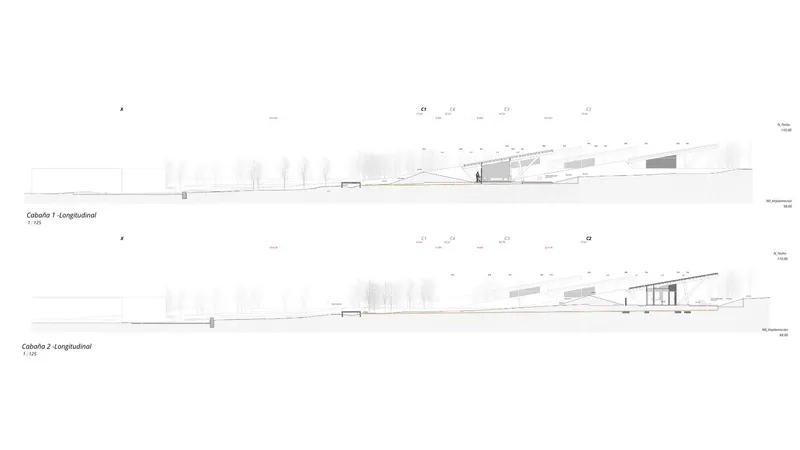

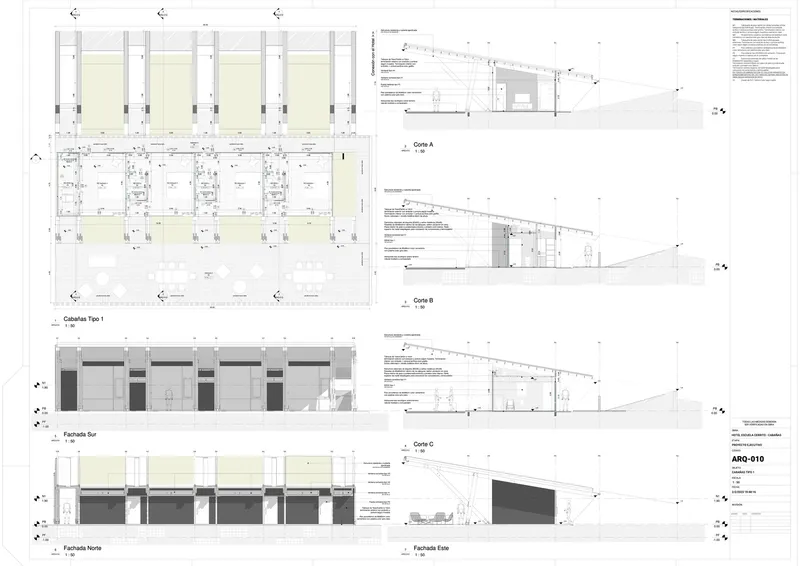
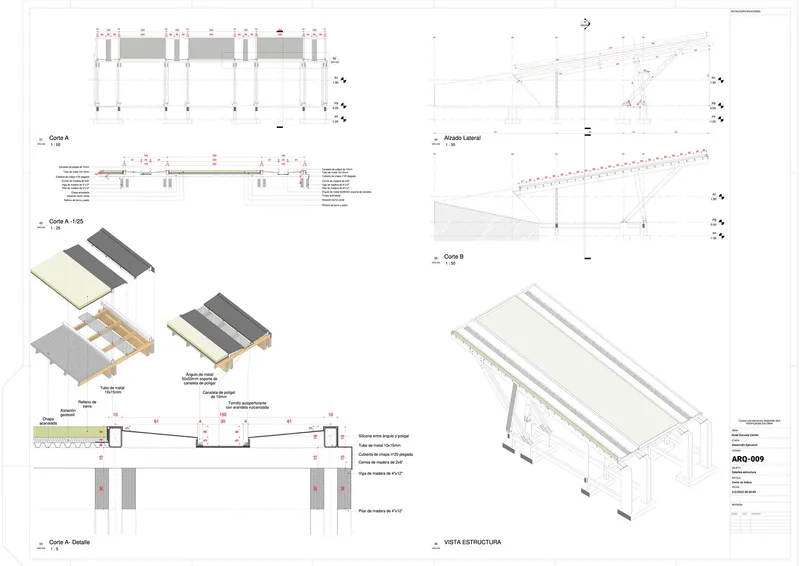
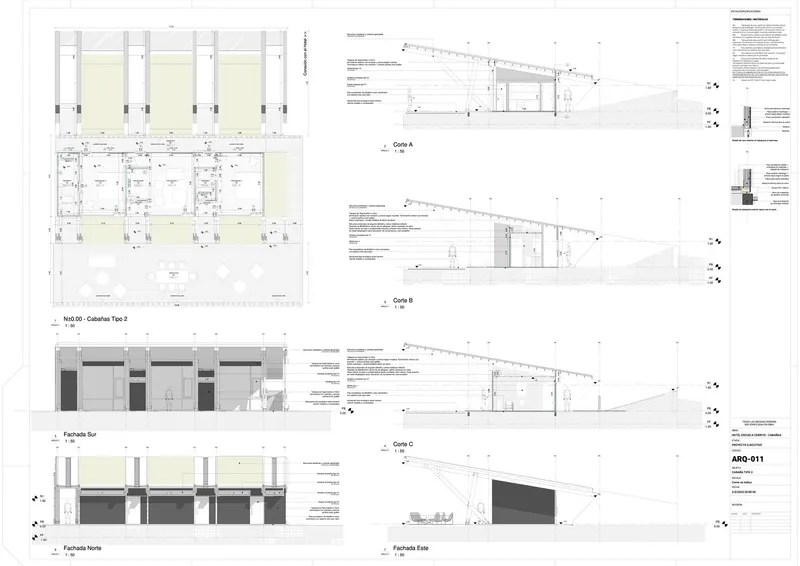
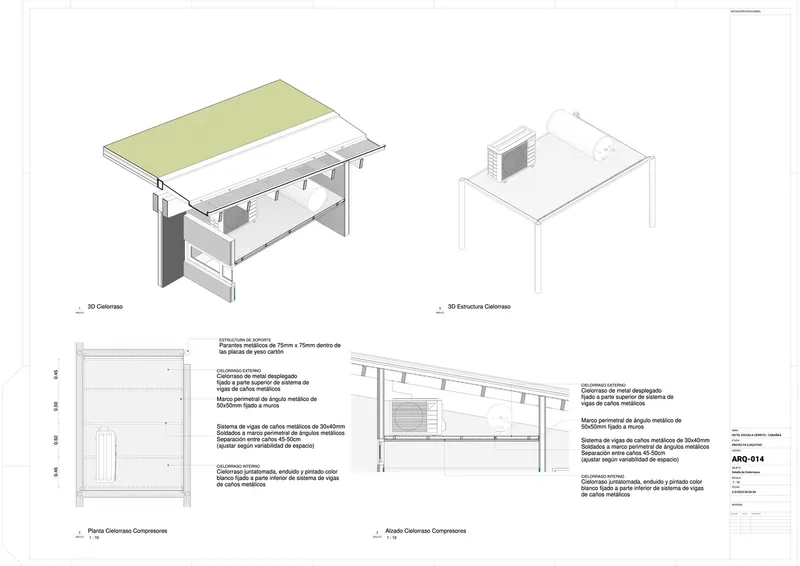
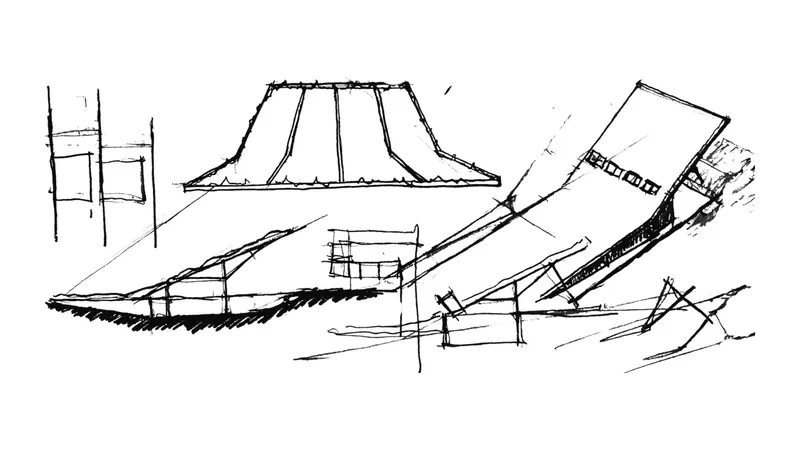
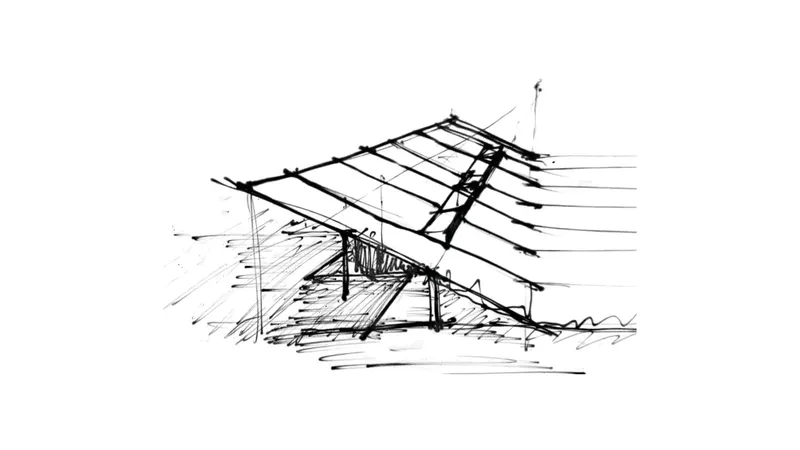
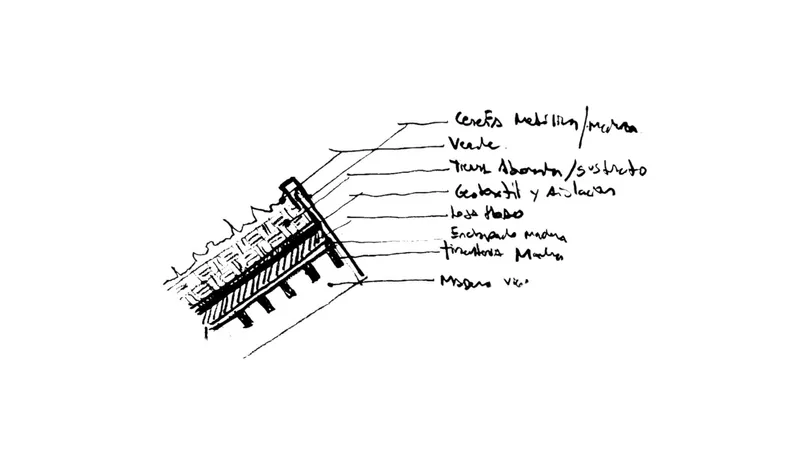
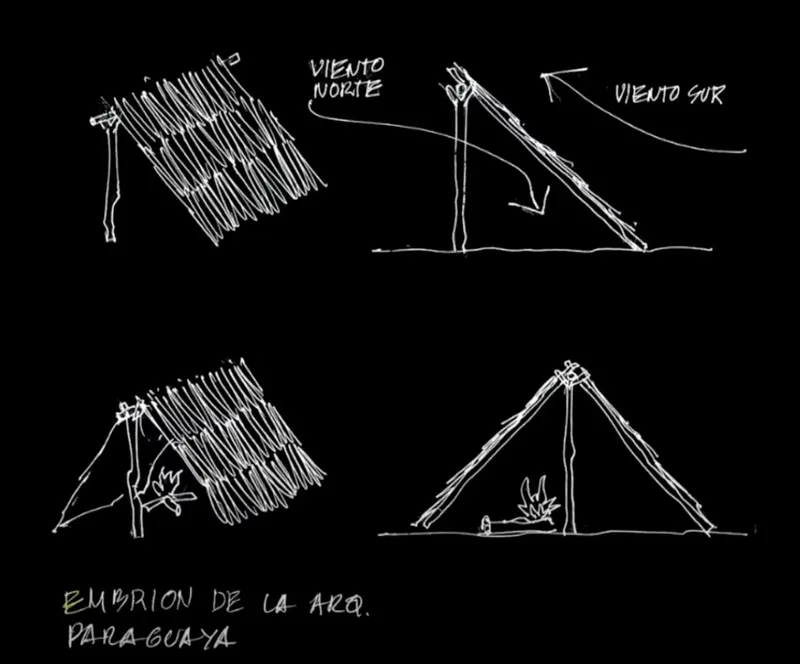

The drawing set reveals the depth of environmental thinking behind the project. Longitudinal sections show how the volumes step with the terrain, minimizing earthwork and maintaining natural drainage patterns. The floor plan confirms the linear arrangement of rooms along the courtyard spine, a simple organization that keeps every space connected to both the garden and the forest edge.
The hand-drawn sketches are particularly revealing. Annotations document solar angles, shadow patterns, and prevailing wind directions, demonstrating that the roof pitch and orientation were calibrated to specific climate data rather than chosen for aesthetic effect. Axonometric views break down the modular roof assembly into its component layers: timber rafters, metal sheeting, insulation, and planted substrate. These are working drawings in the truest sense, records of a design process that treated climate as a primary material.
Why This Project Matters
Yvyrupa Cabins succeeds because it takes a modest program, a small hotel in rural Paraguay, and uses it as an occasion to think seriously about how buildings and landscapes can coexist. The green roofs, passive ventilation, solar panels, and terrain-following sections are not separate sustainability features bolted onto a conventional design. They are the design. Every formal decision grows from an environmental logic, and the result is a building that performs well precisely because it looks the way it does.
In a moment when sustainable architecture is too often reduced to certifications and energy models, this project offers something more grounded: an architecture that responds to wind, sun, slope, and trees with specificity and care. SD+A demonstrates that working with limited means in a rural context does not require compromising on ambition. It just requires paying closer attention.
Yvyrupa Cabins by SD+A, Cerrito, Paraguay. Photography by Leonardo Méndez.
About the Studio
Share Your Own Work on uni.xyz
If projects like this are the kind of work you want to make, uni.xyz is a place to publish your own, find collaborators, and enter design competitions.



Popular Articles
Popular articles from the community


EW PARK: Sustainable Architecture Reimagines the Future of Urban Parking
EW PARK reimagines city parking as a modular wooden tower combining automation, solar energy, electric mobility, and adaptable urban design.

Conexión: Biophilic Design Reimagines High-Rise Living in Hong Kong
Conexión reimagines high-rise living in Hong Kong through biophilic design, green facades, shared spaces, daylight, water and nature within.

AL-JANNAH: Sustainable Architecture and Permaculture for Afghan Widows
AL-JANNAH uses sustainable architecture and permaculture to create resilient oasis of housing, learning, work and renewal for Afghan widows.

Riyadh For All: Intergenerational Urban Design for Active Aging in Rabat
Riyadh For All reimagines urban design in Rabat with intergenerational co-living, adaptive courtyards, and Moroccan cultural exchange today.


Similar Reads
You might also enjoy these articles


Hodi-Mandai Geram
Project Function: Preservation and revitalization of the Intangible heritage and socio-spatial identity of the Hodi by Housing, Cultural Memory Center, Sacred Grove, landscape, local tourism economy


Olio Towers: A Mid-Rise for Performers That Fuses Housing, Rehearsal, and Stage
Located blocks from Houston's Theater District, this modular tower stacks living units around a central performance atrium.

Oasis: Modular Green Housing Carved into Dhaka's Urban Fabric
A shortlisted Plugin Housing entry reclaims unauthorized settlements in Dhaka with stepped concrete volumes, green roofs, and ventilation-driven design.

Black Hole: A Floating Megastructure for the Post-Physical Era
Emiliano Mazzarotto envisions a spherical, self-scaling arena where e-sports, digital hotels, and holographic stadiums replace traditional public space.


Explore Architecture Competitions
Discover active competitions in this discipline



Challenge to reimagine the Iron Throne


Photograph architecture without architects


Illustrate the lost glory of Angkor Wat - Render Challenge


Design challenge to reuse E-waste
Comments (0)
Please login or sign up to add comments
No comments yet. Be the first to comment!