

Steffen Welsch Architects Designs a Melbourne Home Around Its Own Thermal Ecosystem
In Coburg, a 165-square-meter weatherboard extension uses ponds, voids, and timber frames as passive climate devices.


Most sustainable houses announce themselves through technology: photovoltaic arrays, triple glazing, smart thermostats. The Life Cycle House in Coburg, Melbourne, by Steffen Welsch Architects, takes a different path. It treats the house itself as the system. A fishpond draws cool air across the lounge in summer. A netted void above the dining table acts as a thermal chimney. A winter garden doubles as an insulating buffer zone. Every spatial decision here is also a climate decision, and the result is a 79% reduction in global warming potential against the Australian residential benchmark.
What makes the project genuinely interesting, though, is how little it looks like a sustainability demonstration. The addition to an existing weatherboard cottage reads as a modest timber pavilion that dissolves into its garden through an articulated frame of horizontal slats. The 165-square-meter footprint is compact. The materials are warm and tactile. The rooms feel generous because light and air move through them with real intelligence, not because they are oversized. Steffen Welsch has built something that argues convincingly for passive design as a spatial strategy rather than a technical overlay.
A Timber Frame That Does Three Things at Once
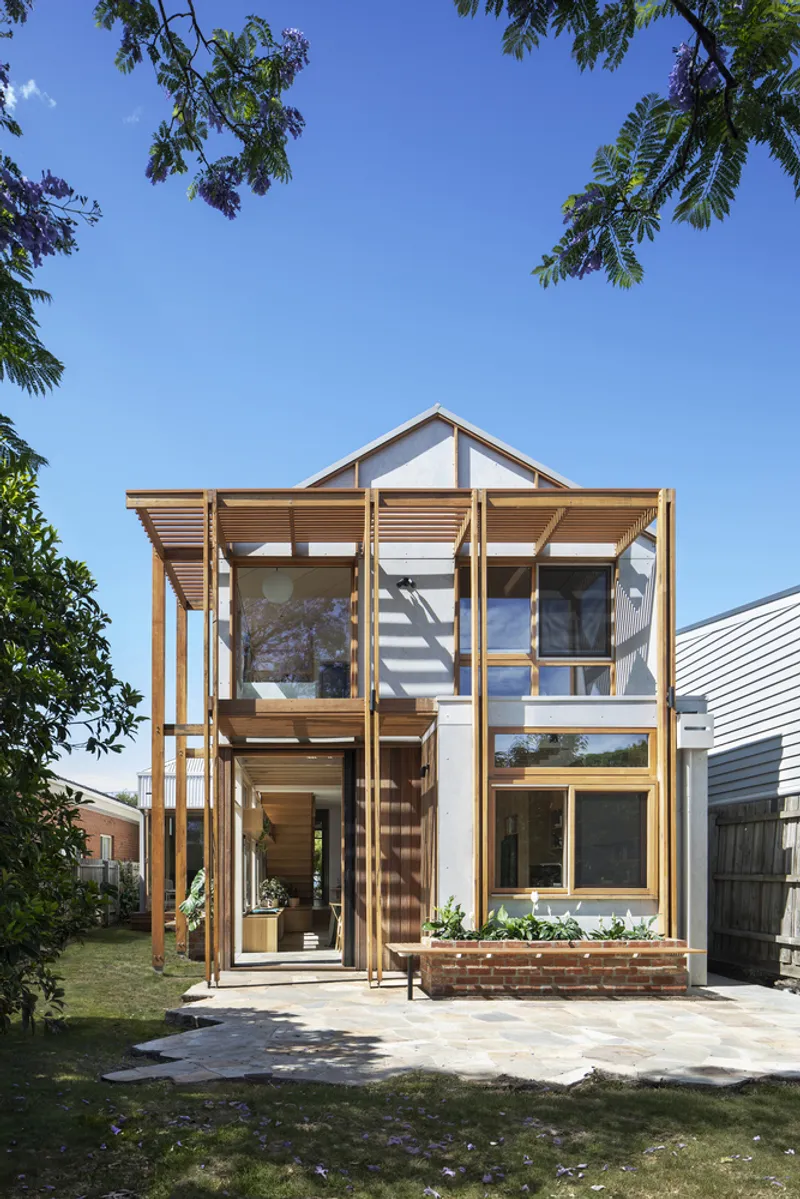
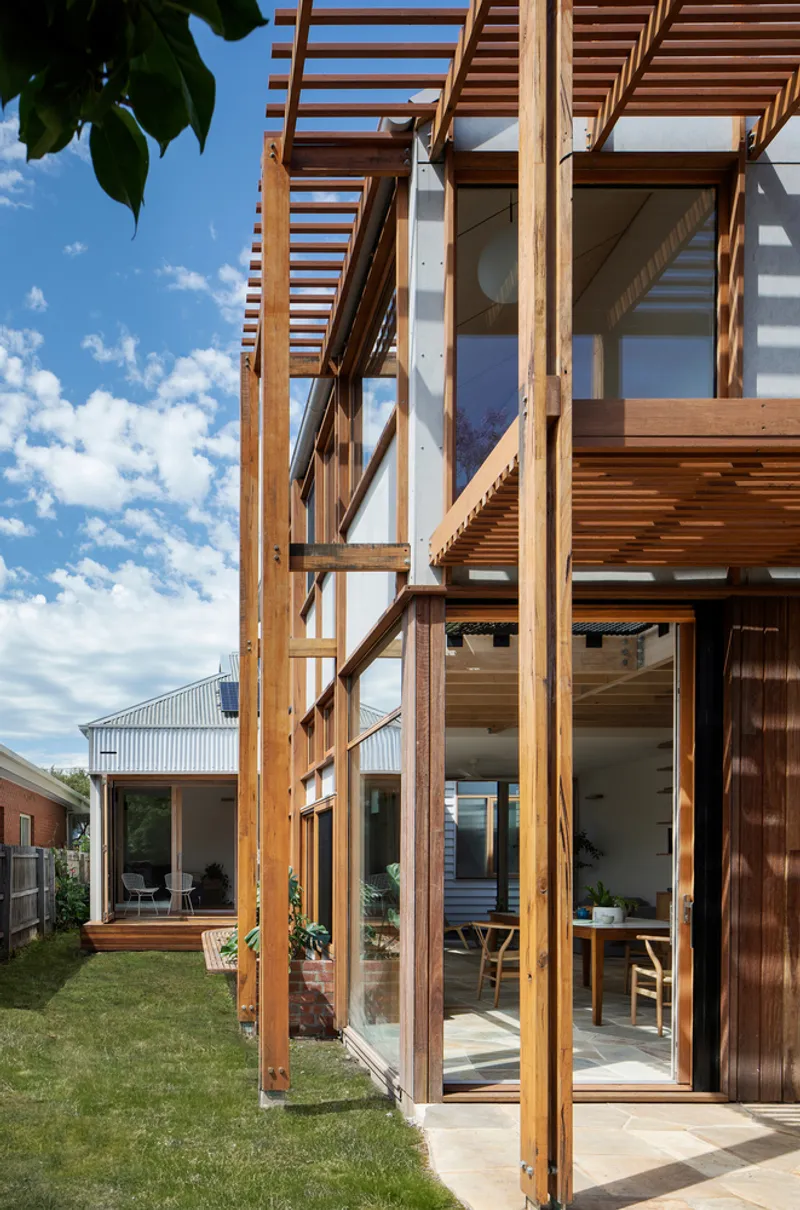
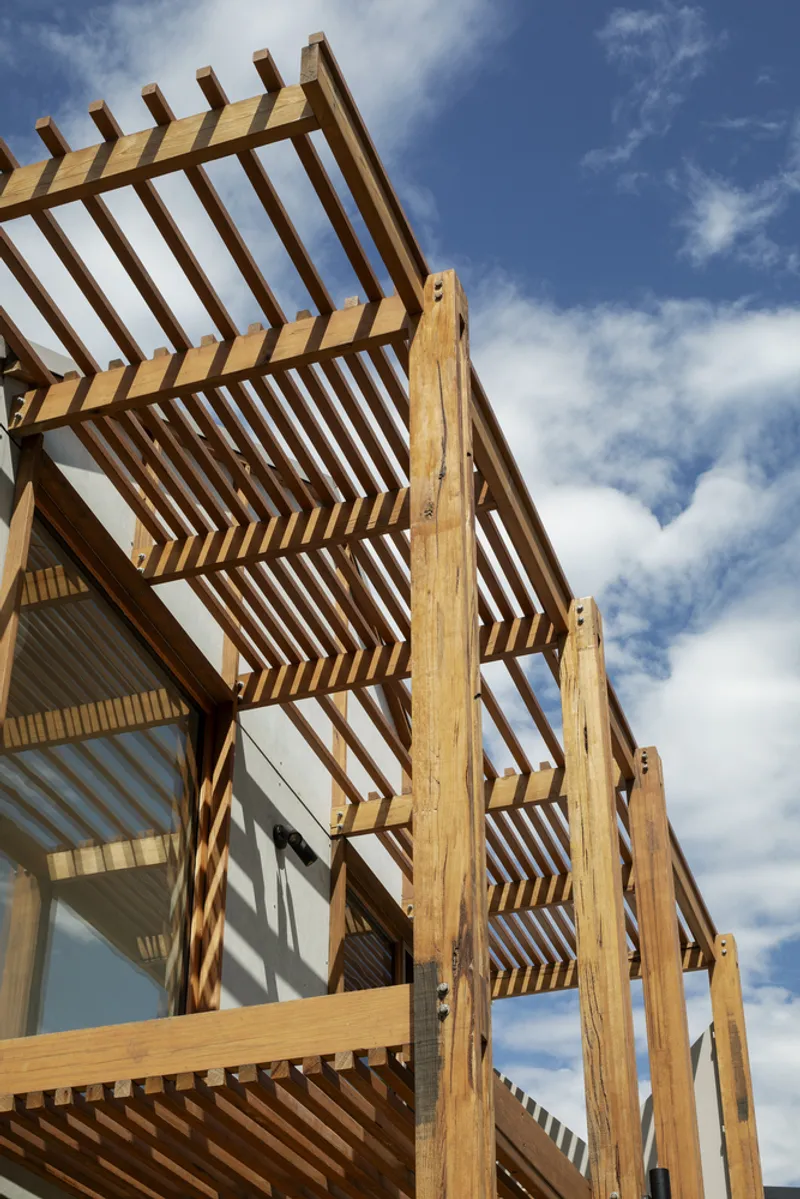
The exposed timber frame wrapping the rear addition is the project's signature element, and it earns that status by doing real work. The horizontal slats filter harsh northern light to reduce glare on the interior glazing. They cast deep, shifting shadow patterns across the courtyard paving throughout the day, making the outdoor space usable even in the heat of a Melbourne summer. And they create a legible architectural transition between the enclosed rooms and the garden, a gradient from solid to open rather than a hard edge.
Viewed from below, the layered screens read almost like a canopy, turning the sky into a composition of timber ribs and cloud. The workmanship is precise without being precious, and the structure avoids the common trap of decorative timber screens that look good in photos but do nothing for the building's performance.
Old House, New House, and the Space Between
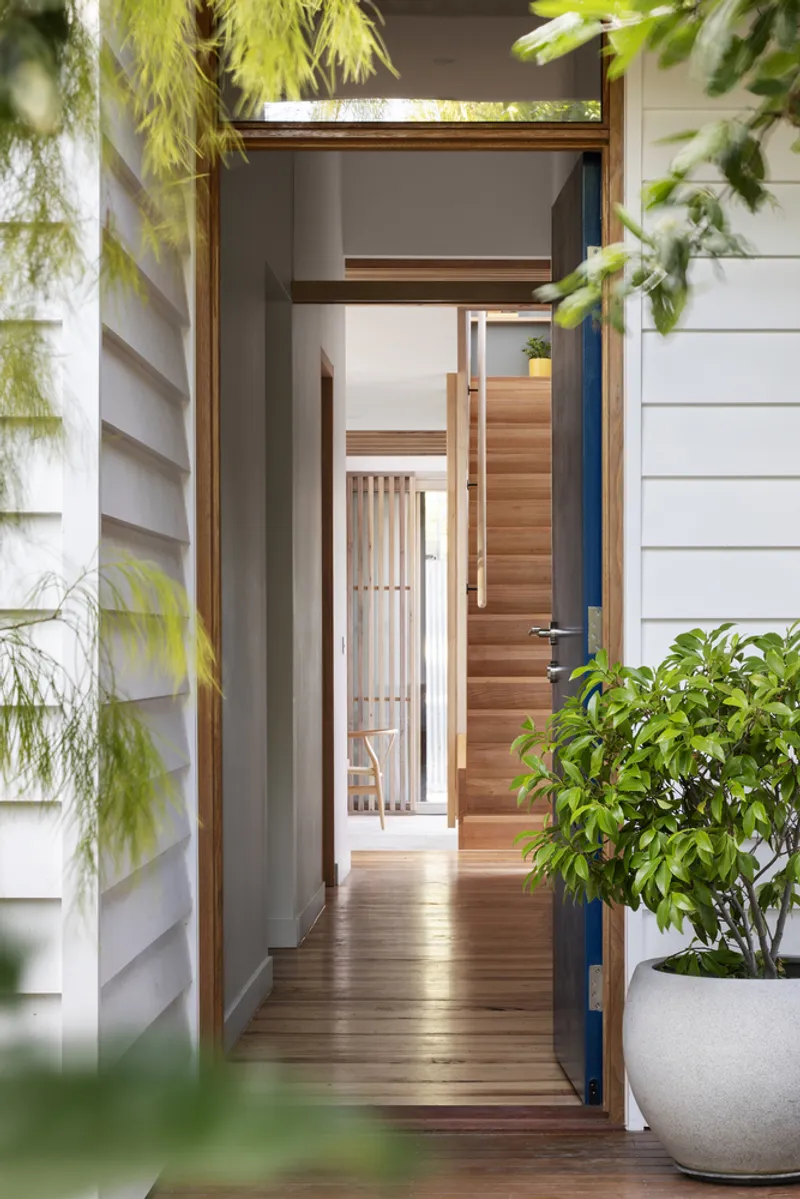


The original weatherboard cottage has been kept and repurposed to hold a home office, the parents' quarters, and associated facilities. The new rear volume contains communal living spaces on the ground floor and children's rooms above. Between the two sits the cleverest piece of the plan: a transition zone comprising a spillover lounge, a winter garden, and a small lobby that overlooks the fishpond. This interstitial space isn't leftover; it is the hinge that makes the whole arrangement work.
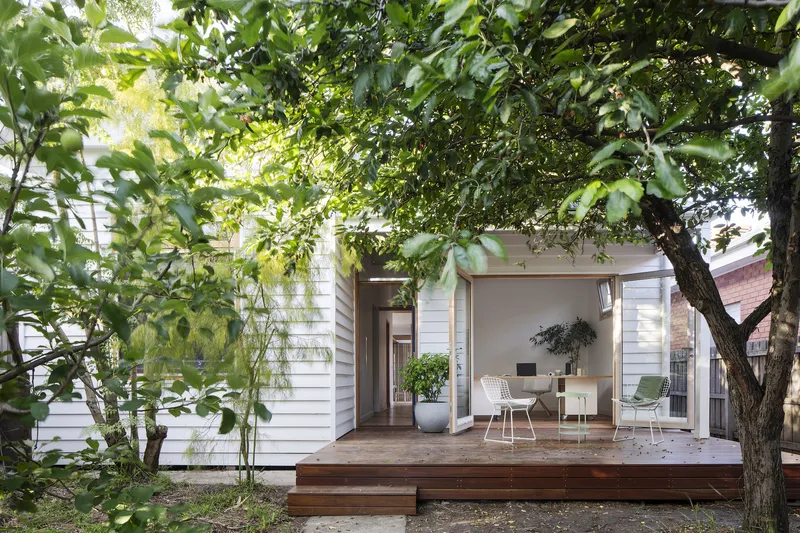
The white weatherboard cladding of the existing house frames views back toward the new addition, and the entry sequence through dappled foliage into the original front door preserves the suburban character of the street. Steffen Welsch has been careful to let the old house remain visibly itself, not subsumed by the new work but given a new role in a larger domestic ecosystem.
Passive Climate as Spatial Experience

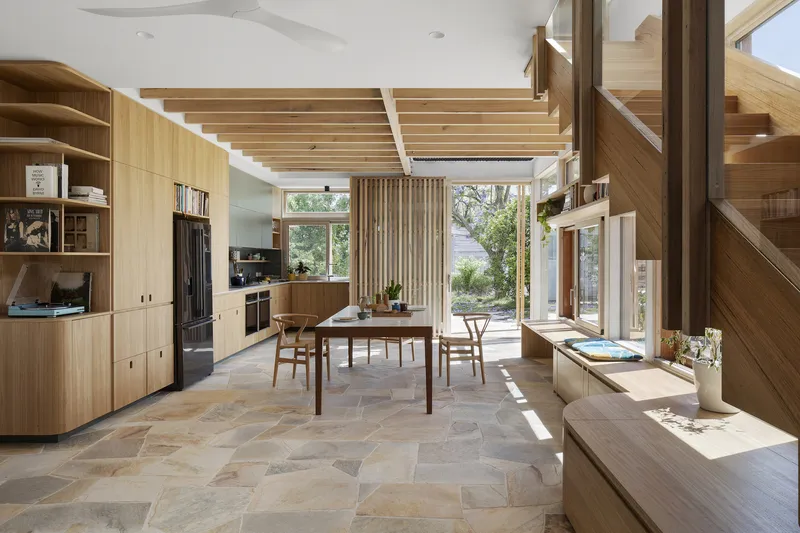
The netted void above the dining space is perhaps the most inventive detail in the house. Functionally, it serves as a thermal chimney: warm air rises through the mesh in winter to preheat the upper floor, while in summer it draws hot air up and out. Experientially, it transforms the dining room into a double-height volume where light filters down through the woven screen and the exposed timber joists above. The Santos Quartz crazy paving stone floor below stores thermal mass, moderating temperature swings throughout the day.
Internal windows between rooms enhance cross-ventilation while borrowing light deep into the plan. The fishpond to the southwest of the lounge isn't ornamental; its evaporative cooling draws breezes into the living spaces on hot afternoons. These are old strategies, pre-mechanical, but they are deployed here with a precision that justifies the project's NatHERS rating of 6.3 stars and its 7.6kW solar PV system.
Living Rooms That Grow With the Family
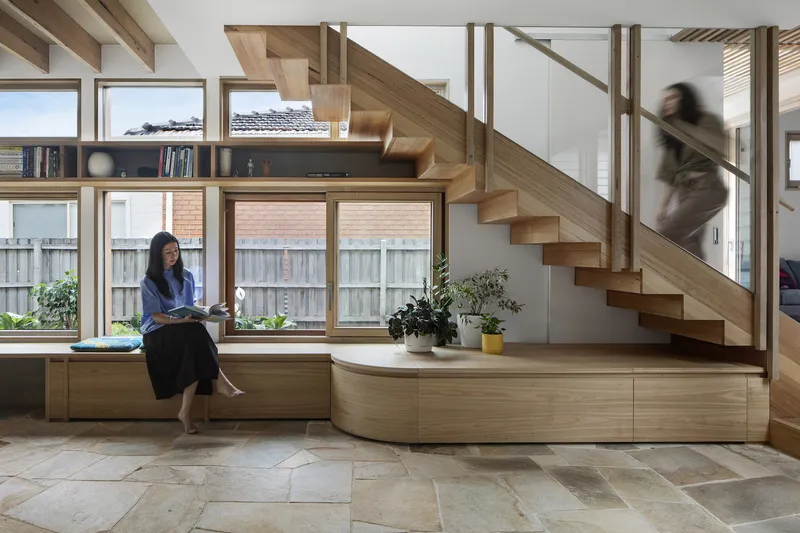
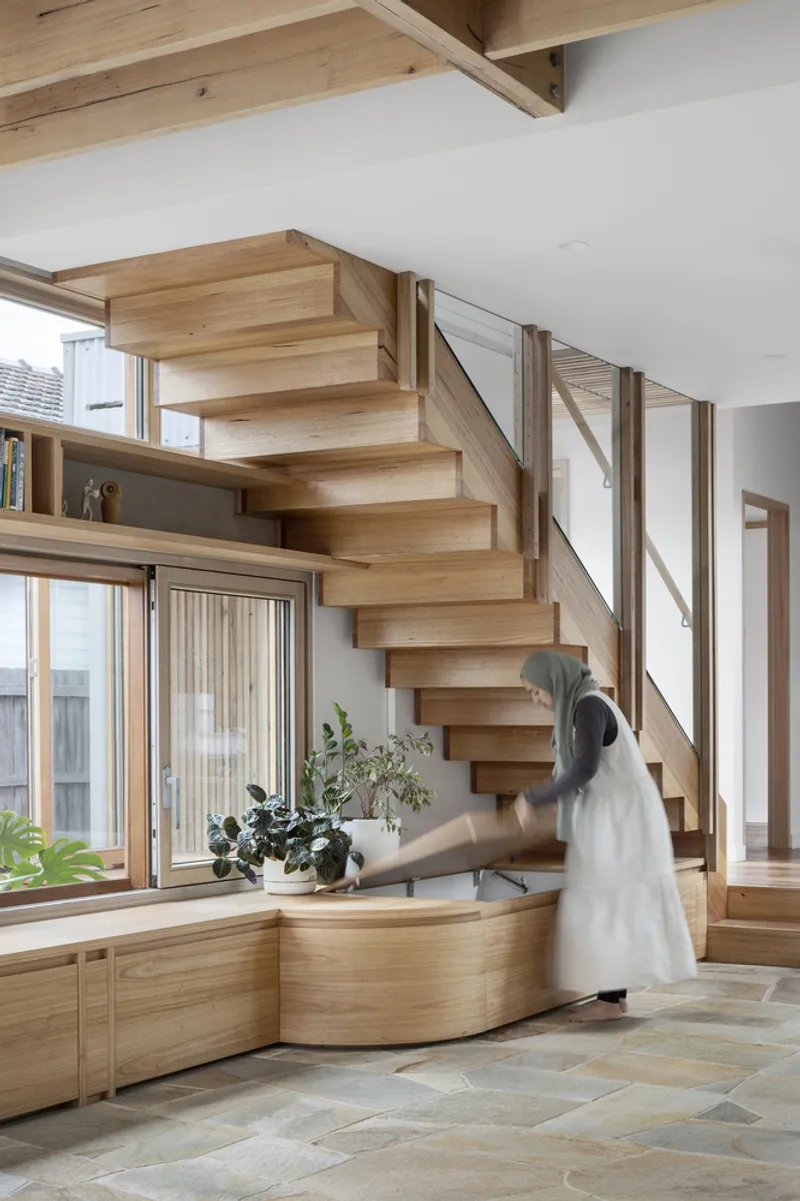
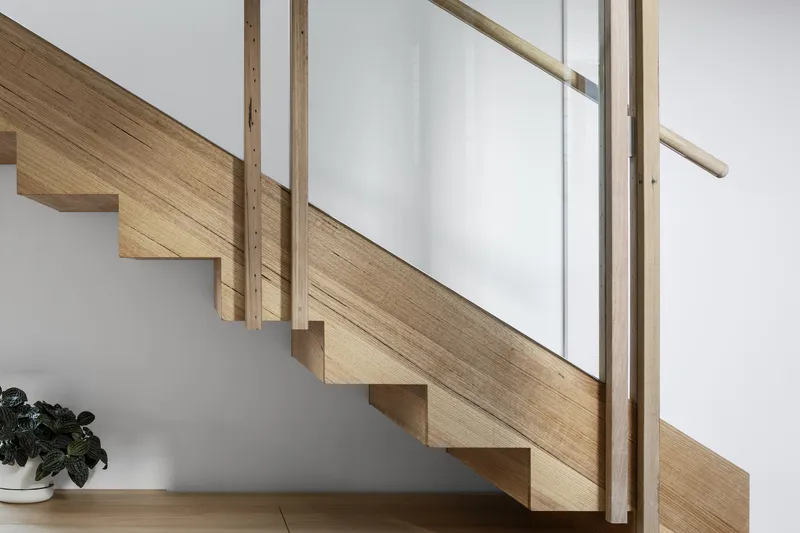
The staircase connecting the two levels is more than circulation. Its built-in bench along the window wall creates a reading nook that overlooks the courtyard, and the floating timber treads with their visible grain give the whole element a furniture-like quality. The design acknowledges that a staircase in a small house is too much real estate to waste on movement alone.
The parent and children's zones were conceived to be interchangeable as privacy needs evolve. A family with young children might keep all sleeping quarters close together; as those children grow into teenagers, the separation between the original cottage and the rear pavilion becomes a zoning strategy for independence. Steffen Welsch calls this a "building as background" ethos, where the architecture recedes to let the life inside it change.
Material Choices That Accumulate Quietly
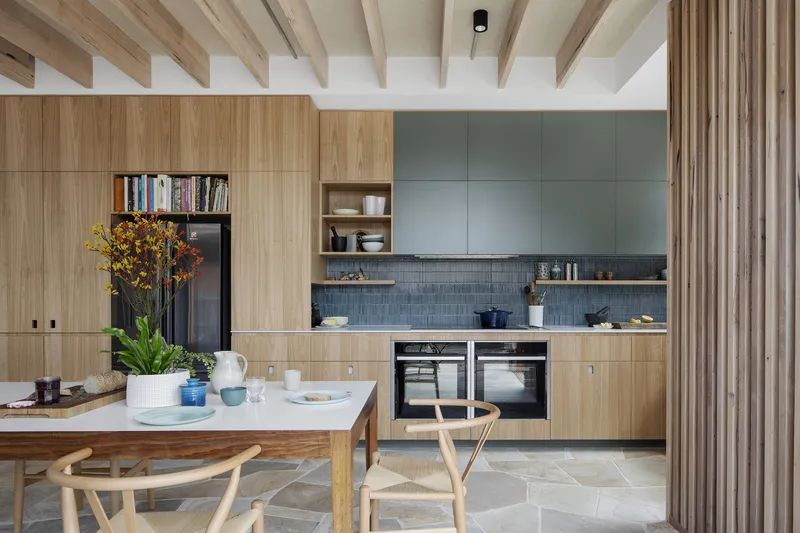
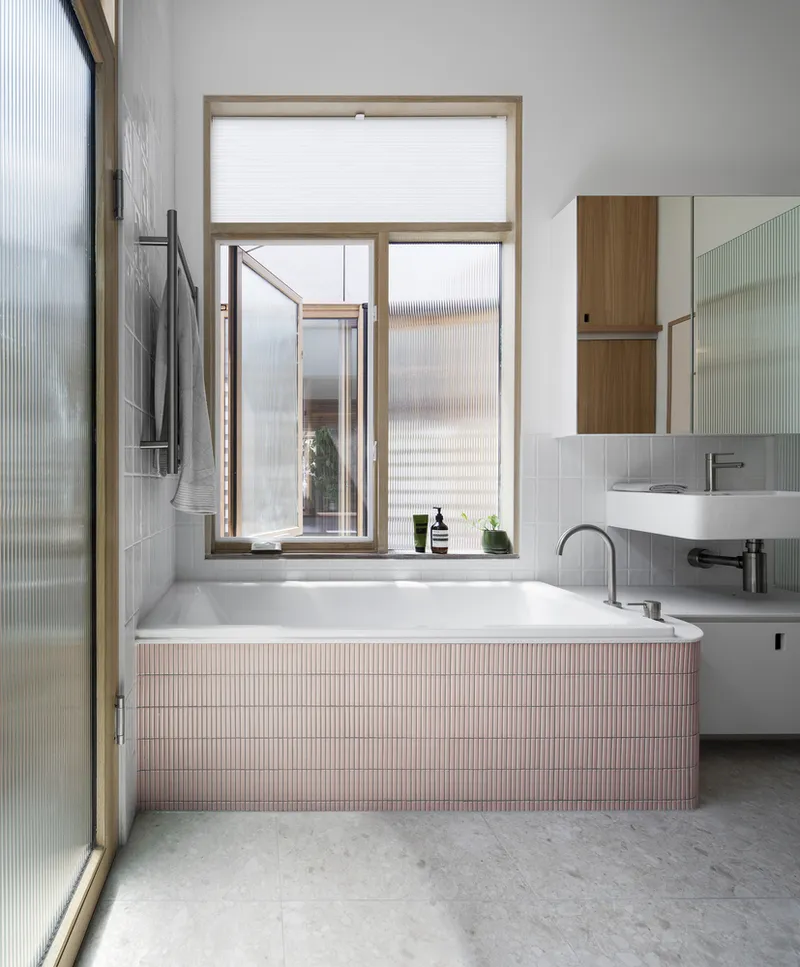

The kitchen pairs timber cabinetry with a blue tiled splashback and exposed ceiling joists, a combination that feels considered rather than styled. The recycled messmate timber flooring upstairs connects the new work to local material traditions without making a spectacle of it. In the bathroom, pink mosaic tiles on the tub surround and vanity backsplash introduce color that is genuinely playful, a welcome departure from the all-white minimalism that dominates Melbourne residential work.
Sliding timber panels conceal and reveal the vanity niche, adding a layer of spatial flexibility to a compact room. The joinery throughout, executed by Mood Workshop, treats every cabinet face and door pull as an opportunity to reinforce the timber language of the house without becoming repetitive.
Upstairs: Treetop Rooms and Borrowed Views

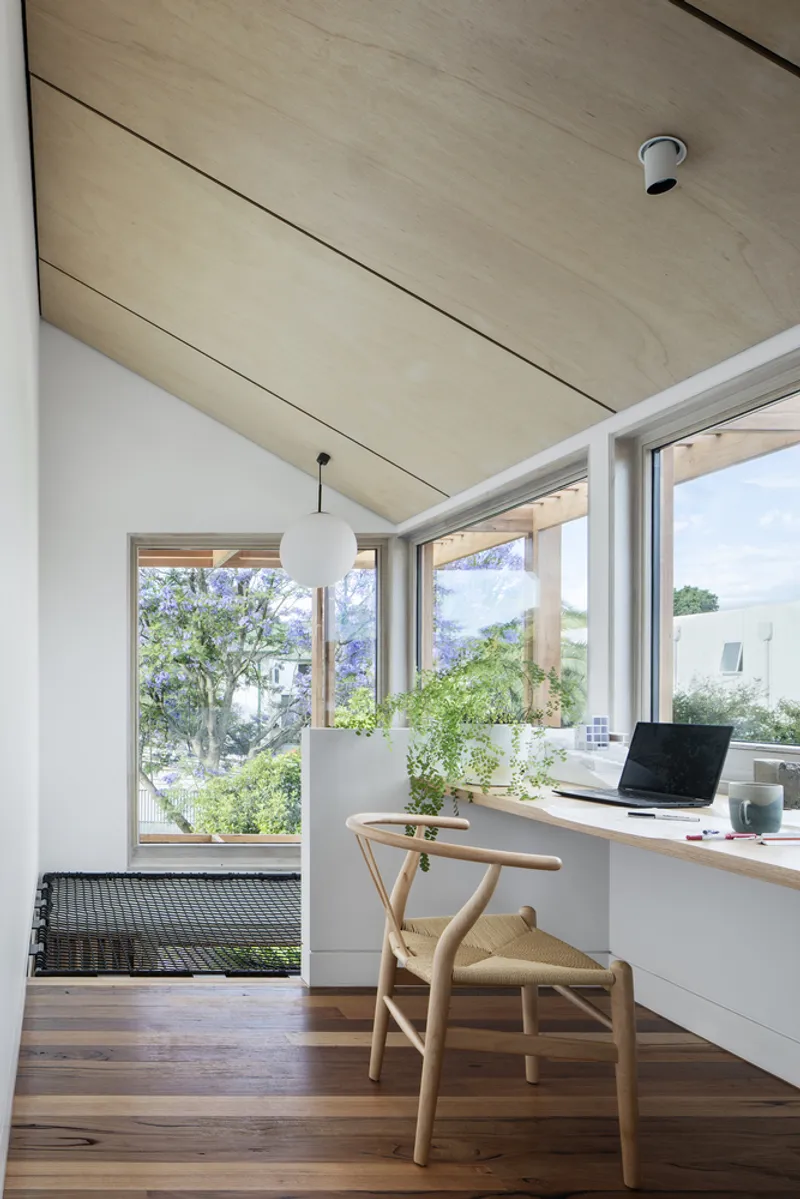
The upper-floor rooms are shaped by their relationship to the canopy. A bedroom with a vaulted plywood ceiling opens through timber casement windows directly onto green treetops, framing the neighborhood foliage as a living wall. The home office tucks into a corner with windows on two sides, catching garden light from different angles throughout the day. These rooms feel elevated in every sense, lifted above the domestic machinery of the ground floor into a quieter register.
The curated views of neighboring trees and buildings from the upper level are deliberate. Rather than turning inward for privacy, the design treats the suburban context as an asset, borrowing the greenery of adjacent lots to extend the perception of space far beyond the compact 165-square-meter footprint.
Plans and Drawings
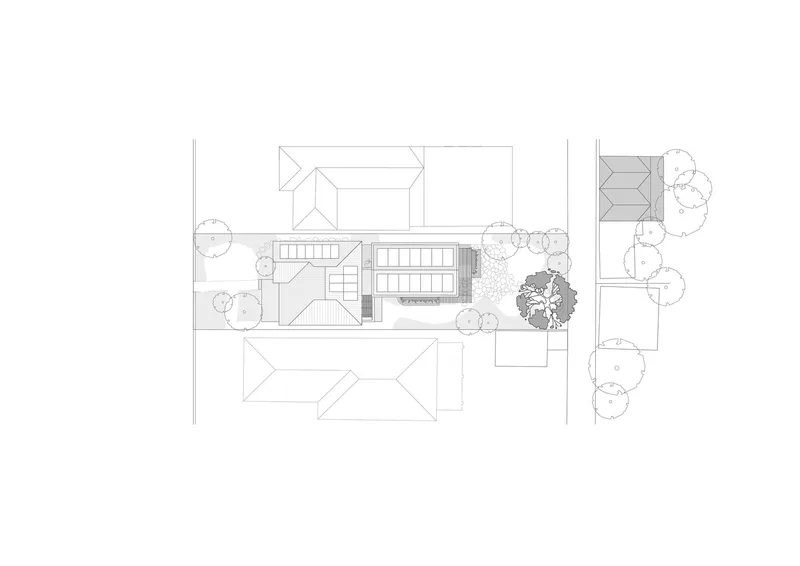
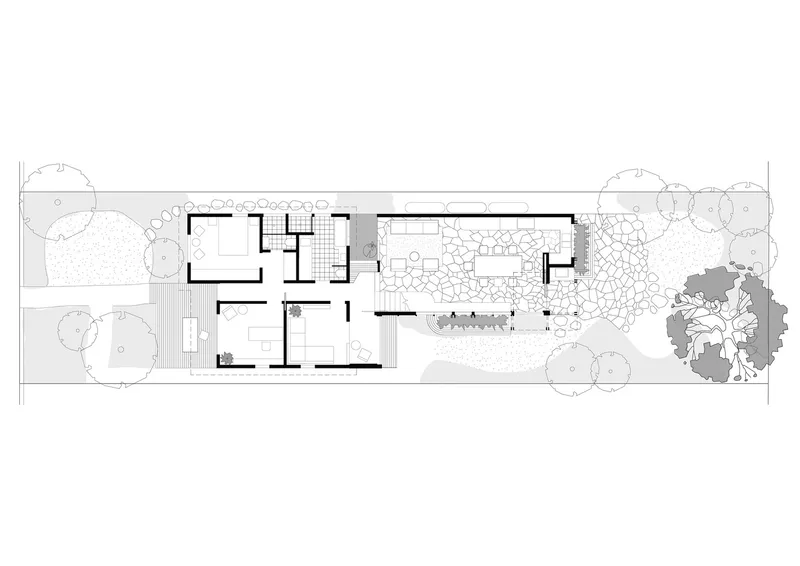
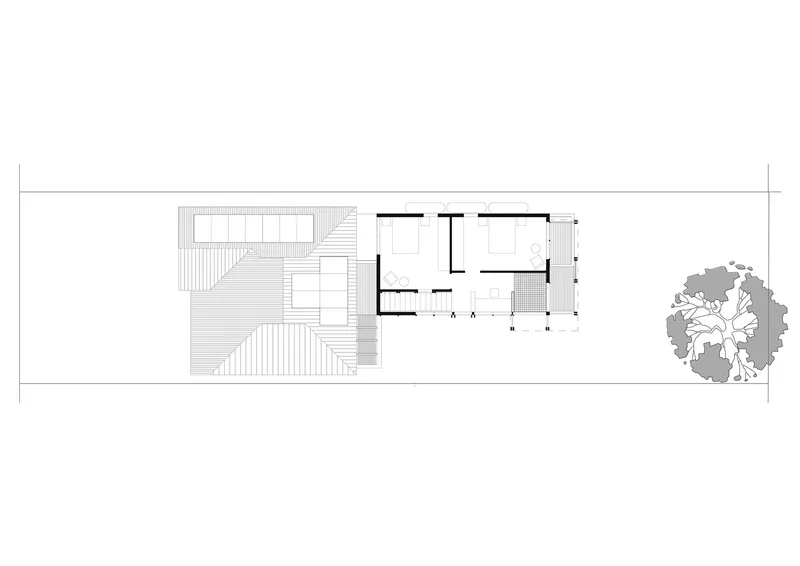

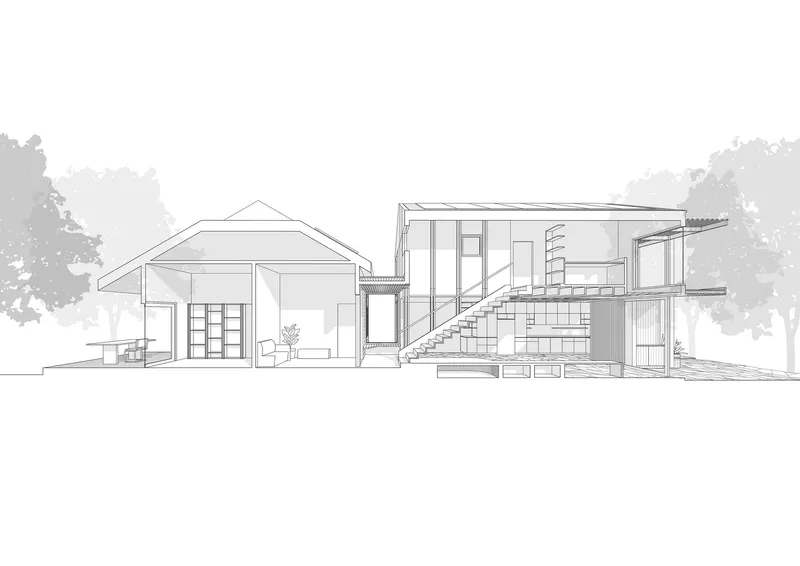

The site plan reveals the careful calibration of building to garden: the new volume is pushed to one side of the lot, preserving a generous outdoor zone with mature trees. The ground and upper floor plans show how the old and new portions are stitched together through the winter garden and lobby, with the fishpond sitting precisely where it can service the passive cooling strategy. The sections confirm the thermal chimney logic, with the netted void rising through the full height of the rear volume.
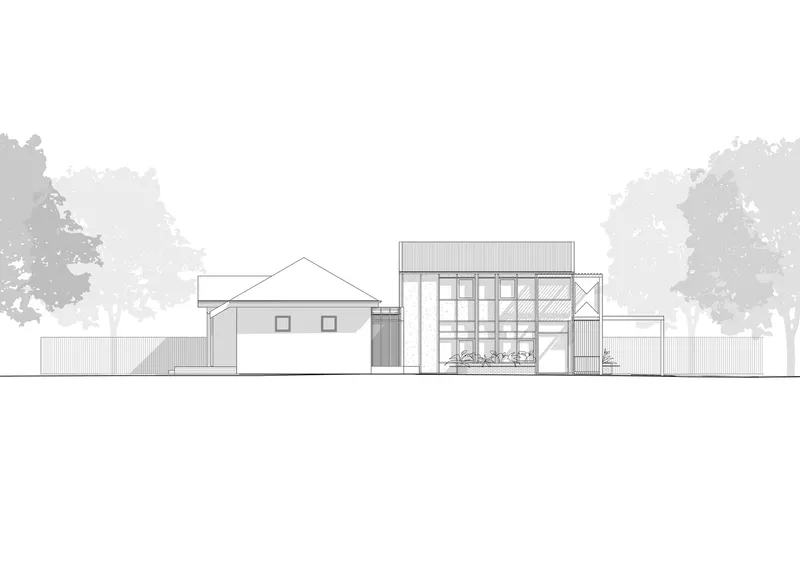
The axonometric drawing is particularly revealing. It shows the glazed pavilion inserted within a courtyard defined by the existing residential volumes, clarifying how the project reads as an infill rather than an extension. The elevations demonstrate the scalar relationship between the original pitched-roof cottage and the new gabled glass volume: similar in silhouette, different in materiality, held together by the timber frame that mediates between them.
Why This Project Matters
The Life Cycle House matters because it treats sustainability as a design problem rather than an engineering problem. Every passive strategy here, the thermal chimney, the evaporative pond, the winter garden buffer, the shading frame, generates spatial qualities that make the house a better place to live. Nothing is bolted on. The RapidLCA analysis showing a 79% improvement over Australian benchmarks is a byproduct of decisions that were simultaneously about comfort, light, air, and the experience of moving through a small house that feels expansive.
For architects working on residential additions in dense suburban contexts, this project offers a clear argument: the most effective environmental strategies are often the most ancient ones, deployed with contemporary precision. Steffen Welsch has shown that a compact weatherboard extension in a quiet Melbourne street can operate as a serious piece of environmental design without ever looking like one. That restraint is harder to achieve than it appears, and it is exactly what makes the house worth studying.
Life Cycle House by Steffen Welsch Architects. Located in Coburg, Melbourne, Australia. 165 m². Completed in 2023. Landscape design by Jo Henry. Builder: Building Integrity Group. Structural engineer: Maurice Farrugia. Joinery by Mood Workshop. Photography by Tatjana Plitt.
About the Studio
Share Your Own Work on uni.xyz
If projects like this are the kind of work you want to make, uni.xyz is a place to publish your own, find collaborators, and enter design competitions.


Popular Articles
Popular articles from the community


Manzana Morphosis: Stretching Barcelona's Grid into a Living Landscape for 2050
A radical reworking of the Eixample manzana turns density into a tool for generous public space, vertical ecology, and environmental performance.
Faces of the Soviet Avant-Garde: Turning Moscow's Street Names into an Open-Air Museum
A network of sculptural installations across a Moscow residential district transforms forgotten architect names into spatial encounters with cultural memor
Tsunami Convergenics: Turning Catastrophic Ocean Forces into Underwater Housing Infrastructure
A speculative underwater settlement off the coast of Onagawa, Japan, treats tsunamis and typhoons as energy sources rather than threats.

Cloaked Colonization: A Mobile Underwater Habitat That Moves Like a Fish
Micah Abaya's shortlisted EHC Pacific entry reimagines ocean settlement as a dispersed network of self-sustaining architectural organisms.

Similar Reads
You might also enjoy these articles

FAMM Arquitectura Organizes Ten Villas Around Courtyards and Jungle in Nosara, Costa Rica
El Molino pairs two elongated volumes with deep overhangs and timber louvers to build a compact coastal community five minutes from the beach.
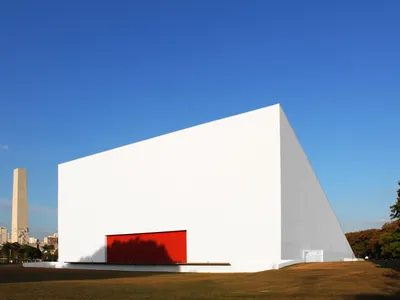
Oscar Niemeyer's Ibirapuera Park Pavilions Define São Paulo's Cultural Identity in Concrete and Curve
A constellation of modernist volumes set within São Paulo's most important urban park, conceived for the city's 400th anniversary in 1954.
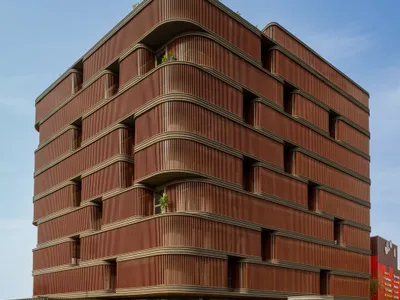
Sanjay Puri Architects Wraps a Jaipur Office Tower in Capsule-Shaped Green Buffers
A nine-level climate-responsive workplace near Jaipur Airport uses stacked planter terraces and aluminium screens to fight 40°C heat.
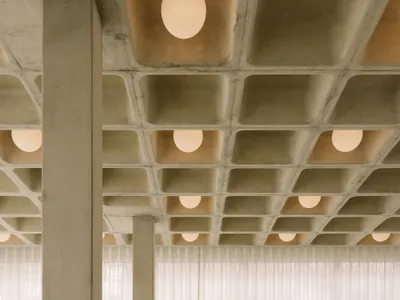
RHO Converts a Berlin Spree-Side Industrial Courtyard into Enkime's 1,000 m² Agency Headquarters
A social media agency's new home in Charlottenburg trades glossy branding for concrete waffle ceilings, glazed tile, and sheer curtains.

Explore Living Building Competitions
Discover active competitions in this discipline

Challenge to reimagine the Iron Throne

Photograph architecture without architects

Illustrate the lost glory of Angkor Wat - Render Challenge

Design challenge to reuse E-waste
Comments (0)
Please login or sign up to add comments
No comments yet. Be the first to comment!