
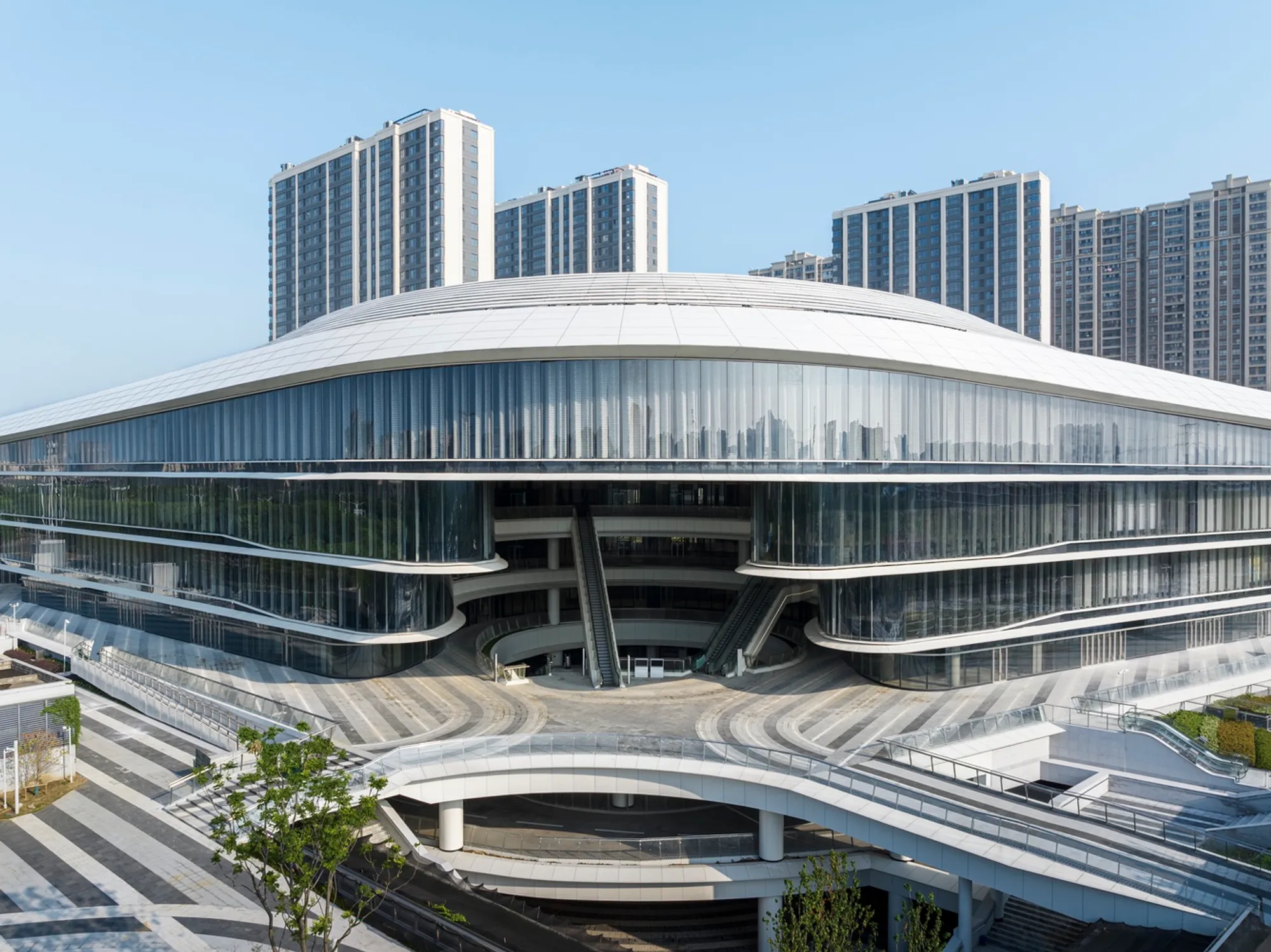
Suzhou Wujiang Songling-Avenue Bus Terminal: A Modern Transportation Hub by Nikken Sekkei
Suzhou Wujiang Songling-Avenue Bus Terminal by Nikken Sekkei blends modern transit efficiency with Suzhou garden-inspired design and vibrant public spaces.


Connecting Heritage and Modern Urban Life
Located just 100 km from Shanghai, Suzhou is renowned for its dual identity as a thriving metropolis and a historic city celebrated for its intricate garden culture. The Suzhou Wujiang Songling-Avenue Bus Terminal, designed by Nikken Sekkei, is strategically situated in a newly developed suburban area, just 30 minutes by subway from the city center, serving as a vital hub for daily commuters and long-distance travelers.
The project faced the challenge of harmonizing cultural heritage with rapid urbanization, surrounded by some of China’s most iconic water towns, gardens, and newly emerging high-rise residential neighborhoods.
Creating Dynamic Urban Spaces within a Suburban Superblock
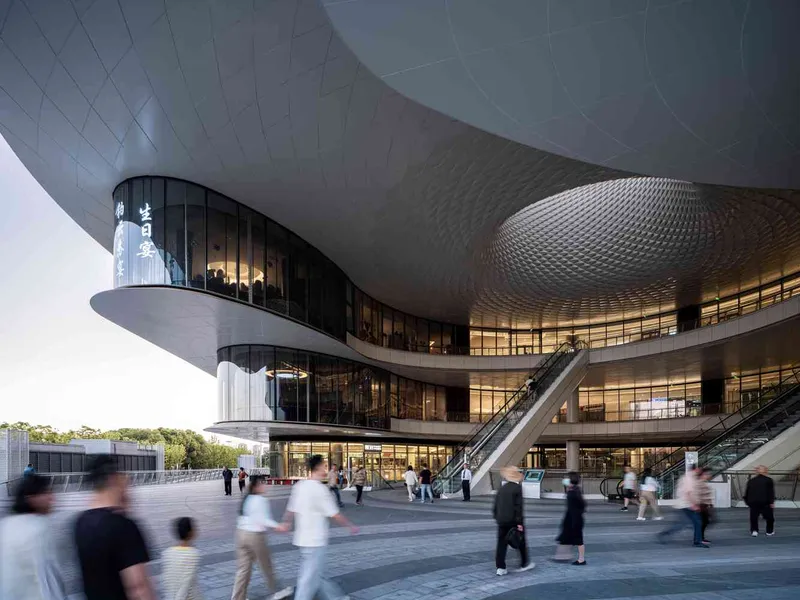
In Suzhou’s expanding suburbs, high-rise residential developments dominate, often creating isolated neighborhoods centered around vehicular traffic. Public gathering spaces like squares and pedestrian streets are rare. This terminal introduces a dynamic public space where people can converge for commuting, shopping, or leisure, providing a visible and lively urban environment.
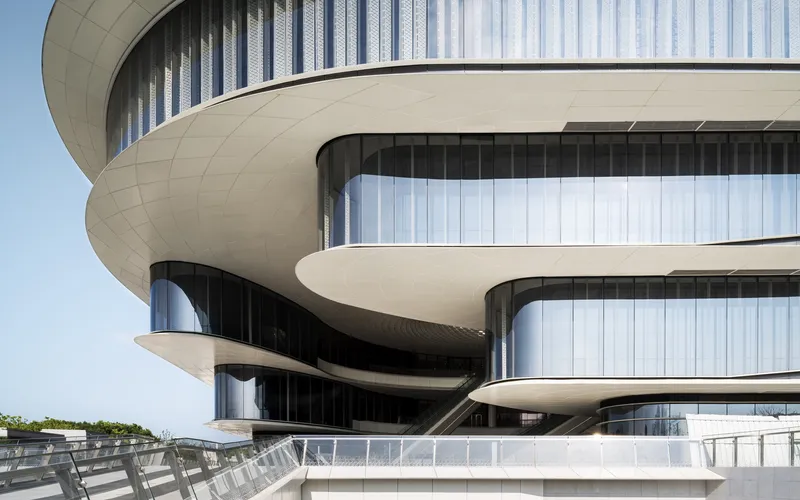
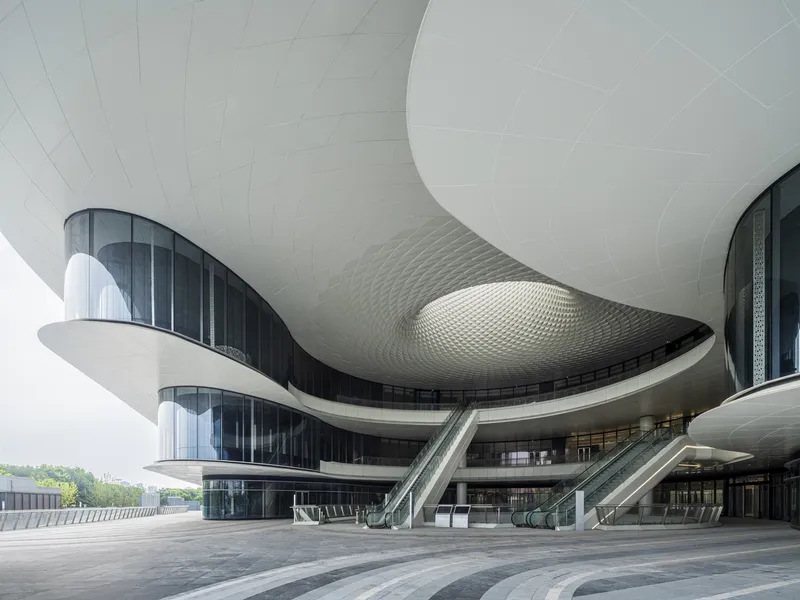
The linear 300-meter building stretches along the main road, seamlessly integrating green walking paths, terraces, commercial areas, and a quiet residential plaza. Its design ensures accessibility, safety, and a sense of “softness” while offering multiple routes and diverse urban spaces for residents and visitors.
From Functional Station to Enjoyable Urban Experience
The design philosophy goes beyond a conventional bus terminal. By working closely with the client—a joint venture between the local transportation bureau and developer—the architects aimed to:
- Ensure convenience, safety, and efficiency for daily commuters
- Support large-scale seasonal travel during events like Spring Festival and National Day
- Elevate the terminal into a comfortable and inviting environment
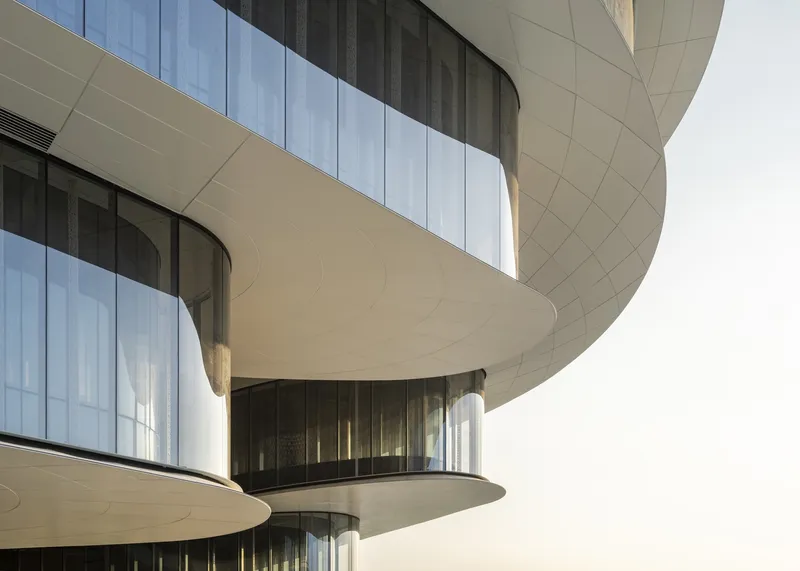
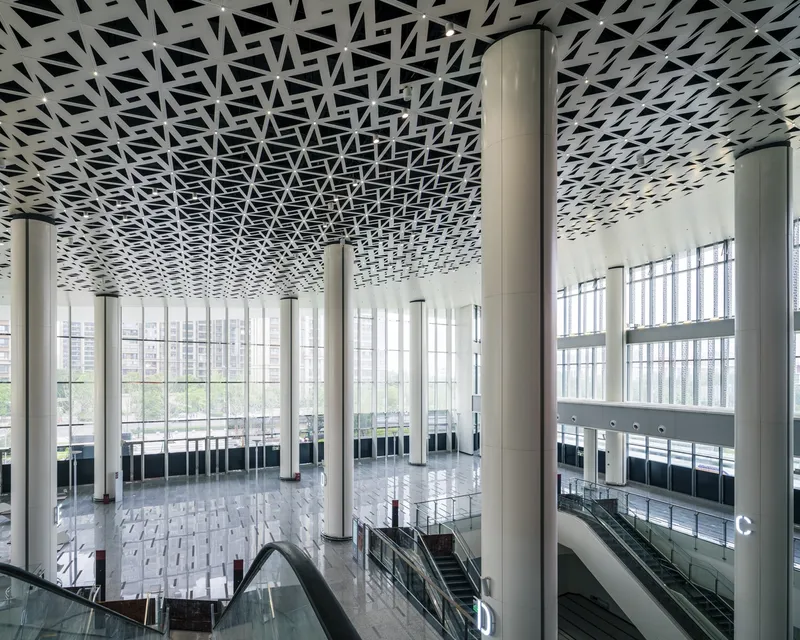
The building features a wing-like layout, with separate lobbies for long-distance and local buses. A bright, transparent waiting area connects directly to public green spaces and urban surroundings.
Seamless Transportation and Integrated Circulation
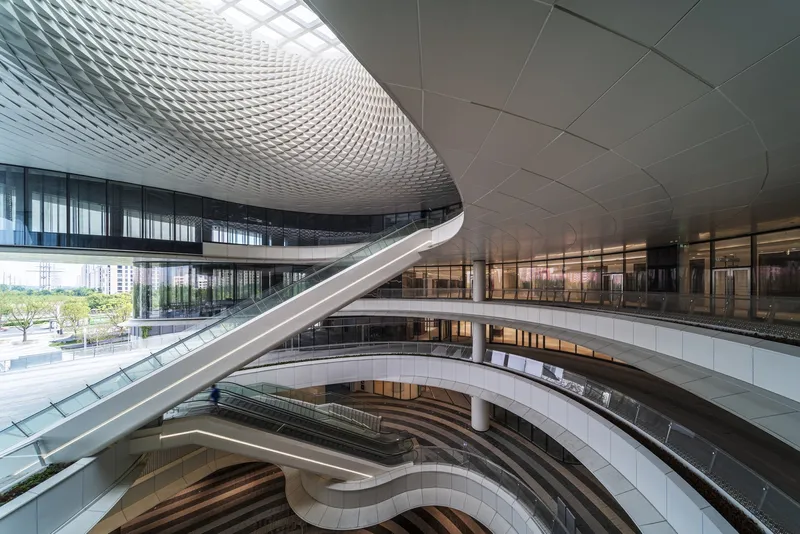
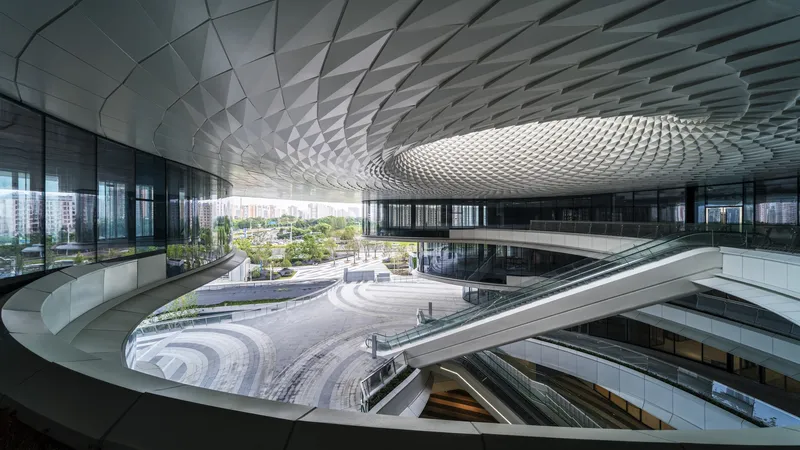
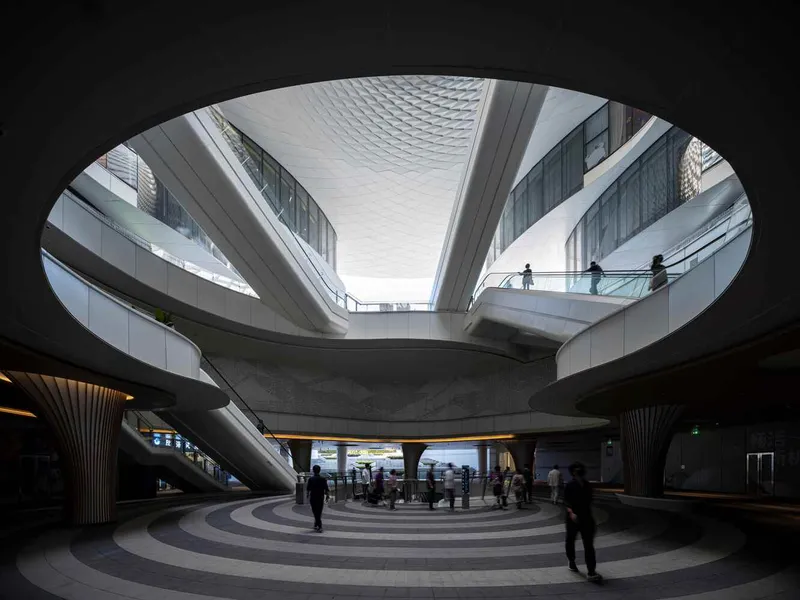
All transit modes—including buses, subways, taxis, and park-and-ride facilities—intersect around the central arrival lobby, forming a comprehensive transportation network. The circulation system acts as an urban “street,” combining horizontal and vertical movement with commercial terraces, layered activity spaces, and visual connections to parks.
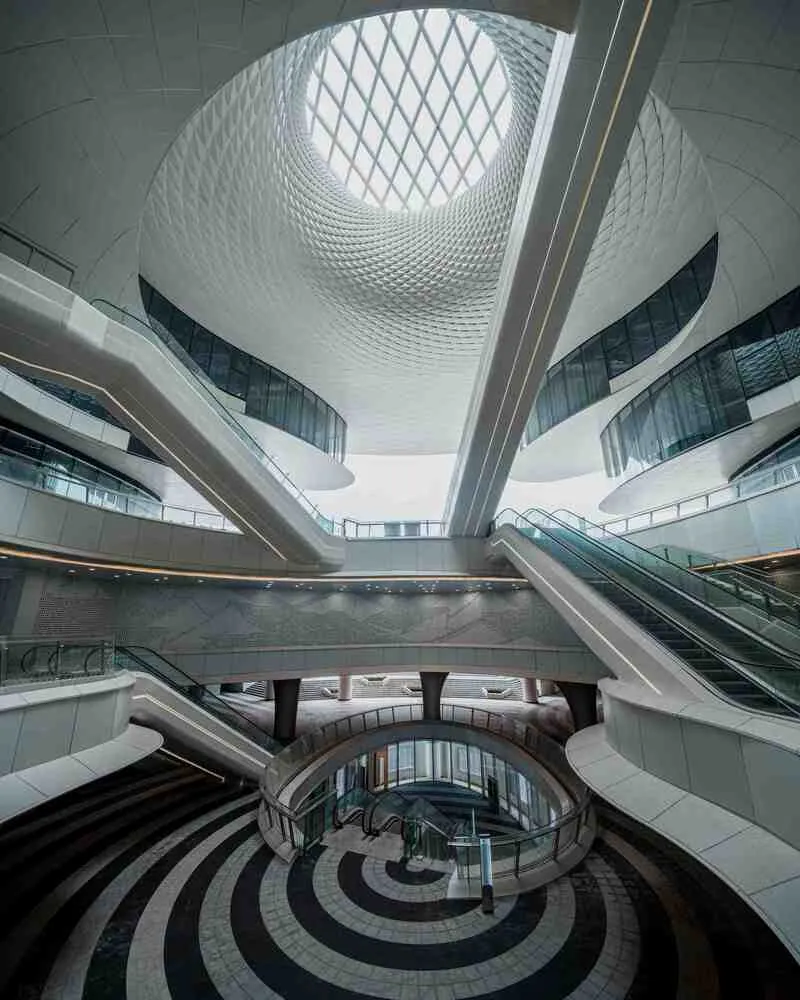
The URBAN CORE atrium spans from the third basement to the third above-ground floor, guided by overlapping floor layouts and skylights, creating a visually iconic and naturally inviting central space for movement.
“Glocal” Design: Merging Futurism with Suzhou Garden Culture
This terminal embodies a glocal design approach, combining modern materials and technology with traditional Suzhou aesthetics. Key design strategies include:
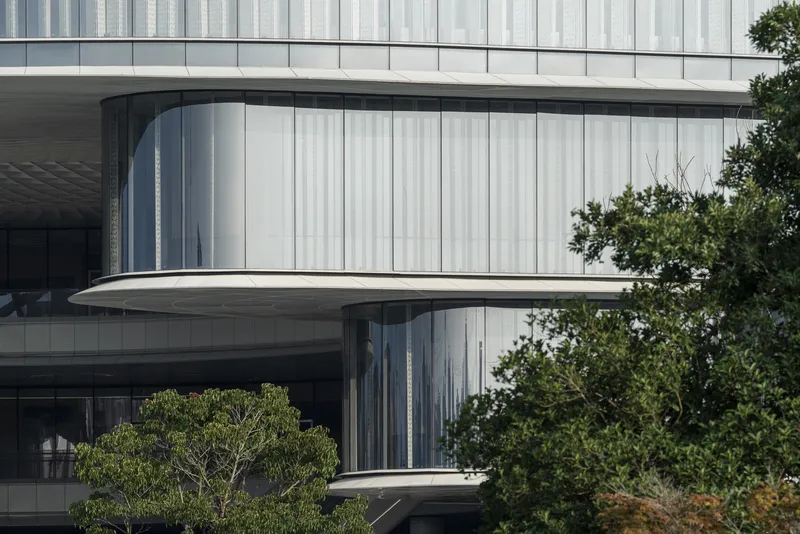
- Long horizontal frontage to evoke speed and urban energy
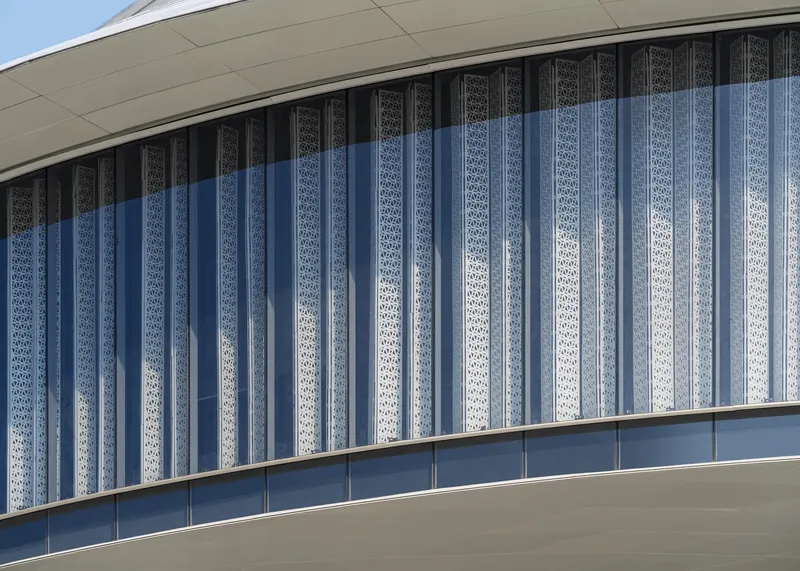
- Aluminum perforated screens inspired by water town lattice doors, softly dividing interior and exterior spaces
- Undulating URBAN CORE ceiling, reflecting natural light and shadows, inspired by interlocking roof tiles
The building’s scale transitions seamlessly from distant views to close-up perspectives, paying homage to Suzhou Garden culture, while creating a modern, layered urban space that resonates with the local community.

A Gateway to Suzhou’s Suburban Development
The Suzhou Wujiang Songling-Avenue Bus Terminal stands as more than just a transport hub—it is a vibrant public space that balances functionality, cultural sensitivity, and aesthetic innovation. By integrating efficient transportation, dynamic urban circulation, and glocal architectural design, the terminal redefines suburban public infrastructure while celebrating Suzhou’s heritage.


Popular Articles
Popular articles from the community


Co-Life: Senior Housing Design That Reconnects Older Adults With the City
Co-Life reimagines senior housing design through healing gardens, shared streets, workshops, and a sustainable community across generations.

Riyadh For All: Intergenerational Urban Design for Active Aging in Rabat
Riyadh For All reimagines urban design in Rabat with intergenerational co-living, adaptive courtyards, and Moroccan cultural exchange today.
AL-JANNAH: Sustainable Architecture and Permaculture for Afghan Widows
AL-JANNAH uses sustainable architecture and permaculture to create resilient oasis of housing, learning, work and renewal for Afghan widows.
EW PARK: Sustainable Architecture Reimagines the Future of Urban Parking
EW PARK reimagines city parking as a modular wooden tower combining automation, solar energy, electric mobility, and adaptable urban design.
Similar Reads
You might also enjoy these articles


Hodi-Mandai Geram
Project Function: Preservation and revitalization of the Intangible heritage and socio-spatial identity of the Hodi by Housing, Cultural Memory Center, Sacred Grove, landscape, local tourism economy


Olio Towers: A Mid-Rise for Performers That Fuses Housing, Rehearsal, and Stage
Located blocks from Houston's Theater District, this modular tower stacks living units around a central performance atrium.

Oasis: Modular Green Housing Carved into Dhaka's Urban Fabric
A shortlisted Plugin Housing entry reclaims unauthorized settlements in Dhaka with stepped concrete volumes, green roofs, and ventilation-driven design.

Black Hole: A Floating Megastructure for the Post-Physical Era
Emiliano Mazzarotto envisions a spherical, self-scaling arena where e-sports, digital hotels, and holographic stadiums replace traditional public space.


Explore Transit Hub Competitions
Discover active competitions in this discipline



Challenge to reimagine the Iron Throne


Photograph architecture without architects


Illustrate the lost glory of Angkor Wat - Render Challenge


Design challenge to reuse E-waste
Comments (0)
Please login or sign up to add comments
No comments yet. Be the first to comment!