

SWR Broadcasting Studio by Steimle Architekten — A Transparent Media Landmark in Mannheim
A transparent media hub combining public engagement, sculptural form, and flexible studio spaces, the SWR Broadcasting Studio redefines Mannheim’s contemporary cultural architecture.


The SWR Broadcasting Studio, designed by Steimle Architekten, redefines the relationship between media production and the public through a bold architectural language centered on transparency, openness, and communication. Completed in 2024 in Mannheim’s Nordstadt district, the 4,710-square-meter media building stands as a sculptural urban landmark that anchors the new Schafweide neighborhood while embodying the values of contemporary broadcasting culture.
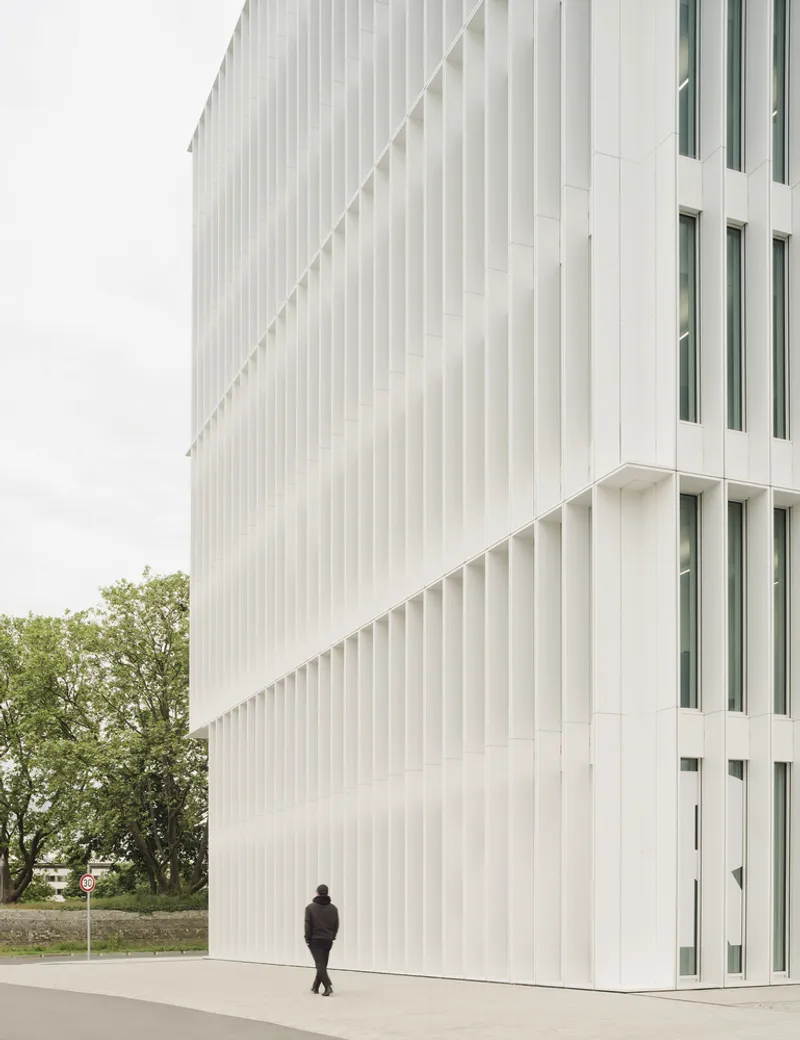
The project occupies a prominent site at the bridgehead of the Neckar crossing, asserting its presence as a confident, standalone volume that mediates between diverse urban conditions. With its glazed façade enveloped by vertical aluminum pilaster strips, the building establishes a visual dialogue with the city, exposing the day-and-night rhythm of radio production and fostering a sense of public engagement. Its position ensures that both pedestrians and passing traffic experience the building as a dynamic cultural node within Mannheim’s evolving urban landscape.

At the heart of the project is a public town square that functions as both an urban connector and an interactive extension of the studio. This plaza opens the development to the Neckar riverbank, characterized by mature trees, while creating opportunities for visitors to observe the “making of radio” in real time. The close relationship between indoor and outdoor spaces is further strengthened by the casino and its terrace, which blur the boundaries between studio life and civic experience. The fully glazed ground floor transforms the building into a visible stage for media production, reinforcing the architectural narrative of transparency.
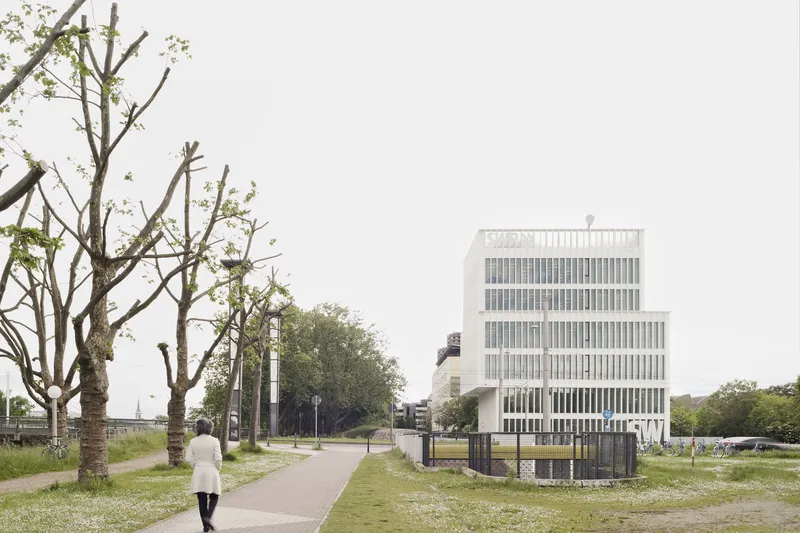
The six-story structure is shaped through a composition of two-story volumes featuring projections and recesses that lend the building a sculptural, three-dimensional quality. At ground level, these shifts create a sheltered forecourt that welcomes visitors into the main entrance and communal spaces. On the fourth floor, the massing generates an elevated city balcony oriented north and west, offering expansive views and reinforcing the building’s urban presence.
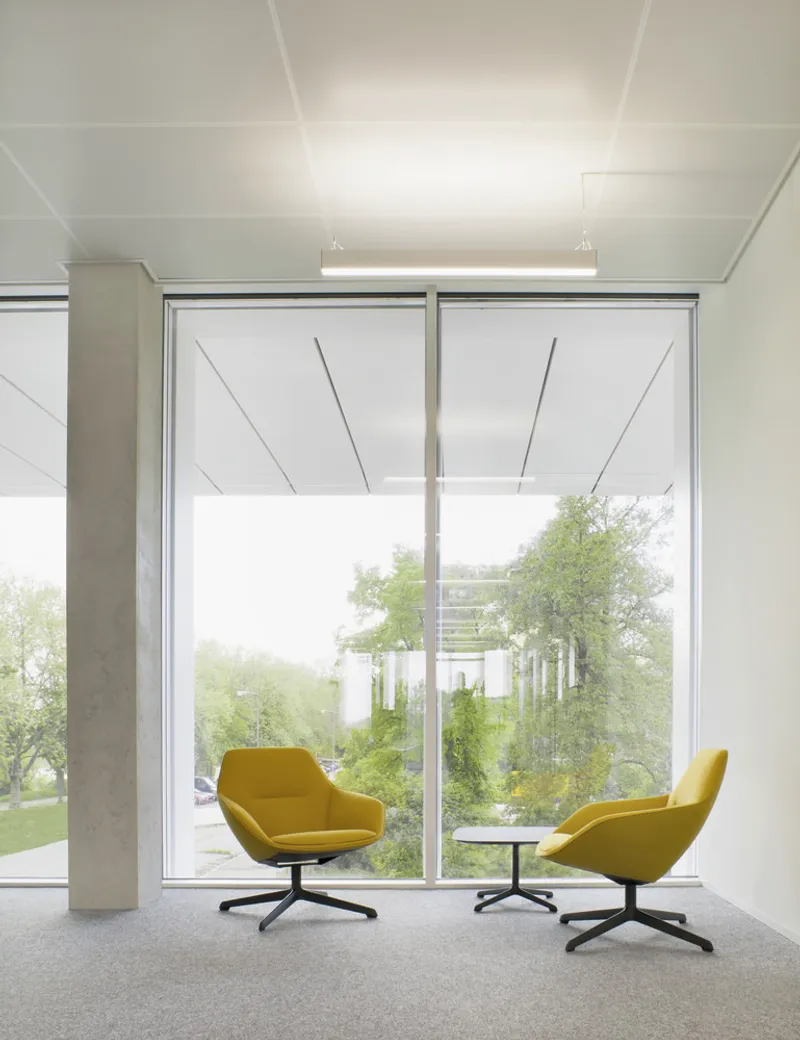
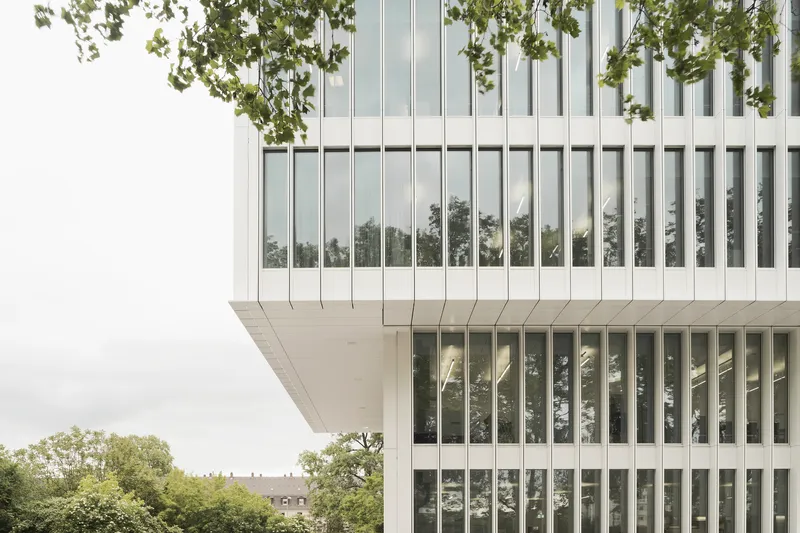
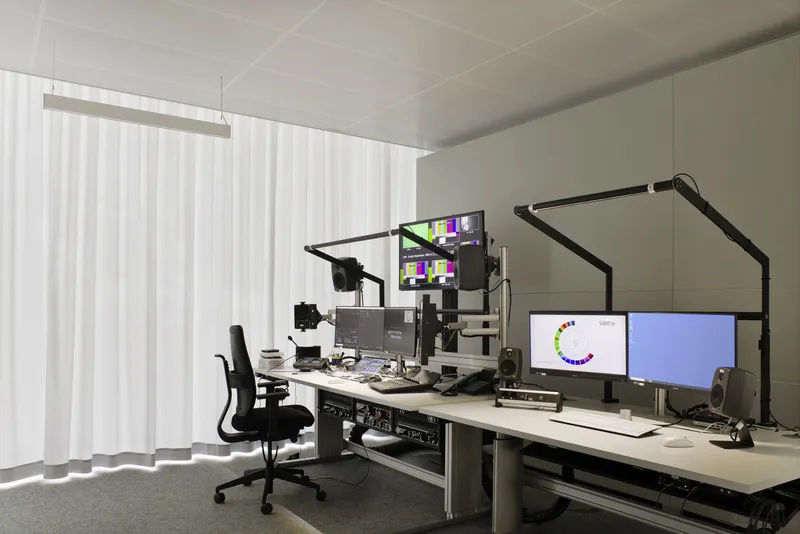
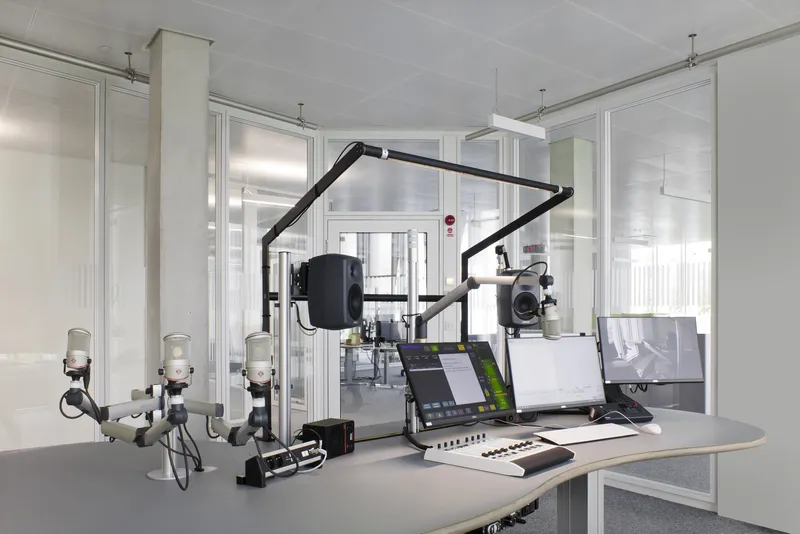
The program is organized into three stacked zones that reflect the building’s internal logic. The first two floors house shared public and communal spaces, including the foyer, casino, and conference center. The next two floors form the operational core of the media building, accommodating editorial workspaces and radio studios designed for high-performance broadcasting. The top two levels are dedicated to administrative functions, creating a spatial hierarchy that supports efficient and collaborative media production.
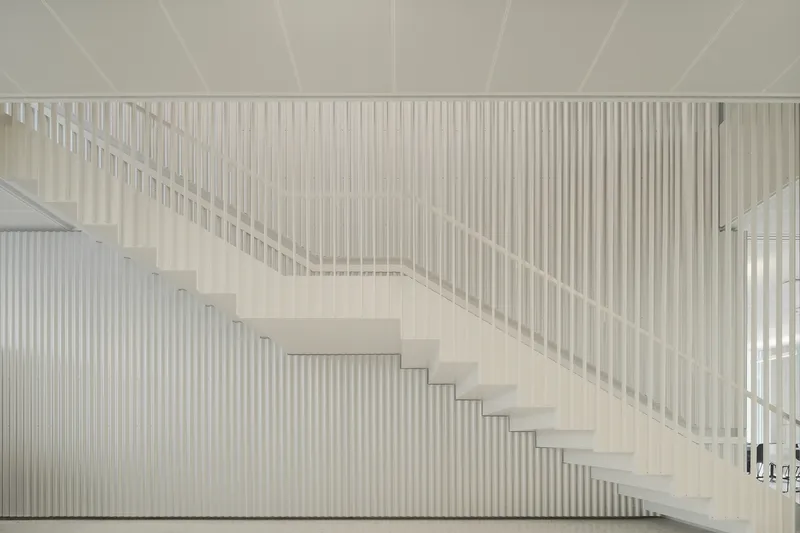
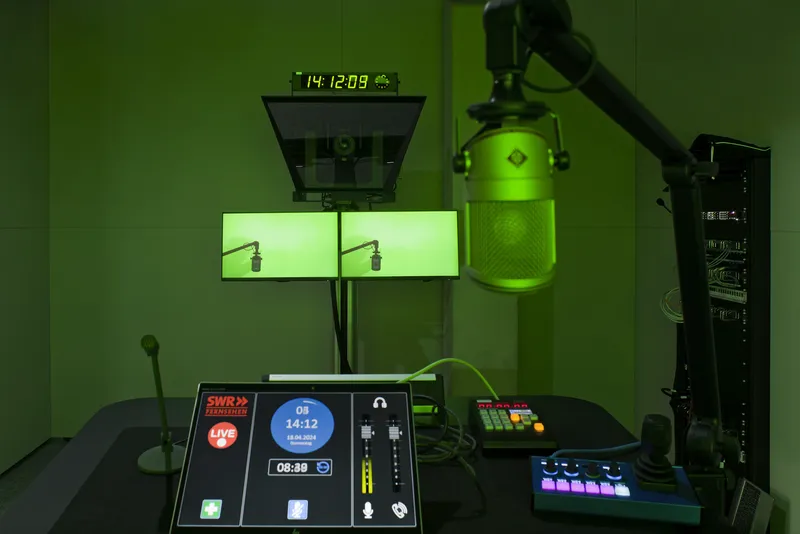
Within the office and production areas, a flexible mix of open workspaces, cellular offices, and adaptable zones ensures that teams can configure their environments according to changing editorial needs. Double-height air spaces, visual connections, and open staircases weave the floors together, creating vertical continuity and supporting a fluid multimedia workflow. These interconnected volumes strengthen internal communication and contribute to a sense of vibrancy throughout the building.
All photographs are works of Brigida González




Popular Articles
Popular articles from the community


The Ocean Hive: Sustainable Architecture for a Self-Sufficient Civilization at Sea
The Ocean Hive imagines sustainable architecture at sea, where modular habitats, algae, wave power and ocean waste sustain a growing colony.

The Earth Pod: 3D Printed Homes for Resilient Refugee Communities
The Earth Pod reimagines refugee housing through 3D printed homes made from clay, combining resilience, self-sufficiency, and rapid shelter.

Riyadh For All: Intergenerational Urban Design for Active Aging in Rabat
Riyadh For All reimagines urban design in Rabat with intergenerational co-living, adaptive courtyards, and Moroccan cultural exchange today.

Co-life: Sustainable Architecture for Age-Friendly Community Living
Co-life reimagines sustainable architecture for seniors through courtyards, rammed earth, shared gardens, and spaces designed for belonging.
Similar Reads
You might also enjoy these articles


Hodi-Mandai Geram
Project Function: Preservation and revitalization of the Intangible heritage and socio-spatial identity of the Hodi by Housing, Cultural Memory Center, Sacred Grove, landscape, local tourism economy


Olio Towers: A Mid-Rise for Performers That Fuses Housing, Rehearsal, and Stage
Located blocks from Houston's Theater District, this modular tower stacks living units around a central performance atrium.

Oasis: Modular Green Housing Carved into Dhaka's Urban Fabric
A shortlisted Plugin Housing entry reclaims unauthorized settlements in Dhaka with stepped concrete volumes, green roofs, and ventilation-driven design.

Black Hole: A Floating Megastructure for the Post-Physical Era
Emiliano Mazzarotto envisions a spherical, self-scaling arena where e-sports, digital hotels, and holographic stadiums replace traditional public space.

Explore Cultural Architecture Competitions
Discover active competitions in this discipline



Challenge to reimagine the Iron Throne


Photograph architecture without architects


Illustrate the lost glory of Angkor Wat - Render Challenge

Bring back Drive In's
Comments (0)
Please login or sign up to add comments
No comments yet. Be the first to comment!