
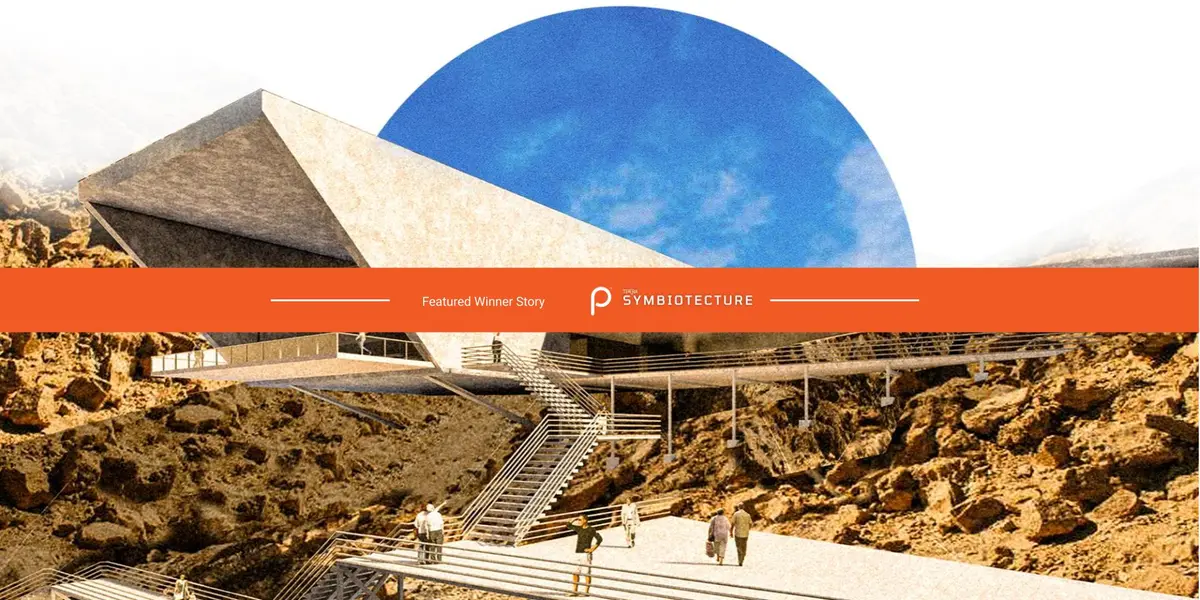
Archaeological park in the Mines of Rio Tinto, Spain.
A geological park design challenge, Symbiotecture - Result Story


The condition of contemporary society is struggling to find itself in common identity values condensed in a recognizable iconography. Assuming that in contemporaneity it is an achievable goal, yet it turns to be an accumulation of dislocated and dislocating experiences. Perhaps for this very reason, it's now a good time to reconsider the debate between nature and architecture but with new assumptions.
A usual way we move close to this idea is by wrapping things up under the term ‘sustainability’, which deals with this entire issue in a lot of fragments. Eventually leaving an unsatisfied need for an architecture that homogeneously condenses a theme that is not only technological, nor exclusively formal or typological. Instead of an ethical and structural connection between humans and society with nature, and a huge opportunity of how architecture be an element of mediation between them.
The competition brief was to design an archaeological park in the Mines of Rio Tinto Spain.
The aim of this competition was to go far beyond a simple, even if necessary, use of nature as a product, but wants to push the architectural experimentation through a process of hybridization of two. In usual architecture discourse, they are apparently different bodies and two different languages how can we merge boundaries between both?
The design question of the competition was:
How can architecture manifest itself like a human body where the architectural spaces can be understood as an extension of it? How can the structure of the territory itself with the corresponding morphological and topographical variations be fused with the nature it is surrounded with?
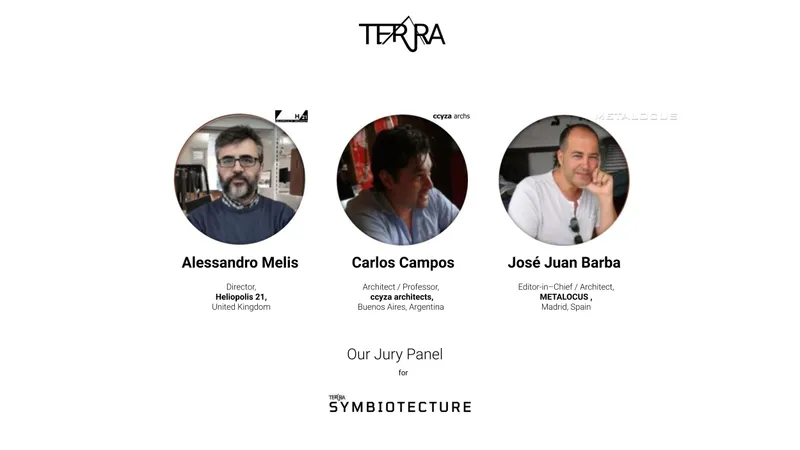
The jury for the competition consisted of esteemed designers, professionals, and academicians from around the world. The Lead Jurors for the competitions were as follows:
Alessandro Melis, Director, Heliopolis 21, United Kingdom
Carlos Campos, Architect / Professor, ccyza architects, Buenos Aires, Argentina
José Juan Barba, Editor-in–Chief / Architect, METALOCUS, Madrid, Spain
Some of the Best of competition projects are:
Winning Project: Symbiotecture
By: Sanny Ng & Iris Lee
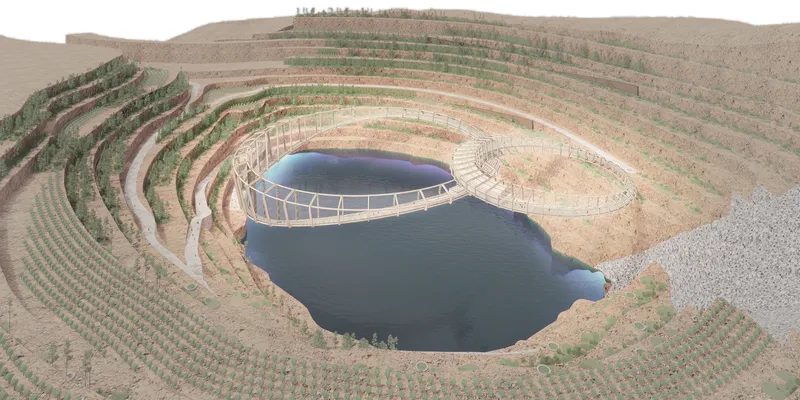
Description: A geological park design challenge.
-----------------
People’s Choice: Symbiotic Archeology Lab
By: Jose Carlos & Anna Denardin
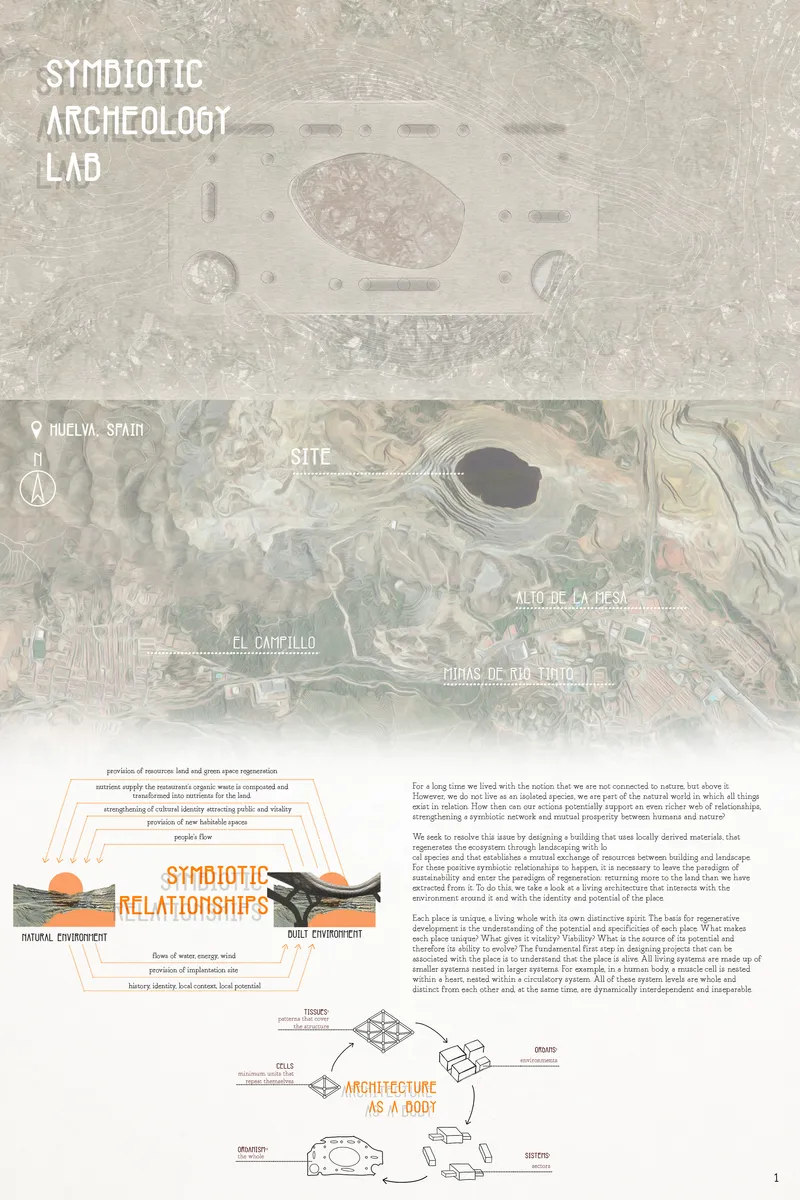
Description: This project aims to support an even richer web of relationships, strengthening a symbiotic network of mutual prosperity between humans and nature.
-----------------
Editor’s Choice: Art Wave
By: Misak Terzibasiyan
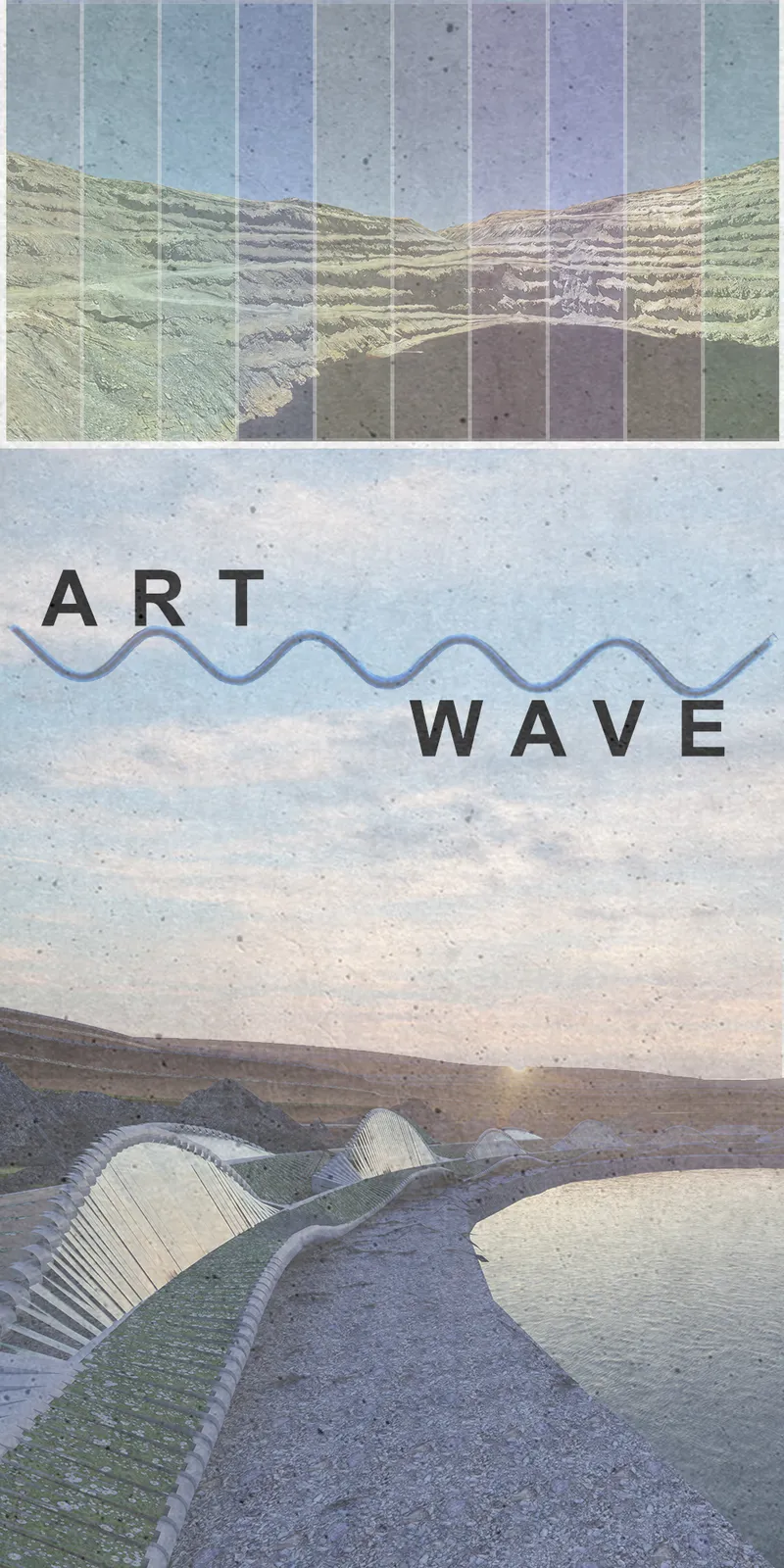
Description: This idea shows fully integrating building and site planning into the landscape planning process. Designing with pathways presents a spatial design approach for adaptive landscapes. This aim to study spatial design based on pathways can help develop more adaptive and sustainable landscapes.
--------------------
Editor’s Choice: REMISSION
By: Joshua Walton

Description: An Archaeological Park located in the mines of Huelva, Spain, that creates a symbiotic relationship with the site and develops ecosystems.
-----------------------
Editor’s Choice: Verge Geopark
By: Mark Manrique
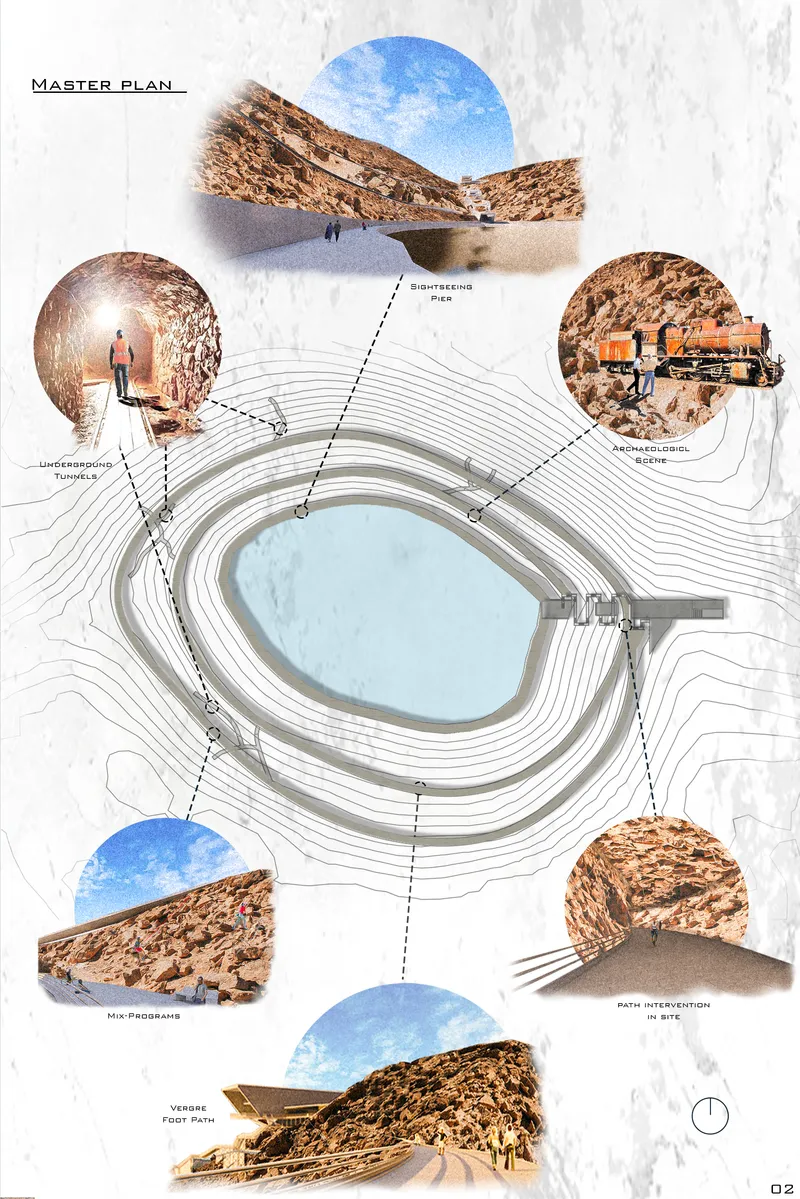
Description: Verge is a geological park in the Rio Tinto mines that is designed to be integrated into the artificial environment of the Corta Antalya mine with minimal site intervention.
-----------------------
Editor’s Choice: NUEVA ATALAYA
By: Vincent Tiburcio
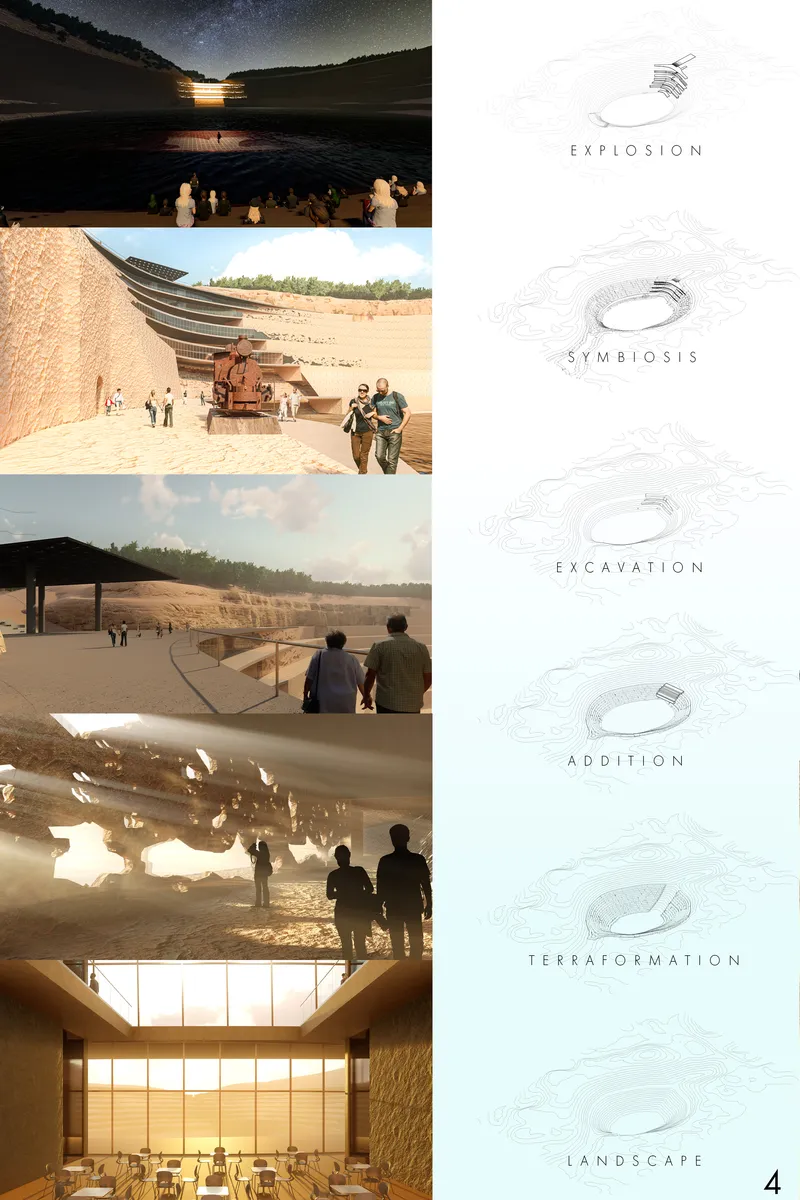
Description: The site of Rio Tinto is located in Andalusia, Spain. Home of one of the biggest man-made open pit mine is the host for a symbiotic architecture where the concept of reclamation becomes an inspiration to shape this project.
Discover the design brief here: https://uni.xyz/competitions/symbiotecture/info/about/
Discover the full results here: https://uni.xyz/competitions/symbiotecture/entries/
Follow us on social media: Facebook | Instagram | LinkedIn | Twitter | Youtube
Discover other design competitions to participate here: https://uni.xyz/competitions


Popular Articles
Popular articles from the community


David Macias Steps a Doorless Stone and Plaster House Down a Tropical Colombian Hillside
In the humid hills of Colombia, Threshold House replaces the front door with an open void and terraces its 850 m² down the slope instead of fighting it.

Cube Design Draws an Ecological Corridor Between Two Shenzhen Hills with the Nankai Building
Beside Shenzhen's container docks, the Nankai Building pairs stacked balconies with a climbing green screen to connect two hillsides across its height.

Jaramillo Van Sluys Arquitectura and Urbanismo Turn a Demolished Registry Lot in Quito into an Orchard Plaza
In Quito's Centro Histórico, a 2,800 m² plaza exposes the San Agustín convent wall and redraws its lost Augustinian orchard in volcanic stone.

David Ortega Stacks a Two-Story Mexico City Penthouse Around a Steel Stair and a Pergola-Shaded Roof Terrace
In Colonia Roma, a 300 m² penthouse uses oak joinery, a planted steel stair and a slatted roof pergola to make a new-build apartment feel like a house.

Similar Reads
You might also enjoy these articles


Aquadapt: An Underwater Habitat That Rewrites Its Rooms by the Hour
Curved modules ring the seabed while one shell shifts from breakfast room to cinema, farm and football pitch as residents' needs change.

Play: Fragments of Their World: Remembered Architecture Rebuilt as a Modular Playground for Refugee Camps
Tom Gardner abstracts domes, arches and towers from the homelands of displaced families into a kit of child-scaled play parts for camp settlements.
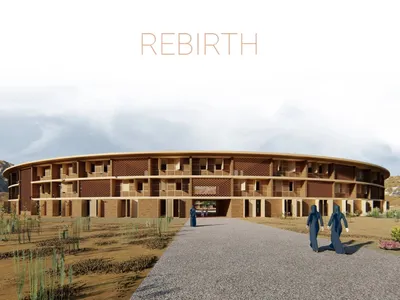
REBIRTH: A Circular Settlement Where Afghan Widows and Their Children Rebuild Life Together
A shortlisted Resile entry turns the circle into a protective ring of timber and brick, gathering homes, classrooms and gardens around a shared landscape.
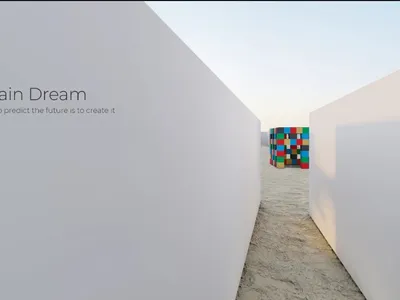
The Main Dream: A Recycled Plastic Kit That Lets Refugee Children Build Their Own Playground
Thirty-centimetre interlocking cubes that connect on three axes turn play into construction, letting children author the spaces they occupy.

Comments (0)
Please login or sign up to add comments
No comments yet. Be the first to comment!