

‘t Bosbad by GAAGA: A Sustainable Forest-Inspired Residential Ensemble in Eindhoven
‘t Bosbad by GAAGA is a sustainable, circular residential project in Eindhoven, integrating nature, reused materials, and water management systems.


Location: Eindhoven, The Netherlands Architect: GAAGA Architectural Design: Esther Stevelink Year Completed: 2022 Gross Floor Area: 2,800 m² Photography: Melchior Overdevest, Max Hart Nibbrig Contractor: Dura Vermeer BV Structural Engineer: Van Rossum Raadgevende Ingenieurs Landscape Architect: MAAK Space Manufacturers: VBI, Van Hameren Houthandel

Nature-Integrated Residential Architecture in Bosrijk
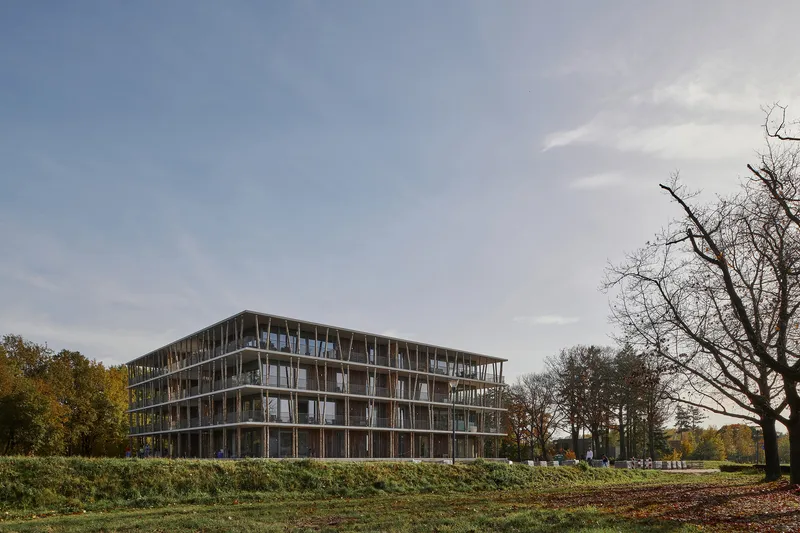
Nestled within the forested landscape of Bosrijk Park in Eindhoven, ‘t Bosbad by Dutch architecture studio GAAGA stands as a unique example of sustainable residential design. Conceived as a “sculpture in a sculpture garden,” the project reflects the vision of Bosrijk, a neighborhood where architectural experimentation and ecological integration go hand in hand.
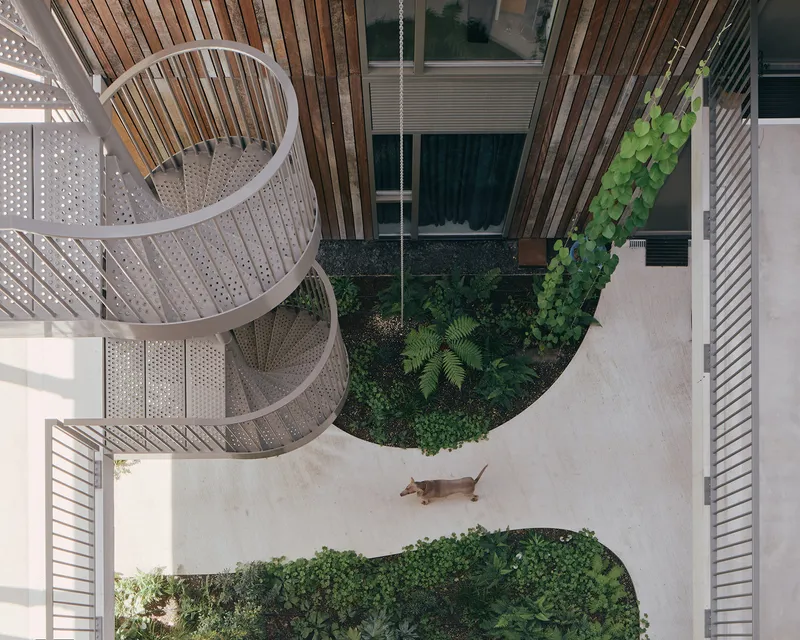
Set within a forest clearing, the building is composed of two rectangular volumes separated by a publicly accessible, landscaped passage. This green corridor not only connects the residential units to the surrounding park pathways but also acts as the building’s central social and ecological spine.

A Rational Layout Inspired by Natural Forms
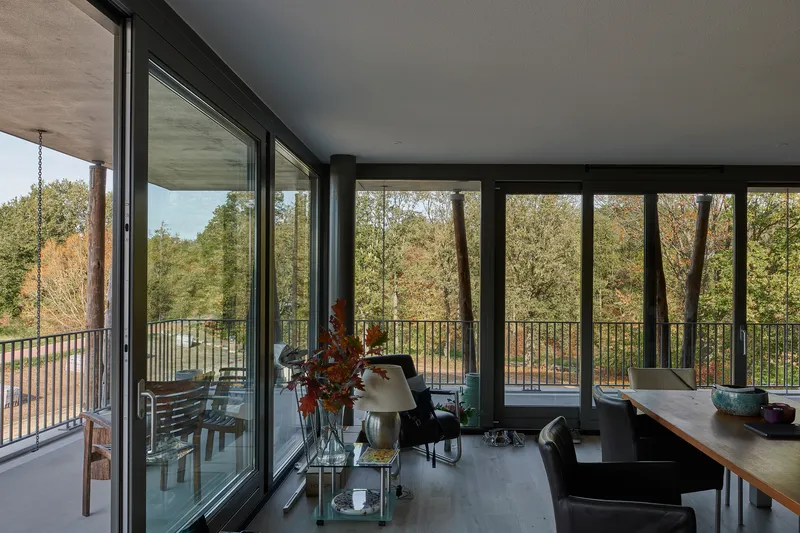
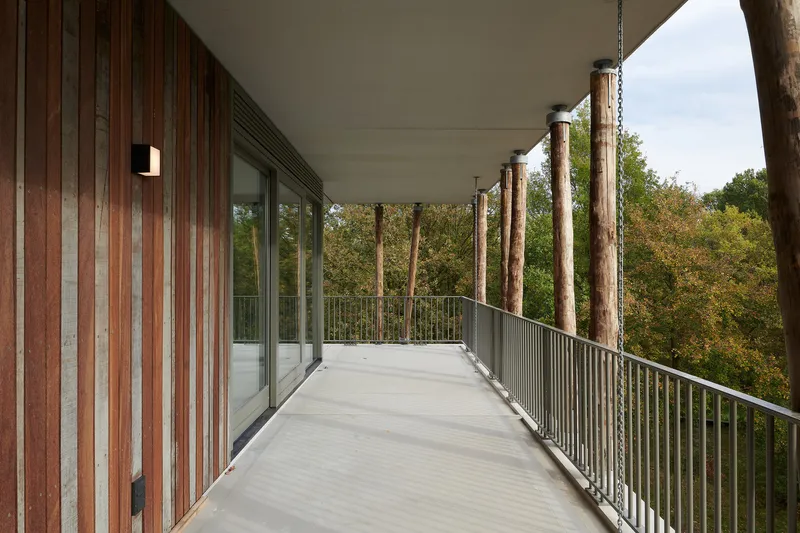
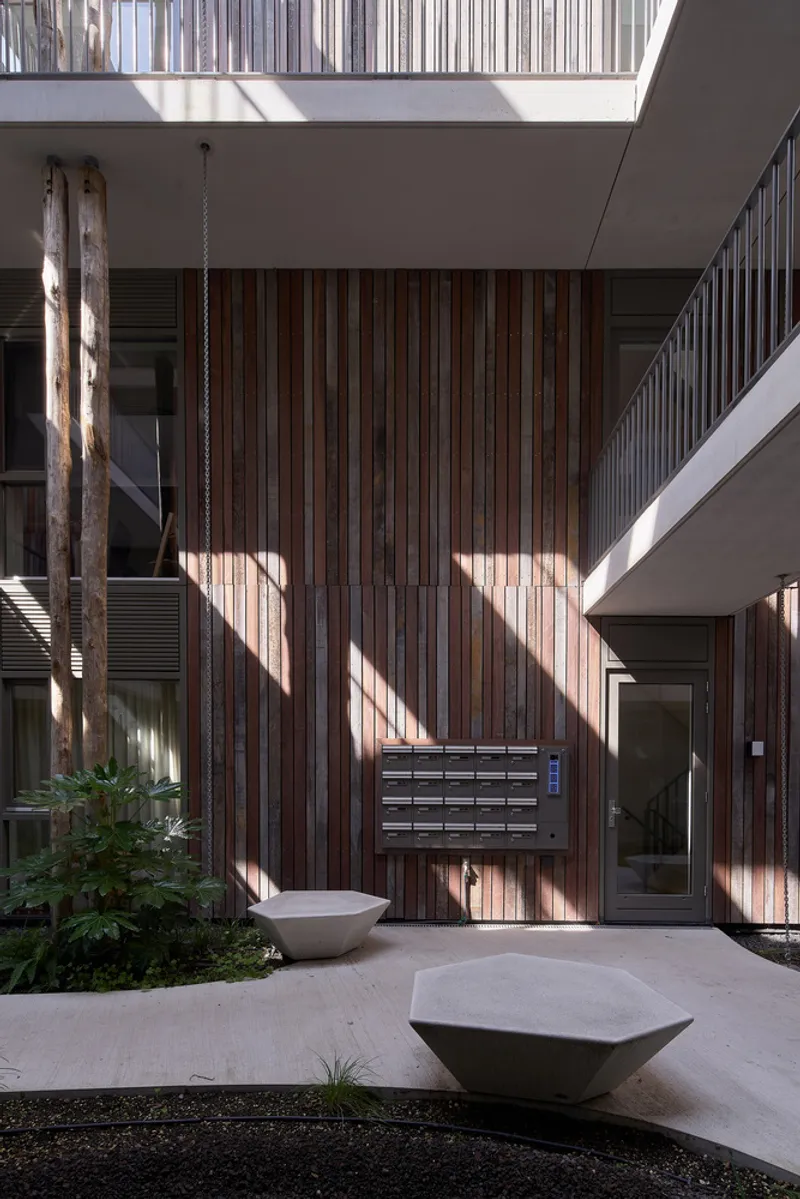
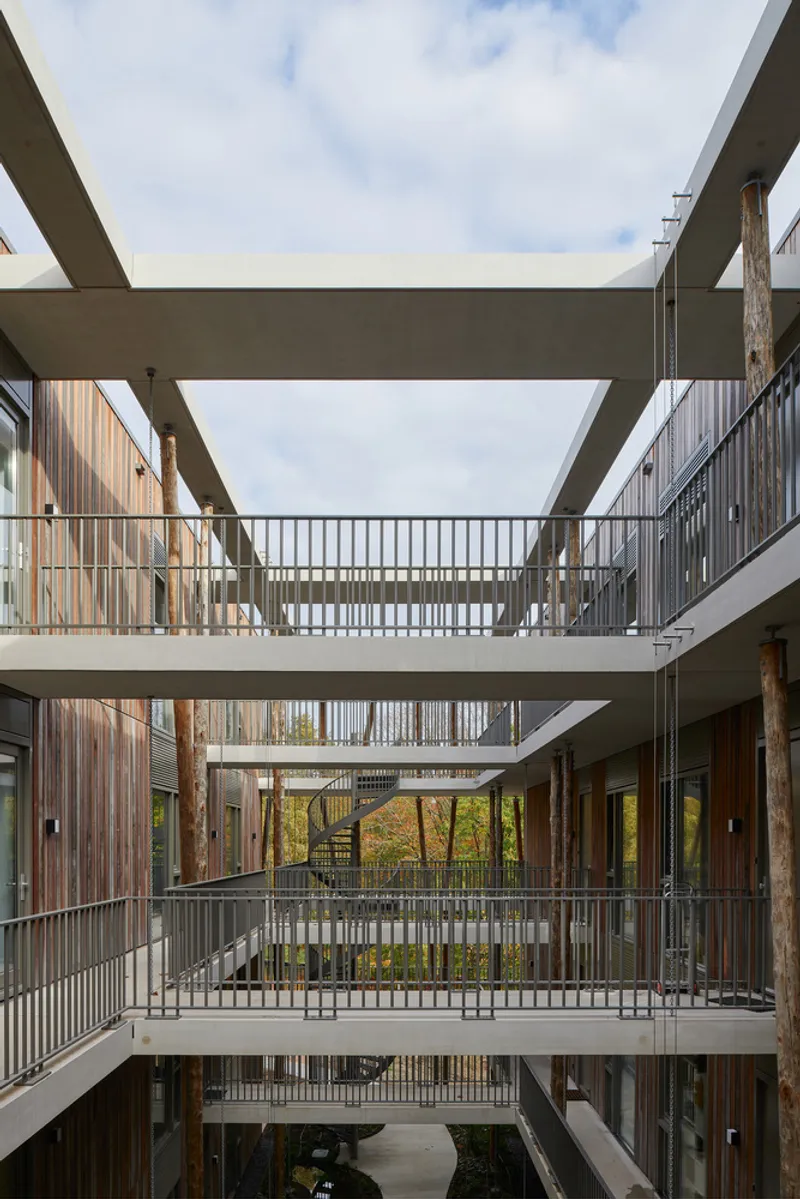
The rational layout is softened by naturalistic interventions. The apartments are accessed via elevated bridges and galleries, which overlook the lush, shared passageway. Each residential unit is designed to maximize views of the park, with generous corner windows and expansive balconies.
One of the most distinctive features is the use of actual eucalyptus tree trunks as structural columns, supporting the continuous balconies. This colonnade forms a natural buffer, offering privacy while preserving the sense of openness toward the landscape. The combination of reused hardwood and tree-trunk supports blurs the line between architecture and forest, grounding the structure in its woodland surroundings.
Green Design and Climate Adaptation
Beyond its aesthetics, ‘t Bosbad serves a crucial environmental role. The landscaped passage not only creates visual continuity with the park but also functions as an innovative water management system. Rainwater from the green roof and walkways flows into a series of connected ponds through water chains, eventually draining into a nearby wadi. This integrated blue-green infrastructure provides passive cooling during hot months and enhances the building's ecological resilience.
Circular and Demountable Construction for a Sustainable Future
In line with circular construction principles, ‘t Bosbad features a demountable concrete support structure using lightweight, ‘green’ hollow-core slabs—an uncommon but efficient solution in housing projects. Over 85% of the building’s material weight is designed for future reuse or recycling.
The façade cladding, made from reclaimed hardwood previously used for riverbank protection, exemplifies the project’s commitment to material reuse and sustainability. Interior spaces are designed with flexibility in mind: installations are not embedded in concrete, and column-free floorplans allow easy reconfiguration for future needs.
Thanks to its energy-neutral performance, efficient material use, and passive climate strategies, ‘t Bosbad is a forward-thinking model of adaptive residential architecture that responds to both environmental and social dynamics.

Key Sustainable Features
- Energy-neutral design
- Demountable and modular structure
- Use of reclaimed and renewable materials
- Blue-green water management strategy
- Integration with park pathways and natural surroundings
- Flexible and future-proof interior layouts




Popular Articles
Popular articles from the community


Conexión: Biophilic Design Reimagines High-Rise Living in Hong Kong
Conexión reimagines high-rise living in Hong Kong through biophilic design, green facades, shared spaces, daylight, water and nature within.

Riyadh For All: Intergenerational Urban Design for Active Aging in Rabat
Riyadh For All reimagines urban design in Rabat with intergenerational co-living, adaptive courtyards, and Moroccan cultural exchange today.

AL-JANNAH: Sustainable Architecture and Permaculture for Afghan Widows
AL-JANNAH uses sustainable architecture and permaculture to create resilient oasis of housing, learning, work and renewal for Afghan widows.

Hill & Cross Opera: Sculptural Opera House Architecture Shaped by Tallinn’s Landscape and Identity
Hill & Cross Opera reimagines opera house architecture in Tallinn through its sculptural hill, civic plaza, glass wave and a luminous cross.

Similar Reads
You might also enjoy these articles


Hodi-Mandai Geram
Project Function: Preservation and revitalization of the Intangible heritage and socio-spatial identity of the Hodi by Housing, Cultural Memory Center, Sacred Grove, landscape, local tourism economy


Olio Towers: A Mid-Rise for Performers That Fuses Housing, Rehearsal, and Stage
Located blocks from Houston's Theater District, this modular tower stacks living units around a central performance atrium.

Oasis: Modular Green Housing Carved into Dhaka's Urban Fabric
A shortlisted Plugin Housing entry reclaims unauthorized settlements in Dhaka with stepped concrete volumes, green roofs, and ventilation-driven design.

Black Hole: A Floating Megastructure for the Post-Physical Era
Emiliano Mazzarotto envisions a spherical, self-scaling arena where e-sports, digital hotels, and holographic stadiums replace traditional public space.


Explore Geurst & Schulze Architecten Competitions
Discover active competitions in this discipline


Challenge to design mud housing for contemporary communities


Challenge to reimagine the Iron Throne


Photograph architecture without architects


Illustrate the lost glory of Angkor Wat - Render Challenge
Comments (0)
Please login or sign up to add comments
No comments yet. Be the first to comment!