
Table Eighteen by fabersociety
A quiet rural intervention combining adaptive reuse and a monumental long table, fostering community gathering within farmland and river landscapes.


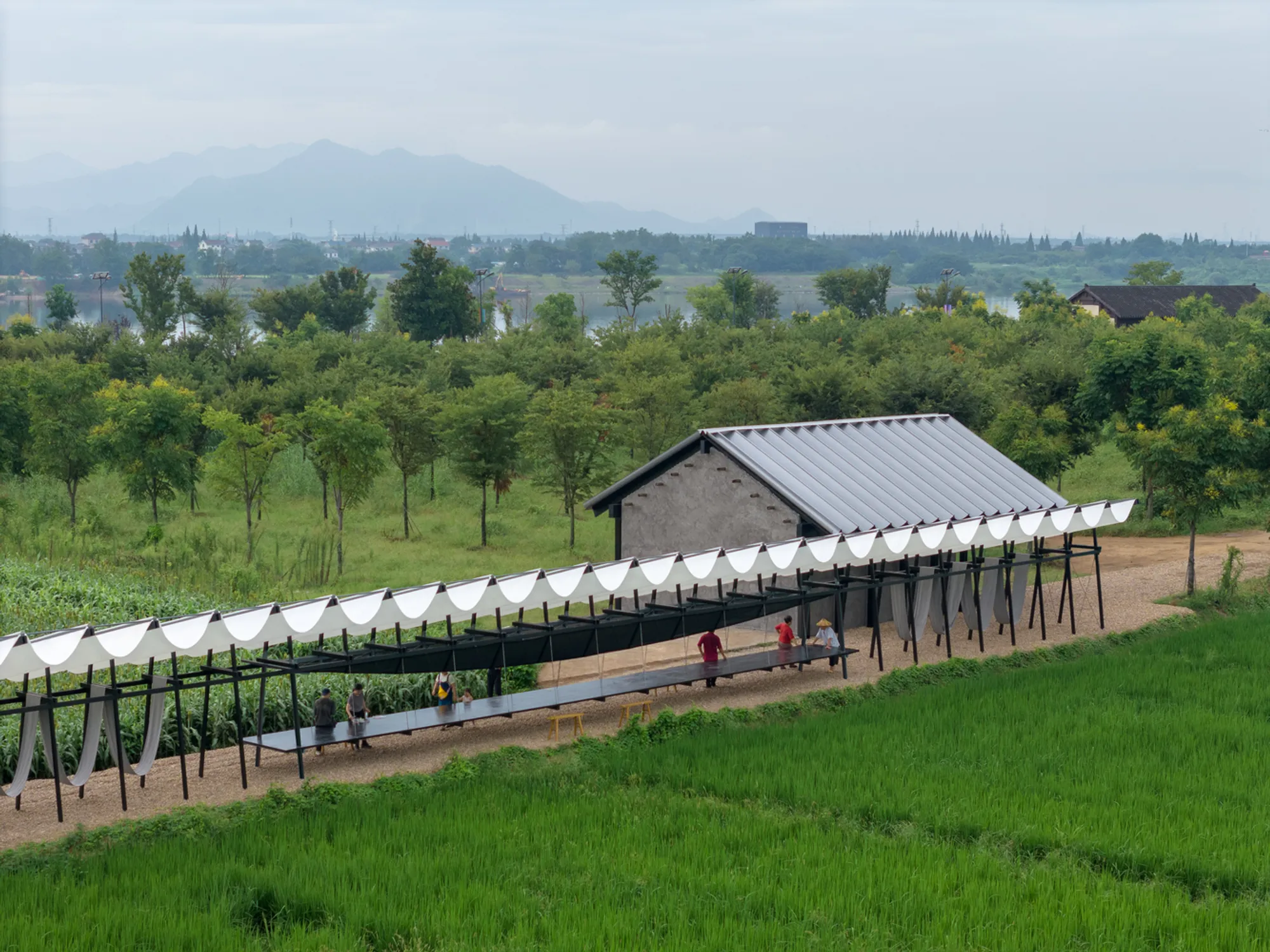
Located within the Jushi Guang Art Ecological Corridor in Xiaonanhai Town, Longyou County, Table Eighteen is a contemporary rural public architecture project by fabersociety that explores adaptive reuse, landscape integration, and collective life in China’s countryside. Completed in 2023, the project unfolds quietly along the banks of the Qu River, combining a renovated farm warehouse with a newly constructed pavilion-like long table system that runs parallel to surrounding farmland and water.
Rather than proposing an iconic rural landmark, Table Eighteen positions itself as an everyday spatial intervention, one that responds to agricultural rhythms, local memory, and the understated beauty of ordinary landscapes.
Architecture as Proposition, Not Statement
Conceived as part of an art-led ecological initiative, the project began without a fixed program or predetermined form. This initial ambiguity shaped fabersociety’s design approach: architecture here does not seek visual dominance or novelty, but instead maintains tension through restraint. The architects intentionally avoided exaggeration, focusing instead on building a quiet dialogue with the site, the community, and the agricultural context.
In a region where many rural townships appear visually homogeneous, Table Eighteen attempts to uncover differentiation through attention rather than spectacle. The project serves visitors and tourists, yet its deeper ambition lies in revealing overlooked local qualities and offering spatial generosity to residents.
Site Strategy: River, Fields, and Existing Structures
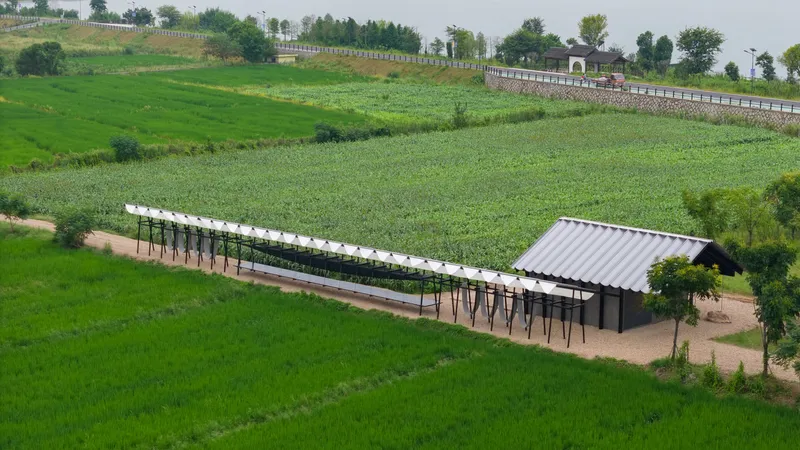
The site selection followed three key principles. First, the architecture aligns with the east: west horizontal spread of the mountains, farmland, and river. Second, proximity to cultivated fields reinforces the project’s relationship with food, gathering, and seasonal labor. Third, the presence of an existing farm warehouse allowed for adaptive reuse, grounding the intervention in material continuity and memory.
The chosen site includes a derelict agricultural warehouse along a narrow field road. To the north stretches farmland with distant hills, while woodland and a town road separate the site from the river to the south. This layered condition, road, field, building, river, becomes the spatial framework for the project.
The Renovated Warehouse: Preserving Rural Memory
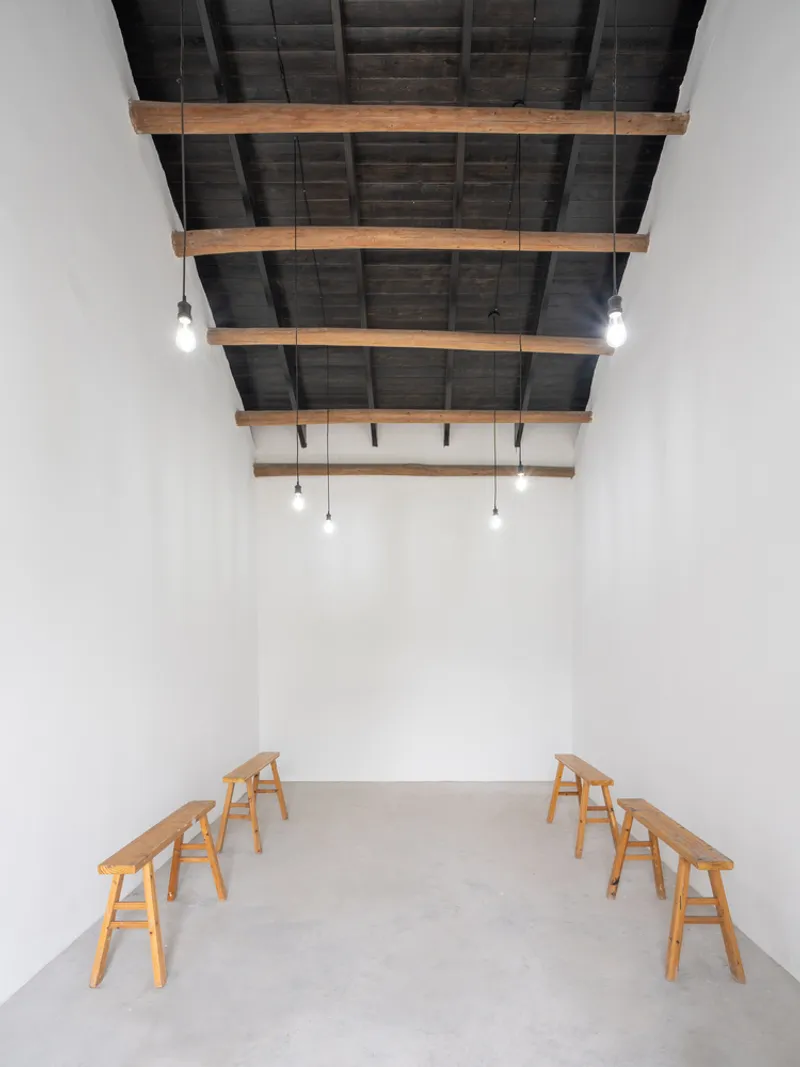
The refurbished warehouse functions as an indoor dining and preparation space, while remaining flexible enough to host exhibitions, seminars, and informal gatherings. As a remnant of intensive agricultural labor, the building retains its original openings, doors, and windows, preserving the physical traces of its former use.
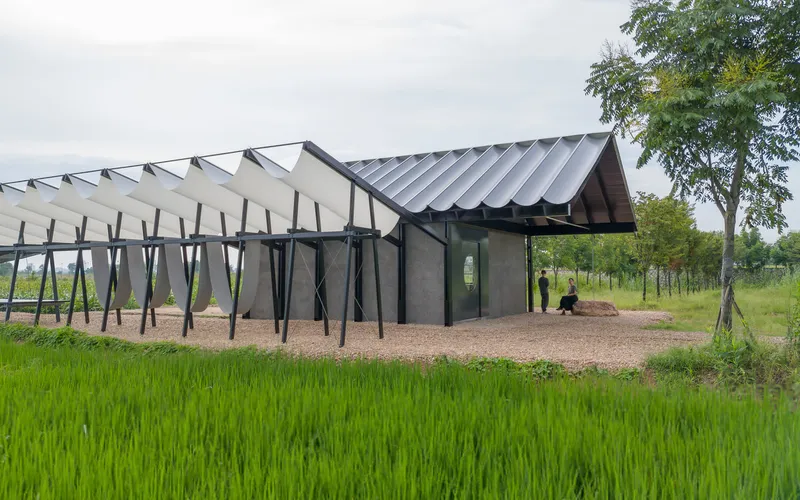
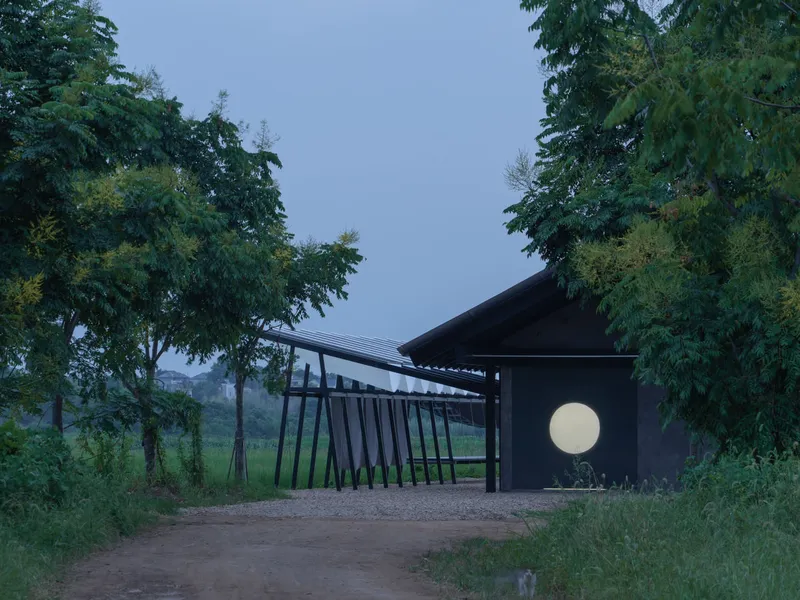
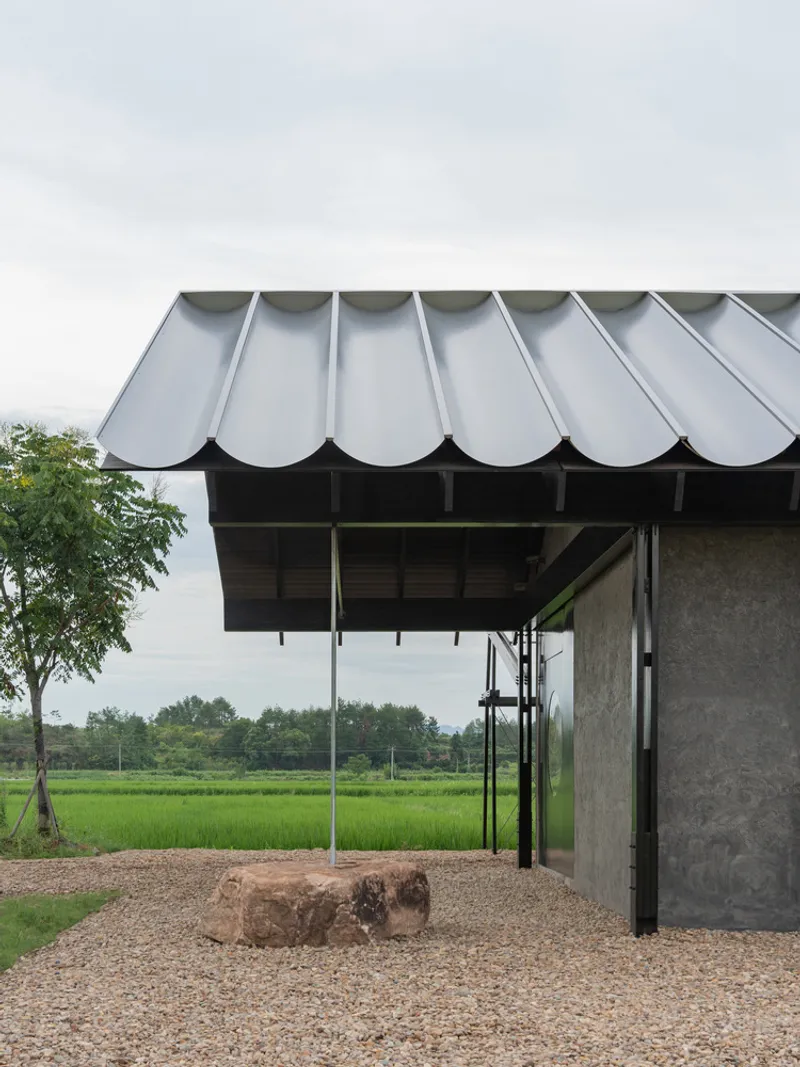
Intervention is deliberately minimal. A new metal roof resolves long-standing leakage issues and extends westward to form a sheltered grey space that marks the main entrance. This subtle cantilever both protects and signals arrival, without disrupting the warehouse’s familiar silhouette.
To stabilize the aging structure, new glued laminated timber ring beams reinforce the upper walls, while selective structural upgrades ensure longevity without erasing character.
Structural Renewal and Material Dialogue
A smaller ancillary structure on site required a more careful intervention. Its original roof was no longer viable, and the existing masonry walls lacked sufficient strength. To protect the historic fabric, a new independent steel-and-timber structural system was installed externally, allowing the roof load to bypass the old walls entirely.
Original roof beams were retained inside, not for structural necessity but as a spatial memory, maintaining continuity between past and present. The proportional logic of this external structure visually echoes the long table system, linking old and new through scale and rhythm rather than imitation.
A large natural rock sourced from a nearby village was introduced as a stabilizing and symbolic element, subtly anchoring the architecture to the surrounding landscape.
The Long Table: From Object to Public Infrastructure
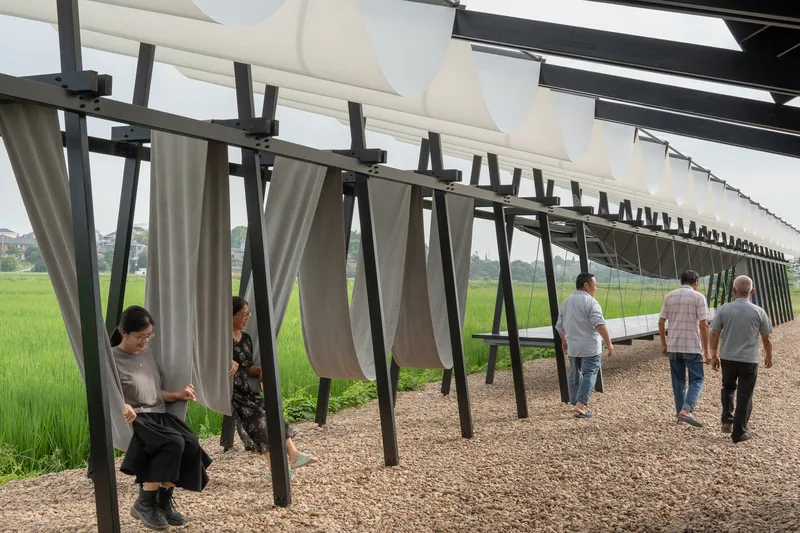
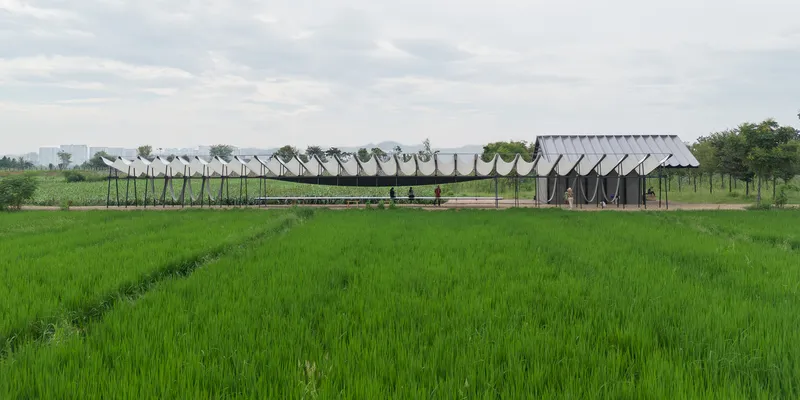
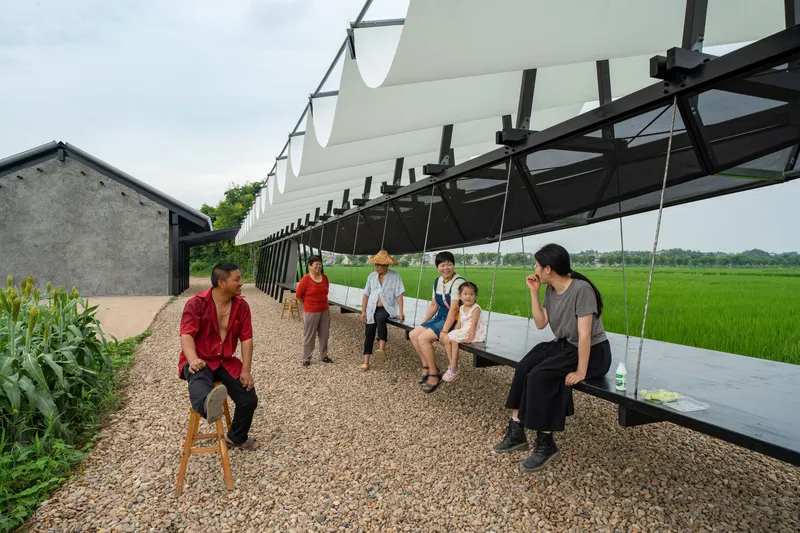
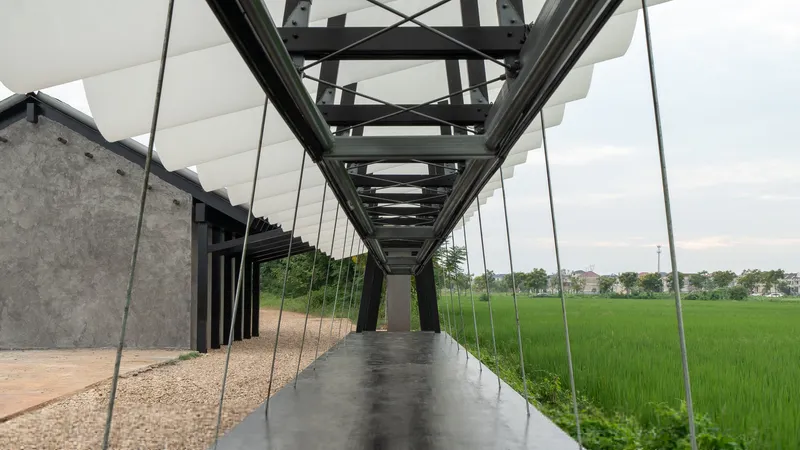
At the heart of the project lies the 18-meter-long table, an architectural gesture that blurs the boundary between furniture, building, and landscape. Positioned along the field path, the table acts as a social interface, connecting villagers, visitors, and passersby through shared use.
Lower than a conventional table, its surface invites sitting, lying, gathering, and informal occupation. The scale exaggeration transforms an everyday object into a communal platform, shifting perception from utility to experience. Floating lightly above the ground, it appears both grounded and imaginary, hovering between the mundane and the poetic.
From 18 to 42: Expanding the Public Realm
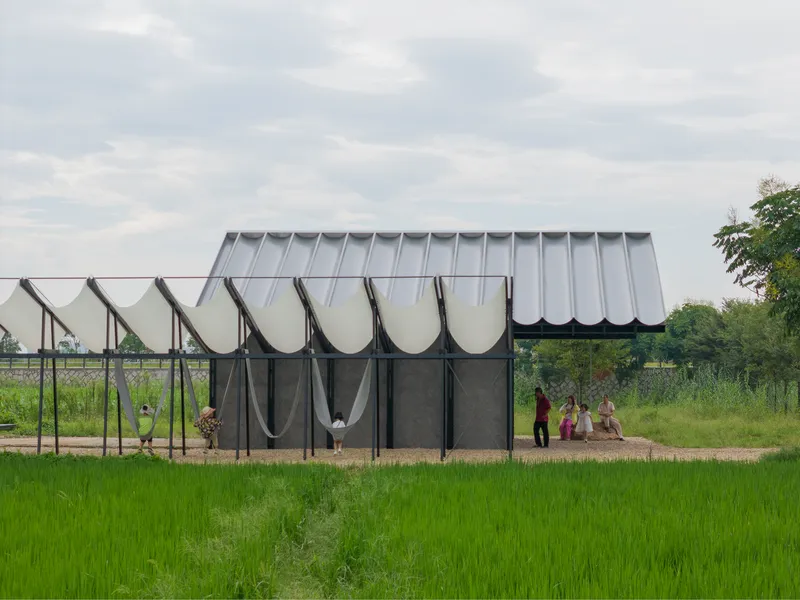
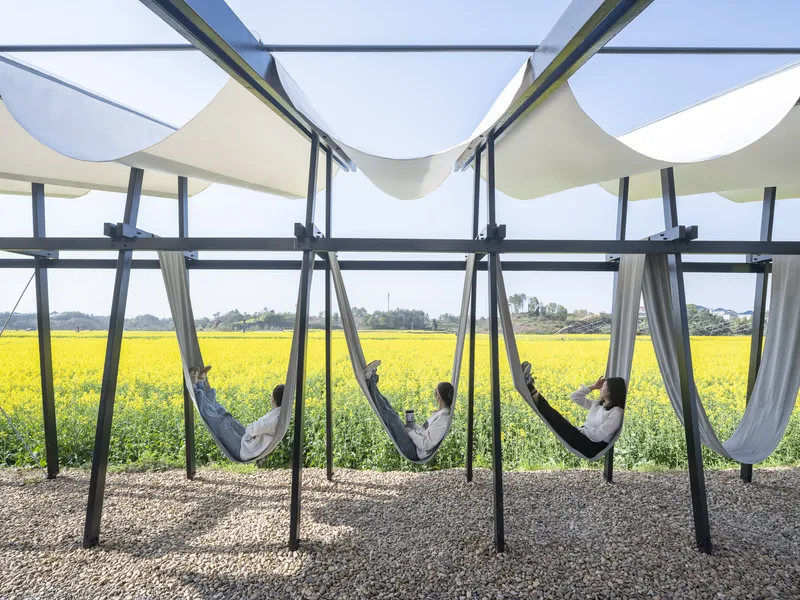
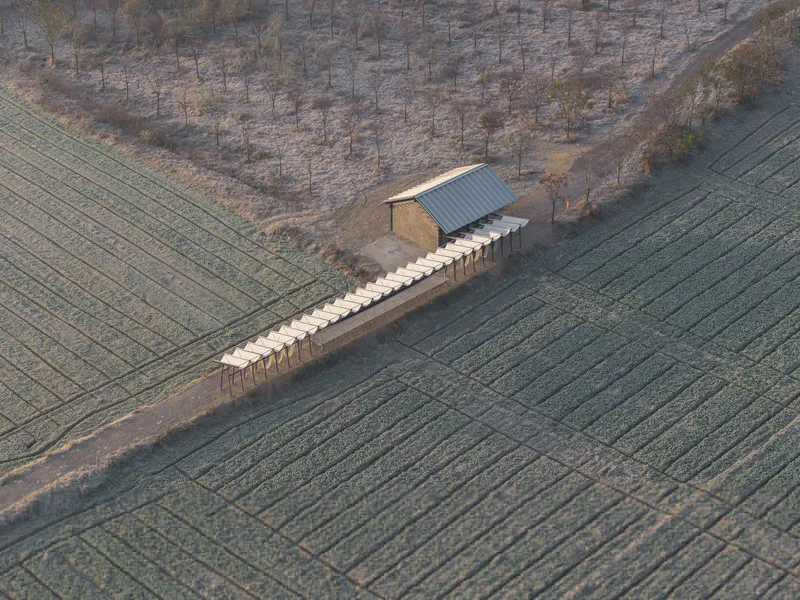
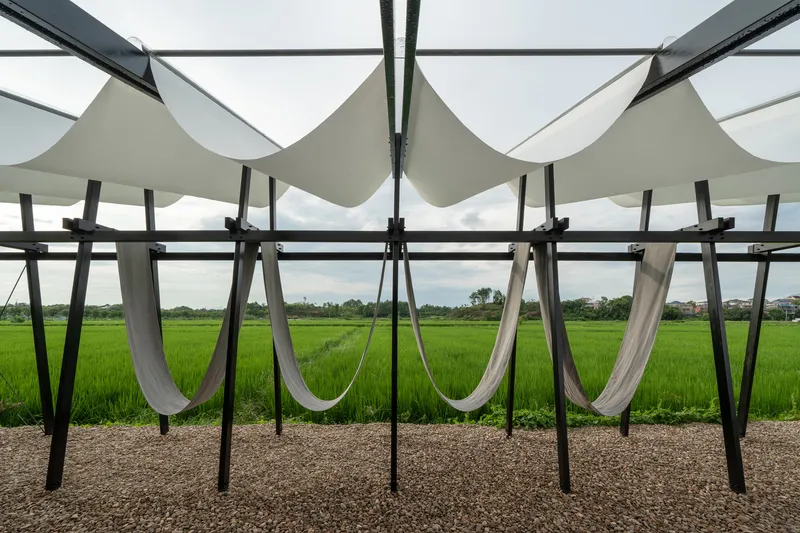
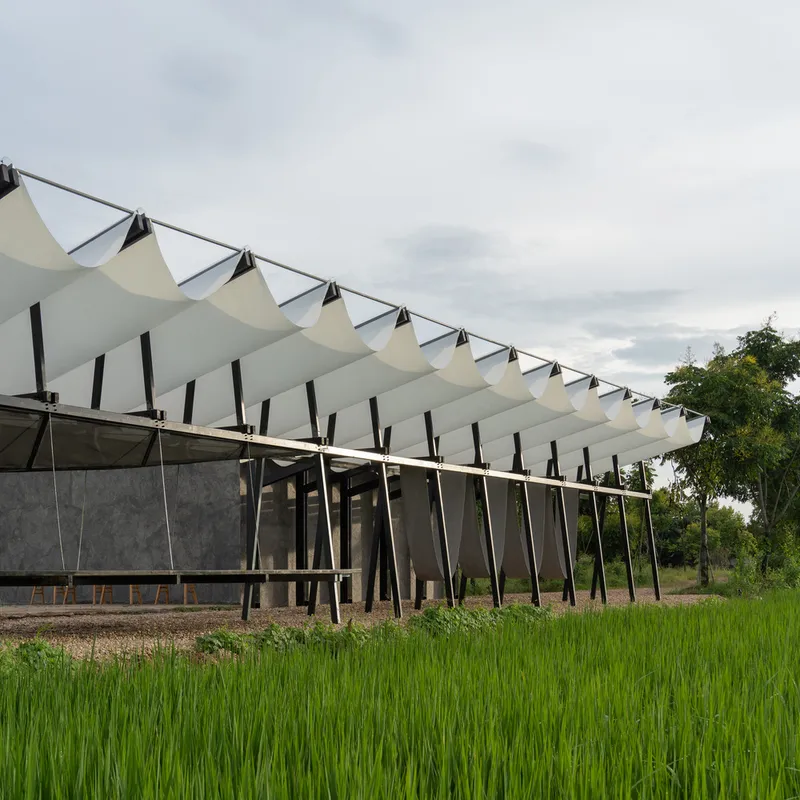
The project extends beyond the original table into a 42-meter-long public system, incorporating a lightweight roof, swings, resting platforms, and shaded edges. This expansion transforms a transitional field road into a place of pause, encounter, and lingering.
Wooden side structures complement the central steel span, providing stability while accommodating diverse modes of use. The architecture does not prescribe behavior; instead, it invites improvisation, from picnics and naps to conversations and solitary observation.
Roof, Landscape, and Environmental Response
Environmental conditions shape the project’s roof geometry. The single-direction sloping roof responds carefully to its surroundings: opening northward toward mountains and farmland, lowering southward to block visual noise from the road, and welcoming pedestrians from the west.
Material choices reinforce impermanence. While the warehouse roof prioritizes durability, the long table and promenade are covered with soft tarpaulin roofing, allowing the architecture to change with light, wind, and weather. Over time, the material will age, fray, and eventually disintegrate, mirroring the cycles of rural life and agricultural production.
This deliberate embrace of temporality adds a fourth dimension to the project, where architecture is understood not as a static object, but as a process unfolding through seasons.
With People, With Time
As outsiders, the architects resisted imposing fixed meanings or rigid functions. Instead, Table Eighteen offers a collective imaginary space, leaving interpretation and use to the community. During and after completion, villagers gradually appropriated the long table in their own ways, developing a sense of attachment and even protection toward it.
Over time, crops change, light shifts, and daily routines evolve. Rice paddies replace rapeseed flowers; harvests come and go. Against this living backdrop, the long table becomes a companion rather than a monument: quietly absorbing traces of use, weather, and time.
Rethinking Contemporary Rural Architecture
Table Eighteen demonstrates how rural public architecture can move beyond symbolism and spectacle to engage deeply with everyday life. Through adaptive reuse, minimal intervention, and openness to change, the project proposes an alternative approach to rural revitalization: one rooted in humility, observation, and shared experience.
All photographs are works of Chao Zhang, Fangfang Tian




Popular Articles
Popular articles from the community


Co-life: Sustainable Architecture for Age-Friendly Community Living
Co-life reimagines sustainable architecture for seniors through courtyards, rammed earth, shared gardens, and spaces designed for belonging.

Play: Fragments of Their World
Familiar architecture becomes modular playground design, creating safe spaces where displaced children can learn, connect, imagine and play.

The Ocean Hive: Sustainable Architecture for a Self-Sufficient Civilization at Sea
The Ocean Hive imagines sustainable architecture at sea, where modular habitats, algae, wave power and ocean waste sustain a growing colony.

Conexión: Biophilic Design Reimagines High-Rise Living in Hong Kong
Conexión reimagines high-rise living in Hong Kong through biophilic design, green facades, shared spaces, daylight, water and nature within.


Similar Reads
You might also enjoy these articles


Hodi-Mandai Geram
Project Function: Preservation and revitalization of the Intangible heritage and socio-spatial identity of the Hodi by Housing, Cultural Memory Center, Sacred Grove, landscape, local tourism economy


Olio Towers: A Mid-Rise for Performers That Fuses Housing, Rehearsal, and Stage
Located blocks from Houston's Theater District, this modular tower stacks living units around a central performance atrium.

Oasis: Modular Green Housing Carved into Dhaka's Urban Fabric
A shortlisted Plugin Housing entry reclaims unauthorized settlements in Dhaka with stepped concrete volumes, green roofs, and ventilation-driven design.

Black Hole: A Floating Megastructure for the Post-Physical Era
Emiliano Mazzarotto envisions a spherical, self-scaling arena where e-sports, digital hotels, and holographic stadiums replace traditional public space.


Explore Public Architecture Competitions
Discover active competitions in this discipline


Challenge to design locus for the upliftment of human rights


Challenge to reimagine the Iron Throne


Photograph architecture without architects


Illustrate the lost glory of Angkor Wat - Render Challenge
Comments (0)
Please login or sign up to add comments
No comments yet. Be the first to comment!