
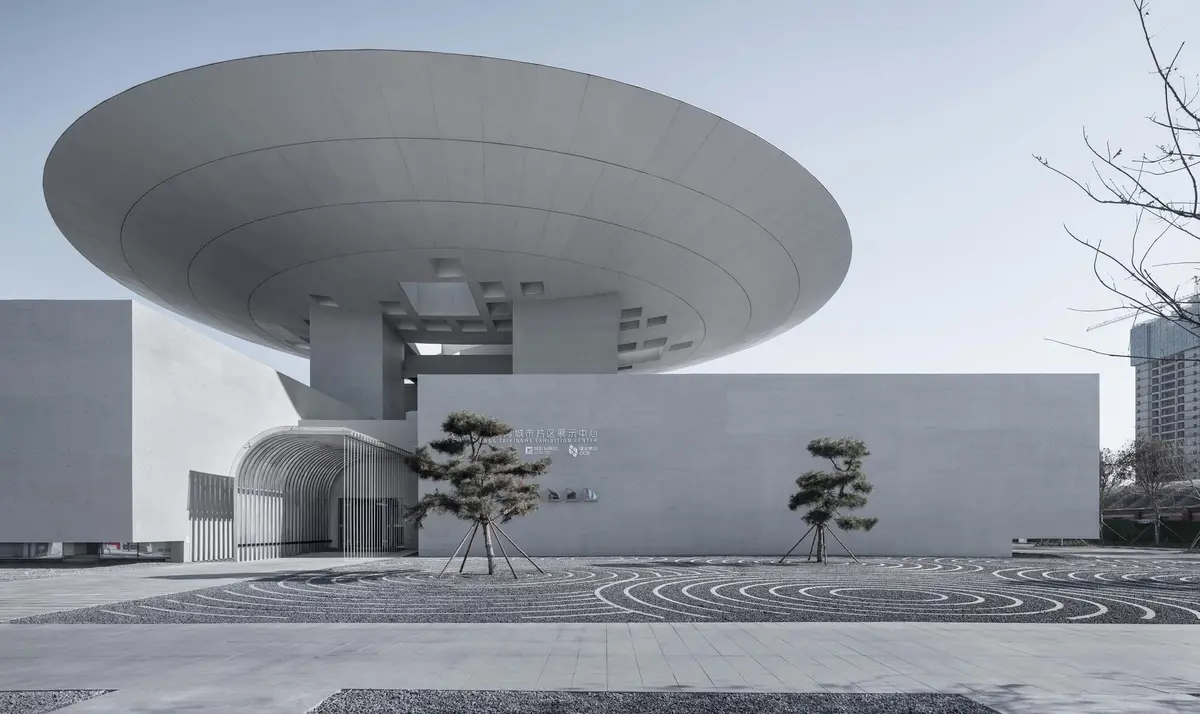
Taiping River Urban District Exhibition Centre by AZL Architects
Taiping River Urban District Exhibition Centre by AZL Architects blends tradition and modernity, anchoring history while suspending visions of Shijiazhuang’s future.


The Taiping River Urban District Exhibition Centre, designed by AZL Architects, is a striking architectural landmark in Shijiazhuang, Hebei Province, China. Completed in 2022, the 5,000 m² cultural hub is more than an exhibition space—it serves as a gateway to the city’s urban renewal, blending historical context, natural landscapes, and futuristic urban visions.
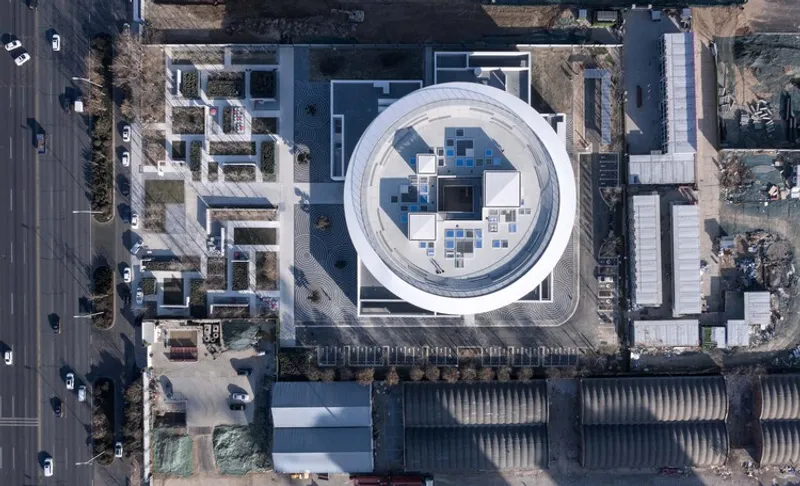
Context and Location
The project lies at the confluence of the Hutuo River—the historic “mother river” of Shijiazhuang—and its tributary, the Taiping River. Positioned near Zhengding Ancient City, which dates back over 1,600 years, the site sits within one of six major urban regeneration districts. Once dominated by small-scale industry and logistics, this district is now planned to become a vibrant waterfront community with cultural, commercial, and residential developments.
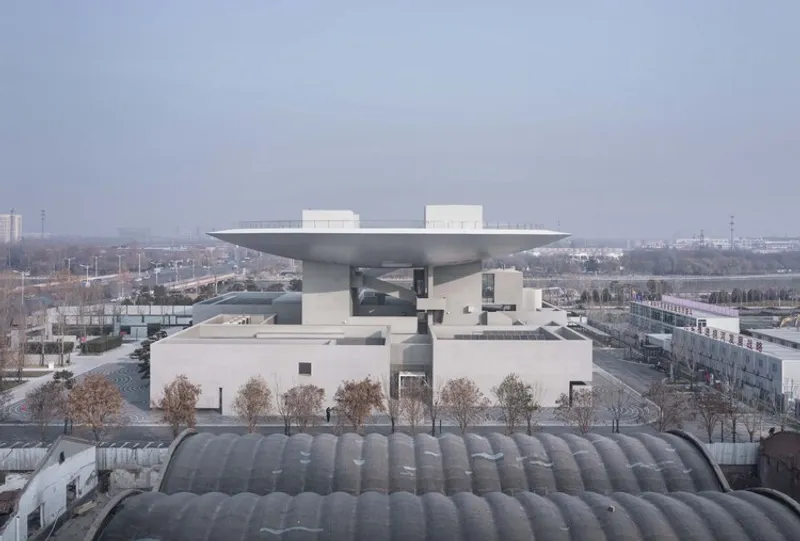
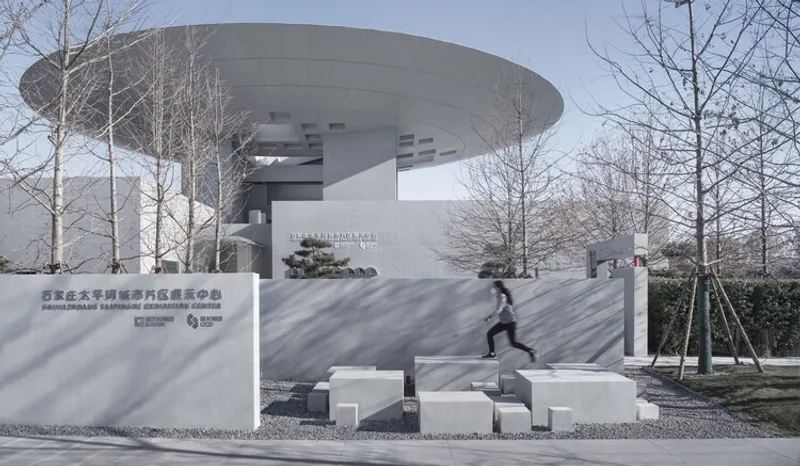
As the first major public building in the district, the Exhibition Centre is both a planning showcase and a symbolic cultural venue, setting the tone for future development.
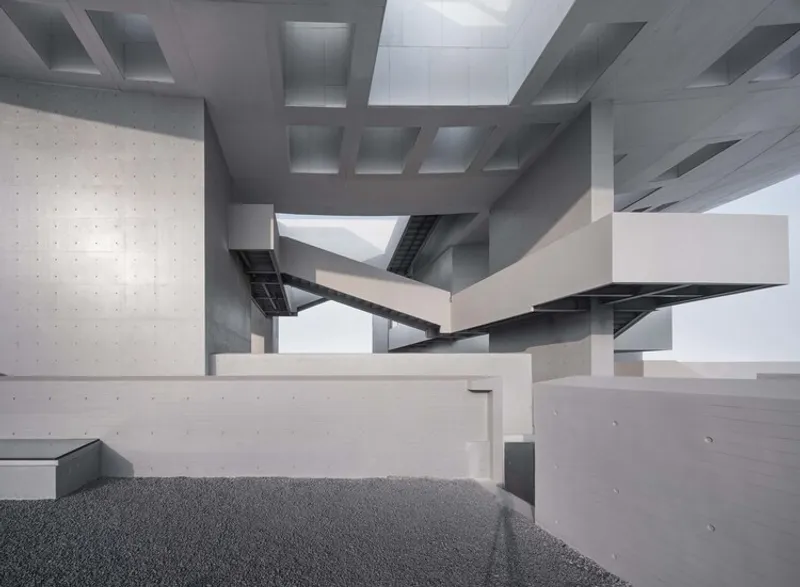
Architectural Concept: Openness and Closeness
AZL Architects approached the design by exploring the duality between openness and closeness, a theme deeply rooted in Chinese architectural history. From ancient walled cities to enclosed courtyards, the tension between boundary and freedom has shaped spatial design for centuries.
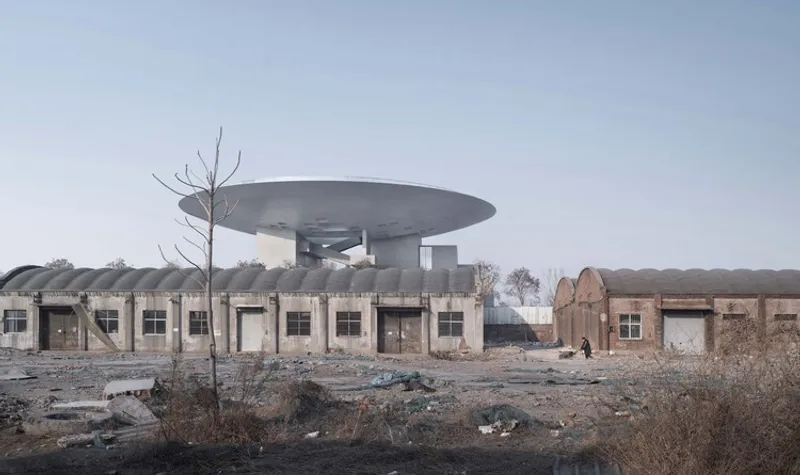
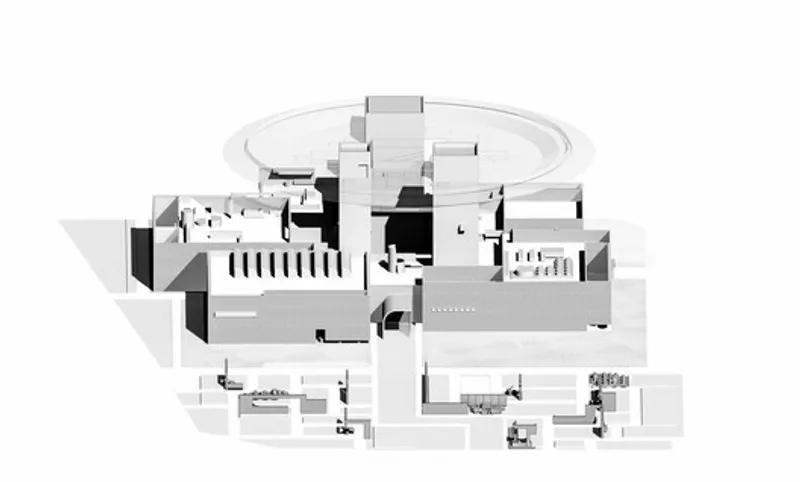
- The Lower Structure ("Anchoring")The base of the building is grounded with fair-faced concrete walls, inspired by the ramparts of Zhengding Ancient City. This anchored base conveys permanence, weight, and cultural continuity, while enclosing exhibition halls, conference areas, and VIP facilities.
- The Upper Structure ("Suspension")Above rises a dramatic suspended steel truss platform, appearing like a floating “saucer.” From here, visitors enjoy sweeping views of the Taiping River, Hutuo River, and the evolving cityscape. This elevated perspective symbolizes vision and progress, linking the city’s historic roots with its modern ambitions.
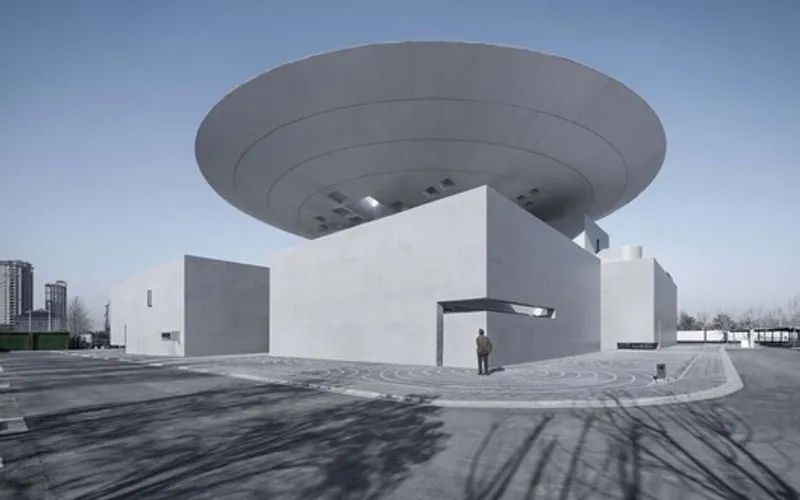
Together, “anchoring” and “suspension” embody the dialectical relationship between tradition and innovation, past and future, enclosure and openness.
Emotional Spaces and Human Experience
A defining feature of the Exhibition Centre is its “emotional spaces”—smaller architectural gestures such as low walls, benches, framed views, and landscaped courtyards. These interventions blur the boundaries between building, nature, and public life.
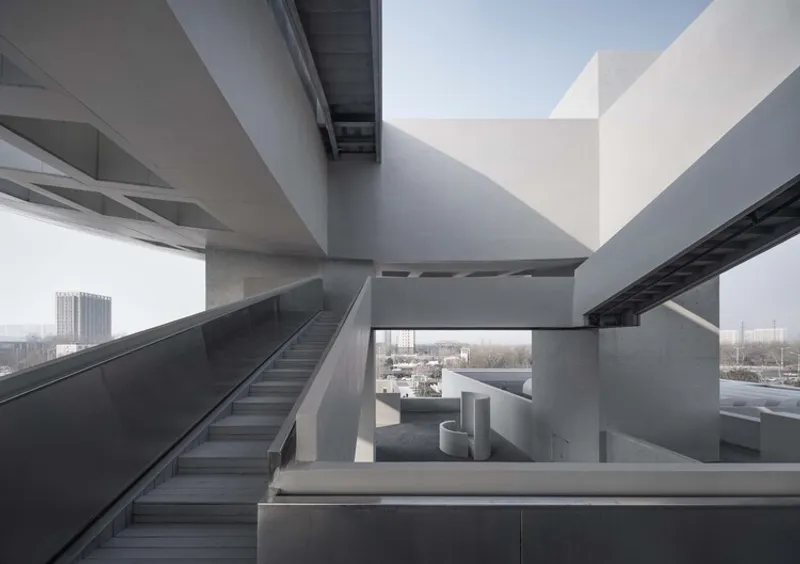
In winter, snow-covered benches evoke playfulness, inviting visitors outdoors. In summer, bamboo groves and water features create shaded retreats. These human-scale interventions transform the exhibition center into more than a gallery—it becomes an urban living room for the community.
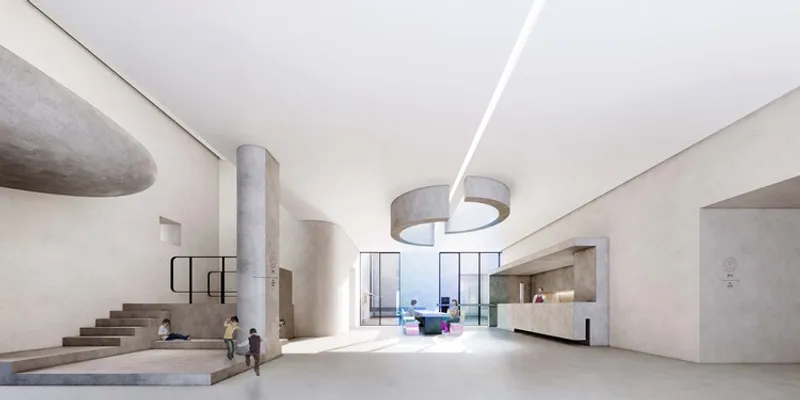
Function and Circulation
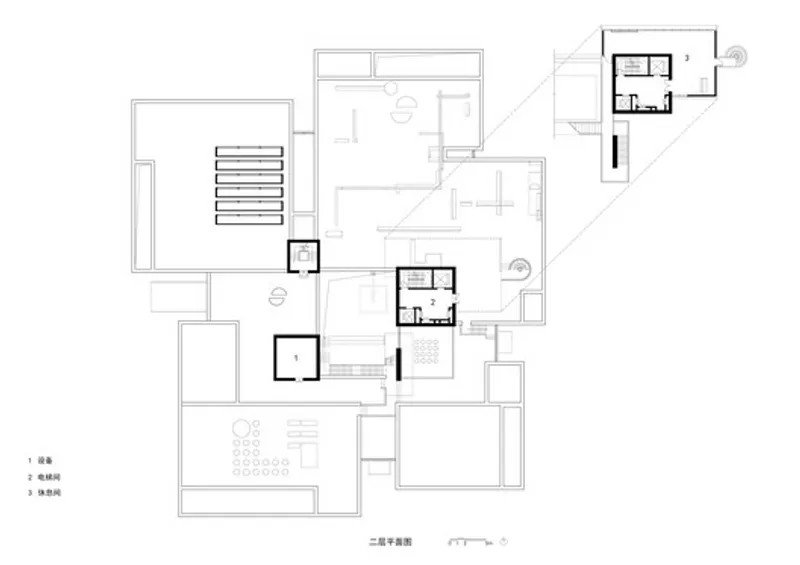
The ground floor houses the main program:
- A grand foyer and vestibule leading to exhibition halls
- Auxiliary functions like conference rooms, offices, and VIP reception
- A central courtyard filled with water, bamboo, and dappled light
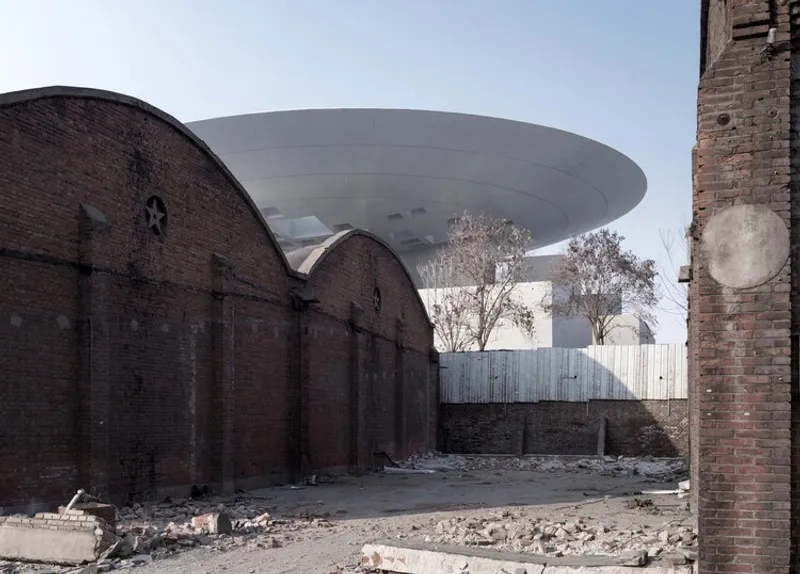
The second floor contains a café and book bar overlooking the Taiping River, while the roof platform offers a public observatory deck. The 600 m² basement holds technical equipment, ensuring seamless building operations.
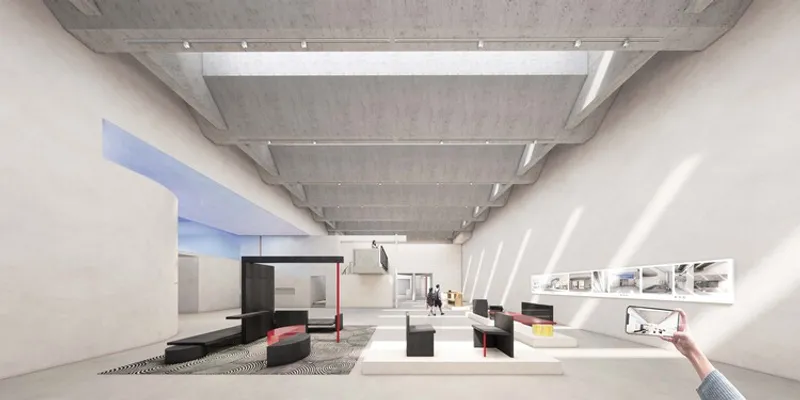
Circulation flows around the central courtyard, creating a looped exhibition path that balances openness with intimacy.
Materials and Construction
The building’s materiality reflects both strength and delicacy:
- Fair-faced concrete walls formed with pine timber molds, evoking texture and craftsmanship.
- Suspended steel truss roof clad in light-grey GRC panels, giving the upper volume a floating, futuristic appearance.
- Natural light enters through sail-shaped skylights, filtering into exhibition halls and courtyards to animate the interiors.
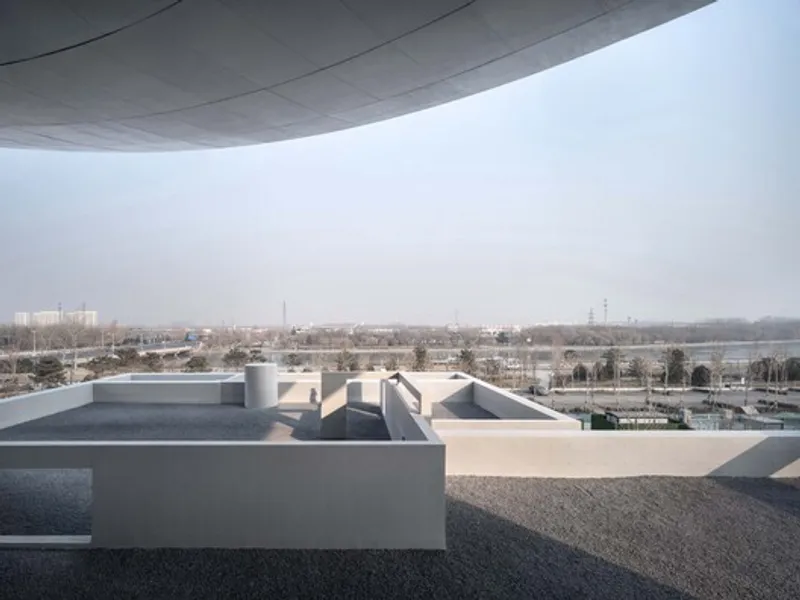
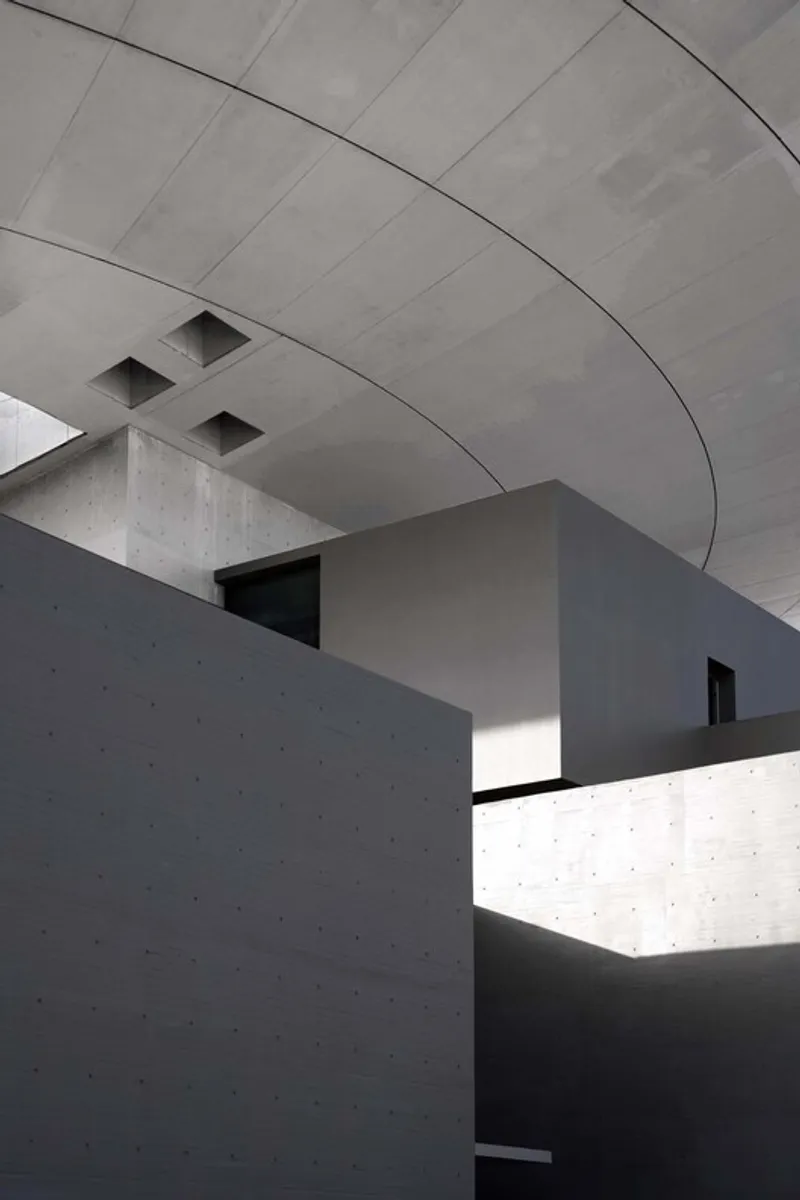
This combination of concrete solidity and steel lightness reinforces the architectural narrative of anchoring and suspension.
Cultural and Urban Significance
The Taiping River Urban District Exhibition Centre is not only a planning exhibition hall but also a cultural landmark. By linking the Hutuo River’s natural beauty, the heritage of Zhengding Ancient City, and Shijiazhuang’s future urban vision, the building provides a multi-dimensional cultural experience.
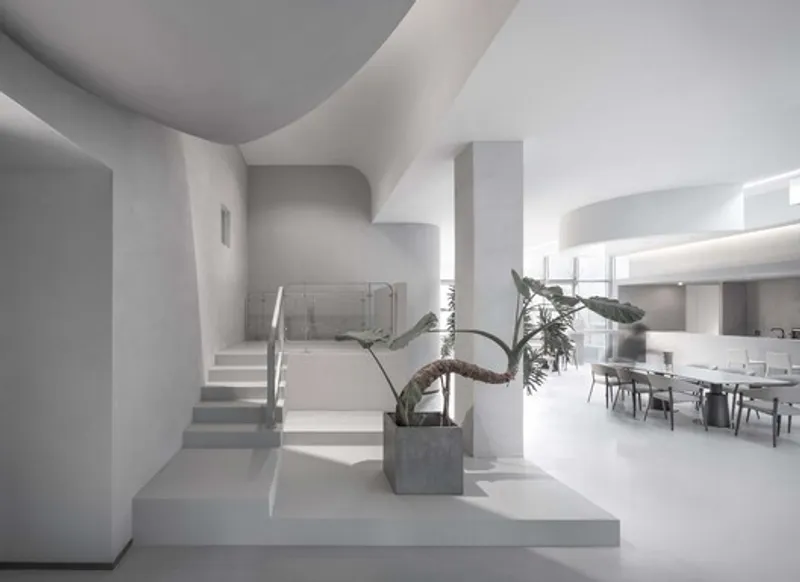
It symbolizes the transition of Shijiazhuang from an industrial past toward a sustainable, cultural, and people-centered future.
All the photographs are works of Bowen Hou, Zeyu Yang


Popular Articles
Popular articles from the community


ALGAL REALM: A Bio-Integrated Lunar Habitat Design for Life Beyond Earth
ALGAL REALM reimagines lunar habitat design with algae-powered life support, 3D-printed regolith, and vertical living for a lunar future.

Play: Fragments of Their World
Familiar architecture becomes modular playground design, creating safe spaces where displaced children can learn, connect, imagine and play.

Co-Life: Senior Housing Design That Reconnects Older Adults With the City
Co-Life reimagines senior housing design through healing gardens, shared streets, workshops, and a sustainable community across generations.

Co-life: Sustainable Architecture for Age-Friendly Community Living
Co-life reimagines sustainable architecture for seniors through courtyards, rammed earth, shared gardens, and spaces designed for belonging.

Similar Reads
You might also enjoy these articles


Hodi-Mandai Geram
Project Function: Preservation and revitalization of the Intangible heritage and socio-spatial identity of the Hodi by Housing, Cultural Memory Center, Sacred Grove, landscape, local tourism economy


Olio Towers: A Mid-Rise for Performers That Fuses Housing, Rehearsal, and Stage
Located blocks from Houston's Theater District, this modular tower stacks living units around a central performance atrium.

Oasis: Modular Green Housing Carved into Dhaka's Urban Fabric
A shortlisted Plugin Housing entry reclaims unauthorized settlements in Dhaka with stepped concrete volumes, green roofs, and ventilation-driven design.

Black Hole: A Floating Megastructure for the Post-Physical Era
Emiliano Mazzarotto envisions a spherical, self-scaling arena where e-sports, digital hotels, and holographic stadiums replace traditional public space.

Explore Cultural Architecture Competitions
Discover active competitions in this discipline

Challenge to reimagine the Iron Throne

Photograph architecture without architects

Illustrate the lost glory of Angkor Wat - Render Challenge

Bring back Drive In's
Comments (0)
Please login or sign up to add comments
No comments yet. Be the first to comment!