
Tarq Gallery by SquareWorks: A Contemporary Restoration in Mumbai
Tarq Gallery by SquareWorks seamlessly blends heritage restoration with modern design, featuring exposed steel, Corten accents, and natural light integration.


A Harmonious Blend of Heritage and Modernity
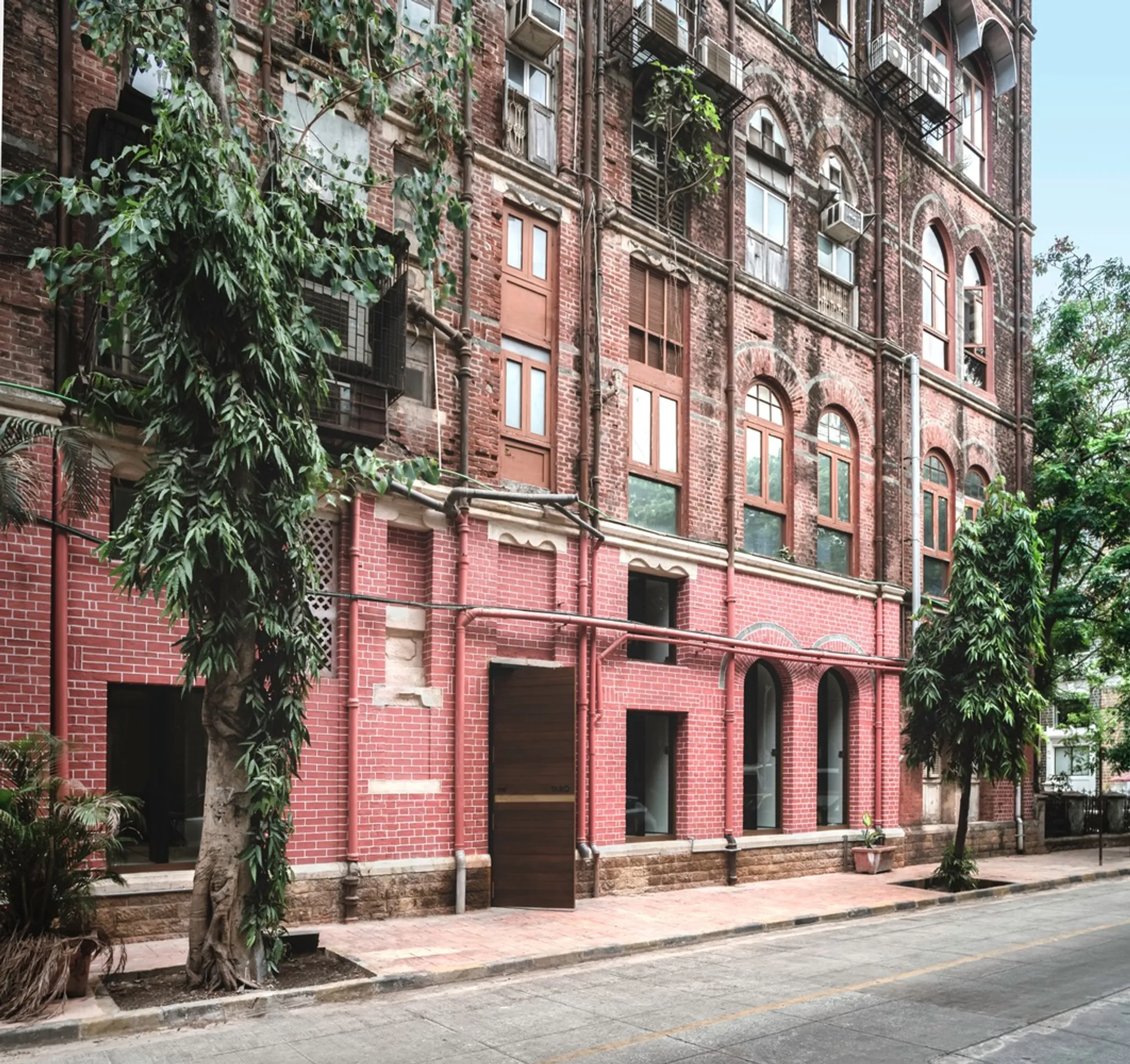
Tarq Gallery, designed by SquareWorks, is a striking example of architectural restoration and adaptive reuse. Situated in Mumbai, this contemporary art gallery occupies the ground floor of a 120-year-old heritage building, positioned between two distinct urban fabrics—the Victorian Gothic structures of the east and the Art Deco influences of the west. This transformation seamlessly bridges the city's historical and modern architectural narratives.
Restoring the Past, Designing for the Future
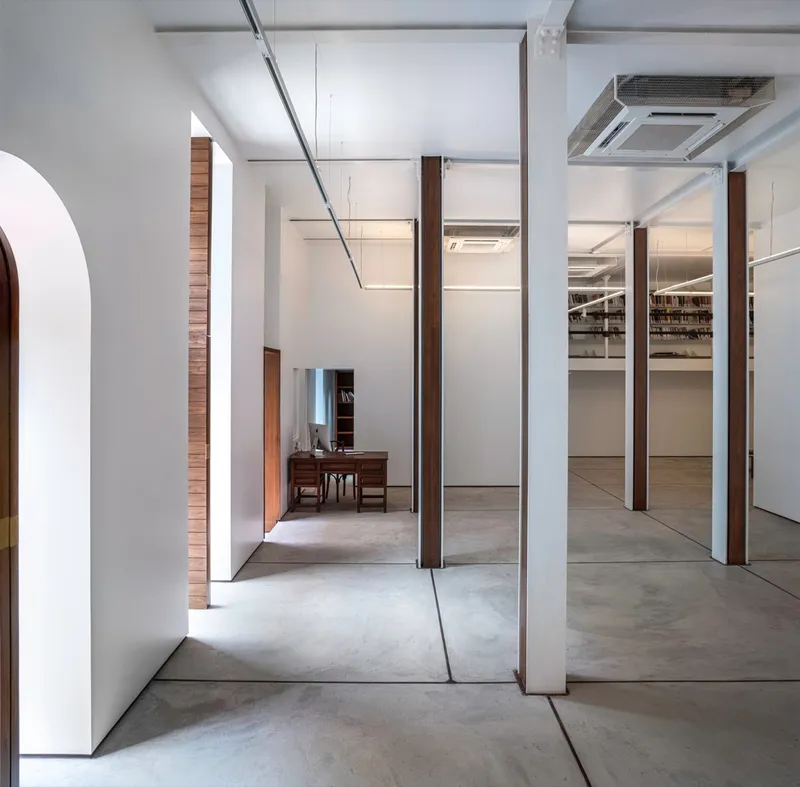
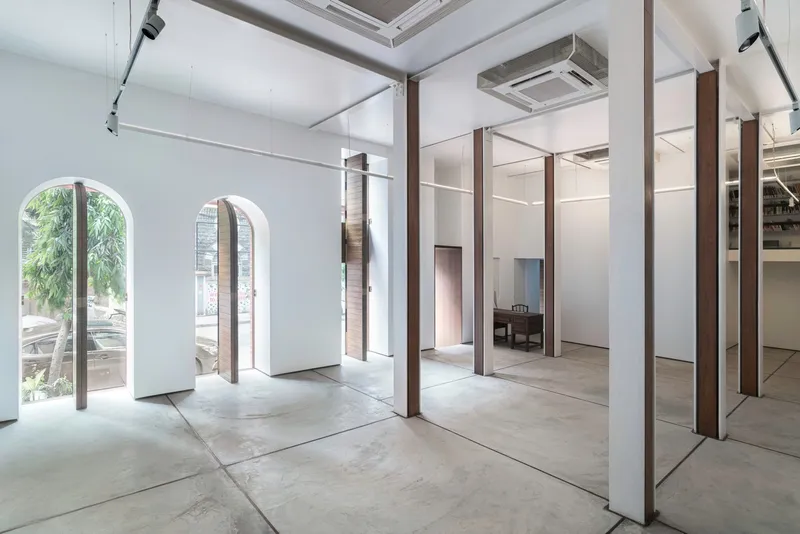
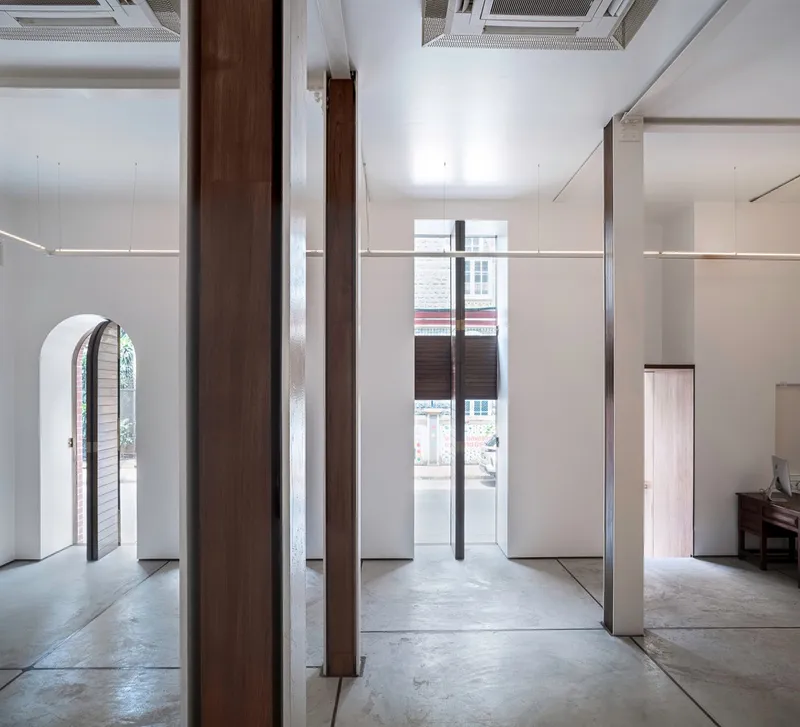
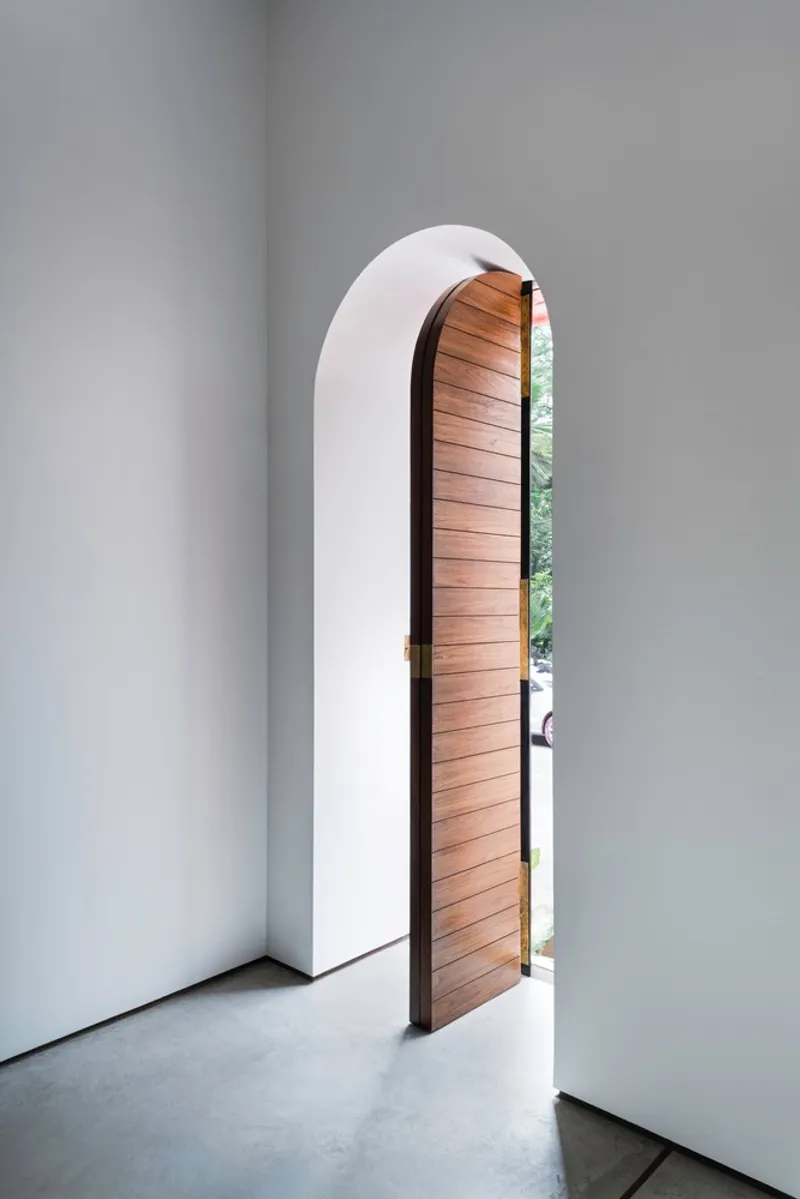
The primary design objective was to respect the historical integrity of the structure while infusing it with a contemporary aesthetic. The restoration process emphasized natural light, reviving the original brick masonry openings and enhancing the 14-foot-high ceilings with exposed steel columns and beams. Wood filler accents were applied to the structural elements, ensuring a balance between industrial character and refined craftsmanship.

Custom Craftsmanship and Material Innovation
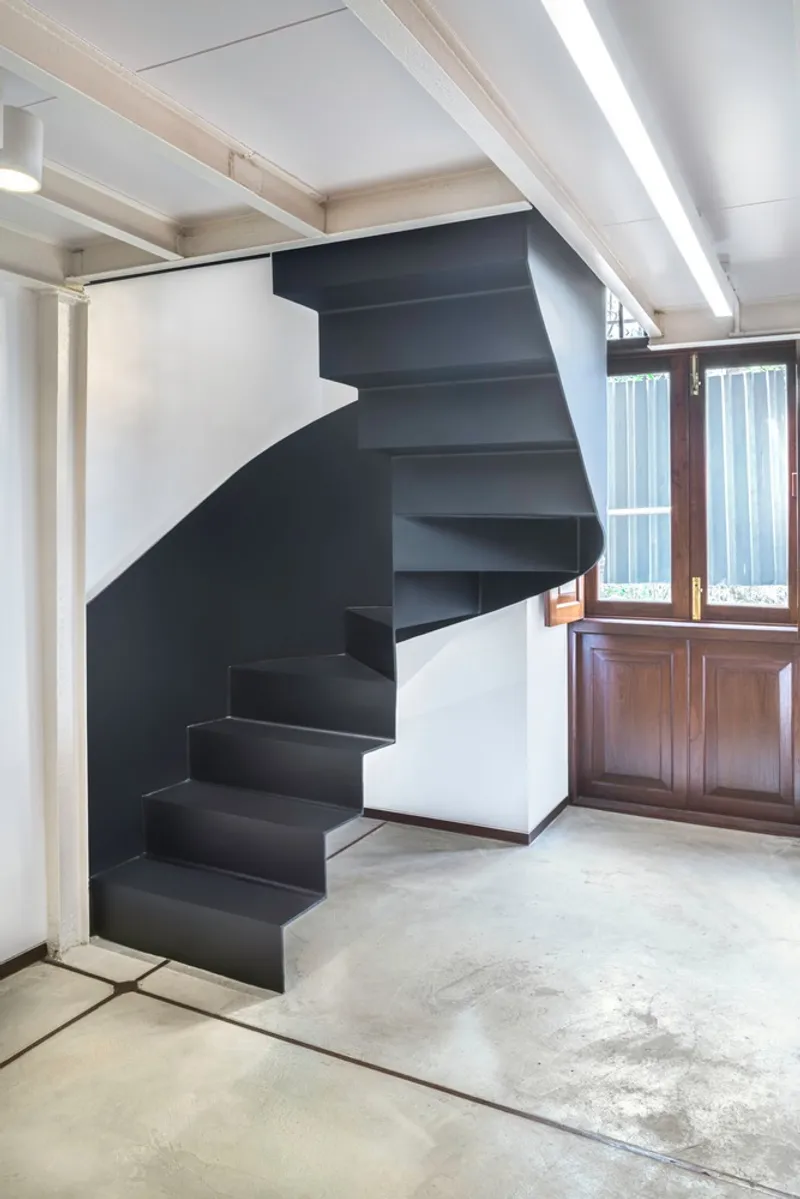
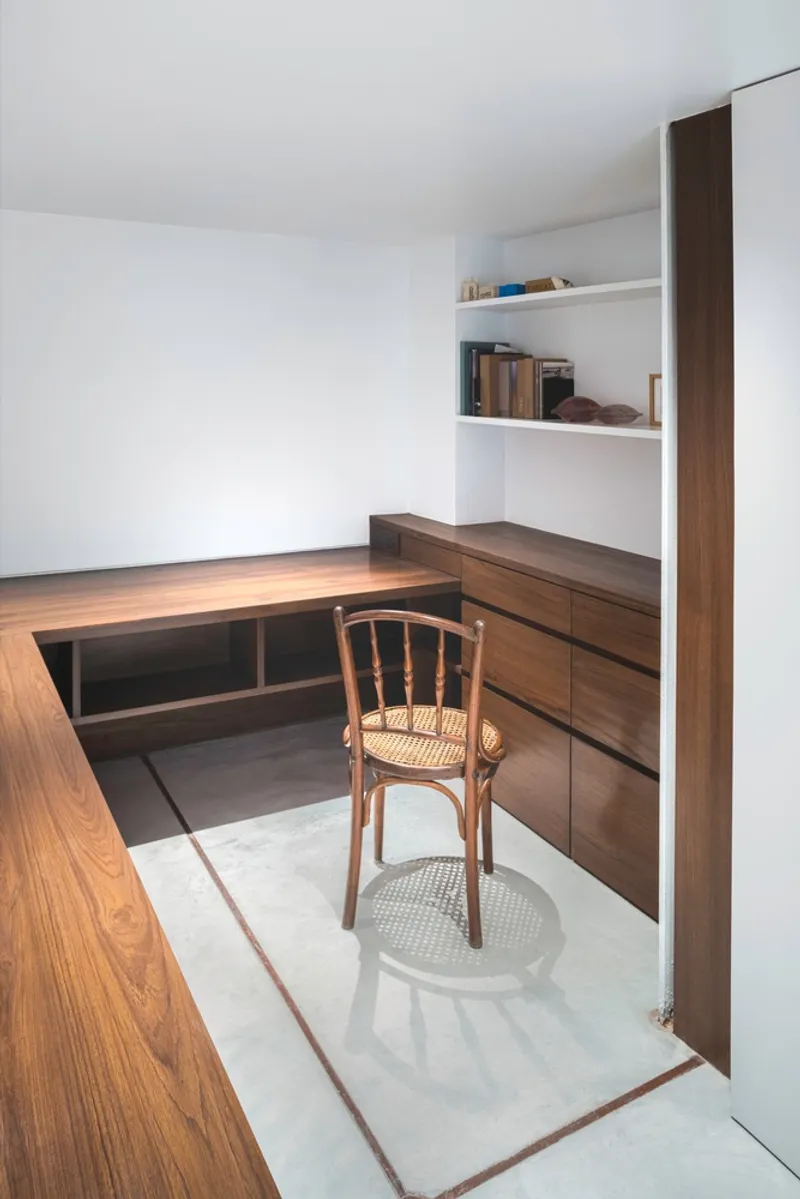
A key aspect of the project was its commitment to custom carpentry and site-specific fabrication. Moving away from mass production, every design element was meticulously crafted to align with the spatial composition of the gallery. A Corten steel feature wall became a defining addition, merging the brand identity of TARQ with the building’s historic fabric. The textured, rusted patina of Corten steel not only complements the original steel framework but also introduces a bold, contemporary contrast.


Heritage Conservation with Modern Enhancements
Preserving the heritage values of the building was paramount. The original wooden windows on the north facade were carefully restored by skilled carpenters. On the west facade, where original frames were absent, new central axial-hinged window shutters were introduced to enhance visibility while maintaining historical integrity.
Rather than concealing structural elements behind false ceilings, the steel beams were left exposed, reinforcing the gallery's dialogue between the past and present. This approach underscores the coexistence of different architectural eras, materials, and systems, preserving the essence of the original structure while accommodating modern functionality.
A Contemporary Art Space Rooted in History
Through the integration of natural light, sustainable materials, and bespoke craftsmanship, SquareWorks has successfully redefined a historic space into a dynamic contemporary art gallery. The juxtaposition of Corten steel, restored brick masonry, and exposed steel structures encapsulates the essence of heritage conservation and modern design. This transformation is a testament to Mumbai’s evolving architectural landscape, where history and modernity coexist in perfect harmony.
All Photographs are works of Studio Charuau




Popular Articles
Popular articles from the community


The Ocean Hive: Sustainable Architecture for a Self-Sufficient Civilization at Sea
The Ocean Hive imagines sustainable architecture at sea, where modular habitats, algae, wave power and ocean waste sustain a growing colony.

EW PARK: Sustainable Architecture Reimagines the Future of Urban Parking
EW PARK reimagines city parking as a modular wooden tower combining automation, solar energy, electric mobility, and adaptable urban design.

Hill & Cross Opera: Sculptural Opera House Architecture Shaped by Tallinn’s Landscape and Identity
Hill & Cross Opera reimagines opera house architecture in Tallinn through its sculptural hill, civic plaza, glass wave and a luminous cross.

Riyadh For All: Intergenerational Urban Design for Active Aging in Rabat
Riyadh For All reimagines urban design in Rabat with intergenerational co-living, adaptive courtyards, and Moroccan cultural exchange today.
Similar Reads
You might also enjoy these articles


Hodi-Mandai Geram
Project Function: Preservation and revitalization of the Intangible heritage and socio-spatial identity of the Hodi by Housing, Cultural Memory Center, Sacred Grove, landscape, local tourism economy


Olio Towers: A Mid-Rise for Performers That Fuses Housing, Rehearsal, and Stage
Located blocks from Houston's Theater District, this modular tower stacks living units around a central performance atrium.

Oasis: Modular Green Housing Carved into Dhaka's Urban Fabric
A shortlisted Plugin Housing entry reclaims unauthorized settlements in Dhaka with stepped concrete volumes, green roofs, and ventilation-driven design.

Black Hole: A Floating Megastructure for the Post-Physical Era
Emiliano Mazzarotto envisions a spherical, self-scaling arena where e-sports, digital hotels, and holographic stadiums replace traditional public space.

Explore Contemporary Gallery Competitions
Discover active competitions in this discipline



Challenge to reimagine the Iron Throne


Photograph architecture without architects


Illustrate the lost glory of Angkor Wat - Render Challenge


Design challenge to reuse E-waste
Comments (0)
Please login or sign up to add comments
No comments yet. Be the first to comment!