
Tate House by MATERIA: A Harmonious Pavilion Retreat in Puerto Escondido, Mexico
Tate House by MATERIA blends modular pavilions, endemic gardens, and traditional Oaxacan materials, harmonizing nature, light, and contemplative outdoor spaces.


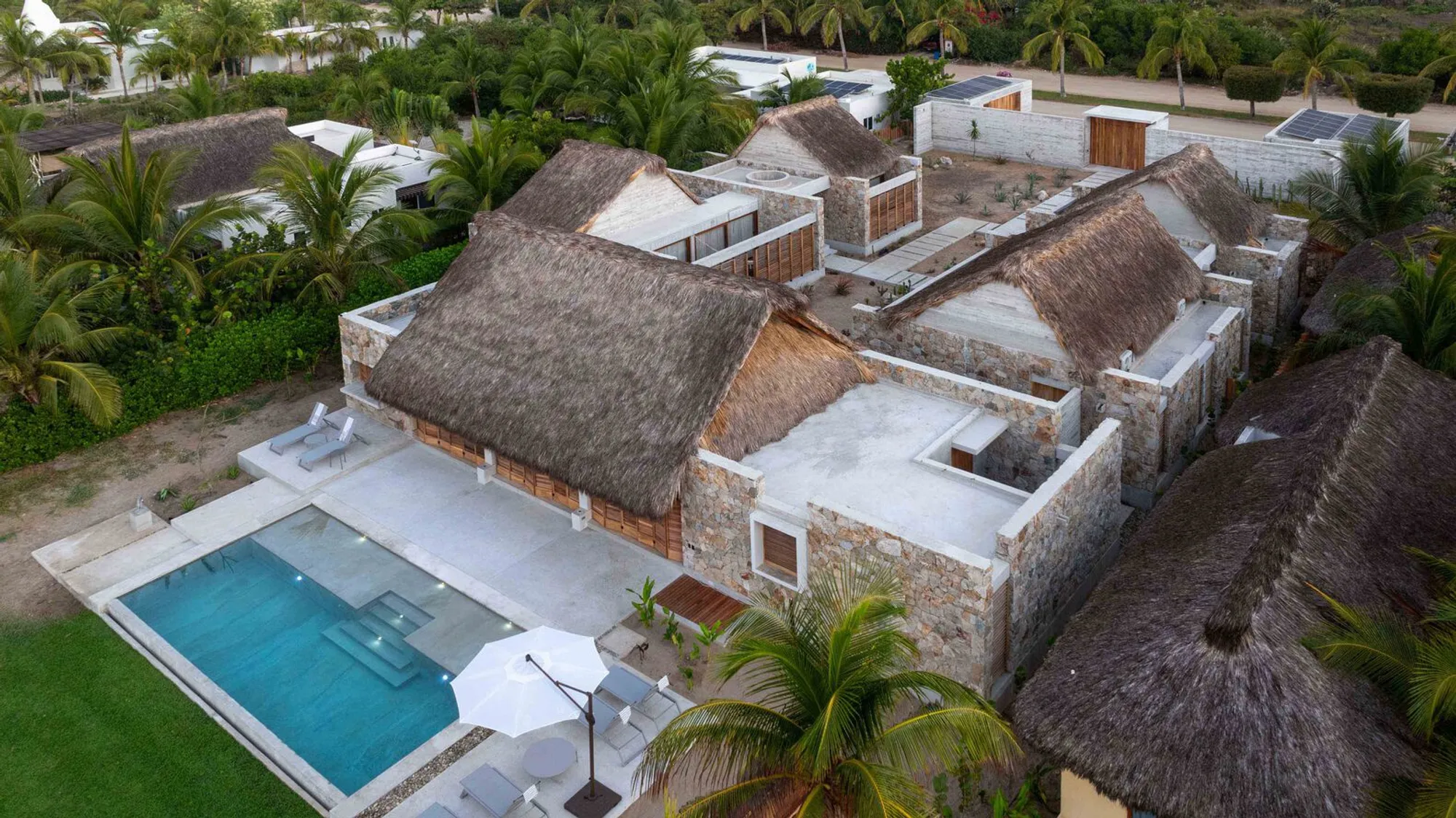
Nestled along the breathtaking coastline of Puerto Escondido, the Tate House is a masterful architectural response to the natural and cultural context of Oaxaca. Designed by MATERIA, this residential project emphasizes a profound connection to the site, where the home emerges not as an imposed structure but as a lens to experience nature, light, and seasonal rhythms. The architecture prioritizes integration with the environment, celebrating the dialogue between interior and exterior spaces.
Site-Responsive Design and Spatial Organization
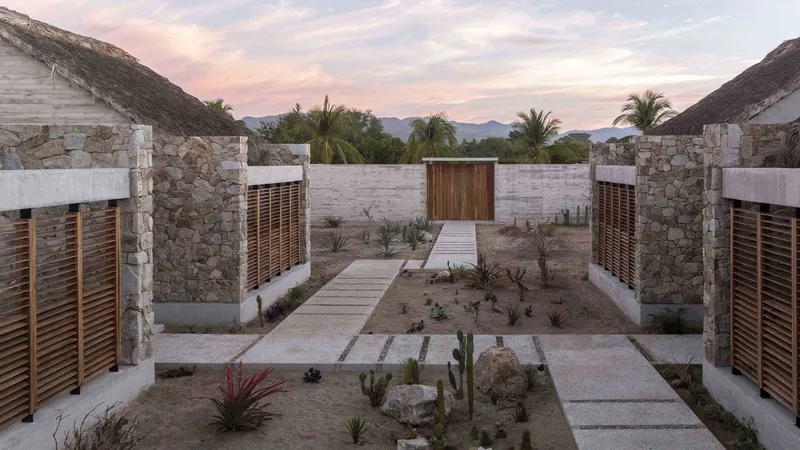
The layout of Tate House is composed of modular pavilions that define and frame outdoor areas, guiding pathways through gardens and contemplative zones. The arrangement thoughtfully balances openness and enclosure, creating an immersive site-wide experience. Each pavilion serves both functional and experiential roles, ensuring that movement through the property is fluid and engaging.
Gardens as Extensions of Architecture
Three distinct gardens punctuate the property:
- Open Dune Garden: Stretching from the living areas toward the ocean, this garden blurs the boundaries between the home and the natural shoreline.
- Privacy Buffer: Dense native tropical jungle vegetation along the lateral edges ensures seclusion from neighboring properties while maintaining ecological authenticity.
- Desert Botanical Garden: The heart of the property, this garden features endemic species of agave, cacti, bromeliads, and trees such as pochote (Ceiba pentandra), copal (Bursera simaruba), and guayacán (Guaiacum coulteri). Plant placement and seasonal changes enhance the pathways linking the pavilions, creating a living tapestry of textures and blooms throughout the year.
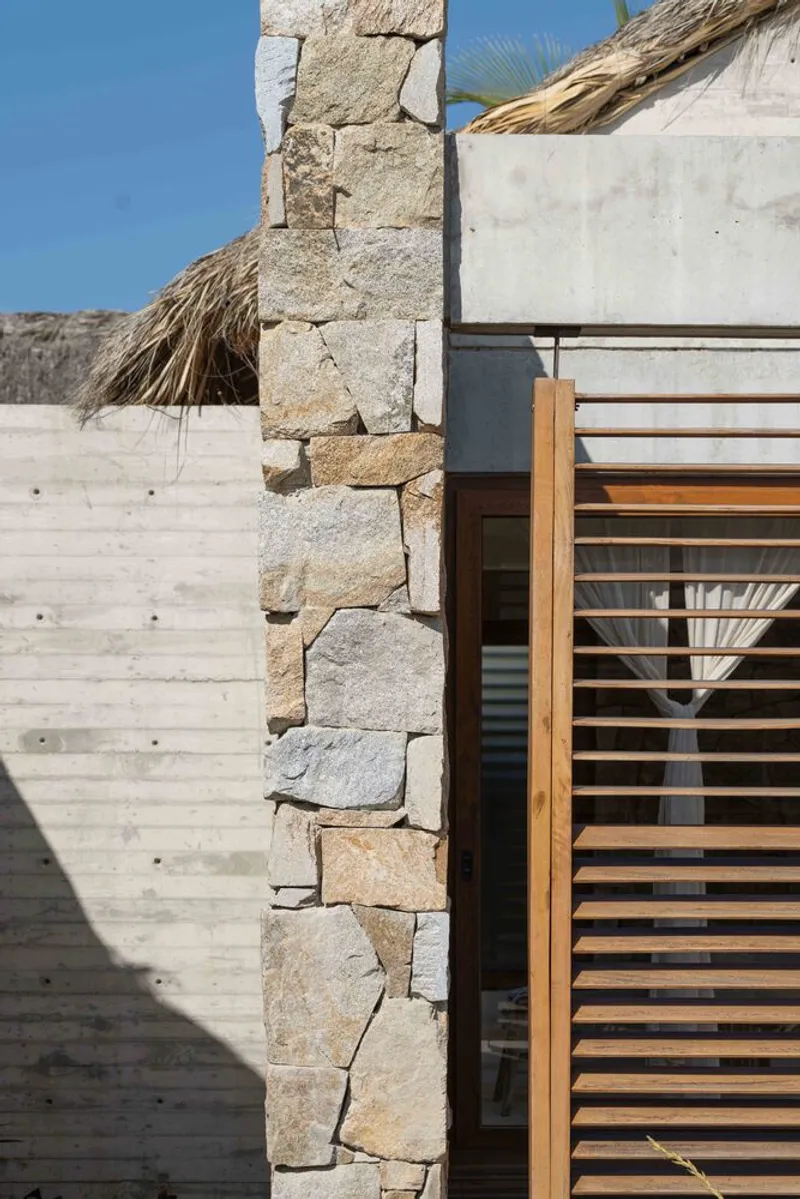
Materiality and Tectonics: Craftsmanship of Oaxaca
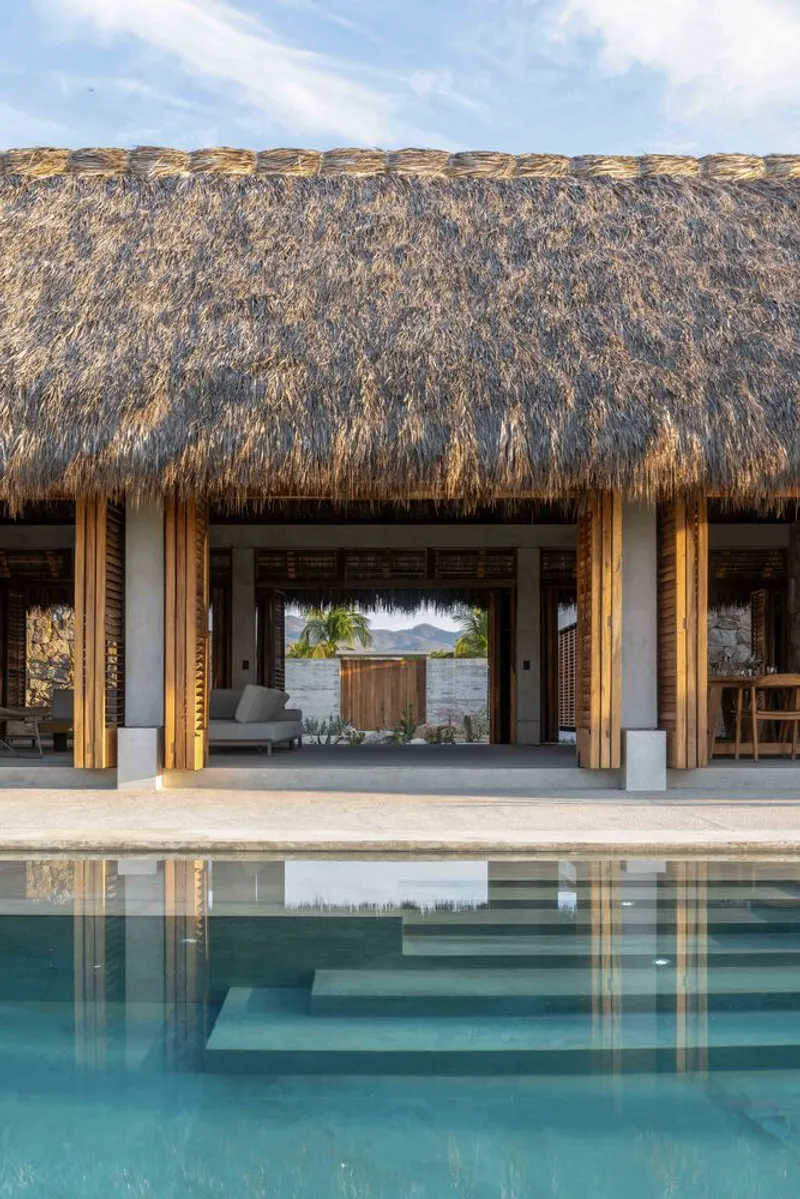
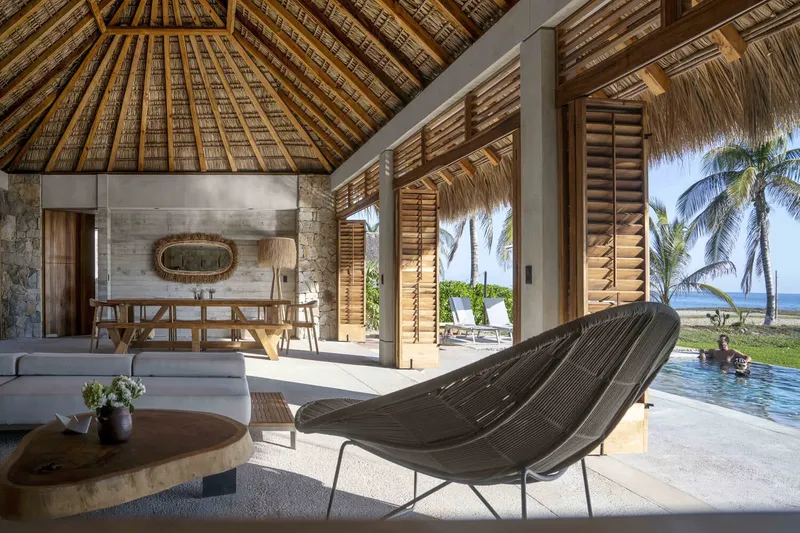
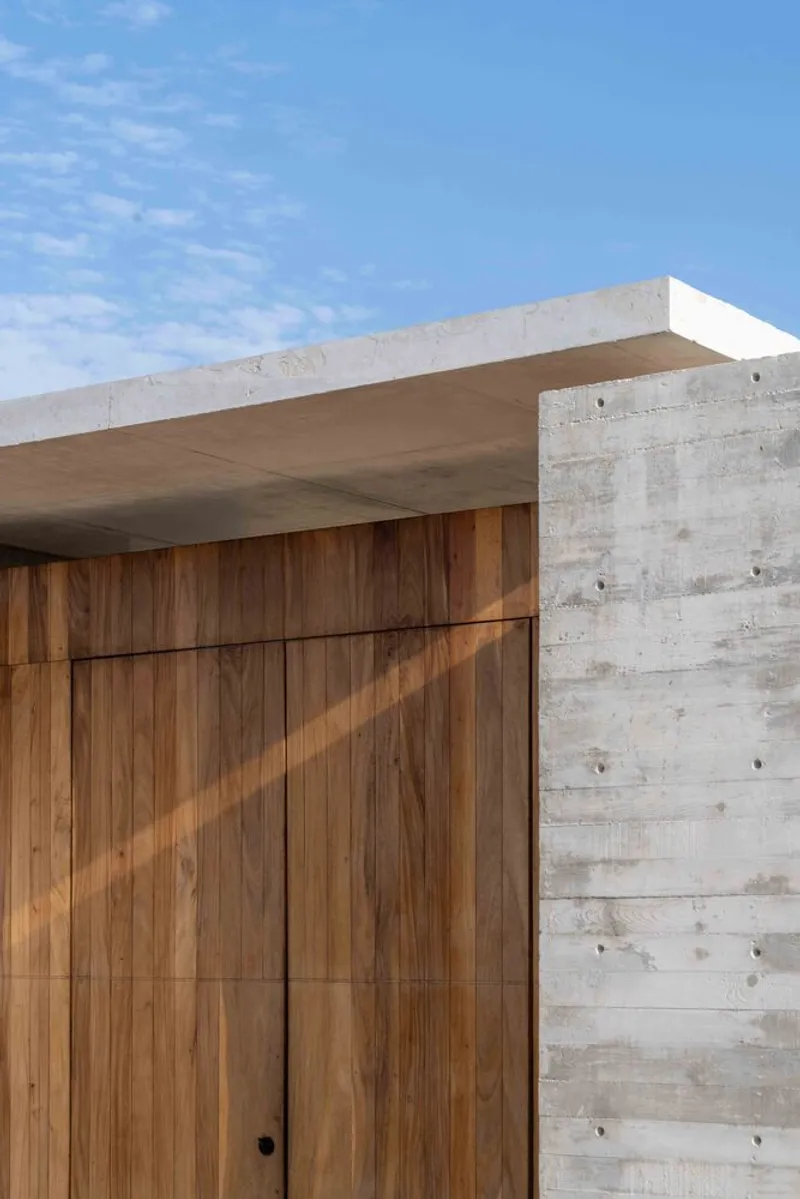
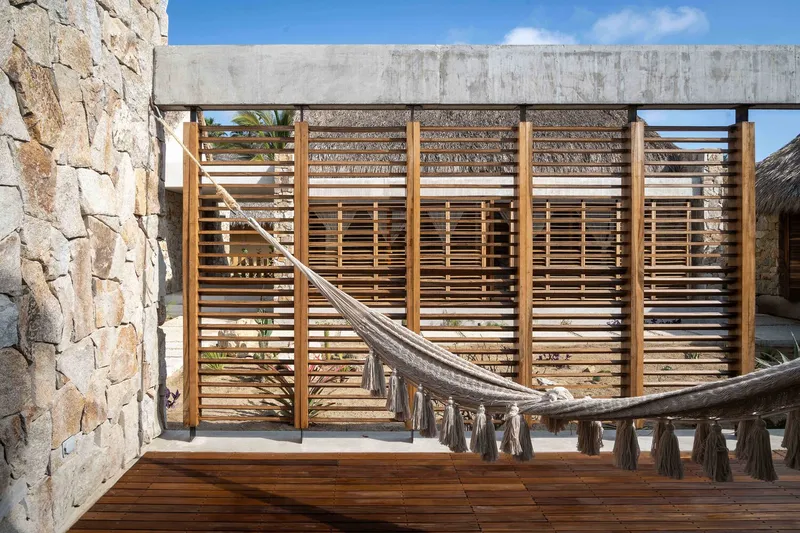
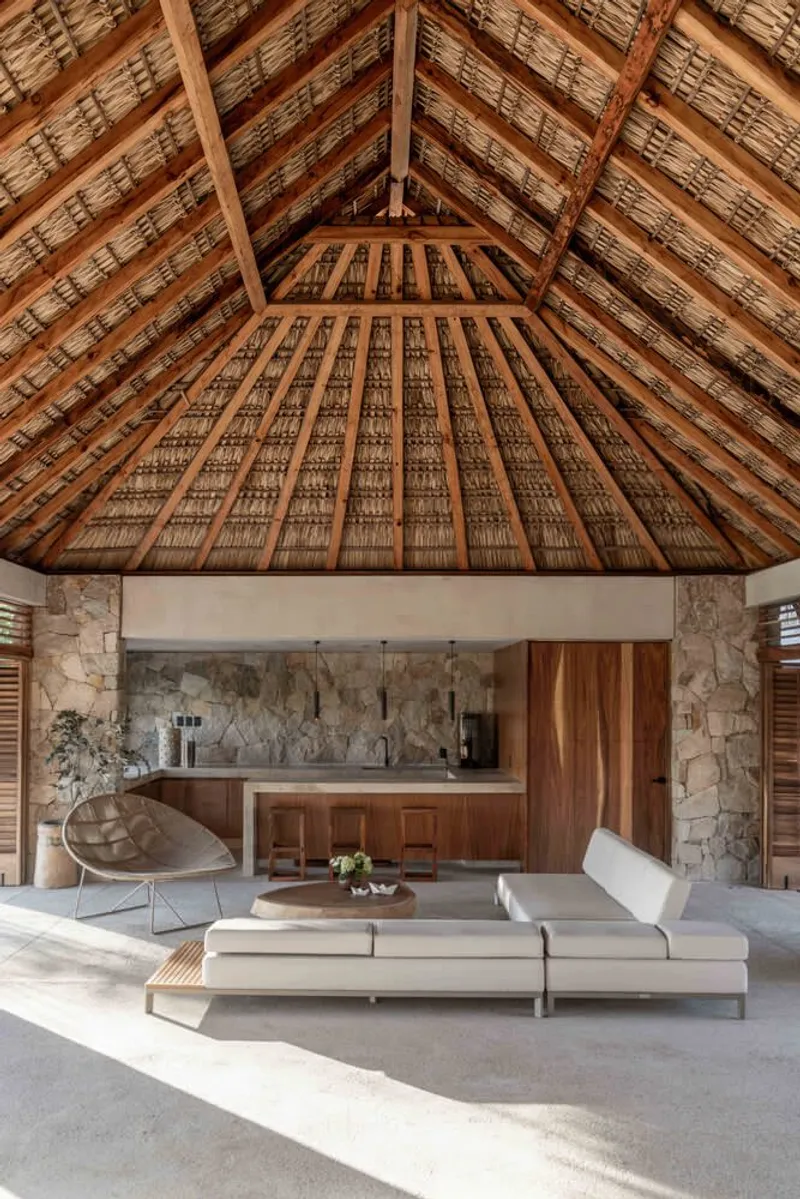
Tate House manifests Oaxaca’s rich artisanal heritage through its material palette and construction techniques. Masonry solids flank habitable spaces atop a concrete slab, establishing a horizontal axis that anchors the project to the landscape. Spaces between masonry volumes are covered with traditional wood and palm-thatched palapas, creating airy, shaded zones that respond to local climatic conditions. Wooden lattices define private terraces, reinforcing the intimate connection to the gardens while framing views of the surroundings.
The interplay of concrete, stone, and wood forms a rhythmic architectural language. Joints, voids, and material transitions celebrate haptic expression and light modulation, highlighting textures and shadows that evolve with the day. The pavilions’ repetition emphasizes a constant visual dialogue between solid and void, permanence and impermanence.
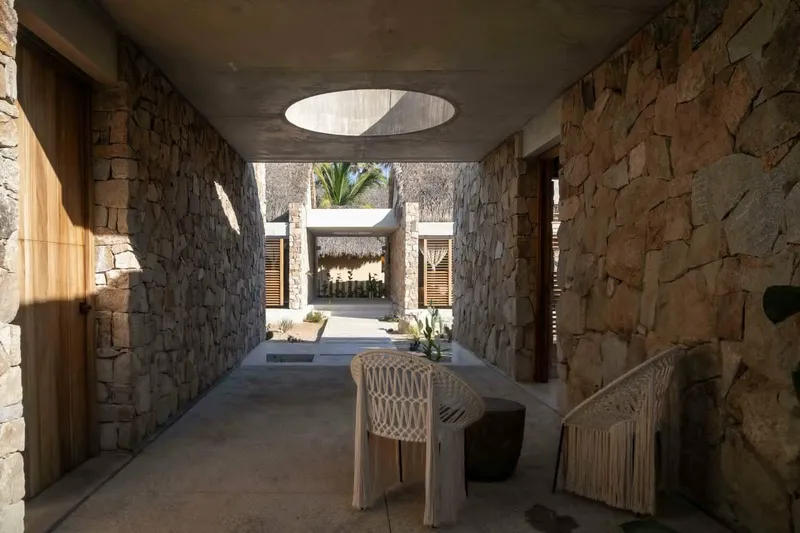
The Central Pavilion: A Threshold of Permanence
At the heart of Tate House lies the central pavilion, the main social and public space. This “threshold of permanence” serves as a large framed view of the Pacific Ocean to the west and the Oaxacan mountains to the east. It functions simultaneously as a source of shade, a connecting element for surrounding gardens, and a contemplative space where light is filtered via oculus openings in the concrete slabs above.
Interstitial spaces between pavilions provide subtle thresholds, encouraging movement, reflection, and a tactile mapping of sunlight throughout the day. Each pavilion is carefully oriented to integrate visual and physical connections to both immediate and distant contexts, fostering a harmonious relationship with the natural environment.
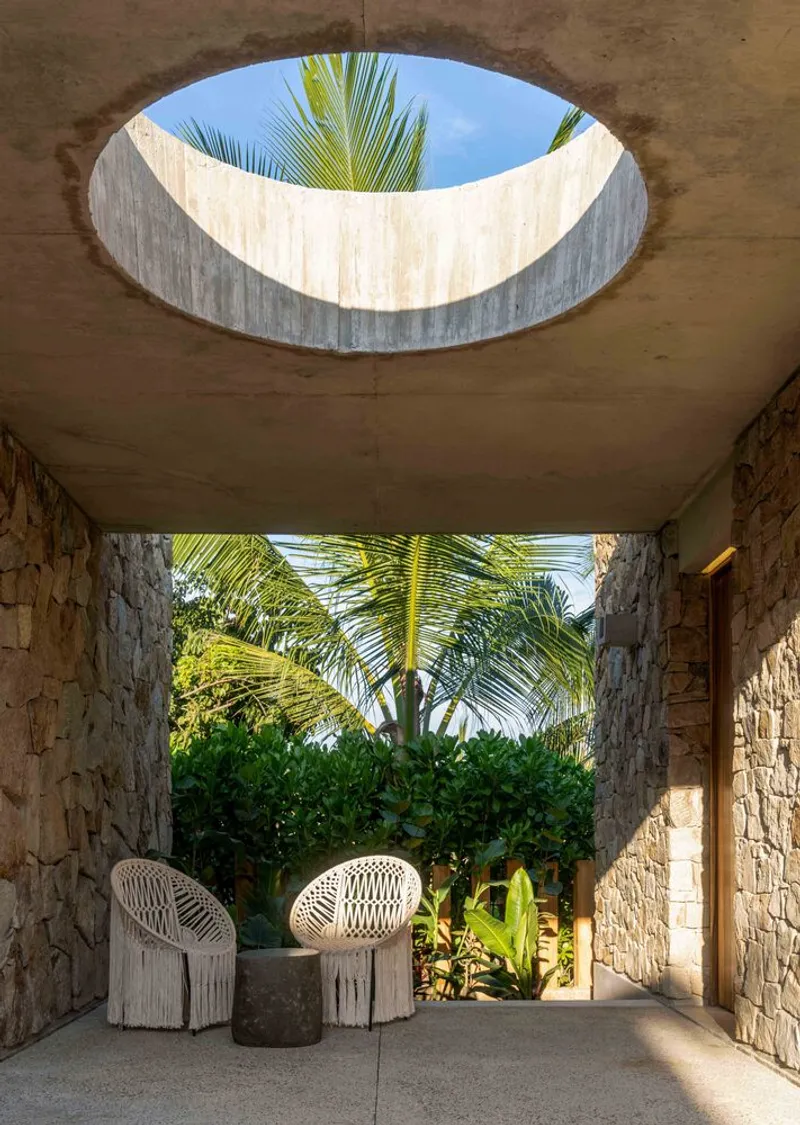
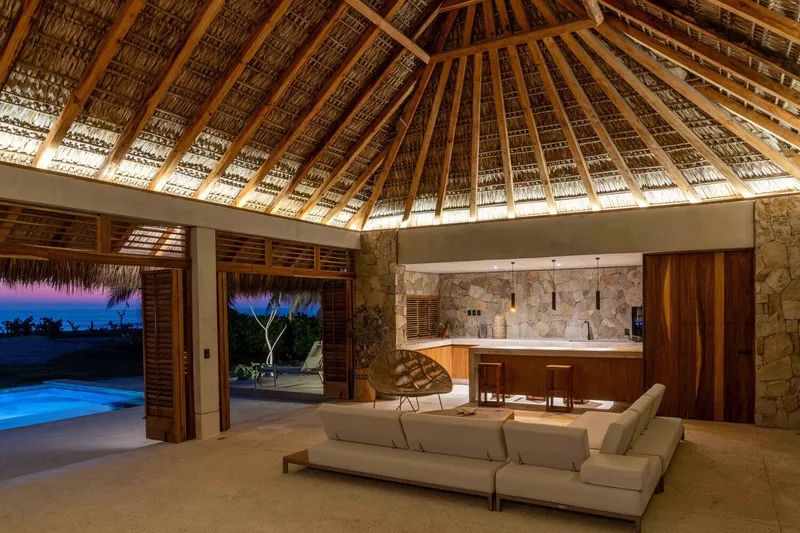
Tate House by MATERIA is more than a residence; it is a celebration of site-specific architecture, material authenticity, and the poetic interplay between nature and built form. From its modular pavilions to its endemic gardens, this project exemplifies sustainable, context-driven design that resonates with the cultural and ecological landscape of Puerto Escondido.
All photographs are works of
Jaime Navarro



Popular Articles
Popular articles from the community


The Ocean Hive: Sustainable Architecture for a Self-Sufficient Civilization at Sea
The Ocean Hive imagines sustainable architecture at sea, where modular habitats, algae, wave power and ocean waste sustain a growing colony.

Conexión: Biophilic Design Reimagines High-Rise Living in Hong Kong
Conexión reimagines high-rise living in Hong Kong through biophilic design, green facades, shared spaces, daylight, water and nature within.

Play: Fragments of Their World
Familiar architecture becomes modular playground design, creating safe spaces where displaced children can learn, connect, imagine and play.

Co-life: Sustainable Architecture for Age-Friendly Community Living
Co-life reimagines sustainable architecture for seniors through courtyards, rammed earth, shared gardens, and spaces designed for belonging.


Similar Reads
You might also enjoy these articles

Bamboo Housing Challenge 2026: Design Affordable, Sustainable Homes Using Bamboo
An international design competition by Bamboo U and IBUKU inviting architects and designers to reimagine affordable housing using bamboo — with the winning design built full-scale in Bali.

Computational Design & Education: Beegraphy Design Awards Introduces 7th Category (Featuring Jiyun's Innovative Approach)
Dive into Beegraphy’s 7th Design Awards category, where computational design meets education to create immersive, interactive learning tools, inspired by Jiyun’s work.
From Parametric Lighting to Urban Furniture: Join the 2nd Workshop in Beegraphy’s Computational Design Series
Dive into Cutting-Edge Design Techniques and Practical Applications with Industry Experts

Last Call: Unleash Your Architectural Genius in SHAK's Kindergarten Design Competition
Urgent call for architects to join SHAK's kindergarten design competition before the looming deadline


Explore Housing Competitions
Discover active competitions in this discipline



Challenge to reimagine the Iron Throne


Photograph architecture without architects


Illustrate the lost glory of Angkor Wat - Render Challenge


Design challenge to reuse E-waste
Comments (0)
Please login or sign up to add comments
No comments yet. Be the first to comment!