

Tatuí Apartment / Passos Arquitetura
Discover Tatuí Apartment, a Japanese-inspired renovation by Passos Arquitetura, blending nature, sustainability, and urban tranquility in São Paulo.


Bringing Nature and Harmony to Urban Living
Tatuí Apartment, designed by Passos Arquitetura, transforms an urban dwelling in São Paulo into a sanctuary inspired by Japanese architecture. This renovation redefines apartment living by emphasizing natural textures, maximizing natural lighting, and integrating lush greenery. Located in the bustling neighborhood of Jardim Paulista, this project creates a tranquil connection between modern interiors and nature, offering a unique retreat for its residents.
Key Features of Tatuí Apartment Design
1. Japanese Architectural Elements
Tsuboniwa: A Modern Take on Courtyard Gardens
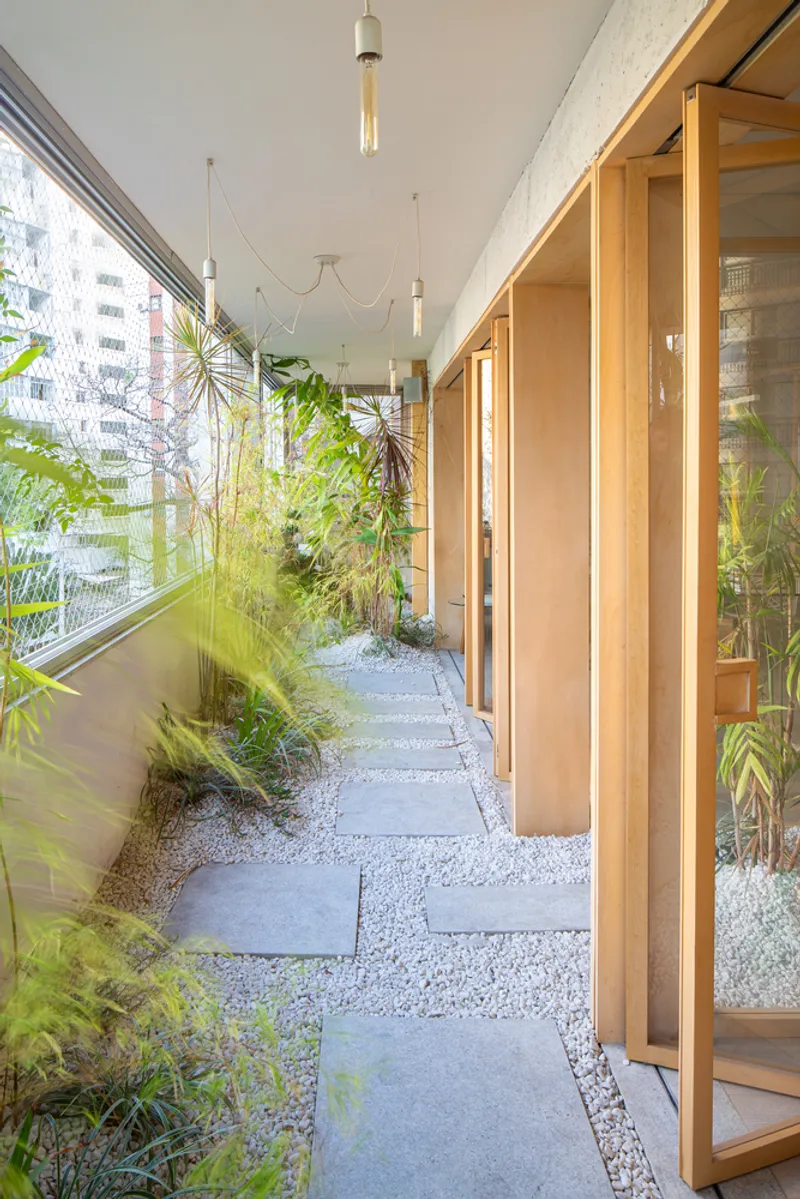
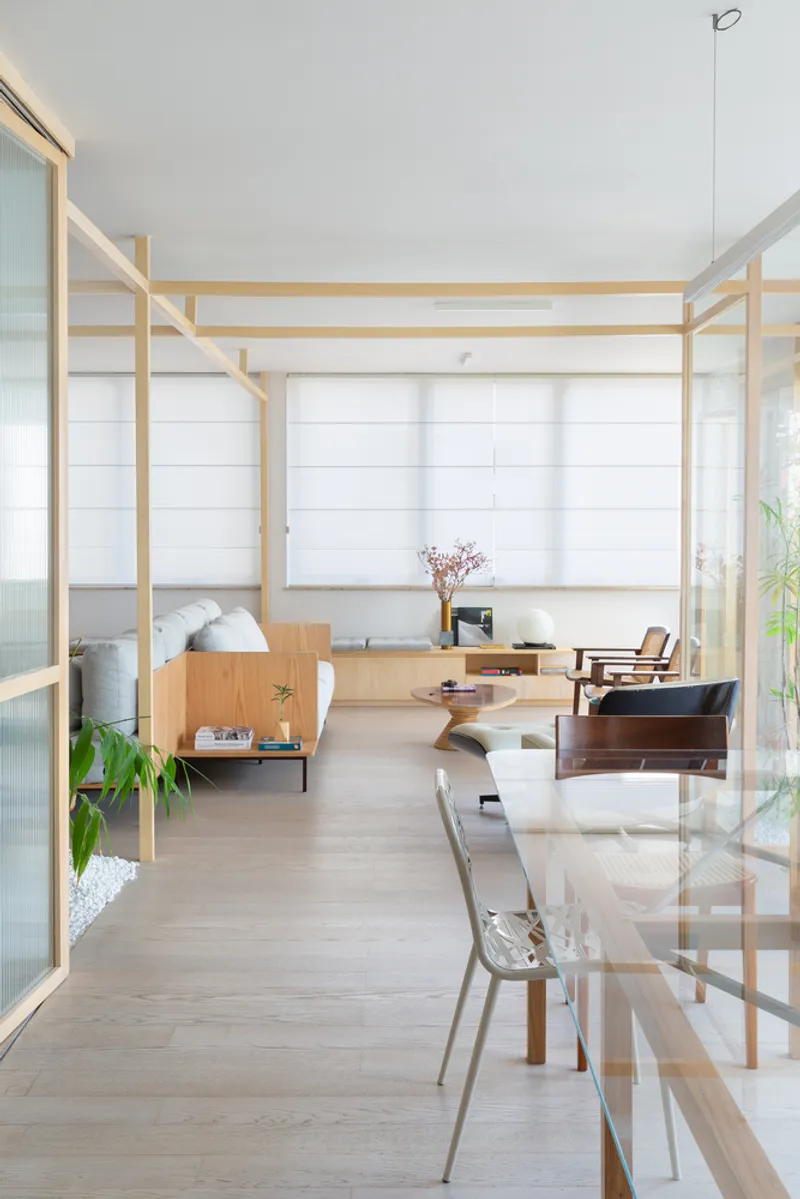
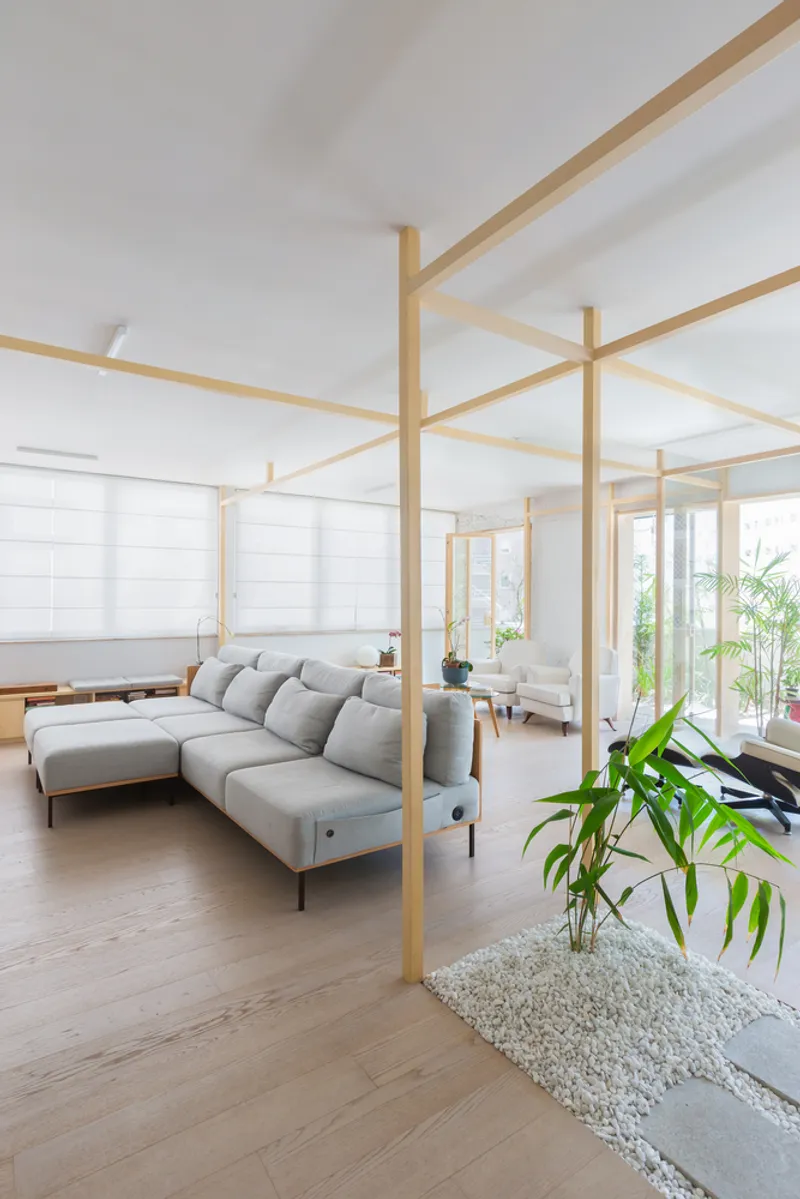
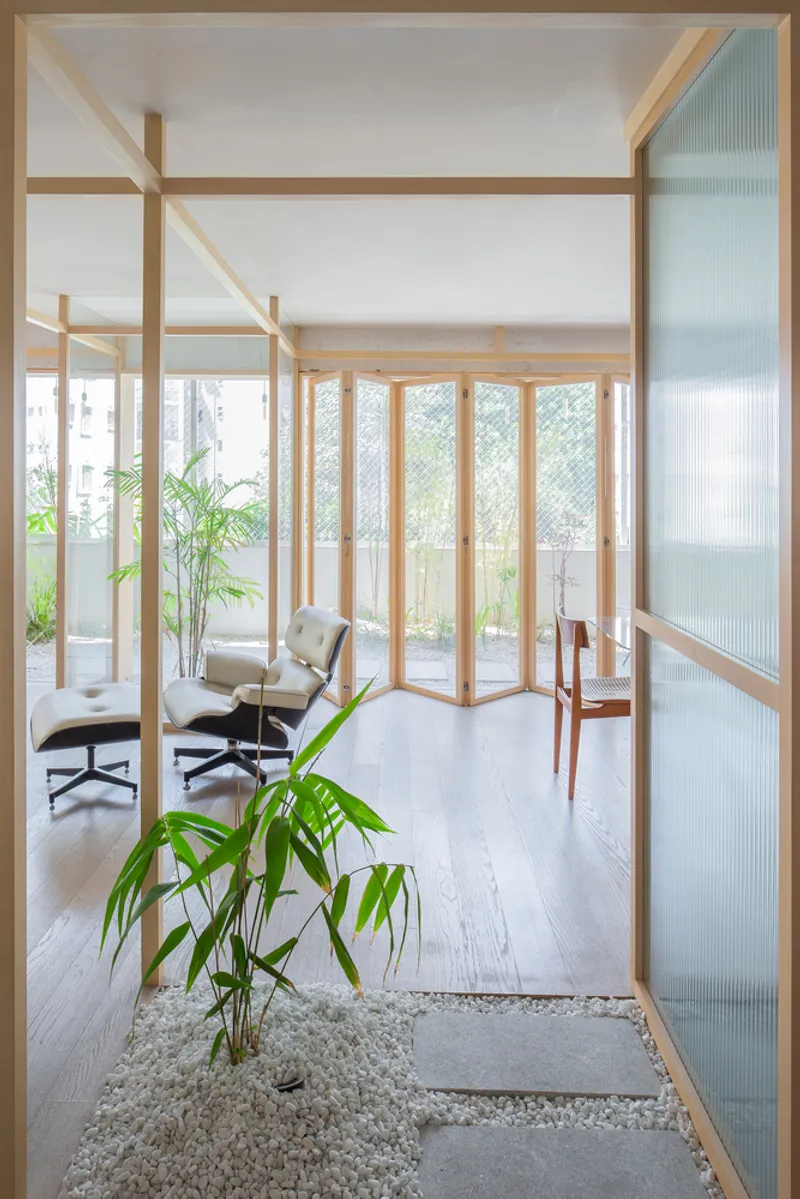
One of the standout features of the Tatuí Apartment is the incorporation of Tsuboniwa, a concept from traditional Japanese architecture. These courtyard gardens, dating back to the 8th century, are designed to create a serene atmosphere by bringing nature indoors. In this apartment, a modern Tsuboniwa forms the focal point of the social areas, linking the living room, dining room, and kitchen.
Shakkei: Borrowed Scenery in Urban Settings
Another key element is Shakkei, or "borrowed scenery," which integrates outdoor views into the design. The balcony garden is inspired by the treetop of a flamboyant tree visible from the apartment. This green expanse blurs the boundaries between the interior and the bustling urban exterior, reinforcing a sense of calm.
2. Open and Flexible Social Spaces
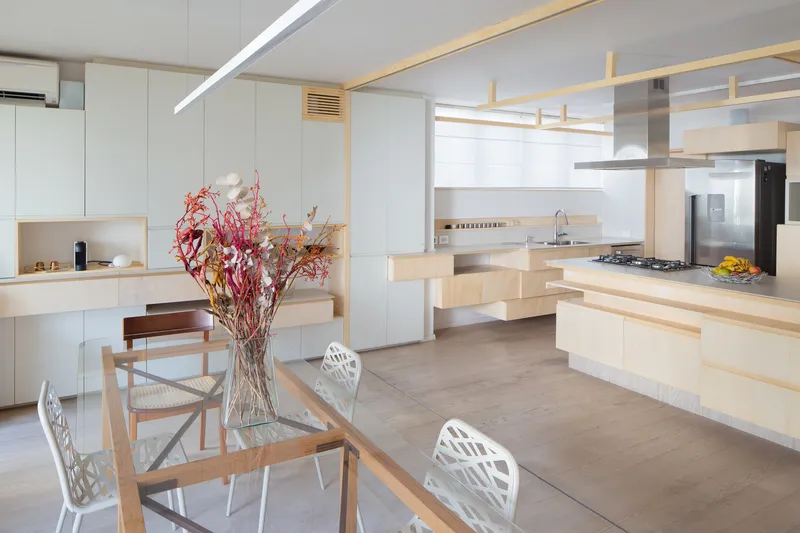
The renovation transformed the apartment’s layout to create a large, open-plan social area.
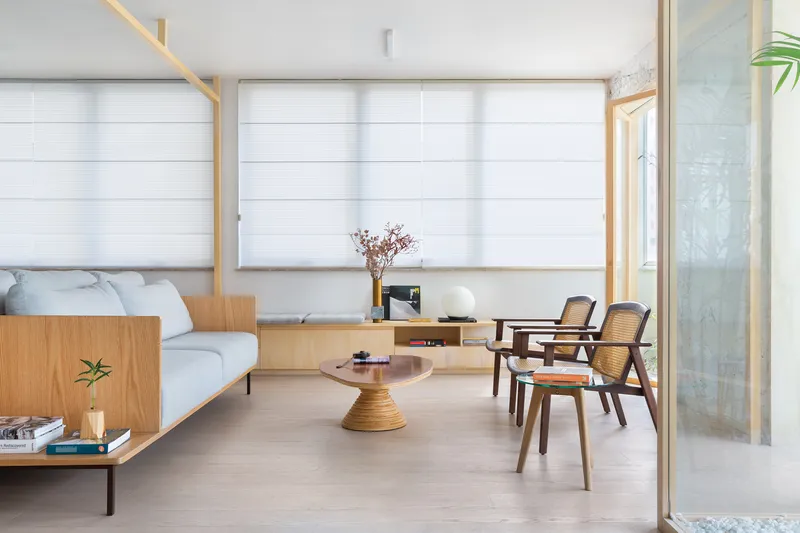
- Living Room: Designed for relaxation and entertainment, the space is connected visually and physically to the indoor garden.
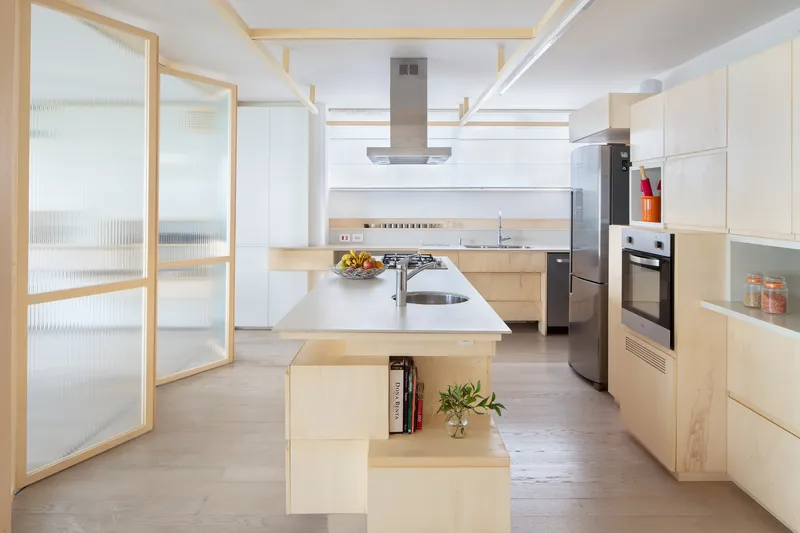
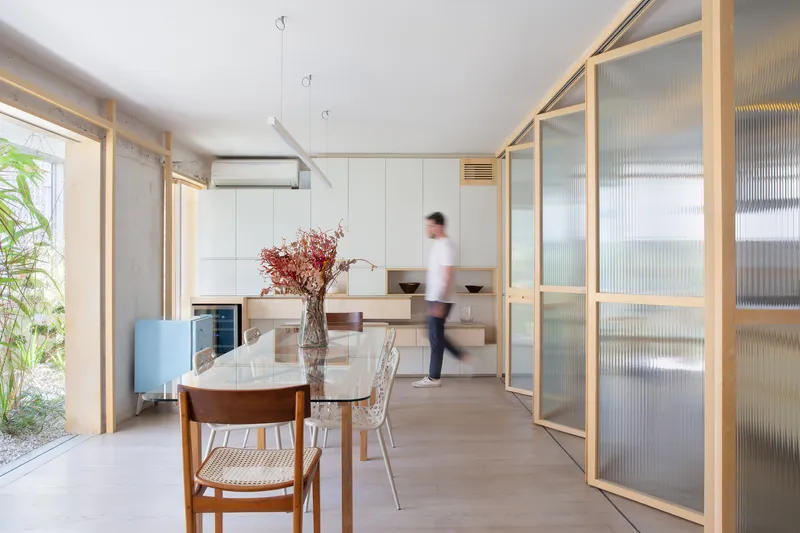
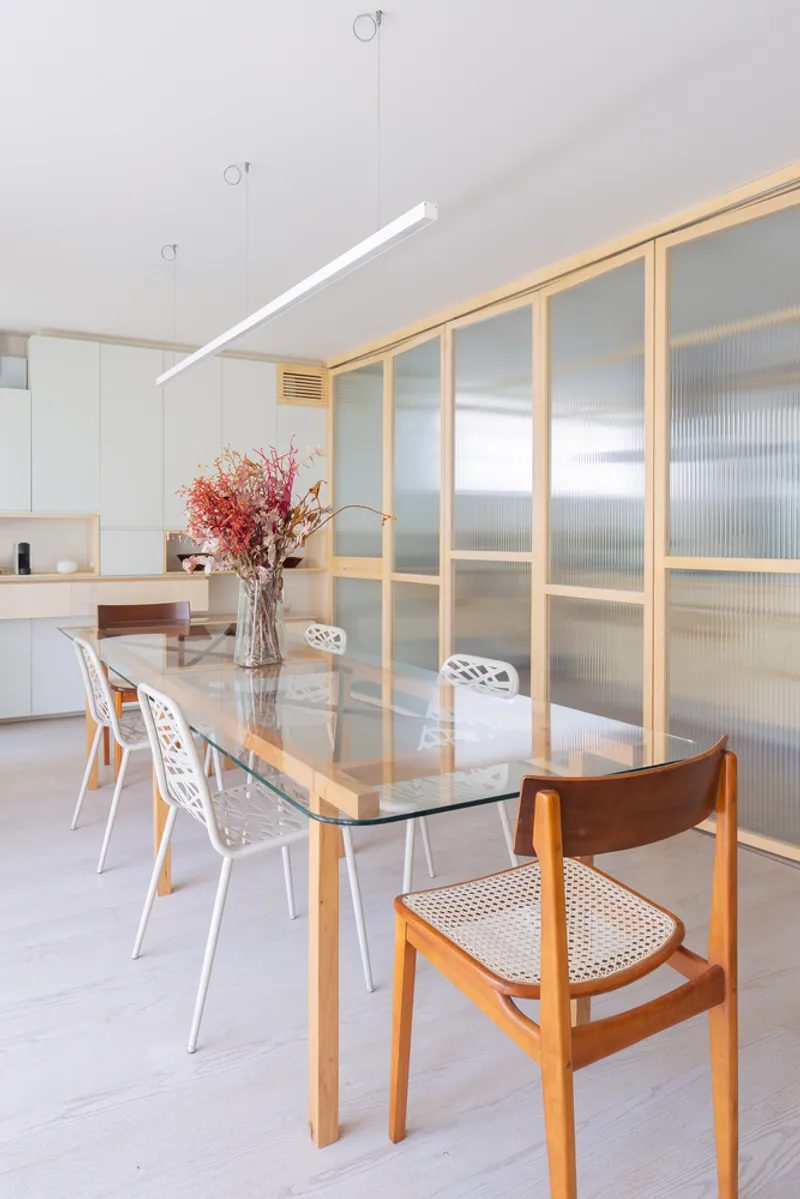
- Dining Room and Kitchen: Seamlessly integrated, these spaces are equipped with pivoting glass doors that allow the kitchen to be enclosed while maintaining light flow.
This thoughtful arrangement enhances interaction while preserving functionality and privacy when needed.
3. Thoughtful Use of Materials
Wood and Natural Textures
The design employs natural materials to evoke warmth and authenticity:
- American Oak Flooring: Adds a timeless, earthy tone to the interiors.
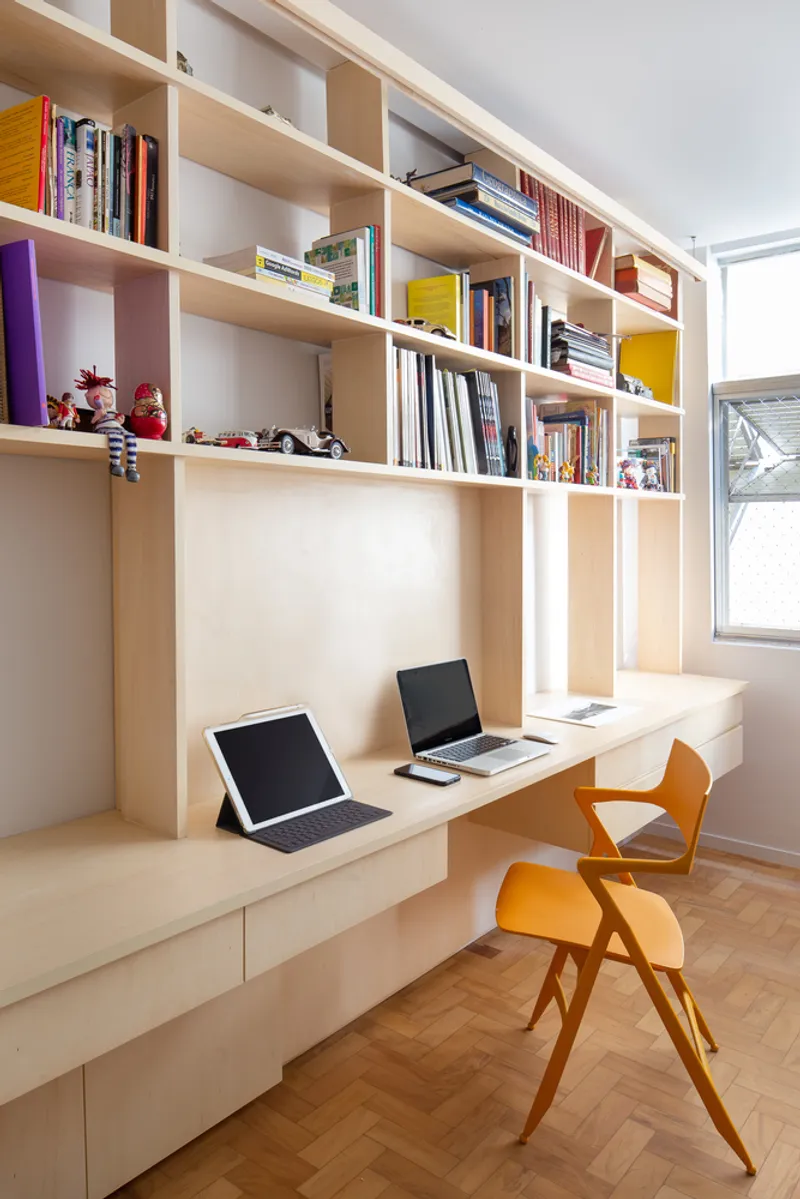
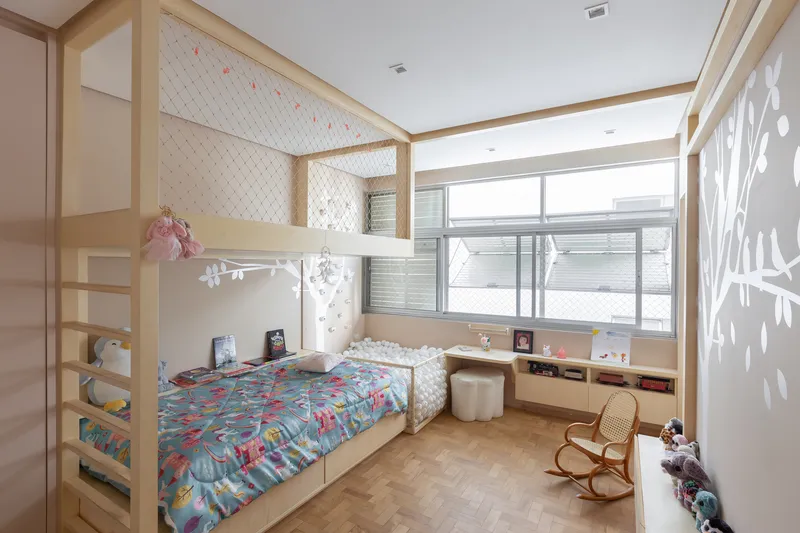
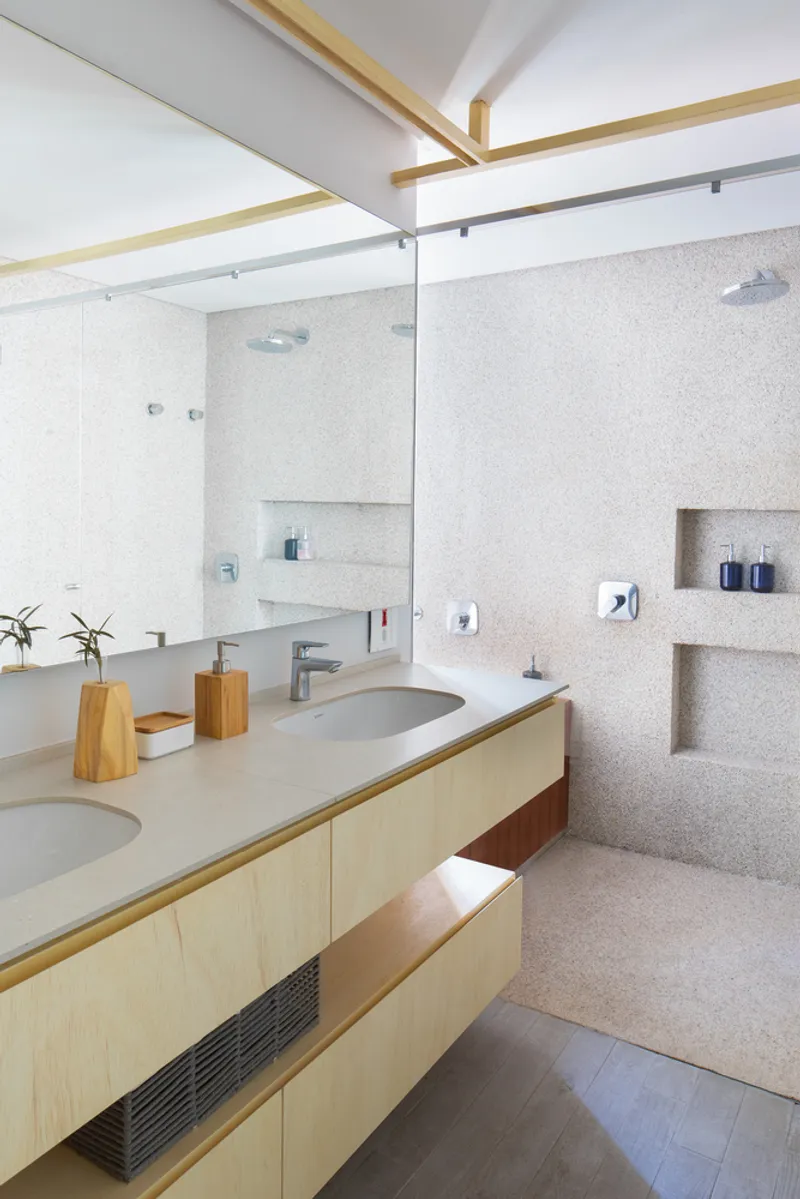
- Paricá Wood Joinery: Complements the flooring with seamless craftsmanship.
Exposed Facade Walls
Original facade walls were stripped and painted white, introducing a rustic yet minimalist aesthetic that aligns with the project’s natural theme.
4. Custom Furniture Inspired by Japanese Craftsmanship
Passos Arquitetura also designed bespoke furniture pieces to enhance the apartment's functional and aesthetic appeal:
- Custom Sofa: A multifunctional centerpiece for relaxation and socialization.
- Dining Table: Inspired by traditional Japanese joinery, its simple yet elegant structure adapts to various settings, showcasing the beauty of raw materials.
Sustainability and Biophilic Design
The Tatuí Apartment integrates sustainable design principles by bringing greenery into every corner of the space. The balcony garden spans the length of the apartment, serving as a natural buffer against the urban surroundings. By embracing biophilic elements, the design promotes mental well-being and a deeper connection with nature.
Tatuí Apartment as a Model for Urban Tranquility
Passos Arquitetura’s Tatuí Apartment showcases how Japanese-inspired design can transform an urban apartment into a serene oasis. By integrating Tsuboniwa gardens, Shakkei principles, and natural materials, the project creates a harmonious blend of modernity and tradition. Located in the heart of São Paulo, this apartment is a testament to the power of thoughtful design in fostering tranquility amidst urban chaos.
All Photographs are work of André Mortatti


Popular Articles
Popular articles from the community


Cube Design Draws an Ecological Corridor Between Two Shenzhen Hills with the Nankai Building
Beside Shenzhen's container docks, the Nankai Building pairs stacked balconies with a climbing green screen to connect two hillsides across its height.

LT2A and OPEN Architectes Thread a Brick and Glass High School Through a Wooded Belgian Campus
In Braine-l'Alleud, a 3,000 m² wing for Collège Cardinal Mercier pairs pale brick with a glazed colonnade, deferring to a small chapel and a dense wood.


Singing Woman: An Opera House That Performs Before the Curtain Rises
Ovidiu Cristian Pavel's conceptual opera house translates Estonia's choral identity into a sculpted waterfront landmark facing the Baltic Sea.

FCC Arquitectura Expands a Portuguese Granite House with a Board-Marked Concrete Wing
In Portugal, JV House pairs a cleaned-up whitewashed and granite dwelling with a timber-shuttered concrete extension, courtyards and a garden pool.

Similar Reads
You might also enjoy these articles


Hodi-Mandai Geram
Project Function: Preservation and revitalization of the Intangible heritage and socio-spatial identity of the Hodi by Housing, Cultural Memory Center, Sacred Grove, landscape, local tourism economy


Olio Towers: A Mid-Rise for Performers That Fuses Housing, Rehearsal, and Stage
Located blocks from Houston's Theater District, this modular tower stacks living units around a central performance atrium.

Oasis: Modular Green Housing Carved into Dhaka's Urban Fabric
A shortlisted Plugin Housing entry reclaims unauthorized settlements in Dhaka with stepped concrete volumes, green roofs, and ventilation-driven design.

Black Hole: A Floating Megastructure for the Post-Physical Era
Emiliano Mazzarotto envisions a spherical, self-scaling arena where e-sports, digital hotels, and holographic stadiums replace traditional public space.

Explore Japanese Architecture Competitions
Discover active competitions in this discipline

Challenge to reimagine the Iron Throne

Photograph architecture without architects

Illustrate the lost glory of Angkor Wat - Render Challenge

Design challenge to reuse E-waste
Comments (0)
Please login or sign up to add comments
No comments yet. Be the first to comment!