
Technical Services Base Lysolaje by PROGRES ARCHITEKTI: A Model of Sustainable and Functional Public Architecture in Prague
Sustainable technical services base in Prague featuring modular design, energy efficiency, green roofs, and innovative biophilic architecture by PROGRES ARCHITEKTI.


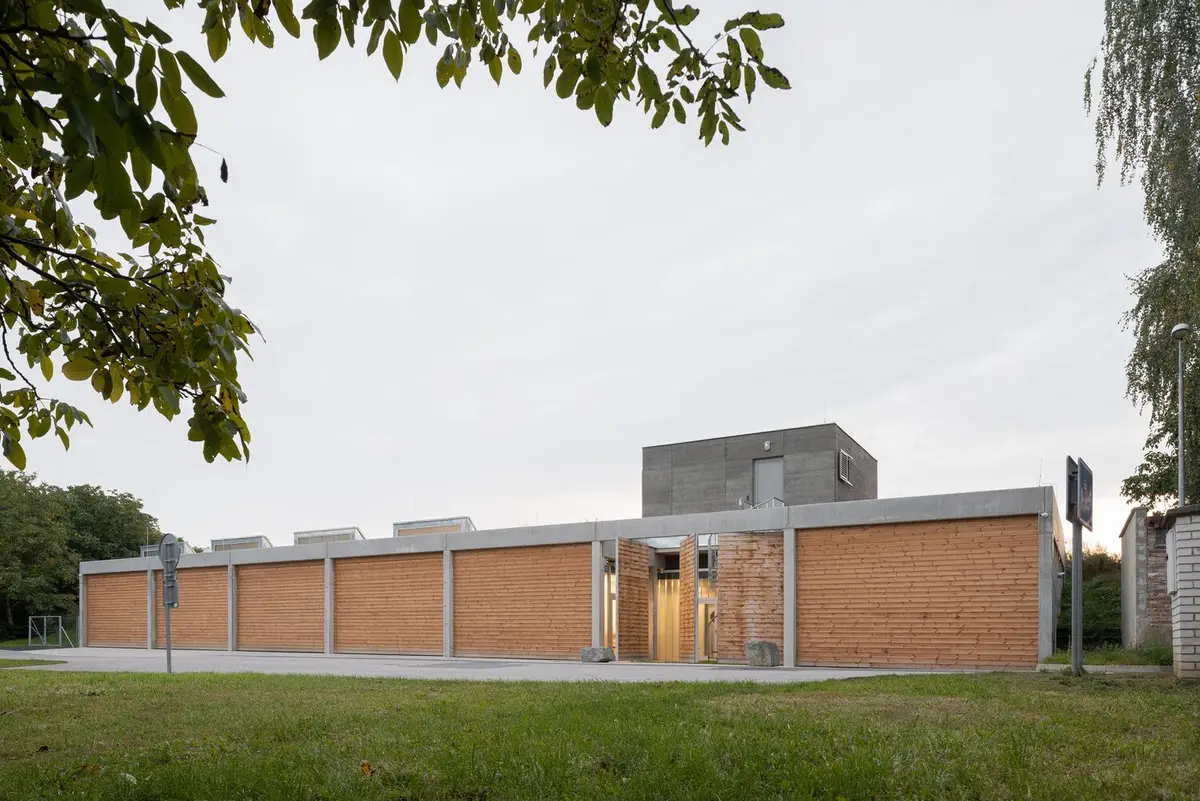
Located in Praha-Lysolaje, Czechia, the Technical Services Base Lysolaje designed by PROGRES ARCHITEKTI stands as an exemplary public infrastructure project that combines functionality, sustainability, and architectural sensitivity. Completed in 2022, this 437 m² facility redefines the standards of technical service buildings in the Czech Republic by emphasizing context, variability, and environmental responsibility.
Challenging Conventional Technical Architecture in Czechia
Unlike many technical buildings across the Czech Republic, which often lack cohesive architectural design and contextual harmony, the Technical Services Base Lysolaje breaks the mold. PROGRES ARCHITEKTI collaborated closely with the Prague city district Lysolaje representatives to establish a clear design philosophy focusing on functionality, honesty in materials, sustainability, and respect for the surrounding environment.
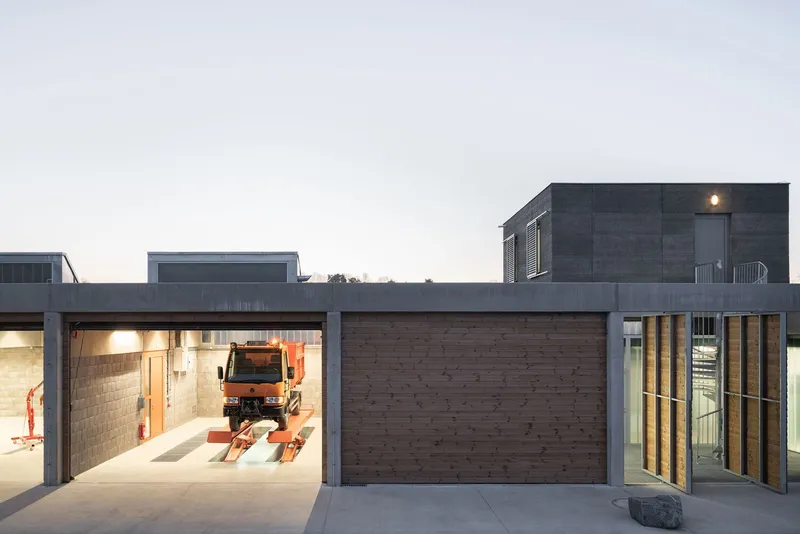
Thoughtful Integration Into the Landscape
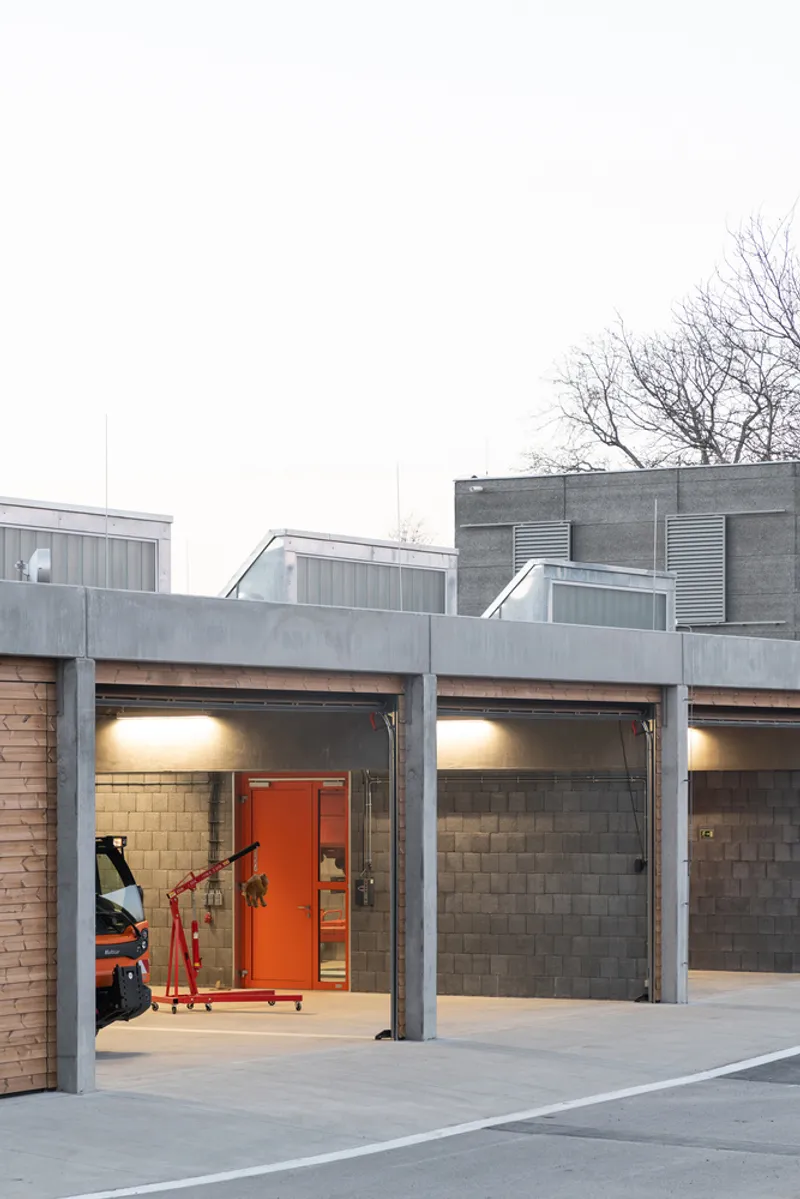
One of the key design strategies was to embed the building into the hillside, which allows the structure to naturally settle within the existing topography. This low-profile volumetric approach helps the building harmonize with neighboring residential architecture. The facades are rhythmically articulated, incorporating timber elements on the main frontage to evoke a calm, natural aesthetic. The kinetic dynamic of the building’s modular facade—achieved through operable modules—adds an engaging visual pulse that enlivens the structure during daily operations.
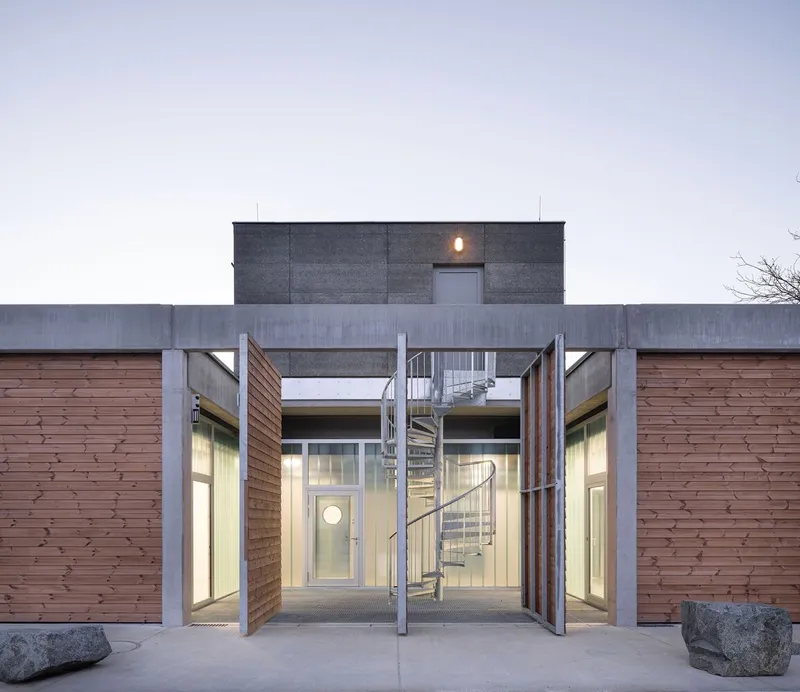
Flexible and Modular Structural Design
The facility uses a prefabricated concrete frame structured as a modular web, offering exceptional flexibility and adaptability. This structural system accommodates two distinct operations with very different spatial and technical requirements. Additionally, it allows for future modifications, making the building resilient to changing demands over time.
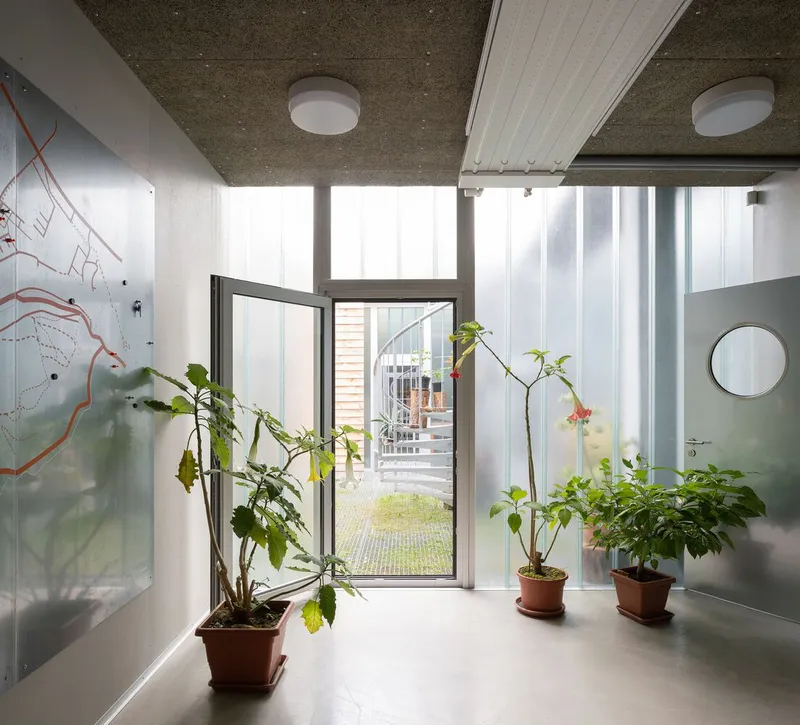
Distinct Functional Zones for Optimal Performance
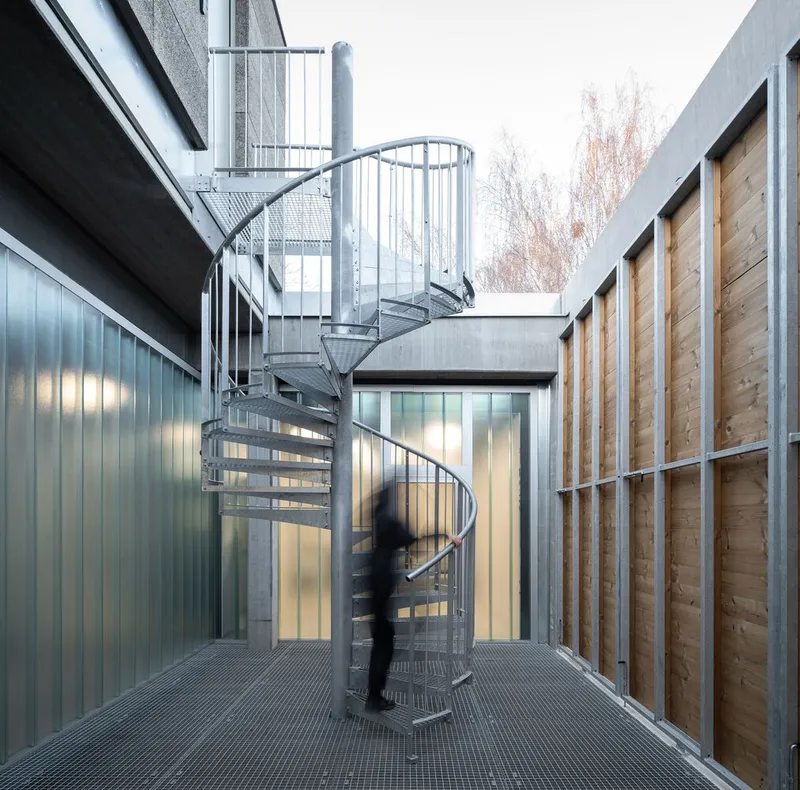
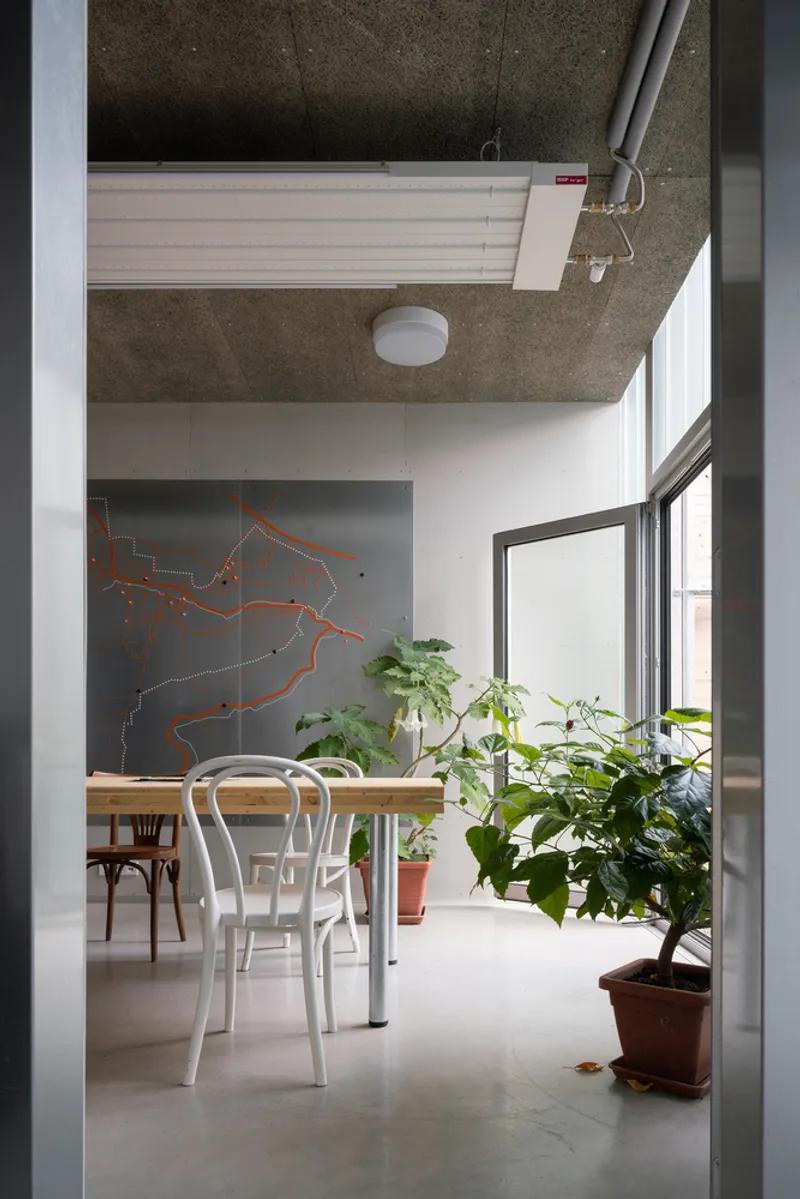
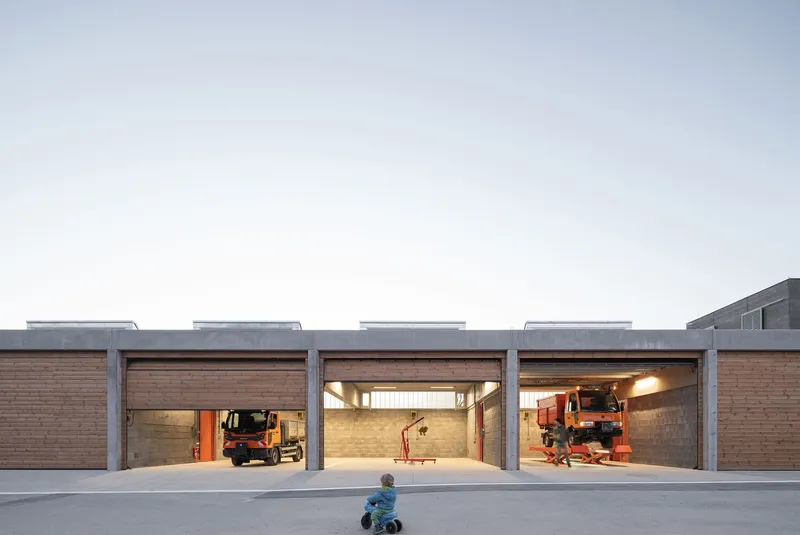
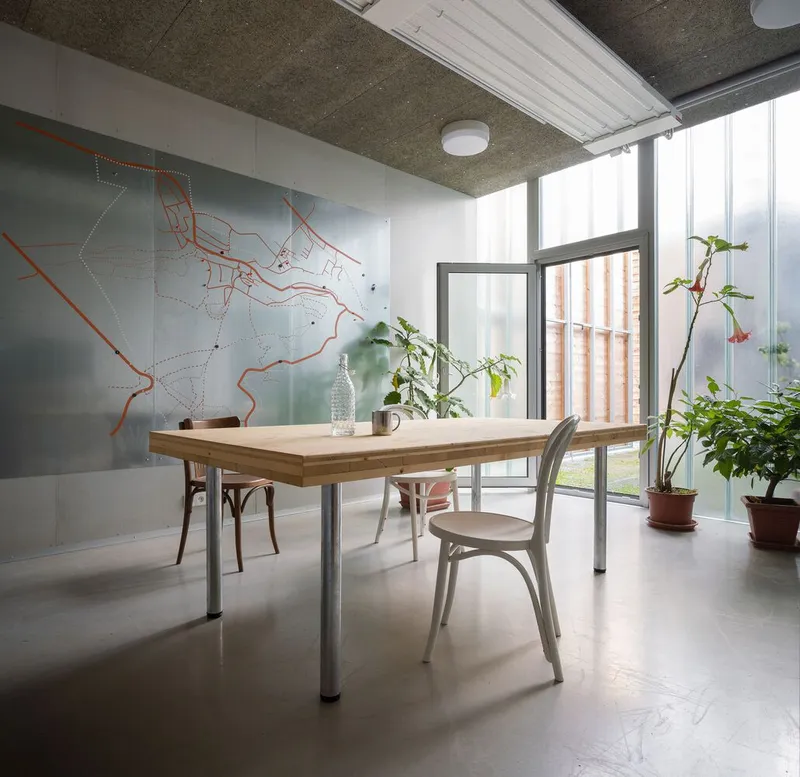
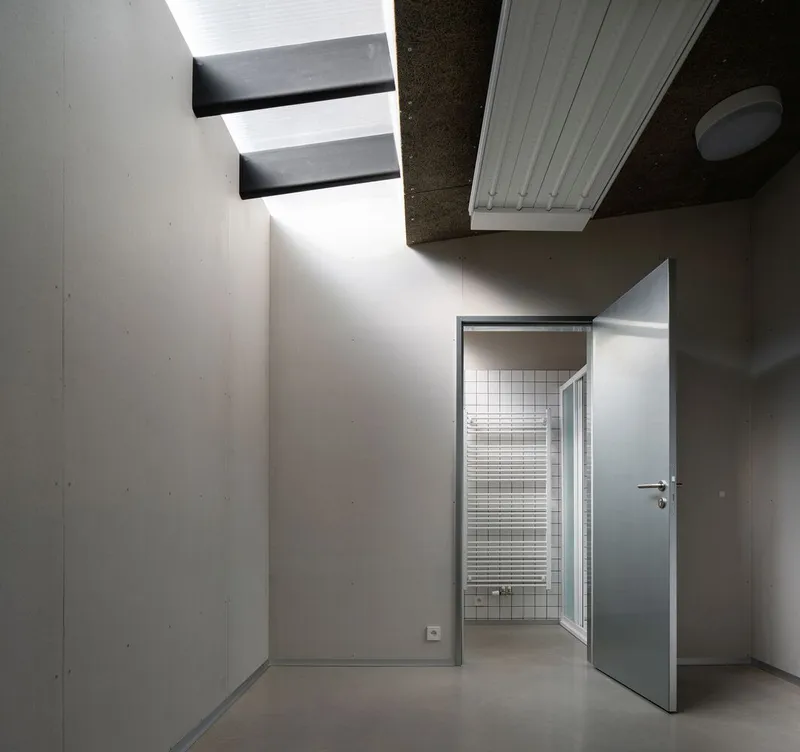
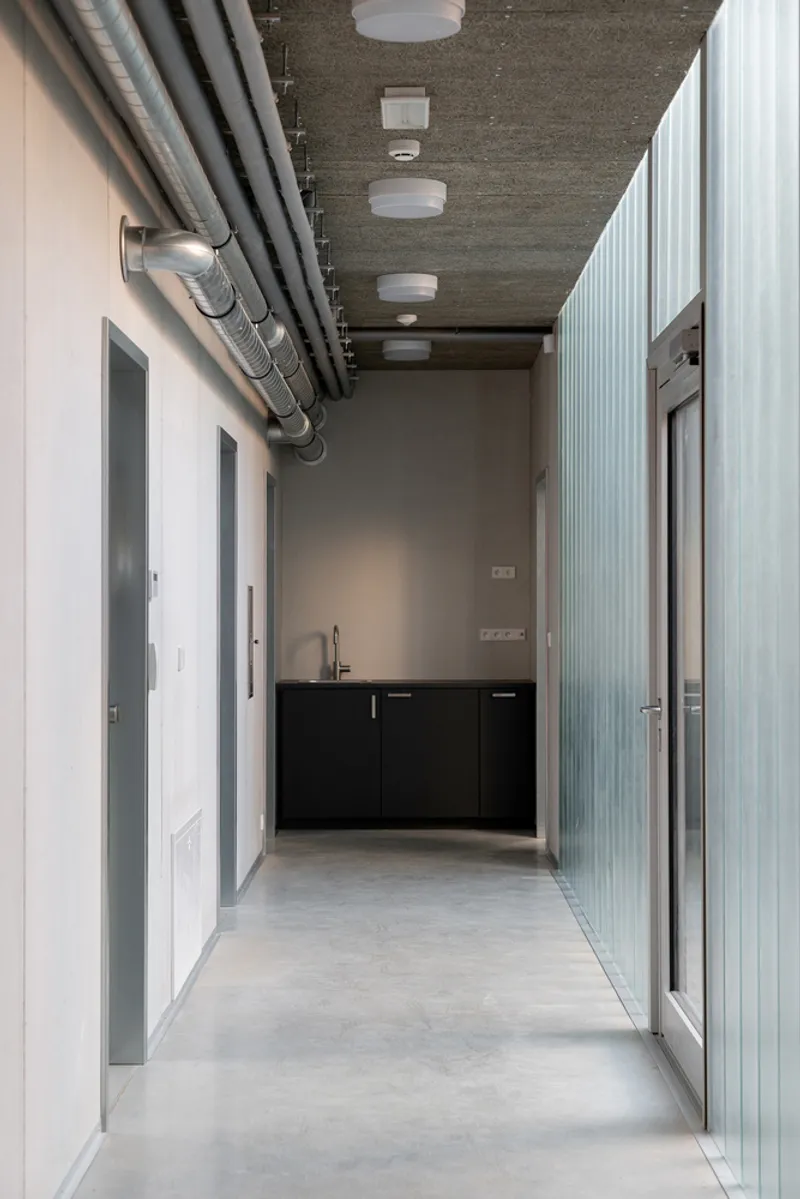
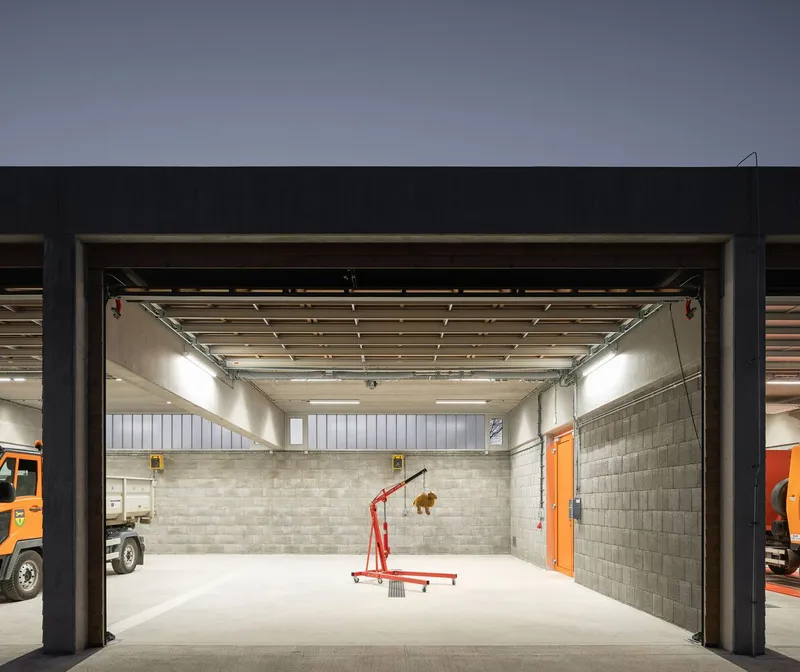
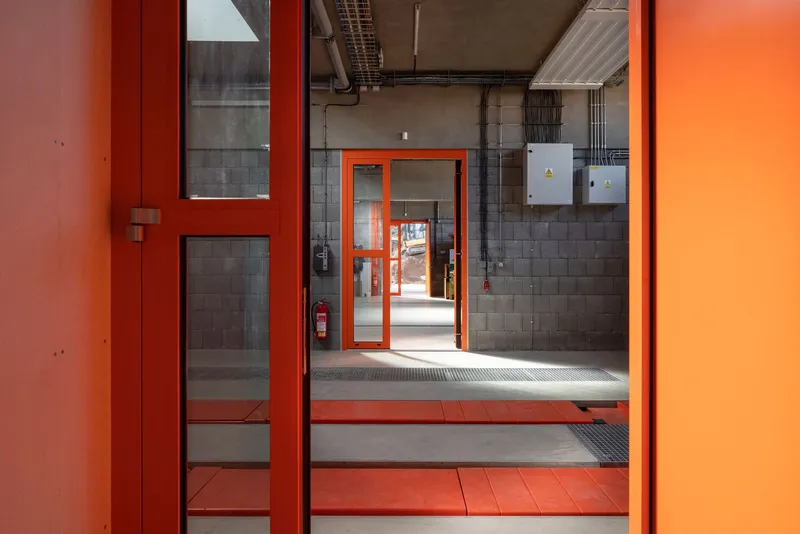
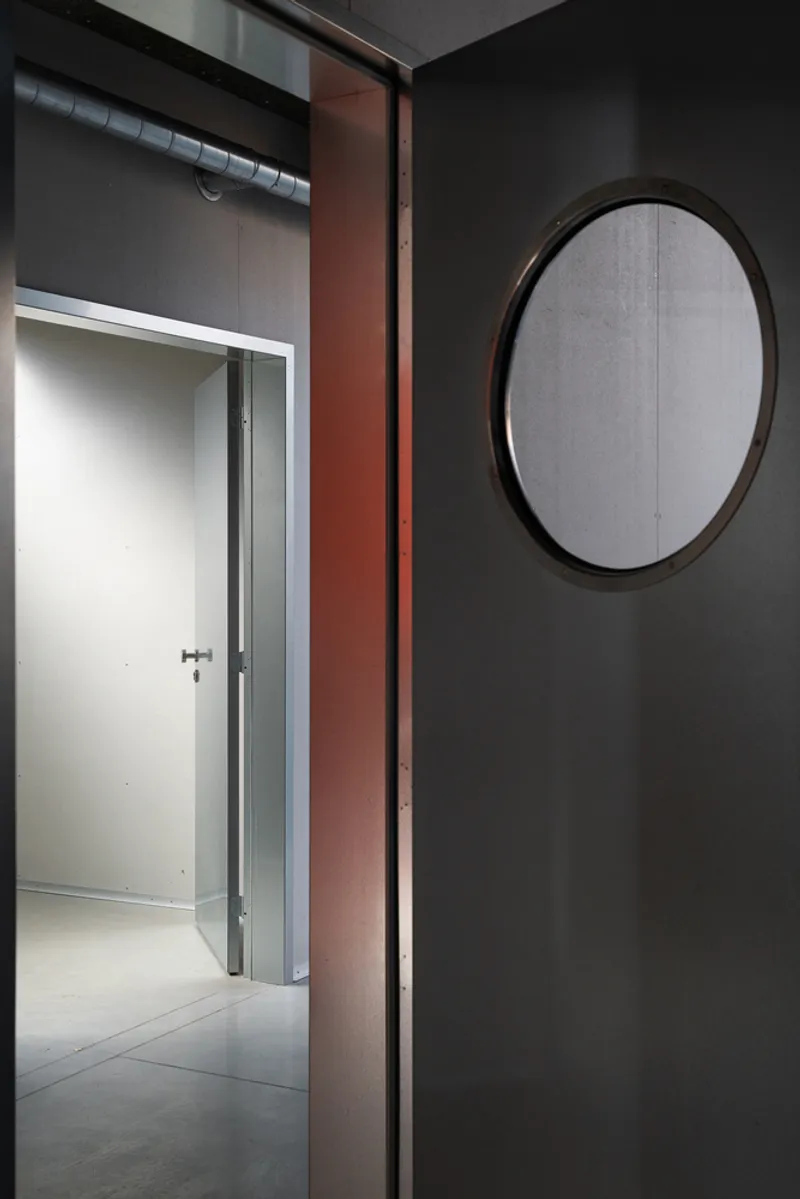
The larger section houses garages for maintenance vehicles, material storage, and an indoor depot designed for heavy-duty technical functions. In contrast, the smaller section, constructed as an inset box using lightweight prefabricated steel, caters to the crew’s needs. It includes changing rooms, workshop areas, offices, warm storage, and a lounge for night shifts, especially important during snow emergencies. This separate volume also includes a manager’s flat on the second floor, offering flexible use and potential for future expansion.
Innovative and Sustainable Environmental Concepts
A remarkable architectural feature is the entrance atrium, acting as the building’s spatial and social heart. It links the street with the interior and acts as a communication hub. The atrium’s glass skin provides soft, diffused natural light, creating a semi-private gathering space where plants grow and rainwater nourishes the greenery. This focus on biophilic design enhances occupant comfort and well-being.
The building exemplifies sustainable architecture with energy-efficient strategies integrated from the early design phase—long before environmental awareness became mainstream. The technical zone, embedded into the earth, maintains a stable temperature year-round without heating, while the heated area meets passive house insulation standards. Heating is provided by a modern heat pump system, and photovoltaic panels with battery storage power the entire building and its equipment. Rainwater harvesting supports maintenance and irrigation, while green roofs enhance the microclimate, manage stormwater, and visually soften the building’s profile.
A Beacon of Inspiration for Public Architecture
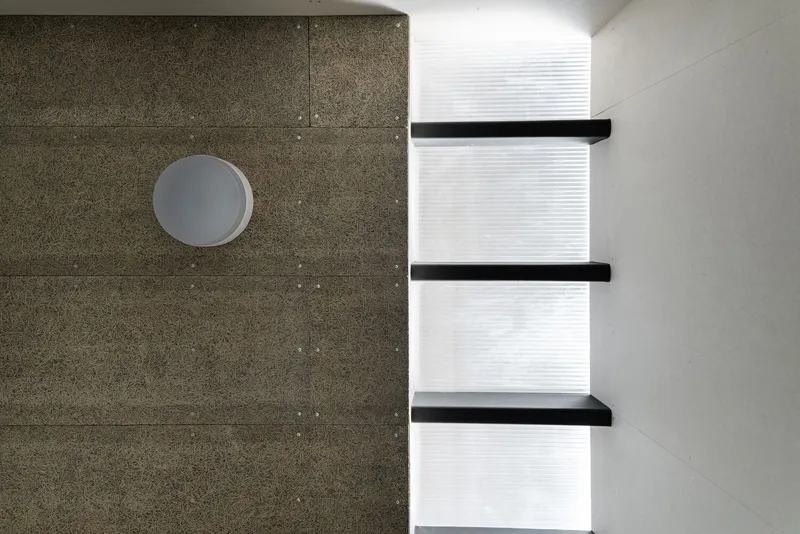
The Technical Services Base Lysolaje serves as a benchmark for future public buildings in Prague and beyond. It demonstrates how architecture can address pressing issues such as energy efficiency, renewable resources, indoor environmental quality, and material durability. Natural daylighting and superior acoustic design contribute to a high-quality indoor environment, while modularity and robust materials extend the building’s lifecycle, supporting long-term sustainability.
All photographs are works of Alex Shoots Buildings


Popular Articles
Popular articles from the community


Jaramillo Van Sluys Arquitectura and Urbanismo Turn a Demolished Registry Lot in Quito into an Orchard Plaza
In Quito's Centro Histórico, a 2,800 m² plaza exposes the San Agustín convent wall and redraws its lost Augustinian orchard in volcanic stone.

Cube Design Draws an Ecological Corridor Between Two Shenzhen Hills with the Nankai Building
Beside Shenzhen's container docks, the Nankai Building pairs stacked balconies with a climbing green screen to connect two hillsides across its height.

U.GA Architects Wraps an Oval Rooftop Pool in Curved Board-Formed Concrete on Busan's Jeollidan-gil
In Busan's Jeonpo-dong, a 454 m² mixed-use block stacks a neighborhood facility, guest rooms and an oval rooftop pool inside spiraling concrete walls.

Juan García Correa, John González and Claudia Rueda Sink a Circular Amphitheater into a Manizales Engineering Building
On the La Nubia campus in Manizales, Colombia, the S1 Building folds labs and offices into a hillside of ramped lawns that double as a campus route.

Similar Reads
You might also enjoy these articles


Hodi-Mandai Geram
Project Function: Preservation and revitalization of the Intangible heritage and socio-spatial identity of the Hodi by Housing, Cultural Memory Center, Sacred Grove, landscape, local tourism economy


Olio Towers: A Mid-Rise for Performers That Fuses Housing, Rehearsal, and Stage
Located blocks from Houston's Theater District, this modular tower stacks living units around a central performance atrium.

Oasis: Modular Green Housing Carved into Dhaka's Urban Fabric
A shortlisted Plugin Housing entry reclaims unauthorized settlements in Dhaka with stepped concrete volumes, green roofs, and ventilation-driven design.

Black Hole: A Floating Megastructure for the Post-Physical Era
Emiliano Mazzarotto envisions a spherical, self-scaling arena where e-sports, digital hotels, and holographic stadiums replace traditional public space.

Explore Archip Prague Competitions
Discover active competitions in this discipline

Challenge to design locus for the upliftment of human rights

Challenge to reimagine the Iron Throne

Photograph architecture without architects

Illustrate the lost glory of Angkor Wat - Render Challenge
Comments (0)
Please login or sign up to add comments
No comments yet. Be the first to comment!