
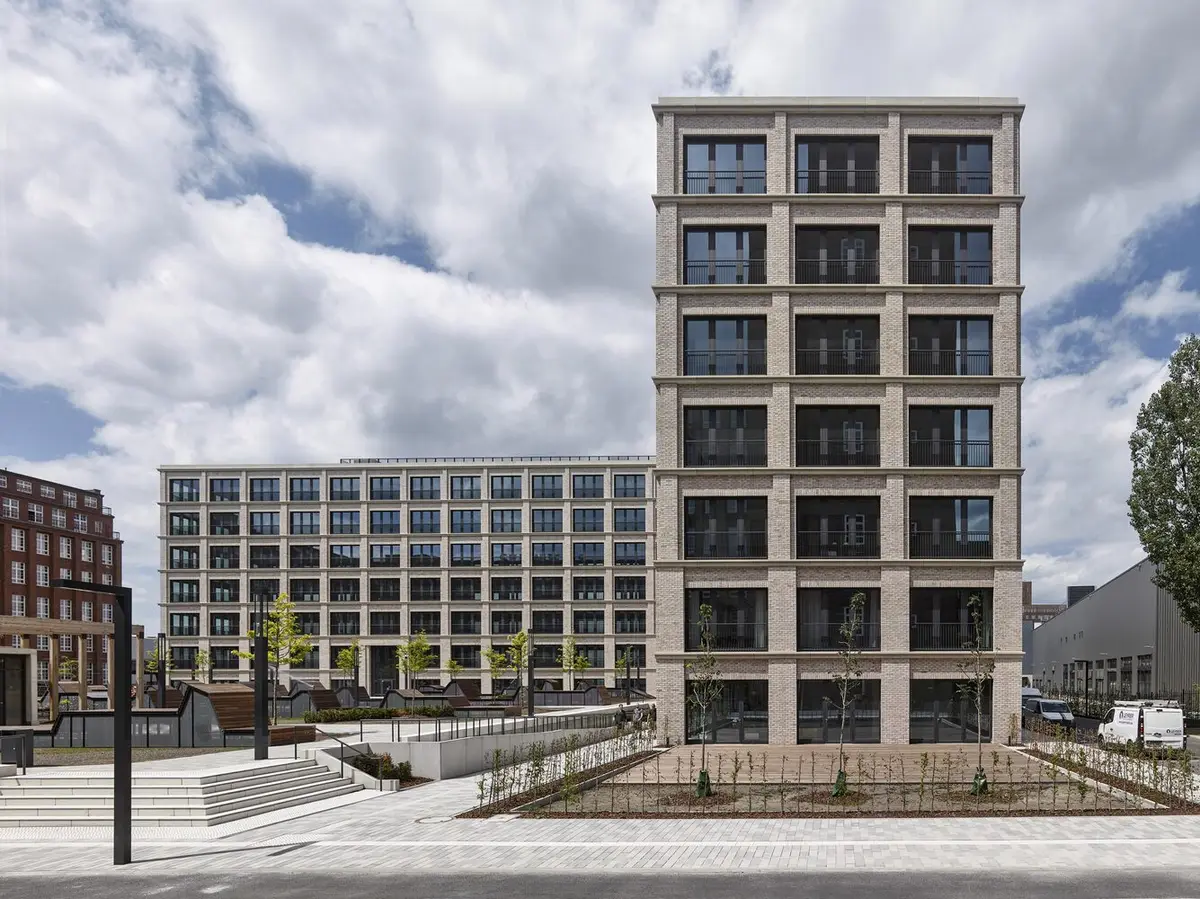
TechnoCampus Berlin – A Fusion of Industrial Heritage and Contemporary Office Architecture
TechnoCampus Berlin blends historic industrial architecture with sustainable new office buildings, creating a green, flexible, and future-ready workplace in Siemensstadt.


Architects: Tchoban Voss Architekten
Reviving Berlin’s Industrial Landmark
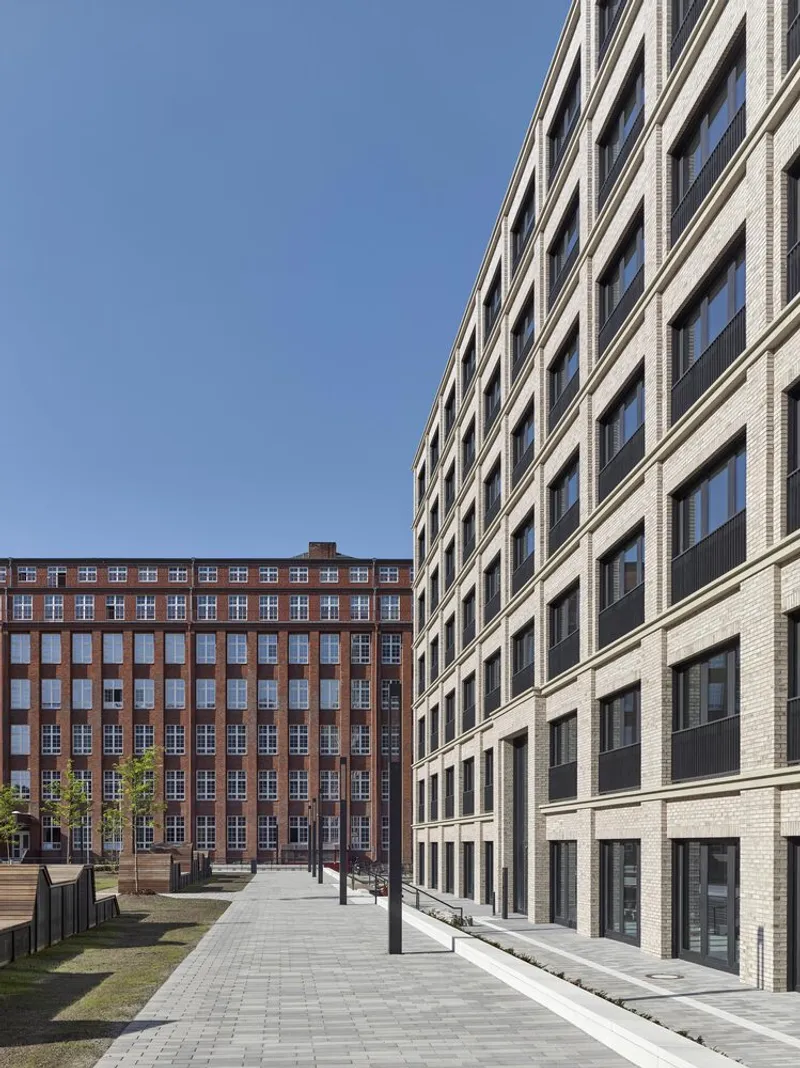
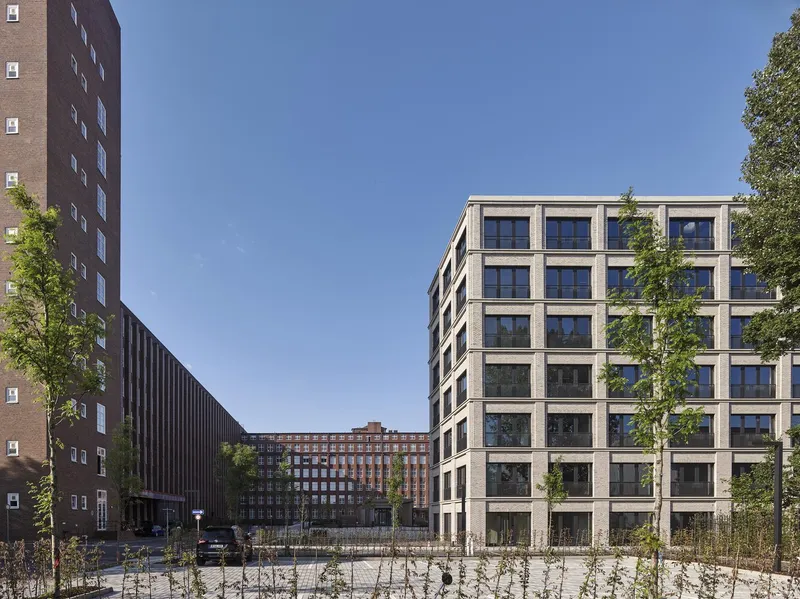
TechnoCampus Berlin, designed by Tchoban Voss Architekten, stands as a masterful blend of industrial heritage and modern workplace innovation. Located at Siemensdamm 59–62, the development occupies a 51,300 m² site forming the eastern boundary of Siemensstadt. The project preserves and revitalizes the Wernerwerk XV, a historically protected industrial building designed by Hans C. Hertlein in 1924–25 for the Siemens transmission systems factory.
Originally built in several phases and expanded until 1942, the existing complex consists of cubic volumes rising from five to ten stories. It was fully renovated in 2009, becoming home to diverse companies from technology to creative industries.
Balancing Past and Present
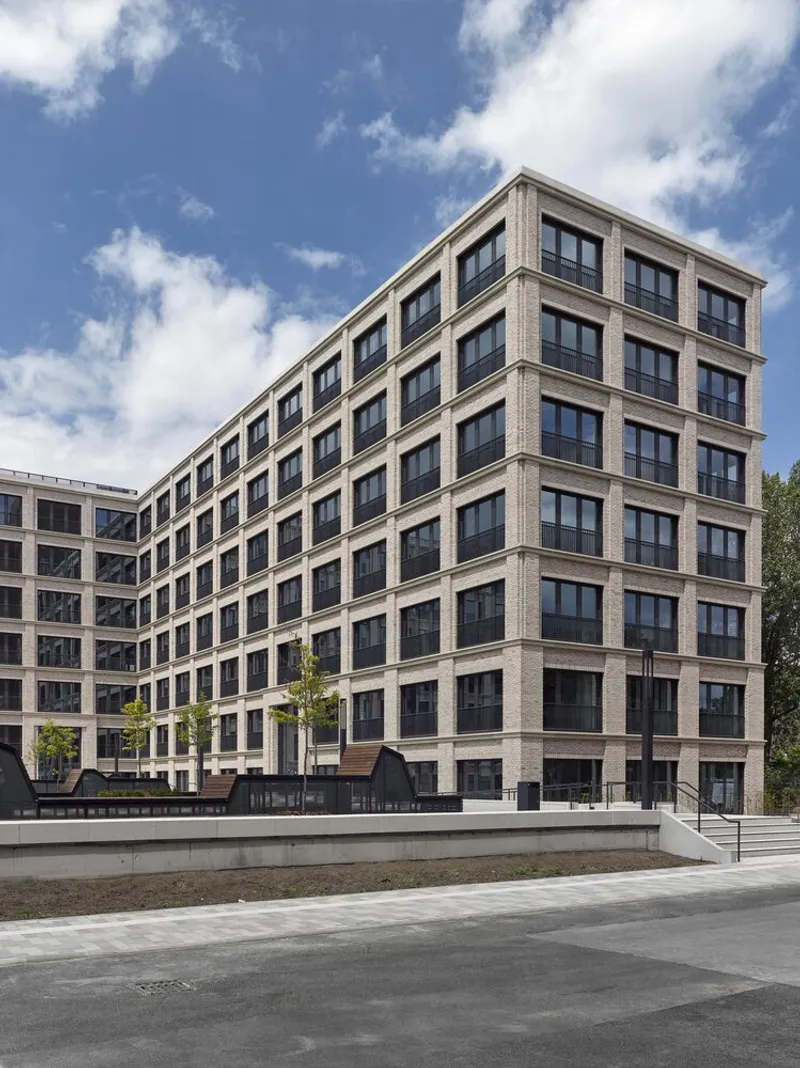
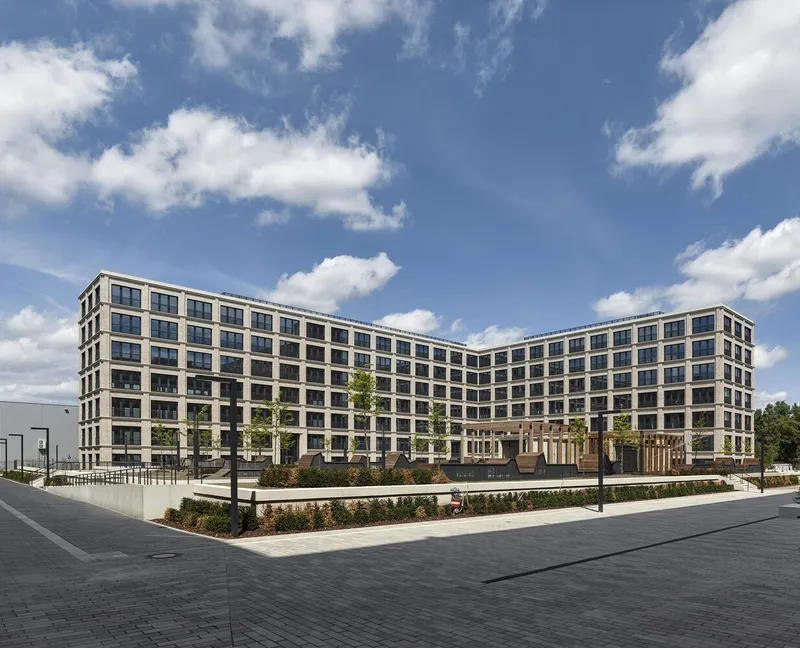
The design vision for TechnoCampus Berlin was to create a harmonious ensemble of historic brick façades and new constructions. The architects introduced two distinct volumes:
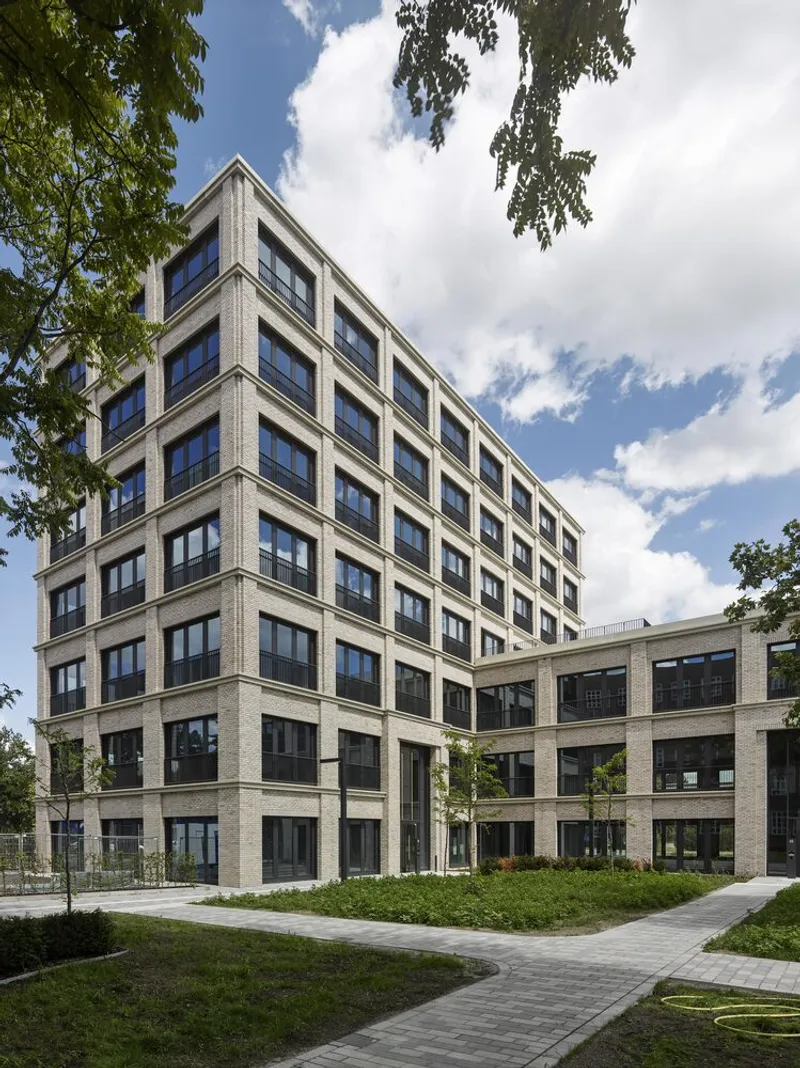
- BT1: A seven-story angular building
- BT2: A building with three-story extensions
These new structures are positioned to form two landscaped courtyards, enhancing the campus-like atmosphere and providing green, communal spaces for employees and visitors.
Materiality and Architectural Expression
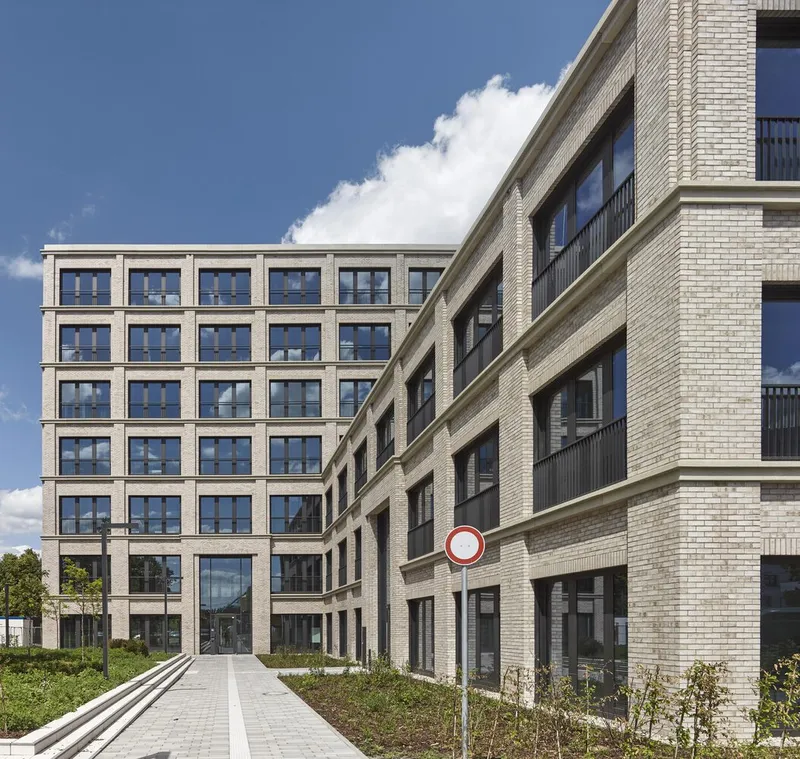
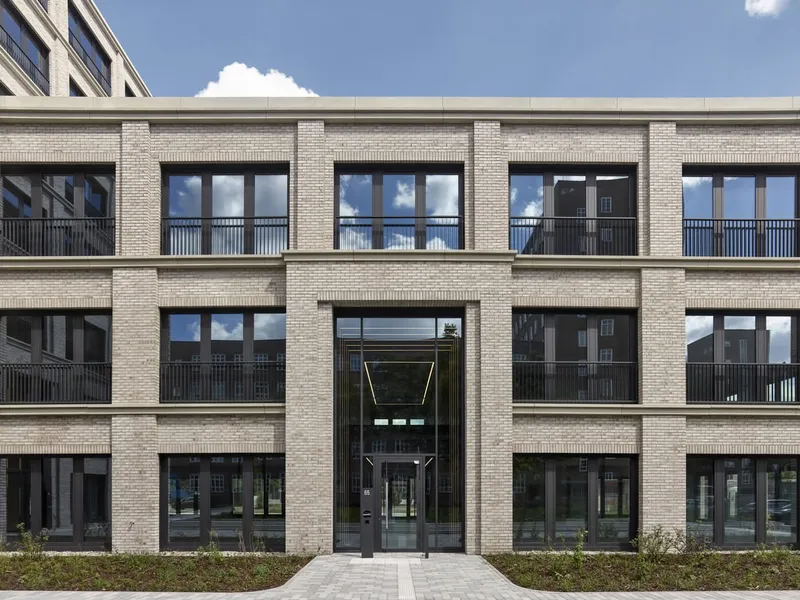
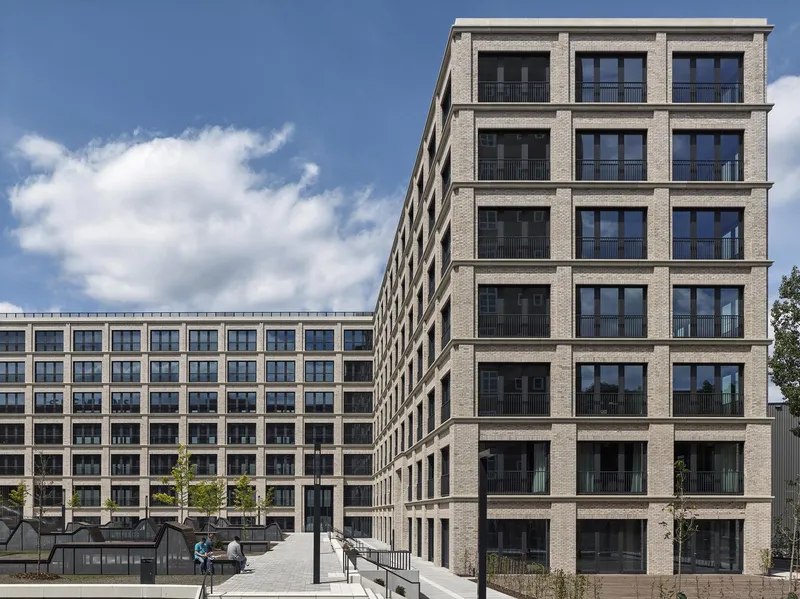
The new office buildings are clad in matte, pastel-toned clinker brickwork with an iridescent pattern, echoing the materiality of the historic Wernerwerk XV. The façades follow a precise window and extension grid, with story-by-story cornices, pilaster strips, and flanges highlighting the architectural rhythm.
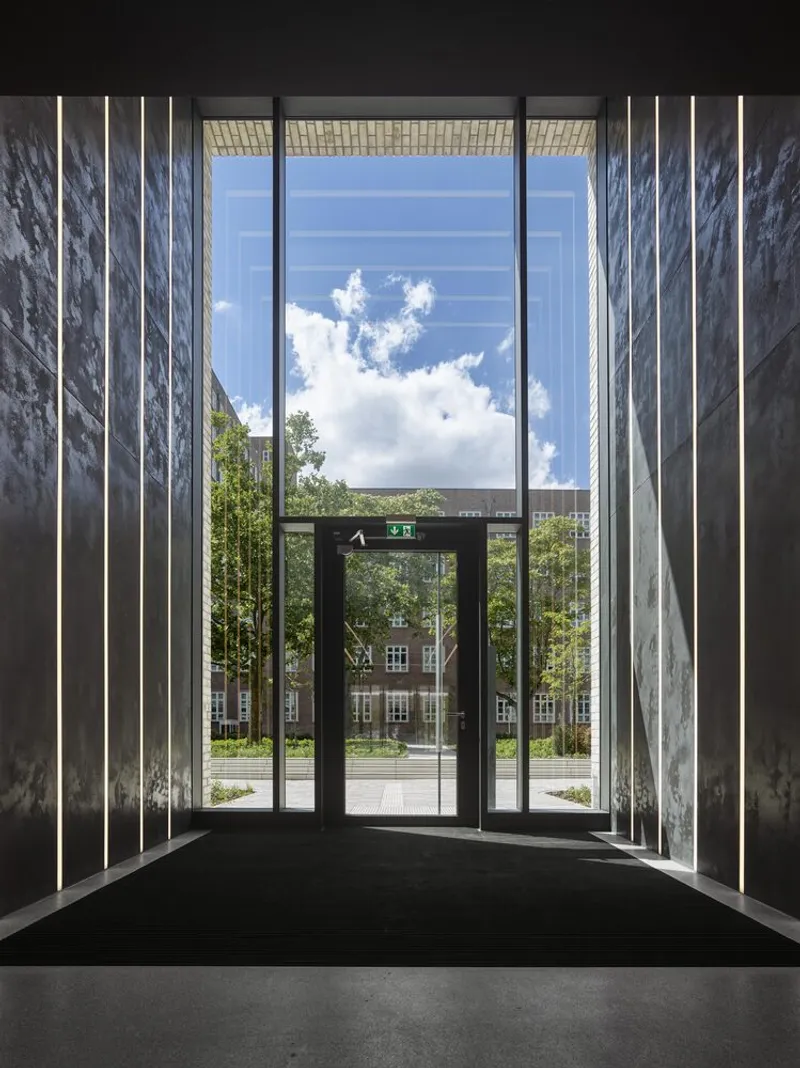
Durable masonry, architectural concrete, and metal accents lend the buildings a technical yet refined character. This palette not only pays homage to Berlin’s industrial heritage but also supports flexible, contemporary workspaces.
Sustainable and User-Centric Design
Sustainability is integral to TechnoCampus Berlin. The project achieved DGNB Platinum Certification through features such as:
- Automated ventilation control that switches off HVAC when windows are open
- External sun protection on east, south, and west façades
- Green roof terraces accessible via skylights
- Barrier-free access across the campus
- Electric vehicle charging stations in parking facilities
Beneath the BT1 courtyard lies an underground garage with 177 parking spaces (including 12 barrier-free and 30 EV charging spots). A separate two-story parking deck in the southeast corner provides 186 additional spaces.
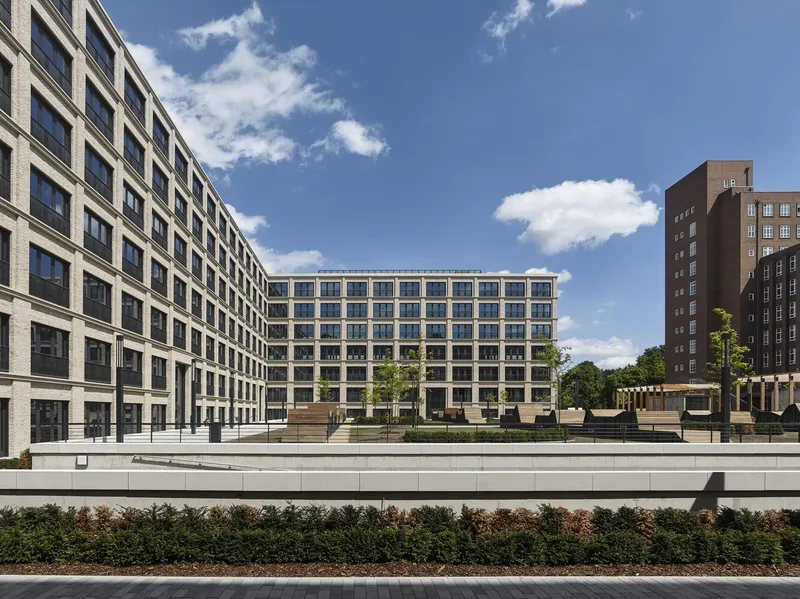
All photographs are works of Stefan Mueller


Popular Articles
Popular articles from the community


Manzana Morphosis: Stretching Barcelona's Grid into a Living Landscape for 2050
A radical reworking of the Eixample manzana turns density into a tool for generous public space, vertical ecology, and environmental performance.


ETEH Reworks the Shared Spaces of São Domingos School in Brazil Around Timber, Color and Hanging Plants
At São Domingos School in Brazil, 436 m² of hall, refectory and library are recast with timber joinery, a yellow and blue code and trailing greenery.

Singing Woman: An Opera House That Performs Before the Curtain Rises
Ovidiu Cristian Pavel's conceptual opera house translates Estonia's choral identity into a sculpted waterfront landmark facing the Baltic Sea.

The Amber Palace Opera: A Geological Fiction Surfaces on Tallinn's Baltic Waterfront
Pierre Brillard reimagines a Baltic legend as a public landscape, opera house, and waterfront promenade rooted in Tallinn's coastal identity.

Similar Reads
You might also enjoy these articles


Hodi-Mandai Geram
Project Function: Preservation and revitalization of the Intangible heritage and socio-spatial identity of the Hodi by Housing, Cultural Memory Center, Sacred Grove, landscape, local tourism economy


Olio Towers: A Mid-Rise for Performers That Fuses Housing, Rehearsal, and Stage
Located blocks from Houston's Theater District, this modular tower stacks living units around a central performance atrium.

Oasis: Modular Green Housing Carved into Dhaka's Urban Fabric
A shortlisted Plugin Housing entry reclaims unauthorized settlements in Dhaka with stepped concrete volumes, green roofs, and ventilation-driven design.

Black Hole: A Floating Megastructure for the Post-Physical Era
Emiliano Mazzarotto envisions a spherical, self-scaling arena where e-sports, digital hotels, and holographic stadiums replace traditional public space.

Explore TU Berlin Competitions
Discover active competitions in this discipline

Challenge to reimagine the Iron Throne

Photograph architecture without architects

Illustrate the lost glory of Angkor Wat - Render Challenge

Design challenge to reuse E-waste
Comments (0)
Please login or sign up to add comments
No comments yet. Be the first to comment!