
TEKI Design Hides a Beauty Salon, Dance Studio, and Café Inside 50 Square Meters of Concrete
In a quiet Hiroshima neighborhood, a central mirror volume transforms a tiny multipurpose space between uses.


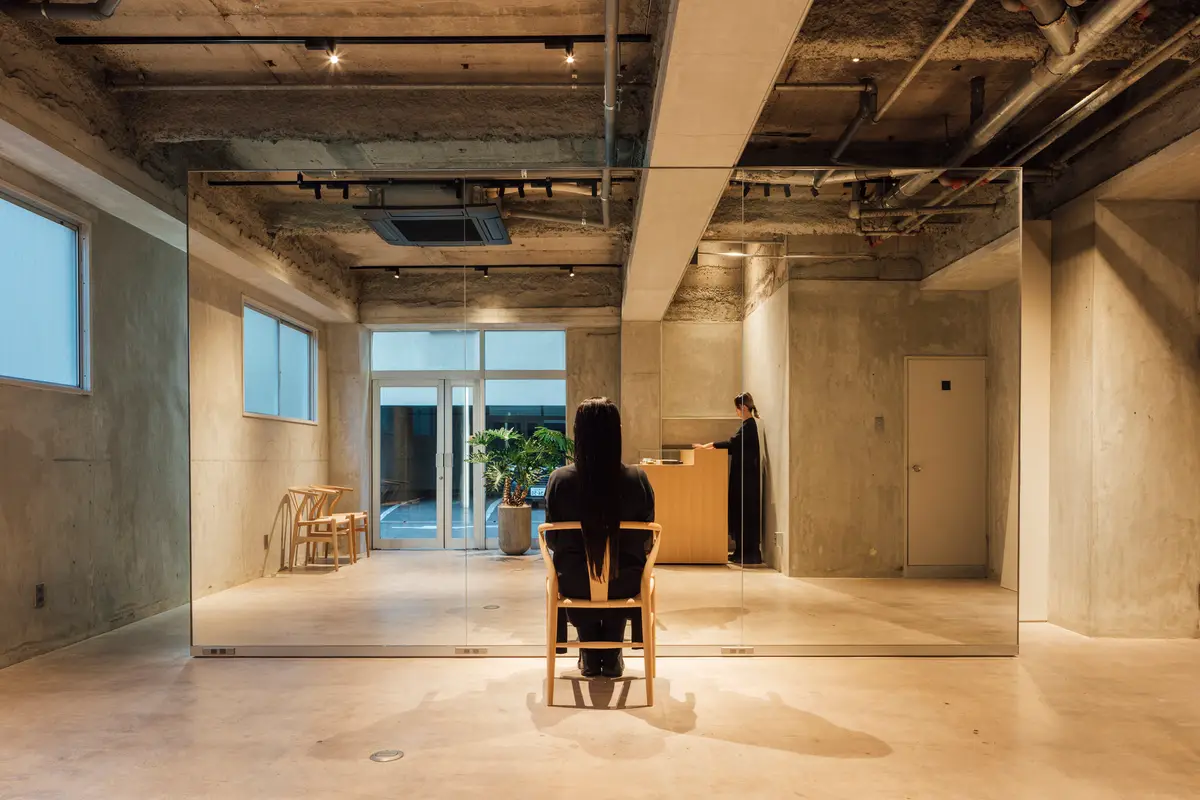
Fifty square meters is about the size of a large studio apartment. TEKI Design was asked to fit a beauty salon, a seating area, and a dance classroom into that footprint, all within a quiet residential street in Hiroshima. The instinct for most architects would be to subdivide, to carve up the plan into micro-rooms and label each one. TEKI Design did the opposite. They left the space almost entirely blank and placed a single mirror volume at its center, a piece of furniture scaled to architecture that holds all the salon's functions and storage behind its reflective surface.
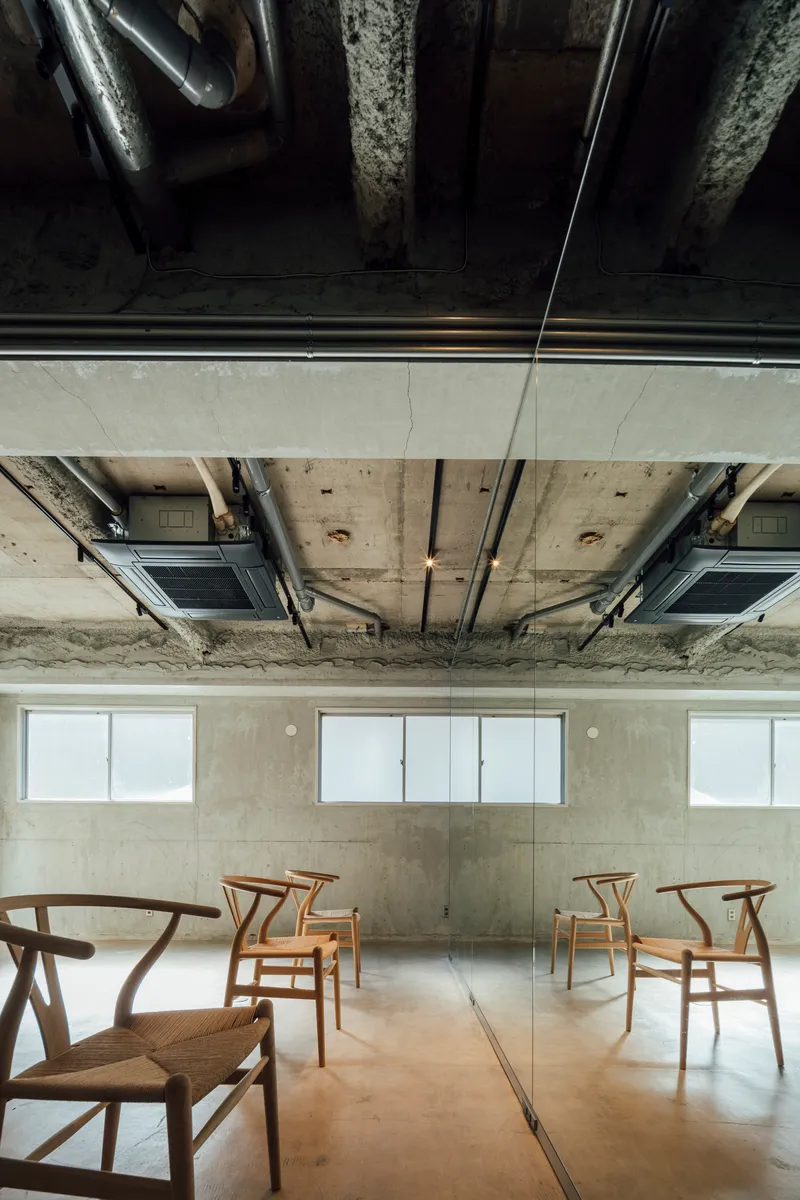
The result is a project less about program than about absence. When the salon is not operating, the mirror volume reflects only emptiness: raw concrete walls, a polished floor, exposed mechanical runs overhead. The room becomes a dance studio, a gathering space, or simply nothing at all. It is a radical commitment to flexibility in a culture that understands the value of the void. Kyslik Salon is not a renovation that crams three businesses into a small box. It is a spatial argument that the best way to serve multiple uses is to design for none of them in particular.
The Mirror as Architecture
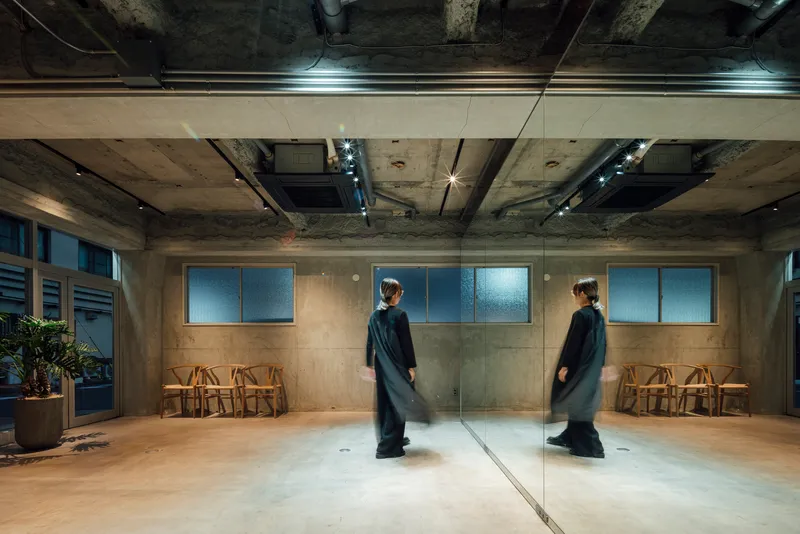
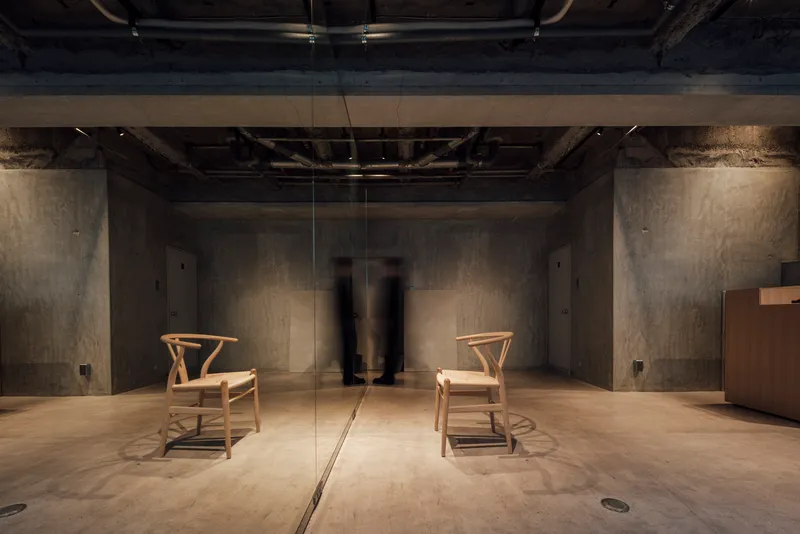
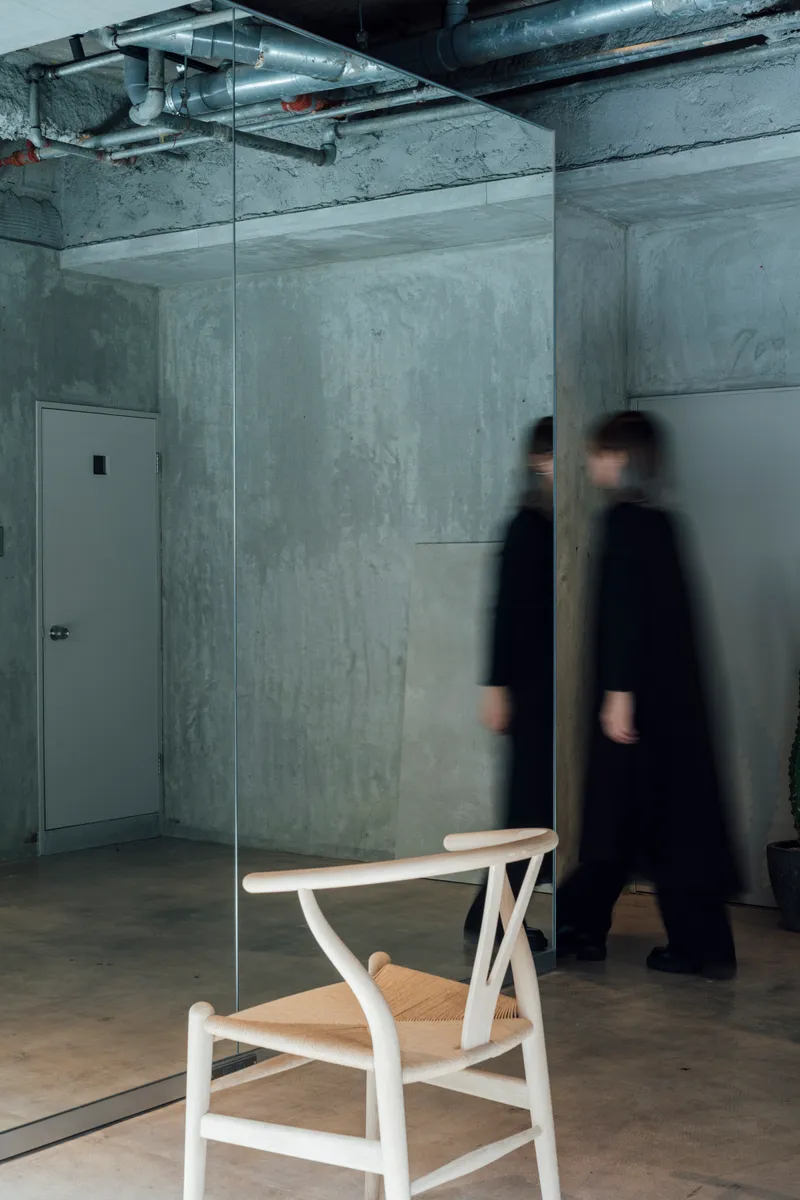
The central mirror volume is the entire project. It is not decoration or an accent wall. It is a spatial device that performs double duty: one side is a functional back-of-house for the salon, packed with storage and equipment, while the other side dissolves into reflection, expanding the perceived size of the room. The mirrors catch figures mid-stride, turning everyday movement through the space into something choreographic.
When a client sits for a haircut, the mirror is a tool of the trade. When the chairs are cleared and the floor opens for dance, the mirror becomes a rehearsal wall. The cleverness is that neither use requires any physical transformation. The room simply changes meaning depending on who walks in.
Concrete Shell, Warm Occupants
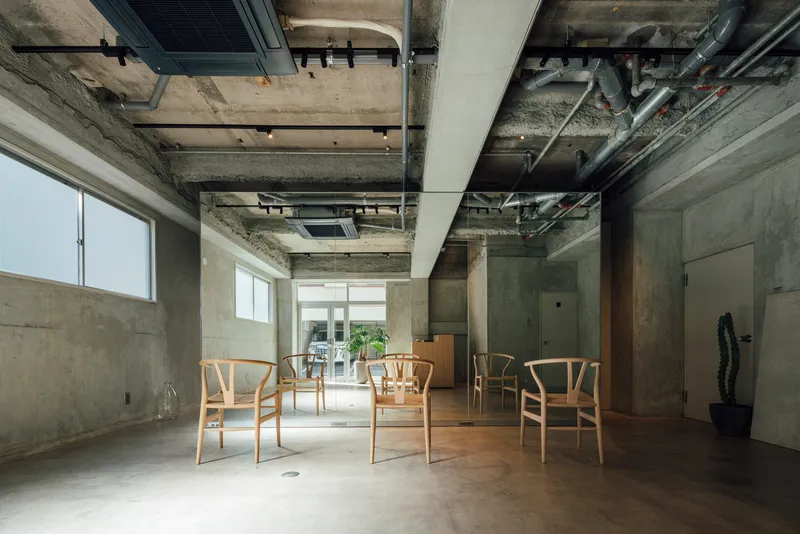
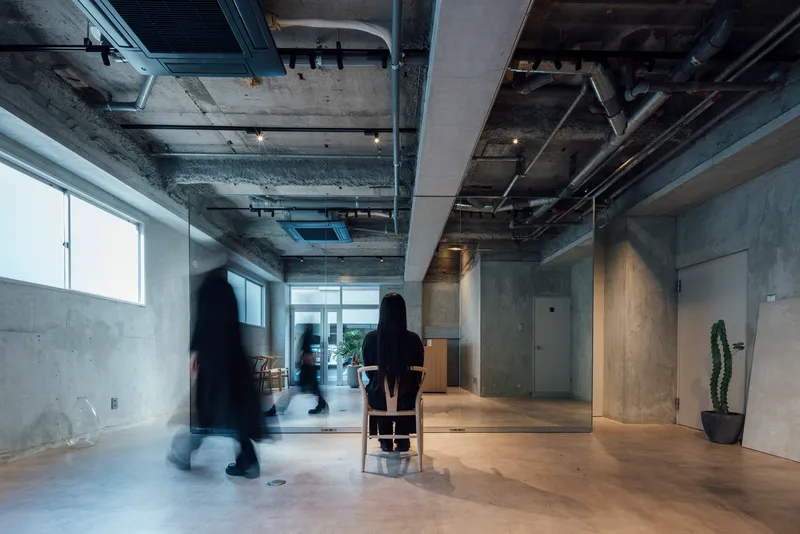
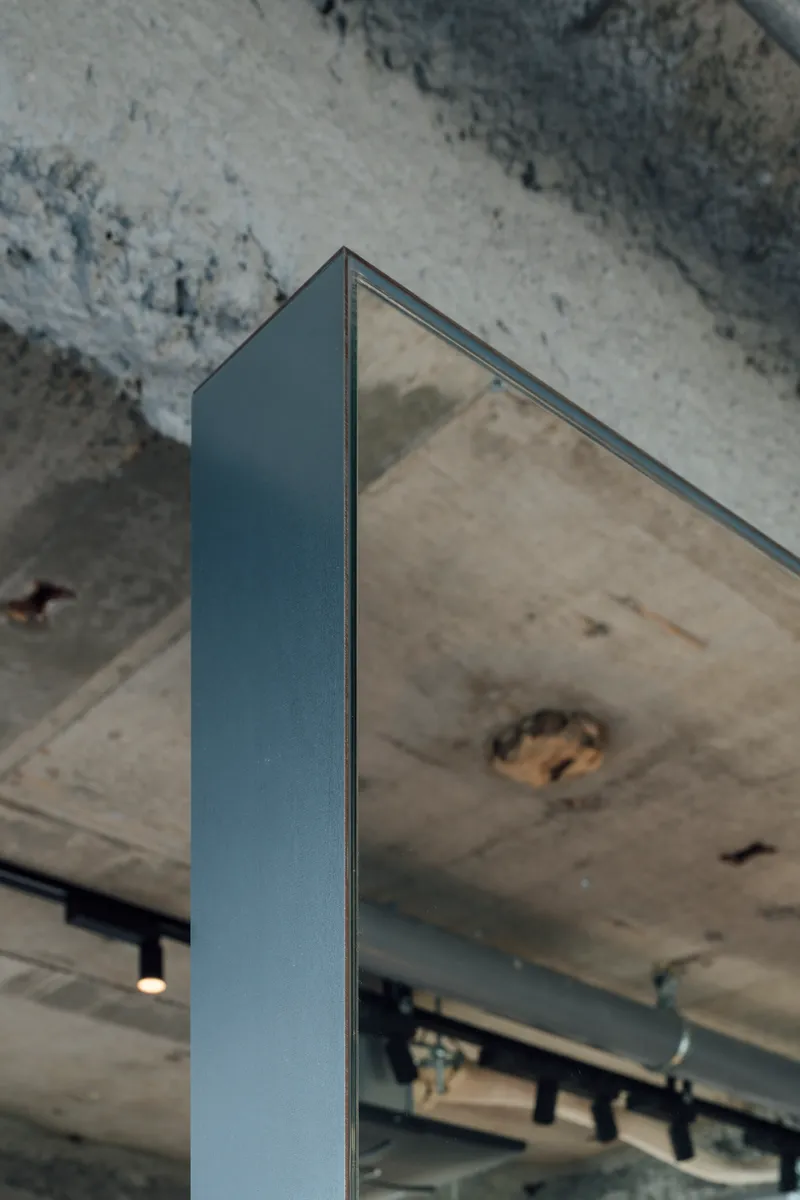
The raw concrete envelope is uncompromising. Walls, ceiling, and structural slab are all left exposed, with visible patching and the weathered underside of the existing upper floor on full display. Mechanical services run uncovered overhead. In a beauty salon, where the expected register is soft, polished, and curated, this level of material honesty is confrontational.
But the confrontation works because of the furniture. Warm-toned wooden chairs and a timber reception desk inject enough domestic comfort to keep the space from feeling industrial. The tension between rough shell and delicate object gives Kyslik its personality: not a loft conversion pretending to be raw, but an actually modest space that treats its limitations as its primary material.
Glass Partitions and Layered Depth
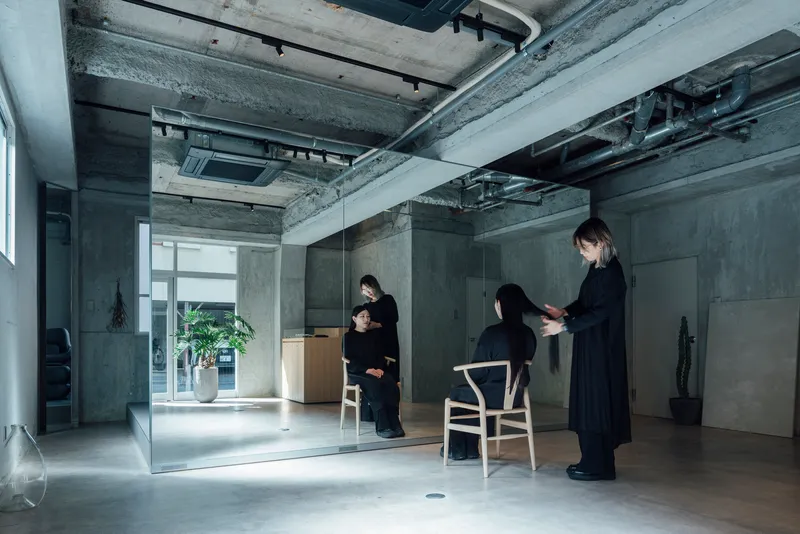
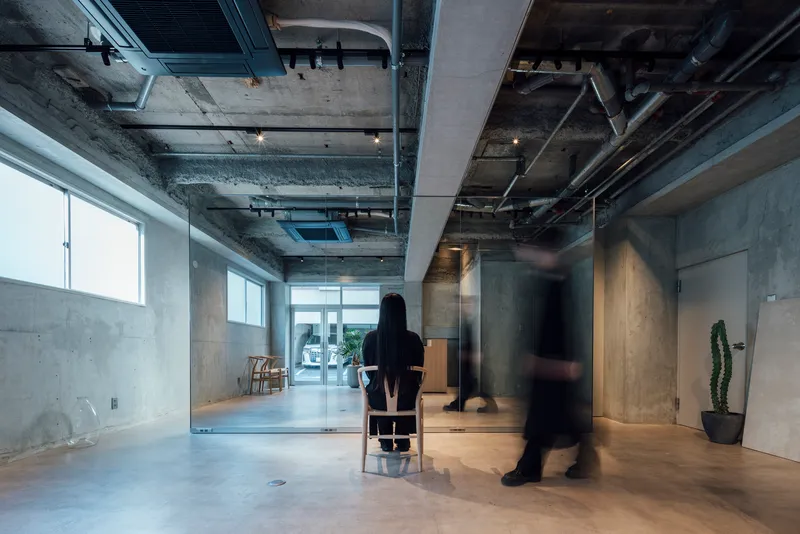
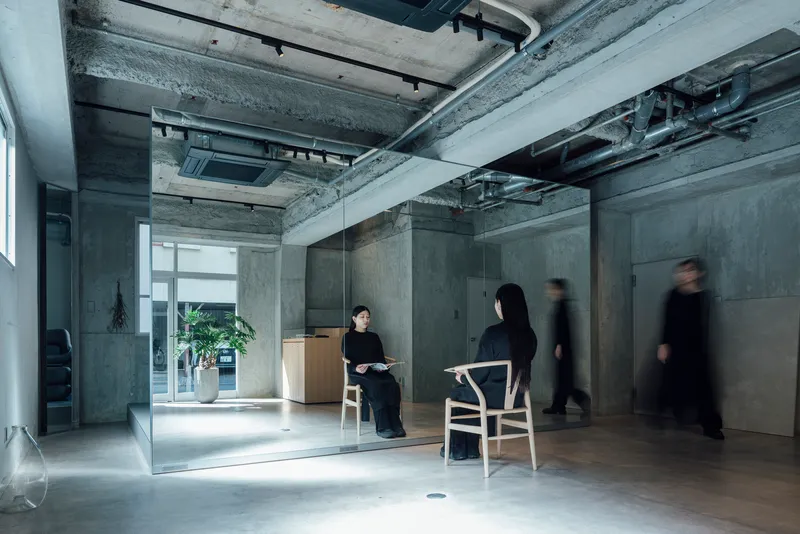
In fifty square meters, visual depth is everything. TEKI Design uses full-height glass partitions not to separate rooms but to multiply sightlines. You look through one pane, catch a reflection in the mirror volume, glimpse a figure moving through a corridor beyond. The space reads as far larger than its footprint because the eye never hits a dead end.
The glass also introduces a sense of social theater. Figures appear in motion blur, passing behind partitions, visible but not quite accessible. For a space that hosts consultations, haircuts, dance lessons, and casual seating, this layered transparency lets activities coexist without colliding. Privacy is achieved through depth, not walls.
The Salon Behind the Surface
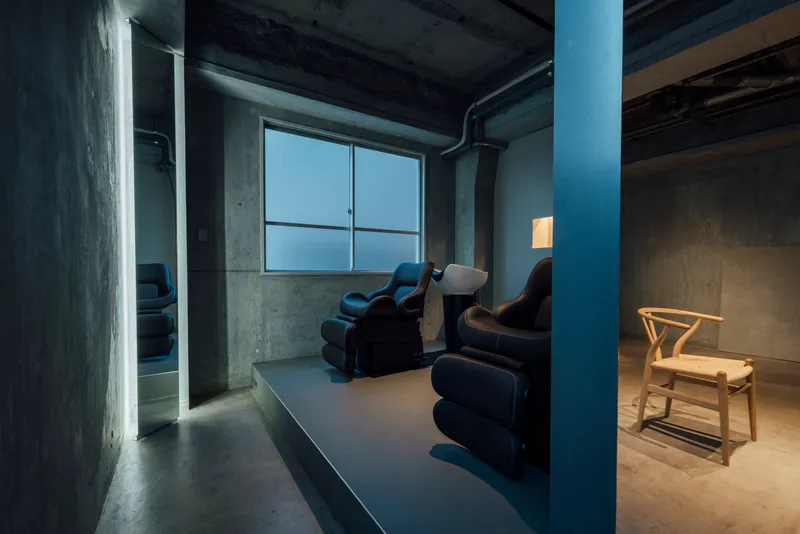
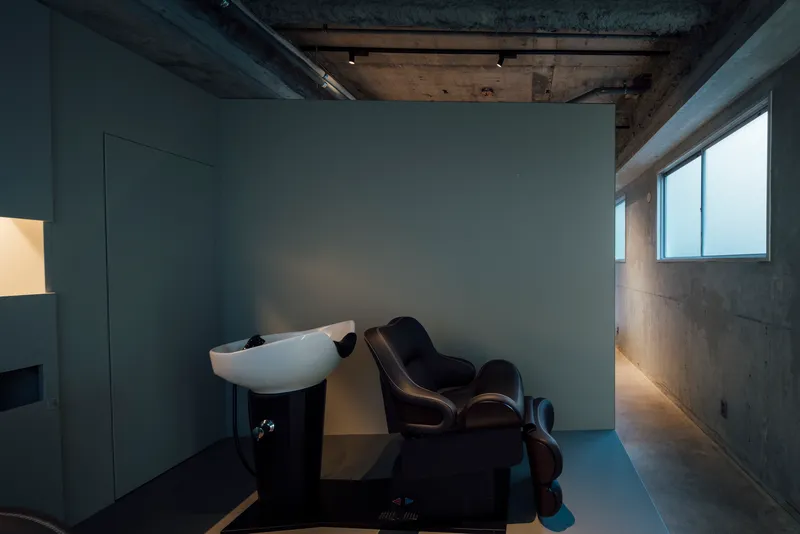
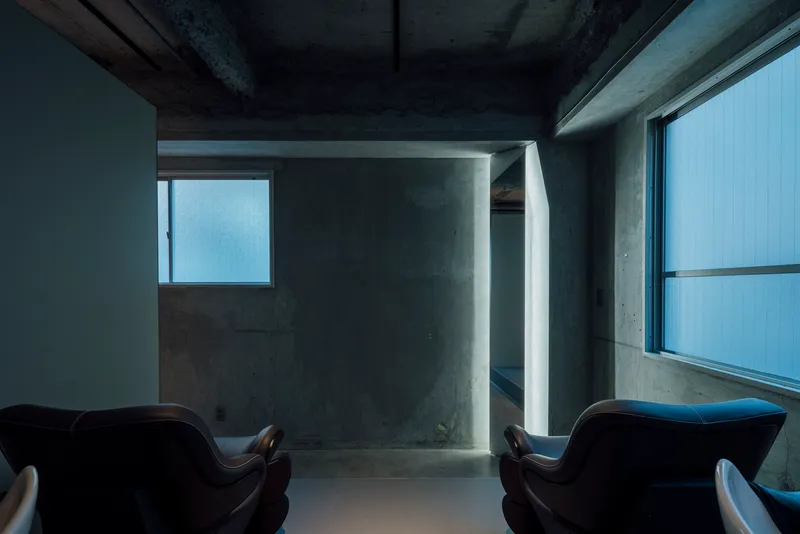
Behind the central mirror, the beauty salon functions reveal themselves. Reclining chairs, a wall-mounted washbasin, translucent glass windows filtering natural light along the perimeter: these are the practical necessities that make the business run. The corridor between salon stations is deliberately narrow, framed by concrete doorways that compress the body before releasing it back into the open room.
The translucent glazing is a smart choice. It admits daylight without exposing clients to the street, maintaining intimacy during services. Combined with the concrete surfaces, the light quality in this zone is soft and even, almost ecclesiastical. It is the one area of the project that feels genuinely private, tucked behind the mirror where the blank room cannot reach.
Day to Night
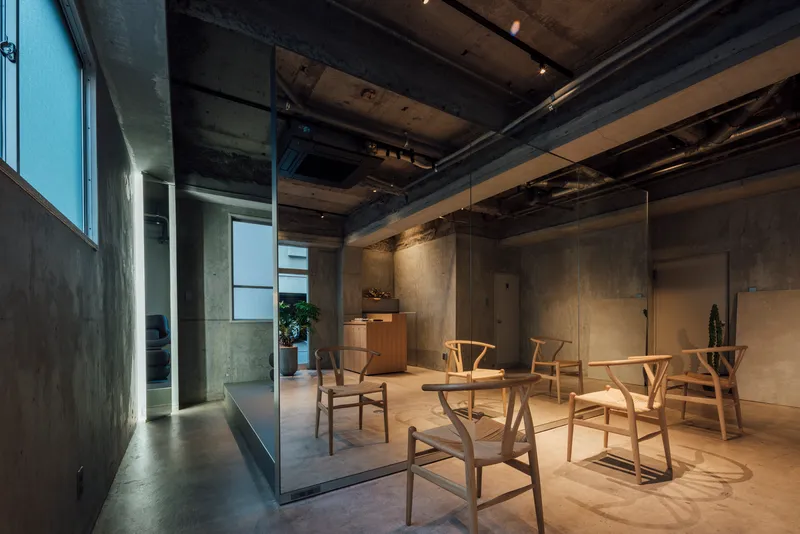
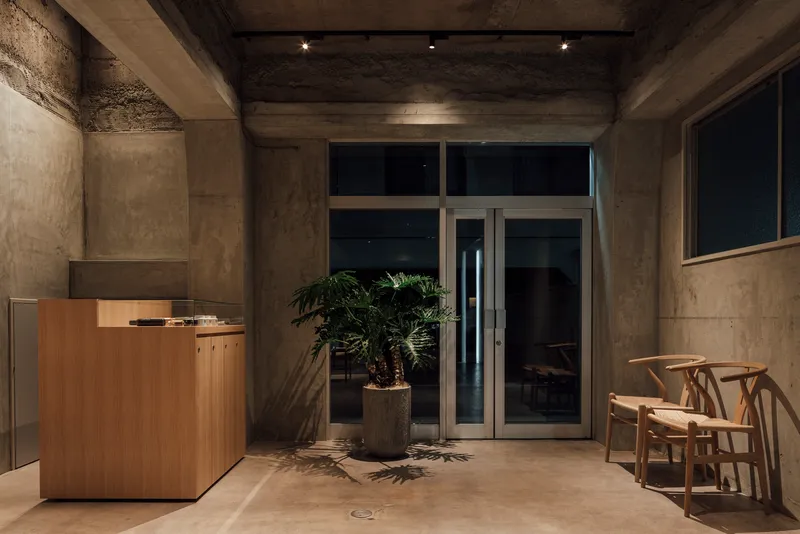
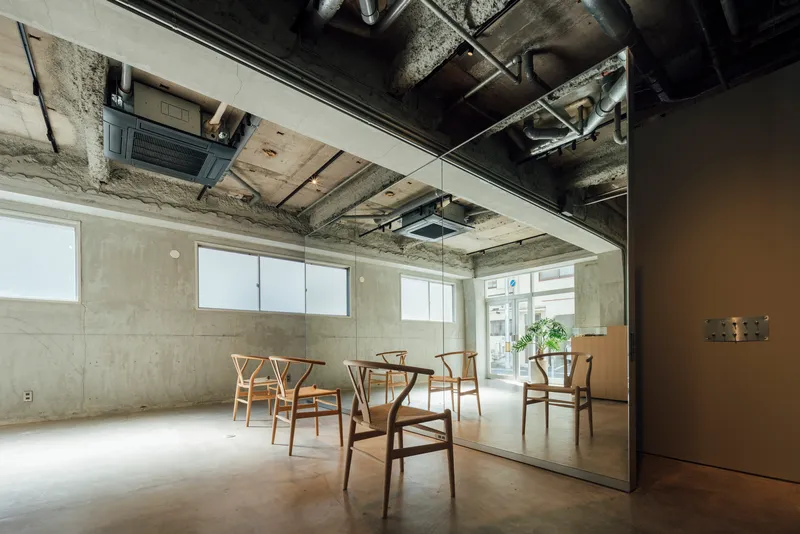
The project transforms dramatically between daylight and evening. During the day, natural light through the translucent windows washes the concrete in cool, even tones. At night, track lighting and spotlights take over, casting warm pools that isolate the timber furniture against the grey shell. The reception desk, backed by a potted palm, becomes almost cinematic under artificial light.
This dual register is important because the space serves different communities at different hours. The evening identity, warmer and more atmospheric, suits the gathering and social functions. The daytime clarity supports precision work at the salon chairs. TEKI Design did not design one space with two programs. They designed one space with two moods, and let the programs follow.
Thresholds and Circulation
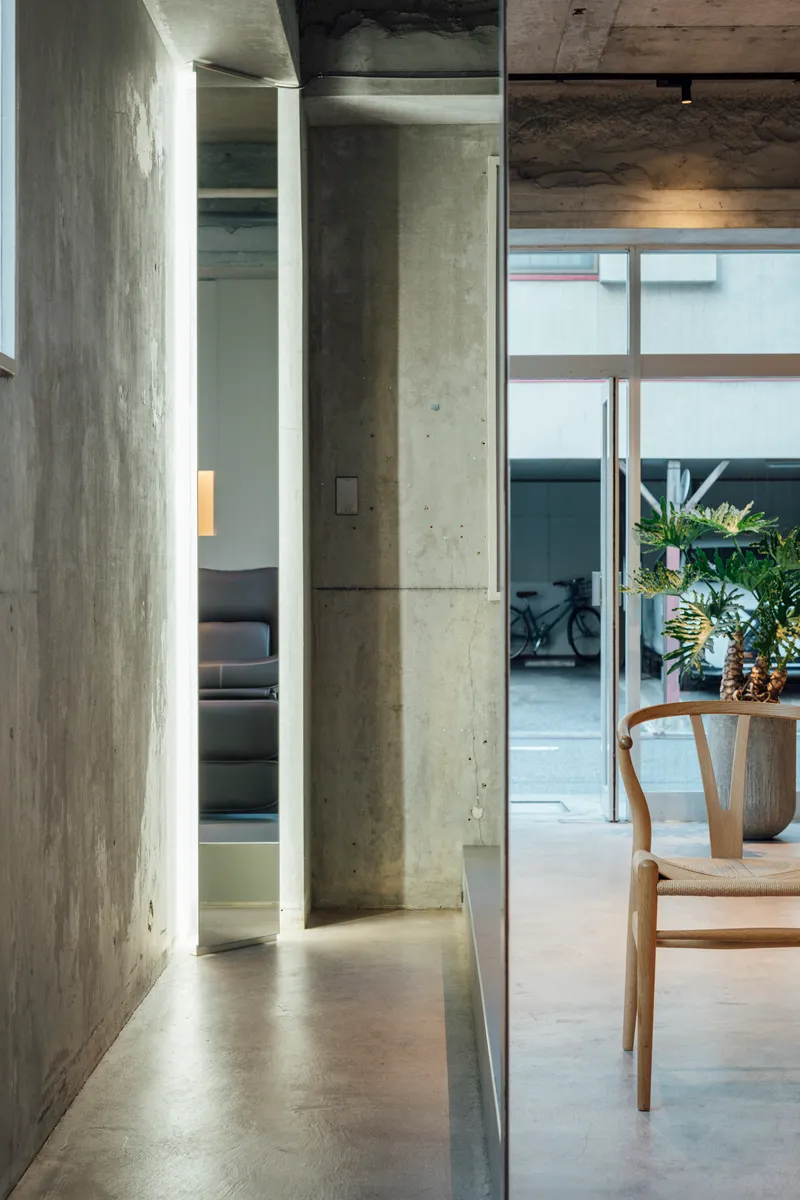
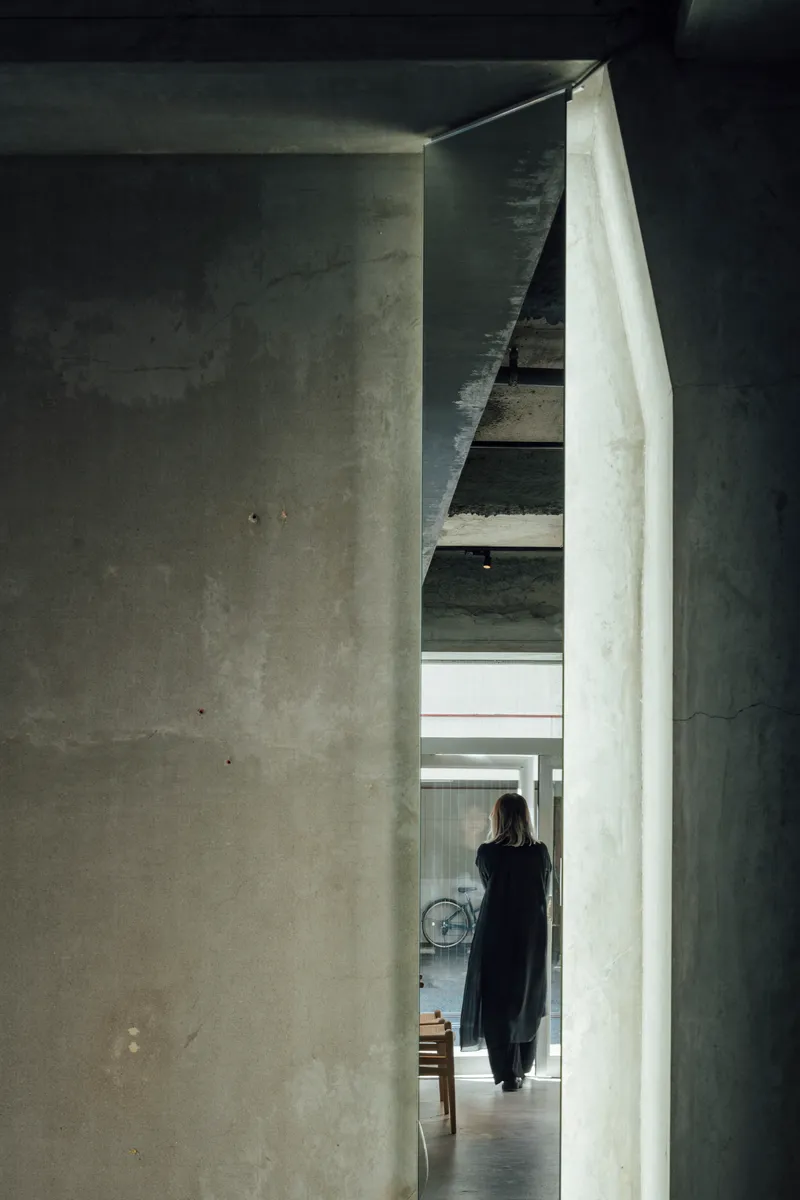
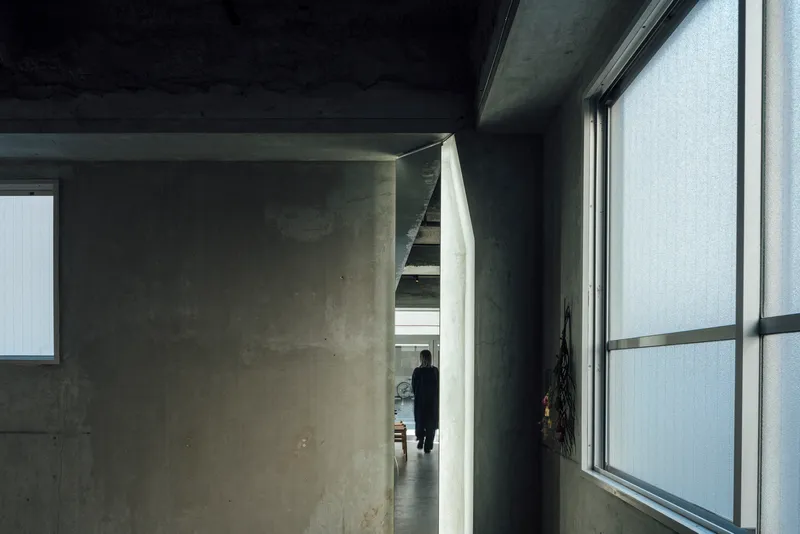
For a project this small, the circulation sequences are surprisingly deliberate. Concrete corridors lead past angled doorways, figures are glimpsed through oblique openings, and a staircase at the back draws indirect natural light down from above. Every threshold is a frame. The experience of moving through Kyslik is less about arriving somewhere and more about the quality of each passage.
The dark-painted ceiling in the rear corridor compresses the vertical dimension, making the transition from back-of-house to the main room feel like an expansion. It is a classic architectural trick, but it works especially well here because the main room's exposed mechanical ceiling reads as generous by contrast. Scale, in this project, is always relative.
Street Presence
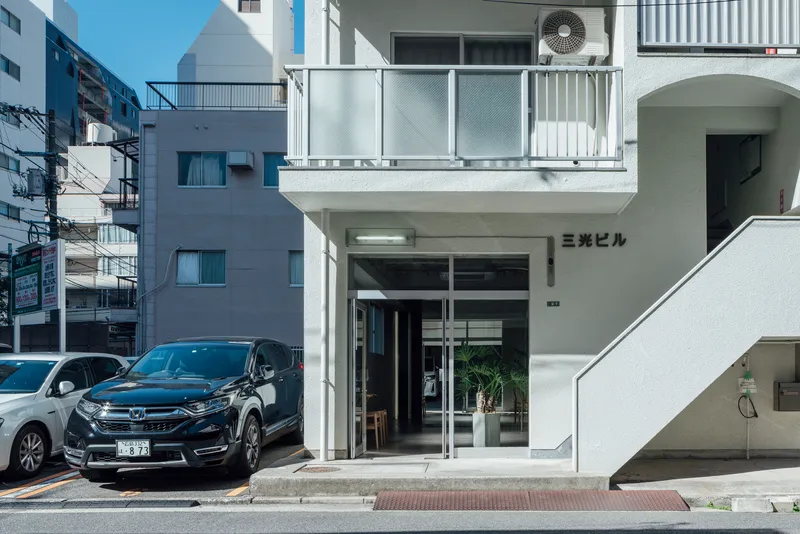
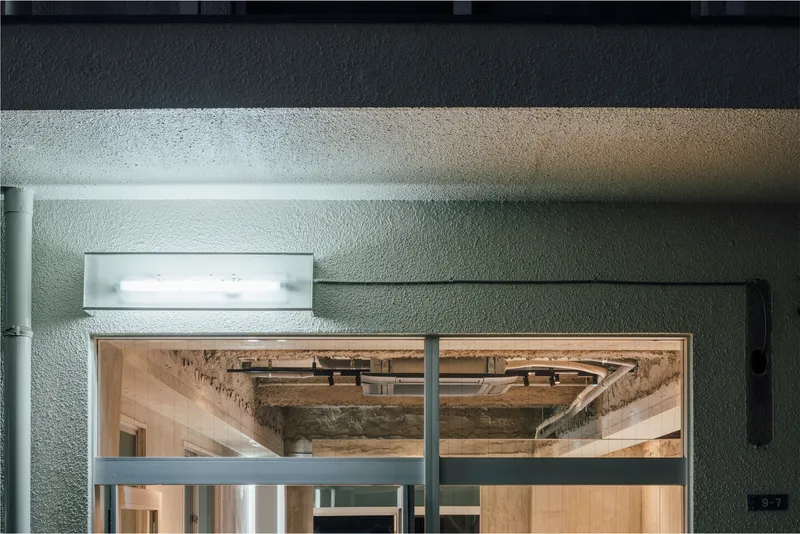
From the street, Kyslik barely announces itself. Glass entry doors sit beneath a metal balcony railing, flanked by parked cars. The facade is modest, almost anonymous, consistent with its residential context. There is no signage screaming for attention, no oversized logo. You could walk past without knowing what happens inside.
That restraint is the point. The project saves all its spatial energy for the interior, where the mirror, the glass, and the concrete do the work of creating atmosphere. The suspended white panel bisecting the ceiling overhead, visible in the plan view from above, is the only gesture that hints at something carefully considered within. Kyslik earns its clients through experience, not from the curb.
Why This Project Matters
Kyslik Salon is an argument against specialization. In a market that encourages architects to optimize every square meter for a single function, TEKI Design deliberately left the majority of their floor area undefined. The mirror volume is the only permanent commitment, and even it serves multiple purposes depending on the hour. The lesson is counterintuitive but worth hearing: in very small spaces, designing less can yield more.
The project also demonstrates that material economy and spatial richness are not mutually exclusive. Concrete, glass, mirrors, timber furniture: the palette is minimal. But the layering of reflections, the compression and release of corridors, and the shifting quality of light across the day produce an experience that feels far more complex than its means suggest. For fifty square meters in a Hiroshima side street, that is a remarkable return on investment.
Kyslik Salon by TEKI Design. Hiroshima, Japan. 50 m². Completed 2022. Photography by Tatsuya Tabii.
About the Studio
Share Your Own Work on uni.xyz
If projects like this are the kind of work you want to make, uni.xyz is a place to publish your own, find collaborators, and enter design competitions.


Popular Articles
Popular articles from the community


The Musturak Paradise: Senior Living Architecture for a Connected Future in Temara, Morocco
The Musturak Paradise reimagines senior living architecture in Temara via private homes, social spaces, culture, community, and shared care.

Co-life: Sustainable Architecture for Age-Friendly Community Living
Co-life reimagines sustainable architecture for seniors through courtyards, rammed earth, shared gardens, and spaces designed for belonging.

Hill & Cross Opera: Sculptural Opera House Architecture Shaped by Tallinn’s Landscape and Identity
Hill & Cross Opera reimagines opera house architecture in Tallinn through its sculptural hill, civic plaza, glass wave and a luminous cross.

Lunar Spiral: Space Architecture Shaped by the Mathematics of the Universe
Lunar Spiral reimagines space architecture through Fibonacci geometry, lunar regolith, levitating habitats, and self-sustaining Moon living.

Similar Reads
You might also enjoy these articles

Bao Huynh Watercolor Atelier: A Serene Art Retreat in Hội An
Bao Huynh Watercolor Atelier in Hội An blends multifunctional art spaces, sustainable design, local materials, and family-friendly living in a serene environment.

Atelier Macri Concept Store Interior Design by CASE-REAL
Atelier Macri store features a "ko" counter, walnut wood details, cork displays, blending retail, gallery, and seamless customer experiences.

Manuel Vargas Izquierdo Stadium and High-Performance Sports Center: Architectural Excellence in Jalpa de Méndez
The Manuel Vargas Izquierdo Stadium blends sustainable design, inclusive sports facilities, and cultural-inspired architecture, revitalizing Jalpa de Méndez’s public spaces.

KAKR Buluh Awar Hall: Revitalizing Community and Ecology Through Bamboo Architecture
Community built bamboo hall revitalizes Buluh Awar village, empowering youth, restoring ecology, celebrating vernacular craftsmanship through sustainable architecture and culture.

Explore Architecture Competitions
Discover active competitions in this discipline

Challenge to reimagine the Iron Throne

Photograph architecture without architects

Illustrate the lost glory of Angkor Wat - Render Challenge

Design challenge to reuse E-waste
Comments (0)
Please login or sign up to add comments
No comments yet. Be the first to comment!