

Tempo Nexus Library by k59 atelier
A small adaptive-reuse library in a historic Saigon apartment, where restraint and care revive urban memory through quiet architectural continuity.


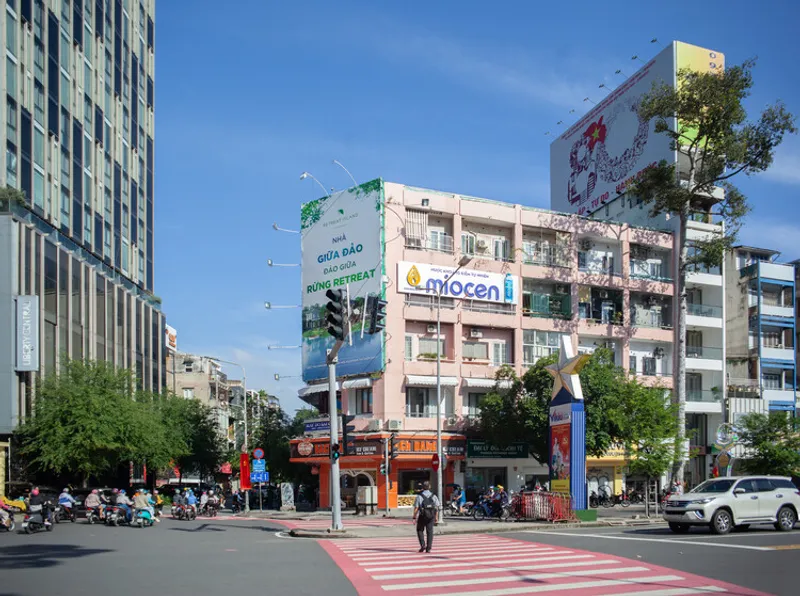
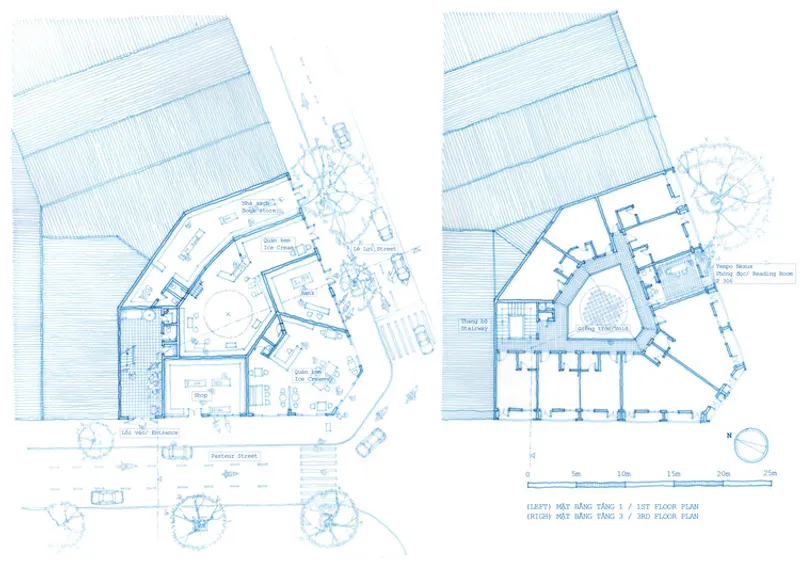
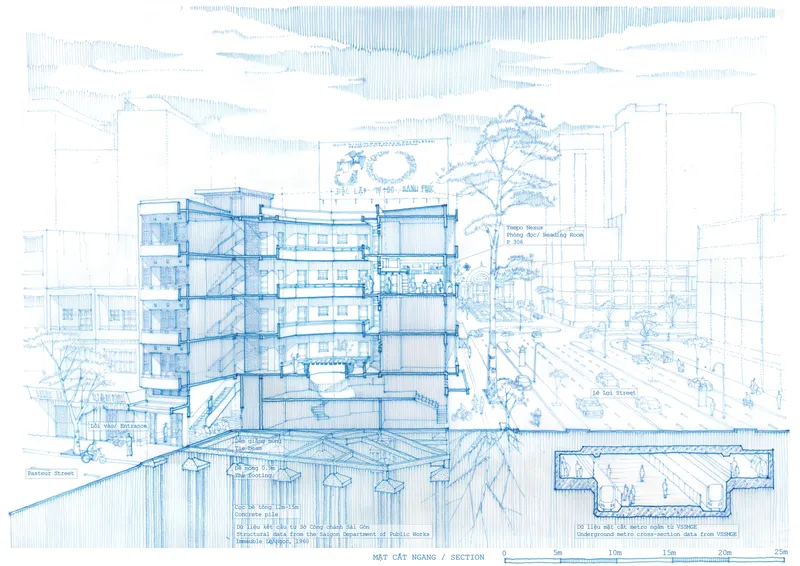
Hidden within the aging corridors of the Lê Ngọc Apartment Building on Pasteur Street in Ho Chi Minh City, Tempo Nexus Library by k59 atelier is a small yet profoundly resonant act of architectural restoration. Completed in 2025 within a modest 40 m² footprint, the project transforms a long-abandoned apartment into a community library, one that quietly reconnects contemporary life with the layered memories of Saigon’s mid-20th-century residential heritage.
Unfolding Urban Memory Through Careful Reuse in a Historic Saigon Apartment
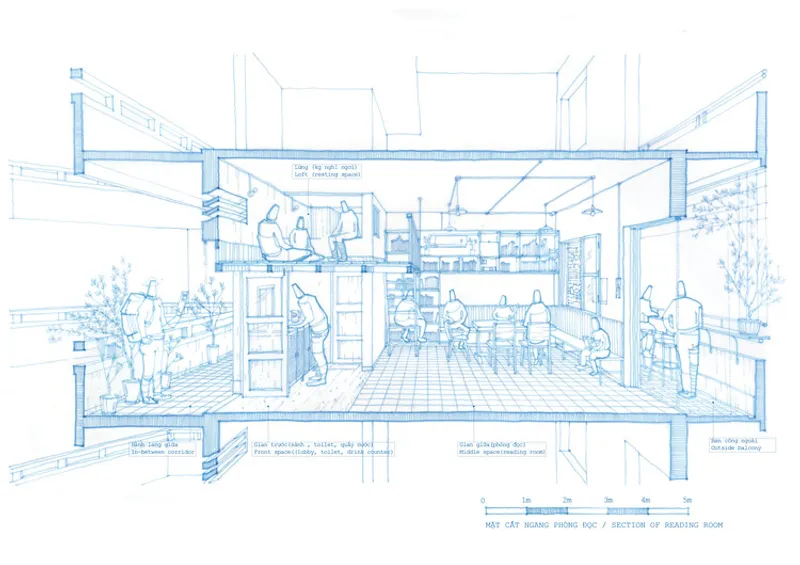
Rather than positioning itself as a bold architectural insertion, Tempo Nexus Library adopts an attitude of restraint, listening, and continuity. It is not a project of replacement, but of rediscovery, where architecture becomes a tool for unfolding history rather than overwriting it.
A Long-Term Commitment to Saigon’s Apartment Heritage
Tempo Nexus Library is part of an ongoing research-driven series pursued by k59 atelier, rooted in a deep emotional and cultural attachment to Saigon’s old apartment buildings. These structures: often overlooked, altered, or left vacant, form a crucial layer of the city’s collective memory.
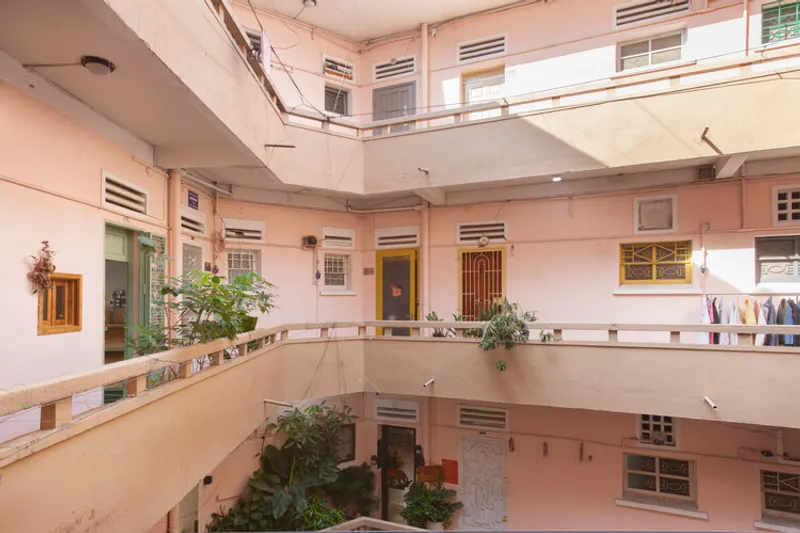
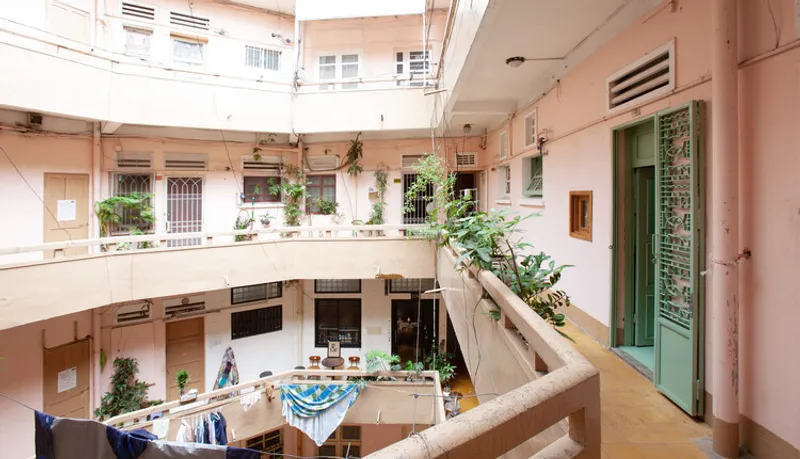
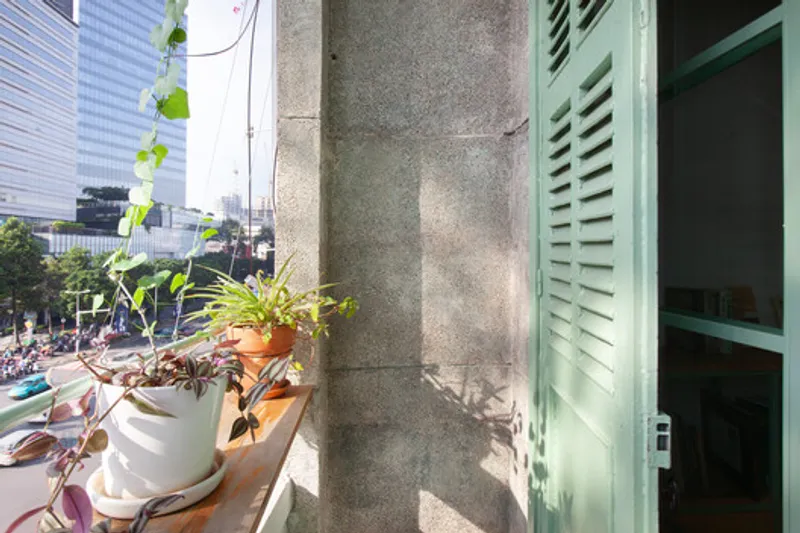
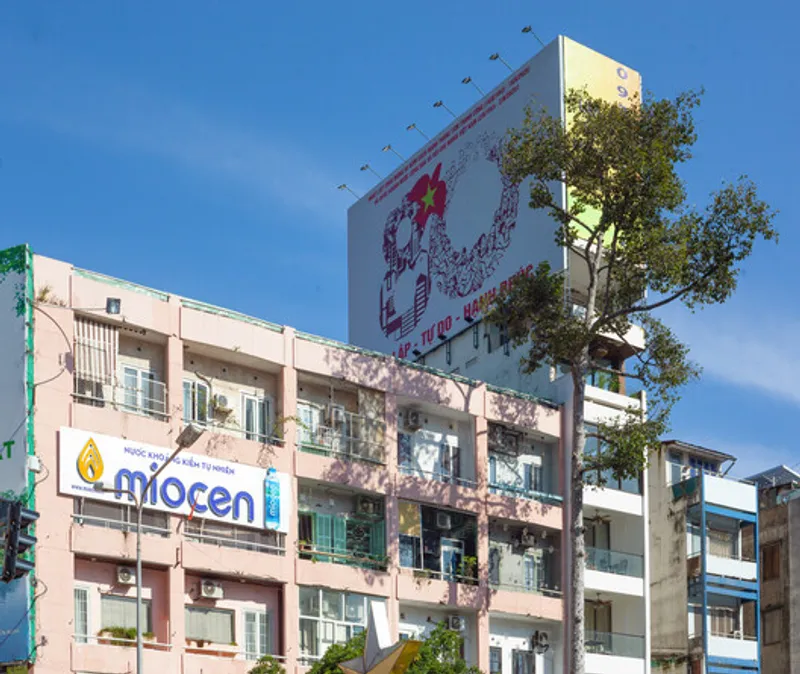
The Lê Ngọc Apartment Building itself was constructed between 1951 and 1961 by architect Hoàng Hùng, under the General Department of Construction of the time. Like many buildings of its era, it has undergone incremental transformations: terrazzo façades repainted, patterned cement tiles concealed, and ornate wrought-iron doors replaced with aluminum and glass. These changes reflect both material scarcity and evolving lifestyles, rather than deliberate erasure.
Tempo Nexus Library emerges from this context, not to reverse time, but to negotiate respectfully with it.
From Vacancy to Cultural Catalyst
The apartment that now houses Tempo Nexus Library had been left unused for many years. Its renovation presented an opportunity not only to reactivate dormant space, but to question how adaptive reuse can serve cultural, social, and historical continuity within dense urban fabric.
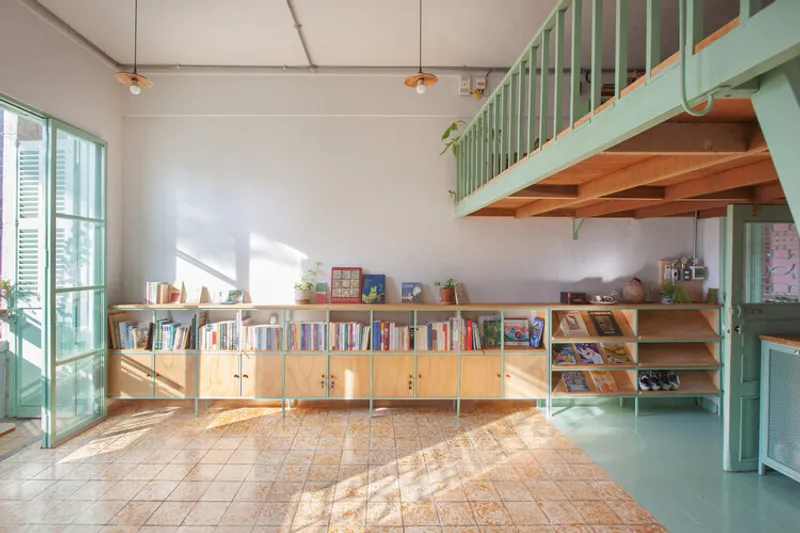
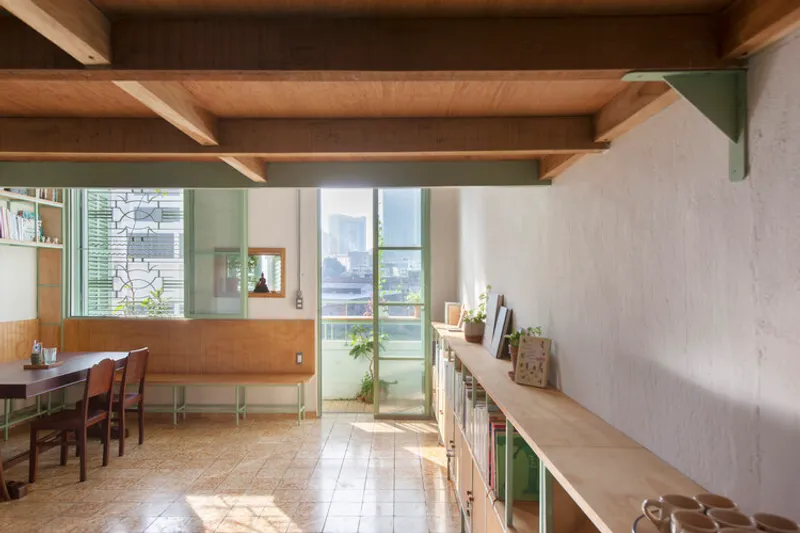
The goal was not to create a pristine library interior, but a space where reading, reflection, and gathering could coexist with visible traces of the past. The library becomes a slow, intimate program, well suited to its scale and context, inviting visitors to pause rather than consume.
“Unfolding History” as Design Method
With the support of the Anthropology and History research group Tản Mạn Kiến Trúc, alongside collaborators Ms. Châu and Mr. Henri (NGO), the architects embarked on a process they describe as “unfolding history.”
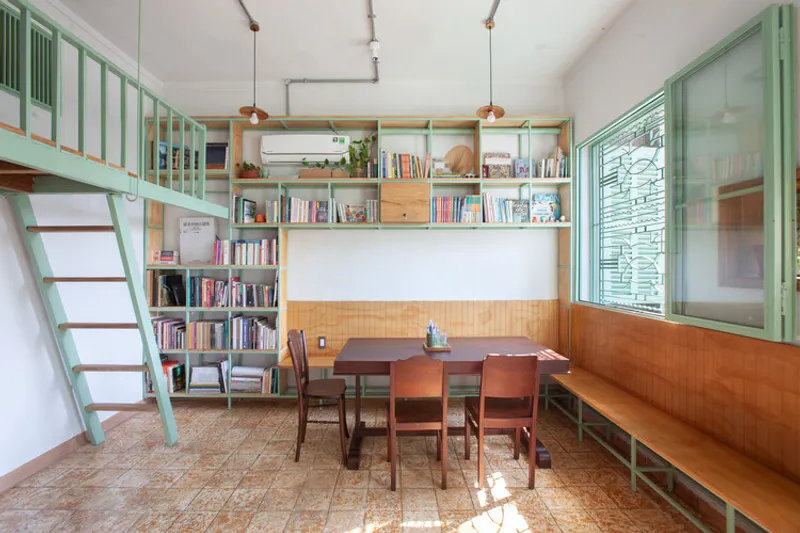
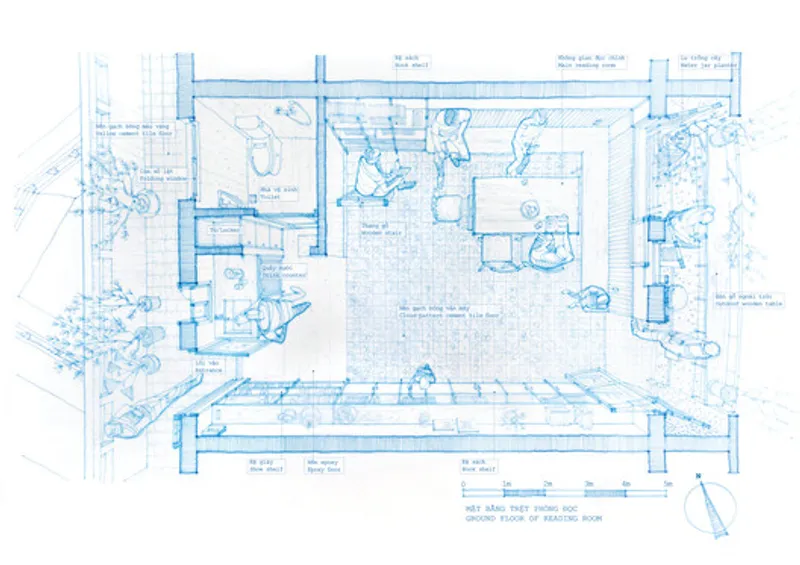
Rather than imposing a finished vision from the outset, the renovation proceeded layer by layer. Walls were carefully peeled back, revealing cloud-patterned cement tiles, original surfaces, and fragments of earlier craftsmanship. Surviving wrought-iron motifs were restored with the help of local artisans, allowing traditional skills to re-enter the space.
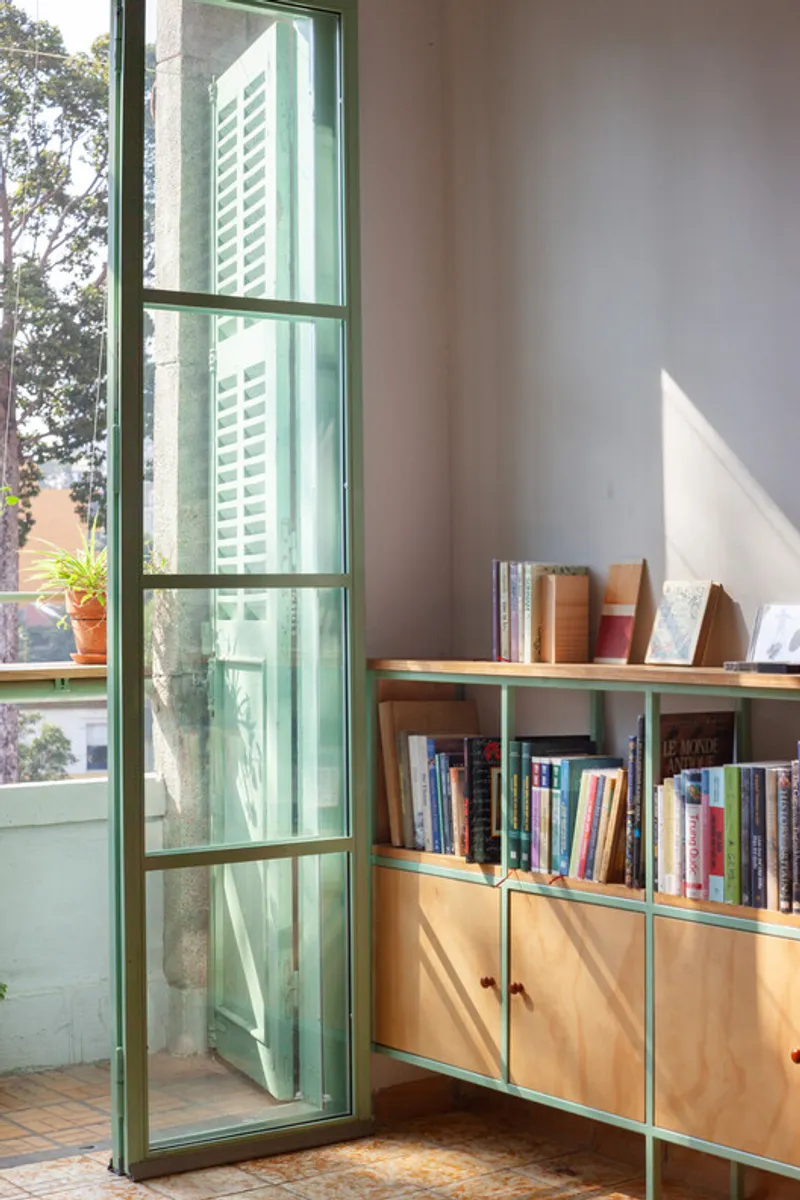
Each discovery informed the next decision. What remained became the foundation for what was added. In this way, design emerged as a dialogue between past and present, rather than a unilateral act.
Preservation Through Minimal Intervention
A guiding principle of the project is summarized by the architects as “doing as if nothing was done.” This philosophy prioritizes preservation over display, and continuity over contrast.
Structurally, the renovation carefully respects the apartment’s existing load-bearing system. Reinforcements were introduced only where necessary, and essential upgrades, such as water supply and drainage, were discreetly integrated to extend the building’s lifespan without altering its character.
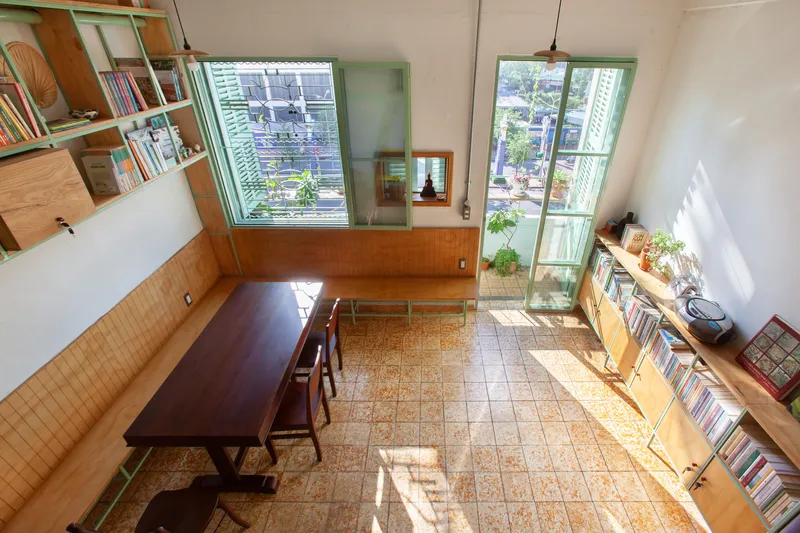
Equally important was the study of the building’s natural ventilation. By understanding how air originally moved through the apartment, the architects were able to enhance comfort without relying on heavy mechanical intervention, reinforcing the intelligence embedded in the original design.
Spatial Intimacy and Domestic Scale
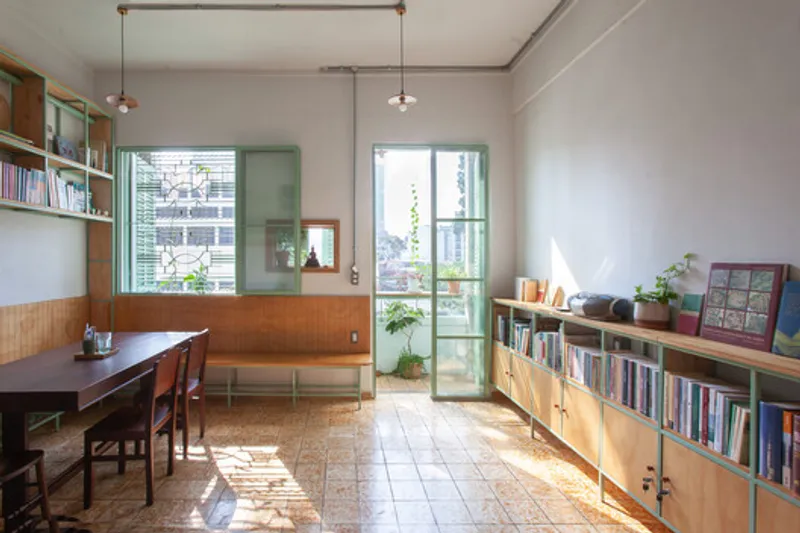
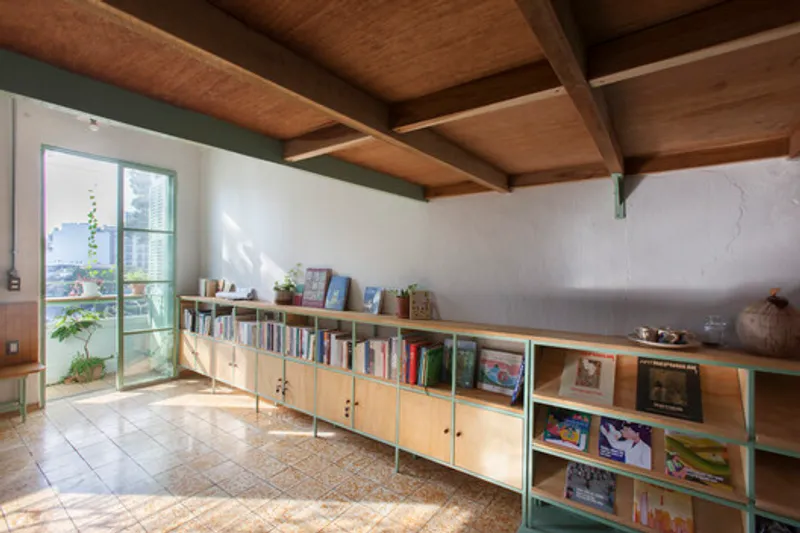
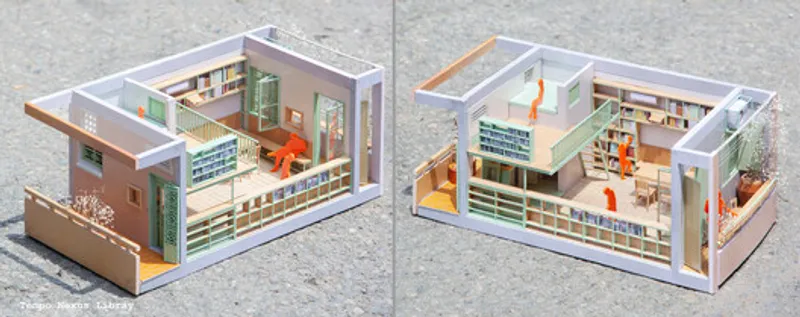
At just 40 m², Tempo Nexus Library is defined by intimacy rather than monumentality. Bookshelves, reading tables, and seating are integrated into the existing spatial logic, allowing the apartment’s proportions to remain legible.
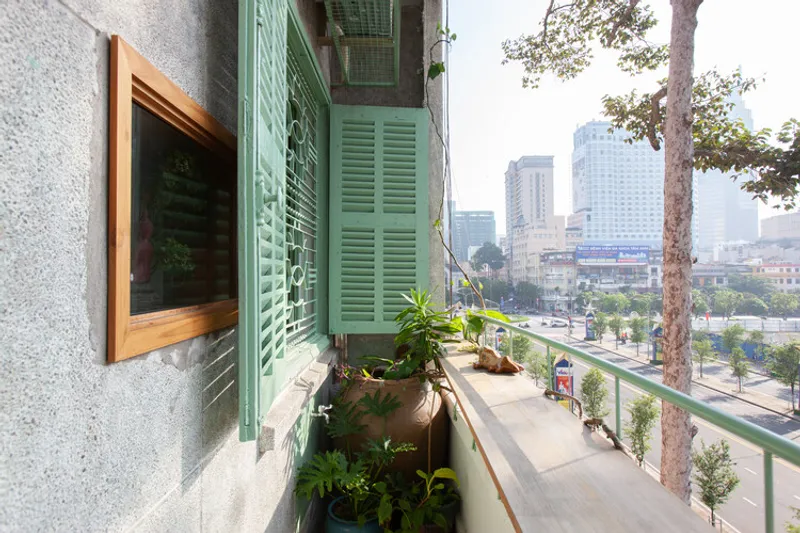
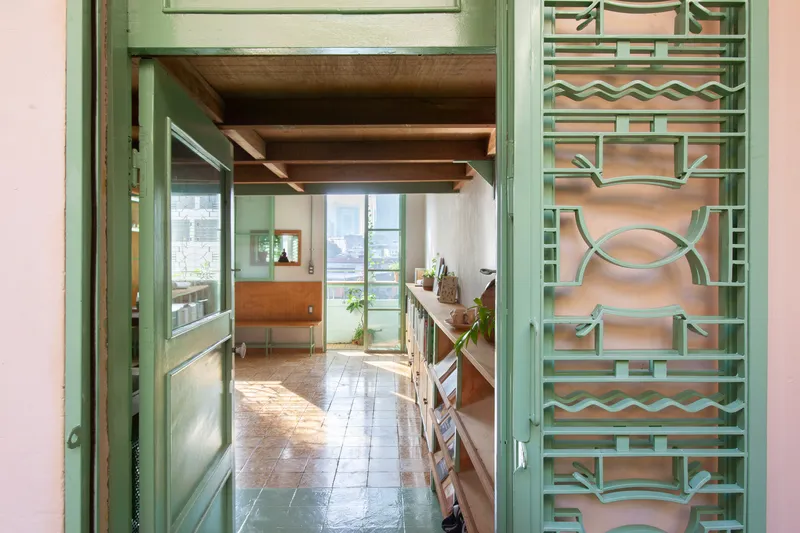
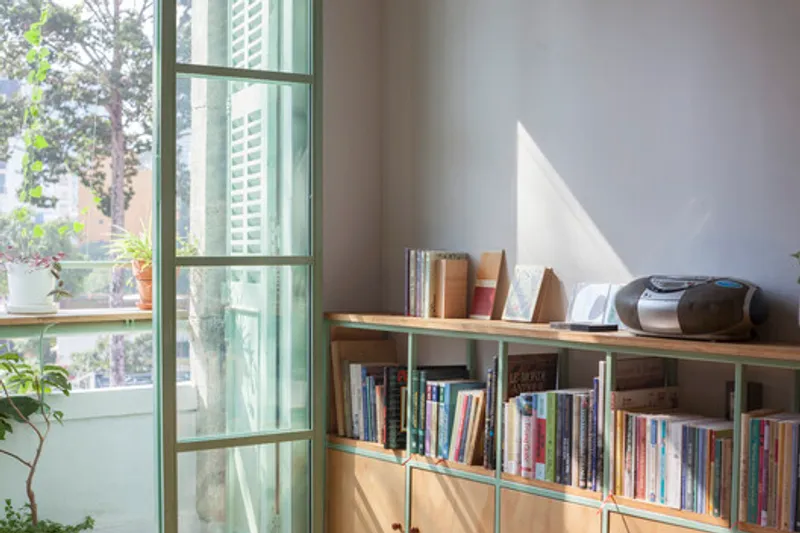
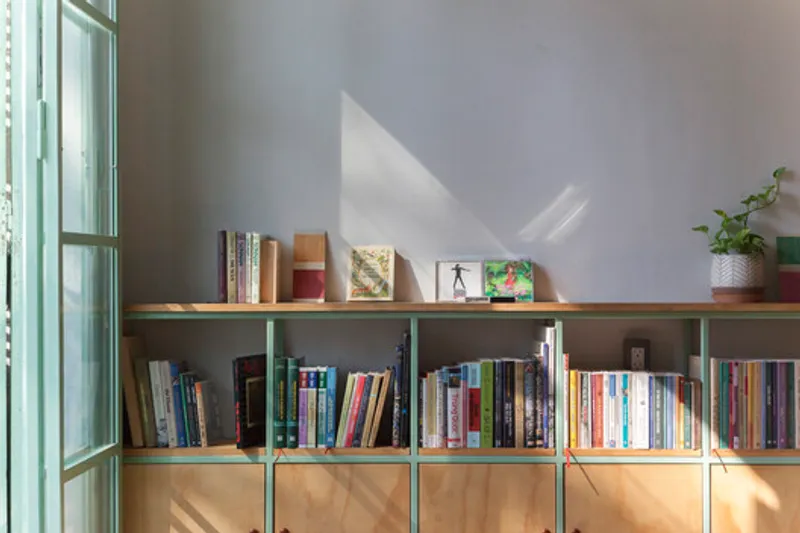
Wooden shelving and furniture introduce warmth and tactility, complementing the rediscovered surfaces rather than competing with them. Light is soft and domestic, reinforcing the sense that this is not an institutional library, but a shared living room for knowledge.
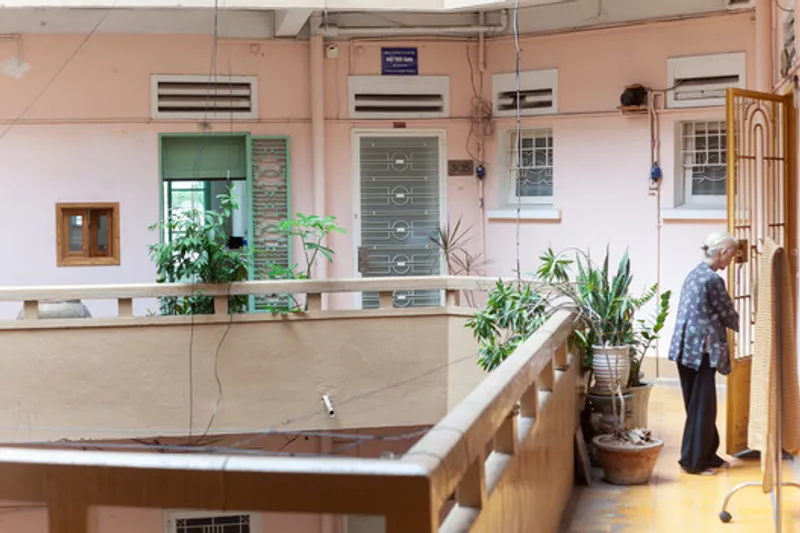
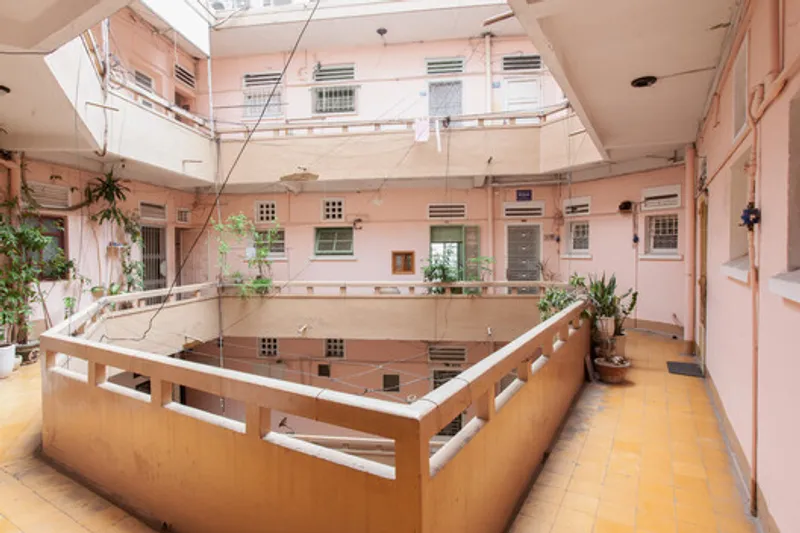
Balconies and openings maintain visual and climatic connections with the courtyard and surrounding building, preserving the porous relationship between private interiors and collective life that defines Saigon’s older apartment blocks.
Community as an Architectural Condition
Working within the Lê Ngọc Apartment Building offered insights beyond material history. The project revealed the importance of self-managed residents’ committees and the strong social fabric characteristic of old Saigon apartments.
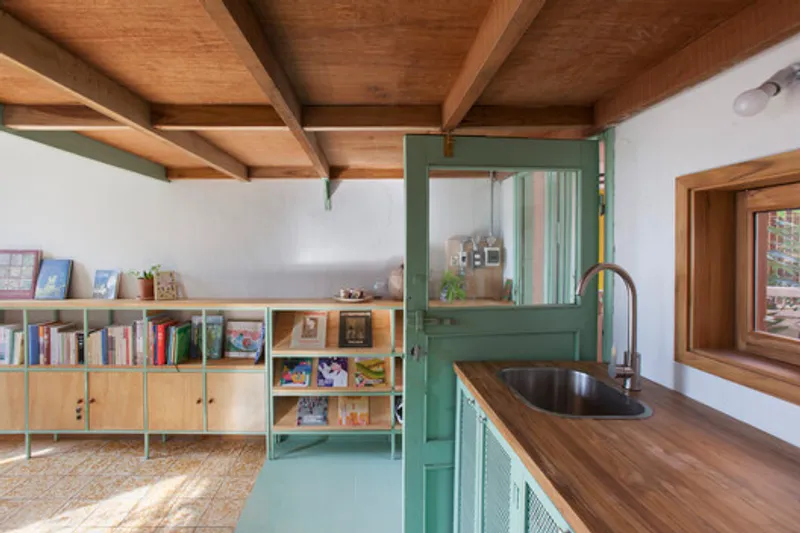
Shared corridors, balconies, and courtyards foster everyday encounters and collective responsibility. Tempo Nexus Library does not exist in isolation; it participates in this living ecosystem. Visitors pass through common spaces, greet residents, and become momentary participants in the building’s social life.
In this sense, the library acts as both a cultural resource and a social bridge, reinforcing the communal values embedded in the building’s original conception.
Adaptive Reuse as Urban Memory Work
Tempo Nexus Library is not a nostalgic reconstruction, nor a contemporary overlay. It operates in a careful middle ground: acknowledging loss, transformation, and adaptation as part of urban reality.
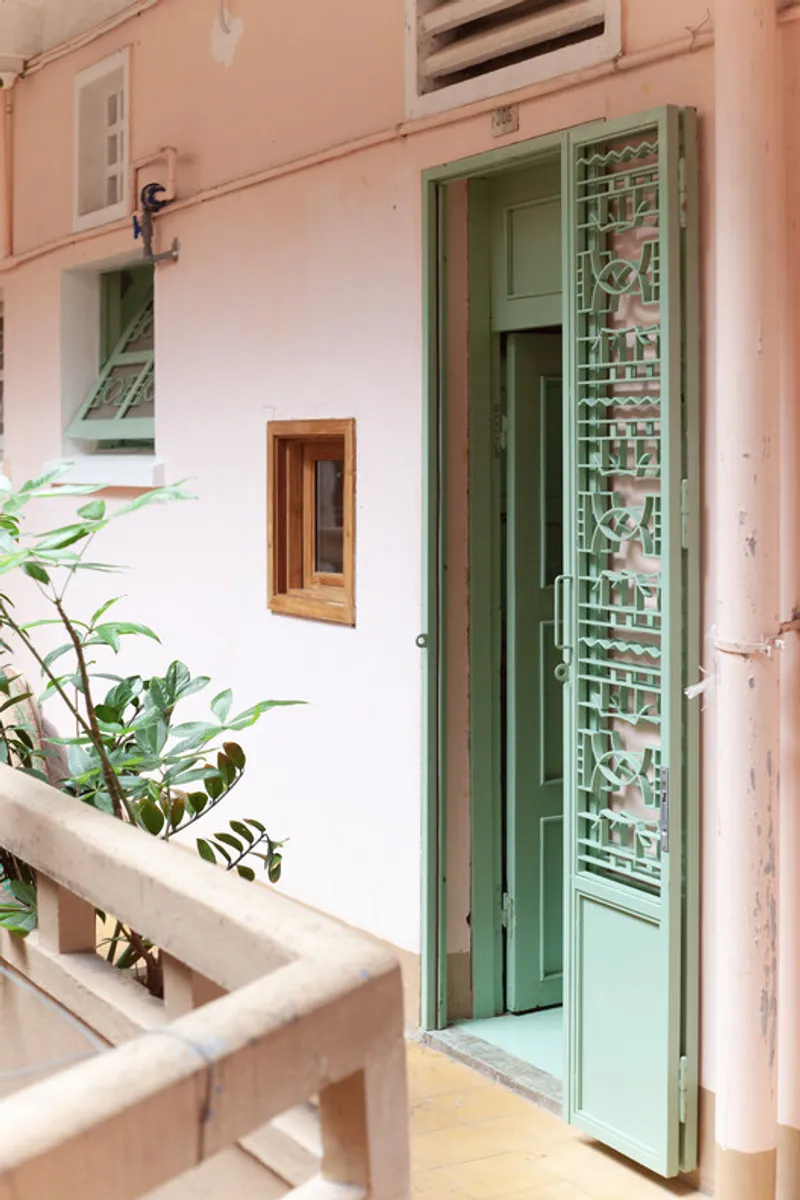
By choosing restraint over spectacle, k59 atelier resists the urge to aestheticize decay or exaggerate contrast. Instead, the project demonstrates how small-scale interventions can sustain memory through continuity, care, and use.
The library becomes an experiment in how architecture can hold time, allowing multiple eras to coexist without hierarchy.
A Quiet Counterpoint to Rapid Urban Change
In a city defined by speed and redevelopment, Tempo Nexus Library offers a quiet counterpoint. It does not deny contemporary life, but slows it down. Reading becomes an act of resistance against erasure, and architecture becomes a medium for attentiveness.
The project suggests that heritage conservation need not always operate at the scale of monuments or museums. Sometimes, the most powerful acts of preservation occur within ordinary buildings, through ordinary use.
Architecture as Care, Not Statement
Ultimately, Tempo Nexus Library reframes architecture as an act of care rather than declaration. Its success lies not in visual transformation, but in the sensitivity with which it reveals what already exists.
By reviving an abandoned apartment through minimal, thoughtful intervention, k59 atelier demonstrates how adaptive reuse can nurture cultural memory, community cohesion, and architectural humility.
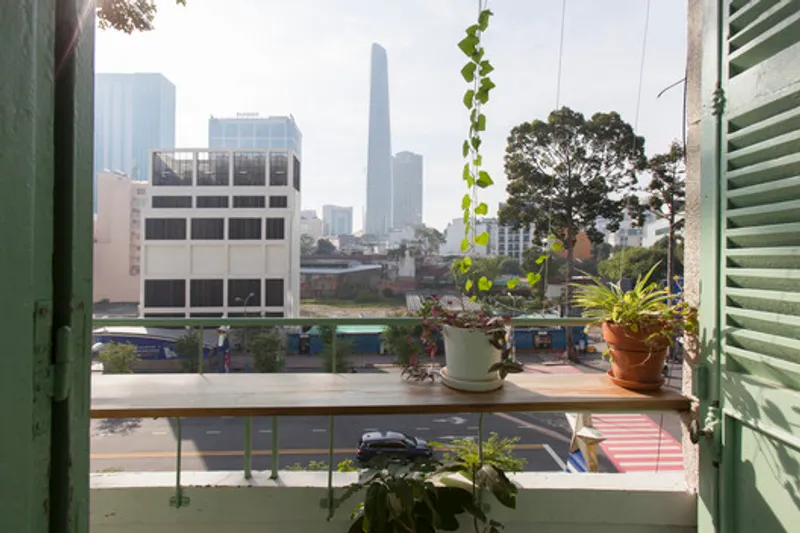
Tempo Nexus Library is small in size, but expansive in implication, a reminder that cities are built not only from new constructions, but from the patient reactivation of what remains.


Popular Articles
Popular articles from the community


David Ortega Stacks a Two-Story Mexico City Penthouse Around a Steel Stair and a Pergola-Shaded Roof Terrace
In Colonia Roma, a 300 m² penthouse uses oak joinery, a planted steel stair and a slatted roof pergola to make a new-build apartment feel like a house.

LT2A and OPEN Architectes Thread a Brick and Glass High School Through a Wooded Belgian Campus
In Braine-l'Alleud, a 3,000 m² wing for Collège Cardinal Mercier pairs pale brick with a glazed colonnade, deferring to a small chapel and a dense wood.

U.GA Architects Wraps an Oval Rooftop Pool in Curved Board-Formed Concrete on Busan's Jeollidan-gil
In Busan's Jeonpo-dong, a 454 m² mixed-use block stacks a neighborhood facility, guest rooms and an oval rooftop pool inside spiraling concrete walls.

Jaramillo Van Sluys Arquitectura and Urbanismo Turn a Demolished Registry Lot in Quito into an Orchard Plaza
In Quito's Centro Histórico, a 2,800 m² plaza exposes the San Agustín convent wall and redraws its lost Augustinian orchard in volcanic stone.

Similar Reads
You might also enjoy these articles


Hodi-Mandai Geram
Project Function: Preservation and revitalization of the Intangible heritage and socio-spatial identity of the Hodi by Housing, Cultural Memory Center, Sacred Grove, landscape, local tourism economy


Olio Towers: A Mid-Rise for Performers That Fuses Housing, Rehearsal, and Stage
Located blocks from Houston's Theater District, this modular tower stacks living units around a central performance atrium.

Oasis: Modular Green Housing Carved into Dhaka's Urban Fabric
A shortlisted Plugin Housing entry reclaims unauthorized settlements in Dhaka with stepped concrete volumes, green roofs, and ventilation-driven design.

Black Hole: A Floating Megastructure for the Post-Physical Era
Emiliano Mazzarotto envisions a spherical, self-scaling arena where e-sports, digital hotels, and holographic stadiums replace traditional public space.

Explore Urban Design Competitions
Discover active competitions in this discipline

Design challenge to equip cities with modern furniture

Challenge to reimagine the Iron Throne

Photograph architecture without architects

Illustrate the lost glory of Angkor Wat - Render Challenge
Comments (0)
Please login or sign up to add comments
No comments yet. Be the first to comment!