

TF House by Cristián Romero Valente
TF House blends wood and steel in southern Chile, offering panoramic volcano views, sustainable design, and warm, light-filled interiors


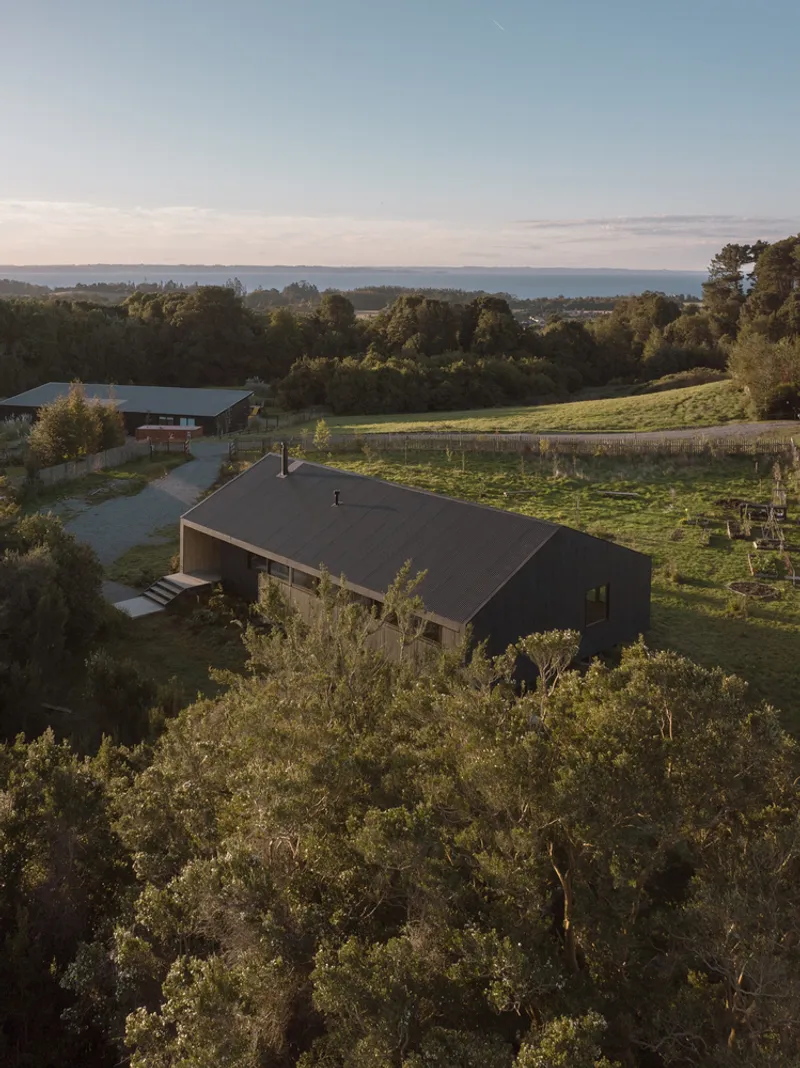
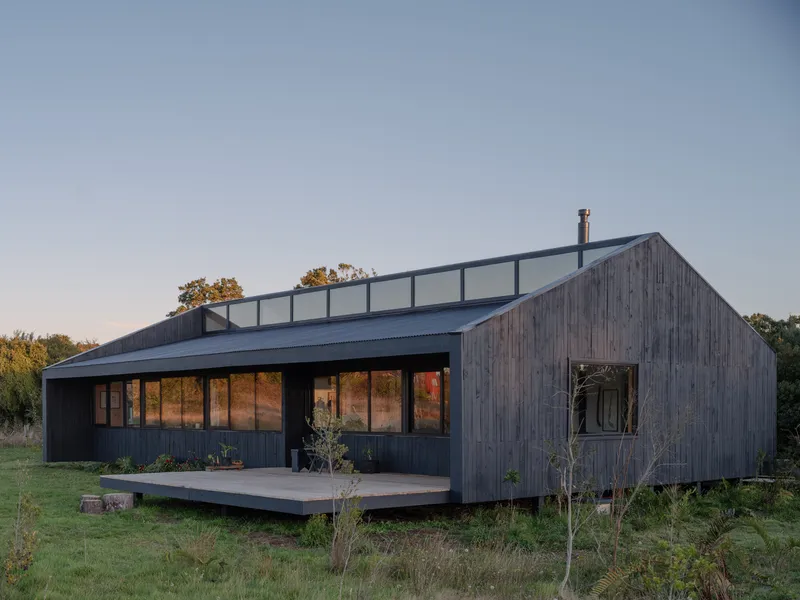
Nestled in the scenic landscape of Puerto Varas, Chile, TF House by Cristián Romero Valente is a 144 m² single-family residence that celebrates nature, simplicity, and regional identity. Located in the Los Lagos region, the home is carefully positioned to face northeast, offering uninterrupted views of the iconic Osorno volcano while maximizing exposure to natural light throughout the day.
Contextual Design
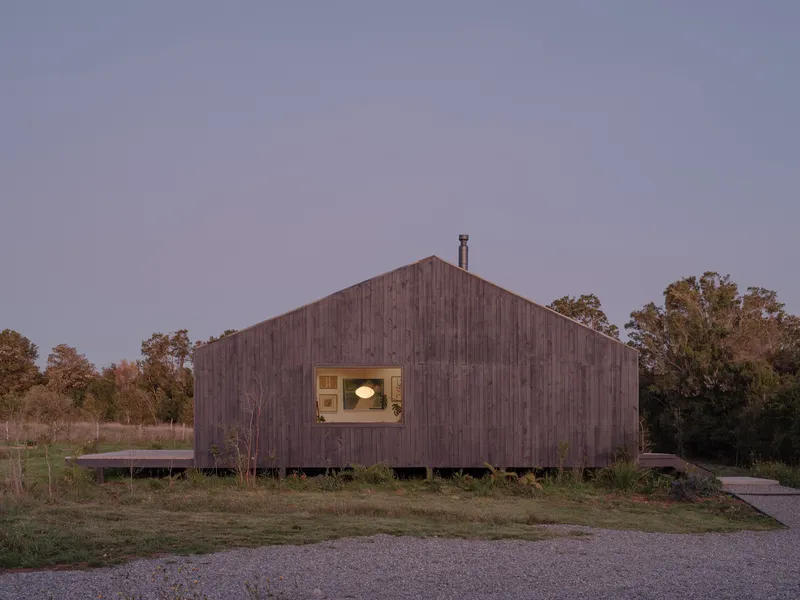
Perched on a steep hillside, the house is suspended above the ground on a steel and wood framework that minimizes environmental disruption and integrates seamlessly into the natural topography. Its architectural language draws inspiration from the traditional wooden sheds of southern Chile, paying homage to local vernacular forms while introducing a contemporary sensibility.
Materiality & Structure
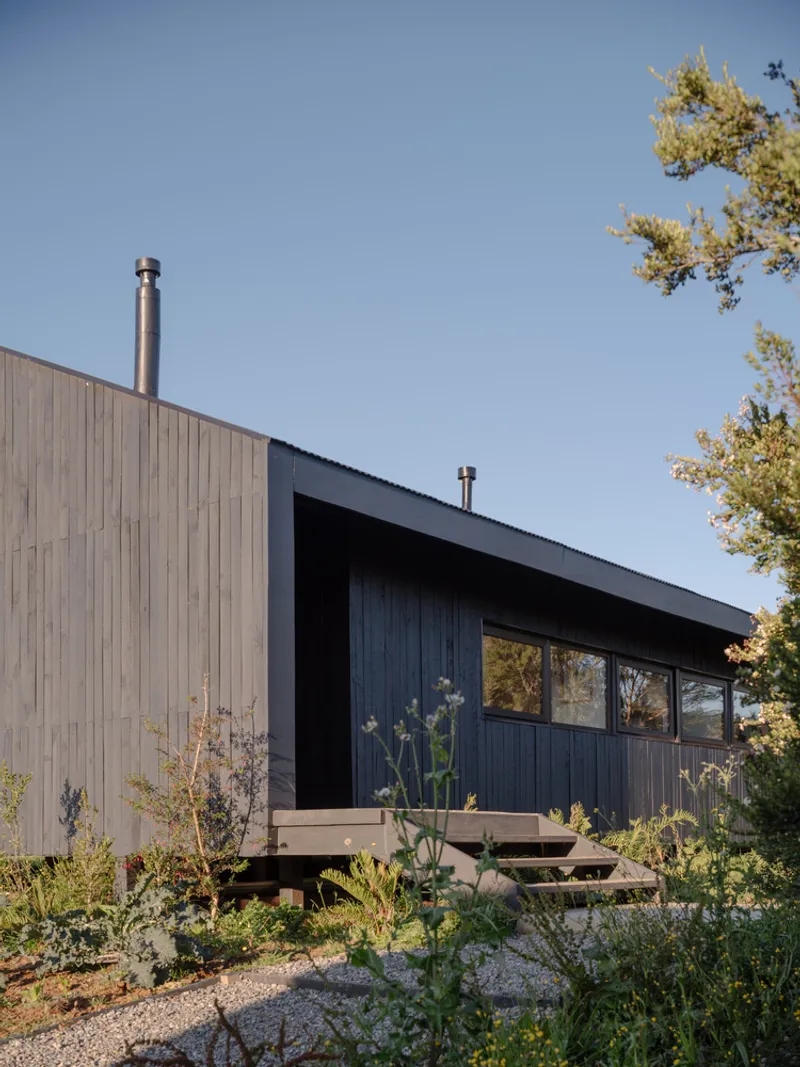
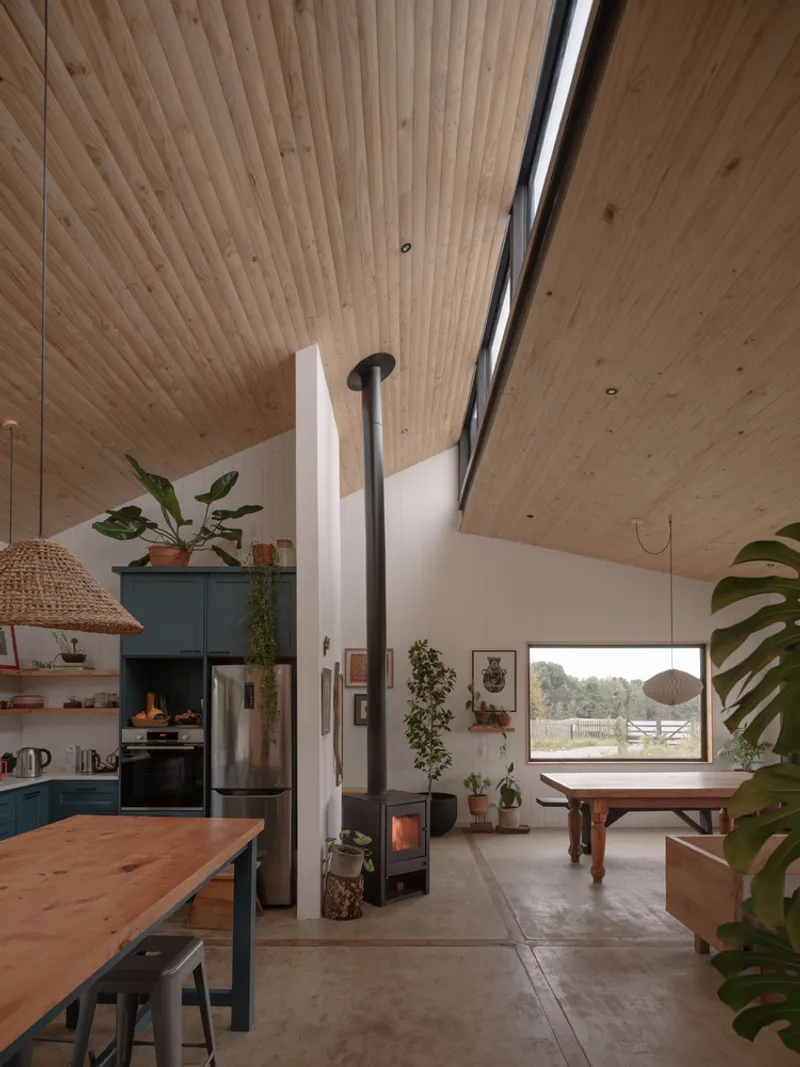
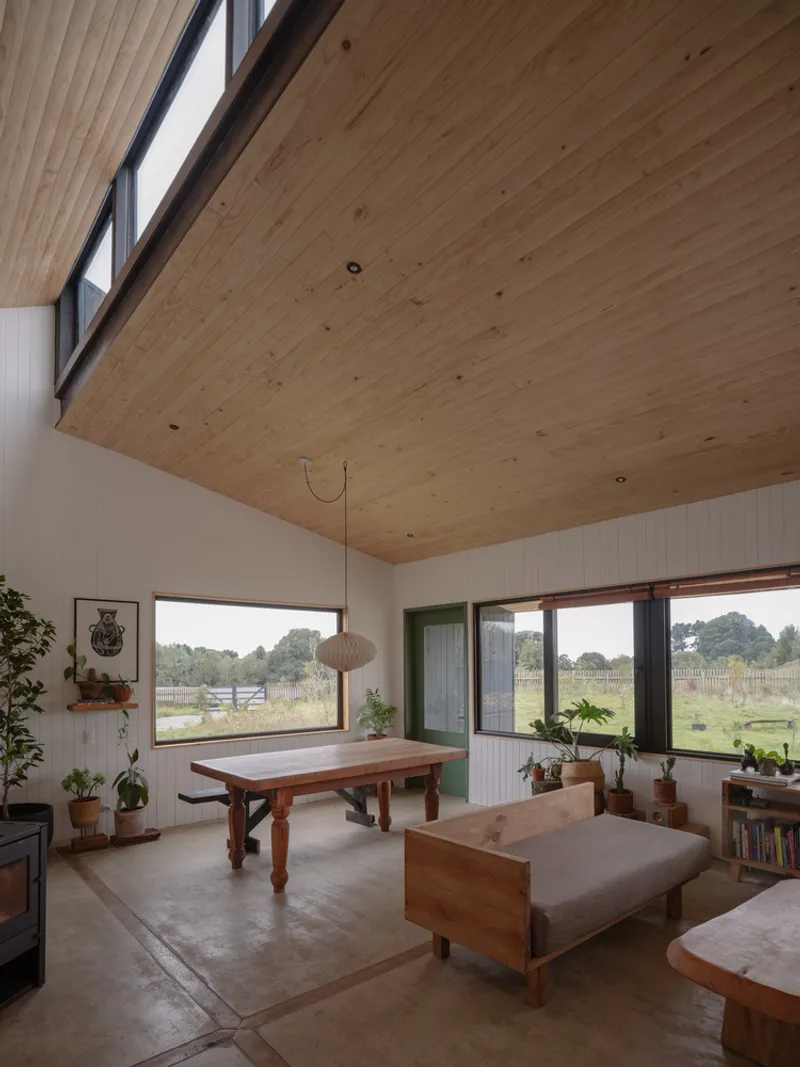
The structure employs steel pillars to support a prominent gable roof and deep eaves designed to counter seasonal winds and rains. Exterior walls are clad in rough pine wood, echoing the rustic textures of the surroundings. Inside, wood dominates the spatial experience, coating all surfaces to create a warm and welcoming atmosphere. The house features high ceilings and continuous window bands beneath the roofline that enhance both ventilation and daylight penetration.
Sustainable Performance
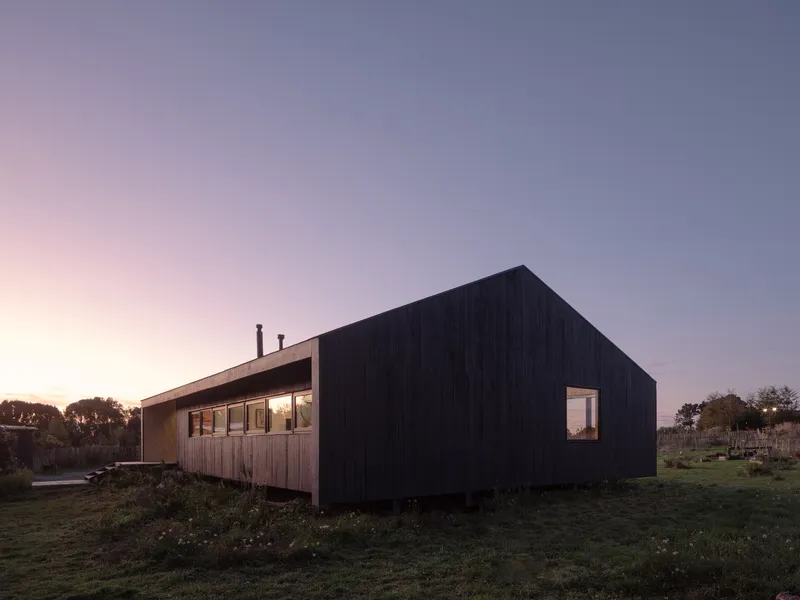
Sustainability is embedded in the home's fabric. Recycled cellulose insulation ensures excellent thermal and acoustic performance, reducing energy demands. The roof geometry and deep eaves regulate climate impact, and the overall construction approach reflects an eco-conscious philosophy rooted in material efficiency and environmental respect.
Spatial Layout
Accessed by an exterior staircase, the house sits on a single elevated level. The plan is based on a modular grid that ensures each area benefits from natural light. The layout is divided into three zones: a communal area with kitchen, dining, and living spaces; a private zone with bedrooms; and transitional outdoor platforms that frame the surrounding landscape.
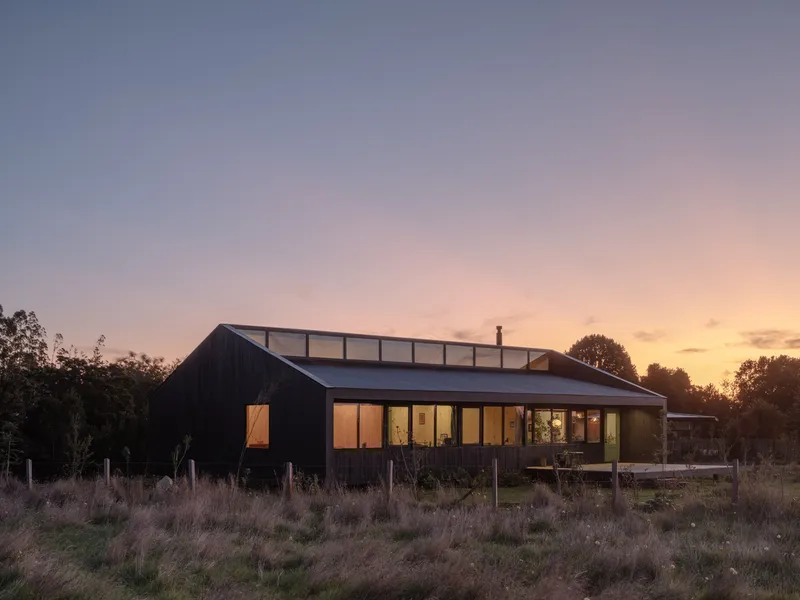
TF House is more than a dwelling—it is an architectural response to its site, climate, and cultural context. Its refined use of regional materials, integration with the terrain, and panoramic orientation exemplify a thoughtful and poetic approach to modern rural living.
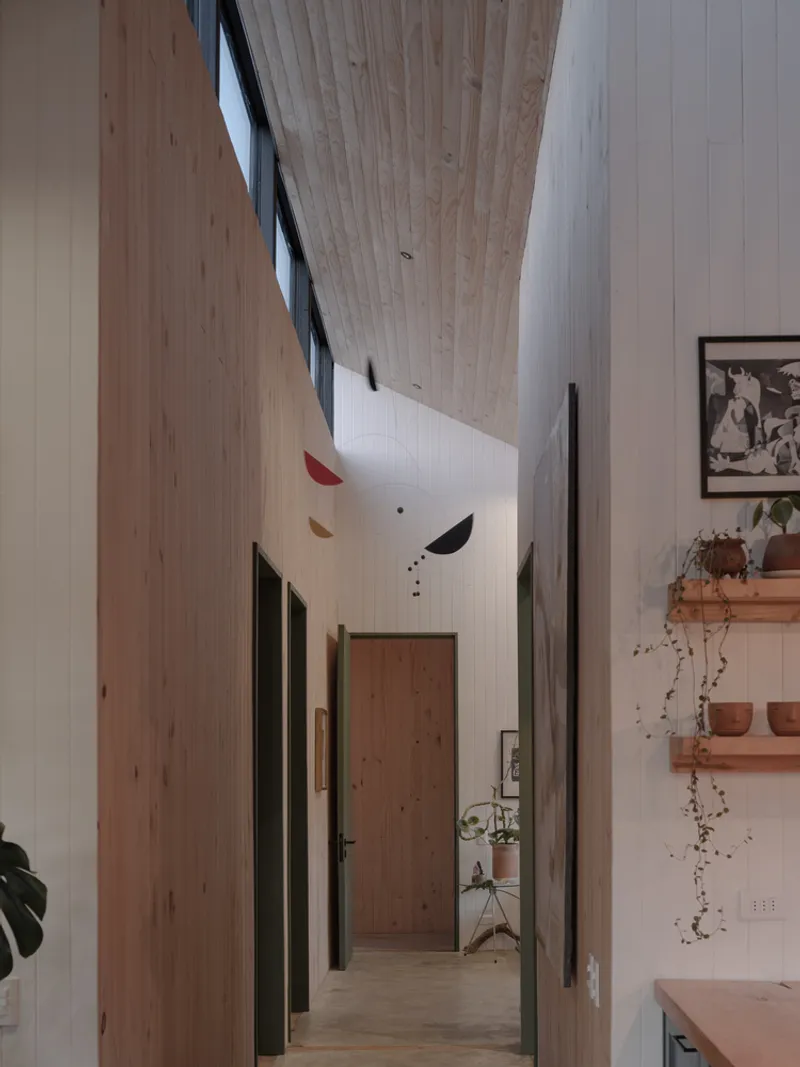
All the photographs are works of Marcos Zegers




Popular Articles
Popular articles from the community


The Earth Pod: 3D Printed Homes for Resilient Refugee Communities
The Earth Pod reimagines refugee housing through 3D printed homes made from clay, combining resilience, self-sufficiency, and rapid shelter.
EW PARK: Sustainable Architecture Reimagines the Future of Urban Parking
EW PARK reimagines city parking as a modular wooden tower combining automation, solar energy, electric mobility, and adaptable urban design.

Co-Life: Senior Housing Design That Reconnects Older Adults With the City
Co-Life reimagines senior housing design through healing gardens, shared streets, workshops, and a sustainable community across generations.

The Ocean Hive: Sustainable Architecture for a Self-Sufficient Civilization at Sea
The Ocean Hive imagines sustainable architecture at sea, where modular habitats, algae, wave power and ocean waste sustain a growing colony.


Similar Reads
You might also enjoy these articles


Hodi-Mandai Geram
Project Function: Preservation and revitalization of the Intangible heritage and socio-spatial identity of the Hodi by Housing, Cultural Memory Center, Sacred Grove, landscape, local tourism economy


Olio Towers: A Mid-Rise for Performers That Fuses Housing, Rehearsal, and Stage
Located blocks from Houston's Theater District, this modular tower stacks living units around a central performance atrium.

Oasis: Modular Green Housing Carved into Dhaka's Urban Fabric
A shortlisted Plugin Housing entry reclaims unauthorized settlements in Dhaka with stepped concrete volumes, green roofs, and ventilation-driven design.

Black Hole: A Floating Megastructure for the Post-Physical Era
Emiliano Mazzarotto envisions a spherical, self-scaling arena where e-sports, digital hotels, and holographic stadiums replace traditional public space.

Explore Housing Competitions
Discover active competitions in this discipline



Challenge to reimagine the Iron Throne


Photograph architecture without architects


Illustrate the lost glory of Angkor Wat - Render Challenge


Design challenge to reuse E-waste
Comments (0)
Please login or sign up to add comments
No comments yet. Be the first to comment!