
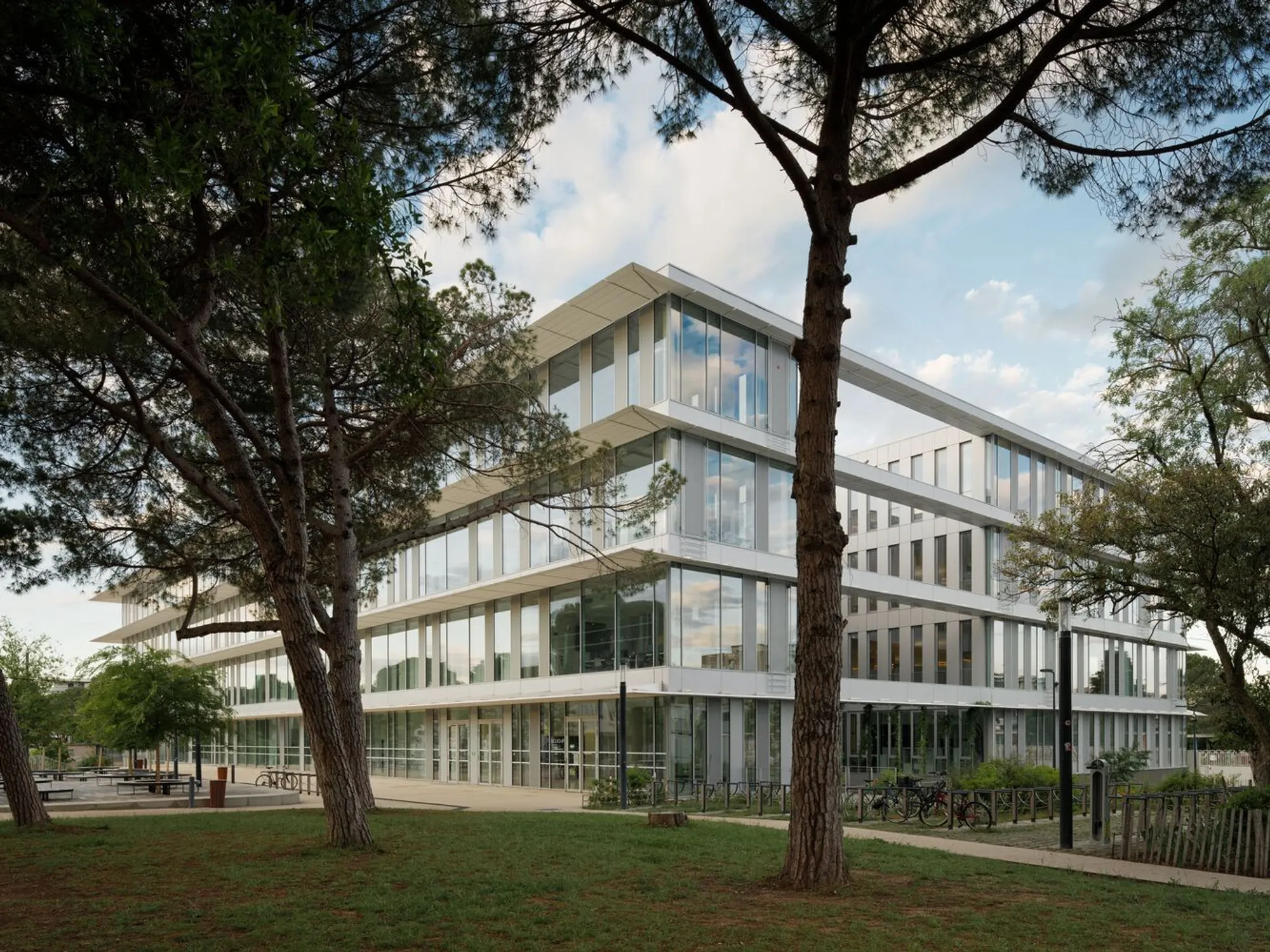
The Atrium University Library by SCAU
Atrium University Library by SCAU blends open rational floors with sculpted concrete landscapes, expressing intellectual abstraction and embodied learning practices.


Montpellier, France | 2024
Designed by SCAU, the Atrium University Library in Montpellier redefines the contemporary academic library as a spatial manifesto for evolving learning practices. Completed in 2024, the project articulates two seemingly paradoxical yet complementary visions of knowledge acquisition, one intellectual and abstract, the other physical and experiential, woven together through a powerful architectural narrative.
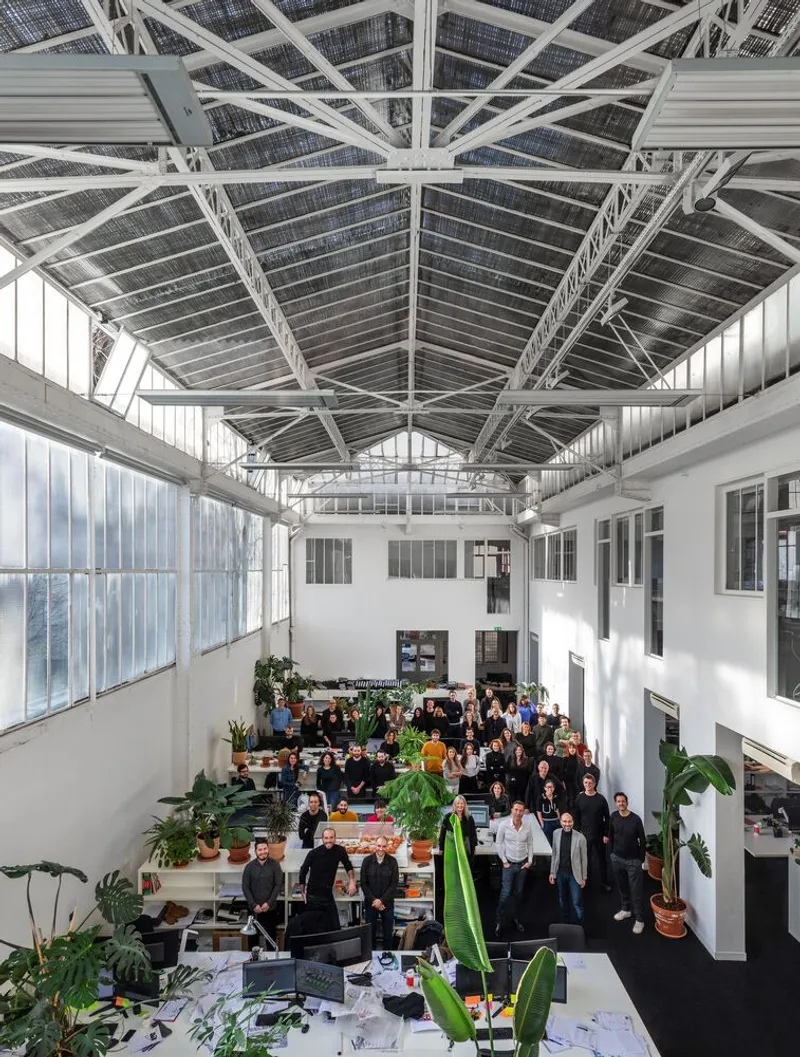
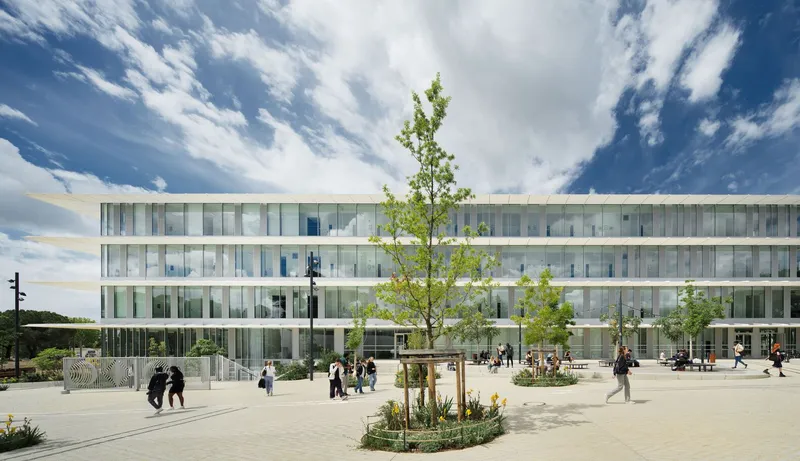
At the core of the project is the idea that learning is no longer a singular, static activity, but a spectrum of practices that oscillate between concentration, collaboration, movement, and sensory engagement. The Atrium University Library translates this shift into a clearly legible architectural structure, where spatial organization, material expression, and circulation collectively support diverse modes of study.
The upper floors of the library are conceived as open, orthonormal planes characterized by minimal structural constraints. These elevated levels offer flat, flexible surfaces designed to be freely appropriated by students, researchers, and faculty. Bathed in natural light filtered through generous windows, these spaces emphasize clarity, openness, and visual continuity. Here, learning is framed as a mental voyage: an abstract process supported by calm, adaptable environments that encourage focus, contemplation, and collective exchange.
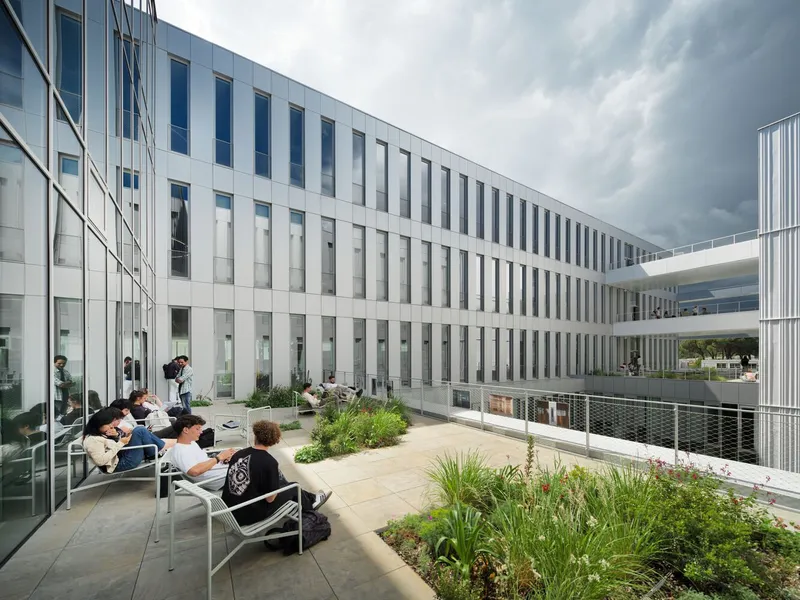
In contrast, the lower floors introduce a radically different spatial experience. Below ground, the architecture transforms into a rolling, twisting, and folding landscape, where the floor itself becomes a topography. This sculpted interior invites movement, bodily engagement, and spatial exploration, echoing a more physical and material understanding of learning. The undulating surfaces challenge conventional library typologies, turning circulation into an active, sensory experience rather than a purely functional necessity.
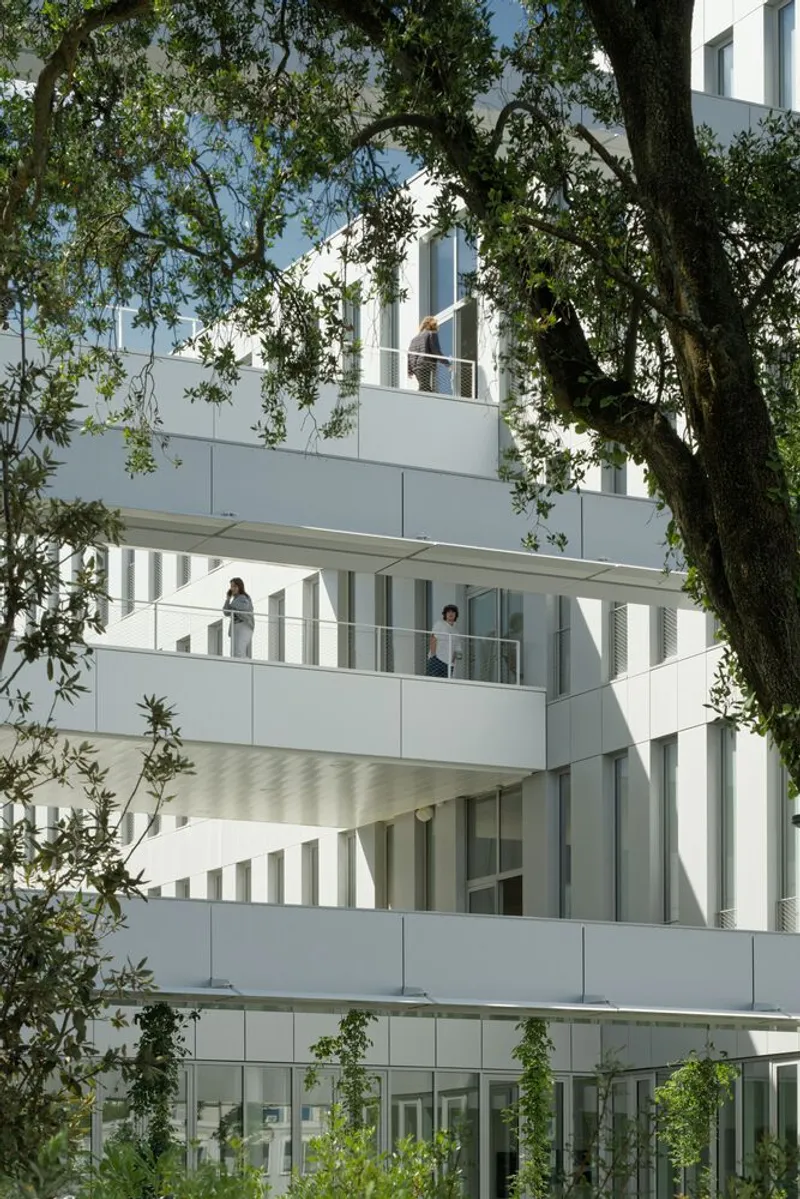
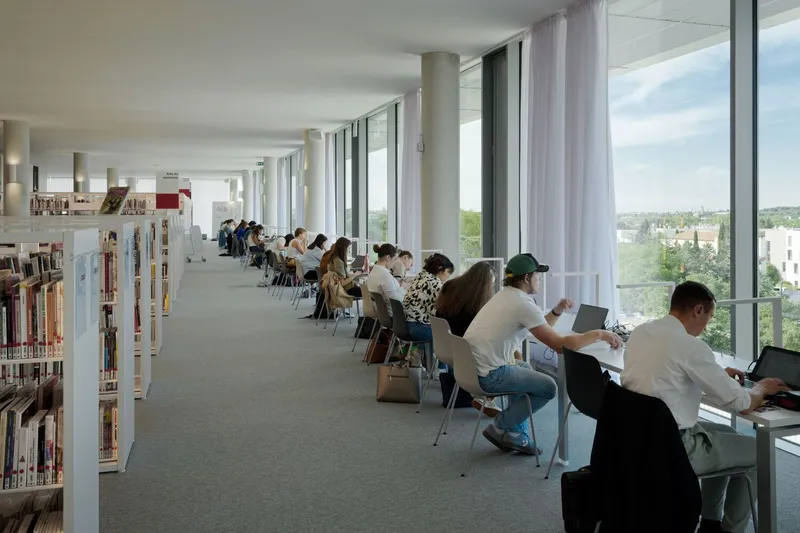
Connecting these two architectural worlds is a system of split and folded concrete sheets that operate simultaneously as structure, circulation, and spatial mediator. These expressive concrete elements form a continuous architectural language, guiding users vertically and visually between the rational clarity of the upper levels and the immersive, tactile qualities of the subterranean spaces. The atrium itself acts as a spatial hinge, reinforcing visual connections across floors while flooding the interior with daylight.
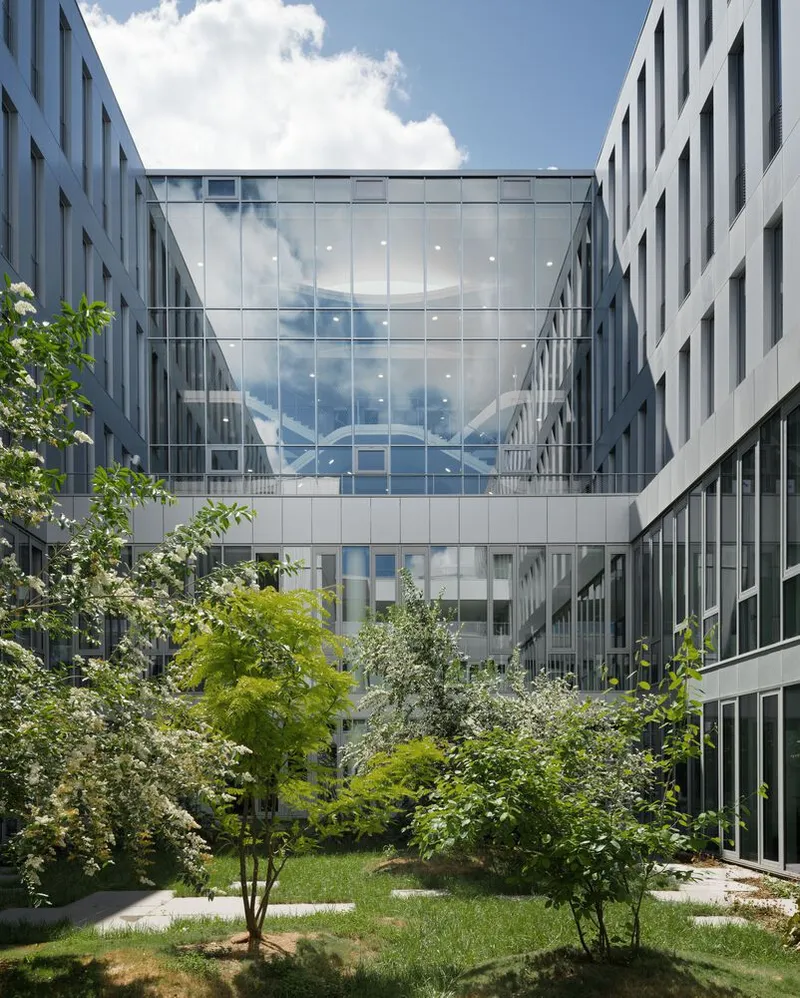
Materiality plays a crucial role in reinforcing the project’s conceptual framework. Exposed concrete surfaces emphasize permanence and structural honesty, while carefully integrated interior finishes soften the experience and enhance acoustic comfort. The balance between raw material expression and refined detailing reflects the dual nature of the library as both a monumental civic space and an intimate environment for individual study.
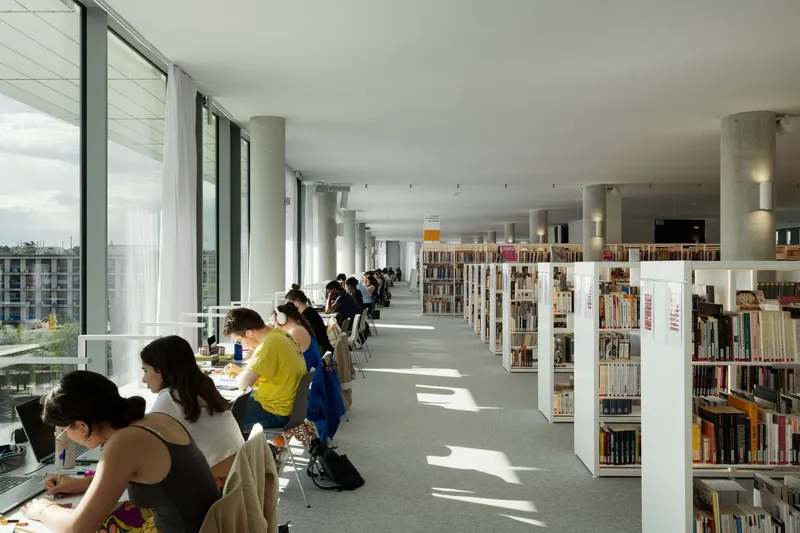
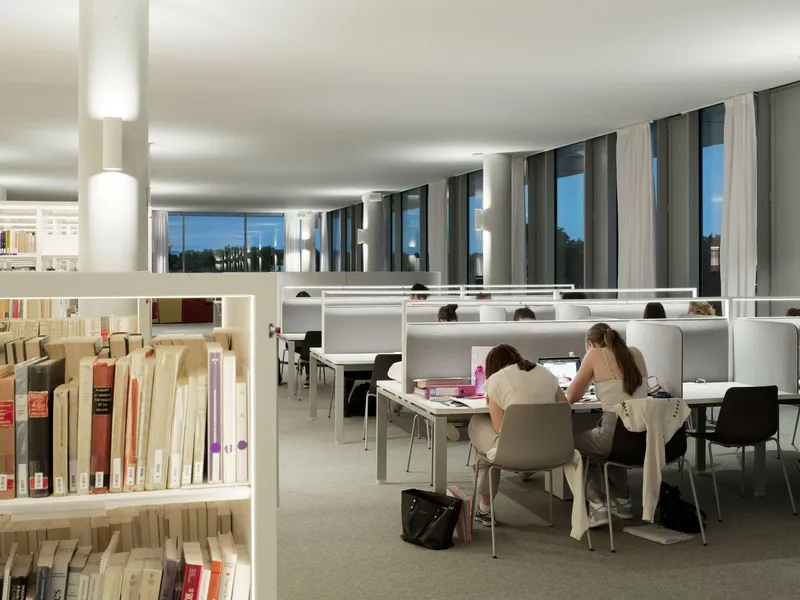
Beyond its architectural ambition, the Atrium University Library contributes to the broader campus and urban context of Montpellier by offering a new public-facing academic landmark. Landscaped green spaces surrounding the building extend the learning environment outdoors, reinforcing the library’s role as a social and intellectual hub rather than a closed institutional object.
All photographs are works of Takuji Shimmura, Photo Bruno Delamain




Popular Articles
Popular articles from the community


Co-Life: Senior Housing Design That Reconnects Older Adults With the City
Co-Life reimagines senior housing design through healing gardens, shared streets, workshops, and a sustainable community across generations.

The Earth Pod: 3D Printed Homes for Resilient Refugee Communities
The Earth Pod reimagines refugee housing through 3D printed homes made from clay, combining resilience, self-sufficiency, and rapid shelter.

Riyadh For All: Intergenerational Urban Design for Active Aging in Rabat
Riyadh For All reimagines urban design in Rabat with intergenerational co-living, adaptive courtyards, and Moroccan cultural exchange today.

AL-JANNAH: Sustainable Architecture and Permaculture for Afghan Widows
AL-JANNAH uses sustainable architecture and permaculture to create resilient oasis of housing, learning, work and renewal for Afghan widows.


Similar Reads
You might also enjoy these articles


Hodi-Mandai Geram
Project Function: Preservation and revitalization of the Intangible heritage and socio-spatial identity of the Hodi by Housing, Cultural Memory Center, Sacred Grove, landscape, local tourism economy


Olio Towers: A Mid-Rise for Performers That Fuses Housing, Rehearsal, and Stage
Located blocks from Houston's Theater District, this modular tower stacks living units around a central performance atrium.

Oasis: Modular Green Housing Carved into Dhaka's Urban Fabric
A shortlisted Plugin Housing entry reclaims unauthorized settlements in Dhaka with stepped concrete volumes, green roofs, and ventilation-driven design.

Black Hole: A Floating Megastructure for the Post-Physical Era
Emiliano Mazzarotto envisions a spherical, self-scaling arena where e-sports, digital hotels, and holographic stadiums replace traditional public space.
Explore Academic Building Competitions
Discover active competitions in this discipline



Challenge to design public laboratory


Challenge to reimagine the Iron Throne


Photograph architecture without architects


Illustrate the lost glory of Angkor Wat - Render Challenge
Comments (0)
Please login or sign up to add comments
No comments yet. Be the first to comment!