
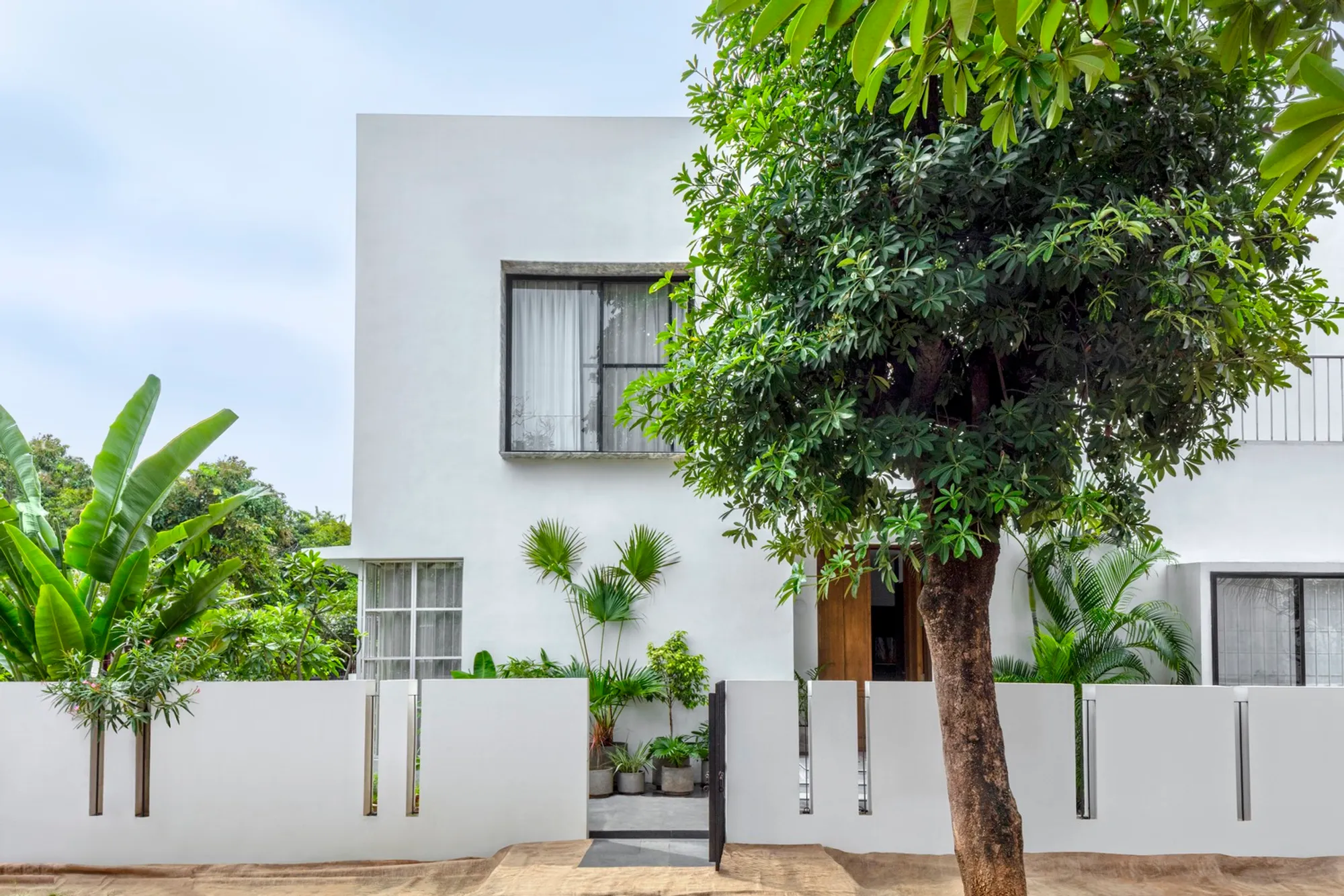
The Courtyard House by Atelier Varun Goyal: A Modern Interpretation of Family Living in Bhilai, India
The Courtyard House blends minimalism and tradition, uniting two homes around a central courtyard for privacy, sustainability, and family togetherness.


Located in the heart of Bhilai, India, The Courtyard House by Atelier Varun Goyal is a compelling example of contemporary Indian residential architecture rooted in tradition. Spanning 8,000 square feet, this residence reimagines the age-old concept of the courtyard within the framework of a modern joint family system. Designed for two brothers and their families, the project masterfully balances collective togetherness with individual privacy—an architectural narrative of connection, context, and community.
A Dual-Dwelling Designed for Unity and Privacy
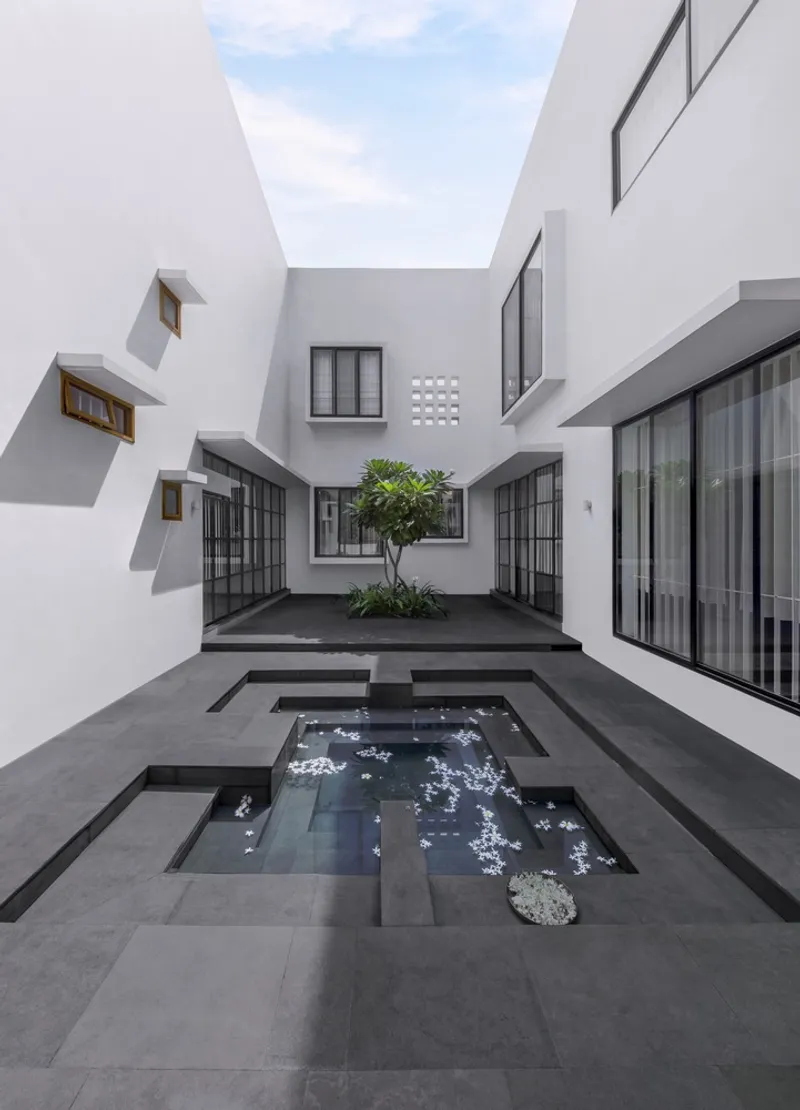
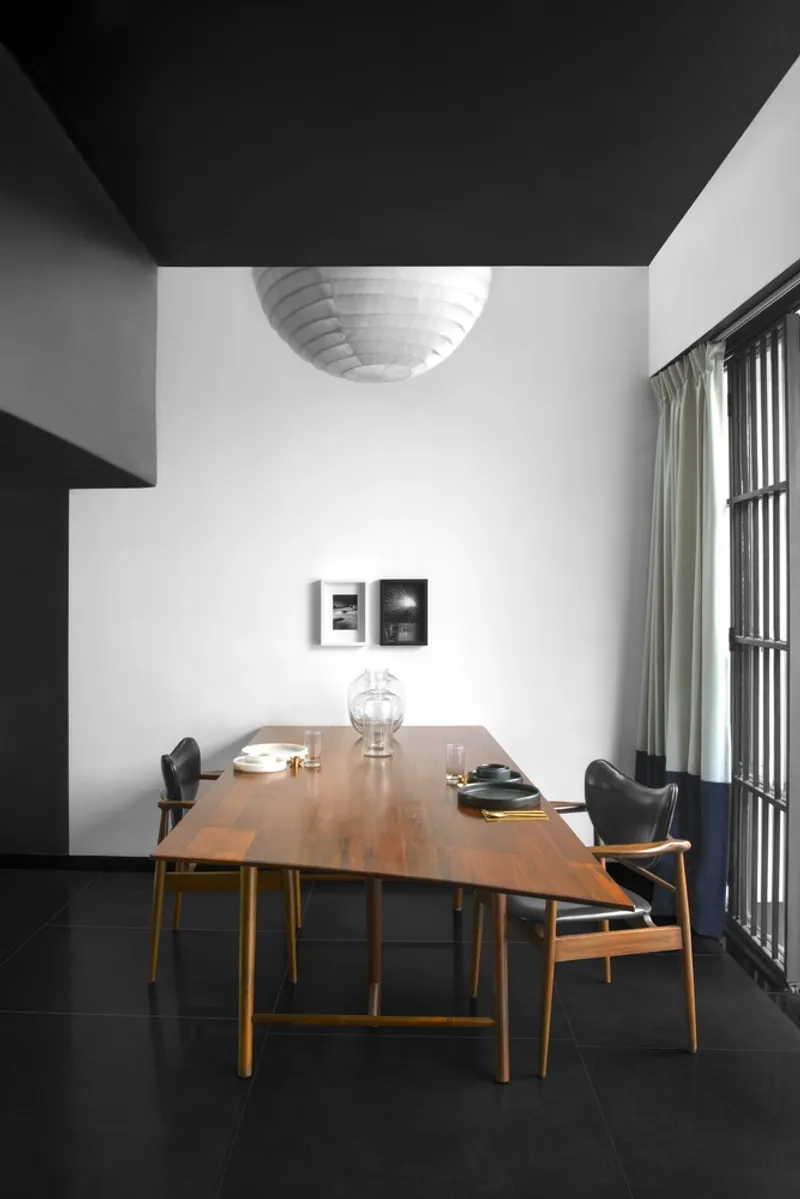
The project’s central design concept revolves around creating two interconnected homes within a shared structure. The spatial layout is organized around a central courtyard, which acts as the symbolic and physical heart of the home—an open, green zone fostering interaction, light, and ventilation. This courtyard facilitates the delicate balance of privacy and connectivity, giving each family their own defined space while maintaining opportunities for communal engagement.
Atelier Varun Goyal adopted a design approach that is "Contemporary and Contextual", blending minimalist forms with local materiality and climatic sensitivity. The architecture responds to both social needs and environmental factors, making it a case study in climate-responsive design and family-centric architecture.
Addressing Design Challenges with Contextual Sensitivity
1. Privacy in a Joint Family Structure Balancing the joint family’s emotional closeness with the need for personal space was a key challenge. The architects responded with zoned living areas, private bedrooms, and separate entrances for both homes, alongside service entries for staff that ensure functionality without disruption.
2. Responding to Bhilai’s Hot Climate With harsh summer temperatures in mind, passive design strategies such as strategic window placement, deep shading, and thermal insulation were integrated. The architectural configuration maximizes natural cross-ventilation, while skylights and courtyard views ensure well-lit interiors without over-reliance on artificial lighting.
3. Functional Kitchens for Large Indian Families Designing two open-concept kitchens for extended families posed another challenge. These spaces needed to support heavy usage while aligning with the home’s minimalist aesthetics. Open kitchens were chosen to enhance family interaction during meal prep, making cooking a shared, enjoyable experience.
Material Palette and Sustainable Strategies
The Courtyard House is deeply committed to sustainable and local construction practices, utilizing materials that are environmentally responsible and regionally sourced.
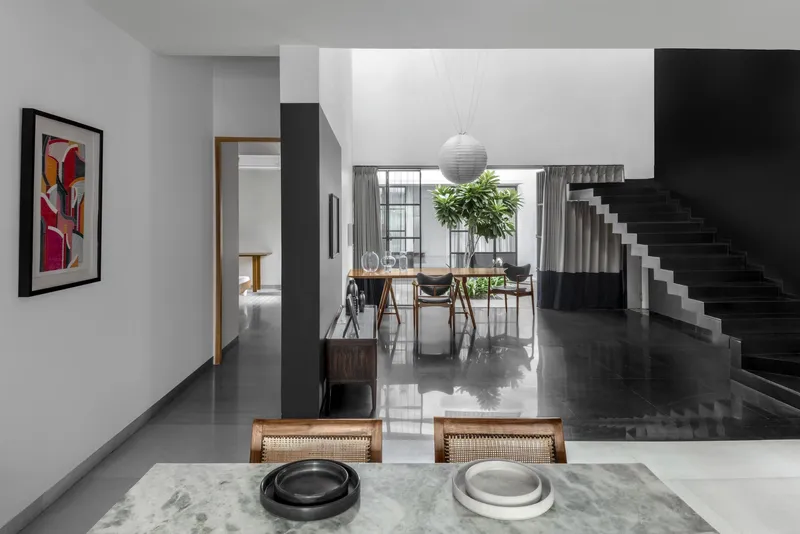
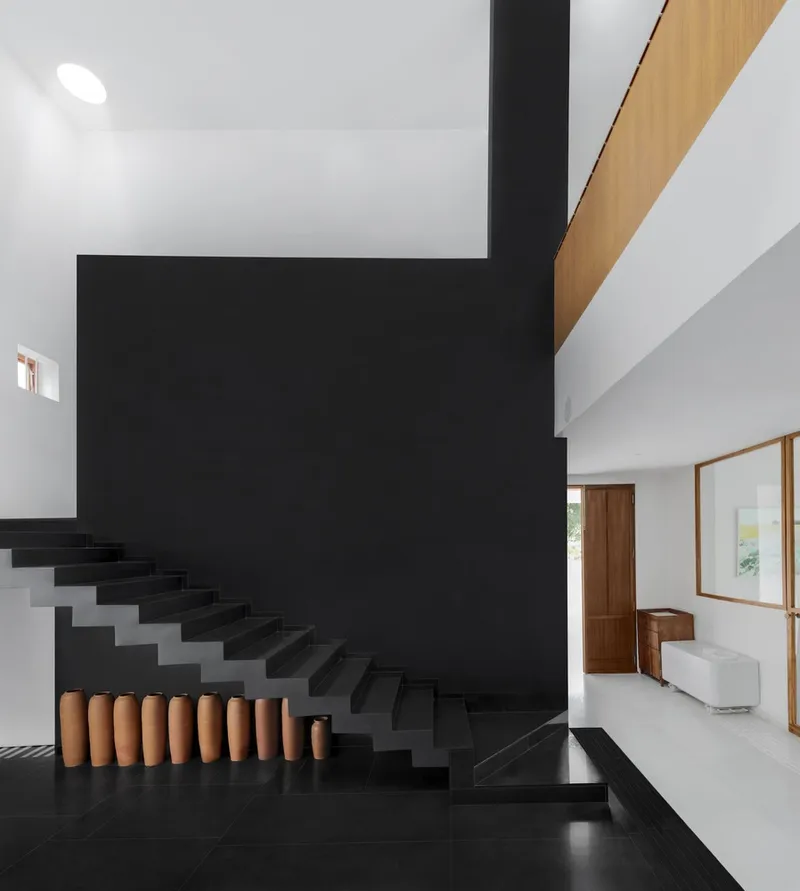
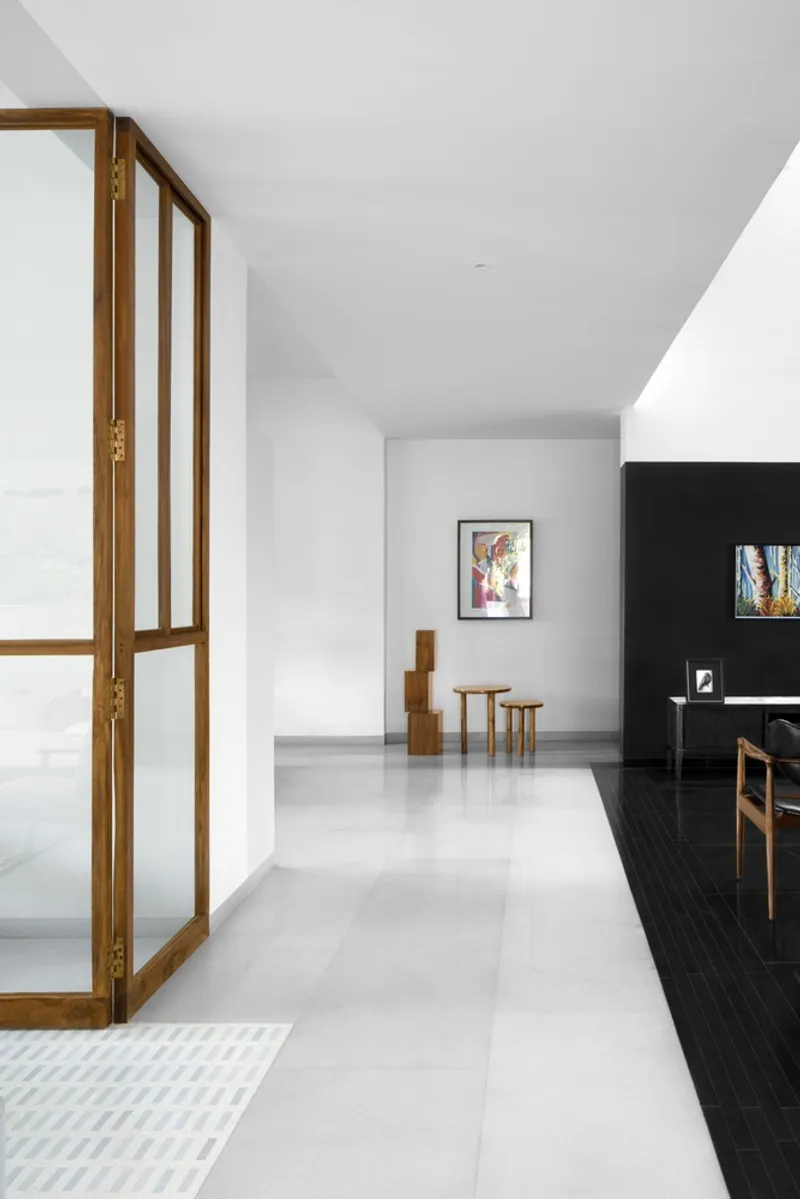
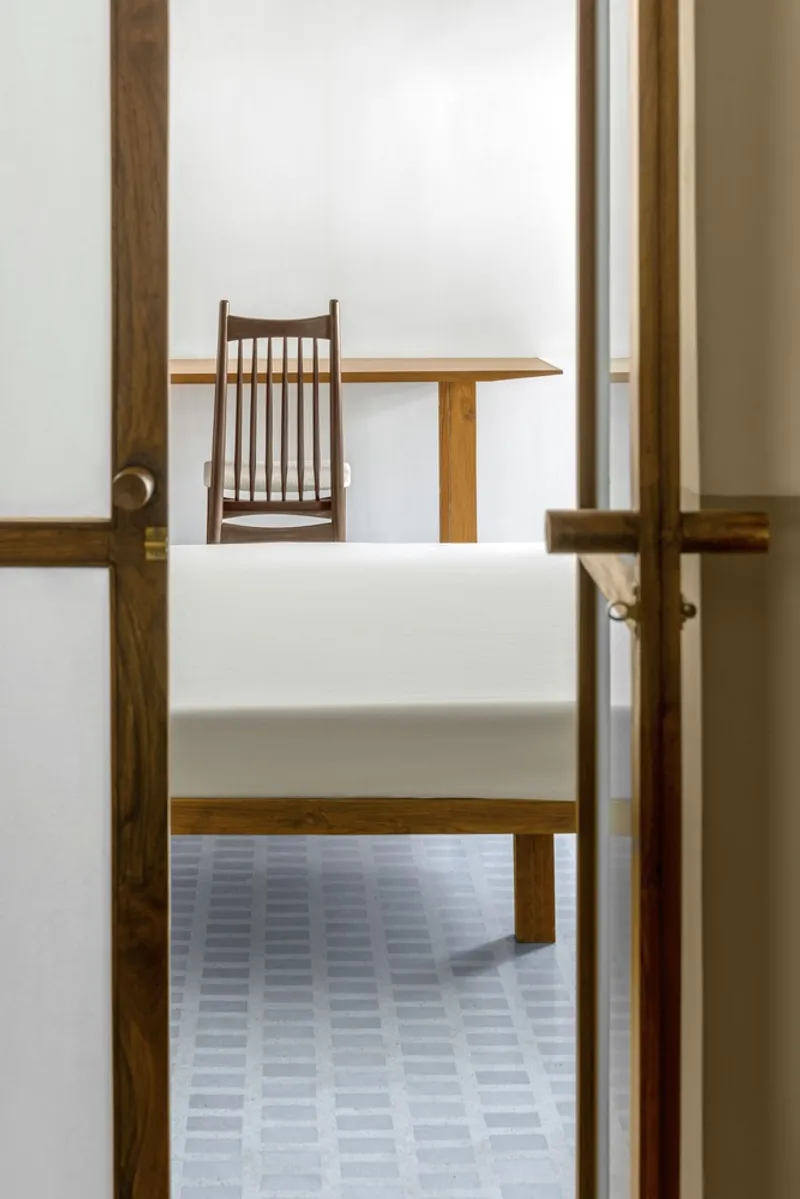
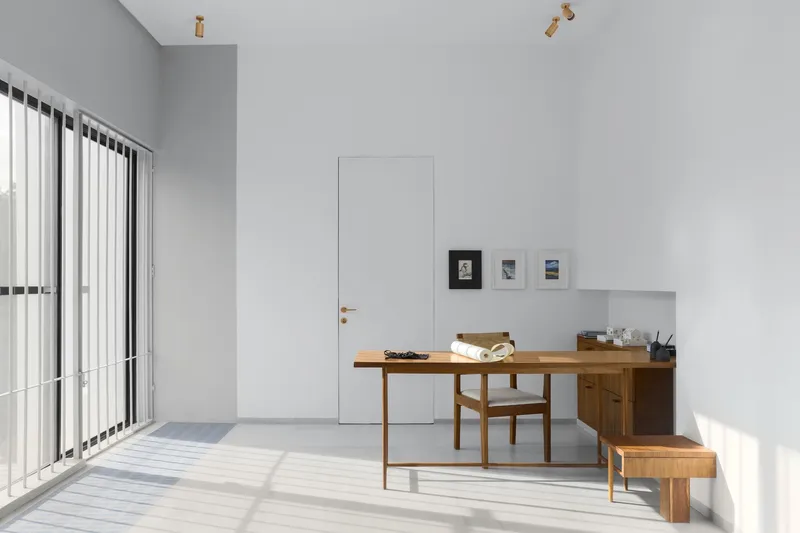
- Indian Marble was used extensively for flooring, creating an elegant base with a strong cultural identity.
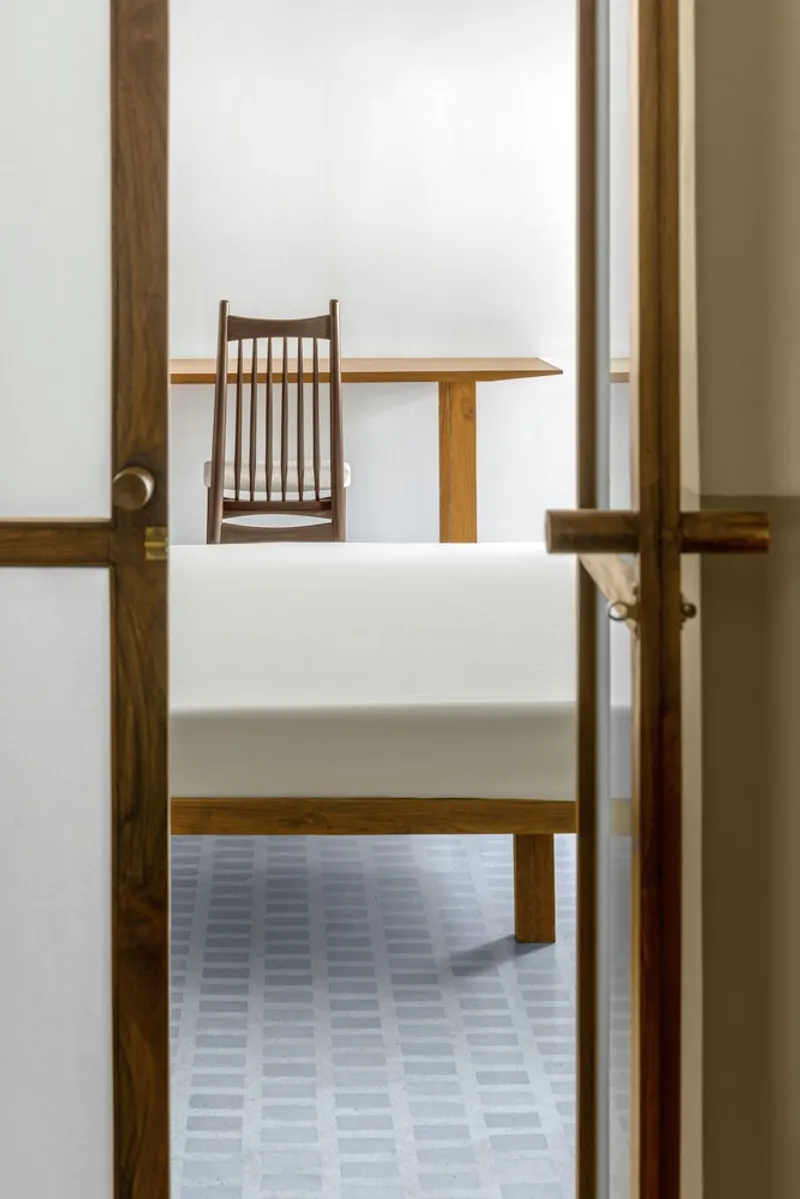
- Terrazzo with Marble Inlays, made using waste material from the project itself, reflects a sustainable ethos and adds visual richness.
- Reclaimed Teak Wood offers warmth and character, celebrating heritage within a modern interior setting.
- Terracotta Bricks, locally produced, form the primary wall material, enhancing thermal performance while reducing carbon impact.
The house is built using modern RCC construction techniques to ensure structural strength and long-term efficiency. With input from structural engineers BSBK, acoustics by 8mm, and landscape architecture by Dragonfly Farms, the project integrates multidisciplinary expertise to create a coherent living experience.
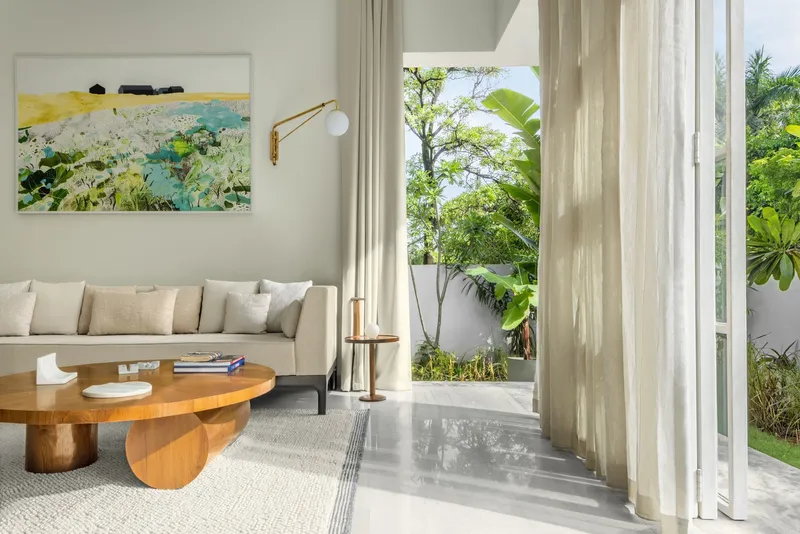
Spatial Composition and Functional Layout
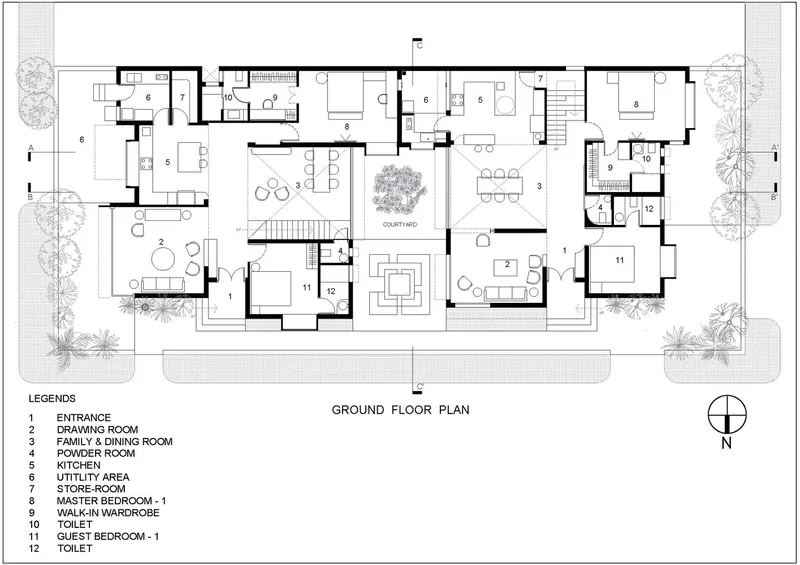
The house is divided into two symmetrical halves, each containing:
- Living Rooms, Dining Spaces, and Drawing Areas
- Open Kitchens to promote interaction and shared experiences
- Private Bedrooms with Ensuite Washrooms and Dressing Spaces
- Distinct Main Entrances for each family, plus dedicated staff entry points
- Fenestration Design for optimal airflow, daylight, and privacy
The central courtyard is flanked by pavilion-like structures that act as anchors for everyday family life. These pavilions blur the line between indoor and outdoor living, creating seamless transitions that enhance the home's spatial fluidity.
Architectural Philosophy: Minimalism Meets Cultural Resonance
At its core, The Courtyard House is a fusion of modern Indian architecture, minimalist design, and cultural continuity. Every decision—from material selection to spatial zoning—was guided by a desire to create a timeless living environment that caters to evolving family dynamics without losing its grounding in tradition.
This home is not merely a shelter but a living organism that adapts to its inhabitants, seasonally breathes with its environment, an d celebrates the nuances of Indian familial life.
All Photographs are works of Pankaj Anand




Popular Articles
Popular articles from the community


The Ocean Hive: Sustainable Architecture for a Self-Sufficient Civilization at Sea
The Ocean Hive imagines sustainable architecture at sea, where modular habitats, algae, wave power and ocean waste sustain a growing colony.

Co-Life: Senior Housing Design That Reconnects Older Adults With the City
Co-Life reimagines senior housing design through healing gardens, shared streets, workshops, and a sustainable community across generations.

Conexión: Biophilic Design Reimagines High-Rise Living in Hong Kong
Conexión reimagines high-rise living in Hong Kong through biophilic design, green facades, shared spaces, daylight, water and nature within.

Lunar Spiral: Space Architecture Shaped by the Mathematics of the Universe
Lunar Spiral reimagines space architecture through Fibonacci geometry, lunar regolith, levitating habitats, and self-sustaining Moon living.


Similar Reads
You might also enjoy these articles


Hodi-Mandai Geram
Project Function: Preservation and revitalization of the Intangible heritage and socio-spatial identity of the Hodi by Housing, Cultural Memory Center, Sacred Grove, landscape, local tourism economy


Olio Towers: A Mid-Rise for Performers That Fuses Housing, Rehearsal, and Stage
Located blocks from Houston's Theater District, this modular tower stacks living units around a central performance atrium.

Oasis: Modular Green Housing Carved into Dhaka's Urban Fabric
A shortlisted Plugin Housing entry reclaims unauthorized settlements in Dhaka with stepped concrete volumes, green roofs, and ventilation-driven design.

Black Hole: A Floating Megastructure for the Post-Physical Era
Emiliano Mazzarotto envisions a spherical, self-scaling arena where e-sports, digital hotels, and holographic stadiums replace traditional public space.


Explore Courtyard Competitions
Discover active competitions in this discipline



Challenge to reimagine the Iron Throne


Photograph architecture without architects


Illustrate the lost glory of Angkor Wat - Render Challenge


Design challenge to reuse E-waste
Comments (0)
Please login or sign up to add comments
No comments yet. Be the first to comment!