

The Disappearing Garden by XJ Design: A Poetic Fusion of Memory, Material, and Public Space in Datong
A poetic public space blending memory and material, The Disappearing Garden revives Datong’s history through adaptive reuse and cultural design.


Project Title: The Disappearing Garden Architects: XJ Design Location: Damaojiao, Datong Ancient City, China Completion Year: 2023 Photography: Can Yang Project Type: Public Space, Landscape Architecture, Adaptive Reuse

Breathing New Life into Forgotten Histories
Nestled in the southeast corner of the Datong Ancient City, The Disappearing Garden by XJ Design is a poetic reinterpretation of a neglected urban space. Once a derelict site, this area has been transformed into a powerful contemporary cultural landscape that honors the memory of the past while embracing the aesthetics of the present. As a prime example of adaptive reuse in landscape architecture, the project elevates discarded fragments and lost narratives into an evocative, interactive public art installation.


Context and Cultural Significance
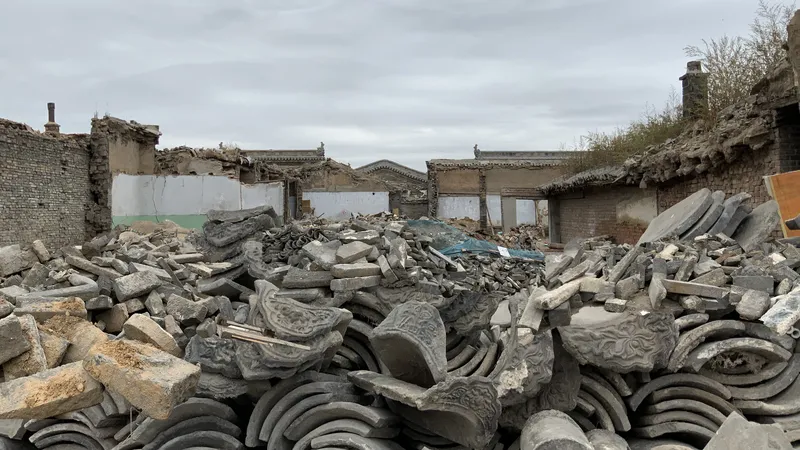
The site, located at the entrance of Damao Corner in Datong's historic core, is flanked by traditional courtyard residences and cultural landmarks such as the Datong Guan Di Temple and the Weibei Research Institute. Despite its rich cultural surroundings, the space had been left abandoned for years. XJ Design saw in this void not just a physical gap, but a missing link in the city’s collective memory—one that could be revived through thoughtful urban renewal and landscape storytelling.

Design Philosophy: A Dialogue Between Time and Space
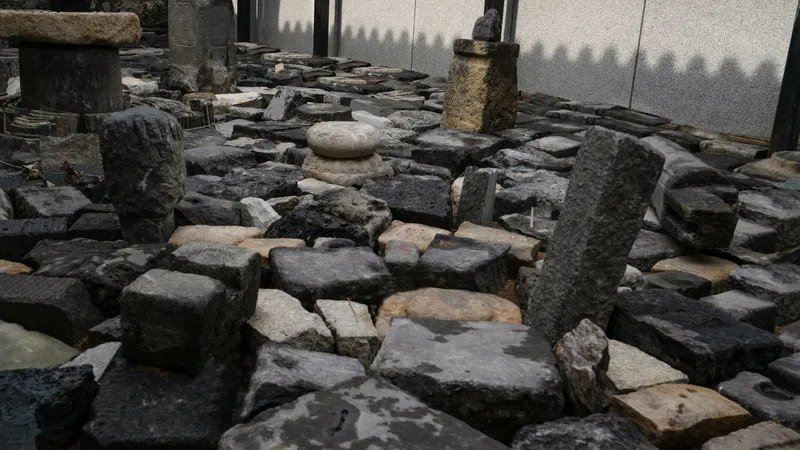
From the outset, the design team approached the space as a recorder of memories. The presence of broken tiles, aged stones, and scattered remnants evoked vivid scenes of lives once lived. These remnants were not seen as waste but as symbolic carriers of the city’s soul.
Inspired by the natural process of aging and decay, the designers adopted a strategy of material resurrection and reinterpretation. Each stone, tile, and object from the original site was treated as a valuable artifact. Rather than erasing traces of time, the project layers the old and the new, blending reclaimed materials with contemporary elements to foster a dialogue between history and modernity.
Spatial Composition and Circulation Strategy
The design unfolds through four distinct zones:
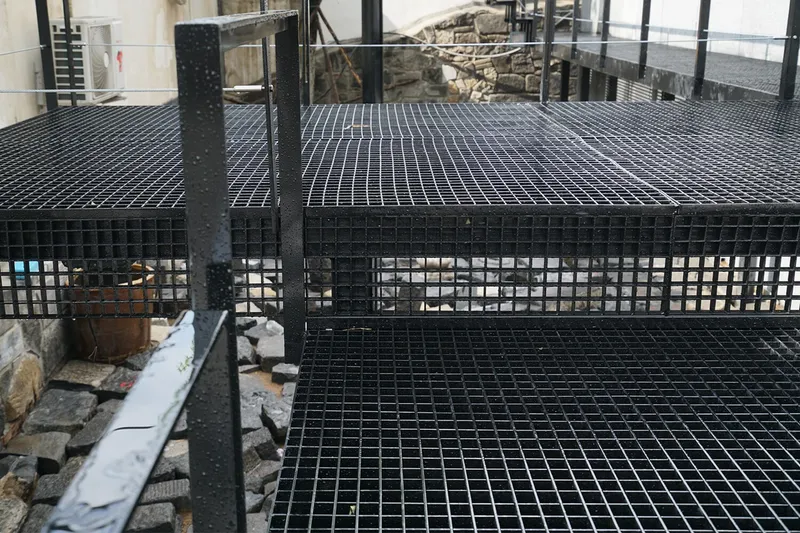
- Ground-Level Display Spaces – Constructed entirely with salvaged materials, these areas ground the project in its historical context, allowing visitors to walk among and interact with time-worn fragments of the site.
- Central Water Plaza – This open space connects to the corridor above, encouraging gathering, reflection, and community engagement.
- Elevated Visual Corridor – Rising to 5.35 meters, this ascending path bridges the old and the new. Its rhythmic structure mirrors the passage of time, with materials transitioning from raw to refined.
- Mirrored Viewing Platform – At the apex of the route, a reflective box dissolves into the skyline, offering a contemplative perspective of the “fifth façade” of the ancient city rooftops and triggering reflection on vanishing memories.

Conceptual Layers: Memory, Disappearance, and Presence
At its core, The Disappearing Garden challenges visitors to confront the impermanence of memory and matter. The project embraces weathering and entropy—objects preserved in the design are destined to gradually fade, symbolizing how history itself dissolves into the fabric of time.
Yet, in this disappearance lies a renewed presence. As visitors ascend the site, they experience an emotional crescendo: from grounded memory to elevated awareness. The mirrored viewing box, subtly vanishing into the skyline, metaphorically encapsulates the fading yet enduring echoes of the past.

A Space for Community, Reflection, and Performance
Beyond its aesthetic qualities, the project is deeply functional. The plaza and elevated corridor are designed to support performances, gatherings, and social interaction. This makes The Disappearing Garden not just a static monument but a living public space—a cultural stage where past and future coalesce through community activity and personal introspection.

A Model for Historic Urban Transformation
As cities across China and beyond grapple with preserving identity amid rapid development, The Disappearing Garden stands out as a thoughtful, artistic model of sustainable urban regeneration. It underscores how landscape design can serve as a powerful medium to reinterpret heritage, bridge temporal gaps, and foster civic connection.



Popular Articles
Popular articles from the community


Conexión: Biophilic Design Reimagines High-Rise Living in Hong Kong
Conexión reimagines high-rise living in Hong Kong through biophilic design, green facades, shared spaces, daylight, water and nature within.

AL-JANNAH: Sustainable Architecture and Permaculture for Afghan Widows
AL-JANNAH uses sustainable architecture and permaculture to create resilient oasis of housing, learning, work and renewal for Afghan widows.

Riyadh For All: Intergenerational Urban Design for Active Aging in Rabat
Riyadh For All reimagines urban design in Rabat with intergenerational co-living, adaptive courtyards, and Moroccan cultural exchange today.

The Ocean Hive: Sustainable Architecture for a Self-Sufficient Civilization at Sea
The Ocean Hive imagines sustainable architecture at sea, where modular habitats, algae, wave power and ocean waste sustain a growing colony.


Similar Reads
You might also enjoy these articles


Hodi-Mandai Geram
Project Function: Preservation and revitalization of the Intangible heritage and socio-spatial identity of the Hodi by Housing, Cultural Memory Center, Sacred Grove, landscape, local tourism economy


Olio Towers: A Mid-Rise for Performers That Fuses Housing, Rehearsal, and Stage
Located blocks from Houston's Theater District, this modular tower stacks living units around a central performance atrium.

Oasis: Modular Green Housing Carved into Dhaka's Urban Fabric
A shortlisted Plugin Housing entry reclaims unauthorized settlements in Dhaka with stepped concrete volumes, green roofs, and ventilation-driven design.

Black Hole: A Floating Megastructure for the Post-Physical Era
Emiliano Mazzarotto envisions a spherical, self-scaling arena where e-sports, digital hotels, and holographic stadiums replace traditional public space.


Explore Landscape Design Competitions
Discover active competitions in this discipline



Challenge to reimagine the Iron Throne


Photograph architecture without architects


Illustrate the lost glory of Angkor Wat - Render Challenge


Design challenge to reuse E-waste
Comments (0)
Please login or sign up to add comments
No comments yet. Be the first to comment!