
The Domcenter by peter haimerl.architektur: Redefining Modern Church Architecture in Linz
A modern church architecture project in Linz revitalizes sacred space through contemporary design, community engagement, and sustainable materials.


A Contemporary Gateway to Austria’s Largest Neo-Gothic Cathedral
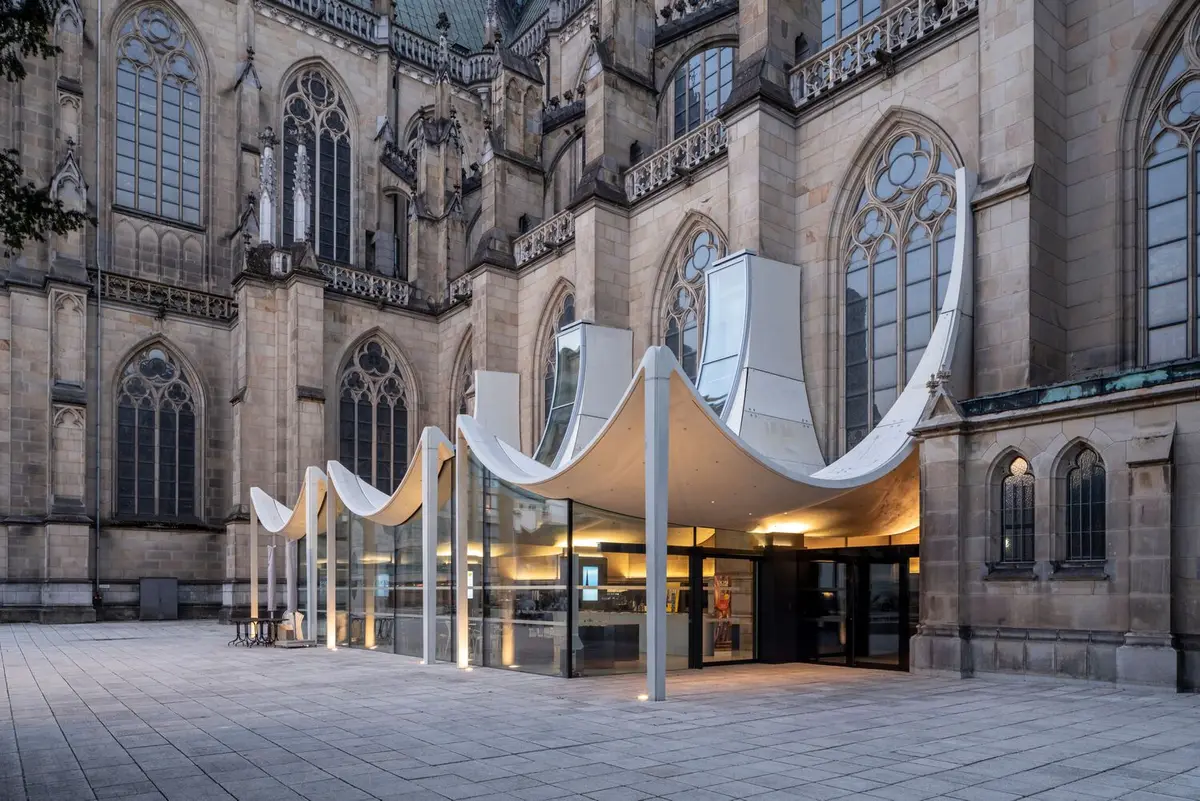
Located on the eastern flank of the historic Linz Cathedral, the Domcenter by peter haimerl.architektur introduces a transformative approach to modern church architecture. Completed in 2024, this 196-square-meter addition honors the cathedral’s centennial while addressing the changing needs of the Catholic community in Austria. Rather than retreating in the face of declining congregation numbers, the Archdiocese of Linz embraces transparency, dialogue, and spatial innovation.
Blending Sacred and Secular: A New Kind of Church Experience
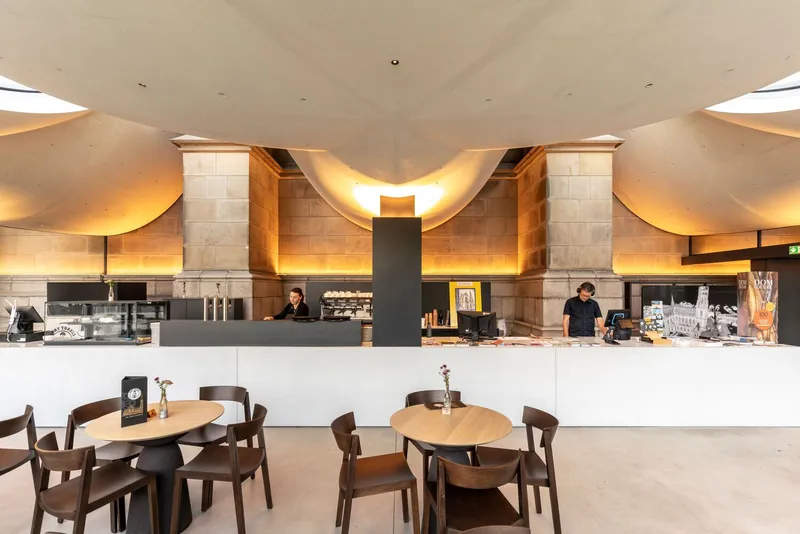
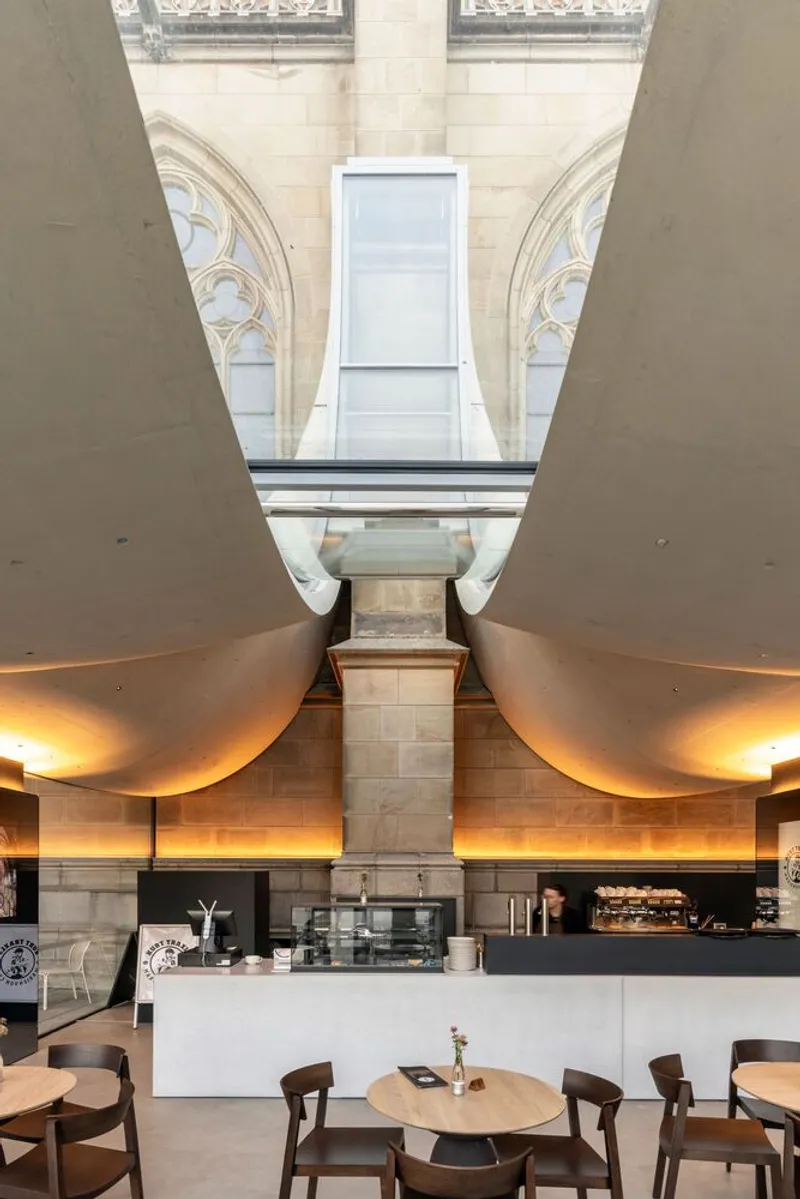
The Domcenter is not merely an extension of the cathedral—it is a new threshold that reshapes how visitors interact with sacred space. With a welcoming café and a bookshop at its heart, the project shifts away from the exclusivity of traditional religious spaces and toward a model of openness reminiscent of museums or cultural halls. The architecture supports this vision with a light-filled interior and intuitive circulation that links the civic plaza with the Wegekirche entrance in the north.
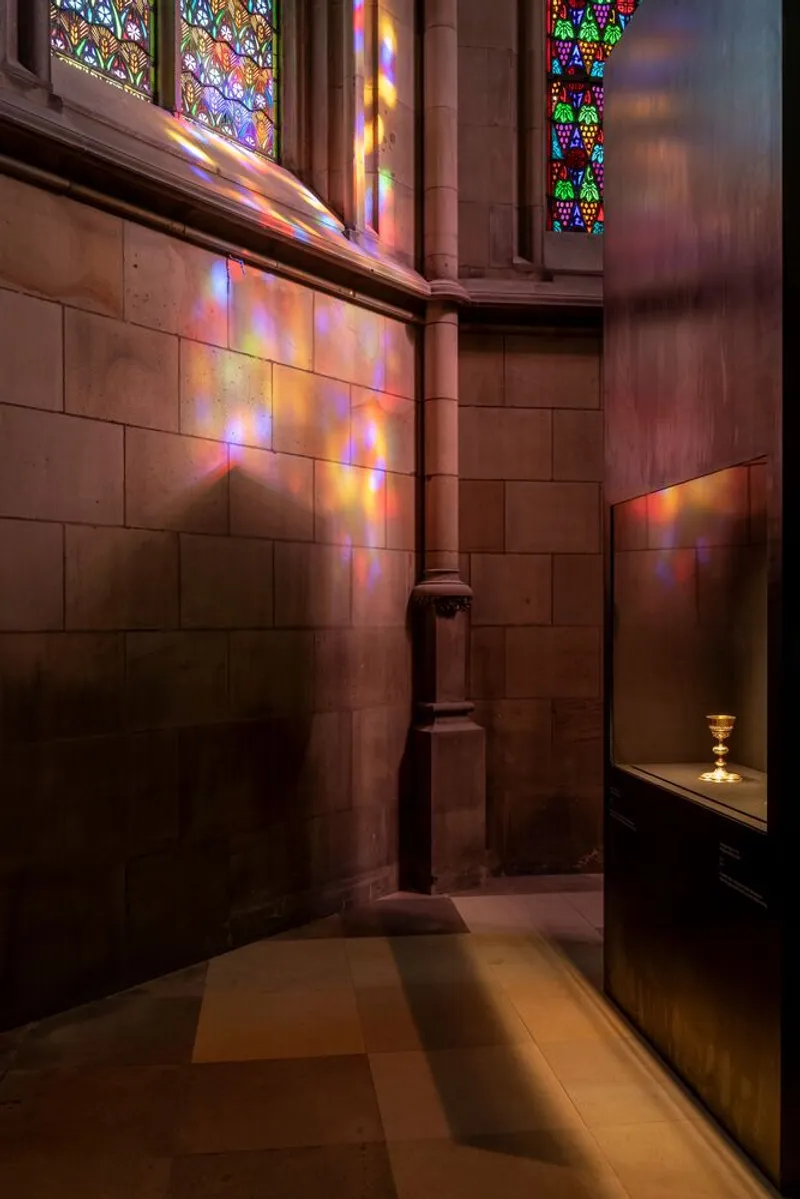
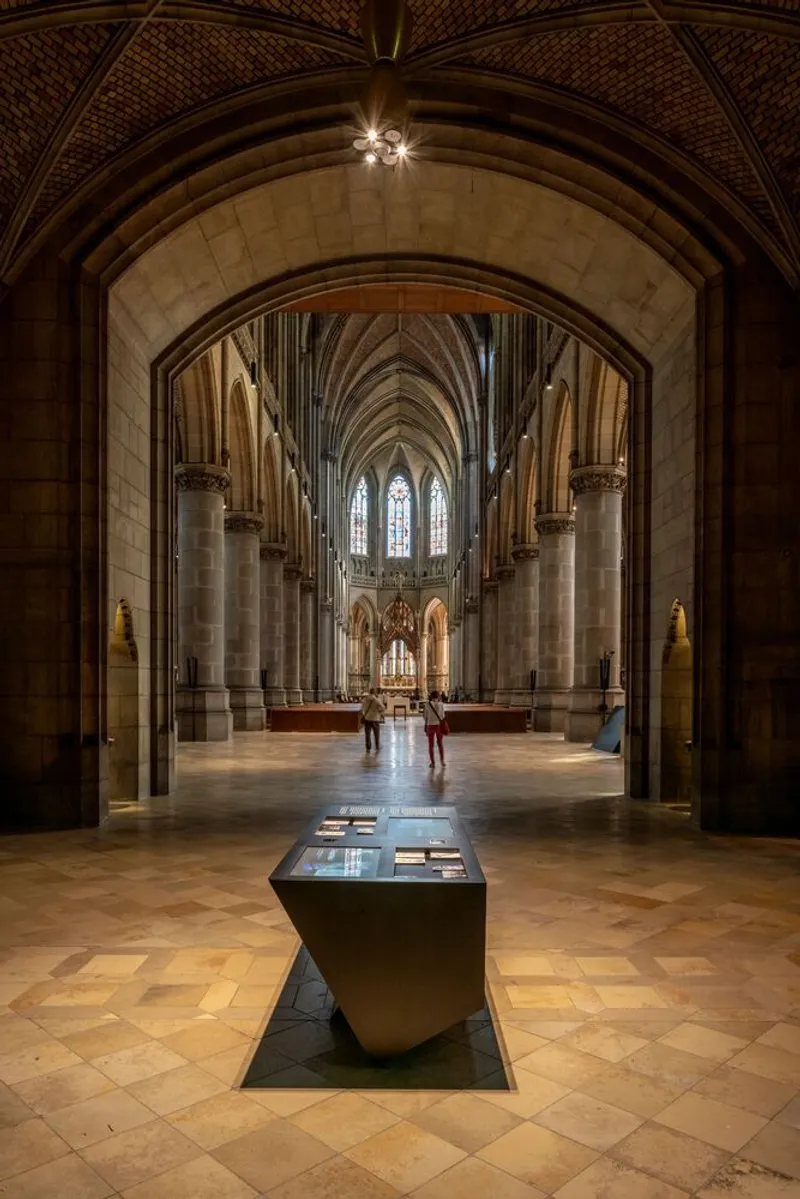
Through adaptive reuse, the former sacristy of the east chapel becomes a transitional corridor, guiding visitors from the everyday into the spiritual realm. This careful layering of function and symbolism demonstrates how modern church architecture can be inclusive, accessible, and rooted in community.
Architectural Lightness Inspired by Tradition
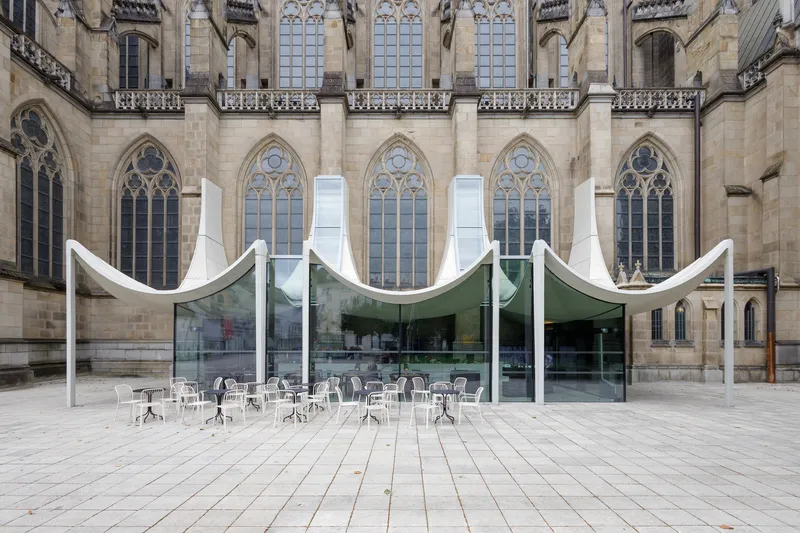
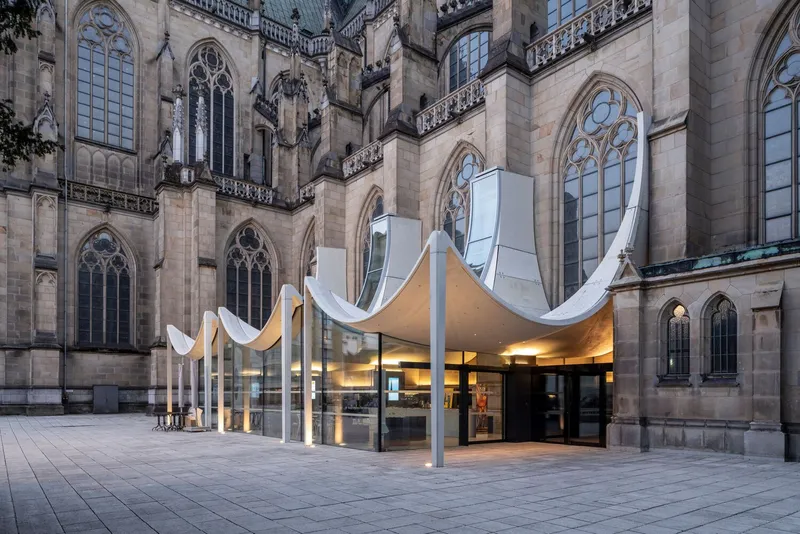
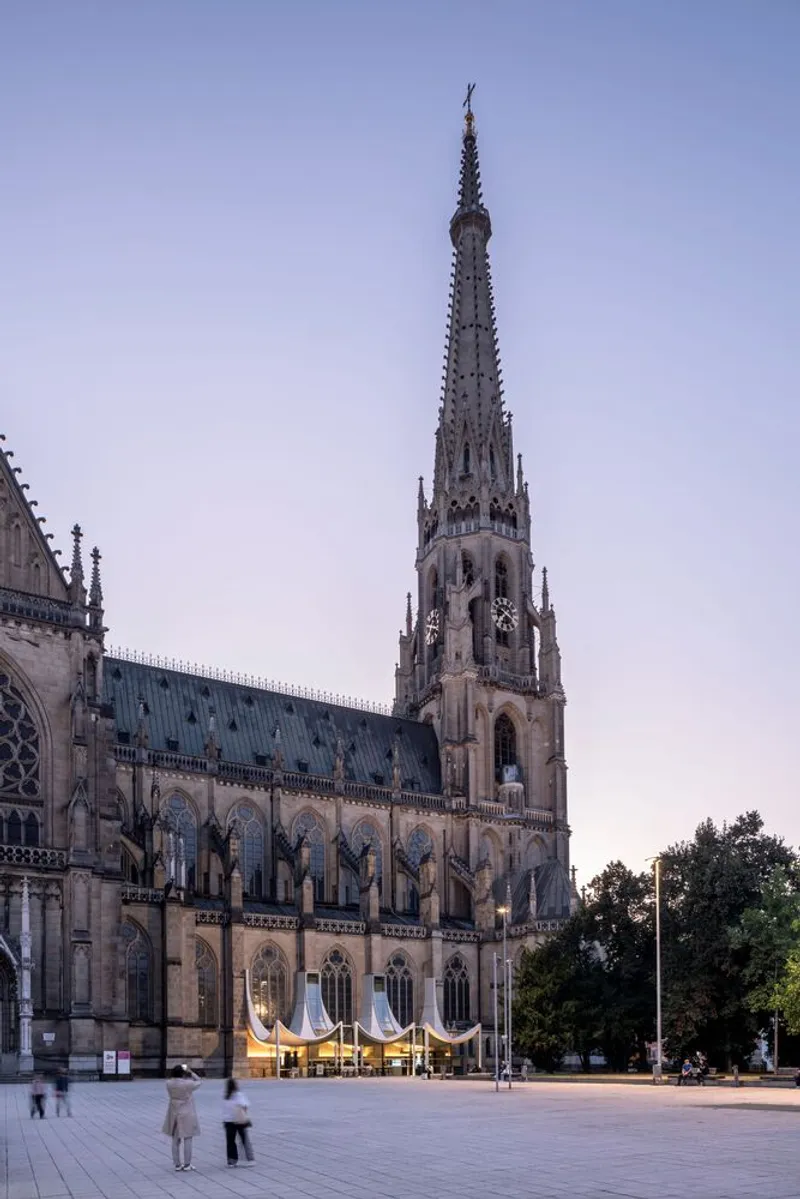
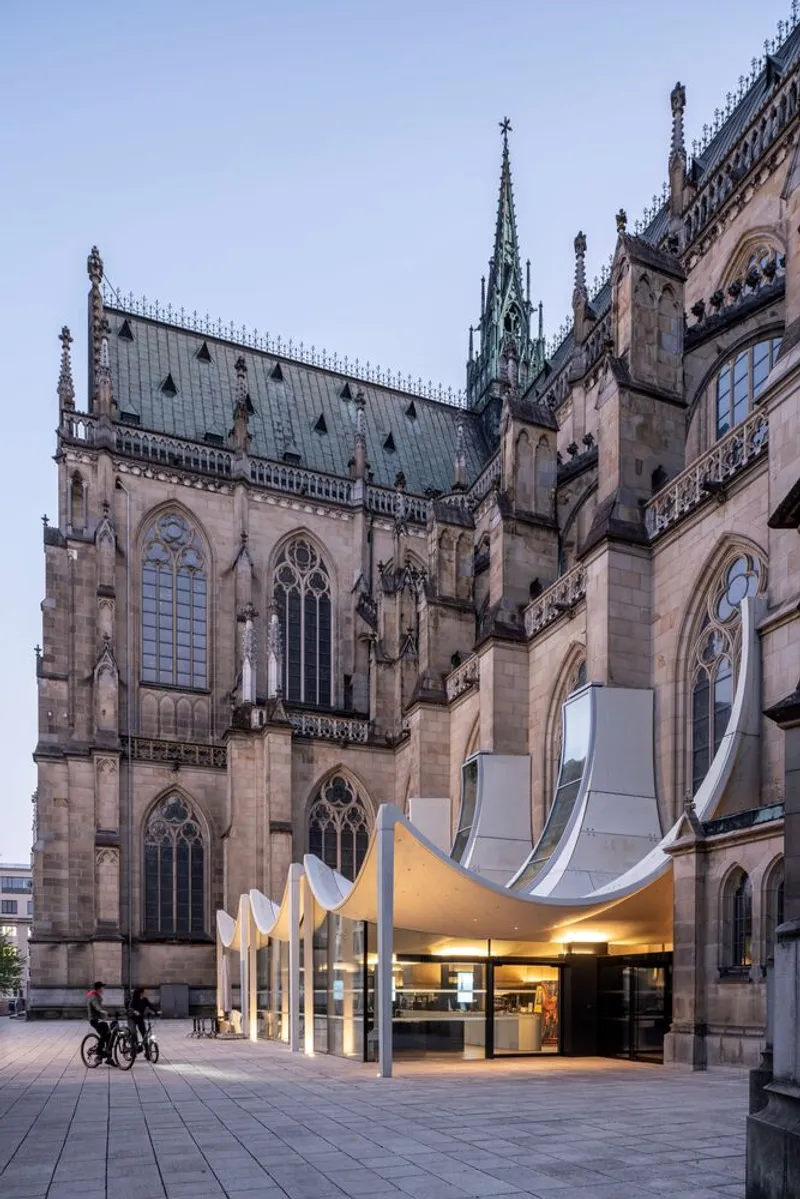
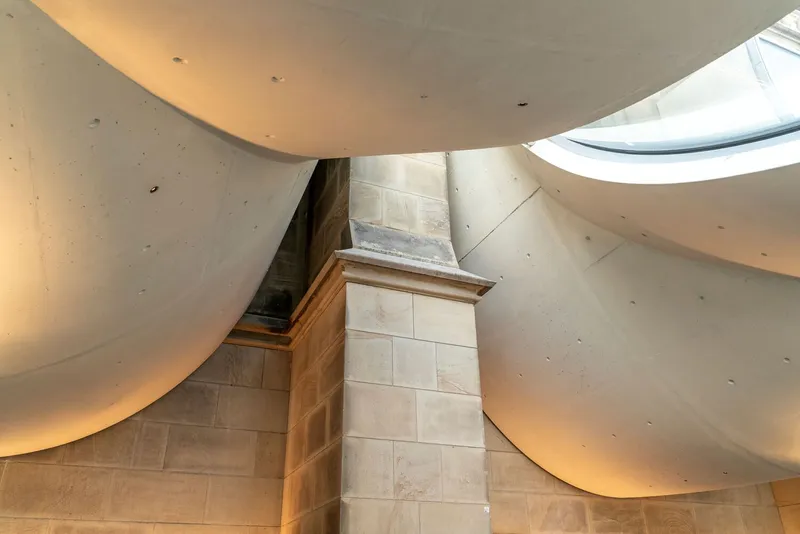
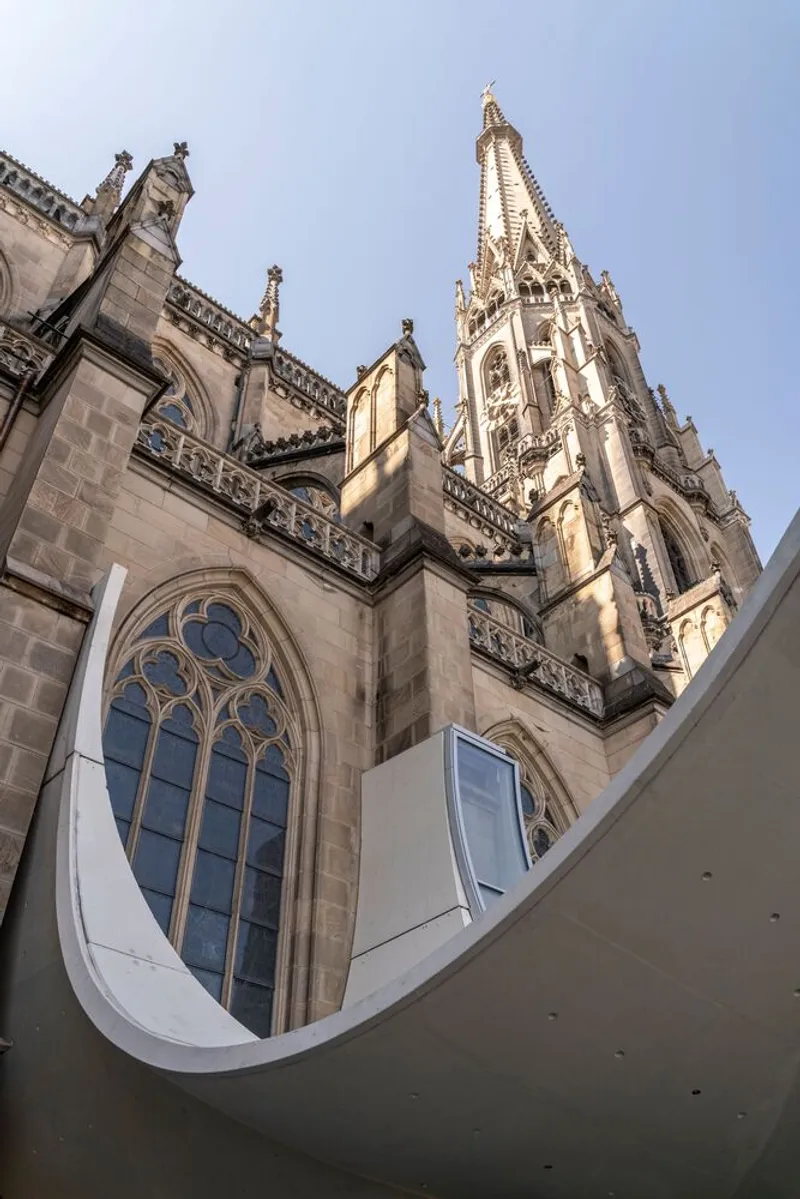
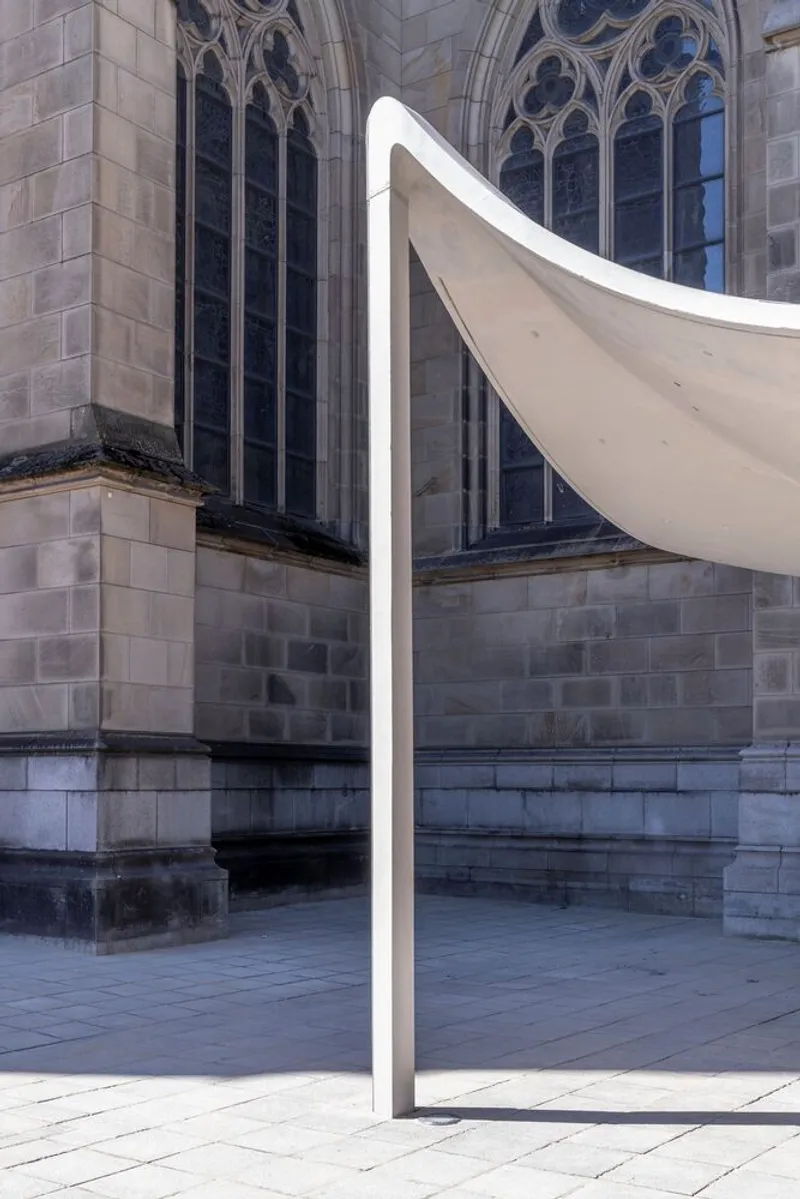
The architectural language of the Domcenter draws from historical typologies like tent roofs and market stalls, translated into a contemporary idiom through inverted vault forms and freestanding canopy structures. These three canopy-like volumes appear to hover beside the cathedral’s neo-Gothic facade, reflecting the shapes of pointed arches without physically connecting to the historic stonework.
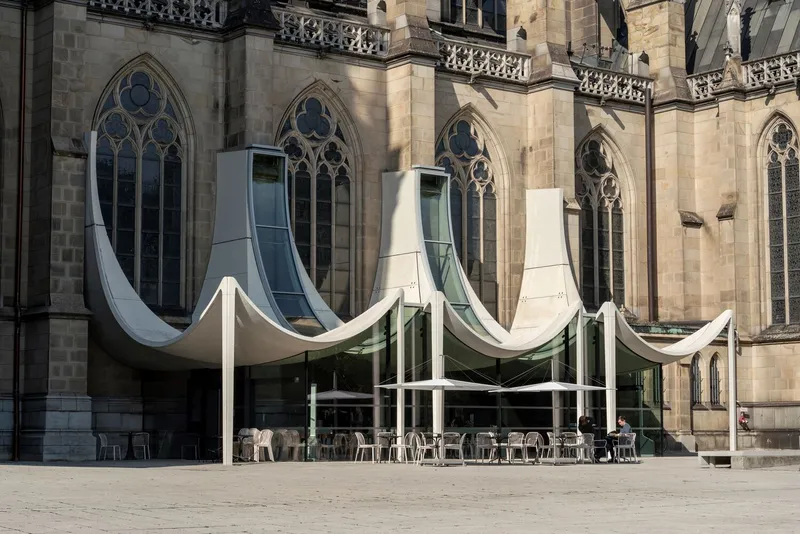
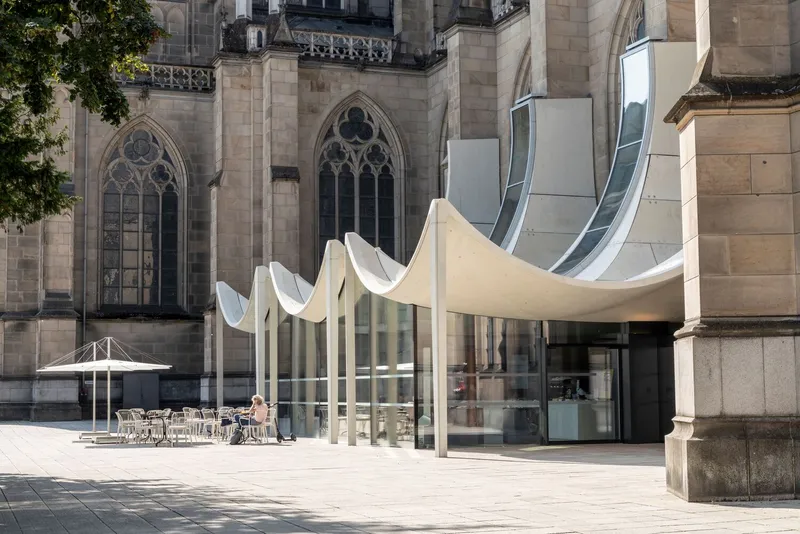
In deference to heritage preservation laws, no structural contact is made with the existing cathedral. Instead, the canopies rest on individual supports and extend gently toward the stone structure, framing a dialogue between old and new. The double-shell design balances form and function, enhancing interior climate conditions while preserving the visual elegance of the intervention.
Sustainable Concrete and Environmental Stewardship
Materiality plays a crucial role in the Domcenter’s identity. The structure employs a refined concrete system engineered for reduced carbon emissions. Over time, the building is projected to reabsorb nearly all the CO2 generated during its construction phase, contributing to a holistic sustainability approach that aligns with broader goals of architectural responsibility and environmental care.
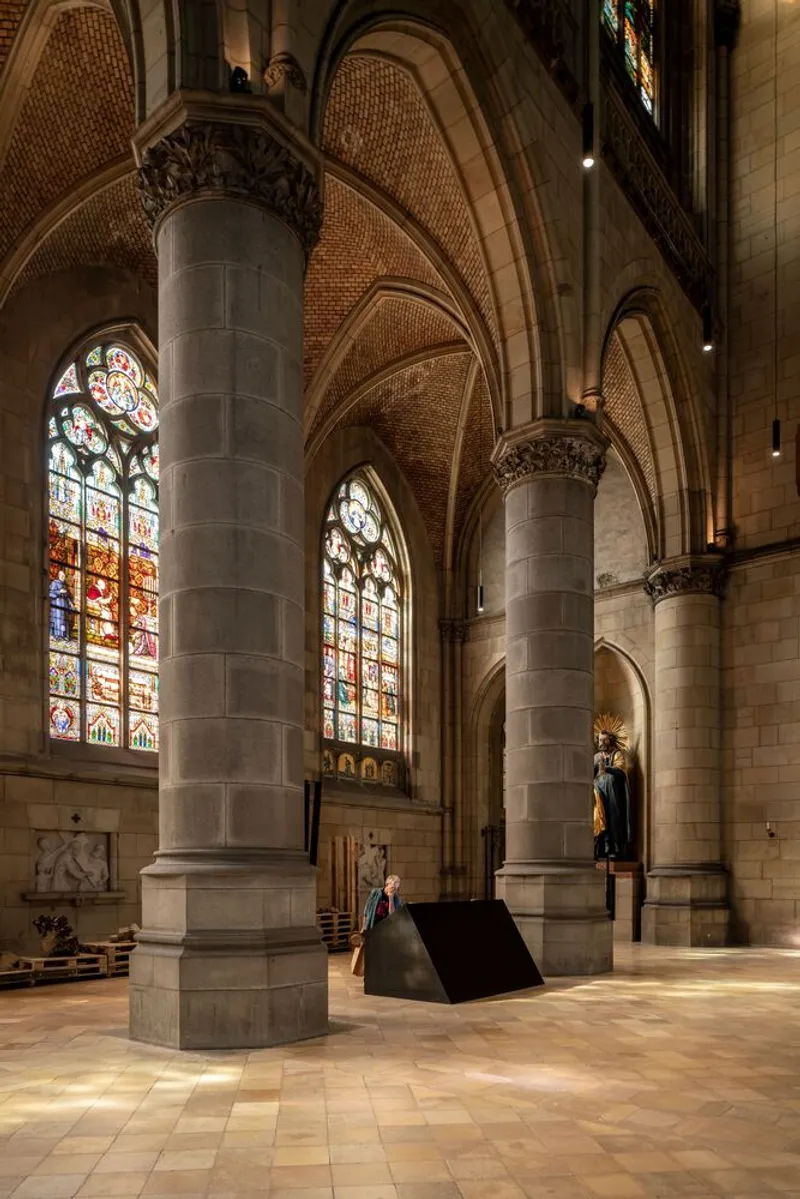
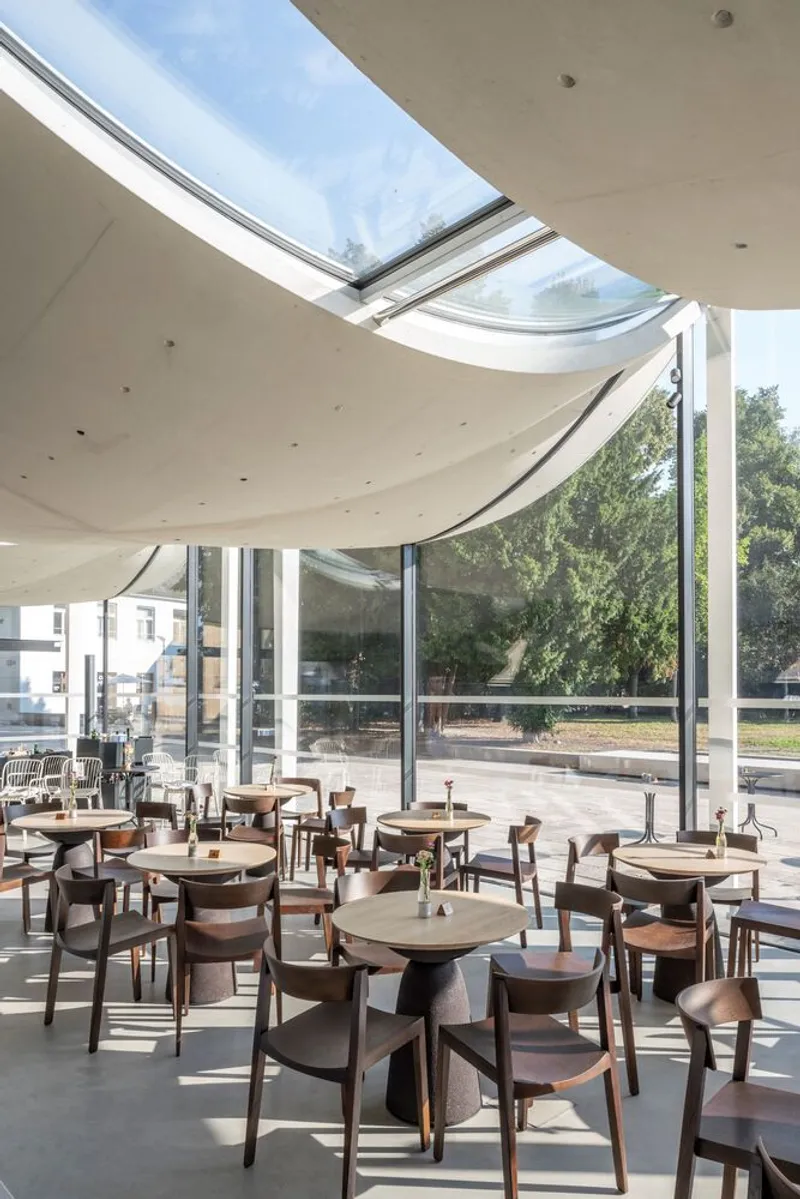
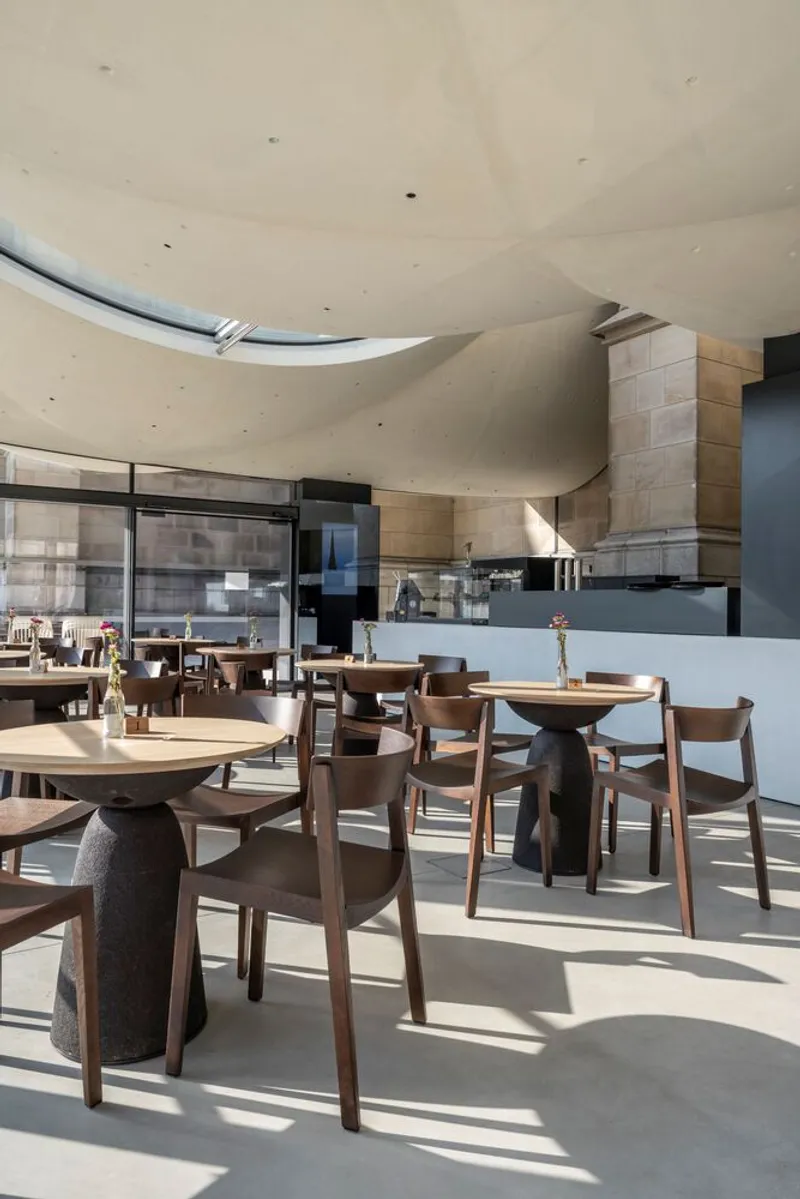
This sustainable foundation is paired with an aesthetic minimalism that foregrounds light, transparency, and structure. The outer shell mirrors the gothic vocabulary of the cathedral, while the interior opens into fluid spaces marked by clear sightlines and modern finishes.
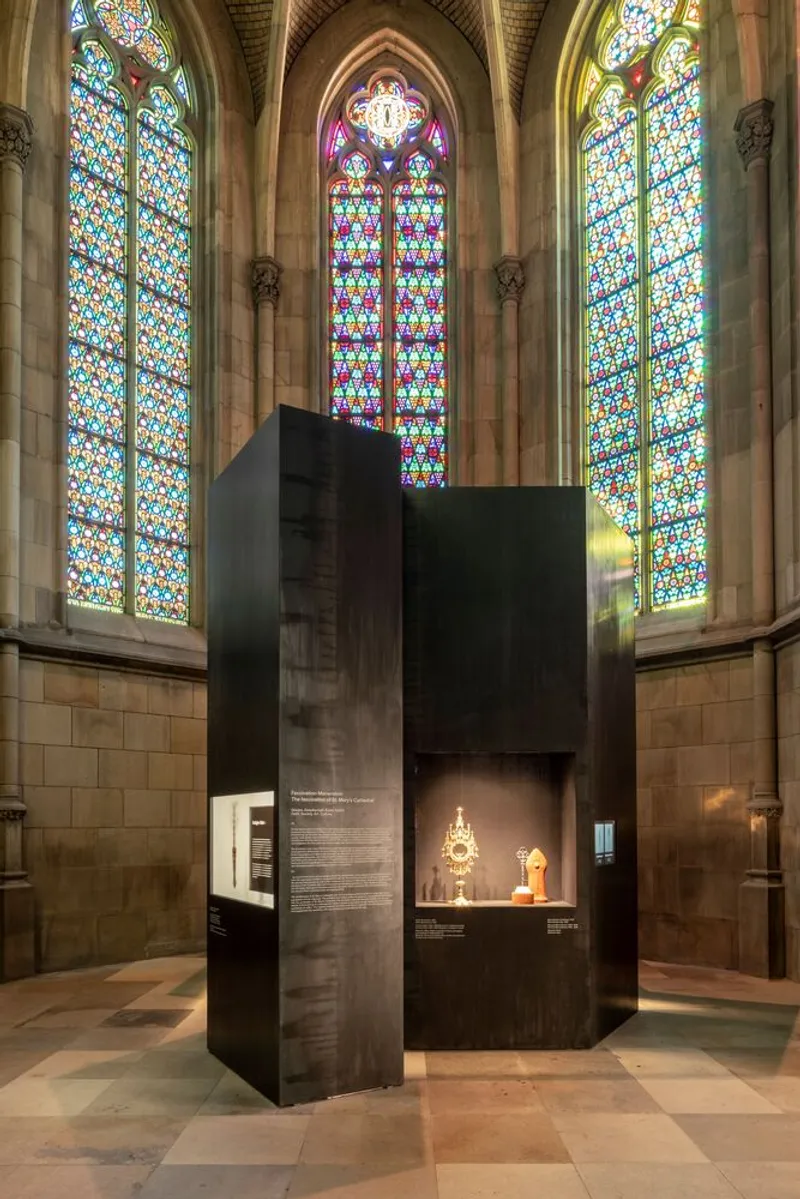
A Dynamic Program Bridging Generations and Communities
Internally, the Domcenter offers a multi-level experience. A sleek linear counter connects the café, bookshop, and information area, creating a social spine across the structure. Beneath this welcoming surface, technical facilities, restrooms, lockers, and storage spaces are discreetly tucked away in a lower level, accessible via stairs and a barrier-free lift. This lift provides seamless vertical access to all three levels—church, plaza, and basement—ensuring universal accessibility.
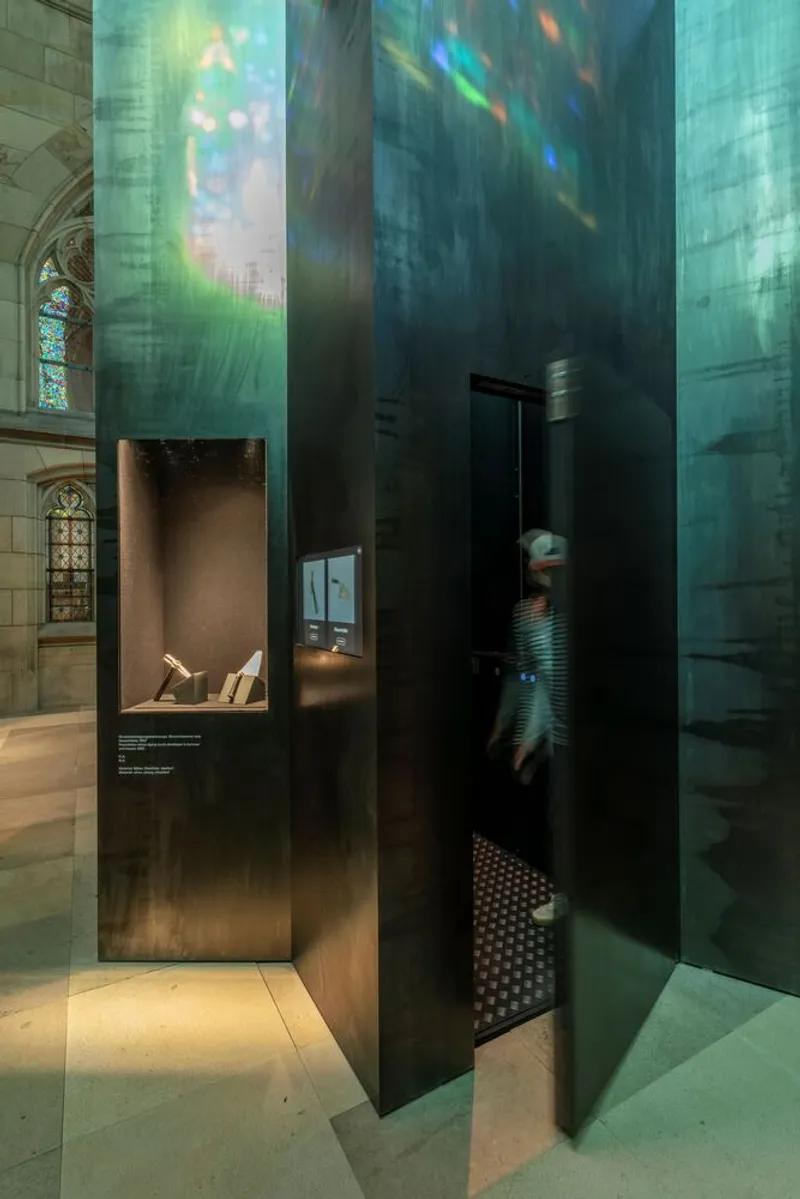
The center also serves as the beginning point for cathedral tours and houses a permanent exhibition of the cathedral treasury in the east chapel. A two-story exhibition zone displays sacred artifacts using an interactive digital format. Display cases designed on the "Einstein tile" principle allow modular arrangements without repetitive patterns, adding visual complexity to the presentation of historical objects.
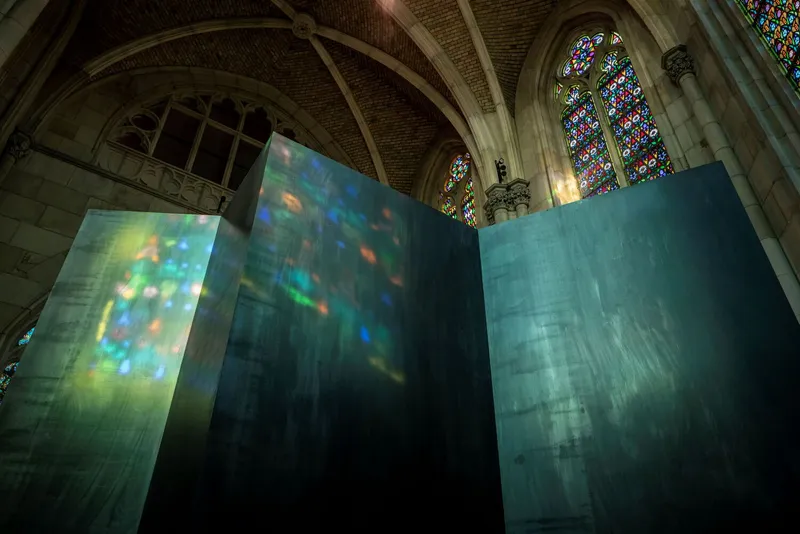
An integrated lift within the exhibition area allows visitors to experience liturgical and cultural treasures from new perspectives, merging traditional ecclesiastical narratives with contemporary museographic techniques.
Civic Engagement Through Architecture
More than a religious annex, the Domcenter functions as a cultural hub open to all. Its hybrid programming allows for church-affiliated events and secular gatherings alike, further strengthening its role as a bridge between spiritual tradition and contemporary life. The formerly underutilized eastern flank of the cathedral now thrives as a space of curiosity, conversation, and cultural exchange.
By reconciling architectural heritage with forward-thinking design, the Domcenter stands as a model for how modern church architecture can evolve in a post-secular world—open, sustainable, and socially embedded.
All photographs are works of Edward Beierle, Gregor Graf


Popular Articles
Popular articles from the community


LT2A and OPEN Architectes Thread a Brick and Glass High School Through a Wooded Belgian Campus
In Braine-l'Alleud, a 3,000 m² wing for Collège Cardinal Mercier pairs pale brick with a glazed colonnade, deferring to a small chapel and a dense wood.

graciastudio Turns a Viewless Tijuana Lot Inward Around a Courtyard of Concrete, Timber and Trees
In Tijuana, Jorge Gracia's GA2 House stacks a timber-clad private floor over exposed concrete and replaces a missing view with a planted interior patio.

Juan García Correa, John González and Claudia Rueda Sink a Circular Amphitheater into a Manizales Engineering Building
On the La Nubia campus in Manizales, Colombia, the S1 Building folds labs and offices into a hillside of ramped lawns that double as a campus route.

FCC Arquitectura Expands a Portuguese Granite House with a Board-Marked Concrete Wing
In Portugal, JV House pairs a cleaned-up whitewashed and granite dwelling with a timber-shuttered concrete extension, courtyards and a garden pool.

Similar Reads
You might also enjoy these articles


Hodi-Mandai Geram
Project Function: Preservation and revitalization of the Intangible heritage and socio-spatial identity of the Hodi by Housing, Cultural Memory Center, Sacred Grove, landscape, local tourism economy


Olio Towers: A Mid-Rise for Performers That Fuses Housing, Rehearsal, and Stage
Located blocks from Houston's Theater District, this modular tower stacks living units around a central performance atrium.

Oasis: Modular Green Housing Carved into Dhaka's Urban Fabric
A shortlisted Plugin Housing entry reclaims unauthorized settlements in Dhaka with stepped concrete volumes, green roofs, and ventilation-driven design.

Black Hole: A Floating Megastructure for the Post-Physical Era
Emiliano Mazzarotto envisions a spherical, self-scaling arena where e-sports, digital hotels, and holographic stadiums replace traditional public space.

Explore Architect For Liturgy Competitions
Discover active competitions in this discipline

Challenge to reimagine the Iron Throne

Photograph architecture without architects

Illustrate the lost glory of Angkor Wat - Render Challenge

Design challenge to reuse E-waste
Comments (0)
Please login or sign up to add comments
No comments yet. Be the first to comment!