
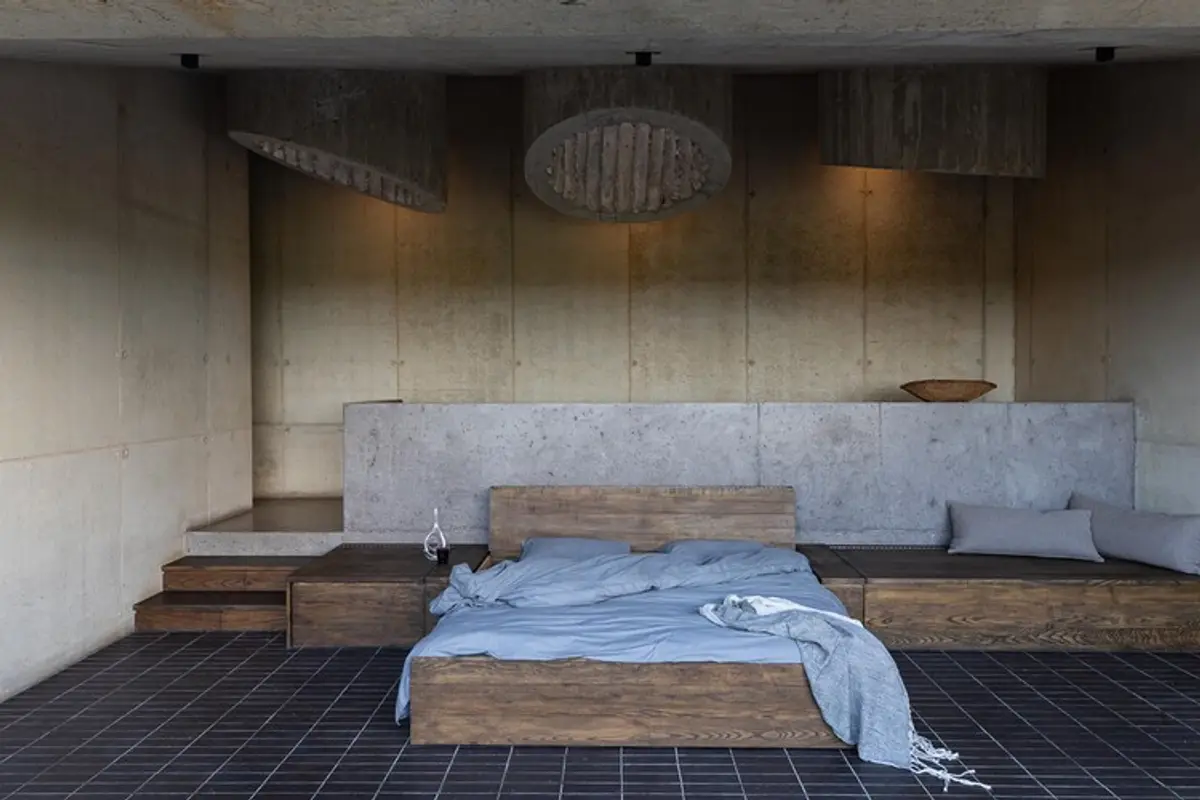
The Folly Multi-Purpose Retreat: Common Architecture's Underground Creative Sanctuary in Salt Rock
Common Architecture creates a hidden hillside retreat combining ceramic studio, wine cellar, and entertainment space beneath concrete skylights in South Africa.


A Hidden Refuge: Architecture as Discovery
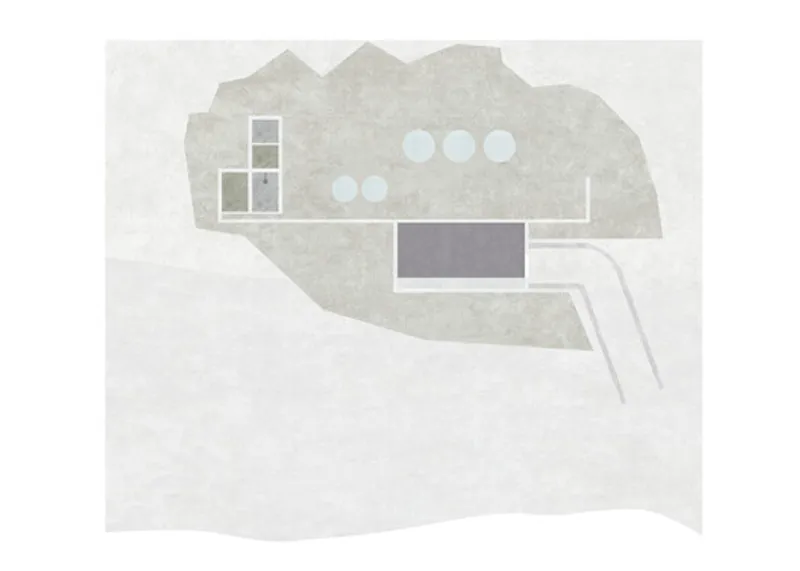
In the verdant landscape of Salt Rock, South Africa, Common Architecture has crafted something rare in contemporary residential design—a building that refuses to announce itself. The Folly is a 60-square-meter multi-purpose retreat that exists almost entirely below the sightline, embedded into an upward-sloping garden where discovery replaces declaration as the primary architectural gesture.

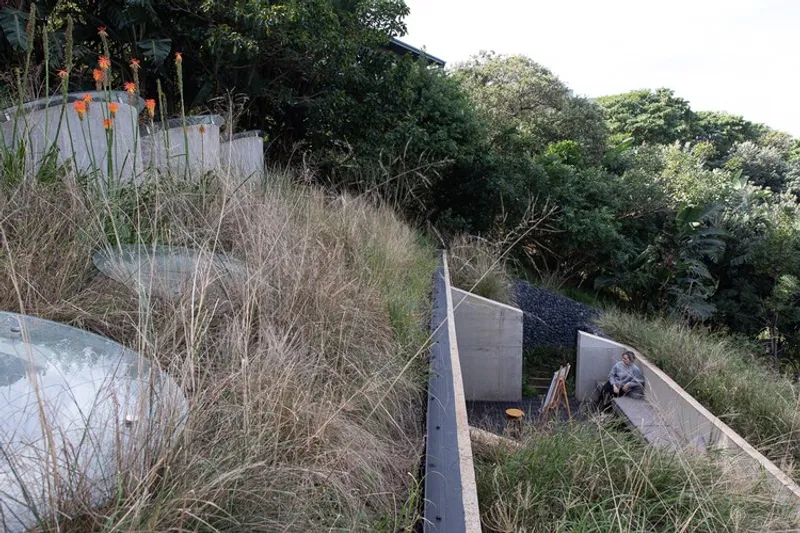
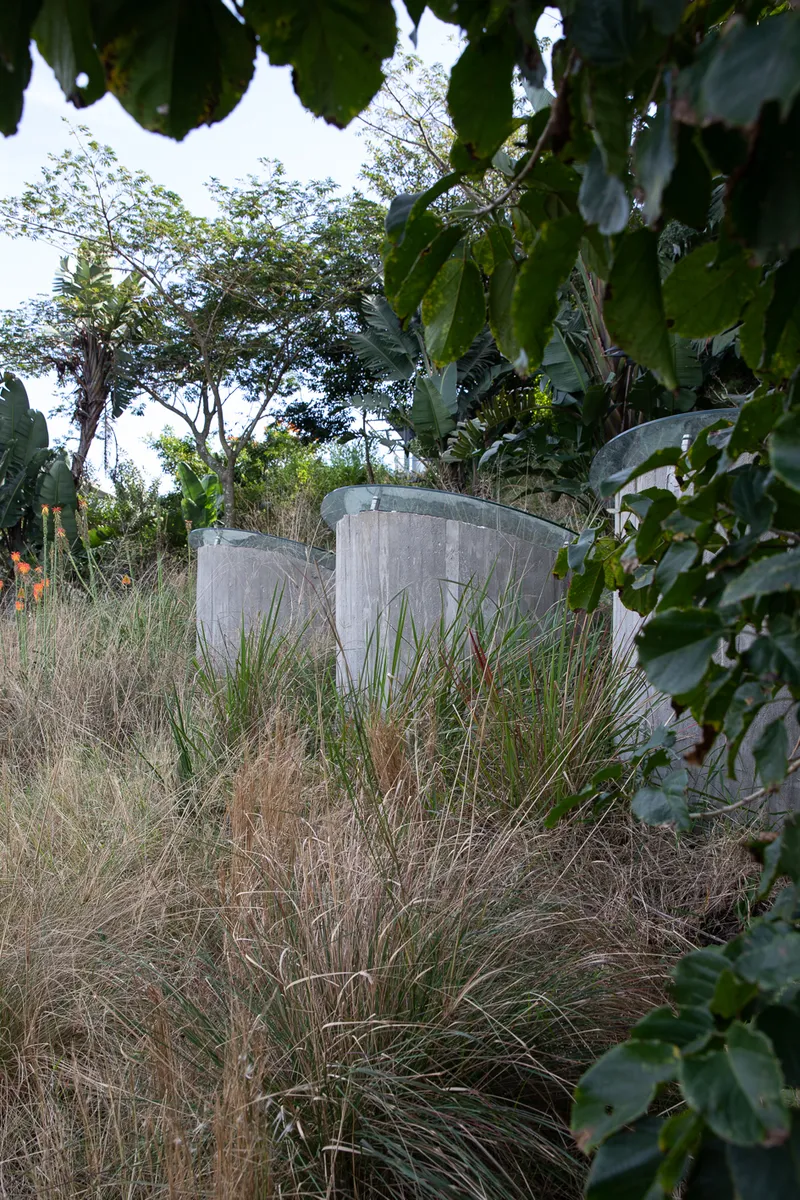
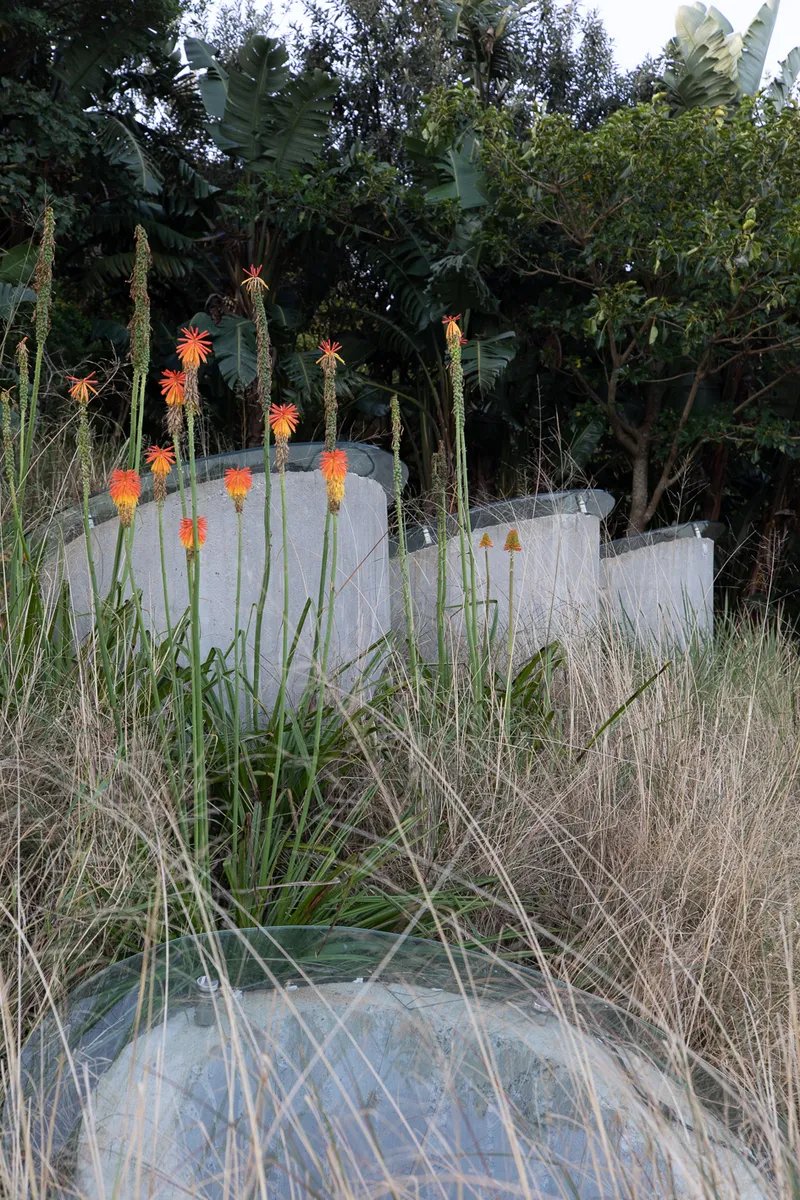
This is not architecture of spectacle, but of intimacy. A building conceived not to dominate its landscape but to become part of it, revealing itself gradually to those who seek it out. From the main house, only the tops of cast-in-situ concrete skylights puncture the garden's surface, hinting at the luminous sanctuary concealed below.
The Brief: Combining Creativity, Collection, and Conviviality
The project emerged from a deceptively simple commission. A couple sought a dedicated space that could serve multiple, seemingly disparate functions: a ceramic studio for creative work, a proper cellar for their growing wine and whiskey collection, and an entertainment venue capable of hosting dinner parties, musical performances, and occasional overnight guests.

More fundamentally, they desired seclusion without isolation—a place apart from the main house that offered psychological distance while remaining physically connected to their property. The challenge was to create a space that could shift fluidly between solitary concentration and social gathering, between productive work and contemplative leisure, all within a compact footprint that wouldn't overwhelm the garden setting.
Site Strategy: Building into the Earth
Common Architecture's response was radical in its restraint. Rather than erecting another freestanding pavilion in the garden, they chose to work with the site's natural topography, carving the retreat into the hillside itself. This decision fundamentally shaped every aspect of the project's character.
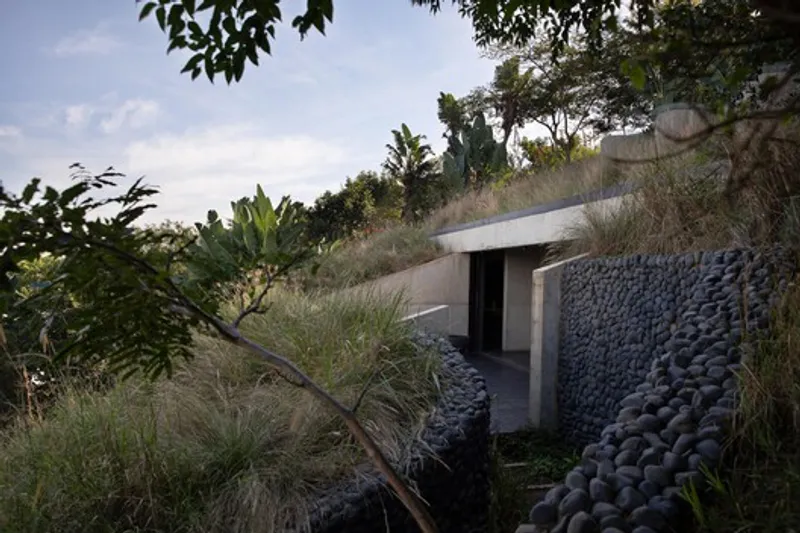
The structure has no driveway, no formal entry in the conventional sense. Access is pedestrian—a deliberate walk through the garden that establishes a ritual of transition between the everyday world of the main house and this separate realm of creative otium. This approach to arrival transforms the act of using the space into something more intentional, more conscious.
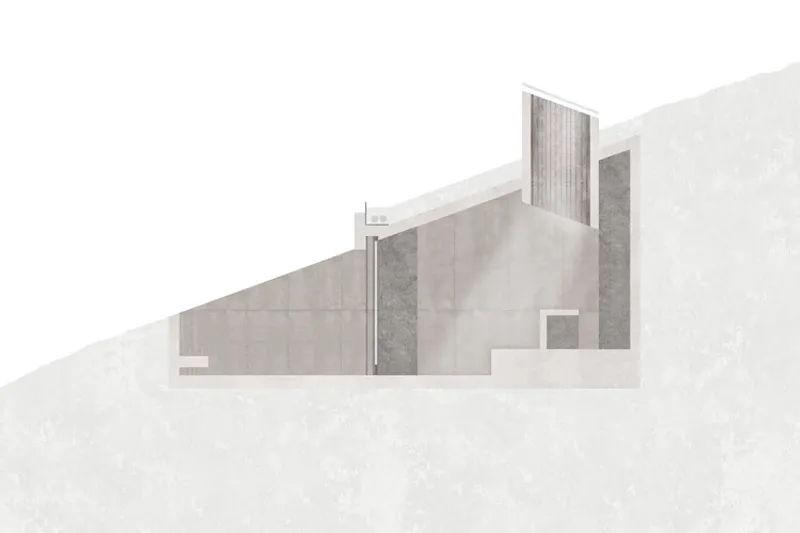
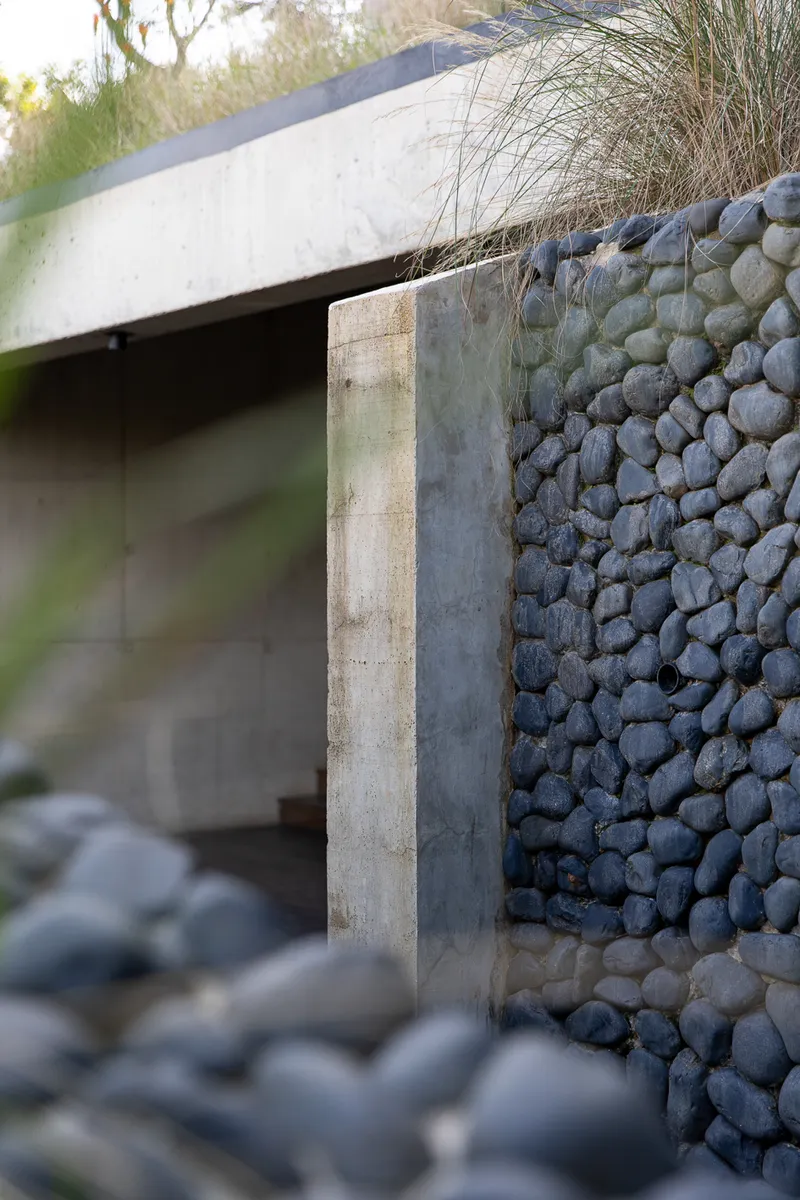
By embedding the building into the slope, the architects achieved multiple objectives simultaneously. The structure gains thermal mass from the surrounding earth, moderating temperature fluctuations naturally. Visual impact on the garden is minimized, preserving sight lines and maintaining the landscape's primacy. Privacy is enhanced without the need for walls or screens. And perhaps most importantly, the experience of the interior space is fundamentally altered—entering becomes descent, a movement downward that carries psychological weight.
Light from Above: Sculpting Atmosphere Through Skylights
In a building largely surrounded by earth, natural light becomes the critical architectural element. Common Architecture addressed this through a series of cast-in-situ concrete skylights—sculptural volumes that puncture the roof plane and channel daylight into the interior spaces below.

These are not standard glazed openings but carefully considered light wells, their concrete forms casting and shaping illumination as it descends. The quality of light within The Folly is distinctive—soft, diffused, top-lit in a way that creates a quiet, luminous atmosphere fundamentally different from the horizontal light of conventional windows.
This overhead illumination serves practical purposes across the building's various functions. In the ceramic studio, consistent north light (in the Southern Hemisphere) provides ideal working conditions for evaluating color and form. In the gathering spaces, the dramatic quality of light filtering from above creates an almost chapel-like ambiance, appropriate for both contemplative solitude and intimate social occasions. In the cellar, minimal natural light protects the wine collection while the skylights provide just enough illumination to navigate the space without artificial lighting during daylight hours.
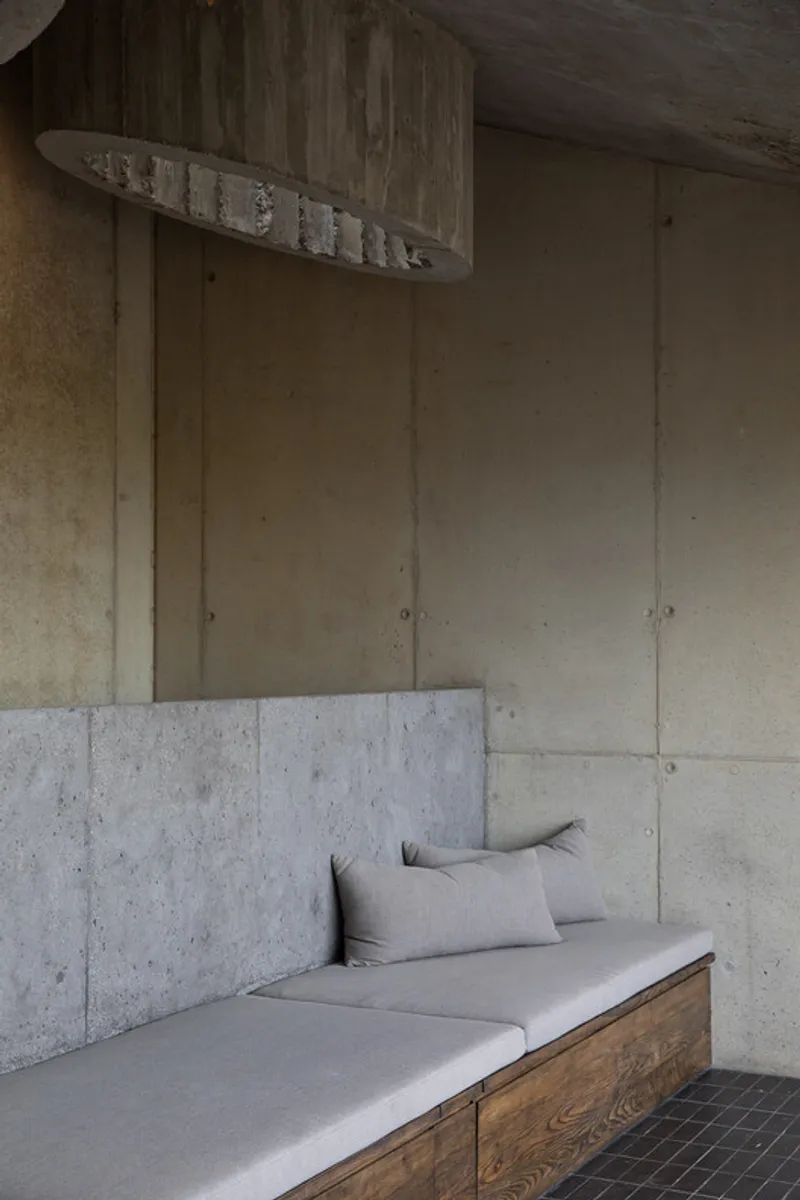

The concrete skylights also serve as the building's primary architectural expression visible from above. Their geometric forms—simple, bold, sculptural—mark the retreat's presence in the garden without overwhelming it. They become landscape elements in their own right, objects to be discovered and admired from the garden paths.
Spatial Flexibility: One Room, Many Lives
Within its compact 60-square-meter footprint, The Folly accommodates an impressive range of functions through careful spatial planning and integrated storage solutions. The interior is essentially a single large volume that can be configured and reconfigured according to need.
The Ceramic Studio: One zone is dedicated to the client's ceramic practice, with durable flooring, adequate power for a kiln, and workspace for clay preparation and wheel throwing. The quality of natural light and acoustic dampening from the concrete structure create an ideal environment for focused creative work.

The Cellar: Climate-stable storage for the wine and whiskey collection is integrated into the design, taking advantage of the earth's natural temperature regulation. Rather than being a separate sealed room, the cellar is woven into the spatial sequence, with bottles displayed as part of the interior landscape.
The Gathering Space: The central volume transforms for entertaining—dinner parties, musical performances, conversations that extend late into the evening. Built-in seating and a concealed table system allow the space to shift from studio to dining room without physical reconfiguration of furniture.

The Guest Room: A Murphy-style bed concealed within the wall allows The Folly to accommodate overnight visitors when needed, transforming the gathering space into a private bedroom. Additional concealed storage maintains the visual calm of the interior while providing practical functionality.
This spatial flexibility is achieved not through moving walls or complex mechanical systems, but through intelligent design of fixed elements and minimal, multi-functional furniture. Every component serves multiple purposes; nothing is extraneous.
Material Restraint: Concrete, Brick, and Timber
The material palette of The Folly is deliberately limited, creating unity and calm within the small space. Three primary materials define the character of the interior and exterior: off-shutter concrete, black brick, and warm timber.
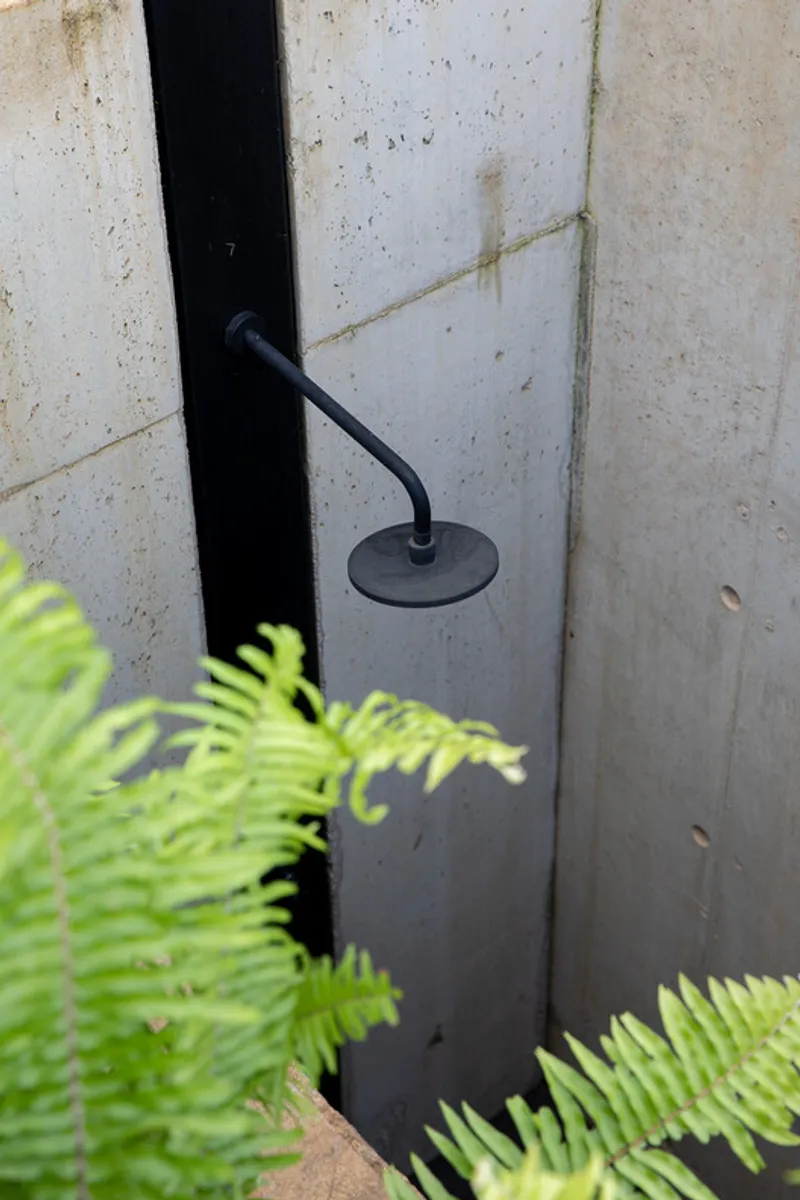
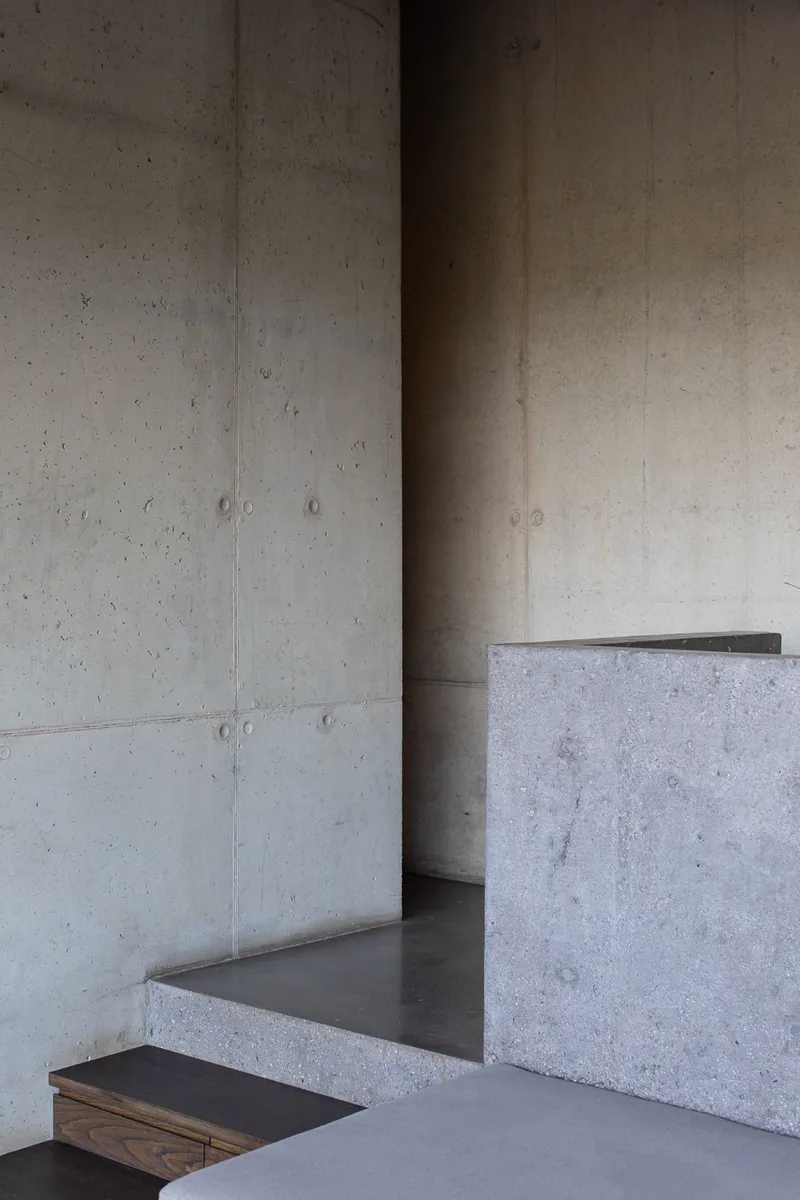
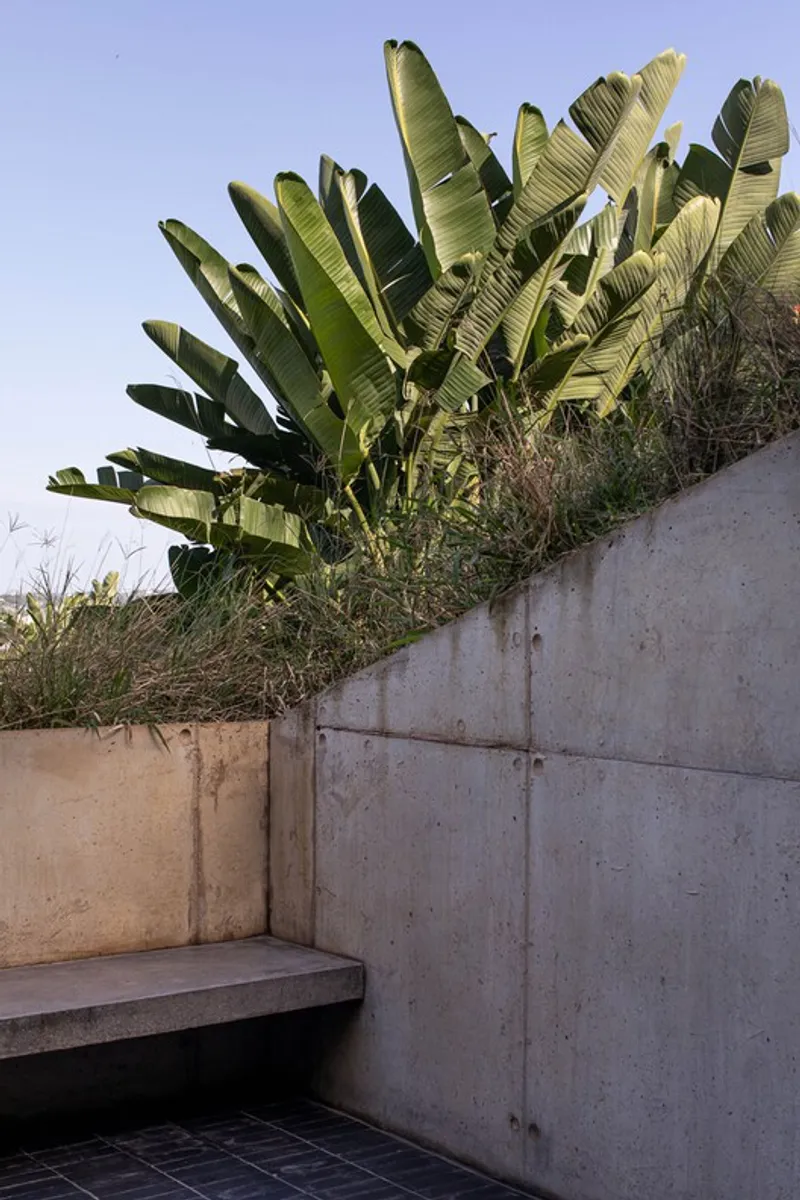
Cast-in-Situ Concrete: The primary structural material, left exposed with the texture of its wooden formwork visible. This "off-shutter" or "board-marked" concrete carries the imprint of its making, adding texture and warmth to what might otherwise be a cold material. The thermal mass of the concrete structure helps moderate interior temperatures, staying cool in South Africa's warm climate.

Black Brick: Used selectively to define specific zones and add textural contrast to the smooth concrete. The dark color creates visual depth and a sense of gravitas appropriate to the building's subterranean character. The brick's acoustic properties also contribute to the space's function as a music chamber.
Warm Timber: Introduced as flooring and accent elements to soften the concrete and brick, adding tactile warmth and acoustic absorption. The wood creates a connection to organic, living materials that balances the mineral quality of concrete and brick.

This restrained material palette serves multiple purposes. It unifies the various functional zones within the single volume, preventing visual fragmentation. It allows the quality of light to become the primary variable in the space's atmosphere—light on concrete reads differently throughout the day and seasons, animating the interior. And it creates a distinct character that contrasts with the main house, establishing The Folly as a separate realm with its own identity.
Acoustic Design: A Chamber for Music
An unusual but critical aspect of the brief was acoustic performance. The clients wanted The Folly to function as a music chamber—a space where instruments could be played and appreciated in optimal conditions. This requirement influenced numerous design decisions.
The concrete shell provides excellent acoustic isolation, containing sound within the retreat and preventing disturbance to neighbors or the main house. The mass of the structure eliminates the thin-wall resonances that plague many contemporary buildings.
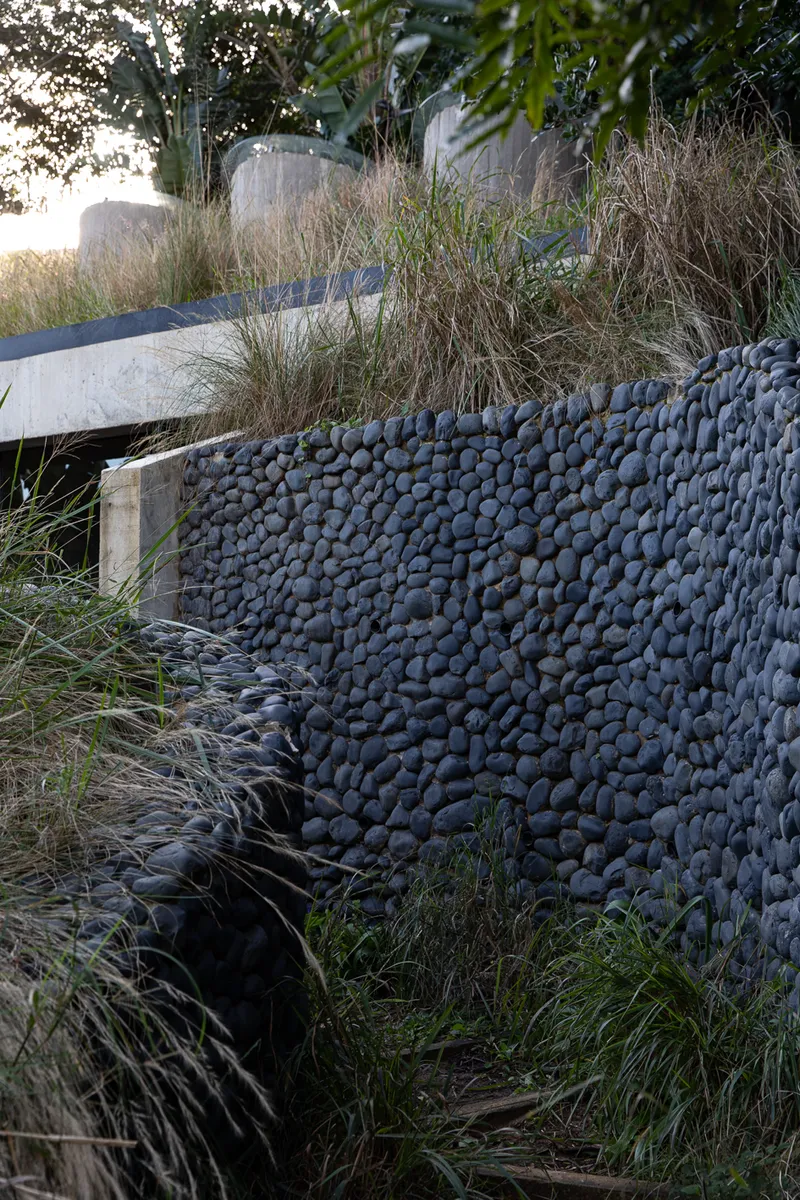
Interior surfaces balance reflection and absorption. The concrete and brick provide some reflective surfaces for acoustic liveliness, while timber elements and soft furnishings absorb excessive reverberation. The result is a space with enough acoustic warmth to support musical performance without becoming muddy or echo-prone.

The compact volume and relatively low ceilings (compared to purpose-built concert halls) create an intimate acoustic environment well-suited to chamber music, solo performances, and recorded music listening. Musicians and listeners are brought into close relationship, fostering a different kind of engagement than is possible in larger spaces.
Construction: Hand-Built Authenticity
The Folly was constructed using traditional hand-built methods rather than prefabrication or industrial systems. This approach was chosen to respect the site's character and allow the building to respond to the specific conditions encountered during excavation and construction.
The cast-in-situ concrete work required skilled formwork carpentry to create the complex geometry of the roof and skylight structures. Each concrete pour was an event requiring careful planning and execution. The board-marked finish celebrates this process, making the construction methodology legible in the final building.


Black brick was laid by masons working in the traditional manner, each unit placed individually and integrated with the concrete structure. Timber elements were cut, fitted, and finished on site, adjusted to the actual dimensions of the built concrete shell.
This hand-built approach resulted in a building with texture, character, and small imperfections that give it authenticity. In an era of computer-controlled fabrication and perfect digital tolerances, The Folly embraces the slight irregularities that come from skilled human hands working with recalcitrant materials.
Landscape Integration: Embedded and Elemental
The relationship between The Folly and its garden setting is fundamental to the project's success. Rather than treating the building as an object placed in a landscape, Common Architecture conceived it as an integral part of the site's topography.
From most vantage points in the garden, The Folly is invisible—known by its absence rather than its presence. The upward-sloping terrain continues uninterrupted, with only the concrete skylights suggesting something below. Native plantings can extend right up to and over the structure, further integrating it into the landscape.
This approach preserves the garden's character and scale. A conventional above-ground structure of the same functional area would have significantly altered the property's spatial qualities and sight lines. By going underground, The Folly adds functionality without subtracting openness.

The pedestrian approach through the garden creates a sequence of discovery. One doesn't see The Folly from the main house and walk directly to it. Instead, the journey involves movement through the landscape, a gradual approach that builds anticipation. The entrance, when finally reached, feels earned rather than automatic.
Psychological Space: Otium and Transformation
The concept of otium—the Latin term for creative leisure, contemplative time free from the obligations of business—is central to The Folly's purpose. This is not merely a hobby room or entertainment annex, but a dedicated space for activities that restore and fulfill.
The physical separation from the main house, though slight in actual distance, creates significant psychological space. Crossing the garden to The Folly is a ritual that signals a shift in mode—from domestic routine to creative work, from everyday concerns to social celebration, from ordinary time to something set apart.

The subterranean quality enhances this sense of transformation. Descending into the earth carries archetypal resonance—entering a cave, a womb, a sanctuary. The surrounding earth feels protective, cocooning. The overhead light creates an almost sacred quality, as if one has entered a private chapel or meditation chamber.
Different times of day and seasons alter the character of the space. Morning light filtered through the skylights creates one atmosphere; evening with artificial lighting and perhaps a fire creates another. Summer heat is moderated by the earth's coolness; winter cold is softened by the structure's thermal mass. The space reveals different aspects of itself according to the rhythms of use and natural cycles.
Contrast and Complement: Dialogue with the Main House
The Folly's architectural language deliberately contrasts with the main house, establishing it as a separate realm while remaining sympathetic to the overall property. Where the main house presumably follows more conventional residential patterns—horizontal windows, visible walls, clear indoor-outdoor boundaries—The Folly inverts these relationships.
This contrast serves functional and psychological purposes. The distinctly different character of The Folly makes it feel like a true retreat, a place apart. One doesn't just move to a different room but enters a qualitatively different environment. This supports the various specialized functions the building accommodates, each of which benefits from the special atmosphere created by the architecture.
Yet the two buildings complement each other as well. The main house can focus on everyday domestic life—cooking, sleeping, casual living—while The Folly handles more specialized activities. This functional separation allows each building to be optimized for its particular purposes without compromise.

Sustainability Through Restraint
While not explicitly marketed as a sustainable design, The Folly embodies several environmentally responsible principles through its fundamental approach rather than through added "green" technologies.
Minimal Site Impact: Building into the hillside rather than on top of it minimized excavation, retained existing drainage patterns, and preserved the garden landscape. No trees were removed; habitat disruption was minimal.
Thermal Performance: The earth-sheltered design provides natural temperature moderation, reducing heating and cooling needs significantly. The thermal mass of the concrete structure dampens daily temperature swings. The minimal window area (only skylights) reduces heat gain and loss.
Material Efficiency: The simple material palette of concrete, brick, and timber required no exotic or high-embodied-energy materials. Concrete and brick are locally sourced; timber can be as well. The hand-built construction eliminated waste associated with prefabrication and industrial processes.
Longevity: The robust construction and timeless material palette suggest a building that will age gracefully and serve for generations. Avoiding trendy finishes and complex systems reduces maintenance needs and the likelihood of obsolescence.
Spatial Efficiency: Packing multiple functions into 60 square meters through intelligent design means the building provides more utility per unit of material and energy than a series of single-purpose spaces would.
Lessons in Small-Scale Architecture
The Folly offers valuable lessons for residential architecture at a time when program requirements often lead to bloated floor areas and excessive building footprints.
Embrace Constraints: The limited site area and budget could have been seen as obstacles. Instead, they became generators of creative solutions—building into the hillside, using simple materials expressively, designing flexible spaces rather than dedicated rooms.
Atmosphere Over Size: The distinctive character of The Folly proves that memorable spaces need not be large. The quality of light, the richness of materials, the acoustic properties, and the subterranean setting create an experience that transcends the modest square footage.

Integration Rather Than Addition: Rather than adding another freestanding structure to the property, The Folly integrates into the existing landscape, demonstrating that new construction need not diminish what's already there.
Multi-Functionality Through Design: Smart spatial planning and integrated storage allow one space to serve many purposes, reducing the total building area needed while actually increasing functionality.

Materiality Matters: The expressive use of simple materials—concrete, brick, timber—creates character and atmosphere without elaborate finishes or expensive fabrication.
A Modest Intervention with Lasting Impact
In an architectural culture often obsessed with iconic forms and Instagram-worthy moments, The Folly pursues a different set of values. It is modest without being timid, simple without being simplistic, restrained without being austere.
The building's primary gesture—disappearing into the landscape—is fundamentally anti-heroic. It suggests that good architecture can be quiet, can defer to its context, can prioritize experience over appearance. The drama is interior, not exterior; felt, not merely seen.
Yet within its self-imposed constraints, The Folly achieves a kind of perfection. Every decision feels inevitable, right. The material palette is exactly sufficient. The spatial organization is clear and efficient. The relationship to light, earth, and landscape is precisely calibrated. Nothing needs to be added or taken away.
This is architecture of essence—stripping away the extraneous to reveal what's fundamental. A room, light from above, materials honestly expressed, functions clearly served. In its modesty, The Folly achieves something increasingly rare: architecture that knows what it is and doesn't pretend to be anything else.

All the Photographs are works of Stephanie Veldman


Popular Articles
Popular articles from the community


graciastudio Turns a Viewless Tijuana Lot Inward Around a Courtyard of Concrete, Timber and Trees
In Tijuana, Jorge Gracia's GA2 House stacks a timber-clad private floor over exposed concrete and replaces a missing view with a planted interior patio.


Manzana Morphosis: Stretching Barcelona's Grid into a Living Landscape for 2050
A radical reworking of the Eixample manzana turns density into a tool for generous public space, vertical ecology, and environmental performance.

The Amber Palace Opera: A Geological Fiction Surfaces on Tallinn's Baltic Waterfront
Pierre Brillard reimagines a Baltic legend as a public landscape, opera house, and waterfront promenade rooted in Tallinn's coastal identity.

Aquadapt: An Underwater Habitat That Rewrites Its Rooms by the Hour
Curved modules ring the seabed while one shell shifts from breakfast room to cinema, farm and football pitch as residents' needs change.

Similar Reads
You might also enjoy these articles


Hodi-Mandai Geram
Project Function: Preservation and revitalization of the Intangible heritage and socio-spatial identity of the Hodi by Housing, Cultural Memory Center, Sacred Grove, landscape, local tourism economy


Olio Towers: A Mid-Rise for Performers That Fuses Housing, Rehearsal, and Stage
Located blocks from Houston's Theater District, this modular tower stacks living units around a central performance atrium.

Oasis: Modular Green Housing Carved into Dhaka's Urban Fabric
A shortlisted Plugin Housing entry reclaims unauthorized settlements in Dhaka with stepped concrete volumes, green roofs, and ventilation-driven design.

Black Hole: A Floating Megastructure for the Post-Physical Era
Emiliano Mazzarotto envisions a spherical, self-scaling arena where e-sports, digital hotels, and holographic stadiums replace traditional public space.

Explore Folk Architecture Competitions
Discover active competitions in this discipline

Challenge to reimagine the Iron Throne

Photograph architecture without architects

Illustrate the lost glory of Angkor Wat - Render Challenge

Design challenge to reuse E-waste
Comments (0)
Please login or sign up to add comments
No comments yet. Be the first to comment!