

The Intimacy of the Forest: A Biophilic Architecture Journey Through Narrative and Space
A biophilic architecture narrative where forest, memory, and dwelling merge into an intimate spatial journey of discovery, tactility, and belonging


In contemporary discourse, biophilic architecture has emerged as a critical framework for reconnecting humans with nature through built environments. The Intimacy of the Forest, a project by Antonia Stanev, explores this paradigm through a deeply narrative-driven spatial experience inspired by the story of Little Red Riding Hood.
Rather than treating architecture as a static object, the project positions it as a sequence of lived experiences. It constructs a journey where the user oscillates between being a wanderer and a dweller, navigating between the unknown forest and the familiarity of home. This duality becomes the central architectural device, transforming the forest into both a physical and psychological landscape.
Winner entry of A New Wood
Biophilic Architecture as Narrative Framework
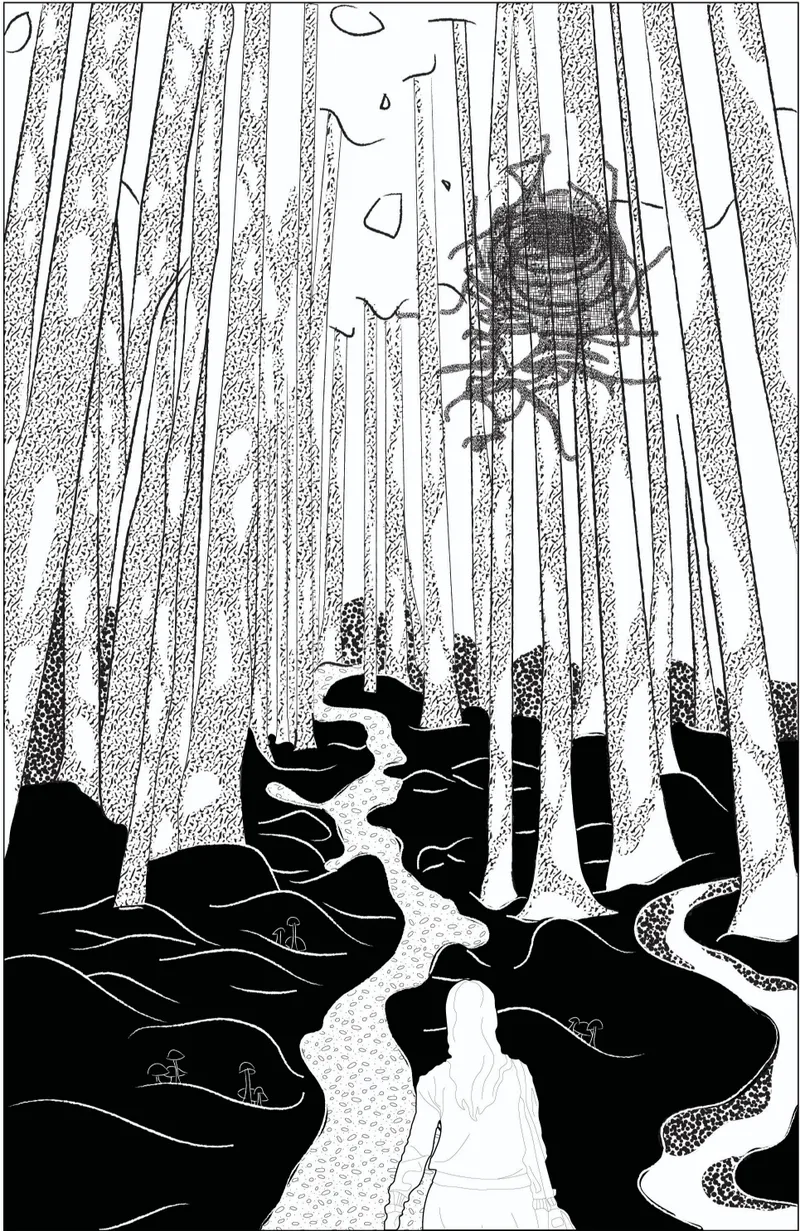
The project reinterprets the forest not as a backdrop but as an active participant in spatial storytelling. Drawing from biophilic principles, it emphasizes sensory immersion over visual dominance. The design challenges the conventional reliance on sight, instead engaging touch, sound, smell, and atmosphere.
Referencing Juhani Pallasmaa’s critique of ocularcentrism, the project proposes that true spatial intimacy emerges through haptic engagement. The forest becomes a tactile field where textures, densities, and proximities guide perception. This shift allows users to form deeper emotional connections with space, aligning with the core objectives of biophilic architecture.
The Journey: From Path to Dwelling
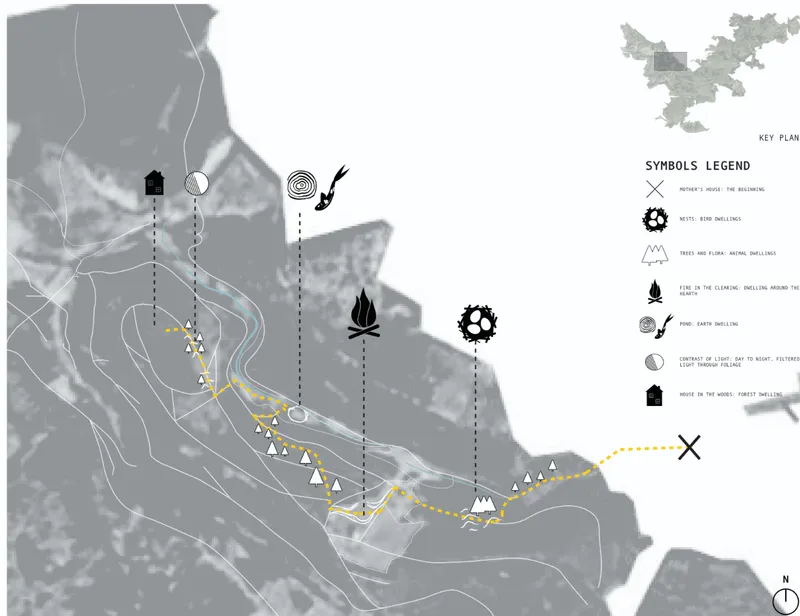
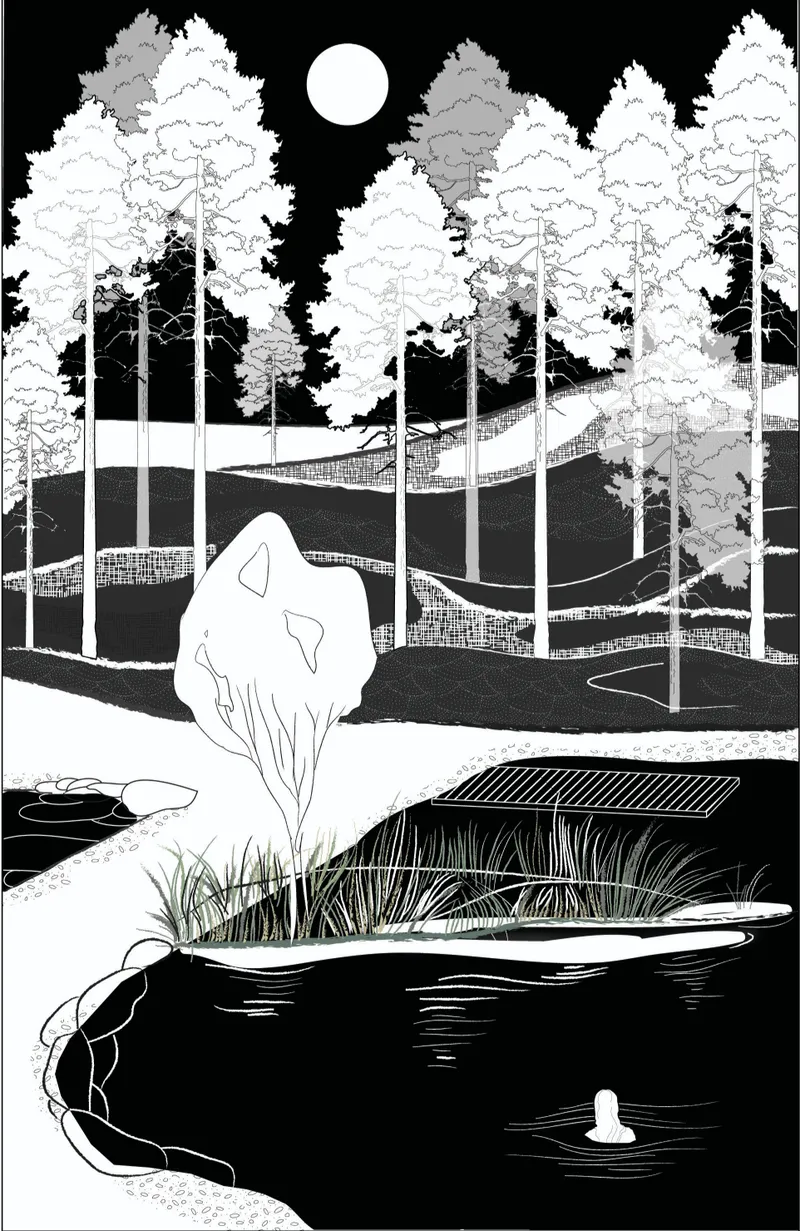
At the heart of the project lies a carefully choreographed path. This path is not linear but episodic, structured through moments of compression and release. It moves through dense wooded areas, open clearings, elevated nests, and submerged valleys.
Each segment represents a different psychological state:
- The Nest: A vertical retreat embedded within trees, evoking safety and introspection
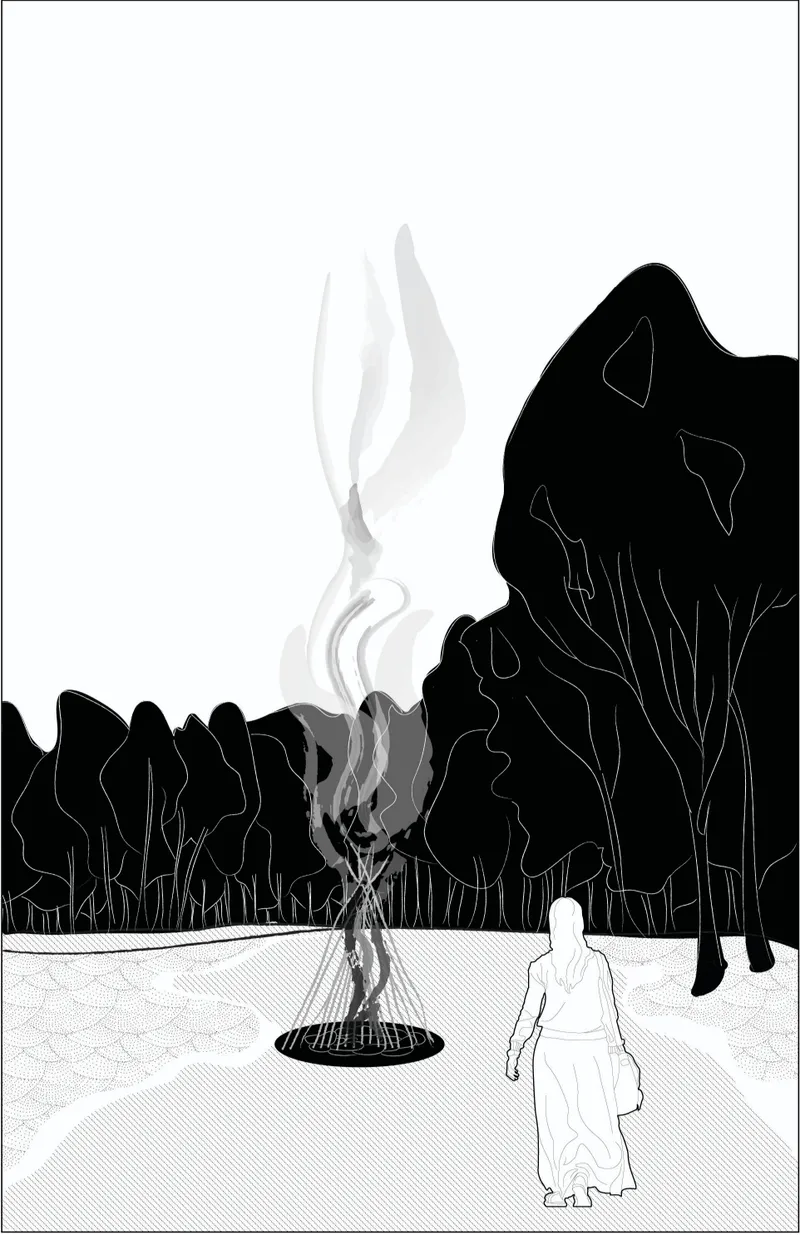
- The Clearing: A transitional openness where light and exposure redefine spatial awareness
- The Hearth: A communal and primal space centered around warmth and gathering
- The Pond: A reflective void where stillness and introspection dominate
This sequencing reflects a rhythm that mirrors natural cycles, reinforcing the project’s alignment with biophilic architecture. The user does not merely move through space but undergoes a transformation shaped by environmental conditions.
Mapping Intimacy: Spatial Strategy
The site strategy operates as a deconstructed map of experiences. Instead of conventional zoning, the design identifies moments of intimacy within the forest. These are articulated through subtle interventions that reveal or conceal space.
The path becomes a mediator between interiority and vastness. Dense foliage compresses perception, while openings expand it. This oscillation creates a dynamic spatial tension, allowing users to constantly renegotiate their relationship with the environment.
Architecturally, this approach aligns with contemporary explorations in biophilic urbanism, where spatial sequences are designed to enhance psychological well-being through environmental variation.
The Wooden House: Forest Dwelling as Sanctuary
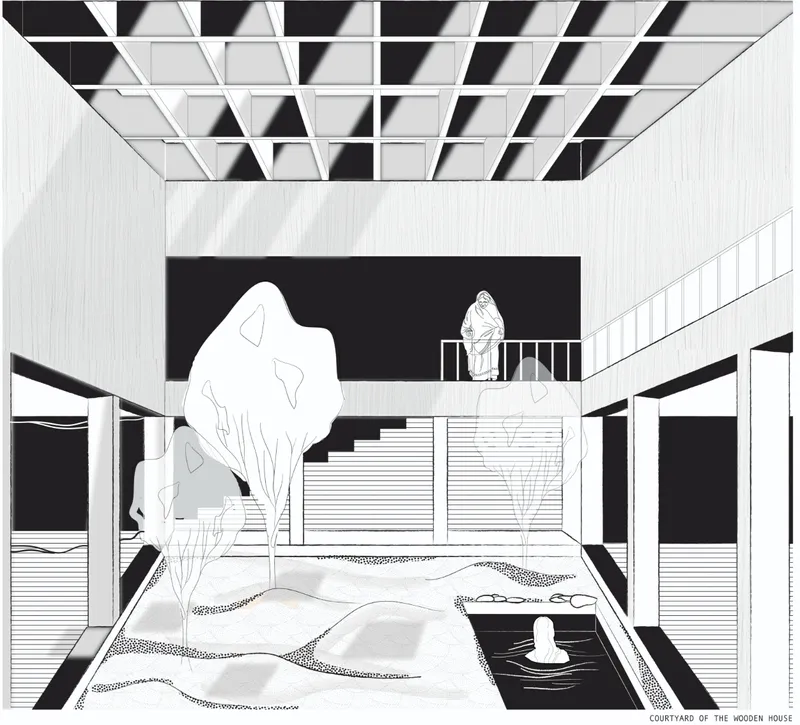
The culmination of the journey is the wooden house, a compact yet deeply layered dwelling embedded within the forest. This structure represents the convergence of nomadic exploration and domestic stability.
The house is organized around a central courtyard, which acts as a microcosm of the forest. Natural elements infiltrate the interior, dissolving boundaries between inside and outside. Programmatic elements such as the hearth, bath, and sleeping nook are arranged to prioritize experiential quality over functional rigidity.
Materiality plays a crucial role. Wood, stone, and earth textures reinforce the tactile narrative, while light is filtered to create a constantly shifting atmosphere. The architecture does not impose itself on the site but emerges from it, embodying the essence of biophilic design.
Atmosphere and Material Intelligence
The project demonstrates a refined understanding of material as a sensory medium. Surfaces are not treated as finishes but as carriers of experience. Rough textures, filtered light, and controlled humidity contribute to a multi-sensory environment.
Thermal gradients within the house further enhance this experience. Zones transition from hot and dry to cool and humid, creating a spatial sequence defined by bodily perception rather than visual cues. This approach aligns with emerging trends in performance-driven biophilic architecture, where environmental conditions are used to shape user experience.
Reframing Home Through Experience
A key conceptual contribution of the project lies in its redefinition of home. Rather than a fixed entity, home is understood as a condition that evolves through experience. It extends beyond physical boundaries into the surrounding landscape.
This perspective challenges traditional architectural typologies, proposing instead a relational model where dwelling is constructed through interaction, memory, and movement. The forest becomes an extension of the home, and the home becomes an intensification of the forest.
The Intimacy of the Forest exemplifies the potential of biophilic architecture to create meaningful, human-centered environments. By integrating narrative, sensory engagement, and spatial sequencing, the project moves beyond conventional design approaches.
Antonia Stanev’s work demonstrates that architecture can operate as a medium of storytelling, capable of evoking emotion, memory, and connection. In doing so, it repositions the relationship between humans and nature, offering a compelling vision for the future of architectural practice.
This project stands as a nuanced exploration of how biophilic architecture can transform not only spaces, but the way we inhabit and understand the world around us.




Popular Articles
Popular articles from the community

EW PARK: Sustainable Architecture Reimagines the Future of Urban Parking
EW PARK reimagines city parking as a modular wooden tower combining automation, solar energy, electric mobility, and adaptable urban design.

The Ocean Hive: Sustainable Architecture for a Self-Sufficient Civilization at Sea
The Ocean Hive imagines sustainable architecture at sea, where modular habitats, algae, wave power and ocean waste sustain a growing colony.

AL-JANNAH: Sustainable Architecture and Permaculture for Afghan Widows
AL-JANNAH uses sustainable architecture and permaculture to create resilient oasis of housing, learning, work and renewal for Afghan widows.

The Musturak Paradise: Senior Living Architecture for a Connected Future in Temara, Morocco
The Musturak Paradise reimagines senior living architecture in Temara via private homes, social spaces, culture, community, and shared care.


Similar Reads
You might also enjoy these articles

Eco Chapel: A Green Architecture Pavilion Designed in Symbiosis with the Forest
Eco Chapel uses green architecture to weave prayer, learning and reuse into a forest pavilion shaped by modular hexagonal canopies for life.
Kaffeebühnen: Coffee Shop Architecture Designed as a Civic Stage Between Vienna’s City and Park
Kaffeebühnen turns coffee shop architecture into a civic stage, linking Vienna’s park edge, urban life, warm timber yards, and coffee craft.
Healing Façade: Sustainable Architecture for Reforestation, Community, and Sacred Ecology in Ethiopia
Healing Façade reimagines sustainable architecture as a living wall that restores soil, catches water and renews Ethiopia's forest churches.


Urban Forest: A Vertical Ecosystem for 5,000 Workers in Singapore's Changi Business Park
Radially stacked pods and layered green decks turn a 7-acre plot into 47 acres of ecological workspace projected for 2040.

Comments (0)
Please login or sign up to add comments
No comments yet. Be the first to comment!