

The Ismaili Center Houston by Farshid Moussavi Architecture: A Landmark of Pluralism, Culture, and Contemporary Islamic Design
A contemporary cultural sanctuary blending Islamic design, luminous spaces, and resilient landscapes to foster reflection, learning, community dialogue, and spiritual connection in Houston.


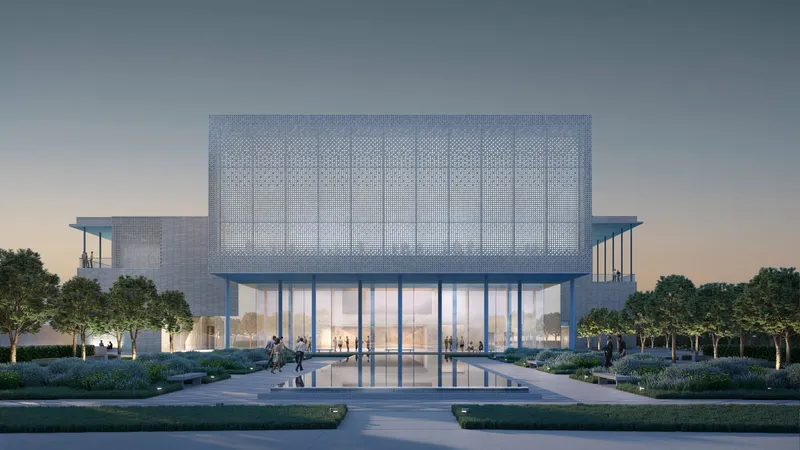
The Ismaili Center Houston, designed by Farshid Moussavi Architecture and photographed by Iwan Baan, Nic Lehoux, and Salina Kassam, emerges as one of the most significant cultural projects of 2025. More than a building, it is envisioned as a living cultural institution, a spiritual anchor, and a civic gift to the city of Houston. As the newest addition to the global network of Ismaili Centers, it extends a tradition of architectural excellence that bridges faith, culture, and civic dialogue.
A Space for Reflection, Dialogue, and Discovery
Ismaili Centers worldwide are designed as ambassadorial spaces, welcoming people of all backgrounds to explore the intersections of faith, intellectual inquiry, cultural expression, and community engagement. The Houston Center continues this legacy by creating an environment where education, arts, spiritual life, and public discourse can coexist seamlessly.
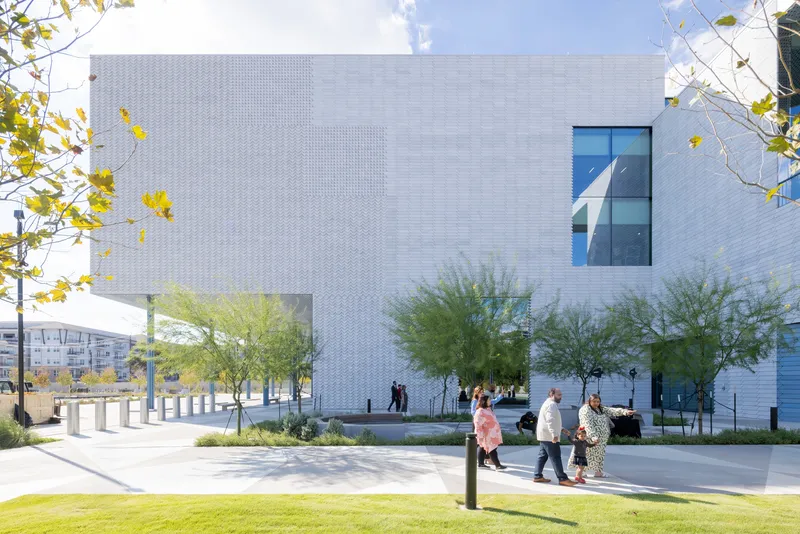
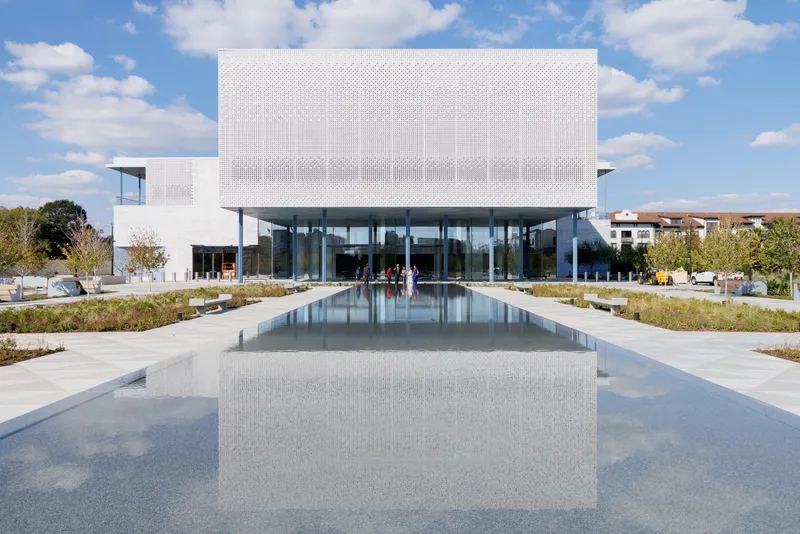
Within the building, visitors encounter a rich programmatic landscape—permanent and rotating art exhibitions, a black box theatre, multipurpose function halls, classrooms, administrative suites, and a café. At the heart of the complex lies the Jamatkhana, a serene prayer hall that grounds the project with a sense of devotion and community. Emphasizing the Ismaili ethic of service, the Center is staffed largely by volunteers and opens its doors to organizations focused on education, social equity, public health, environmental awareness, and the arts.
Architectural Dialogue Between Tradition and Modernity
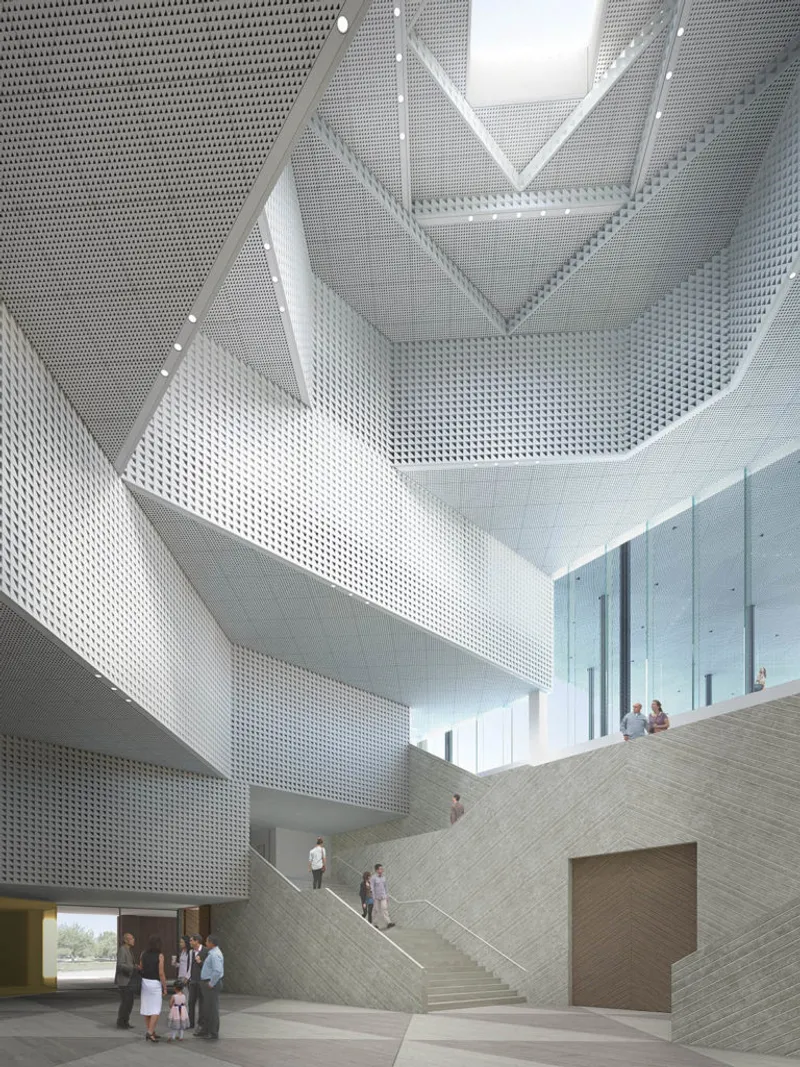
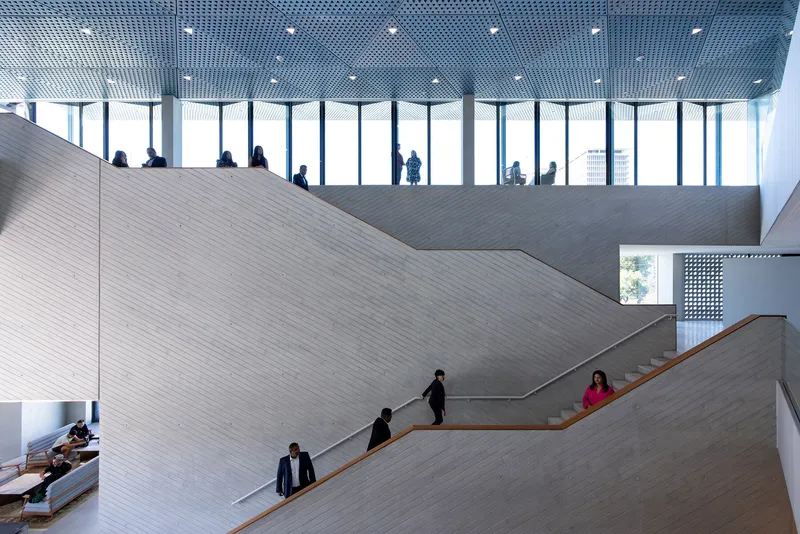
Rather than imitating historic stylistic motifs, the architecture seeks to translate enduring ideas from across the Muslim world into contemporary form. The design embraces principles such as legible structural order, the humanizing scale of ornament, unity through repetition, and the spiritual materiality of natural light.
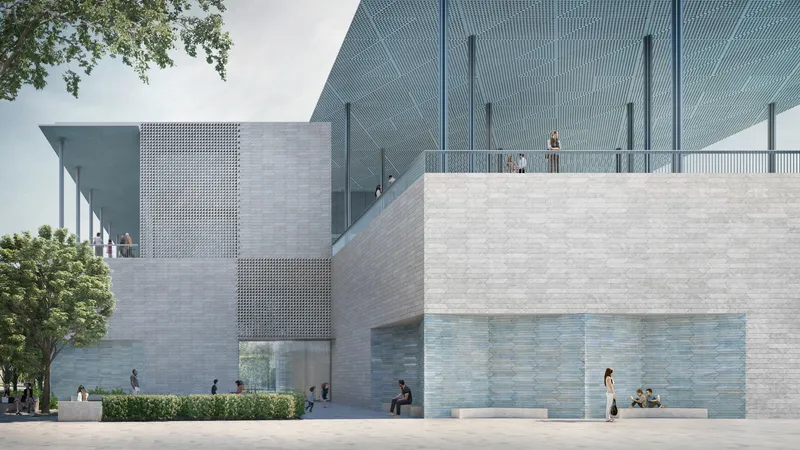
Key architectural elements include:
- Eivans (verandas) inspired by Persian domestic traditions
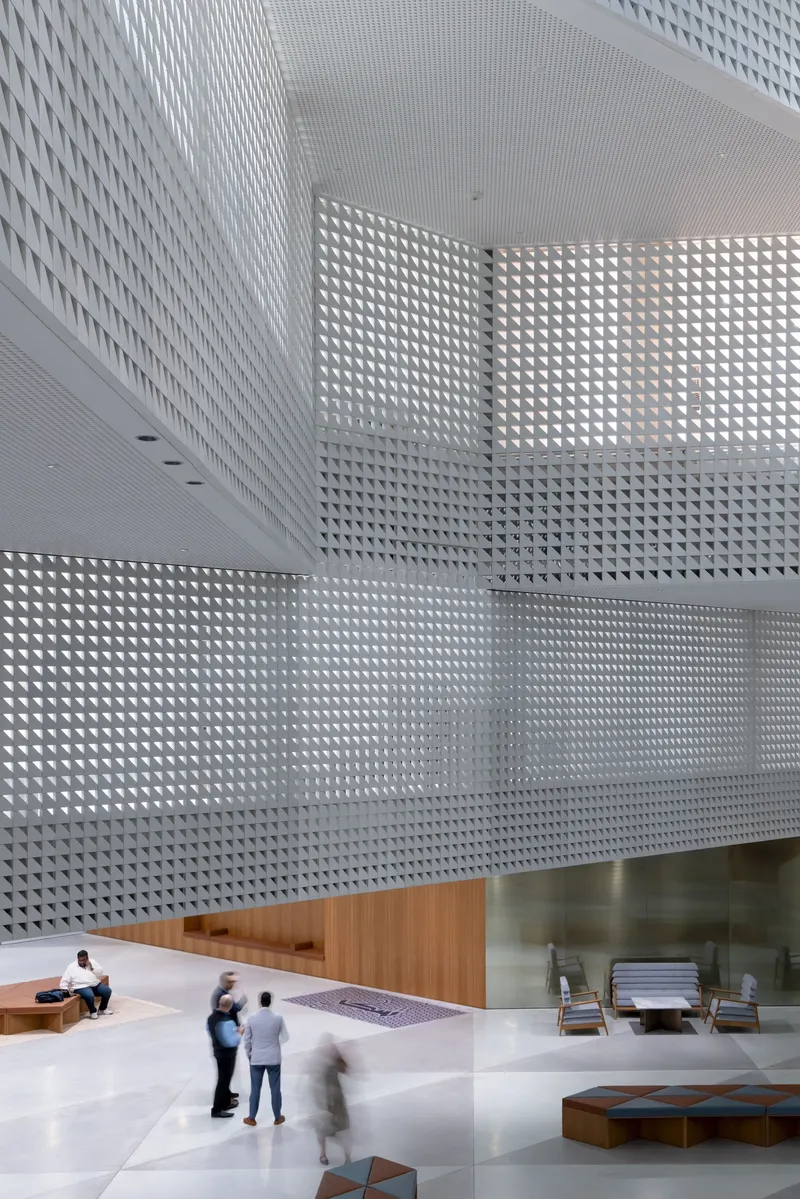
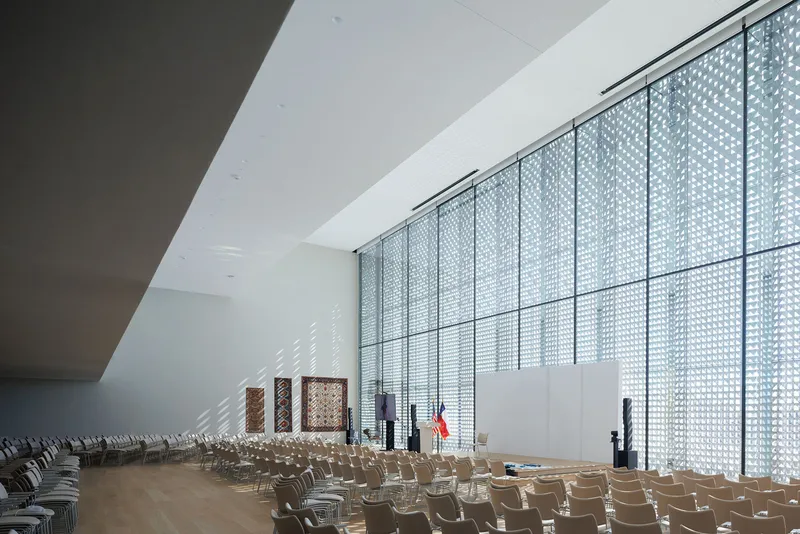
- Perforated stone screens that modulate privacy and luminosity
- A sequence of shaded outdoor rooms paired with luminous interior atria
- A central skylight (oculus) that aligns the atrium with the Jamatkhana
- Small-format stone tiles that read as quiet massing from afar, intricate texture up close
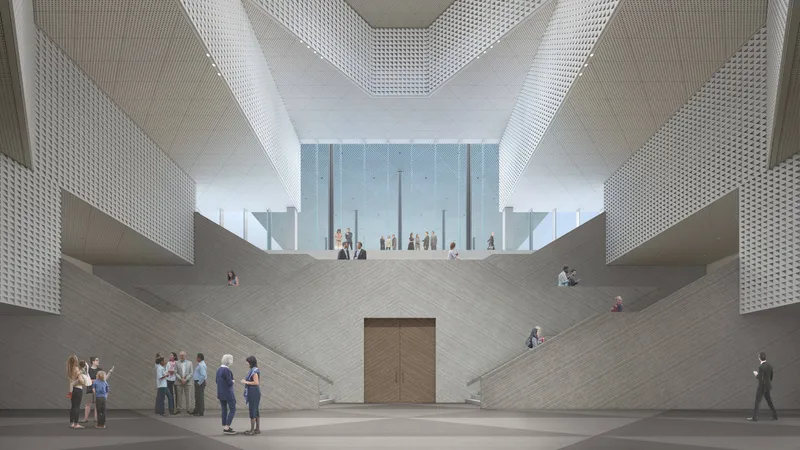
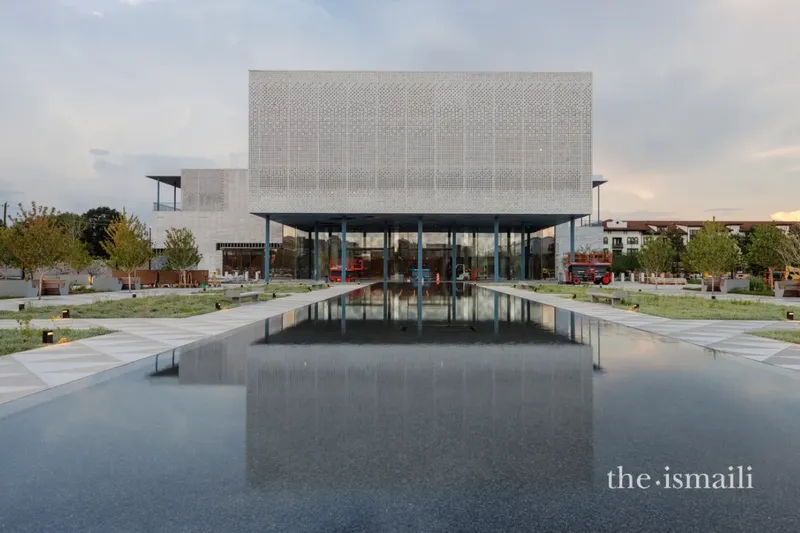
The building’s material palette—silk-laminated glass, steel, timber paneling, and ultra-high-performance concrete—creates an atmosphere centered on clarity, calmness, and geometric precision, rather than decorative excess. Designed for a 100-year lifespan, every detail reflects a commitment to endurance, beauty, and intentional craftsmanship.
Shaped by Houston’s climate, the architecture maintains a porous dialogue between inside and outside. Covered thresholds remain open beyond programmed events, supporting the Center’s mission as a daily civic destination for informal gatherings and contemplative moments.
Landscape of Reflection, Resilience, and Cultural Continuity
The landscape, designed by Nelson Byrd Woltz Landscape Architects, embodies more than environmental engineering—it's a living expression of cultural heritage and ecological resilience. Drawing from a decade-long research journey through historic Islamic gardens in Spain, Egypt, and India, the design integrates key sensory and symbolic elements:
- The sound and movement of water
- The rhythm of geometric organization
- The symbolism of enclosure
- Carefully framed visual axes
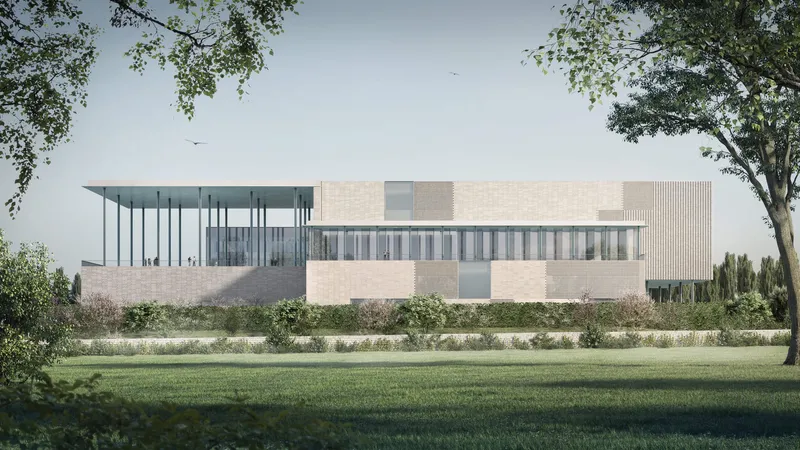
Set on a gently sloping site that echoes ancient Persian gardens stepping toward rivers, the landscape becomes a system of terraced lawns, reflective basins, storm-resilient plantings, and adaptive flood management. These gardens can withstand Houston’s 500-year storm events, with the underground parking garage designed to take on water as needed.
A geometric grid unifies the architecture and landscape, ensuring a harmonious alignment across paths, fountains, walls, and planting beds. Enclosed by garden walls soon to be veiled in creeping fig, the Center forms a peaceful enclave—protected from the city yet deeply connected to its ecology.
The plantings trace a “transect of Texas,” beginning with desert species and extending through prairie landscapes to Gulf Coast flora. This botanical narrative mirrors the adaptability and migration journeys of the Ismaili community.
A Collaborative Achievement and a Cultural Beacon for Houston
Now standing proudly along the Allen Parkway corridor, the Ismaili Center contributes a new architectural identity to Houston’s cultural district. It joins regional landmarks such as the Menil Collection, Rothko Chapel, Asia Society Texas, the Cistern, and the Museum of Fine Arts, Houston.
Far more than a landmark of worship or art, the Center symbolizes openness, pluralism, and collective imagination—a place where diverse communities meet, learn, and envision a more connected future.
All the Photographs are works of Iwan Baan, Nic Lehoux, Salina Kassam


Popular Articles
Popular articles from the community


graciastudio Turns a Viewless Tijuana Lot Inward Around a Courtyard of Concrete, Timber and Trees
In Tijuana, Jorge Gracia's GA2 House stacks a timber-clad private floor over exposed concrete and replaces a missing view with a planted interior patio.


Manzana Morphosis: Stretching Barcelona's Grid into a Living Landscape for 2050
A radical reworking of the Eixample manzana turns density into a tool for generous public space, vertical ecology, and environmental performance.

ETEH Reworks the Shared Spaces of São Domingos School in Brazil Around Timber, Color and Hanging Plants
At São Domingos School in Brazil, 436 m² of hall, refectory and library are recast with timber joinery, a yellow and blue code and trailing greenery.

Singing Woman: An Opera House That Performs Before the Curtain Rises
Ovidiu Cristian Pavel's conceptual opera house translates Estonia's choral identity into a sculpted waterfront landmark facing the Baltic Sea.

Similar Reads
You might also enjoy these articles


Hodi-Mandai Geram
Project Function: Preservation and revitalization of the Intangible heritage and socio-spatial identity of the Hodi by Housing, Cultural Memory Center, Sacred Grove, landscape, local tourism economy


Olio Towers: A Mid-Rise for Performers That Fuses Housing, Rehearsal, and Stage
Located blocks from Houston's Theater District, this modular tower stacks living units around a central performance atrium.

Oasis: Modular Green Housing Carved into Dhaka's Urban Fabric
A shortlisted Plugin Housing entry reclaims unauthorized settlements in Dhaka with stepped concrete volumes, green roofs, and ventilation-driven design.

Black Hole: A Floating Megastructure for the Post-Physical Era
Emiliano Mazzarotto envisions a spherical, self-scaling arena where e-sports, digital hotels, and holographic stadiums replace traditional public space.

Explore İshak Şimşek Arhitecture Competitions
Discover active competitions in this discipline

Challenge to reimagine the Iron Throne

Photograph architecture without architects

Illustrate the lost glory of Angkor Wat - Render Challenge

Bring back Drive In's
Comments (0)
Please login or sign up to add comments
No comments yet. Be the first to comment!