
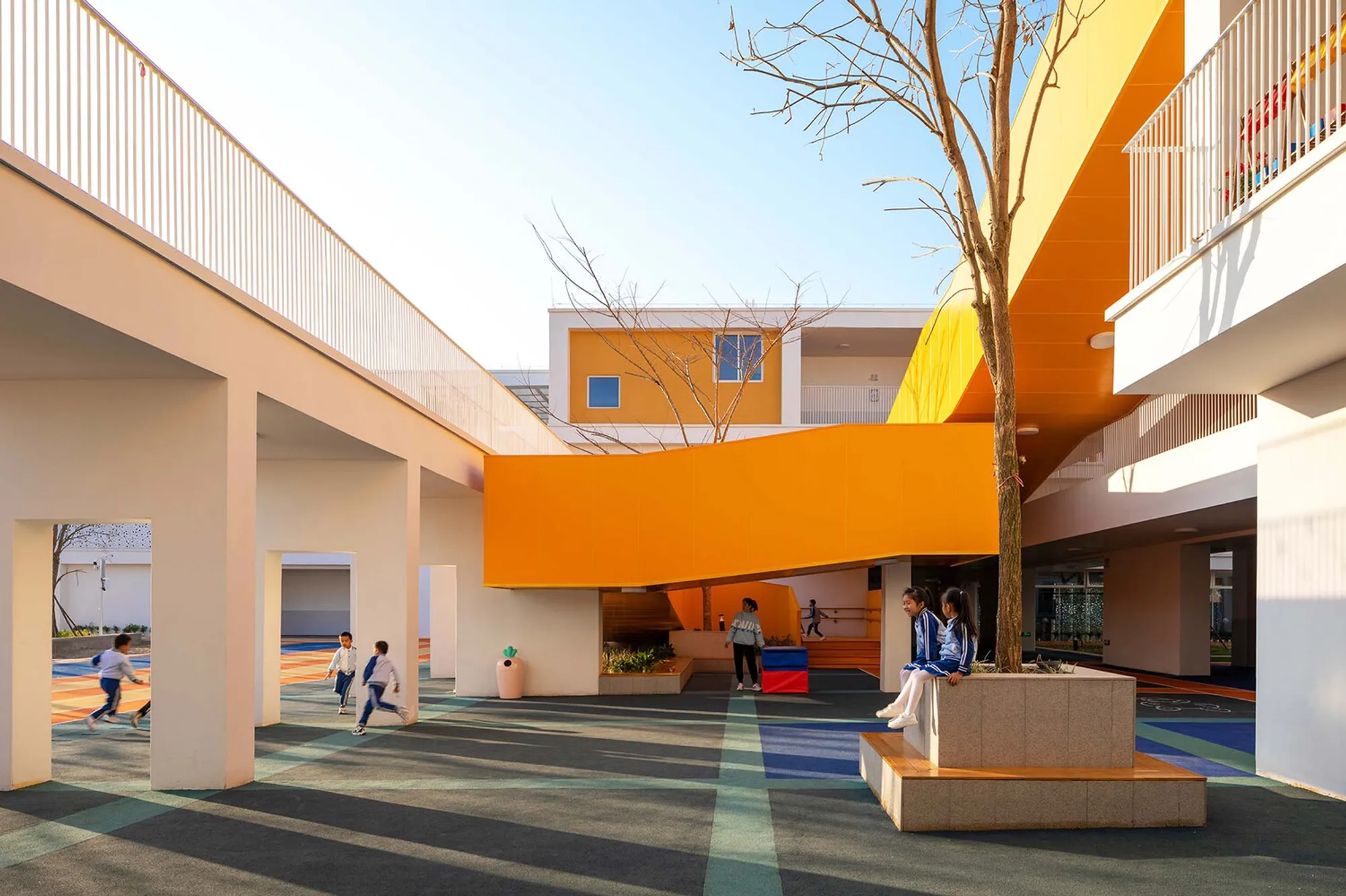
The Little Phoenix Kindergarten by TaoZhi Studio, SCUT
Innovative kindergarten in Pu'er by TaoZhi Studio, blending modular design, natural light, and playful learning spaces across multiple levels.


Context & Design Challenge
Situated on a long and narrow urban plot in Pu'er City—130 meters in the north-south direction and as narrow as 30 meters east-west—The Little Phoenix Kindergarten was envisioned as a highly functional, child-friendly educational space despite severe site limitations and a compressed construction timeline. The challenge: How to craft a spatially rich, well-lit, cost-effective kindergarten that meets educational standards while sparking creativity and comfort for young learners.
A Modular Spatial Framework
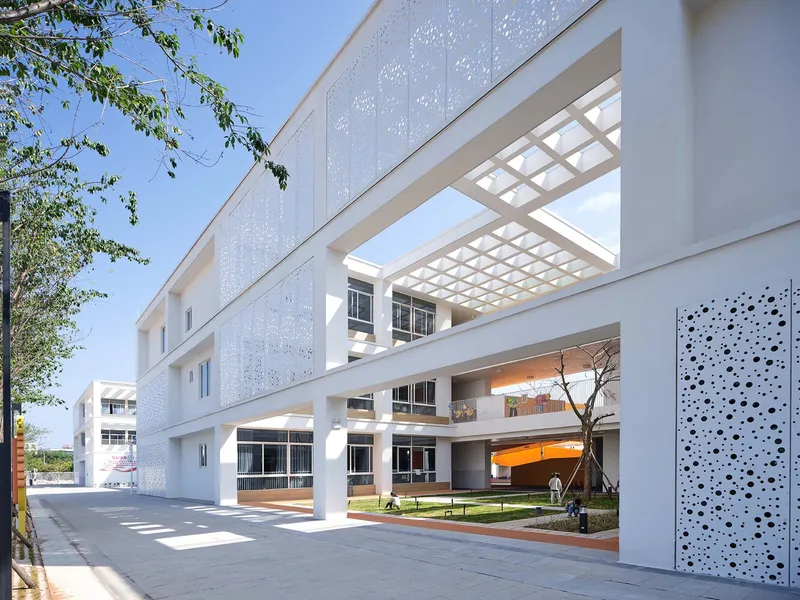
The kindergarten’s design is based on a modular framework, similar to a storage grid, where different rooms and functions are integrated within a rational structure. This approach not only streamlines construction and reduces costs, but also ensures spatial efficiency and high utilization.
Each classroom is strategically placed in the southern part of the site, maximizing sunlight and natural ventilation. The administrative areas are located to the north, preserving the classroom’s south-facing orientation. Despite the tight footprint, the team achieved a seamless flow of educational, administrative, and play spaces.

Flexible and Layered Play Spaces
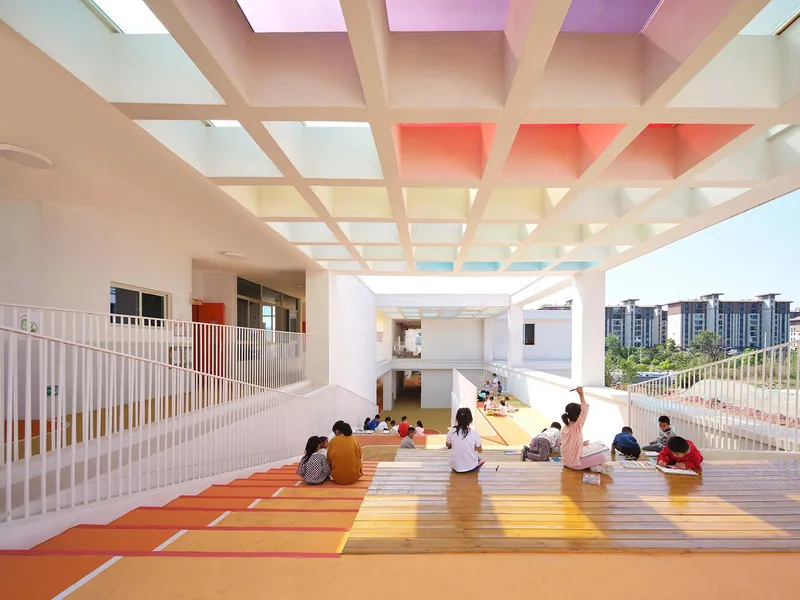
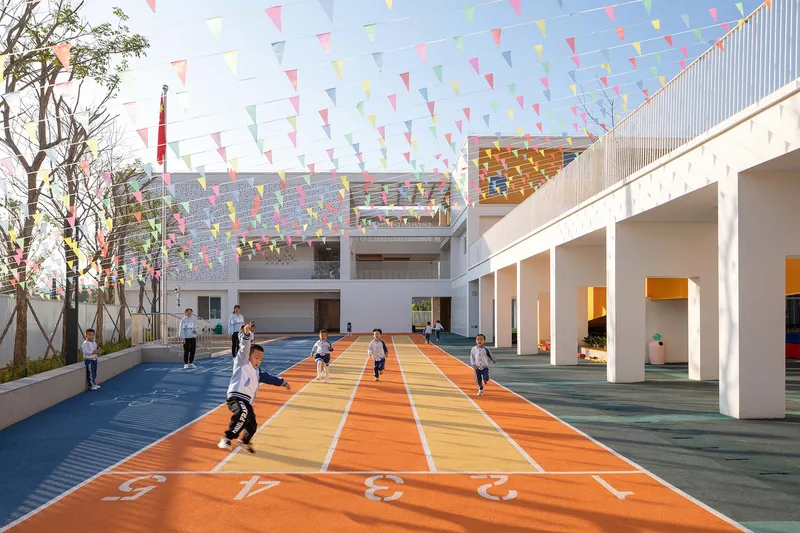
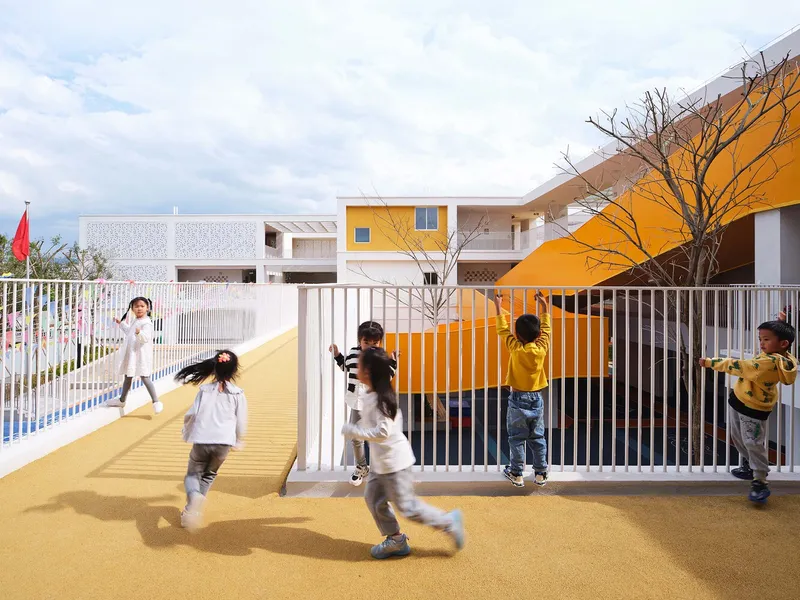
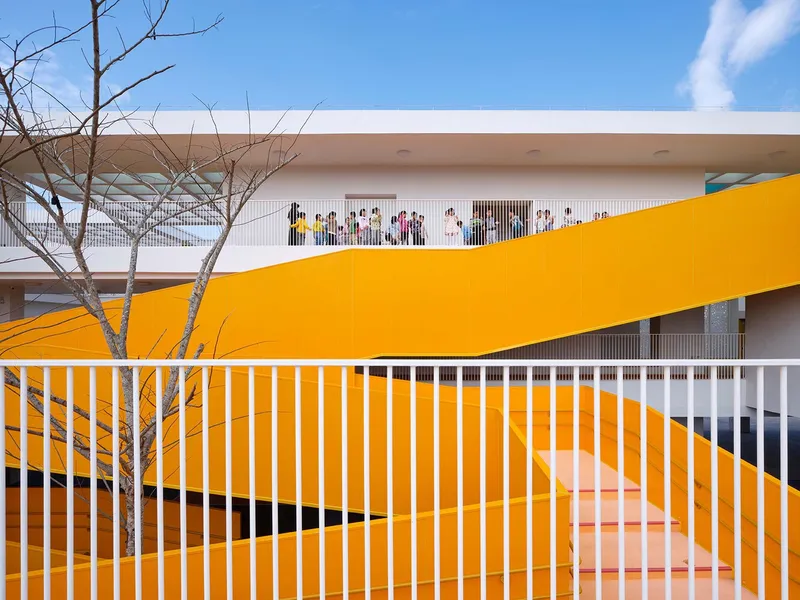
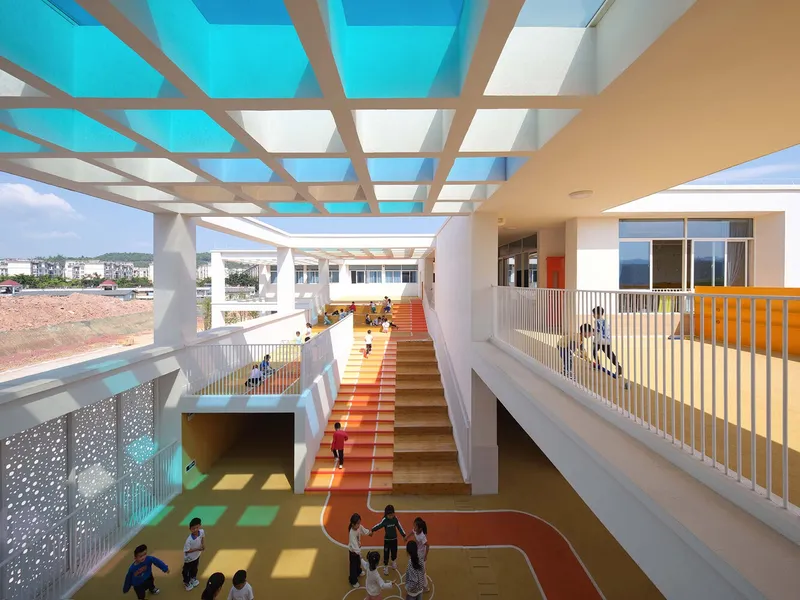
By strategically vacating non-essential spaces within the structural grid, designers created multiple outdoor activity zones that are directly accessible from classrooms. These interstitial voids form playful topologies—connected spaces that allow for outdoor exploration, visual openness, and daylight throughout the campus.
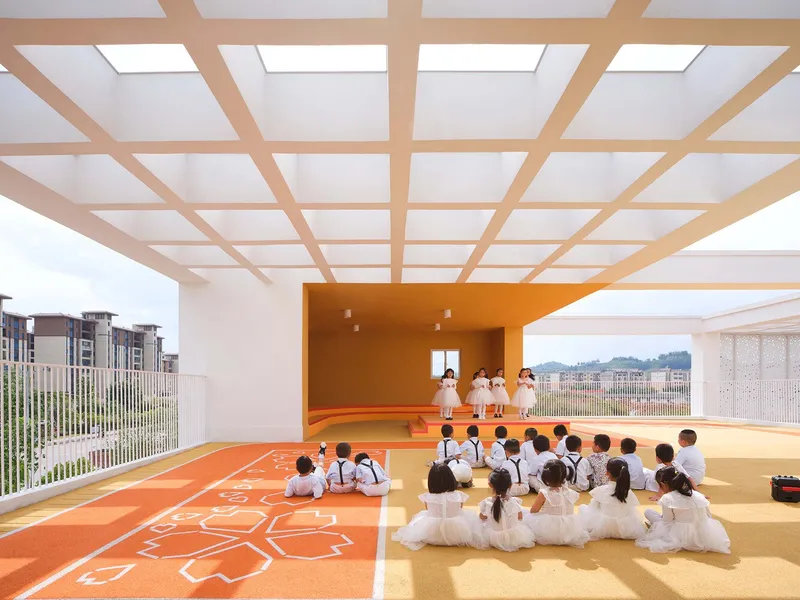
These play areas are not confined to the ground level. Instead, they span multiple floors and feature dynamic zones such as:
- Starlight stages for performances
- Corridors with changing light conditions
- Tunnels and bridges for exploration
- Sunlit stairs and shared steps for group learning and resting
Each node presents a unique thematic experience, allowing children to engage with their environment through imagination, curiosity, and movement.


Scenario-Based Design for Childhood Exploration
Taking cues from how children interact with their environment, the design integrates scenario-based planning. Whether observing insects and flowers, chasing sunlight, or watching rain from a window nook, every moment becomes part of their personal learning journey.
The arrangement of diverse play platforms on different levels encourages children to navigate freely, discover organically, and learn by doing. These day-to-day experiences form the essence of the school's pedagogy—a balance of structure and freedom.
A Joyful Result of Rational Constraints
Despite constraints in land, funding, and construction time, The Little Phoenix Kindergarten demonstrates how thoughtful design can deliver a vibrant, functional, and emotionally rich learning space. It is a project that combines child-centric architecture with rigorous planning, ultimately earning admiration from educators, children, and the wider community.
Post-completion, the kindergarten has quickly become a beloved space where new forms of teaching are emerging. The architects envision it as a living, evolving campus—one that adapts to educational innovations while remaining rooted in children’s joyful everyday experiences.

All Photos are works of 明境建筑摄影




Popular Articles
Popular articles from the community


Riyadh For All: Intergenerational Urban Design for Active Aging in Rabat
Riyadh For All reimagines urban design in Rabat with intergenerational co-living, adaptive courtyards, and Moroccan cultural exchange today.

The Musturak Paradise: Senior Living Architecture for a Connected Future in Temara, Morocco
The Musturak Paradise reimagines senior living architecture in Temara via private homes, social spaces, culture, community, and shared care.

Conexión: Biophilic Design Reimagines High-Rise Living in Hong Kong
Conexión reimagines high-rise living in Hong Kong through biophilic design, green facades, shared spaces, daylight, water and nature within.

Play: Fragments of Their World
Familiar architecture becomes modular playground design, creating safe spaces where displaced children can learn, connect, imagine and play.


Similar Reads
You might also enjoy these articles


Hodi-Mandai Geram
Project Function: Preservation and revitalization of the Intangible heritage and socio-spatial identity of the Hodi by Housing, Cultural Memory Center, Sacred Grove, landscape, local tourism economy


Olio Towers: A Mid-Rise for Performers That Fuses Housing, Rehearsal, and Stage
Located blocks from Houston's Theater District, this modular tower stacks living units around a central performance atrium.

Oasis: Modular Green Housing Carved into Dhaka's Urban Fabric
A shortlisted Plugin Housing entry reclaims unauthorized settlements in Dhaka with stepped concrete volumes, green roofs, and ventilation-driven design.

Black Hole: A Floating Megastructure for the Post-Physical Era
Emiliano Mazzarotto envisions a spherical, self-scaling arena where e-sports, digital hotels, and holographic stadiums replace traditional public space.
Explore Children Design Competitions
Discover active competitions in this discipline



Challenge to design public laboratory


Challenge to reimagine the Iron Throne


Photograph architecture without architects


Illustrate the lost glory of Angkor Wat - Render Challenge
Comments (0)
Please login or sign up to add comments
No comments yet. Be the first to comment!