
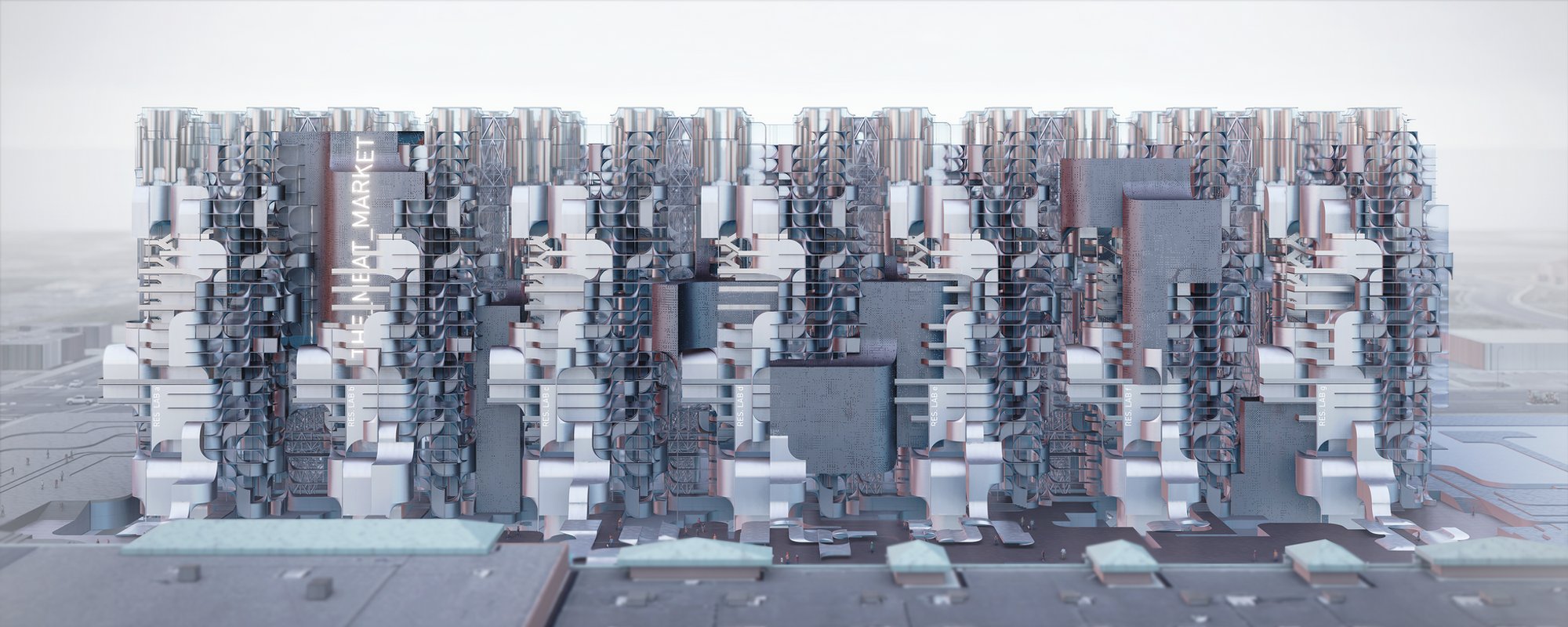
The Meat Market: A Revolution in Sustainable Architecture
Transforming Urban Spaces with Sustainable Architecture and Ethical Food Systems

The Meat Market project seamlessly integrates an artificial meat factory with a public market hall, transforming it into an economic catalyst for Detroit's revival. Through its innovative design and sustainable approach, the project reimagines urban architecture's role in addressing global challenges. The project is designed by Barbara Schickermueller and Winner entry of UnIATA '19
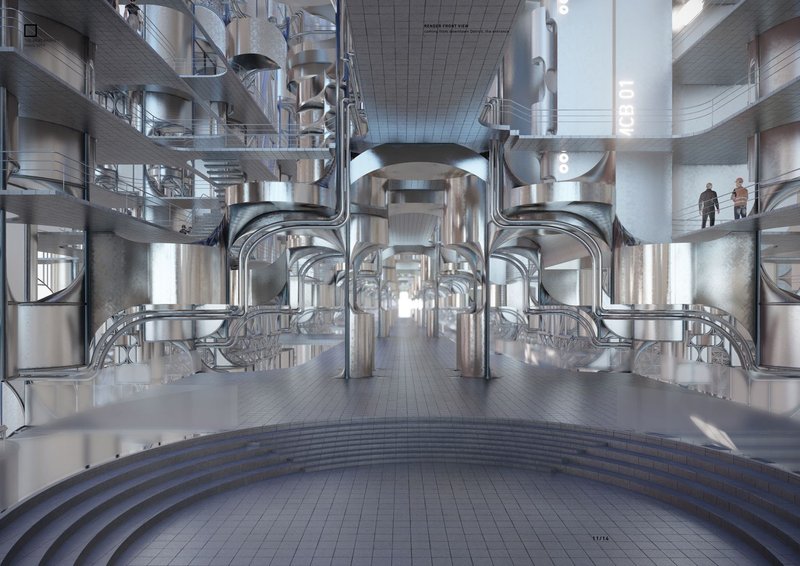
Thesis Concept
The project confronts the environmental impacts of traditional food systems while tackling the disconnect between production and consumption. By embedding urban farming and cultured meat production within city boundaries, The Meat Market aspires to foster healthier relationships with food and the environment. This initiative emphasizes reducing environmental consequences and encouraging local engagement.
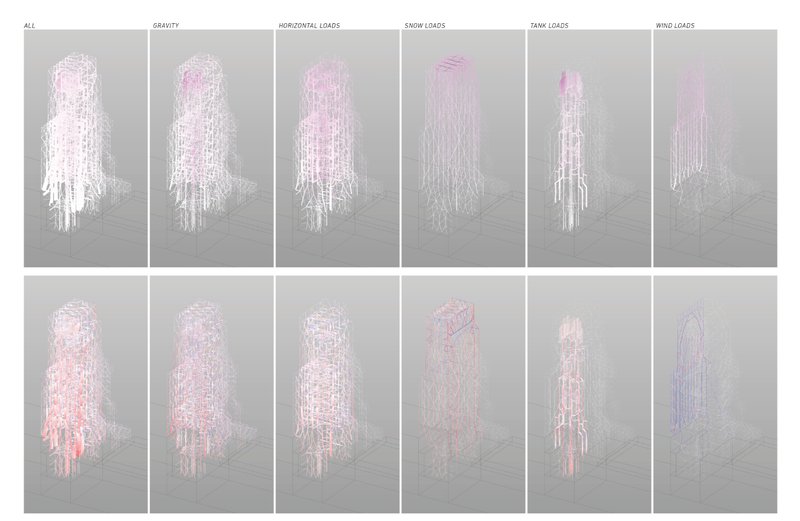
As climate change and population growth threaten traditional food supply chains, The Meat Market presents a visionary solution: a local food hub that prioritizes urban agriculture and sustainable production methods. The vertical assembly-line design not only optimizes space usage but also enhances Detroit's food security and economic stability.
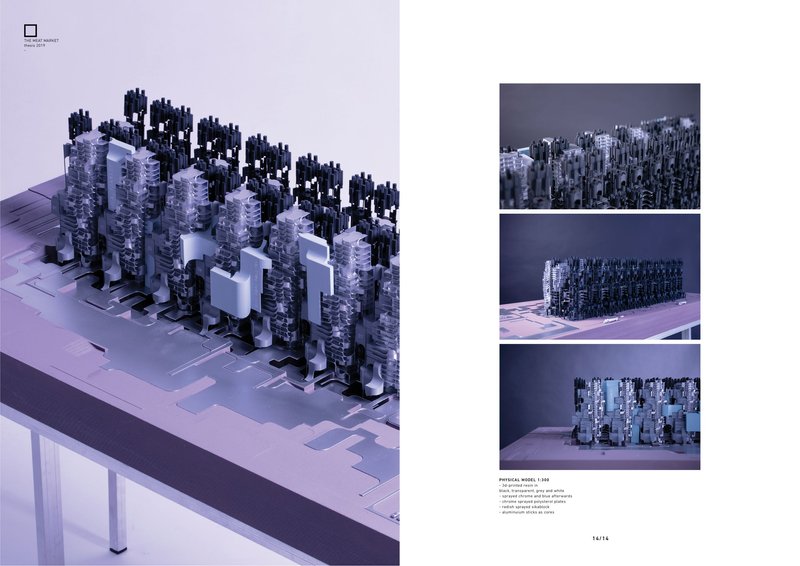
The Fourth Agricultural Revolution
This project symbolizes the fourth agricultural revolution—a pivotal shift toward sustainable food production that departs from high-yield-at-all-cost methods. Instead of exploiting vast land areas, the design harnesses cutting-edge bioreactor technology for cultured meat production, significantly reducing water, land, and greenhouse gas emissions. By doing so, it introduces a future-proof model of urban architecture intertwined with ethical and ecological food production practices.
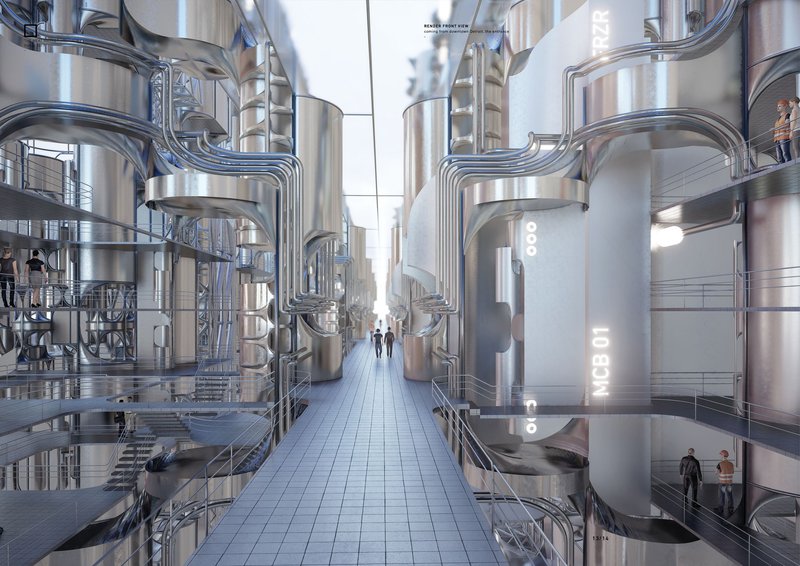
Architectural Vision
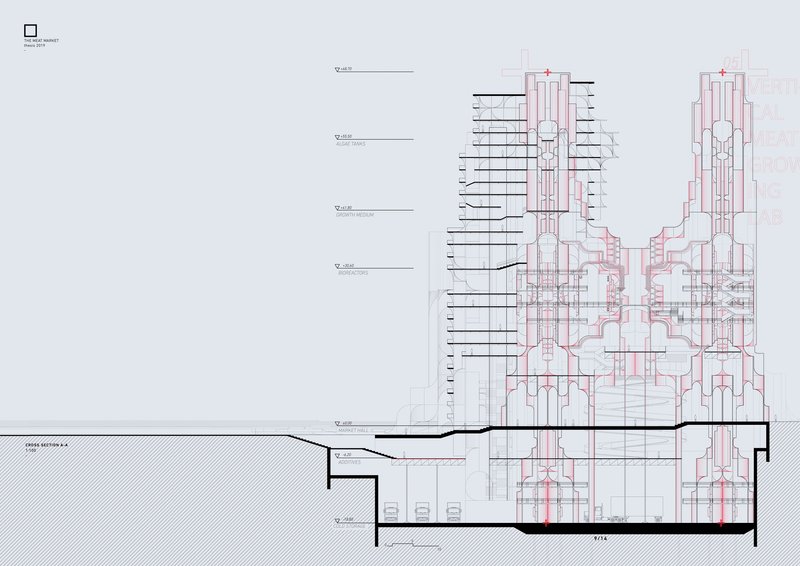
The structure's design merges form and function, taking inspiration from industrial and organic geometries. It incorporates:
- Vertical Farms: Efficiently growing algae and other resources.
- Bioreactors: Innovating cultured meat production processes.
- Market Halls: Encouraging community interaction and direct access to sustainable food.
- Public Squares: Fostering a sense of belonging and cultural exchange.
These interconnected spaces redefine how urban architecture can drive societal and environmental transformation.
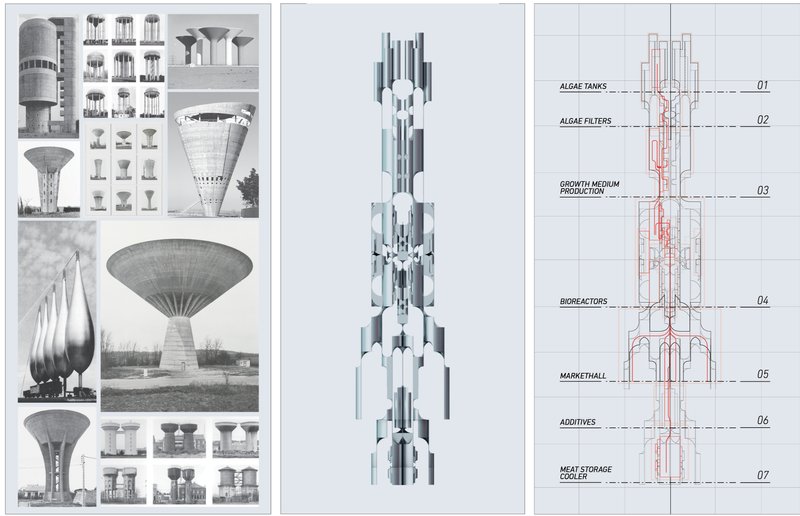
Current Problems and Possible Solutions
Traditional meat production is resource-intensive, requiring vast amounts of water, land, and energy while contributing significantly to global greenhouse gas emissions. By replacing conventional methods with lab-grown alternatives, The Meat Market reduces environmental strain and enhances animal welfare. With an efficient vertical assembly line, it minimizes waste, maximizes space, and redefines production efficiency.
A Masterplan for a Resilient City
The project begins with its pilot installation at Detroit’s historic Highland Park Ford Plant. Leveraging the site’s industrial legacy, the design introduces a modular approach capable of expansion. Future iterations will replicate this model throughout Detroit, strategically addressing food deserts and fostering economic rejuvenation.
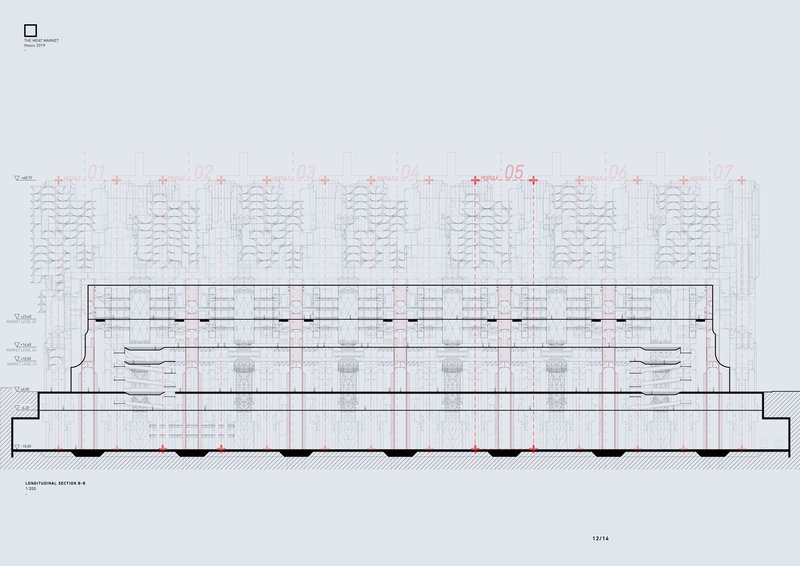
Sustainable Architecture for Global Impact
This project epitomizes the intersection of architecture and sustainability, illustrating how cities can embrace innovative designs to solve pressing global issues. By merging advanced technologies with community-driven spaces, The Meat Market sets a benchmark for urban architectural solutions worldwide.




Popular Articles
Popular articles from the community

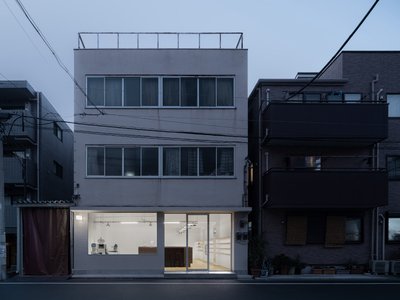
Atelier Macri Concept Store Interior Design by CASE-REAL
Atelier Macri store features a "ko" counter, walnut wood details, cork displays, blending retail, gallery, and seamless customer experiences.
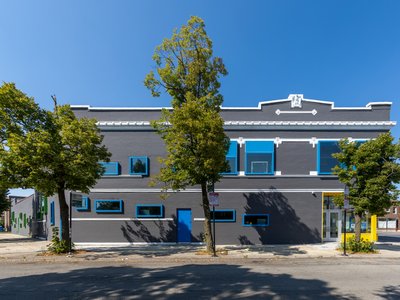
Gads Hill Early Learning Center by JGMA: Adaptive Reuse Shaping Community-Focused Educational Architecture
Adaptive reuse transforms fragmented structure into vibrant early learning center with playful façade, natural light, and community-focused sustainable design.

Solar Steam: A Climate-Responsive Architecture That Redefines the Monument
A climate-responsive memorial architecture that transforms heat, decay, and time into a living system reflecting humanity’s ecological impact.


The Ken Roberts Memorial Delineation Competition (Krob)
As the most senior architectural drawing competition currently in operation anywhere in the world, it draws hundreds of entries each year, awarding the very best submissions in a series of medium-based categories.


Similar Reads
You might also enjoy these articles

Digital Façade Design for our cities’ urban fronts
Prima Facie - Result Story
Protecting avian biodiversity: Bird observatories to help spread awareness & save rare bird species.
Results for ‘Fly’ - Landscape design competition out now
Connecting with nature: Forest interpretation center in Australia's Wollemi National Park
‘Asatti’ - Landscape design competition - Result story


Explore Commercial Buildings Competitions
Discover active competitions in this discipline




The Global Benchmark for Architecture Dissertation Awards

Challenge to design locus for the upliftment of human rights


Challenge to design a learning and healing center

Challenge to re-imagine a department store in present times
Comments (0)
Please login or sign up to add comments
No comments yet. Be the first to comment!