
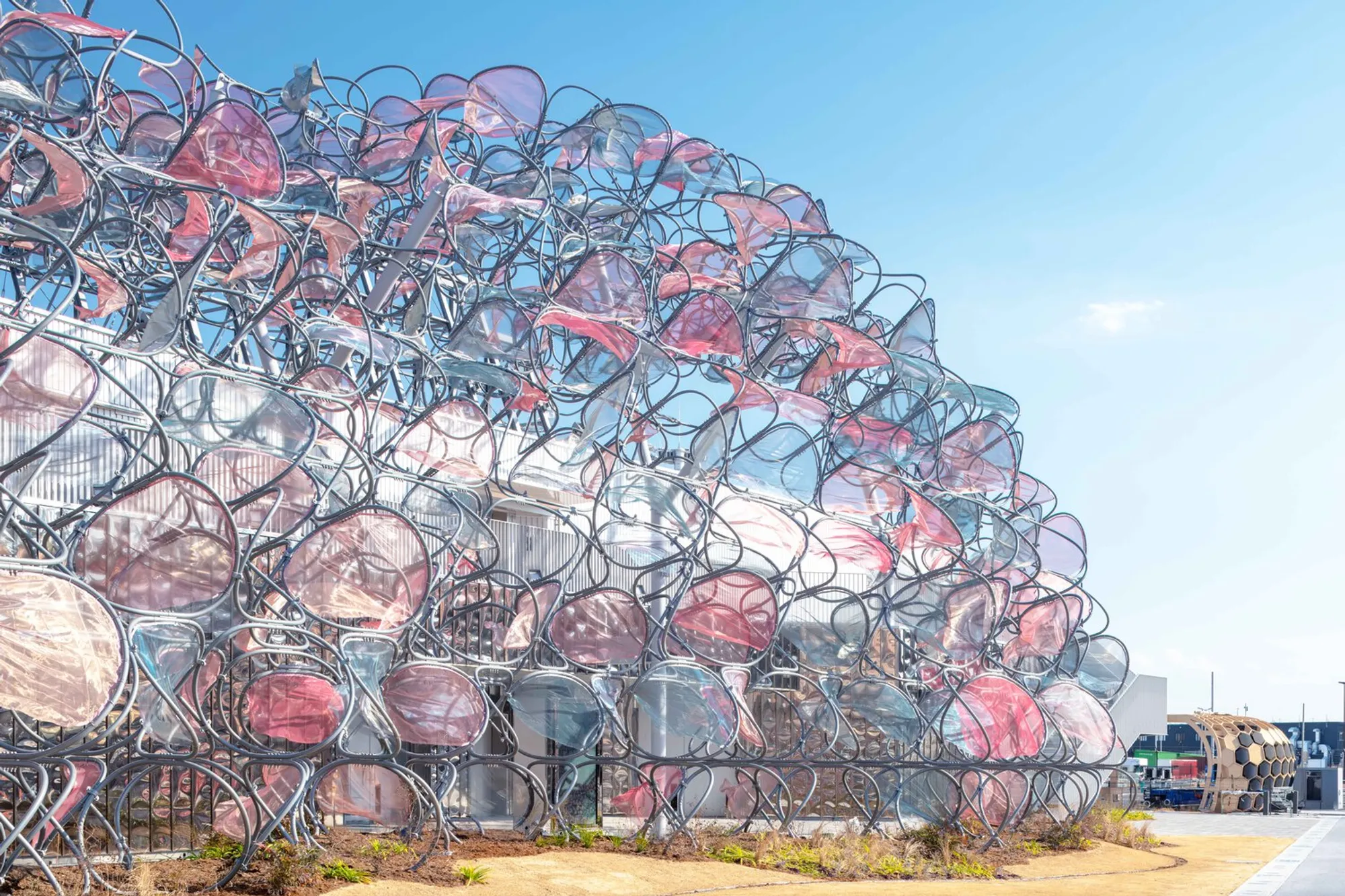
The Organic Pavilion Architecture of the Panasonic Group Pavilion at Expo 2025 Osaka
A deep dive into the Panasonic Pavilion’s organic architecture, celebrating childhood, sustainability, and innovation at Expo 2025 Osaka.


The Panasonic Group Pavilion, designed by Yuko Nagayama & Associates for Expo 2025 Osaka, is a striking example of organic pavilion architecture that captures the imagination and curiosity of visitors. Named The Land of NOMO, this pavilion is envisioned as a space for children—a realm of boundless potential and transformation. The design moves away from rigid geometry and embraces a fluid, evolving form that mirrors the essence of childhood: undefined, dynamic, and ever-growing.
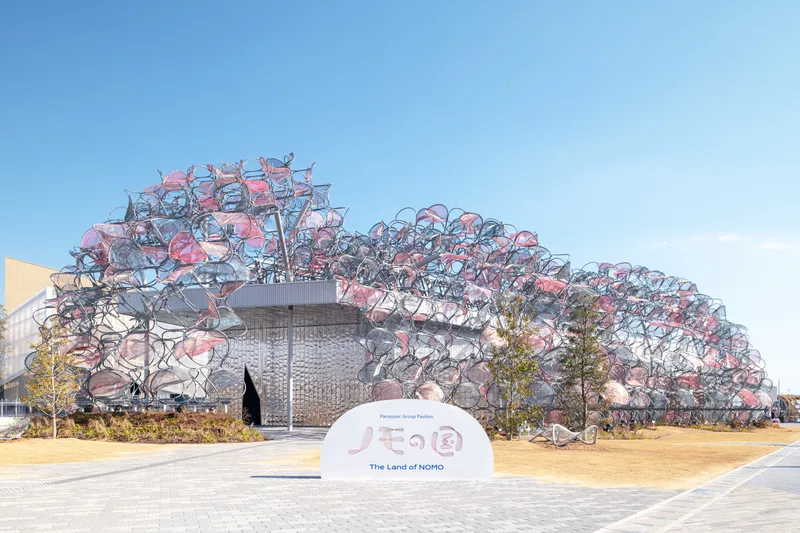
An Organic Form Inspired by Children
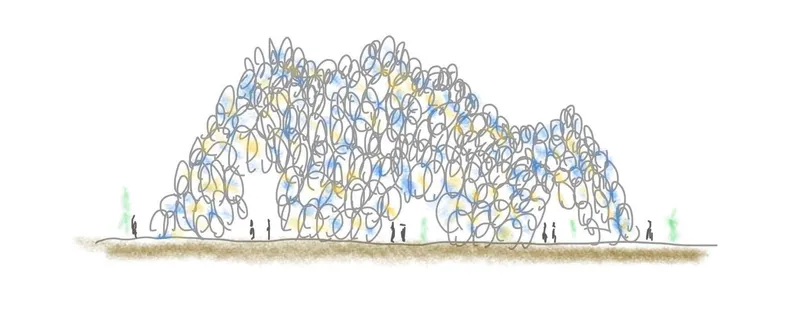
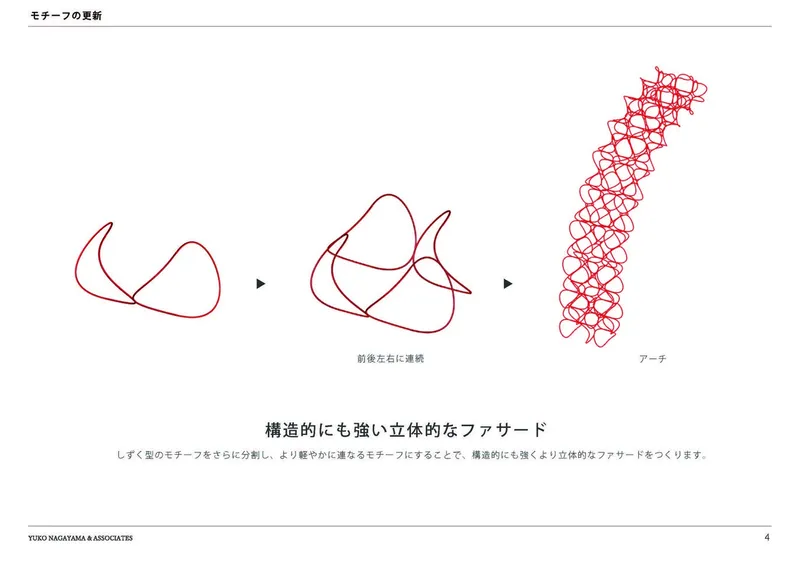
Unlike the geometrically precise Japan Pavilion at Expo 2020 Dubai, the Panasonic Pavilion embodies an organic, free-flowing form. Yuko Nagayama’s initial sketch, resembling the ambiguous lines of a child’s drawing, became the foundation for an architecture that resists fixed shapes. The building is composed of countless small, cell-like units that aggregate into a larger whole, creating a living structure that symbolizes the continuous growth and change associated with children.
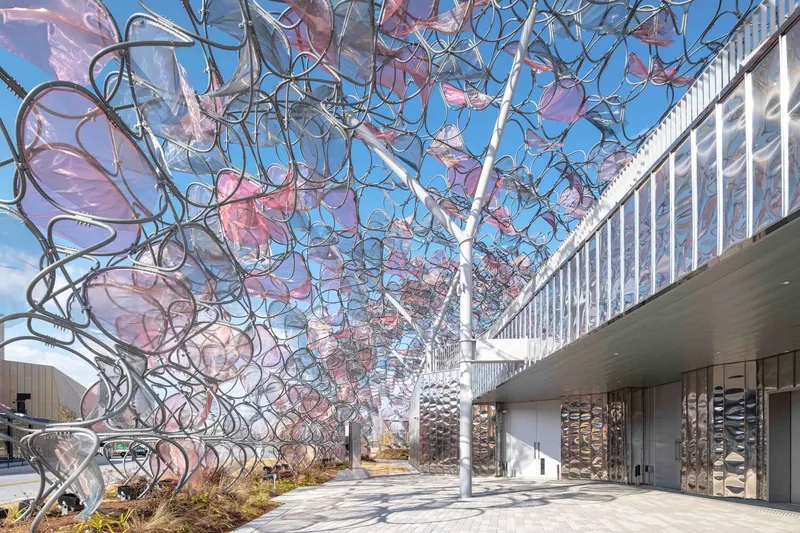
720-Degree Circulation and Structural Innovation
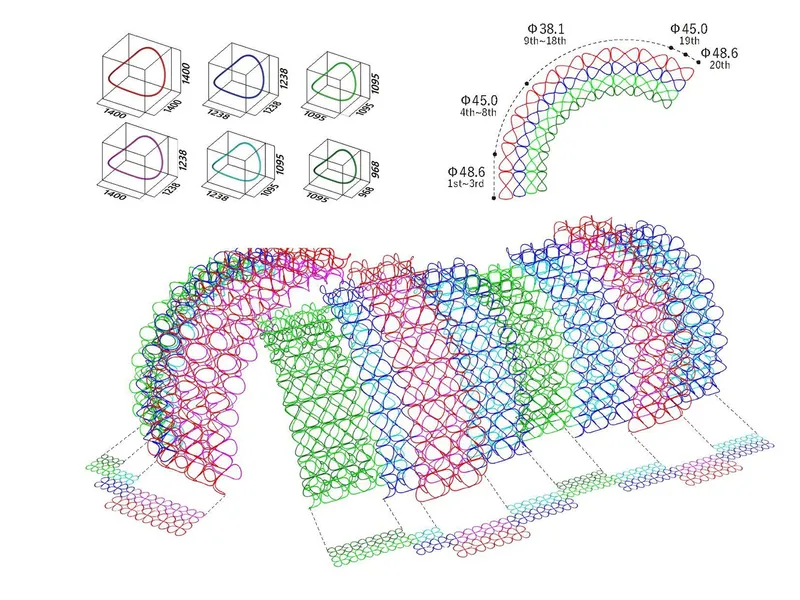
The pavilion is built on the theme of “720-Degree Circulation,” a concept realized through the assembly of three-dimensionally bent steel pipes shaped like butterfly wings. Using cutting-edge 3D-forming machinery, the team produced 1,404 butterfly-shaped motifs in six distinct forms, stacked in 20 vertical layers. These arches, combined with varying radii, generate a dynamic and irregular façade that feels alive and in motion. Pipe diameters of 38.1 mm, 45.0 mm, and 48.6 mm were carefully selected to meet structural demands, while advanced wind tunnel testing ensured the pavilion could withstand the challenging coastal winds of Osaka.
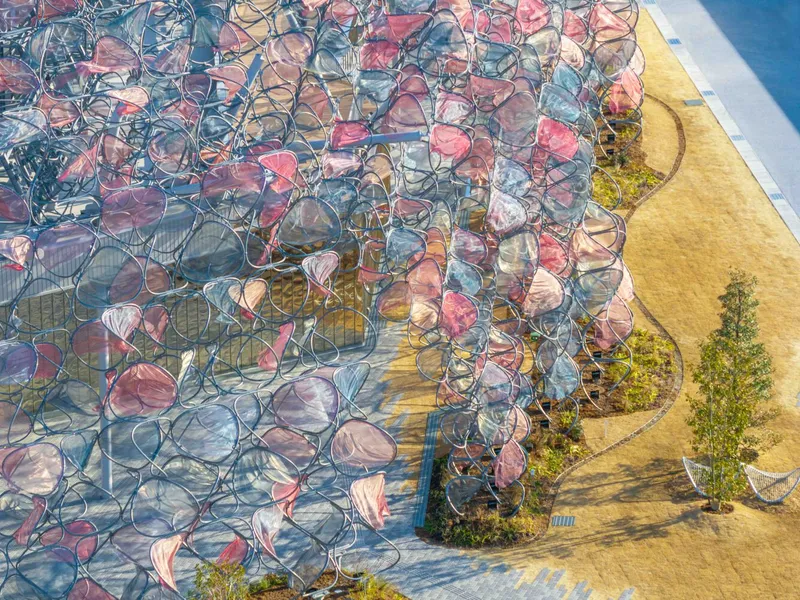
A Dynamic, Living Façade
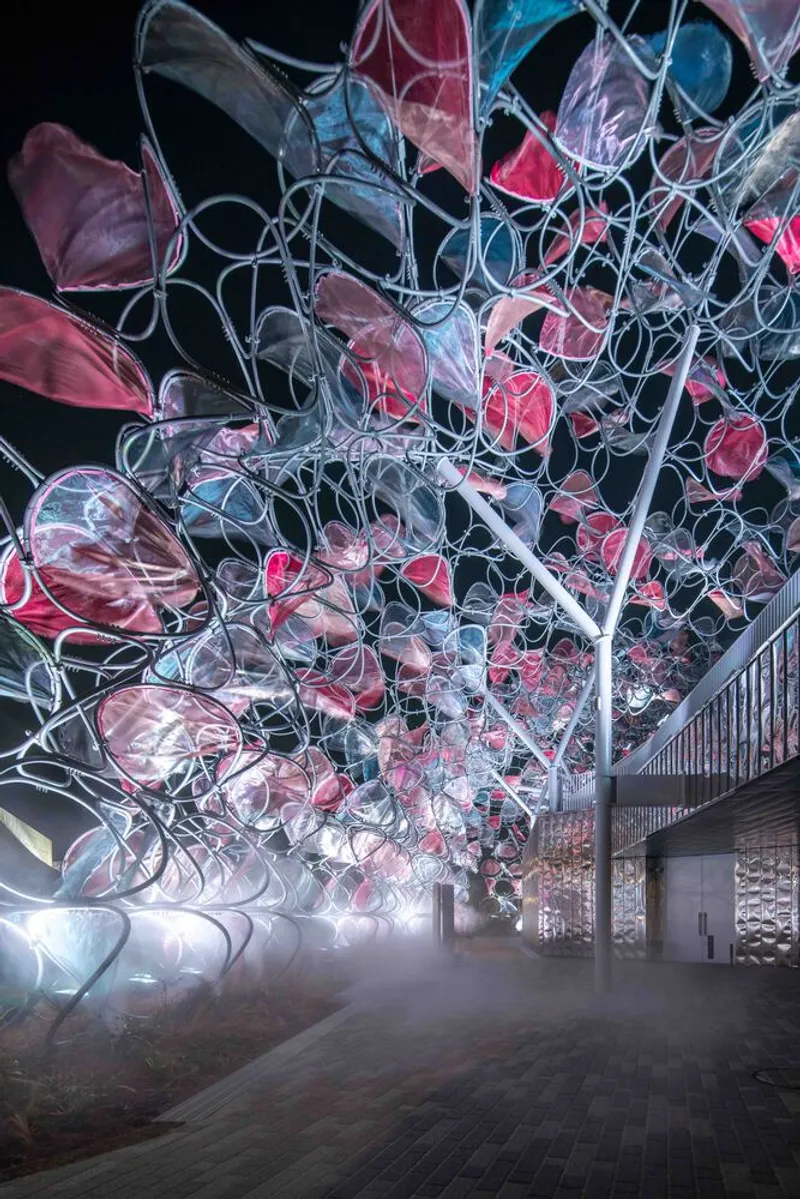
One of the most captivating elements of the Panasonic Pavilion is its façade, which is covered in a sputter-coated organza membrane. This material responds to the ocean breeze with delicate motion, while its color shifts with the viewer’s angle, creating a skin-like, shimmering surface that enhances the organic architecture. The result is a façade that seems to breathe and transform, engaging visitors both visually and emotionally.
Sustainability and Upcycling at the Core
Sustainability is woven into the heart of this project. The Panasonic Group has integrated upcycled materials from its factories into the pavilion’s interiors. Off-cuts from artificial marble used in kitchen systems and prism sheets from televisions are repurposed for reception areas, finishes, and lighting fixtures. This thoughtful use of recycled materials not only reduces waste but also aligns with the cyclical, interconnected motifs embodied by the butterfly forms. Furthermore, the pavilion has secured a relocation site after the Expo, extending its lifecycle and reducing environmental impact—a rare and commendable commitment in temporary architecture.
Architecture That Embraces Change and Renewal
The Panasonic Group Pavilion at Expo 2025 is more than just an exhibition space; it is a profound architectural statement about change, adaptability, and sustainability. By blending organic pavilion architecture with cutting-edge technology and a commitment to upcycling, Yuko Nagayama & Associates have created a building that celebrates humanity’s role in a world of constant circulation and renewal. It invites visitors to reflect on their own evolving journeys and the interconnectedness of all living things.
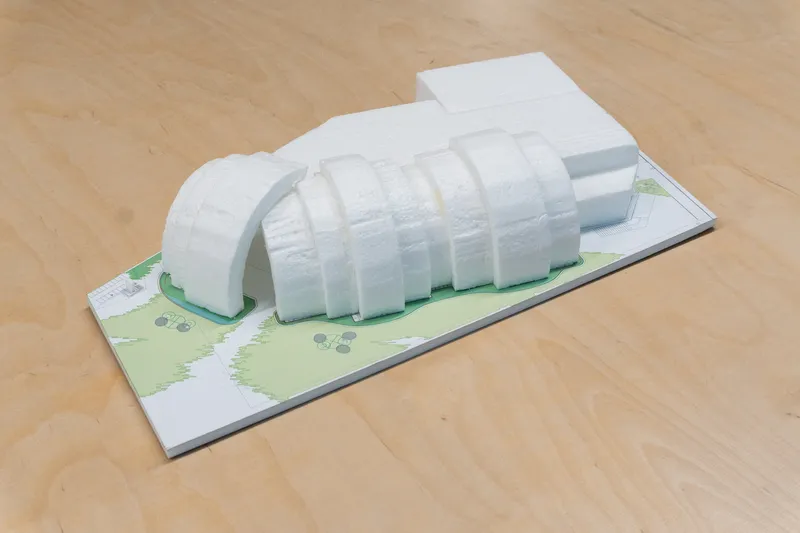
All the photographs are works of Nobutada Omote




Popular Articles
Popular articles from the community


The Earth Pod: 3D Printed Homes for Resilient Refugee Communities
The Earth Pod reimagines refugee housing through 3D printed homes made from clay, combining resilience, self-sufficiency, and rapid shelter.

Play: Fragments of Their World
Familiar architecture becomes modular playground design, creating safe spaces where displaced children can learn, connect, imagine and play.

Lunar Spiral: Space Architecture Shaped by the Mathematics of the Universe
Lunar Spiral reimagines space architecture through Fibonacci geometry, lunar regolith, levitating habitats, and self-sustaining Moon living.

Riyadh For All: Intergenerational Urban Design for Active Aging in Rabat
Riyadh For All reimagines urban design in Rabat with intergenerational co-living, adaptive courtyards, and Moroccan cultural exchange today.

Similar Reads
You might also enjoy these articles


Hodi-Mandai Geram
Project Function: Preservation and revitalization of the Intangible heritage and socio-spatial identity of the Hodi by Housing, Cultural Memory Center, Sacred Grove, landscape, local tourism economy


Olio Towers: A Mid-Rise for Performers That Fuses Housing, Rehearsal, and Stage
Located blocks from Houston's Theater District, this modular tower stacks living units around a central performance atrium.

Oasis: Modular Green Housing Carved into Dhaka's Urban Fabric
A shortlisted Plugin Housing entry reclaims unauthorized settlements in Dhaka with stepped concrete volumes, green roofs, and ventilation-driven design.

Black Hole: A Floating Megastructure for the Post-Physical Era
Emiliano Mazzarotto envisions a spherical, self-scaling arena where e-sports, digital hotels, and holographic stadiums replace traditional public space.

Explore Architecture Competitions
Discover active competitions in this discipline



Challenge to reimagine the Iron Throne


Photograph architecture without architects


Illustrate the lost glory of Angkor Wat - Render Challenge


Design challenge to reuse E-waste
Comments (0)
Please login or sign up to add comments
No comments yet. Be the first to comment!